

Gold mining · How-to guide
How to Start Gold Mining: 7 Steps With Costs
How to start gold mining depends on scale: claim fees run in hundreds of dollars, while published hard-rock project studies show US$115 million to US$2.4 billion. Seven steps, dated costs and a break-even calculator.
Key takeaways
- Gold mines take 20.8 years on average from discovery to production worldwide (S&P Global Market Intelligence, June 2024); buying ground with drill data skips part of that.
- A new US lode claim costs US$274 in BLM fees, then US$200 a year (BLM, fees for claims filed from 1 September 2024).
- Recent project studies give initial capital of US$115.2 million (Doby George PEA), US$389.1 million (DeLamar feasibility study) and about US$2.4 billion (Hope Bay).
- Global average all-in sustaining cost was US$1,785 an ounce in the first quarter of 2026 (World Gold Council); spot gold was US$4,127.40 on Kitco on 5 November 2026.
- Get title, permits and tested ground before you buy equipment, and never use mercury.
In this article
- What gold mining costs and how long it takes
- How to start gold mining in 7 steps
- Step 1: Choose your type of gold mining operation and your market
- Step 2: Secure the ground and the licence for your gold ground
- Where gold is mined today and what that means for your site
- Step 3: Find and test the gold before you spend on equipment
- Step 4: Environmental permits, safety and community approval
- Step 5: How to fund a gold mine
- Step 6: Build or hire a gold processing route
- Step 7: Staff the site and run it safely
- Gold mine profit and break-even calculator
- How long it takes to open a gold mine
- Common mistakes new gold miners make
- Frequently asked questions
How to start gold mining depends on your scale: a small placer or claim operation can begin with a few hundred dollars in claim fees plus tools, while a hard-rock mine costs from about US$115 million to more than US$2 billion to build in recent published studies, and takes many years. The steps are the same in every case: pick the type of operation, secure legal title to the ground, prove there is gold, get permits, raise the money, build a processing route and run it safely. This guide gives each step with dated costs, so you can judge whether a gold mining business is realistic for you.
It is written for licence and claim owners, consultants and investors. Spot gold was quoted at US$4,127.40 an ounce on Kitco at 3:14 a.m. ET on 5 November 2026. Prices change daily, so treat that as a dated reference and not a forecast. Terms are explained where they first appear: grade is the amount of gold in rock, measured in grams per tonne (g/t); all-in sustaining cost (AISC) is what it costs a mine to produce one ounce including the spending needed to keep it running.
What gold mining costs and how long it takes
There is no single price tag. Cost depends on whether you dig gravel in a creek (placer mining), mine a vein underground, or run a large open pit with a processing plant. The table below uses published figures, not rules of thumb. Each project number is the company’s own estimate in a study or announcement, so it can change.
Chart
Initial capital in published gold project figures
US$ million; company estimates, except the Tanzania legal limit
| Scale | Example and figure | What it tells you |
|---|---|---|
| Small-scale | Tanzania’s Mining Act defines a primary mining licence as small-scale mining with minimal machinery and initial capital that does not exceed US$5 million | Law in some countries sets a ceiling on small-scale operations; above it you need a larger licence |
| Mid-size project | Doby George, Nevada: US$115.2 million initial capital in a 2025 preliminary economic assessment (PEA) | A PEA is an early study; costs and permits can change |
| Heap-leach open pit | DeLamar, Idaho: US$389.1 million total initial capital in a feasibility study dated December 2025 | A feasibility study is detailed enough for a financing decision |
| Large district project | Hope Bay, Nunavut: about US$2.4 billion initial capital, announced May 2026 | Large remote mines need a major company or a consortium |
Sources: Tanzania Mining Act; Crux Investor on Western Exploration’s Doby George PEA; the DeLamar feasibility study; and Agnico Eagle’s Hope Bay investment release of 19 May 2026.
Operating cost is the second number. The World Gold Council reported that global average AISC rose to US$1,785 an ounce in the first quarter of 2026, up 16% on a year earlier, with royalties now about 12% of the average operation’s cost base. A new mine has to produce ounces below that kind of cost to earn a margin, and it has to survive a price fall.
The third number is time. S&P Global Market Intelligence found that gold mines take an average of 20.8 years from first discovery to first production, the fastest of the metals it studied, and that the US average across all metals is almost 29 years. Many small operations skip the long path by buying an already-explored claim or restarting an old mine, which is why the early steps below focus on checking the ground before you pay for it.
How to start gold mining in 7 steps
- Choose the type and size of operation and the market you sell into.
- Secure the ground and the right licence.
- Find and test the gold.
- Get environmental, safety and community approvals.
- Raise the money.
- Build or hire a processing route.
- Staff the site and run it safely.
Infographic
From idea to first gold
- 1ChoosePick placer, lode or a purchase, and set your budget.
- 2Secure groundGet title and the right licence.
- 3TestSample and drill before you buy plant.
- 4PermitEnvironmental, safety and community approval.
- 5FundRaise money from partners, investors or lenders.
- 6BuildBuild or hire a processing route.
- 7OperateStaff, safety, monthly records.
A business plan sits across all seven steps. Lenders and partners look first at the ground, the permits and the people, and only then at the financial model, so the order matters: do not buy equipment before you hold title and an approved plan.
Step 1: Choose your type of gold mining operation and your market
Start with the question “what can I realistically fund and permit?” The main routes are these.
Chart
Average US gold price, 2021 to 2025
US$ per troy ounce, annual average (2025 estimate)
- Placer mining: gold carried by water and left in gravels. It needs a claim or lease, water and a wash plant, and it is the usual entry point for individuals. See our guide to placer gold mining methods.
- Lode (hard-rock) mining: gold in veins or disseminated in rock, mined from an open pit or underground, then crushed and processed. It needs far more capital and a permitting path, but can run for decades.
- Buying or restarting: acquiring a mine with past production and some infrastructure. Our page on land and mineral rights for sale explains what to check, and how to sell a mine is covered in our valuation and buyers guide.
- Gold as a by-product: about 7% of US gold was recovered from base-metal ores, chiefly copper, according to the USGS. If you hold a copper or silver project, the copper price per tonne can matter as much as the gold price, and the silver mines page covers the sister metal.
The market side is simple compared with other metals: gold is sold at a world price, so you do not negotiate a buyer for each batch, but you are a price taker. The USGS Mineral Commodity Summaries 2026 gives the average US price as US$1,801 an ounce in 2021 and an estimated US$3,300 in 2025, a rise of 83% in four years. The World Gold Council noted that spot gold briefly reached US$5,595 an ounce in January 2026. A price this high lifts every project, but costs rise with it: royalties, fuel and labour all follow the price up. Plan the business so that it still works at a price well below today’s.
If you are a consultant, your client will ask for the cost to produce an ounce and the break-even price. If you are an investor, you will ask who controls title and who pays for permits. The calculator later on this page lets you test both with your own numbers.
Step 2: Secure the ground and the licence for your gold ground
Mining law varies by country, and the first mistake new owners make is to assume that owning land means owning the gold. In many places the state owns minerals, and you hold only a right to explore or mine them. Confirm the rules with the regulator before paying anyone. Our guide to prospecting licence rules and fees in eight jurisdictions compares several systems side by side.
United States: unpatented mining claims
On US federal land you can stake a claim, but the paperwork and fees are strict. The Bureau of Land Management (BLM) lists the fees for new claims filed on or after 1 September 2024: for a lode claim, a US$25 processing fee, a US$49 location fee and a US$200 maintenance fee, a total of US$274 per claim. A placer claim pays the same processing and location fees plus US$200 maintenance for each 20 acres or part of 20 acres. Maintenance fees are due each year on or before 1 September. A claimant and related parties who own 10 or fewer claims nationwide can file for a waiver instead of paying maintenance fees. Claims are filed through the BLM’s Mineral and Land Records System. For California, see our guide to staking and holding a claim.
A claim is a right to the minerals, not title to the surface. If you plan to disturb the ground, you also face surface-management rules, covered in Step 4. The short video below explains the difference in plain terms.
Other countries: small-scale and large-scale licences
Many African, Australian and Canadian systems separate small-scale from large-scale licences. Tanzania’s Mining Act, for example, links the primary mining licence to a small-scale operation with initial capital no higher than US$5 million. In Ghana, a small-scale licence is reserved for Ghanaian citizens aged 18 or over who register with the Minerals Commission, and the licence runs for up to five years, according to a Legal 500 guide of 12 August 2024. A foreigner therefore usually needs a larger licence, a local partner or a purchase of an existing project, and the video further down this page explains three common routes in Africa.
Before you commit money, run a title check: who holds the ground now, what overlaps it (protected areas, farmland, other licences), and whether the licence period leaves enough time to finish the work you promise. Satellite imagery can help here: maps of land cover, rivers and settlements show conflicts that a paper plan may miss.
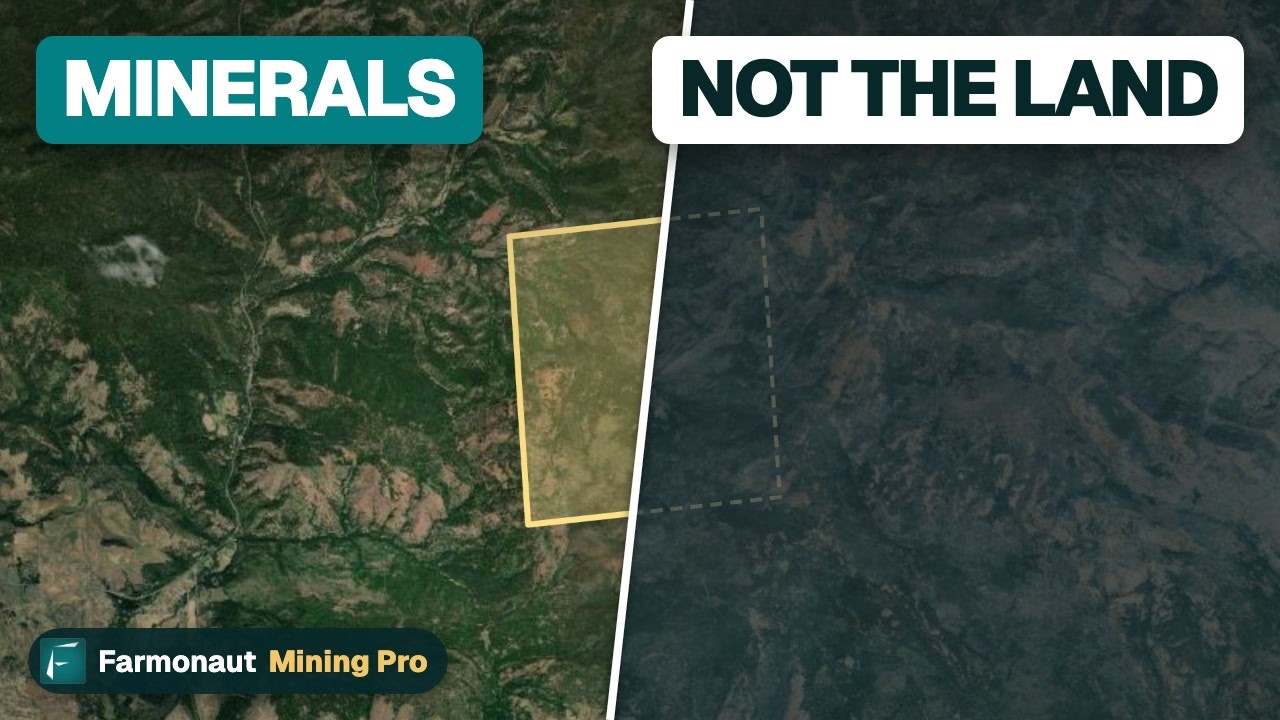
▶ Why owning a gold claim is not owning the land, and how to check the ground first · 3:19
Where gold is mined today and what that means for your site
Gold comes from many countries, and the leaders differ in scale and rules. The chart shows world mine production by country from the USGS. China, Russia and Australia led in 2025 on the agency’s estimates; Ghana mined about as much as the United States.
Chart
World gold mine production, 2025 estimate
Tonnes of gold, selected countries only
For a small mining business the lesson is practical: gold is found in both well-regulated and poorly regulated places, and the deposit matters less than the paperwork. A country with a clear licence process and a known gold district can be a better start than a rich but unclear one. The USGS says Nevada produced about 64% of US gold in 2025, with Alaska next at about 22%, which shows how concentrated production is even in one country.
Step 3: Find and test the gold before you spend on equipment
Exploration is the cheapest place to find that a project will not work. The usual sequence is desk study, mapping, sampling, trenching, drilling and then a resource estimate.
- Desk study: read government geology maps, old reports and production records for the district.
- Remote sensing: satellites map iron-oxide staining, clay minerals and faults that often sit around gold systems. They do not see gold itself. Our short videos on whether a satellite can detect gold, and on reading a satellite gold map, explain the limits.
- Field sampling: soil, stream-sediment and rock samples show where gold occurs. Send them to a certified laboratory; see how to choose an assay lab and what it costs and the assay methods guide.
- Drilling: core or reverse-circulation holes test the ground at depth. Core sampling gives the geologist the rock itself.
- Resource estimate and study: a qualified person writes the numbers. For public projects the report follows a code such as NI 43-101 or JORC; satellite screening alone is an exploration target and not a resource.
Be honest about odds. S&P Global reported that grassroots exploration, the earliest stage, fell to US$2.57 billion or 21% of global exploration budgets in 2025, the lowest share in its data set, because companies prefer work near existing mines where risk is lower. A new owner without a known deposit competes for the same scarce money. If you can buy or option ground that already has drill data, you start further along the path.
Site selection also covers practical points: road access, water, power, distance to a processing plant, and whether local people support the work. These often decide a small project’s cost more than the ore grade does.
Step 4: Environmental permits, safety and community approval
Permits are where many projects stall. You normally need an exploration permit, an environmental assessment, a water permit, a waste and tailings plan, and a closure plan with a financial guarantee. Rules differ by country; ask the regulator which approvals apply to your size of operation.
United States surface rules
BLM’s surface-management rules (43 CFR 3809) distinguish a notice from a plan of operations. Exploration that disturbs 5 acres or less of public land can proceed under a notice filed at least 15 calendar days before work starts, and it is not allowed to split a project into several notices to avoid a plan. A plan of operations is required for activity greater than casual use outside the notice rules, for removing 1,000 tons or more of presumed ore for testing, and in special areas such as designated wilderness or Wild and Scenic Rivers. State and county permits often apply as well, and these rules apply only to US federal land.
Chemicals: mercury and cyanide
Do not use mercury to recover gold. Artisanal and small-scale gold mining operates in over 80 countries and employs about 15 million miners, and a peer-reviewed review of mercury use notes that gold can be recovered without mercury, though concentrators need initial capital and maintenance. If your process uses cyanide, the voluntary International Cyanide Management Code was developed under the United Nations Environment Programme for safe management by gold and silver producers. Our explainer on gold extraction by cyanide covers the chemistry and the controls.
Community and closure
Speak to the people who live and farm near the site before you apply, not after. Plan water use, dust, noise, tailings and closure from day one; regulators and lenders both ask for closure cost. Our page on sustainable gold mining practices lists the main practices. Satellite monitoring of vegetation and disturbed ground can be added to your reporting, and the earlier imagery gives a baseline to compare with later.
Read local rules on safety too: ground support in underground workings, blasting licences, tailings dam inspection and first aid are usually legal requirements, not options.

▶ Whether a foreigner can get a small-scale mining licence in Africa, and the three routes that exist · 5:16
Step 5: How to fund a gold mine
Money comes in stages, and each stage has a different kind of investor.
- Your own capital and partners: pays for title, mapping and first samples.
- Equity from private investors or an exploration company: pays for drilling. Investors want to see title, a qualified geologist and a plan for the next dollar.
- Public markets: S&P Global reported that funds raised by junior and intermediate mining companies rose 109% in 2025 to US$21.43 billion, the second-highest annual total on record, helped by lower interest rates and stronger gold, copper and silver prices, according to BusinessDay’s report.
- Debt, streams and royalties: available mainly once a feasibility study exists. A royalty or stream gives the lender a share of future gold in return for cash now.
- Government support: some jurisdictions offer exploration grants or tax credits; check each regulator.
What lenders ask for is consistent: proof of title, a technical report by a qualified person, permits or a clear permitting path, a costed plan, and a team with a record. Satellite-based mapping can strengthen the evidence on the ground, but it is a screening tool, not proof of ounces. Our carbon-footprint and traceability tools are aimed at reporting, and they never replace the technical report: see the carbon footprinting and product traceability pages if a buyer or lender asks for impact or chain-of-custody data.
Be careful with promoters. Never pay a fee up front to a person who promises “guaranteed” finance or “proven” ground, and always check a company’s filings on its home exchange. Nothing on this page is investment advice.
Step 6: Build or hire a gold processing route
How you recover the gold depends on the ore. Loose gold in gravel is caught by gravity (sluices, jigs, shaking tables). Gold locked in rock must be crushed, ground and then recovered by gravity, flotation, cyanide leaching on a heap or in tanks, or a mix. Gold in sulphide minerals may need roasting, pressure oxidation or bio-oxidation. Run metallurgical test work on your own samples before you pick a plant, because recovery can range widely between deposits.
The video below follows gold from rock to refined metal in plain steps, and it is a good briefing for new partners or investors.
Equipment choices for a small operation:
- Hire first: contract crushing, toll milling or contract mining lets you test ground without buying a plant. Ask the toll miner for its assay and payment terms in writing.
- Buy used: older plants cost less, but check parts supply and permits that move with the plant.
- Plan for power and water: diesel and water often dominate small-site costs. Fuel and power were among the cost drivers the World Gold Council flagged in its first-quarter 2026 review.
Last, gold is sold to a refinery or a licensed buyer at a price tied to the world price, less a refining charge. Keep your own assay and weigh records so you can check settlement statements. Some countries require that artisanal and small-scale gold go through a licensed trader, so ask the regulator before you sell.
▶ How gold is mined and refined, from rock to ring · 5:27
Step 7: Staff the site and run it safely
Hire a qualified geologist or mining engineer for the technical plan, a site manager with direct experience at similar scale, and a safety officer. Local hiring and training build goodwill and reduce turnover. A short checklist for your first year:
- Write a site safety plan, drill every emergency procedure, and keep incident records.
- Test and label chemicals; keep cyanide, fuel and explosives under the legal licence.
- Report to the regulator on time; late reports can stop a licence.
- Keep monthly cost, grade, recovery and ounces-sold records, because those are the numbers a buyer or lender will ask to see.
- Review production against the plan every month and change the plan, not just the report, when ground conditions differ.
Satellite observations can be repeated each month to track new disturbance, stockpiles and vegetation around the site. Use them as an extra check on your own survey data, not in place of it. For custom feeds, Farmonaut offers an API and developer documentation.
Gold mine profit and break-even calculator
The calculator turns your own numbers into ounces, margin and payback. Put in your tonnes, grade, recovery, price and cost; all defaults are round examples and not benchmarks. The margin per ounce is the price minus your AISC, so a project that looks fine at today’s price can lose money if the price falls by a third. A good test is to run the model at a price 30% lower and see whether payback is still tolerable.
Calculator
Does my gold mine pay back?
Enter your own numbers; defaults are round examples.
- Margin per ounce (US$): $1,200
- Annual margin before tax (US$): $6,558,747
- Payback on initial capital (years): 9.1
Example values only, not benchmarks or a forecast. Recovered ounces = tonnes x grade / 31.1035 x recovery. Gold price and all-in cost are inputs (example, use today’s price). Money in US$.
How long it takes to open a gold mine
The S&P Global Market Intelligence study of development times (June 2024) gives these averages from first discovery to first production: Zambia 34 years, the United States almost 29, Canada 27 and Australia 20 (all metals combined), with gold mines worldwide at 20.8 years. The US figure assumes that currently non-operating US properties start producing by 2030, and the authors call their data indicative. An earlier S&P study of 127 mines found an average of 15.7 years, with almost 12 years of that spent on discovery, exploration and studies.
Chart
Years from discovery to first production
Average, years. Countries: all metals; last bar: gold mines worldwide
Small operations move faster because they can start under a notice or a small-scale licence, but the pattern is the same: the long part is not digging, it is finding the ground, drilling it, studying it and getting permits. This is why buying a project that already has drilling can save years, and why a clear permit path is worth paying for.
Common mistakes new gold miners make
- Buying equipment before title. Plant arrives, permit is delayed, cash runs out.
- Trusting a single rich sample. One nugget or one high assay does not make a mine; test many samples in a pattern.
- Ignoring recovery. Gold in rock is worthless if your plant recovers only half of it; test the metallurgy first.
- Planning at the peak price. Model the business at a lower gold price and at higher costs. The WGC found AISC rose for the 28th year in a row on an annual basis in the first quarter of 2026.
- Using mercury or skipping the permit. It risks health, fines and loss of the licence.
- Forgetting the community. Opposition from neighbours can delay a project, so talk to them early.
- Believing sales pitches. Claims for sale, “gold detectors” and guaranteed-return investment offers need independent checking.
If you only want to try the work on a small scale, look at a placer claim and a permit for a small plant, keep spending to what you can lose, and learn the rules before you dig. Always get permission from the landowner and regulator, follow safety rules and do not use mercury.
Frequently asked questions
How do I start a gold mine?
Choose an operation type, secure the ground and licence, test the ground with sampling and drilling, obtain permits, raise money, build or hire a processing route and staff the site. Start with title and testing, because those steps cost the least and tell you whether to continue.
How much does it cost to start a gold mining business?
It ranges from a few hundred dollars in claim fees plus tools for a hobby-scale placer operation to hundreds of millions for a mine. Published studies show US$115.2 million for the Doby George preliminary economic assessment, US$389.1 million for the DeLamar feasibility study and about US$2.4 billion for Hope Bay. The cost of one US lode claim in new fees is US$274, with a US$200 maintenance fee each year.
Is gold mining a profitable business?
It can be when the gold price is well above your all-in cost, but costs are rising. The World Gold Council put global average AISC at US$1,785 an ounce in the first quarter of 2026, against a spot price of US$4,127.40 on Kitco on 5 November 2026, which leaves a gap. The gap can close fast if the price falls or a mine has high costs. Run the calculator at a lower price before you commit.
How long does it take to start a gold mine?
S&P Global Market Intelligence found 20.8 years on average from discovery to production for gold mines worldwide. Small placer or restart projects can start within months to a few years if the ground, licence and permits are already in place.
How can I become a gold miner?
Many people begin by working at an operating mine or on a contractor crew, taking a training course in safety and mining skills, or holding a small claim where the law allows it. To run your own operation you also need the licence and permits described in Steps 2 and 4.
How do I own a gold mine?
You can stake a claim on open public ground where the law allows, apply for a licence from the regulator, or buy or option a claim or mine from its owner. Whatever the route, check title and encumbrances with the registry first. In some countries only citizens can hold small-scale licences; in Ghana, the Legal 500 guide says applicants for a small-scale licence must be Ghanaian citizens.
Do I need a licence to mine gold?
Almost always yes. Even where you may stake a claim, you usually also need a notice or plan of operations, plus water, environmental and local permits. Ask the regulator before you start.
Can a satellite find gold for me?
No satellite sees gold itself. Multispectral and radar data can map rock alteration, structures and surface disturbance, which helps decide where to sample first. The result is an exploration target to test on the ground, not a resource estimate.
Which is easier to start, placer or lode gold mining?
Placer is usually the lower-capital route and the better fit for individuals, but it needs a suitable creek or gravel deposit, water and the right permit. Lode mining needs a deposit that justifies crushing and processing, which means more capital and a longer permit process.
What are the main stages of gold mining operations?
Exploration, development (studies, permits, construction), production (mining and processing) and closure. Each stage has its own approvals and costs, and closure planning should begin before construction.
This page is for information only. It is not investment advice or legal advice. Confirm the rules with the regulator. Get permission before prospecting, follow safety rules and never use mercury.
Farmonaut mining
Get a quote to screen your gold ground from space
Request a quote for a satellite mineral screening of your licence area before you drill.

Mining Pro sample view, synthetic data
Keep reading
Sources
- Kitco, gold spot price (5 November 2026): kitco.com
- World Gold Council, Record gold prices outpace rising mining costs in Q1’26: gold.org
- USGS, Mineral Commodity Summaries 2026: Gold: pubs.usgs.gov
- BLM, Mining Claim Fees: blm.gov
- 43 CFR 3809.21, notices (Cornell LII): law.cornell.edu
- 43 CFR 3809.11, plans of operations (Cornell LII): law.cornell.edu
- Tanzania Mining Act: tanzanialaws.com
- Legal 500, How to acquire a small scale mining licence in Ghana (12 August 2024): legal500.com
- S&P Global Market Intelligence, US mine development times in perspective (June 2024): cdn.ihsmarkit.com
- BusinessDay, S&P Global exploration budgets and junior funding (9 April 2026): businessday.co.za
- Crux Investor, Shrinking exploration budgets (Doby George PEA): cruxinvestor.com
- Integra Resources, DeLamar feasibility study (December 2025): minedocs.com
- Agnico Eagle, Hope Bay investment decision (19 May 2026), via Finviz: finviz.com
- PMC, Mercury and artisanal and small-scale gold mining review: pmc.ncbi.nlm.nih.gov
- International Cyanide Management Code: cyanidecode.org
Discussion
Questions, corrections or field experience? Share them below. First-time comments are reviewed before they appear, and your email is never published.
No comments yet. Be the first to add a question or your experience.

 Ileys General Trading
 SG Gold Mining LLC
 VRV Global Pte Ltd
 Omsri International FZE
 G.I.T.T.
 Jaunita Erss Ltd
 Almosi SARL
 SRK Consulting
 Berks Gold Limited
 Mwerezi Minerals Company Limited
 Mining SARL
 SenGold Invest SAS
 Sean Mining Limited
 NTS Group (Pty) Ltd
 Mine4Africa
 Lithspo Minerals Limited
 Tintina Mining Group

 Licence holder · Nigeria · Gold + lithium










