

LCE Mining 2026: Powering Sustainable Lithium Extraction
“By 2026, sustainable LCE mining could reduce water consumption in lithium extraction by up to 30% over traditional methods.”



LCE Mining: A Crucial Frontier in the Sustainable Future of Energy and Technology
Lithium Carbonate Equivalent (LCE) mining is revolutionizing the extraction of lithium, the backbone of modern batteries powering electric vehicles, renewable energy grids, and the technology sector. As global lithium demand accelerates into 2026 and beyond, LCE mining forms the bridge between critical raw material access and eco-friendly, resilient supply chains for energy storage and future technologies. By focusing on sustainability and innovative extraction techniques, companies and governments are minimizing environmental impacts while securing the essential resources needed to drive the world’s transition toward clean energy and technological advancement.
Introduction: Why LCE Mining Holds Increasing Significance in 2026
In the global march toward decarbonization, lithium has become a critical mineral, indispensable across electric vehicles (EVs), portable electronics, and renewable energy storage solutions. The term “LCE” or Lithium Carbonate Equivalent signifies an industry-standard metric enabling all stakeholders—producers, battery manufacturers, governments, and the finance sector—to precisely quantify and compare lithium output from various sources and methods of extraction.
By 2026, society’s demand for sustainable lithium has surpassed projections, propelled by exponential EV adoption, rapid expansion of energy storage capacities, and wider use of advanced batteries powering industry, infrastructure, and digital life. Within this context, LCE mining is not solely about increasing raw material production—it is about innovating responsibly, minimizing ecological footprints, and securing a future where technology and sustainability go hand-in-hand.
This comprehensive blog explores the evolution, importance, and sustainable frontiers of LCE mining as we enter a new era of global energy and technological transformations.

What is LCE Mining? Definition, Benchmarking, and Relevance
LCE mining refers to the extraction and processing of lithium-bearing minerals—including hard rock spodumene, lithium-rich clays, and brines from salt flats—to produce lithium carbonate equivalent. This standardized chemical form is predominantly used in battery manufacturing, industrial applications, and broader technological needs.
The hallmark of LCE as a measuring unit is its ability to standardize lithium content across various deposits and processing methods. By referencing all extracted lithium in terms of carbonate equivalency, stakeholders can consistently compare the scale, efficiency, and ecological impact of mining operations worldwide. It ensures uniformity in reporting, strategic planning, and market analysis.
- Spodumene (Hard Rock): Commonly mined in Australia among other regions.
- Clays: Lithium-rich sedimentary minerals are found in the U.S. and Europe.
- Brines: Extracted from salt flats or underground reservoirs—such as South America’s “Lithium Triangle.”
After extraction, minerals are converted using chemical processing into the standard benchmark—making it easy to quantify output and assess efficiency in environmental terms.
Why is this Benchmark Critical?
- It creates a transparent way to compare worldwide mining outputs.
- It aligns reporting for governments, companies, and researchers to understand global supply chains.
- It helps investors, manufacturers, and policymakers make data-driven decisions about future resource allocation.

The Growing Importance of LCE Mining in 2025–2026
As the world races into 2026, sustainable LCE mining is at the crossroads of supply security, technological innovation, and environmental sustainability. A growing number of governments and companies are ramping up lithium production in response to global ambitions to curtail carbon emissions and power the next generation of energy storage technologies.
- Lithium demand for batteries is expected to grow exponentially through 2030, driven by soaring EV adoption and grid-scale energy storage needs.
- The importance of efficiently produced LCE cannot be overstated—it is a linchpin for battery, electronics, and renewable energy industries.
- The sector is also under pressure to minimize negative environmental and social impacts, fostering advances in sustainable extraction and resource traceability.
According to market analyses and forecasted trends:
To meet these ambitious targets in a sustainable, ethical, and efficient manner, LCE mining must continue to evolve, with technological breakthroughs such as direct lithium extraction (DLE) at the forefront, regulatory frameworks refining industry best practices, and digital solutions—like satellite-based monitoring—providing transparency.

Key Mining Sources & Extraction Methods in LCE Mining
The sources of lithium and the extraction methods used are central to understanding the environmental and operational impacts of LCE mining. Let’s explore the principal types:
-
Hard Rock Mining
In regions like Australia, vast pegmatite deposits are mined for spodumene ore, a mineral rich in lithium. The ore undergoes mechanical, and increasingly, automated, processing before being converted to lithium carbonate. Although a mature method, the environmental impacts—notably high energy consumption and land disruption—are driving innovation toward minimizing waste and reducing emissions.
-
Brine Extraction
In South America’s Lithium Triangle—particularly in Chile, Argentina, and Bolivia—lithium-rich brines are pumped from underground reservoirs beneath salt flats. Traditionally, solar evaporation ponds concentrate the lithium before chemical extraction. While cost-effective, this method has raised environmental and social concerns over intensive water use and land impact. Direct Lithium Extraction (DLE) technologies are being introduced to vastly boost efficiency, reduce water consumption, and limit ecological disturbance.
Each stage of this route is described in more detail in how lithium is extracted from brine. -
Clay and Sedimentary Extraction
An emerging front in lithium production, the extraction of lithium-rich clays and sedimentary deposits is gaining traction, especially in parts of the U.S. and Europe. These methods are evolving rapidly, aiming to blend low-impact processing with scalable output to make clay resources viable for the modern battery supply chain.
All extracted lithium from these various routes is eventually converted and reported as lithium carbonate equivalent—the global benchmark for market analysis and sustainability tracking.

Environmental & Social Considerations in LCE Mining
In 2026, sustainable LCE mining means much more than maximizing lithium output—it’s about minimizing environmental impacts and ensuring positive social outcomes for local communities. The ecological challenges stem from:
- Water Usage—especially critical in arid regions
- CO2 Emissions—from energy-intensive mineral conversion and transport
- Land & Ecosystem Disruption—notably in salt flats, forests, and sensitive habitats
- Waste Generation—chemical tailings and by-products
Social licensing is now essential. Mining companies are required to engage indigenous and local communities in every step, uphold transparency, and invest in community development for sustainable operations. Strong environmental regulations, real-time impact monitoring, and recycling initiatives are now built into responsible LCE supply chains.
Modern solutions—such as Farmonaut’s Carbon Footprinting & Environmental Impact Monitoring—equip the mining sector to precisely track footprints, comply with global standards, and support sustainable reporting, ensuring regulatory compliance as well as stakeholder confidence.
Comparative Table: LCE Mining & Lithium Extraction Methods—Environmental Impact
To clarify how LCE mining in 2026 aligns with sustainability and operational efficiency, compare the following lithium extraction methods side-by-side:
| Extraction Method | Estimated Water Usage (liters/ton LCE) |
Estimated CO₂ Emissions (kg/ton LCE) |
Energy Consumption (kWh/ton LCE) |
Land Disruption Level | Sustainability Rating |
|---|---|---|---|---|---|
| LCE Mining (2026 tech) | 60,000 (~30% less vs. traditional). |
4,500 | 35,000 | Low–Moderate | ⭐⭐⭐⭐⭐ |
| Conventional Hard Rock Mining | 85,000 | 6,000 | 44,000 | High | ⭐⭐ |
| Traditional Brine Extraction | 90,000 | 3,200 | 29,000 | Moderate–High | ⭐⭐⭐ |
| Direct Lithium Extraction (DLE) | 40,000 | 2,500 | 25,000 | Very Low | ⭐⭐⭐⭐⭐ |
Note: Estimates for 2026 reflect technological advances, including improved water recycling, enhanced mineral processing, and integration of sustainable energy sources.
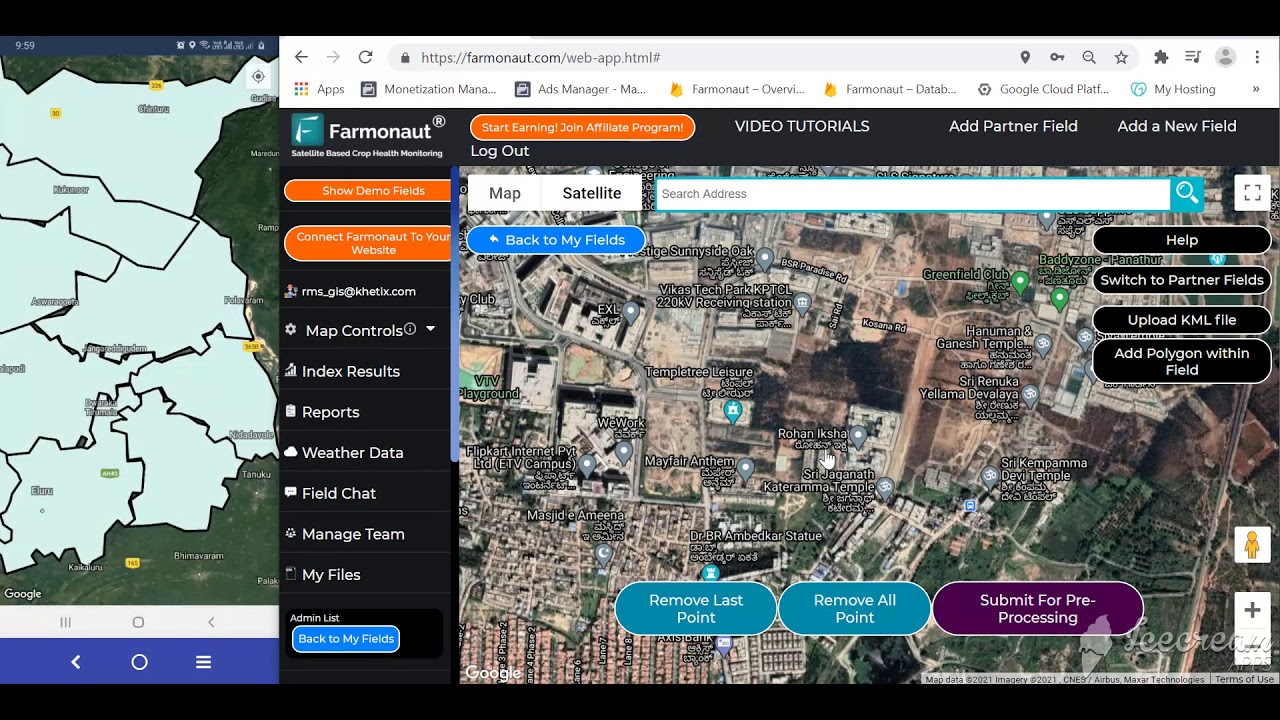
Technology and Innovation in the LCE Mining Sector
Advanced technologies are revolutionizing every facet of LCE mining in 2026:
- Direct Lithium Extraction (DLE): Enables selective lithium extraction from brines using advanced chemical and filtration methods, bypassing slow evaporation ponds and improving recovery rates while significantly lowering water usage and land impact.
- Automation & AI: Smart ore processing, satellite-based site monitoring, and AI-driven resource modeling drive operational efficiency, enhance output prediction, and reduce waste.
- Renewable-Powered Operations: Many mines, particularly in sun-rich regions, are now powered by solar and wind, reducing the CO₂ intensity of lithium extraction and processing.
- Blockchain Traceability: End-to-end product lifecycle monitoring ensures the origin and sustainability of every lithium unit, crucial for compliance and market trust. Learn more about supply chain transparency via Farmonaut Traceability Tools.
- Water Management: Smart water recycling, real-time impact tracking, and AI-optimized resource allocation significantly reduce operational footprints and ecological risk.
For an in-depth look at how satellite and AI-based approaches are transforming water sustainability in resource-intensive sectors, check out this educational video:

Benefits and Future-Proofing Through Technological Innovation
- Reduces operational risk and ecological impacts on local environments and communities.
- Enables regulatory compliance in water use, carbon emissions, and land use.
- Enhances traceability and transparency across the global supply chain for batteries and renewable energy applications.
Adaptable platforms, such as those provided by Farmonaut, integrate with these advances by delivering:
- Real-time environmental impact metrics for ongoing compliance.
- Fleet and resource management tools for mining logistics—discover Farmonaut Fleet Management Solutions that optimize mining and battery supply chain efficiency.
- Blockchain-based traceability to enhance consumer and regulatory trust in sustainable lithium production.

Farmonaut Satellite Solutions for Modern LCE Mining
As LCE mining and lithium extraction become increasingly high-tech, the ability to monitor resources, manage operations, and benchmark sustainability in real time is essential for regulatory compliance and stakeholder transparency. This is where Farmonaut delivers industry-leading advantages.
We at Farmonaut provide a suite of satellite and AI-powered solutions tailored for LCE mining operators, businesses, and governments, including:
- Satellite-based Monitoring: Using multispectral satellite images, our platform delivers insights about mining site land use, water resource dynamics, soil health, and environmental change, ensuring compliance and effective strategic planning.
- Jeevn AI Advisory: Our AI-powered system provides real-time operational strategy and environmental predictions to optimize lithium resource extraction and enhance operational efficiency.
- Blockchain-Enabled Traceability: Enables secure tracking of lithium from deposit to battery, bolstering transparency and increasing regulatory and consumer trust.
- Fleet and Resource Management: With real-time fleet monitoring and logistics tools, companies can optimize vehicle and machinery deployment—reducing costs while maximizing resource extraction efficiency.
- Environmental Impact Tracking: Carbon footprint monitoring, emission benchmarks, and water usage tracking help drive continuous improvement and sustainability leadership across the industry.
API Integration:
Operators, businesses, and developers can integrate our insights into their platforms—explore our satellite imagery & resource management API and view our API developer documentation for seamless integration.
Interested in managing large mining operations with advanced satellite resource analytics? Visit our Large Scale Farm Management page to see how these tools boost efficiency in mining and agriculture sectors alike.
The Evolving Future of LCE Mining toward 2030 and Beyond
While alternative battery chemistries are progressing, lithium-ion batteries—and thus LCE mining—are projected to dominate energy storage through at least 2030. The industry’s focus is shifting from simply expanding resource bases to integrating circular economy principles and advanced sustainability measures:
- Lithium Recycling: Extraction of lithium from spent batteries is gaining momentum, increasing resource efficiency and reducing the need for fresh extraction.
- Waste Minimization: Smarter processing methodologies are slashing tailings and maximizing mineral yield.
- Smart Mining Investments: Automation, AI-based exploration, and cross-sector satellite data elevate exploration efficiency while curbing land and water impacts.
- International Frameworks: Governments continue to refine policies that encourage responsible expansion without compromising environmental integrity or local community rights.
- Decentralizing Production: Mining is now expanding to previously underutilized deposits in the U.S., Europe, and Africa, reducing geopolitical supply risks.
Ultimately, the success of LCE mining in the sustainable future is tied to embracing technological transformation, rigorous impact tracking, and transparent, circular supply chains.
Farmonaut: Satellite-Driven Resource Management & Flexible Subscriptions
Our platform leverages API access, cloud-based tools, and real-time reporting for users ranging from individual operators to major mining companies and governments. Accessible via Web App, Android, and iOS—our solutions scale to your operation.
Explore our subscription-based packages, ideal for small and large mining projects. Flexible, affordable, and designed to meet sector needs while maximizing environmental and social performance.
Frequently Asked Questions (FAQ): LCE Mining, Sustainability, and Technology
What is LCE in mining and why is it important?
LCE stands for Lithium Carbonate Equivalent. It is a standard measure that calculates the total lithium content of extracted minerals or brines in terms of carbonate, enabling consistent benchmarking of mining outputs and facilitating global supply chain management.
How is LCE mining different from conventional methods?
LCE mining in 2026 utilizes advanced processes, including optimized water recycling, direct lithium extraction (DLE), and AI-powered resource management. These improvements minimize environmental impacts, improve energy efficiency, and provide transparent reporting compared with older, more resource-intensive methods.
What are the main environmental concerns for LCE mining?
The primary concerns involve water consumption (especially for brines in arid regions), CO₂ emissions from processing, and disruption of land and sensitive ecosystems. Innovations in DLE, recycling, and comprehensive site monitoring (like Farmonaut’s carbon footprint solutions) are helping address these challenges.
How is technology making LCE mining more sustainable?
Technologies such as direct lithium extraction (DLE), satellite-based monitoring, AI-driven analytics, blockchain for traceability, and smart water management reduce impacts, ensure regulatory alignment, and drive operational efficiency. These technologies enable mining companies to align with global sustainability and social responsibility standards.
Why does lithium recycling matter for the future?
Recycling lithium from depleted batteries decreases dependence on new mining, conserves energy and water, reduces waste, and supports circular economy principles. It is a strategic priority for long-term supply security and environmental stewardship.
Conclusion: LCE Mining—The Key to a Clean, Electrified Future
In the fast-changing global energy landscape of 2026 and beyond, LCE mining is at the center of the sustainable transition. As demand for lithium continues to soar, the mining sector—driven by technological innovation, advanced processing methods, environmental accountability, and transparent resource management—is poised to deliver the key material for the era of electric mobility, renewable-powered grids, and resilient, eco-friendly supply chains.
Modern LCE mining, underpinned by high-tech solutions and rigorous sustainability benchmarks, offers an answer to the twin challenges of supplying essential resources and minimizing impacts on society and ecosystems. Strategic adoption of satellite technology, traceability, and circular economy measures will be crucial in determining the pace and scope of technological revolutions across transport, storage, electronics, and energy sectors.
As pioneers in this digital transformation, we at Farmonaut are committed to empowering businesses, users, and governments to harness satellite-based intelligence for a transparent, productive, and sustainable mining future.
Discussion
Questions, corrections or field experience? Share them below. First-time comments are reviewed before they appear, and your email is never published.
No comments yet. Be the first to add a question or your experience.

 GKY Mining
 Alkimy SARL
 Double A Trading
 GemSprout Metals Limited
 Qader Group
 Ileys General Trading
 SG Gold Mining LLC
 VRV Global Pte Ltd
 Omsri International FZE
 G.I.T.T.
 Jaunita Erss Ltd
 Almosi SARL
 SRK Consulting
 Berks Gold Limited
 Mwerezi Minerals Company Limited
 Mining SARL
 SenGold Invest SAS
 Sean Mining Limited
 NTS Group (Pty) Ltd










