

Electric Car Lithium Mining: 2026 Impact & Solutions
Electric car battery lithium mining is rapidly transforming global transportation as the backbone of the clean vehicle revolution. As we reach 2026, profound shifts in methods, environmental practices, and worldwide demand shape the lithium mining sector — impacting everything from energy strategies to local economies and ecological resilience.
“By 2026, global lithium demand for EV batteries is expected to surge by over 40% compared to 2022 levels.”
Table of Contents
- 2026 Summary: Lithium Demand and Environmental Implications
- The Importance of Lithium in Electric Car Batteries
- Lithium Mining Methods and Key Producing Regions
- Environmental and Socioeconomic Impacts of Lithium Mining
- Innovations and Sustainable Practices in Electric Car Lithium Mining
- Comparative Impact Table: Traditional vs. Sustainable Lithium Mining
- How Satellite Technology (Farmonaut) is Transforming Sustainable Mining
- Strategic and Ethical Considerations for the EV Mining Future
- Frequently Asked Questions
- Conclusion: Electric Car Lithium Mining in the Era of Sustainable Transportation
2026 Summary: Lithium Demand and Environmental Implications
As the world accelerates toward cleaner transportation, electric car lithium mining has dramatically intensified. The adoption of EVs is at an all-time high, catalyzing a surge in lithium demand and underlining new opportunities for the mining sector. However, this boom brings with it significant environmental and socioeconomic implications for mining regions, local communities, global supply chains, and the Earth’s ecosystem.
By 2026, we stand at a pivotal point: The lithium mining industry is challenged to balance the soaring demand driven by EV production with the urgent need for sustainable practices—minimizing carbon emissions, reducing water consumption, and safeguarding agricultural and natural ecosystems.
The Importance of Lithium in Electric Car Batteries
Lithium is the cornerstone of electric vehicle (EV) revolution. Modern lithium-ion batteries—central to electric car battery lithium mining—offer:
- High energy density for long-range driving
- Fast charging capabilities matching consumer expectations
- Light weight enhancing EV performance and efficiency
- Longevity ensuring that batteries last longer than traditional alternatives
The key role that lithium plays in rechargeable batteries powering electric vehicles cannot be overstated. The component enables rapid charging and meets the high standards for range and reliability set by modern drivers.
Automakers worldwide are rapidly phasing out internal combustion “ICE” engines and setting ambitious targets to become fully electric. Many have pledged to be 100% electric by 2030, making lithium a strategically critical element. As projections indicate, lithium demand is expected to increase by over 500% by the end of the decade, with electric car mining at the center stage of this transition toward clean mobility.
Why Lithium? A Modern Battery Marvel
The unique chemistry of lithium enables high performance rechargeable batteries—making them the component of choice for EV manufacturers. As the EV sector grows, so too do global supply chains focused on mining and extracting this valuable resource. This growth underscores the importance of ensuring that all steps, from extraction to recycling, are as sustainable as possible.

Global Demand and Market Growth (2025–2026 and Beyond)
- Lithium demand is projected to increase exponentially: The rise of electric vehicles means that by the end of 2026, lithium requirements will eclipse historical highs.
-
Market estimates suggest:
- More than 40% increase in global lithium demand for EVs between 2022 and 2026 alone.
- Electric car battery lithium mining and supply chain capacities are being expanded to keep pace with consumer and policy targets.
-
EV Production:
Automakers in North America, Europe, China, and beyond are scaling up EV production—further magnifying lithium’s importance as a critical element for the modern era.



Lithium Mining Methods and Key Producing Regions
Lithium can be primarily extracted via two major methods—each with distinct environmental and operational implications in the global landscape:
- Hard-Rock Mining (Spodumene Extraction):
- Targets spodumene-rich mineral deposits, especially in Australia, Canada, and parts of Africa.
- Mining here is intensive, involves breaking up rock, and consumes significant energy and water resources.
- Hard-rock operations generate solid waste and may require substantial land clearance, impacting local biodiversity—especially in forested regions.
- Brine Extraction:
- Relies on pumping lithium-rich salty water (brine) from underground reservoirs.
-
The “Lithium Triangle”:
Chile, Argentina, and Bolivia are the world’s key brine producers, contributing a substantial portion of global lithium supply. - These South American regions depend on agriculture and are sensitive to water diversion, making sustainable practices essential.
As of 2026, advancements in extraction technologies have improved both efficiency and yield, particularly from spodumene sources. Yet, these methods still carry significant environmental and economic challenges, underscoring the need for further innovations.

Key Producing Countries and Regions
- Australia: The world’s leading producer; hard-rock mining of spodumene dominates.
- Chile & Argentina: Major exporters in the global brine extraction sector; part of the “Lithium Triangle.”
- Bolivia: Holds vast untapped reserves, especially within the Salar de Uyuni salt flat.
- Canada: Emerging as a critical supplier with sustainable mining targets and rising investments in direct lithium extraction methods.
- China: Active in both mining and battery production sectors.
The differences in geology, water availability, local economies, and infrastructure lead to varying opportunities and challenges for each region involved in electric car mining.
Mining Supply Chains and Global Implications
As lithium mining becomes more lucrative and strategically critical, supply chain transparency, ethical practices, and long-term ecological impacts are in the spotlight worldwide. With rising global demand and new environmental policies, all producing regions—especially key nations like Australia, Canada, Chile, Argentina, Bolivia, and South Africa—must prioritize sustainability amid the rush.
Challenges for the Industry in 2026:
- Scaling up production while meeting environmental targets for water usage, carbon emissions, and waste management
- Reducing the impact of land disturbance on biodiversity and agriculture
- Adopting more sustainable extraction technologies and practices to keep pace with global expectations and regulations

Did You Know?
“Sustainable lithium mining methods could cut water usage by up to 50%, reducing environmental impact in key mining regions.”
Environmental and Socioeconomic Impacts of Lithium Mining
The rapid scale-up of lithium extraction for electric car batteries has led to growing concerns, especially in 2025 and beyond. The impacts are both environmental and socioeconomic, affecting regions, industries, and communities.
Water Scarcity and Resource Challenges
- Brine extraction—notably in Chile, Argentina, and Bolivia—uses vast amounts of water in arid environments where agriculture is the mainstay for local populations.
- Water is diverted from farming and ecosystems, exacerbating water scarcity, degrading land, and impacting food security in some of the world’s most sensitive environments.
- Traditional evaporation ponds can take months or years to yield usable lithium, leading to both resource loss and risks for biodiversity.
Land Use, Waste, and Biodiversity
Hard-rock mining requires extensive land clearance; forested and ecologically sensitive areas in Canada and Australia can suffer loss of habitats, soil erosion, and chemical runoff. Mining waste—tailings and processed spoil—further threaten local flora and fauna. Sustainable operations are critically needed to prevent irreversible ecological harm.
Local Community Impacts
- Economic benefits from mining are substantial, offering jobs and infrastructure—but they must be balanced with the needs and rights of local communities.
- Indigenous groups, farmers, and rural communities I in Argentina and Chile often face health, social, and economic challenges due to resource reallocation, pollution, or land-use change.
- Effective community involvement, benefit-sharing, and robust environmental regulations are essential to sustainable industry growth.

Carbon Emissions and the Paradox of Clean Energy
While electric car lithium mining plays a central role in reducing carbon emissions by powering clean vehicles, traditional mining operations can still be highly energy-intensive and carbon-heavy. This paradox highlights the need to adopt renewable energy sources, smart tracking of emissions, and innovative extraction methods to truly support a green transition.
Farmonaut’s environmental monitoring tools (learn more about Farmonaut’s carbon footprinting solutions) can provide real-time, satellite-based tracking of carbon emissions—a vital step for companies and governments aiming for sustainability in mining.
Waste Generation and Ecosystem Health
Mining waste—whether from hard-rock spodumene mining or brine evaporation—can contaminate soil and water, impacting the health of agriculture and local ecosystems. Without careful management, toxic leakage, and loss of arable land threaten long-term sustainability and food production.
Technologies are emerging to track, remediate, and prevent such impacts, but widespread implementation remains a work in progress as of 2026.

Innovations and Sustainable Practices in Electric Car Lithium Mining
Facing the dual challenge of rising demand and environmental impact, the mining industry is actively pursuing new methods and technologies. Innovations in electric car lithium mining focus on lowering water use, reducing carbon emissions, and closing the loop with recycling and traceability—all aimed at creating a truly sustainable sector.
Direct Lithium Extraction (DLE) and Closed-Loop Systems
-
Direct Lithium Extraction (DLE):
- Emerging as a transformative technology by 2026, DLE uses chemical and physical processes to rapidly extract lithium from brine with far less water and reduced timeframe, bypassing lengthy evaporation systems.
- Companies in South America, Australia, and North America are actively trialing and implementing DLE at scale, offering hope for sustainable growth in critical mining regions.
- Water Recycling and Renewable Energy: Mines are increasingly adopting closed-loop water recycling alongside solar or wind-powered operations, dramatically lowering the ecological footprint of extraction and processing.
Battery Recycling: A Circular Economy for Lithium
Electric car battery lithium mining in the modern era is coupled with the rise of battery recycling. Instead of sourcing all lithium from raw extraction, end-of-life EV batteries are now processed to recover lithium, cobalt, nickel, and other valuable materials.
- By 2026, global recycling capacity is expanding, spurred by regional and international regulations for extended producer responsibility.
- Closed-loop recycling eases resource scarcity, reduces mining waste, and minimizes the need for new environmentally disruptive extraction projects.
- Key battery recyclers are working with automakers and policymakers to establish robust supply chains for sustainable vehicles of the future.
Restoration and Monitoring Technologies
- Mining operations are increasingly required to rehabilitate exhausted sites—through soil restoration, reforestation, and biodiversity management.
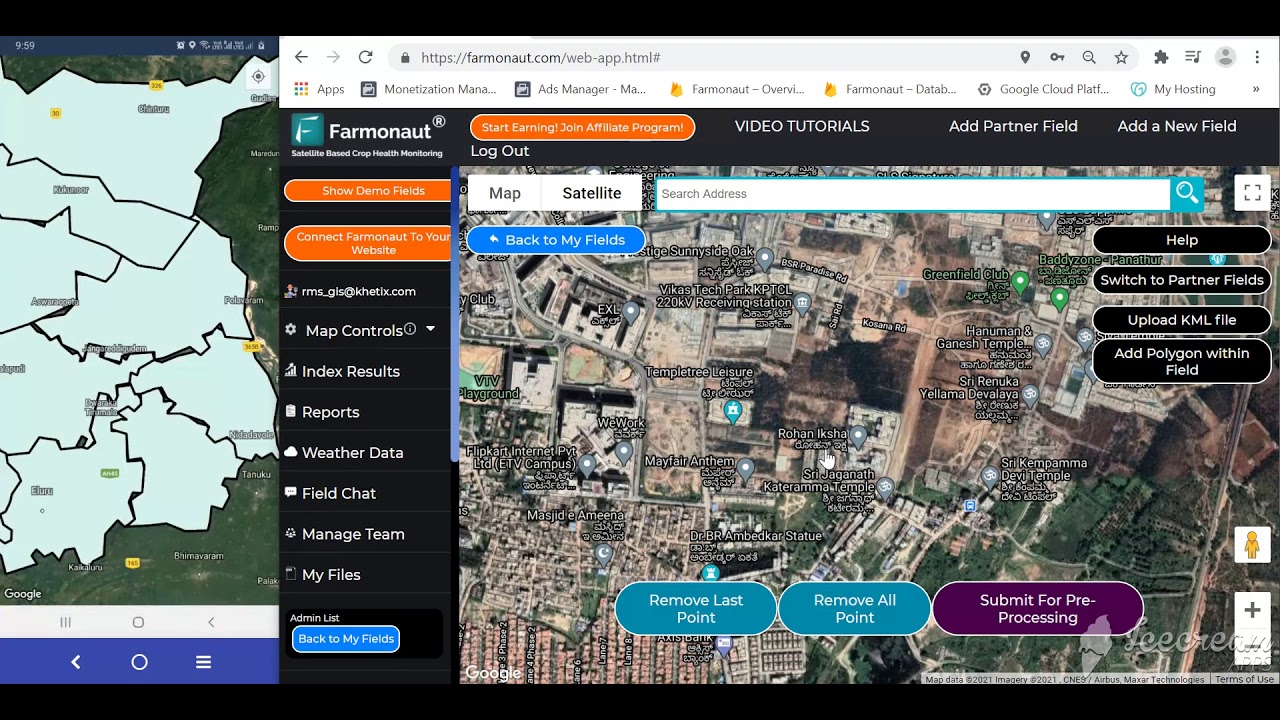
- Satellite technology, as provided by companies like Farmonaut, offers powerful remote sensing tools for monitoring vegetation health, land use, and ecosystem change—essential for measuring carbon sequestration and footprinting post-mining.
- Artificial intelligence (AI) and blockchain advance transparency, resource management, and supply chain traceability (see Farmonaut Traceability solutions), addressing the growing demand for verified sustainable minerals.

Comparative Impact Table—Traditional vs. Sustainable Lithium Mining (2026 Projections)
The following table compares the most prevalent lithium mining methods, focusing on estimated global market share, water and carbon impacts, land disturbance, and the potential for recycling and circularity by 2026:
| Mining Method | Estimated Global Market Share (2026) | Water Use per Ton (m³) | CO₂ Emissions per Ton (tons) | Land Disturbance (ha/ton) | Recyclability Potential (%) |
|---|---|---|---|---|---|
| Open-pit (Hard-rock/Spodumene) | 44% | 180-250 | 10-18 | 0.40 | Low (10–20) |
| Brine Extraction | 39% | 400-500 | 8-12 | 0.14 | Moderate (20–30) |
| Direct Lithium Extraction (DLE) | 12% | 80-120 | 5-8 | 0.09 | Moderate-High (35–50) |
| Battery Recycling | 5% | <30 | 2-4 | 0.03 | Very High (90+) |
Note: Figures represent industry-average projections and estimates for 2026, reflecting both current and anticipated technology adoption rates.
How Satellite Technology (Farmonaut) is Transforming Sustainable Mining
Satellite data and digital innovations are revolutionizing the way electric car lithium mining operations tackle sustainability. At Farmonaut, we offer advanced satellite-based solutions that empower miners, regulators, and environmental stewards to monitor, manage, and optimize every stage of lithium mining—ensuring that the transition toward clean transportation does not come at the expense of our planet.
- Real-time Environmental Monitoring: Using satellite imagery and AI, we help mining operators track land disturbance, vegetation health, and water use. This supports rapid response to environmental risks and informed restoration efforts.
- Blockchain-based Traceability: Our traceability tools (Product Traceability Solutions) enable companies to document their lithium from extraction to recycling, providing transparent and tamper-proof supply chains.
- Carbon Footprint Tracking: Farmonaut’s carbon footprint analysis tools (Carbon Footprinting) allow organizations to measure and manage carbon emissions, helping achieve sustainability targets and regulatory compliance.
- Resource and Fleet Management: Our fleet management solution streamlines the oversight of mining equipment, reduces operational inefficiencies, and minimizes the environmental footprint through optimal logistics and resource use.
- Remote Sensing for Restoration: We provide post-mining land monitoring for ecosystem recovery and compliance reporting, supporting goals for carbon sequestration and sustainable land use.
With our state-of-the-art API (Farmonaut API), application developers and enterprises in the lithium sector can integrate satellite-based insights into their systems—driving smarter, data-driven, and sustainable mining practices throughout the supply chain. For detailed technical guidance, access our API Developer Docs.
Explore Farmonaut’s large-scale monitoring capabilities for multi-site lithium mining operations and their effect on land management and reclamation.
Strategic and Ethical Considerations for the EV Mining Future
As the demand for electric vehicles and lithium grows, so do the responsibilities of industry leaders, communities, and policymakers. Balancing ecological health, economic benefit, and social equity is at the heart of future-ready mining strategies in 2026 and beyond.
- Supply Chain Transparency: With rising scrutiny from consumers and regulators, traceable and ethical lithium supply chains are now the gold standard—especially for major automakers and technology brands worldwide.
- Environmental Regulations: Governments in countries like Australia, Canada, Chile, and Argentina are stepping up oversight, requiring stricter water, emissions, and land use reporting for mining operations.
- Community Engagement: Transparency, shared economic benefits, and active participation of local stakeholders—including indigenous groups and agricultural producers—are essential for a fair energy transition.
- Technological Collaborations: The future of sustainable mining lies in adopting AI, satellites, blockchain, and advanced extraction methods for a 360-degree approach to environmental performance and resource stewardship.
With Farmonaut’s satellite and AI-powered tools, we are committed to supporting a responsible, sustainable path for electric car lithium mining—empowering businesses, communities, and governments to shape a cleaner, more inclusive future.
Frequently Asked Questions: Electric Car Lithium Mining (2026)
What is electric car lithium mining and why does it matter?
Electric car lithium mining refers to the extraction of lithium for use in rechargeable batteries that power electric vehicles. It matters because lithium is a critical component for high-efficiency, long-life batteries, making it pivotal for a global transition toward cleaner transportation and the reduction of carbon emissions.
What are the main environmental impacts of lithium mining?
Key impacts include water scarcity (especially via brine extraction in arid regions), land disturbance and biodiversity loss (notably from spodumene mining), carbon and other emissions, and waste generation. These impacts can threaten local agriculture, water resources, and communities if not carefully managed.
How are mining companies making electric car lithium mining more sustainable?
Through innovations such as Direct Lithium Extraction (DLE), closed-loop water systems, renewable energy integration, robust restoration and reclamation programs, and increased use of recycled lithium from end-of-life batteries. Blockchain and satellite-based monitoring increase transparency and help reduce risks across the supply chain.
How can satellite technology help lithium mining operators and regulators?
Satellite analytics (such as those provided by Farmonaut) can deliver real-time assessments of land condition, vegetation health, carbon emissions, and environmental compliance. This data helps optimize operations, manage resources, and demonstrate sustainability performance to regulators and stakeholders.
What is the role of battery recycling in reducing the impacts of lithium mining?
Recycling recovers critical materials from end-of-life EV batteries, reducing the need for new resource extraction. This helps cut waste, conserve land and water, and improves the overall sustainability of electric vehicle supply chains.
Are there global standards for sustainable lithium mining?
As of 2026, a growing set of global and regional standards has emerged—including environmental, social, and governance (ESG) criteria, supply chain traceability requirements, and specific government targets—especially for water use, emissions, and local community engagement.
Conclusion: Electric Car Lithium Mining in the Era of Sustainable Transportation
The next chapter in electric car battery lithium mining is being written today. Demand is set to continue its meteoric rise through 2026 and beyond, but so is our collective responsibility to ensure this resource powers a cleaner world—without compromising natural resources, community wellbeing, or long-term ecological health.
- Sustainable innovations—from DLE to recycling and blockchain traceability—are already reshaping the sector.
- Governments and industry must strive to implement best practices for water use, emissions control, waste reduction, and community partnership.
- Satellite technology, AI, and real-time monitoring—like those delivered by Farmonaut—will drive transparency, efficiency, and lasting sustainability across all electric car lithium mining operations.
- Circular supply chains and robust regulations are critical to reduce the sector’s ecological footprint and support both environmental and societal resilience.
By embracing innovation, accountability, and cross-sector collaboration, the electric vehicle and lithium mining industries can together fuel the transition toward a clean energy future—ensuring that every EV on the road delivers true benefits for the planet and generations to come.
Want to start your own journey toward sustainable mining and precision resource management? Experience Farmonaut Satellite Technology today on our web & mobile apps or easily integrate with your enterprise platform via the Farmonaut API!

 Lithspo Minerals Limited
 Tintina Mining Group
 Dalgety Minerals Pty Ltd
 Vortex Minerals Pty Ltd
 Faith At Work (Pty) Ltd
 Geotech Mining Solutions plc
 Vulcan International Limited
 Kidepo Associates
 GKY Mining
 Alkimy SARL
 Double A Trading
 GemSprout Metals Limited
 Qader Group
 Ileys General Trading
 SG Gold Mining LLC
 VRV Global Pte Ltd
 Omsri International FZE
 G.I.T.T.
 Jaunita Erss Ltd
 Almosi SARL
 SRK Consulting
 Berks Gold Limited
 Mwerezi Minerals Company Limited
