

Mine reclamation · Step-by-step guide
Mine Land Restoration: 7 Steps, Bonds and Timelines
US mine reclamation runs in seven steps, from a costed plan to staged bond release. Coal bonds release 60% after regrading and drainage control, and the plant standard must be met in any 2 years of the 5 or 10 year responsibility period (30 CFR 800.40 and 816.116).
Key takeaways
- Coal operators release 60% of the bond after backfilling, regrading and drainage control; the rest waits for revegetation and the responsibility period (30 CFR 800.40).
- The responsibility period is at least 5 full years above 26 inches of annual rain and 10 full years at 26 inches or less (30 CFR 816.116).
- Vegetation counts as successful at 90% of the standard, tested at 90% confidence, and must be met in any 2 years of the 5 or 10 year period (30 CFR 816.116).
- BLM hardrock guarantees must cover what a third-party contractor would charge to reclaim the site (43 CFR 3809.552).
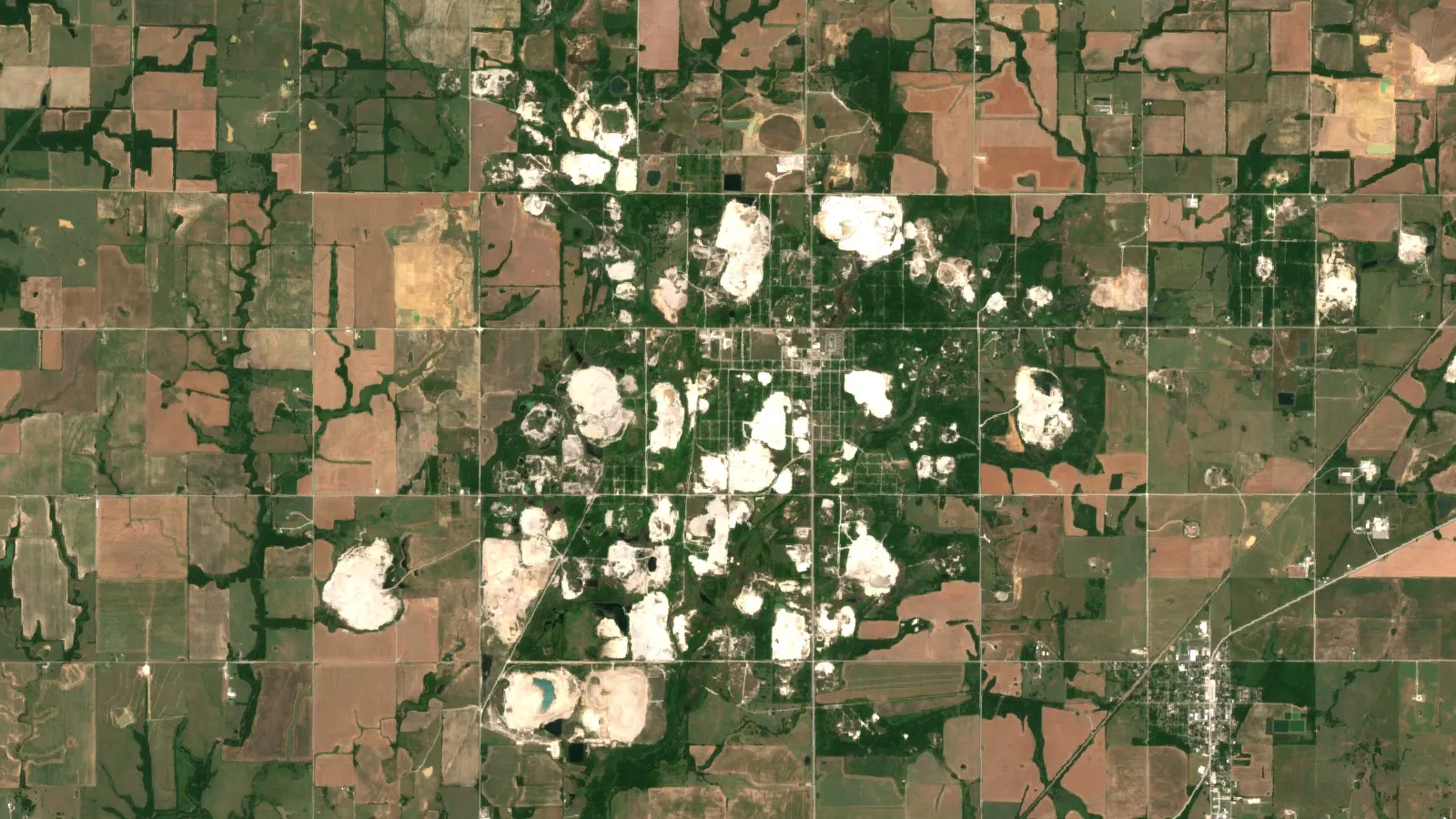
- Across 123 Tar Creek sites, satellite data showed vegetation recovering in 3.5 years on average (Smith and others, 2024).
In this article
- Mine land restoration: what US rules require
- Mine land restoration in 7 steps
- Reclamation bonds: how much is released and when
- How long until reclaimed land counts as restored
- Who pays when a mine has no owner
- Estimate your own reclamation guarantee
- Checking recovery from space
- Frequently asked questions
Mine land restoration: what US rules require
Restoring a mine means moving rock, soil and water back into a stable shape and growing plants on the result. In the United States the law that decides how this works depends on the mineral. Surface coal mines follow the federal Surface Mining Control and Reclamation Act (SMCRA) and its rules in 30 CFR 816. Hardrock mines (gold, copper, silver and similar) on federal land follow the Bureau of Land Management (BLM) surface management rules in 43 CFR 3809, plus state law. The steps below are the same ones those rules spell out, in the order a site team does them.
A word on terms. Reclamation is the legal word: the land must reach a use the regulator has approved, such as pasture, forest or wildlife habitat. Restoration is a stricter aim, rebuilding the original ecosystem. Most permits ask for reclamation, and some sites aim higher. The Society for Ecological Restoration standards say restoration should be judged against clear goals using measurable indicators (Gann and others, 2020 overview of the second edition), which is also how the coal rules work.
| Step | What the rule says | Where it is written |
|---|---|---|
| 1. Plan and guarantee the cost | Hardrock operators post a financial guarantee sized to a third-party clean-up | 43 CFR 3809.551 and 3809.552 |
| 2. Salvage topsoil | Remove topsoil as a separate layer before any digging or blasting | 30 CFR 816.22 |
| 3. Backfill and regrade | Return to approximate original contour; remove highwalls, spoil piles and depressions | 30 CFR 816.102 |
| 4. Control drainage | Drainage control is part of the first bond-release stage | 30 CFR 800.40 |
| 5. Replace topsoil and plant | Revegetate for the approved land use | 30 CFR 816.116 |
| 6. Prove success | Cover and production at 90% of the standard, met in any 2 years of the 5 or 10 year responsibility period | 30 CFR 816.116 |
| 7. Release the bond in stages | 60% at the first stage, the rest after revegetation and the responsibility period | 30 CFR 800.40 |
The table covers US coal and BLM hardrock rules only. State programs, other countries and private land can differ, so a consultant should read the permit conditions for the actual site.
Mine land restoration in 7 steps
1. Plan and guarantee the cost before ground is disturbed
Reclamation starts on paper. For hardrock work on BLM land the operator chooses one of three forms of financial guarantee: an individual guarantee for one notice or plan of operations, a blanket guarantee for several operations, or proof of an existing state guarantee (43 CFR 3809.551). An individual guarantee must cover the estimated cost as if BLM hired a third-party contractor to do the reclamation, including treatment facilities needed to meet federal and state standards (43 CFR 3809.552). Because the guarantee is priced on a third party doing the work, a realistic plan and cost estimate matter.
Infographic
From plan to bond release
- 1Plan and guaranteeCost the work and post the guarantee.
- 2Salvage topsoilStrip it as a separate layer and protect it.
- 3Backfill and regradeReturn a stable shape and remove highwalls.
- 4Control drainageManage runoff and treat water.
- 5PlantReplace topsoil and seed for the approved use.
- 6Prove and releaseSample against the standard, then release the bond in stages.
What to put in the plan: a baseline of soil, slopes, streams and vegetation before disturbance; the final landform; where topsoil will be stored; and the land use the owner wants afterwards. A baseline map made before work starts is the cheapest evidence you will ever have of what “restored” means for that site.
2. Strip and store topsoil as a separate layer
Topsoil holds the seeds, fungi and nutrients that plants need. The coal rule requires all topsoil to be removed as a separate layer and kept apart, after the vegetation is cleared but before drilling, blasting or mining begins. Where topsoil is under 6 inches thick, the operator may remove it together with the material just below and treat the mix as topsoil. Stockpiles must sit on a stable site, be protected from contamination, compaction, wind and water erosion, and be covered quickly with fast-growing plants (30 CFR 816.22).
Age matters. In an arid-zone study in Western Australia, perennial plants emerged more than four times as often from fresh topsoil as from topsoil stored for one year, and about twice as often as from the bottom 50 cm of 2 m-high stockpiles stored for three years (Golos, Dixon and Erickson, University of Western Australia). The practical lesson is to move topsoil straight onto regraded ground whenever the schedule allows, and to keep stockpiles from burying seed deeper than needed when it does not.
3. Backfill and regrade to a stable shape
The coal rule asks for backfilling and grading to the approximate original contour, with highwalls, spoil piles and depressions eliminated, apart from listed exceptions. The finished slope must not exceed the angle of repose, or a lesser angle needed to reach a long-term static safety factor of 1.3 (30 CFR 816.102). A safety factor of 1.3 means the forces holding the slope in place are 30% larger than the forces trying to move it. Hardrock mines follow the plan approved in their own permit.
4. Control drainage and treat water
Water is the part of restoration that can last longest. In the US coal rules, drainage control is one of three works that earn the first bond release, alongside backfilling and regrading (30 CFR 800.40). Acid mine drainage, which is acidic water rich in metals from exposed sulfide rock, can need treatment for decades. For abandoned coal sites, federal law lets states spend up to 30% of their Bipartisan Infrastructure Law grants on acid mine drainage abatement (OSMRE fact sheet, 17 July 2023). For hardrock sites, BLM guarantees must also cover treatment facilities and their upkeep.
5. Put topsoil back and plant for the approved land use
Seed mixes, tree planting and mulch follow the land use the permit approves. The coal rules measure success differently by use. Grazing land and cropland are compared with a reference area. Habitat, forest and recreation land are judged on tree and shrub stocking plus ground cover, and counted trees must have survived at least two growing seasons (30 CFR 816.116).
6. Prove it with sampling, not photos
Regulators do not accept “it looks green”. The coal rule sets success standards from unmined land in the area. Ground cover, production or stocking is treated as equal to the standard when it reaches at least 90% of it, tested with a 90% statistical confidence interval. Sampling methods have to be written down and made public (30 CFR 816.116). Pick reference areas and sample plots at the start of the project, not at the end.
7. Release the bond in stages and keep monitoring
The last step is financial. The bond is the money the regulator holds so the work gets done even if the operator walks away. The sections below show how much is released and when. Monitoring continues until the final release, and good teams keep a record of rainfall, plant counts and water chemistry for the file.
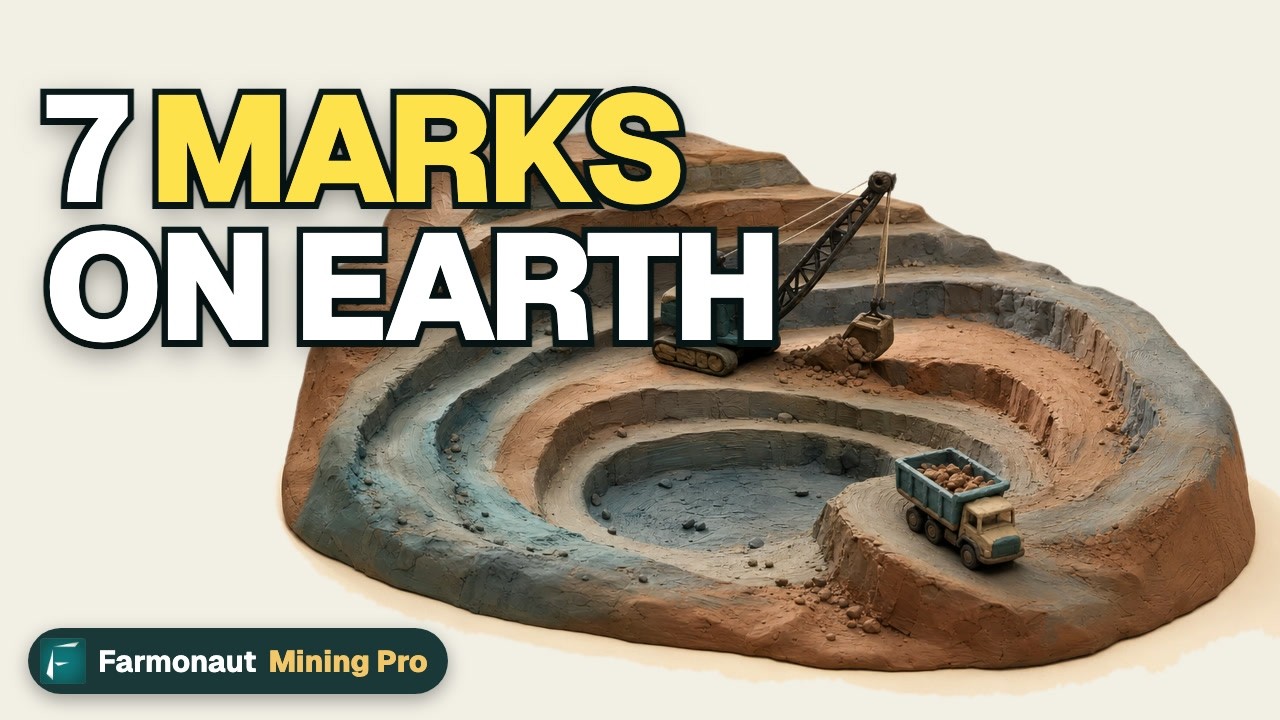
▶ The seven main environmental impacts of mining, explained in plain words with a claymation. · 2:31
Reclamation bonds: how much is released and when
Under the federal coal bond-release rule, the regulator may release 60% of the bond once the operator has finished backfilling, regrading (which can include topsoil replacement) and drainage control on a bonded area. A second release follows after revegetation is established, but the regulator must keep enough to pay a third party to re-establish vegetation if needed. The remainder is released only after the operator has finished all work and the responsibility period has expired (30 CFR 800.40).
Chart
Federal coal bond: first release
Percent of the bond for an area, under 30 CFR 800.40(c)
The process is public. After a release application is filed, the operator must advertise it once a week for four weeks in a local newspaper and notify neighbors, local governments and water suppliers. The regulator must inspect within 30 days, or as soon as weather allows, and must give a written decision within 60 days if no public hearing is held (30 CFR 800.40). The surface owner can take part in the inspection, and anyone with a legal interest that the release could harm can file written objections within 30 days of the last notice and ask for a hearing.
Hardrock rules work differently. BLM guarantees cover the estimated cost of third-party reclamation, and BLM reviews the estimate and can require more coverage (43 CFR 3809.552). The 60% figure above comes from the coal rule and is not a hardrock rule.
How long until reclaimed land counts as restored
For coal land, the minimum period of responsibility depends on rainfall. In areas with more than 26 inches of average annual precipitation it is at least five full years. In areas with 26 inches or less it is at least ten full years. For lands eligible for remining, the minimums fall to two years and five years. The clock starts after the last year of seeding, fertilizer, irrigation or other added work, and for grazing land, pasture and cropland the standard must be met in any 2 years of that period (not the first year in the five-year case, and only after year six in the ten-year case) (30 CFR 816.116).
Chart
Minimum years of responsibility for revegetation
US coal land, years after the last added seeding or fertilizer
Satellite studies track how fast plants return, which a legal responsibility period does not measure. At the Tar Creek Superfund site in Oklahoma, researchers tracked 123 cleaned-up mine-waste sites with Landsat and PlanetScope imagery over more than 20 years. They found vegetation took an average of 3.5 years to recover, at a mean rate of 0.1 NDVI per year, and plateaued at an average NDVI of about 0.70. About 70% of reclaimed area held continuous cover from 2017 to 2023 (Smith and others, Discover Geoscience, August 2024). NDVI is a vegetation index from satellite colors, where bare ground scores near zero and dense plants score higher.
Who pays when a mine has no owner
Old mines were often left without any reclamation. BLM says many mines on its land were abandoned before 1 January 1981, that it is rare to find a financially responsible party because of the age of the sites, and that as many as half a million abandoned mines are believed to exist, with many more unlocated (BLM Abandoned Mine Lands).
Chart
Abandoned mine reclamation fee per ton of coal
Cents per ton: before and after the 2021 Bipartisan Infrastructure Law
For abandoned coal land the money comes from a per-ton fee on coal mined today. The statute sets the fee at 22.4 cents per ton for surface coal and 9.6 cents per ton for underground coal (or 10% of value, whichever is less), payable through 30 September 2034 (30 U.S.C. 1232). The 2021 Bipartisan Infrastructure Law cut those rates by 20% and added $11.293 billion for the Abandoned Mine Reclamation Fund, paid out at $725 million a year to the 23 states and the Navajo Nation that are eligible. In the 17 July 2023 fact sheet the largest annual grants went to Pennsylvania ($244.9 million), West Virginia ($140.8 million) and Illinois ($75.8 million) (OSMRE).
For investors and consultants the point is liability. A site with a thin bond can become a public cost. BLM reviews its estimate of reclamation cost periodically and can require more coverage (43 CFR 3809.552).
Estimate your own reclamation guarantee
The calculator below turns a disturbed area and a cost per acre into a total guarantee and shows the 60% first-stage release that applies to coal bonds. Replace the example numbers with quotes from earthmoving and revegetation contractors for your site. For hardrock projects use it only as a rough check, since the regulator sets the amount.
Calculator
What might your reclamation guarantee be?
Enter your disturbed area and contractor quotes.
- Released after backfill, regrade, drainage: $552,000
- Held until revegetation and final release: $368,000
- Cost per acre with contingency: $9,200
Example values only, not a benchmark or a quote. The 60% first-stage release is the coal figure in 30 CFR 800.40(c); hardrock amounts are set by the regulator. Money is in US$; use your own quotes.
Checking recovery from space
Field sampling is expensive and slow, and repeat satellite images are a low-cost way to see whether plants are coming back across a whole permit. The Tar Creek authors still note that more work is needed to show which measurements satellites can estimate reliably, so imagery supports the field plots and does not replace them. Typical uses are a baseline map before disturbance, a yearly vegetation index for each reclaimed block, and a flag for areas that stay bare.
Farmonaut builds satellite mineral-detection reports for licence areas and can map a site for a consultant or owner; the output is an exploration and mapping input and not an environmental clearance. See satellite-based mineral detection, or ask for a quote through the mining query form or contact page. Related reading on this site: New Mexico mining act and claims, South Dakota permits and satellite exploration in the United States.
▶ Remote sensing for mining in three minutes: what satellites can measure from a distance. · 2:01
Related reading on this site: Mining Act of 1872: 7 Steps to Protect Land and Rights.
We cover a connected topic in Golden Sunlight Mine Montana: Reclamation Status.
Frequently asked questions
What is the difference between mine reclamation and mine restoration?
Reclamation returns land to a use the regulator approves, such as pasture or habitat. Restoration aims to rebuild the original ecosystem. Permits are usually written for reclamation.
What are the main steps in restoring a mine site?
Plan and guarantee the cost, salvage topsoil, backfill and regrade, control drainage, replace topsoil and plant, prove vegetation success by sampling, and release the bond in stages.
How long does mine reclamation take?
For US coal land the responsibility period is at least five full years in wetter areas (over 26 inches of rain) and ten in drier areas, counted after the last added seeding or fertilizer; the plant standard must be met in any 2 years of that period. Water treatment at some sites lasts much longer.
What is a reclamation bond?
It is money or a guarantee held by the regulator to cover clean-up if the operator fails. Coal bonds are released in three phases, with 60% available after backfilling, regrading and drainage control.
How much does mine reclamation cost?
There is no single national price. For BLM hardrock sites the guarantee must equal the cost of a third-party contractor doing the approved plan, so the number comes from site quotes. Use the calculator above with your own cost per acre.
Why does topsoil have to be stored separately?
It holds the seed bank and nutrients. Federal coal rules require it to be removed as its own layer and protected, and one study found perennial seedling emergence fell as stockpiles aged.
Who pays to restore abandoned mines?
For coal, a per-ton fee on current production funds state programs, boosted by $11.293 billion from the Bipartisan Infrastructure Law. For hardrock sites on BLM land, BLM works on them using a risk-based approach with federal, state and local partners.
Can satellites show whether a mine has been restored?
They show vegetation cover and change over time, such as NDVI trends. They do not show soil chemistry or water quality, which need field samples.
Does restored land have to look the way it did before mining?
For coal, land is returned to approximate original contour unless an exception applies, and vegetation is judged against reference areas. The land use itself can change if the regulator approves.
Can a restored mine become farmland or forest?
Yes, when the approved plan says so. Cropland success is compared with a reference area, and forest success uses tree and shrub stocking with ground cover.
This page is for information only. It is not legal advice. Confirm the rules with the regulator. Rules differ by state, mineral and land ownership.
Farmonaut mining
Map your mining site from space
Farmonaut maps a licence area from satellite data so consultants can see ground conditions before field work.
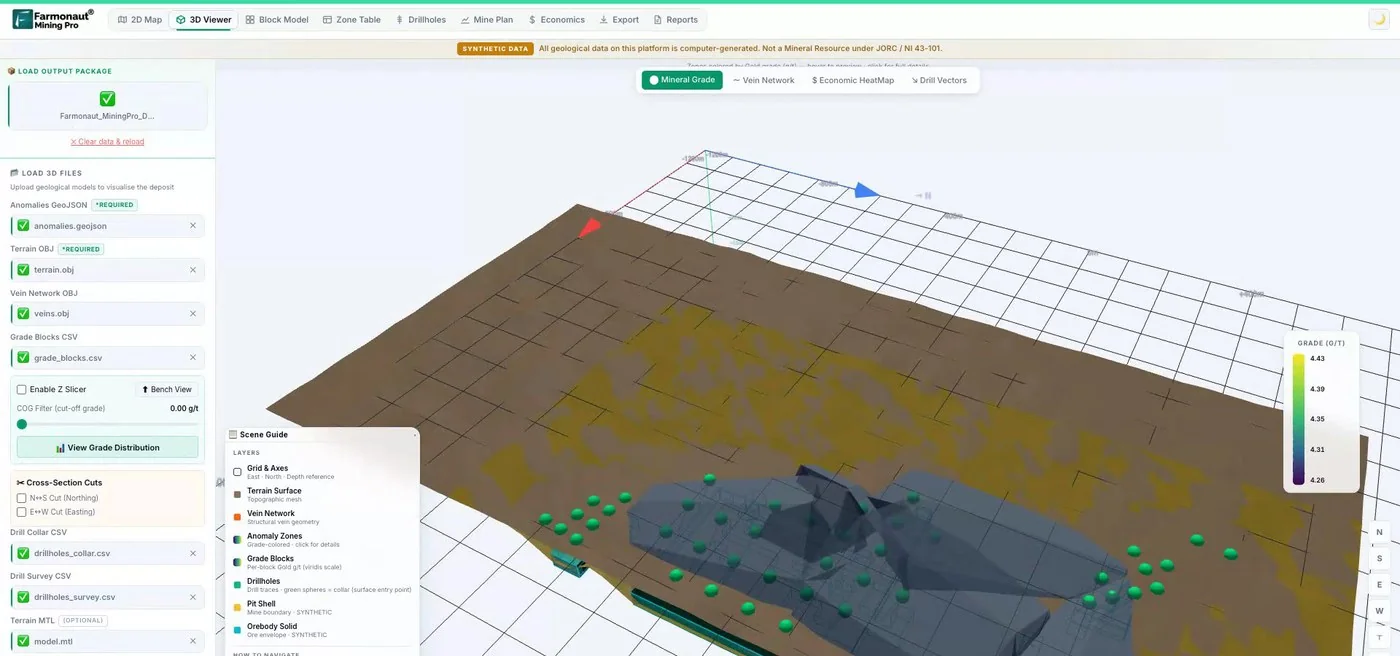
Mining Pro sample view, synthetic data
Keep reading
Sources
- Legal Information Institute, 30 CFR 800.40 (bond release): law.cornell.edu
- Legal Information Institute, 30 CFR 816.116 (revegetation success): law.cornell.edu
- Legal Information Institute, 30 CFR 816.22 (topsoil): law.cornell.edu
- Legal Information Institute, 30 CFR 816.102 (backfilling and grading): law.cornell.edu
- Legal Information Institute, 30 U.S.C. 1232 (reclamation fee): law.cornell.edu
- Legal Information Institute, 43 CFR 3809.551 (BLM guarantee choices): law.cornell.edu
- Legal Information Institute, 43 CFR 3809.552 (individual guarantee): law.cornell.edu
- OSMRE, Bipartisan Infrastructure Law fact sheet (17 July 2023): osmre.gov
- BLM, Abandoned Mine Lands: blm.gov
- University of Western Australia, Golos, Dixon and Erickson, topsoil stockpile seed bank study: research-repository.uwa.edu.au
- Smith and others, Discover Geoscience (August 2024), Tar Creek remote sensing: doi.org
- Gann, International principles and standards for the practice of ecological restoration: an overview of the second edition (5 March 2020): regionalconservation.org
Discussion
Questions, corrections or field experience? Share them below. First-time comments are reviewed before they appear, and your email is never published.
No comments yet. Be the first to add a question or your experience.

 Imperial Impex FZE
 Congo Mining Solutions
 Mining SARL
 SenGold Invest SAS
 Sania Corporation
 Sean Mining Limited
 NTS Group (Pty) Ltd
 Mine4Africa
 Lithspo Minerals Limited
 Tintina Mining Group
 Dalgety Minerals Pty Ltd
 Vortex Minerals Pty Ltd
 Faith At Work (Pty) Ltd
 Geotech Mining Solutions plc
 Vulcan International Limited
 Kidepo Associates
 GKY Mining
 Alkimy SARL
 Double A Trading
 GemSprout Metals Limited
 Qader Group
 Ileys General Trading
 SG Gold Mining LLC










