

Mining Equipment Performance Data: Scenario, Variance & Correlation Analysis for 2025
- Introduction: Equipment Performance Analytics in the Mining Industry
-
Why Mining Equipment Performance Data Analytics Is Indispensable
- The Fundamental Challenges
- The Rise of Advanced Data Strategies
-
Mining Equipment Performance Data Scenario Analysis
- What Is Scenario Analysis?
- Examining Hypothetical Situations in Mining Operations
- Key Scenarios and Variables Impacting Equipment Performance
- Benefits and Practical Applications of Scenario Analysis
- Tools for Automated Scenario Analysis in Mining
- Farmonaut and Scenario Analysis
-
Mining Equipment Performance Data Variance Analysis
- Defining Variance Analysis in Mining Context
- Metrics, Benchmarks, and Variance Interpretation
- Detecting Inefficiencies & Root Causes
- Variance Analysis in Planning and Financial Management
- Automated Variance Analysis and Mining Tech
- Farmonaut’s Satellite-Aided Variance Analysis
-
Mining Equipment Performance Data Correlation Analysis
- Introduction to Correlation Analysis
- Understanding Complex Relationships Among Equipment Factors
- Optimizing Operations via Correlation Analysis
- Enabling Predictive Maintenance
- Real-World Examples from 2025 and Beyond
- Farmonaut’s Role in Empowering Correlation Analysis
- Comparative Equipment Performance Analytics Table
- Implications for Future Mining Operations: Safer, Smarter, and More Efficient
- Farmonaut: Making Mining Equipment Analytics Accessible
- Solutions Overview
- AI, Satellite & Environmental Monitoring
- Fleet, Traceability & Carbon Management
- Access Farmonaut Solutions
- FAQ: Mining Equipment Performance Data Analytics
- Conclusion
Unlocking Mining Equipment Performance Insights in 2025
Mining equipment performance data scenario analysis, variance analysis, and correlation analysis represent the future of efficient and safe mining operations. The mining industry is on the verge of a technological revolution, and by 2025, data-driven insights will be indispensable for maximizing equipment utilization, optimizing operational strategies, reducing downtime, and enhancing overall productivity.
Across sectors, advanced analytics will forever change how mining businesses manage key assets—from excavators and haul trucks to specialized drills and crushers. Understanding and leveraging scenario, variance, and correlation analyses are not just best practices; they are essential strategies for mining companies striving to thrive in an increasingly complex and competitive environment.
Why Mining Equipment Performance Data Analytics Is Indispensable
The Fundamental Challenges
Mining equipment is pushed to its limits under demanding environmental, operational, and financial conditions. Excessive load, unpredictable weather, complex operational schedules, and variable human factors can all impact equipment performance—resulting in costly downtime and safety risks. As equipment becomes more advanced and interconnected, leveraging comprehensive data analytics is crucial for:
- Identifying underperformance, inefficiencies, and abnormal behavioral patterns in machinery
- Predicting potential failures and minimizing downtime
- Optimizing resource allocation and extending asset life
- Improving safety and reducing financial risk
The Rise of Advanced Data Strategies
By 2025, mining companies increasingly rely on comprehensive, data-driven approaches—including scenario analysis, variance analysis, and correlation analysis—to:
- Optimize equipment utilization
- Reduce unexpected downtime
- Enhance predictive maintenance
- Make informed operational decisions quickly and efficiently

Mining Equipment Performance Data Scenario Analysis
What Is Scenario Analysis?
Scenario analysis in mining equipment performance data involves examining different hypothetical situations by manipulating key variables—like load, operating conditions, or maintenance schedules—to forecast possible outcomes for mining machinery and operations.
By simulating multiple conditions, operators and managers proactively explore the impact of changes before they occur—facilitating proactive management and strategy refinement.
Examining Hypothetical Situations in Mining Operations
The power of mining equipment performance data scenario analysis lies in its ability to model and anticipate outcomes under numerous what-if case studies.
For instance:
- Increased Haul Truck Payload: Operators simulate increased load levels in haul trucks to anticipate additional stress points, higher fuel consumption, or wear patterns.
- Adverse Weather: Simulation of adverse weather conditions allows mine operators to forecast possible failure points, changes in productivity rates, and risk of hazards.
- Operating Schedule Variations: Adjusting maintenance schedules or shift timings helps determine optimal resource use and avert costly breakdowns.
Key Scenarios and Variables Impacting Equipment Performance
Scenario analysis typically evaluates:
- Changes in load (e.g., lighter vs. heavier payloads)
- Operating conditions (ranging from harsh climates to underground vs. open-pit mining)
- Differing maintenance schedules and resources allocation strategies
- Environmental influences (temperature, humidity, dust levels)
- Human factors (operator behavior, training, shift patterns)
By simulating these scenarios, mining operators and managers pinpoint vulnerable points, consumption variations, and evolving wear patterns—enabling proactive decision-making and contingency planning.

Benefits and Practical Applications of Scenario Analysis
Some of the most significant benefits of mining equipment performance data scenario analysis include:
- Anticipating Equipment Stress Points: Understand the likely impact of increased utilization, higher loads, or environmental changes.
- Optimizing Resource Allocation: Managers can allocate resources more effectively, reducing costs while maximizing machine life and safety.
- Scheduling Maintenance Ahead of Failures: Scenario analysis allows for predictive maintenance, reducing unexpected downtime and associated financial risks.
- Supporting Risk Management: By highlighting vulnerabilities and hazard points under different operational states, firms can establish robust contingency plans to minimize loss and safety hazards.
Tools for Automated Scenario Analysis in Mining
Modern scenario analysis harnesses:
- Sensor-rich IoT Devices: Capturing granular operational data at every stage
- AI-Powered Modeling Tools: Faster, data-driven simulations and projections
- Real-time Dashboards: Immediate, actionable insights for managers and operators
Farmonaut and Scenario Analysis
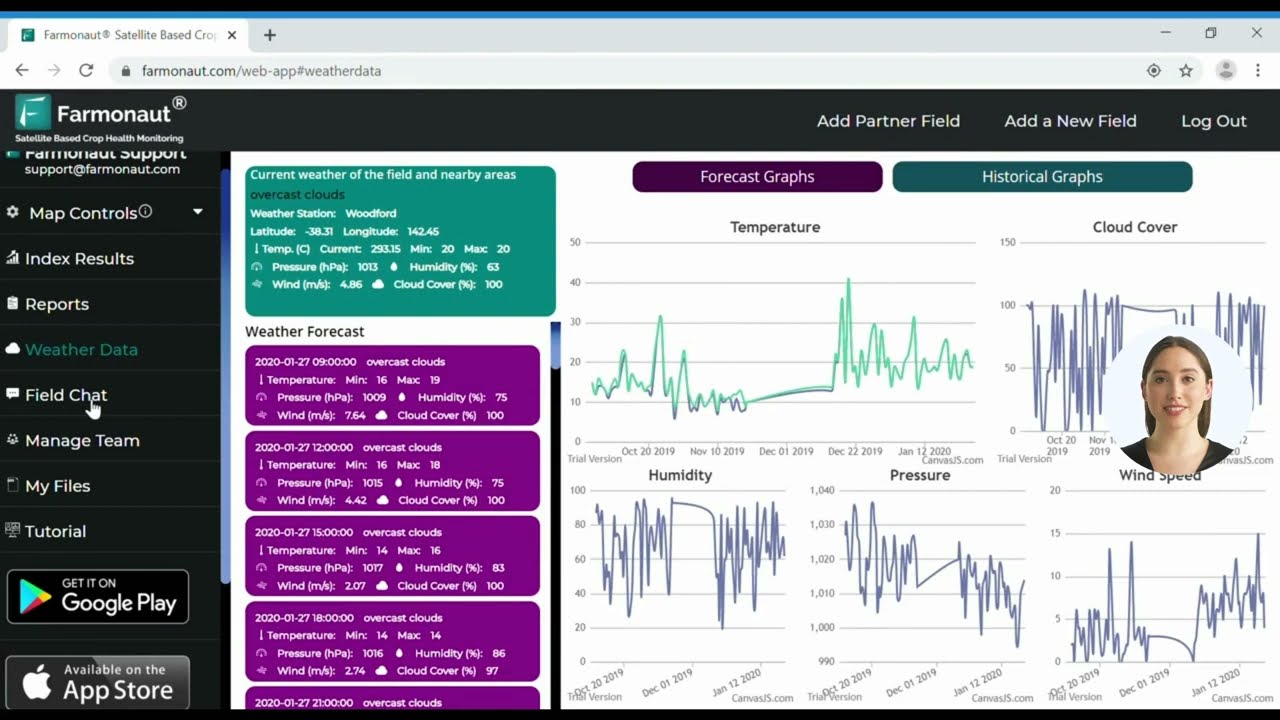
We at Farmonaut deliver satellite-driven insights that help mining operators and companies run scenario analyses with high-resolution environmental and operational data. By leveraging multispectral satellite imagery, clients can evaluate the real-world impact of weather changes, vegetation encroachment, and soil conditions on mining equipment performance.
To further enhance scenario-based planning, our users benefit from:
- Farmonaut App for real-time monitoring and AI-driven scenario planning
- Fleet Management tools to optimize vehicle usage and reduce operational costs
- Subscription packages suited for individual users, enterprises, and public sector mining organizations




For integration into existing enterprise systems, our API and Developer Docs make it easy to automate data-driven decision-making and analytics for mining operations.
Mining Equipment Performance Data Variance Analysis
Defining Variance Analysis in Mining Context
In the context of mining, variance analysis investigates deviations between actual equipment performance and expected benchmarks or standards. It identifies the difference between what should happen (baseline) and what actually does, providing a direct lens into inefficiencies, underperformance, or emerging abnormal behavior in machinery.
Metrics, Benchmarks, and Variance Interpretation
Commonly tracked metrics and benchmarks for mining equipment performance data variance analysis include:
- Utilization Rate (%): The percentage of scheduled operational time the equipment is actively used. Higher variance indicates unreliable use.
- Downtime (hrs/week): Number of unscheduled hours where equipment is non-functional.
- Output (tons/week): Actual material moved or processed compared against targets.
- Fuel Consumption: Variance from expected (baseline) consumption flags operational or mechanical issues.
- Mean Time Between Failures (MTBF): Variance from recommended MTBF highlights maintenance needs or poor design.
By relentlessly tracking metrics and comparing against planned or historical standards, companies flag deviations quickly, minimizing the impact of systemic faults or one-off failures.

Detecting Inefficiencies & Root Causes
Variance analysis is crucial for:
- Detecting Inefficiencies: For example, an excavator fleet consistently consumes more fuel than the baseline. The variance analysis flags this discrepancy, triggering investigation into potential causes like poor operator behavior, mechanical issues, or suboptimal mine design.
- Prompting Maintenance or Retraining: When variance points to mechanical failures or poor operational practices, managers can quickly dispatch maintenance crews or arrange staff retraining.
- Highlighting Hidden Risks: Persistent or growing variance warns of deteriorating asset health, requiring preventive action before catastrophic failures occur.
Variance Analysis in Planning and Financial Management
Understanding variance in equipment life cycles enables firms to:
- Refine cost forecasts for repairs, replacements, and spare parts inventory
- Set financial reserves for equipment upgrades and contingency plans
- Benchmark performance for continuous improvement

Automated Variance Analysis and Mining Tech
Today’s variance analysis relies on:
- Automated Data Integration: Real-time feeds from IoT sensors plug directly into analytics engines
- AI-Based Benchmarking: AI and machine learning algorithms continuously set new, dynamic baselines for performance
- Custom Alerts and Dashboards: Real-time visualization for instant notification of anomalous variance
Farmonaut’s Satellite-Aided Variance Analysis
Satellite technology dramatically enhances variance tracking. At Farmonaut, we deliver up-to-date geospatial and environmental data that supplements ground-based sensors, enabling mining companies to:
- Identify hidden negative environmental impacts leading to equipment underperformance
- Monitor site-wide conditions and performance variances even across remote locations
- Manage fleet performance with precision through georeferenced fleet and resource management tools
Leverage our carbon footprinting analytics for real-time environmental performance metrics, providing insights critical for variance management and regulatory compliance.
Mining Equipment Performance Data Correlation Analysis
Introduction to Correlation Analysis
Mining equipment performance data correlation analysis examines the relationships and dependencies between multiple variables within mining operations. It highlights how shifts in one factor (e.g., operator behavior, temperature, tire wear) drive or signal changes in key performance indicators.
Understanding Complex Relationships Among Equipment Factors
Multiple variables often interact in unexpected ways. By using correlation analysis, mining operators can:
- Identify Direct Relationships: e.g., Haul truck speed vs. tire wear rates; higher speeds may accelerate wear.
- Reveal Indirect Factors: e.g., Ambient temperature and equipment vibration could combine to affect mechanical failure rates.
- Map Systemic Dependencies: Interrelated metrics such as fuel consumption, operator behavior, and site topography.
Optimizing Operations via Correlation Analysis
By mapping these relationships, companies can:
- Optimize Machine Parameters: Adjust speeds, loads, and scheduling for improved equipment longevity
- Reduce Downtime: Spot the variables (and combinations) that most strongly predict potential failures
- Mitigate risk and plan maintenance schedules according to real-world operational correlations instead of fixed intervals
Enabling Predictive Maintenance
As mining equipment becomes increasingly instrumented and connected, correlation analysis feeds directly into predictive maintenance strategies—highlighting which sensor signals or operational variables reliably forecast breakdowns.
This automated approach bridges the gap between scheduled and truly data-driven maintenance scheduling, allowing for:
- Proactive intervention long before visible symptoms arise
- Lower maintenance costs and greater equipment uptime
- Reduced risk of catastrophic failures
Real-World Examples in 2025 and Beyond
Consider the following operational applications leveraging correlation analysis in mining equipment:
- Haul Truck Tire Monitoring: Predict wear rates by correlating operational speeds, load cycles, and ambient temperature from both onboard and satellite data
- Excavator Efficiency: Link operator behavior and environmental factors with fuel consumption for cost optimization
- Drill Rig Failure Prediction: Uncover strong correlations between vibration, temperature, and tool longevity—helping maintenance teams focus on early warning signals

Farmonaut’s Role in Empowering Correlation Analysis
Through real-time and historical satellite data, Farmonaut users can:
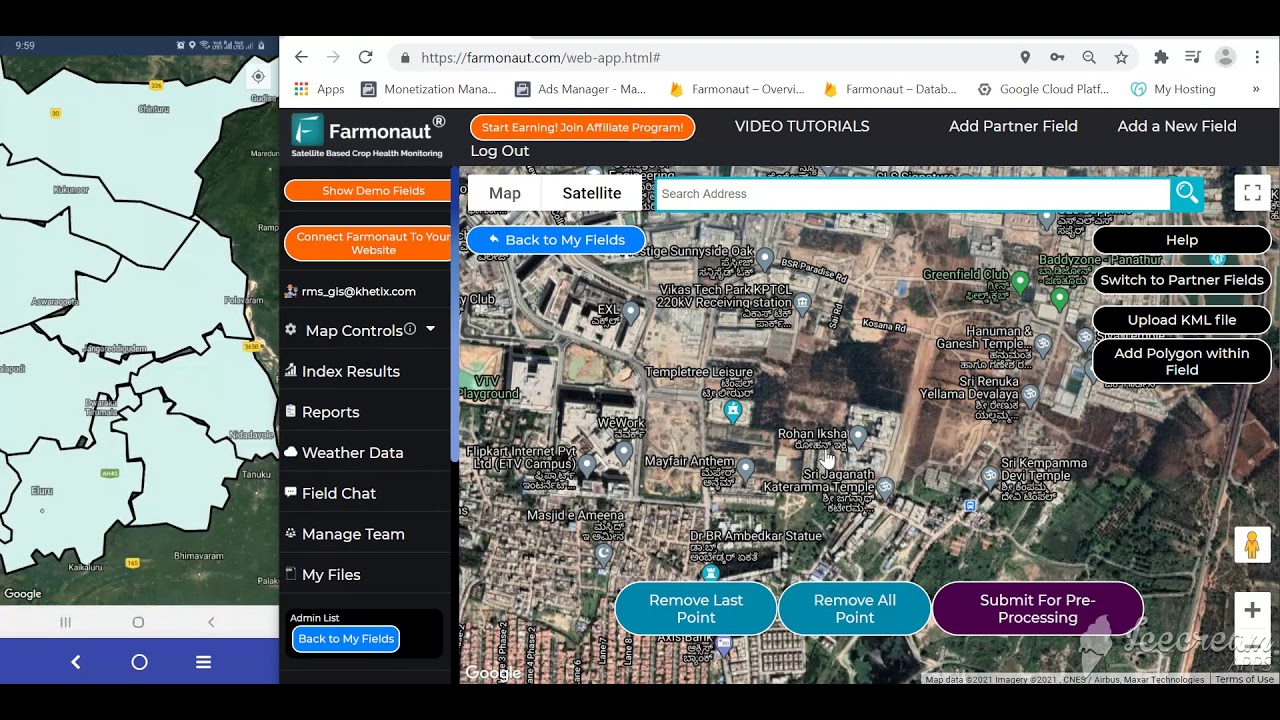
- Map multifaceted relationships between surface conditions, weather events, and machine health, providing a “macro” context that is often invisible to ground-based sensors alone
- Integrate blockchain-powered traceability to correlate operational events and supply chain anomalies seamlessly
Our insights make it possible for mining enterprises, operators, and site managers to enhance resource allocation, safety planning, and productivity forecasting.
Comparative Mining Equipment Performance Analytics Table (2025)
The following table provides a scenario-based overview of estimated key performance indicators (KPIs) of different mining equipment types. These analytics showcase how scenario analysis, variance analysis, and correlation analysis together provide actionable, quantifiable insights for management, fleet scheduling, predictive maintenance, and operational decision-making.
| Equipment Type | Scenario | Estimated Utilization Rate (%) | Estimated Downtime (hrs/week) | Estimated Output (tons/week) | Variance from Baseline (%) | Correlation with Production Metrics |
|---|---|---|---|---|---|---|
| Excavator | Standard Operation | 85 | 6 | 12,500 | 0 | Baseline |
| Excavator | High-Load | 79 | 10 | 13,200 | +8% | 0.72 – Output↑, Maintenance Cost↑ |
| Excavator | Scheduled Maintenance | 65 | 18 | 11,000 | -12% | 0.42 – Output↓, Reliability↑ |
| Haul Truck | Standard Operation | 88 | 5 | 30,000 | 0 | Baseline |
| Haul Truck | Increased Payload | 81 | 8 | 34,500 | +15% | 0.84 – Output↑, Tire Wear↑ |
| Haul Truck | Adverse Weather | 70 | 22 | 18,000 | -40% | 0.21 – Output↓, Incident Risk↑ |
| Drill | Standard Operation | 90 | 4 | 6,800 | 0 | Baseline |
| Drill | High-Usage | 77 | 12 | 7,300 | +7% | 0.79 – Output↑, Tool Wear↑ |
| Crusher | Standard Operation | 92 | 2 | 20,000 | 0 | Baseline |
| Crusher | Unscheduled Maintenance | 63 | 25 | 11,500 | -42% | 0.31 – Output↓, Reliability↓ |
Note: The above figures are estimated for illustrative purposes, reflecting how scenario, variance, and correlation analysis drive actionable mining equipment performance management.
Implications for the Future of Mining: Safer, Smarter, and More Efficient
By 2025, mining companies that fully leverage scenario analysis, variance analysis, and correlation analysis will possess a distinct competitive advantage. The integration of these analytics into unified equipment management systems promises:
- Greater Safety: Continuous equipment health monitoring, hazard anticipation, and risk management
- Lower Downtime: Automated early warning, faster root-cause analysis, and smarter maintenance scheduling
- Optimized Productivity: Data-driven resource allocation and minimized output losses
- Extended Asset Life: Predictive interventions and improved utilization strategies
- Financial Sustainability: Since companies can more accurately forecast costs, optimize budgets, and minimize unexpected capital loss
As digital twins and machine learning algorithms mature, they will enhance scenario, variance, and correlation analyses with even finer predictive precision and automated, actionable recommendations.
From Reactive to Predictive and Prescriptive
The future of mining equipment management will shift decisively from a reactive, “break-fix” approach to a predictive—and ultimately a prescriptive—paradigm. This fundamentally transforms operations by:
- Empowering fast, data-informed field decisions
- Reducing human error and unexpected equipment failures
- Enabling sustainable resource and environmental management
Farmonaut: Making Mining Equipment Analytics Accessible to All
We at Farmonaut are dedicated to democratizing access to advanced, satellite-powered mining intelligence. Here’s how our services empower users—from individual operators to enterprise-scale mining companies and governments:
Key Solutions Overview
- Satellite-Based Monitoring: Harness multispectral satellite data to monitor mining equipment, site conditions, and environmental impact in real-time
- AI-Driven Jeevn Advisory System: Get tailored operational and weather insights for scenario planning and predictive maintenance
- Blockchain Traceability: Secure supply chain and operational data with traceability solutions designed for the mining industry
- Advanced Fleet Management: Optimize equipment usage, logistics, and operational costs through fleet and machinery management tools
- Real-time Environmental Impact: Ensure compliance and sustainability with carbon footprinting monitoring
Seamless Multiplatform Access
- Available via our Android, iOS, and web apps
- Download the Farmonaut platform for scenario simulation, variance tracking, and analytics
- Integrate with enterprise systems using our API and developer documentation.
Our platform’s flexible, affordable subscription model ensures every mining operator—and every size of business—can tap into the future of equipment performance analytics.
Leverage Large-Scale Mining Operations & Resource Management
Mining enterprises with expansive operations can unlock the full benefits of satellite-based resource and large scale mining management tools. Achieve rapid scaling for monitoring, optimize workforce allocation, and implement site-wide variance/correlation tracking.
Enabling Sustainability and Financial Inclusion
Advanced satellite-based verification supports financial institutions in streamlining mining insurance and loan processing, enabling better risk management for lenders and easier access to financing for mining businesses. Sustainability officers value real-time environmental impact analytics to ensure regulatory compliance and foster responsible stewardship.
Frequently Asked Questions: Mining Equipment Performance Data Analytics
1. What is the importance of mining equipment performance data scenario analysis?
Mining equipment performance data scenario analysis allows operators to proactively forecast the effects of changing operational variables, such as load, weather, and maintenance. This helps identify potential failure points, optimize resource allocation, and reduce unscheduled downtime.
2. How does variance analysis improve mining equipment management?
Mining equipment performance data variance analysis identifies deviations from performance benchmarks. This process flags inefficiencies, triggers maintenance or retraining, and enhances financial planning by improving repair and replacement forecasting.
3. What is the role of correlation analysis in mining equipment performance?
Correlation analysis examines relationships between operational variables, revealing factors—sometimes hidden—that drive equipment failures or inefficiencies. This enables better predictive maintenance, lowers risk, and optimizes operational outcomes.
4. How can satellite data improve mining equipment performance analytics?
Satellite technology, as provided by platforms like Farmonaut, enhances data accuracy, enables monitoring across vast mine sites, and tracks environmental factors affecting equipment. It provides a “macro” perspective that supports comprehensive variance and correlation analysis.
5. Is Farmonaut an equipment vendor or manufacturer?
No. Farmonaut is a satellite technology company providing data-driven insights and analytics for mining equipment management. We do not manufacture or sell physical equipment.
6. Can Farmonaut’s analytics tools integrate with my existing mine management system?
Yes. Our platform includes API and integration support, allowing seamless connection with existing operational and analytical infrastructure. See our API documentation for details.
7. Do Farmonaut solutions support sustainability and regulatory compliance?
Absolutely. Features like carbon footprinting and traceability help users monitor environmental impact and document compliance with regulatory standards.
8. Who should use mining equipment performance data scenario, variance, and correlation analyses?
These analytics tools are relevant for mine operators, asset managers, maintenance planners, financial analysts, safety officers, and C-level executives in the mining industry aiming for improved efficiency, safety, and competitiveness by 2025 and beyond.
Conclusion: Setting a New Standard in Mining Equipment Management for 2025
Mining equipment performance data scenario analysis, variance analysis, and correlation analysis are reshaping the mining industry. Companies adopting these comprehensive, data-driven strategies will benefit from:
- Reduced unscheduled downtime
- Improved operational safety
- Optimized asset utilization and lifecycle management
- Actionable, real-time insights for faster response to changing conditions
- Greater financial sustainability and regulatory compliance
As technology continues to evolve—with innovations such as digital twins, AI, IoT, and satellite integration—mining operations are ready to enter a new era of predictive and prescriptive management.
We at Farmonaut are committed to making these advanced analytics accessible and affordable to all in the mining industry—delivering the actionable intelligence needed to adapt, thrive, and lead in 2025 and beyond.
Make your mining operations future-ready with data-driven scenario, variance, and correlation analyses—powered by Farmonaut.

 SenGold Invest SAS
 Sania Corporation
 Sean Mining Limited
 NTS Group (Pty) Ltd
 Mine4Africa
 Lithspo Minerals Limited
 Tintina Mining Group
 Dalgety Minerals Pty Ltd
 Vortex Minerals Pty Ltd
 Faith At Work (Pty) Ltd
 Geotech Mining Solutions plc
 Vulcan International Limited
 Kidepo Associates
 GKY Mining
 Alkimy SARL
 Double A Trading
 GemSprout Metals Limited
 Qader Group
 Ileys General Trading
 SG Gold Mining LLC
 VRV Global Pte Ltd
 Omsri International FZE
 G.I.T.T.
 Jaunita Erss Ltd
