

Mining explosives · Manufacturing and safety guide
Mining Explosives Manufacturing: Innovation and Safety
Mining explosives manufacturing now centres on control: bulk emulsion mixed at the bench, programmable electronic detonators and blast-design software. About 3 million metric tons are used in the US each year, over 95% made by IME members (IME).
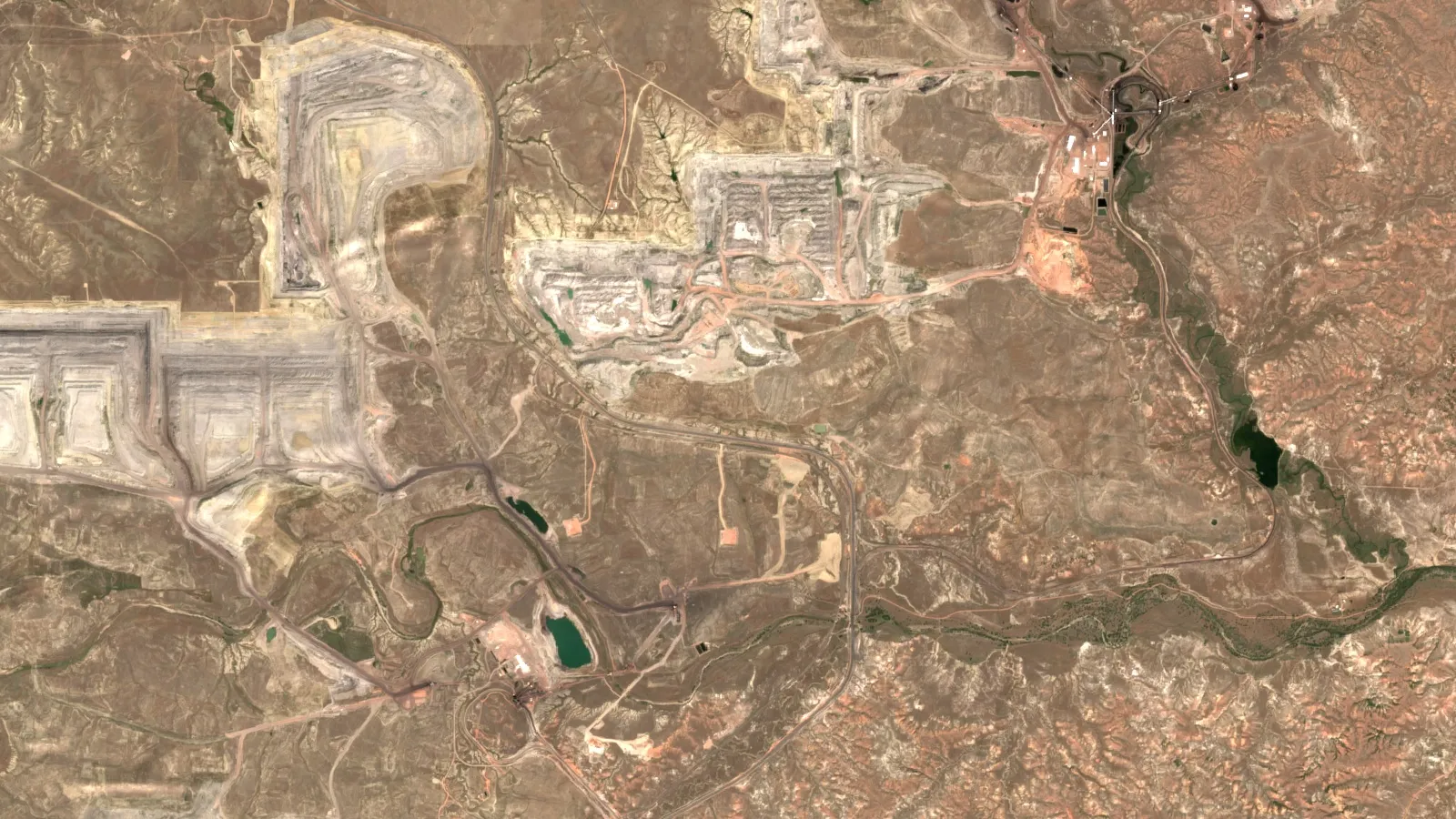
Key takeaways
- About 3 million metric tons of commercial explosives are consumed in the US in an average year; IME member companies make over 95% of it (IME).
- Emulsions resist water; ANFO does not, so ANFO is kept for dry holes.
- MSHA’s daily report (12 November 2026) lists one explosives fatality in 2025 and one in 2026; powered haulage caused 10 of 31 mining deaths in 2026.
- Under 30 CFR 816.67, coal surface blasting without seismic monitoring may use W = (D/Ds)² to cap pounds per 8-millisecond delay.
- ATF recognises five magazine types and requires a magazine check at least every seven days (27 CFR 555).
In this article
- The US Explosives Market: Scale, Types and Manufacturing
- Innovation in Explosives Manufacturing: What's Actually Changed
- Quarrying Explosives Manufacturing: Aggregates, Roads and Community Blasting
- Initiation and Timing: Engineering Control for Predictable Blasts
- Blasting Design & Fragmentation for Ore Recovery
- Safety, Handling and Storage: What MSHA's Numbers Show
- Environmental & Community Controls, Plus a Setback Calculator
- Gold and Value-Mineral Applications
- Comparing Explosive Types
- Farmonaut's Role: Satellite Intelligence Ahead of the Blast
- Frequently Asked Questions: Mining Explosives Manufacturing
- Conclusion: Manufacturing, Timing and Control Are the Real Story
Innovation in explosives manufacturing today means three things converging: electronic detonators that fire on programmed millisecond delays instead of chemical fuses, bulk emulsion plants that mix product on the bench instead of shipping finished cartridges, and blast-design software that models burden, spacing and vibration before a hole is ever drilled. None of that shows up in a search-snippet answer, because the real content is a federal vibration table, a fatality count that moves every quarter, and a formula you can actually run against your own site. This article gives you all three, plus the two adjacent searches it’s built to answer: what quarrying explosives manufacturing looks like for aggregate producers, and where mining explosives manufacturing sits on safety today.
The Institute of Makers of Explosives puts average US commercial explosives consumption at 3 million metric tons a year, with IME member companies manufacturing over 95% of that volume. IME republishes this figure on its statistics page as conditions change, so check the source directly for the current number.
The US Explosives Market: Scale, Types and Manufacturing
Mining explosives manufacturing in the United States is a chemistry-and-logistics business built around ammonium nitrate. A handful of large producers formulate, package and deliver product to sites, and IME’s member roster accounts for more than 95% of the roughly 3 million metric tons consumed domestically in an average year. The chart below sets that scale against the share manufactured by IME members specifically.
Chart
Global mining explosives market, one estimate
US$ billion; 2026 and 2031 are forecasts
Understanding the Manufactured Types
- ANFO (Ammonium Nitrate/Fuel Oil) — The default bulk product for large open-pit shots because it is cheap to manufacture and load. ANFO carries no water resistance, so it breaks down in wet boreholes and is reserved for dry ground.
- Emulsion Explosives — The oxidizer is suspended as microscopic droplets in an oil-continuous phase, which is what gives emulsions their water resistance in wet or fractured holes. Manufacturers formulate density and sensitizer content per site.
- Slurry (Watergel) Explosives — A thickened, gelled formulation combining water resistance with strong energy output; used across variable bench heights and mixed dry/wet columns.
- Dynamite — Nitroglycerin-based and more sensitive to handle than bulk agents, now reserved for specialty initiation and small-diameter work rather than production blasting.
Key Parameters Influencing Selection
- ✔ Ground Conditions: Fractured, damp, hard or soft rock each points to a different formulation.
- ✔ Bench Height: Taller benches need explosives that hold energy across the full column length.
- ✔ Fragmentation Target: Fine fragmentation for value ore, coarser for waste rock or aggregate feed.
- ✔ Proximity to Structures: Sets the ground-vibration limit that applies, covered in the environmental section below.
- ✔ Cost and Logistics: Bulk ANFO ships and loads fastest; emulsions cost more to manufacture but remove misfire risk in wet holes.
Loading ANFO into a wet hole without a liner or switching to emulsion is a leading cause of misfires and cutoffs — the water displaces the fuel oil coating before initiation reaches it.
Which mining explosives are water resistant?
Water resistance decides more product choices than any other ground condition. ANFO (ammonium nitrate prills soaked with about 6% fuel oil) dissolves when water sits in the hole, so it is loaded only into dry holes or into holes that have been pumped and lined. Emulsions keep the ammonium nitrate solution as tiny droplets inside a film of oil, so water cannot reach it. Bulk trucks often blend the two (often sold as heavy ANFO) to trade some cost for some water resistance. Watergels and packaged emulsion cartridges cover small, wet holes.
Bulk explosives in surface mining
In large surface mines most product is delivered in bulk, not in boxes. A mobile manufacturing unit carries unsensitised ingredients to the bench and makes the explosive as it pumps it into each hole. Many regulators treat the unsensitised emulsion base as an oxidiser, not an explosive, until it is sensitised in the hole, which lowers the risk on public roads. Packaged product is still used for primers, small holes and underground headings. On the global scale, one market study puts mining explosives sales at about US$13.56 billion in 2025, rising to US$16.77 billion by 2031 (Mordor Intelligence, 2026); treat such figures as estimates.
Innovation in Explosives Manufacturing: What’s Actually Changed
The innovation in explosives manufacturing that matters operationally has moved away from the explosive compound itself and toward how it is delivered, timed and monitored. Three shifts define the current state of the industry:
1. Bulk Manufacturing at the Bench
Mobile manufacturing units mix ammonium nitrate emulsion or ANFO on site rather than trucking in packaged product, letting a blaster adjust density and energy hole-by-hole against logged geology instead of using one formulation across an entire pattern. This is a manufacturing decision made in the field, not the plant, and it is the single biggest change in how mining explosives manufacturing actually operates day to day.
2. Programmable Electronic Initiation
Electronic detonators replace fixed pyrotechnic delay elements with a programmable timer, so a blast designer sets exact millisecond delays across hundreds of holes rather than relying on the fixed increments a shock-tube (non-electric) system ships with. That precision is what lets a single blast plan control fragmentation and vibration output at the same time — a tradeoff older initiation systems could not make.
3. Digital Blast Design and Post-Blast Feedback
Software models burden, spacing, stemming and deck height against a 3D block model before drilling starts, and after the shot, monitoring data — vibration, airblast, fragmentation photos — feeds back into the next design. This closes a loop that used to be manual and largely undocumented.
None of these three innovations touch the chemistry that came before them; ammonium-nitrate-based blasting agents remain the workhorse of the industry. The innovation is entirely in control — of mix, of timing, and of what happens after the shot goes off.
Quarrying Explosives Manufacturing: Aggregates, Roads and Community Blasting
Quarrying explosives manufacturing is a distinct use case from large-scale metal mining: smaller-diameter holes, tighter benches, and — because quarries sit closer to towns than most open-pit mines — a much lower tolerance for vibration and flyrock complaints. IME describes commercial explosives as essential to quarrying operations “in all 50 states,” used to break the limestone, granite and sand-and-gravel that becomes road-base aggregate.
That aggregate underlies most of the US road network. The Federal Highway Administration’s Highway Statistics 2023, Table HM-10 counted 4,199,208 miles of public roads in the United States for that year — a figure FHWA republishes annually as new mileage is reported by states, so check the current table for an updated total. IME says quarried aggregate paves over four million miles of US roads, close to the whole public network.
The practical difference in quarry blast design is proximity control: smaller bench heights, lighter charge weights per delay, and — because quarries operate on fixed schedules near residential areas — published blast times and pre-blast surveys of nearby structures, the same tools covered in the environmental section below.
Initiation and Timing: Engineering Control for Predictable Blasts
Initiation is the step that decides whether a well-designed blast pattern actually performs as modeled. Three systems are in current use, in ascending order of control:
Reliable Initiation Systems
- Electric Detonators: The oldest standard; vulnerable to stray current, static and lightning, so sites that use them need extra controls.
- Non-Electric (Shock Tube) Detonators: Fixed-increment delays with no electrical vulnerability; still the default on many mid-sized sites.
- Electronic Detonators: Programmable to the millisecond, with logged firing data for every hole. This is the system referenced throughout the innovation section above.
Why Timing Matters
- ⏲ Synchronized delays reduce vibration transmitted to nearby structures, tunnels and utilities.
- ⏲ Staggered sequences break rock more uniformly, cutting the volume that needs a second blast.
- ⏲ Correct sequencing keeps rock moving toward the free face instead of flying backward or sideways as flyrock.
Electronic detonators let a blaster shift a single hole’s delay by a few milliseconds after reviewing the prior shot’s vibration trace — non-electric systems can’t be adjusted once the delay elements are manufactured into the tube.
Blasting Design & Fragmentation for Ore Recovery
Blast design is an exercise in balancing four parameters against the rock in front of the drill:
- 📊 Burden: distance from the first row of holes to the free face — the single biggest lever on fragmentation size.
- 📏 Spacing: lateral distance between holes in a row; controls uniformity across the pattern.
- 🔝 Stemming: inert material packed above the charge to hold gas pressure in the hole and cut flyrock.
- 🚦 Deck Height: separate charges at different depths in one hole, used on layered or variable-height benches.
Get these four right and the downstream effects compound: less secondary (mechanical) breaking, lower crusher energy draw per ton, fewer misfires, and a blast pattern that a mill can actually run at design throughput instead of fighting oversize.

▶ How gold ore moves from blasting and crushing to refined metal · 5:27
Safety, Handling and Storage: What MSHA’s Numbers Show
The clearest evidence that safety discipline works is how rarely explosives themselves cause a mining fatality relative to everything else that happens on a site. MSHA’s daily fatality-classification chart records zero fatalities under “Explosives and Breaking Agents” for 2022 through 2024, one in 2025 (a surface fatality), and one more in 2026 through 12 November (MSHA daily report, 12 November 2026) — against a backdrop of powered-haulage and machinery incidents that dominate the cause list every year. Fatalities from all causes across US mining tell a noisier story: 30 in 2022, 40 in 2023, 28 in 2024 and 34 in 2025, with 31 recorded in 2026 by 12 November (MSHA, 12 November 2026).
Chart
US mining deaths by cause, 2026 to date
Fatalities, all US mines, 1 January to 12 November 2026
MSHA revises these tables as investigations close, so treat the MSHA page as the current record rather than these figures.
Core Storage and Handling Standards
- Licensed Storage: Explosives are kept in ATF-approved magazines (five types under 27 CFR 555.203) that must be checked at least every seven days, with detonators stored apart from other explosives under MSHA rules.
- Transportation: Routed, labeled and monitored under federal and state hazmat rules.
- On-Site Protocols: Trained personnel, marked exclusion zones, and posted signage around every blast site.
- Audits: Incident and near-miss reviews feed back into site procedure the same way post-blast data feeds back into design.
What the storage rules require
Federal rules set the floor. ATF rules in 27 CFR 555 Subpart K define five magazine types: types 1 to 4 for high and low explosives and detonators, and type 5 for blasting agents. Anyone storing explosive materials must inspect each magazine at least every seven days. At metal and nonmetal mines, MSHA’s explosives standards in 30 CFR 56 Subpart E add that detonators must not share a magazine with other explosive material and that blasting agents stored with explosives must be kept separate. States and local fire codes can add more.
For a mining employee, the practical checks are simple: know which magazine holds what, sign the register for every issue and return, never carry detonators and explosives in the same container, and report any missing item at once. MSHA’s daily fatality report shows that powered haulage, machinery and slips or falls kill far more miners each year than explosives do, so blast-area traffic control matters as much as the shot itself.
Environmental & Community Controls, Plus a Setback Calculator
Federal blasting regulation gives mining and quarrying operations an actual number to design against rather than a general instruction to “keep vibration low.” OSMRE notes that people can feel ground vibration at levels as low as 2% of the legal limit, and that coal operators mail a blasting schedule to residents within half a mile of blasting and offer a pre-blast survey to residents within half a mile of the permit area (<a href=”https://www.ecfr.gov/current/title-30/section-816.62″ target=”_blank” rel=”noopener”>30 CFR 816.62</a>). The limit itself, under 30 CFR 816.67, scales down as distance to the nearest protected structure increases:
Chart
Maximum charge per 8 ms delay by distance
Pounds, W = (D/Ds)², no seismic monitoring
Each tier pairs with a scaled-distance factor (Ds) used in the formula W = (D/Ds)², where W is the maximum explosive weight in pounds allowed per 8-millisecond delay period and D is the distance in feet to the nearest protected structure. Run your own numbers against it below — this is a federal screening threshold for surface coal mining without seismic monitoring, not a substitute for a site-specific permit, state limit, or licensed blaster’s design.
The half-mile pre-blast survey requirement exists because it covers the radius where residents can request a baseline structural inspection before blasting starts — it is the paper trail that resolves most damage disputes after the fact.
Worked example: a protected house sits 1,000 feet from the shot. That falls in the 301 to 5,000 feet band, so Ds is 55 and W = (1,000 / 55)² ≈ 331 pounds per 8-millisecond delay (30 CFR 816.67). At 300 feet the limit drops to 36 pounds (Ds 50). If each hole carries 150 pounds, no more than two holes may fire in the same 8-millisecond window at 1,000 feet. This is why electronic detonators matter: they spread hundreds of holes across separate delays without raising the charge per delay. The OSMRE blasting page lists each state’s citizen guide for local rules.
Calculator
How much explosive can fire in one 8 ms delay?
Enter the distance to the nearest protected structure and your charge per hole.
- Same limit in kilograms: 150
- Holes that may share one delay: 2.2
Example values only, not a design. Uses W = (D/Ds)² from 30 CFR 816.67 (eCFR, 2026): Ds is 50 up to 300 ft, 55 from 301 to 5,000 ft and 65 beyond 5,000 ft unless your regulator approves another value. Coal surface blasting without seismic monitoring only; state limits and a licensed blaster’s design come first.
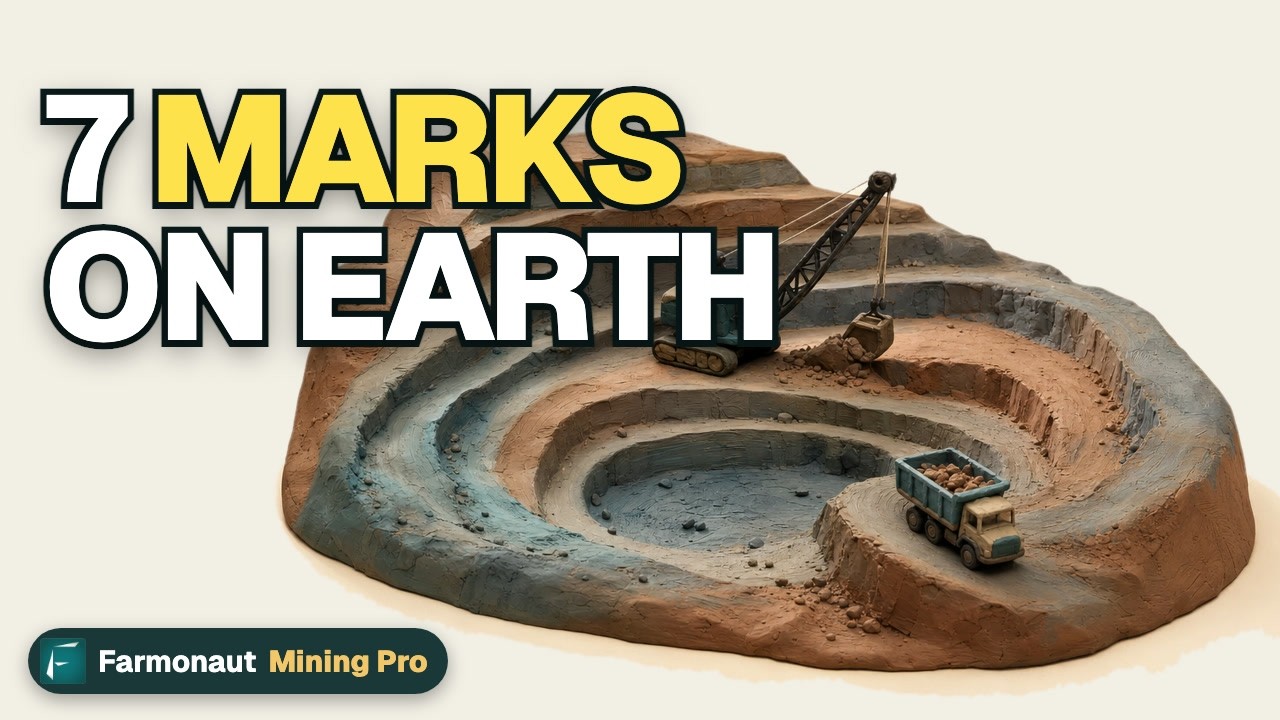
▶ The main environmental impacts of mining, explained in plain words · 2:31
Gold and Value-Mineral Applications
In gold operations specifically, blast design determines ore dilution directly: fine, uniform fragmentation reduces the waste rock mixed into the mill feed, while precise timing lets blasters remove barren rock along a value boundary without disturbing the ore body a few feet away.
Want to reduce blasting risk before drilling even starts? Farmonaut’s satellite-based mineral detection flags exploration target zones from satellite data before any ground work; drilling still decides where the ore is.
Comparing Explosive Types
| Explosive Type | Water Resistance | Relative Energy Class | Best-Suited Ground | Primary Use |
|---|---|---|---|---|
| ANFO | None | Medium | Dry, competent rock | Large open-pit, dry benches |
| Emulsion | Excellent | High | Wet, fractured ground | Open-pit and underground, wet holes |
| Slurry (Watergel) | Good | High | Variable geology | Mixed-condition benches, tunnels |
| Dynamite | Good | Very High | Hard rock, small diameter | Specialty initiation, small-scale work |
Use mining.farmonaut.com to map an area of interest for gold, copper, lithium and other minerals before drilling.
Farmonaut’s Role: Satellite Intelligence Ahead of the Blast
Farmonaut doesn’t manufacture explosives — it supplies the mineral-mapping layer that determines where blasting is worth doing in the first place. Our platform combines Earth observation and AI-driven geospatial analysis to:
- ✔ Cut early exploration screening from months to days by narrowing target zones before any drilling
- ✔ Lower early-exploration cost by up to 80–85%, with no ground disturbance
- ✔ Flag exploration target zones that ground checks and drilling then test
- ✔ Cover gold, copper, lithium, rare earths and more across 20+ mineral types and 25+ countries
- ✔ Deliver GIS-ready technical reports for investment and risk review
Explore satellite-based mineral detection for non-invasive prospecting, or request our satellite-driven 3D mineral prospectivity mapping for drilling and investment decisions ahead of any blast design.
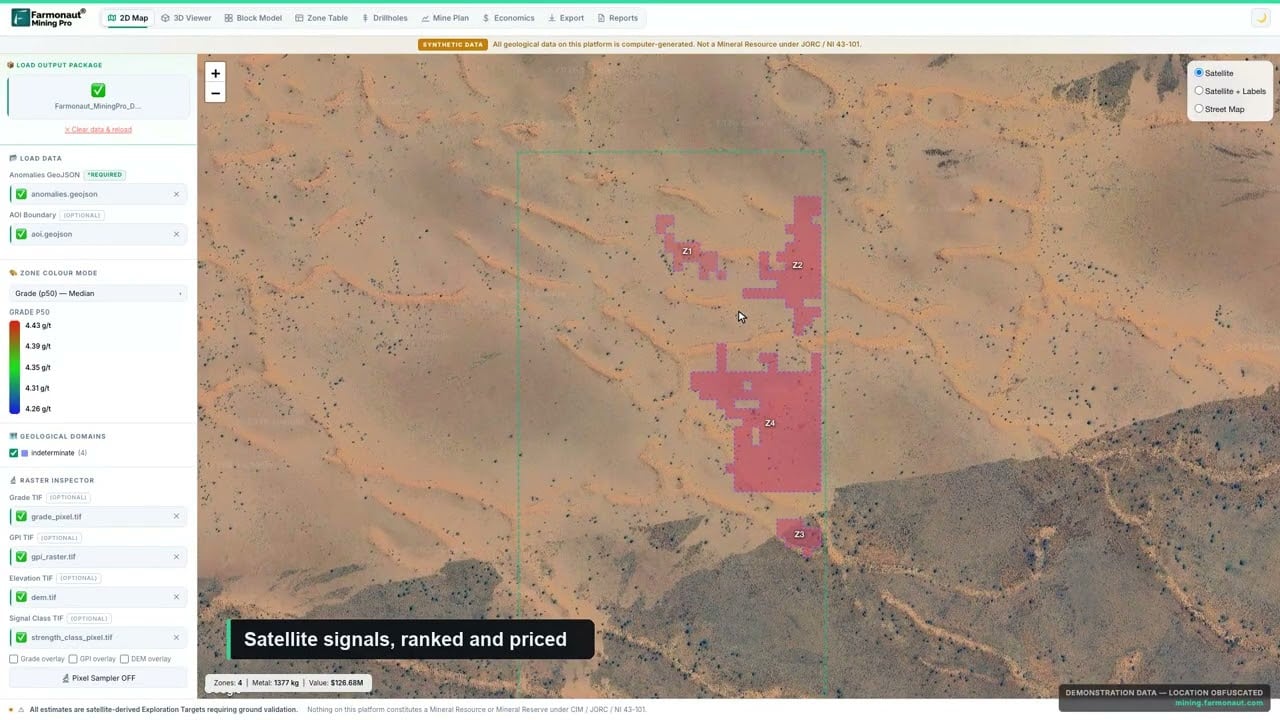
▶ What Farmonaut Mining Pro shows for a licence area before drilling · 4:56
Frequently Asked Questions: Mining Explosives Manufacturing
A: Programmable electronic detonators, mobile bulk-mixing units that manufacture emulsion or ANFO on the bench, and digital blast-design software with post-blast feedback loops — not a new explosive compound.
A: Smaller-diameter holes, lighter charge weights per delay, and proximity-driven rules — pre-blast surveys and published schedules for residents within half a mile — because quarries sit closer to communities than most large open-pit mines.
A: Emulsion explosives — their oil-continuous phase keeps the oxidizer from washing out, unlike ANFO, which has no water resistance.
A: MSHA’s fatality-classification chart shows zero “Explosives and Breaking Agents” deaths for 2022–2024, one in 2025, and one more in 2026 through 12 November — far below causes like powered haulage. Check MSHA’s chart for the current count.
A: Under 30 CFR 816.67, 1.25 in/sec within 300 feet of a protected structure, 1.00 in/sec from 301–5,000 feet, and 0.75 in/sec beyond 5,001 feet — use the calculator above to check a specific charge weight.
A: No. Farmonaut supplies satellite-based mineral detection and mapping that informs where exploration and blasting should focus — the explosives themselves come from manufacturers like IME’s members.
Which explosives are water resistant?
Emulsions and watergels resist water; heavy ANFO blends resist it partly; straight ANFO does not and should only go into dry holes.
What are bulk explosives in surface mining?
Product mixed and pumped straight into the hole by a mobile manufacturing truck, instead of packaged cartridges. Most large open-pit and coal shots use bulk ANFO, emulsion or blends.
Who regulates explosives storage in the US?
ATF licenses and sets magazine rules under 27 CFR 555; MSHA sets mine-site rules (30 CFR 56 and 57); DOT covers transport; OSMRE and state programmes cover coal blasting effects.
How often must an explosives magazine be inspected?
At least every seven days under 27 CFR 555.204, enough to show whether anyone has entered it or removed anything.
Who makes most commercial explosives used in US mining?
IME member companies, which IME says produce over 95% of the roughly 3 million metric tons used in the US in an average year.
Conclusion: Manufacturing, Timing and Control Are the Real Story
Mining explosives manufacturing hasn’t been reinvented at the chemistry level — ammonium nitrate remains the base of the bulk products loaded into most blast holes. What has changed is control: bulk mixing at the bench, millisecond-programmable initiation, and a federal vibration table you can actually calculate against instead of guessing. For quarrying explosives manufacturing specifically, that control is what keeps blasting near towns compliant and predictable while still supplying the aggregate under most of the US road network.
Ready to bring satellite-driven targeting into your next project? Explore satellite-based mineral detection, request 3D prospectivity mapping, or map your site at mining.farmonaut.com. For tailored guidance, get a quote or contact us.
This page is for information only. It is not legal or blasting-design advice. Confirm limits with your regulator and a licensed blaster.
Farmonaut mining
Map your mining site from space
Mine and quarry teams can view a satellite map of their site and nearby ground before planning the next drill pattern.

Mining Pro sample view, synthetic data
Keep reading
Sources
- Institute of Makers of Explosives, statistics and reports: ime.org
- Institute of Makers of Explosives, About IME: ime.org
- MSHA, Daily Fatality Report (12 November 2026): arlweb.msha.gov
- eCFR, 30 CFR 816.67 Use of explosives: control of adverse effects: ecfr.gov
- Cornell LII, 30 CFR 816.67: law.cornell.edu
- OSMRE, Blasting: osmre.gov
- eCFR, 27 CFR 555 Subpart K, storage of explosive materials (ATF): ecfr.gov
- eCFR, 30 CFR 56 Subpart E, explosives at surface metal and nonmetal mines: ecfr.gov
- eCFR, 30 CFR 57, underground metal and nonmetal mines: ecfr.gov
- FHWA, Highway Statistics 2023, Table HM-10: fhwa.dot.gov
- Mordor Intelligence, Mining Explosives Market (2026): mordorintelligence.com
Discussion
Questions, corrections or field experience? Share them below. First-time comments are reviewed before they appear, and your email is never published.
No comments yet. Be the first to add a question or your experience.

 Mining SARL
 SenGold Invest SAS
 Sania Corporation
 Sean Mining Limited
 NTS Group (Pty) Ltd
 Mine4Africa
 Lithspo Minerals Limited
 Tintina Mining Group
 Dalgety Minerals Pty Ltd
 Vortex Minerals Pty Ltd
 Faith At Work (Pty) Ltd
 Geotech Mining Solutions plc
 Vulcan International Limited
 Kidepo Associates
 GKY Mining
 Alkimy SARL
 Double A Trading
 GemSprout Metals Limited
 Qader Group
 Ileys General Trading
 SG Gold Mining LLC
 VRV Global Pte Ltd
 Omsri International FZE
 G.I.T.T.

 Client · Tanzania · Gold
 Client & affiliate partner · Ghana · Gold










