

Mineral royalties · How-to guide
How to Sell Mineral Royalties: 6 Steps and Valuation
To sell a mineral royalty, confirm title, value the expected payments, approach buyers under a confidentiality agreement, then close and register the transfer. See six steps, three valuation approaches, 2026 deal sizes, a buyer list and a calculator.
Key takeaways
- A private mining royalty is a contract right to payment from a mine owner. It is a private contract, unlike a statutory government royalty (Clayton Utz, August 2024).
- Value is the present value of expected payments, reduced for risk. CIM names three approaches: income, market and cost (CIM MES, CIMVal).
- Franco-Nevada agreed royalty and stream deals of US$40.1 million to US$250 million in January and February 2026 (results release, 10 March 2026). Revelo sold 20 exploration-stage royalties for US$1.5 million in 2020.
- Title and registration decide what a buyer pays: Quebec’s Court of Appeal held in 2013 that a personal-right NSR was not enforceable against third parties (Langlois, 2015).
- Tax depends on country and deal structure. The IRS taxes the gain over basis; archived CRA guidance excludes Canadian resource property disposals from capital gains. Ask an adviser.
In this article
- What you are selling: types of mineral royalty
- How to sell mineral royalties in 6 steps
- How a mineral royalty is valued
- What moves the value of a royalty
- Estimate what your royalty is worth now
- Who buys mineral royalties
- What buyers have paid for royalties
- What buyers check before they pay
- Taxes when you sell a mineral royalty: the general picture
- Selling part of a royalty or keeping it
- Mistakes that lower the price
- Frequently asked questions
To sell a mineral royalty, you confirm what you own, value the future payments, offer the royalty to buyers who pay cash now, and close a transfer that the mine operator is told about and, where the law requires it, that is registered. Buyers range from listed royalty companies to small funds and the mine owner itself. The price is the present value of the payments you expect, reduced for risk. In January and February 2026 alone, Franco-Nevada announced royalty and stream deals worth between about US$40 million and US$250 million each, (Franco-Nevada, 10 March 2026). At the small end, a TSX Venture-listed explorer sold twenty exploration-stage royalties for US$1.5 million in total in 2020, so the market has room for both large and small sellers.
This page walks through the types of royalty, the sale steps, three valuation approaches, a list of buyers with what they have paid, the checks buyers run, and the tax questions to raise with an adviser. It covers metals, coal and industrial minerals, not oil and gas royalties. For selling the mineral rights themselves, see our guide on how to sell mineral rights.
What you are selling: types of mineral royalty
A private mining royalty is a right to payment from the owner of a mining project, linked to the minerals taken out or sold. It is a contract between the miner and the royalty holder. That makes it different from the statutory royalty a miner pays a government, which works like a tax; Queensland, for example, charges a variable rate of 2.50% to 5.00% on base and precious metals, depending on average metal prices (Queensland Revenue Office). This page is about the private kind, the one you can sell.
How the royalty is calculated decides how much a buyer will pay. Law firm Clayton Utz describes four common types (Clayton Utz, August 2024):
| Royalty type | What the percentage applies to | What it means for a seller |
|---|---|---|
| Net smelter return (NSR) | Sale price of the minerals minus agreed deductions such as transport, treatment, smelting and refining | The most common type. The list of allowed deductions is negotiated, so read it closely before you quote a value. |
| Gross revenue royalty | Gross revenue from selling the minerals, with no deductions | Simplest to calculate and better for the holder than an NSR at the same rate. |
| Net profit royalty | Revenue minus all costs of production, operations, treatment and selling | Allows the widest deductions, so payments start later and are harder to forecast. |
| Volume or tonnage royalty | A fixed amount for each tonne or other unit extracted and sold | Easy to calculate and not tied to the metal price, so the value follows output only. |
Royalties reach their holders in several ways: as a finder’s fee when an explorer sells a project, as part of the purchase price of a project, through a joint-venture agreement, or in return for mining rights (Clayton Utz). Landowners who lease mineral rights usually hold the same kind of interest. A stream is a related product: the financier pays upfront and receives a share of production at a discounted price, while a royalty gives a share of revenue or profit. Streams are bought and sold in the same market, so you will see both in the deal list below.
How to sell mineral royalties in 6 steps
There is no standard sale process, but most deals follow the same order. The steps below are the ones the public deal records and legal sources support.
Infographic
Selling a mineral royalty in 6 steps
- 1Collect documentsAgreement, amendments, payment statements, operator reports and claim records.
- 2Confirm what you ownRegistration, real or personal right, consent, first refusal and buy-back clauses.
- 3Value it as a rangeIncome, market and cost approaches give a low, middle and high case.
- 4Approach buyersOperator, royalty companies, funds or a neighbour with first refusal, under a confidentiality agreement.
- 5Agree terms and diligenceLetter of intent, price, deferred payments, then title and operator checks.
- 6Sign, notify, registerTransfer agreement, notice to the operator, registration and tax filing.
- Collect the documents. You need the royalty agreement and every amendment, proof of how you obtained it, recent payment statements, operator production reports, and the claim or lease records for the ground it covers.
- Confirm what you own. Check whether the royalty is registered, whether it is a personal contract right or a right attached to the land, and whether the agreement contains consent, first refusal or buy-back clauses. This step is covered in the due diligence section.
- Value it as a range. Work out a low, middle and high case from the income, market and cost approaches described below. Buyers will run their own numbers, so a range is more useful than a single price.
- Choose a route and approach buyers. You can offer the royalty to the operator, to listed royalty companies, to private funds or individuals, or to a neighbouring property owner who holds a first refusal. Sign a confidentiality agreement before you share reports.
- Agree terms and run diligence. A letter of intent sets the price, any deferred or milestone payment, and the timetable. The buyer then checks title, the operator and the payment history.
- Sign, notify and register. The purchase agreement transfers the royalty. The operator receives notice, any consent is recorded, and the transfer is registered where the local system allows it. Keep the paperwork for your tax filing.
Timing from public deals gives a feel for the pace. Franco-Nevada agreed to buy a US$250 million NSR from i-80 Gold on 12 February 2026 and expected to close in March; it agreed to buy six royalties from Victoria Gold on 24 February 2026 and expected to close in the first half of 2026 (Franco-Nevada, 10 March 2026). Revelo’s sale of twenty royalties was announced in January 2020 and closed in March 2020, after a property owner exercised its first refusal on part of the package (Revelo news release, March 2020).
How a mineral royalty is valued
The Canadian Institute of Mining (CIM) valuation standards, known as CIMVal, name three accepted approaches for mineral properties, and the same logic applies to a royalty on one (CIM MES, CIMVal standards):
- Income approach. The value is the present value of the net cash flows received over the life of the asset, adjusted for time and investment risk. This is the discounted cash flow (DCF) method. CIM notes it normally needs a life-of-mine model with future production, costs and taxes, so it fits producing mines, development projects and qualifying resource properties.
- Market approach. The asset is compared with the transaction value of similar assets sold in an open market. Methods include comparable transactions, market capitalization analysis and option or farm-in terms.
- Cost approach. The value reflects what past exploration spending contributed to the property. It suits early-stage ground where no life-of-mine model exists.
For a royalty on a producing mine, the income approach does most of the work. The cash flow in each year is output times the metal price times the royalty rate, less any deductions the agreement allows. You then discount those payments back to today at a rate that reflects the time and the risk, and add them up. For a royalty on ground that has only been explored, there is no production forecast, so the price rests on comparable sales. Revelo’s twenty exploration-stage royalties sold for US$1.5 million in total, an average of about US$75,000 each, which gives a sense of the scale of early-stage prices.
A simple worked example
Take a 2% NSR on a mine that produces 100,000 ounces of gold a year for ten years, at an example price of US$3,000 an ounce. Revenue is US$300 million a year and the royalty pays US$6 million a year, or US$60 million before discounting. At an 8% discount rate the ten payments are worth about US$40 million today. A buyer who sees extra risk and uses 12% would value the same payments near US$34 million. These are example numbers, not market prices; use the calculator below with your own inputs.
What moves the value of a royalty
Six things move the price more than any others.
Chart
Franco-Nevada revenue by metal, 2024 and 2025
US$ million, mining assets only (oil, gas and interest income left out)
- Metal price. Royalty income follows prices. Franco-Nevada sold 24% more gold ounces in 2025 than in 2024 (366,265 against 295,193), but its gold revenue rose 80%, from US$706.9 million to US$1,275.8 million, in a year the release describes as one of record gold and silver prices (Franco-Nevada, 10 March 2026).
- Mine life and output. A longer reserve life and a stable plan raise the value; a mine near the end of its reserves lowers it.
- The operator. A royalty holder has no say in how the mine is run, so the owner’s finances, permits and record matter to the buyer.
- Royalty terms. Rates can change over time. Franco-Nevada’s Bullabulling royalties (1.45% and 2.45% gross royalties over different tenements) step down in aggregate from 2.45% to 1.63% once 4.0 million ounces of gold have been produced from the royalty lands, and its i-80 royalty rises from 1.5% to 3.0% in 2031. Royalties can also blend several areas: Royal Gold expects a blended royalty of about 3.5% to 4% on its Cortez interests in Nevada in 2026 (earnings call summary, February 2026). A royalty that the operator can buy down, such as the AurMac royalty in the Victoria Gold portfolio, is worth less than one that cannot be bought back.
- Land access. Rock that cannot be reached for land-use reasons cannot pay a royalty, however good the grade.
- Stage of the project. Producing mines carry the lowest risk; development projects carry more; exploration ground carries the most and is priced from comparables.
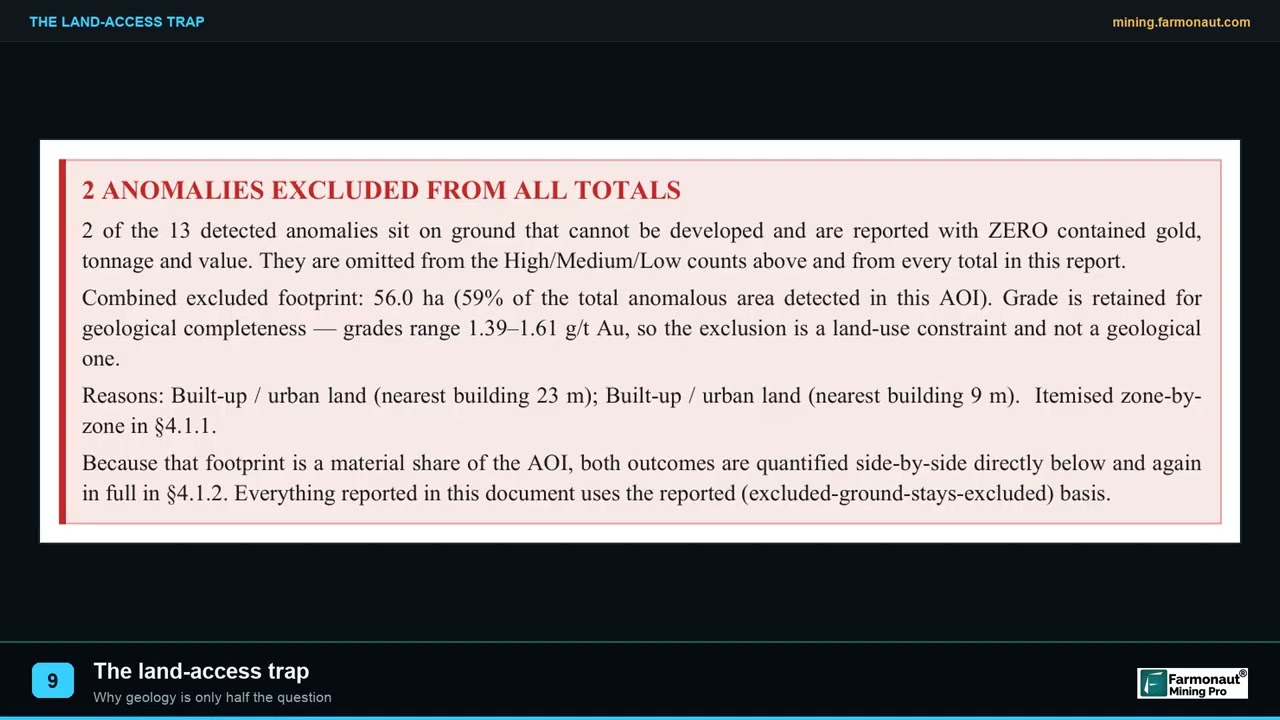
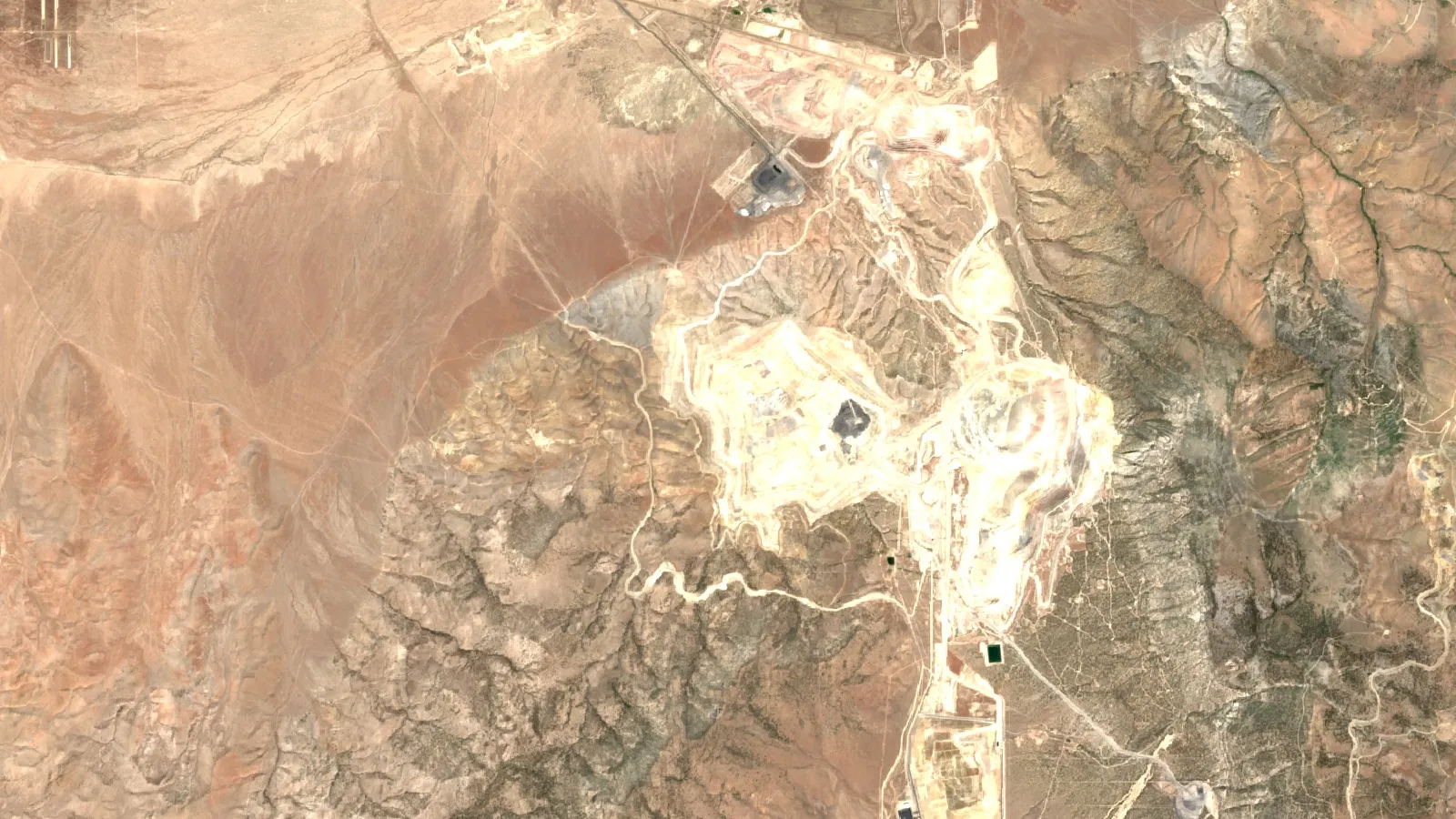
▶ A short survey example of good rock that cannot be mined because of land access, and why that matters to anyone valuing ground. · 2:05
Estimate what your royalty is worth now
The calculator in this section turns the worked example above into a tool for your own numbers. It discounts a level stream of royalty payments and then shows the tax on the gain over your cost. It is a teaching tool and not a valuation.
Calculator
What is your royalty worth now?
Enter your own output, price, rate, mine life and discount rate.
- Royalty payments before discounting (US$): $60,000,000
- Gain over your cost basis (US$): $35,260,488
- Tax on the gain at your example rate (US$): $7,052,098
- Cash after tax (US$): $33,208,391
Example values only, not a valuation. The model holds output and price flat for the whole mine life, ignores NSR deductions, and uses one discount rate; buyers add operator and project risk, so real offers are usually lower. Prices are inputs: example, use today’s price (US$ per troy ounce). The tax rate is an example only; check your own rules with an adviser.
Who buys mineral royalties
Buyers fall into four groups. Listed royalty and streaming companies are the most visible because they announce deals in news releases. Operators can hold a buy-back right in the royalty agreement. Property owners with a first refusal can step in, as the Revelo sale showed. Private funds and individuals may buy smaller royalties. The table lists examples with facts taken from company releases; it is not a complete list and it makes no recommendation.
Chart
Revenue of listed royalty and stream companies, 2025
US$ million, selected companies; the three largest are rounded as reported
| Buyer | Listing or base | What the sources show |
|---|---|---|
| Franco-Nevada | Toronto | 2025 revenue of US$1,822.8 million; agreed in early 2026 to buy royalties and streams ranging from US$40.1 million to US$250 million, including a portfolio of six royalties from Victoria Gold for C$55 million. |
| Royal Gold | Ticker RGLD | Closed its Sandstorm Gold and Horizon Copper acquisitions in 2025 and reported fiscal 2025 revenue of about US$1.0 billion (earnings call summary, February 2026). |
| Wheaton Precious Metals | Vancouver | Mainly a streaming company; reported record 2025 revenue of US$2.3 billion (Wheaton, 12 March 2026). |
| Triple Flag Precious Metals | TSX and NYSE: TFPM | Agreed in June 2026 to buy a US$440 million gold stream on the Ravenswood gold mine (Triple Flag, 12 June 2026). |
| Elemental Royalty | TSXV: ELE | Formed when Elemental Altus and EMX Royalty completed their merger on 13 November 2025 (merger release). EMX bought 18 of Revelo’s royalties in 2020. |
| Gold Royalty | NYSE American: GROY | Record 2025 revenue of US$15.6 million (Gold Royalty, 18 March 2026). |
| Metalla Royalty & Streaming | TSXV and NYSE American: MTA | Record 2025 revenue of US$11.7 million (Metalla, 26 March 2026). |
The size gap in the chart below matters for a seller. The largest buyers pursue deals of tens or hundreds of millions of dollars, while the smaller companies and private buyers are the natural home for royalties worth a few million or less. Match the size of your royalty to the size of the buyer before you spend time on outreach.
What buyers have paid for royalties
Public prices are the best evidence for the market approach. The chart shows the four deals Franco-Nevada announced between 26 January and 24 February 2026, as stated in its results release. Three of them (i-80, Bullabulling and Casa Berardi) fund an operator in return for a new royalty or stream, so they show what buyers pay for rights over operating and development projects. Only the Victoria Gold portfolio is a purchase of royalties from an existing holder, which is the position of most readers of this page: six royalties, including a 6.0% NSR on the AurMac property and a 1.0% NSR on Hyland in the Yukon, a milestone-payment royalty on the Cove project in Nevada and three on earlier-stage properties, for C$55 million (about US$40.1 million) in cash.
Chart
Royalty and stream deals Franco-Nevada agreed in early 2026
US$ million as stated by the company (Australian and Canadian dollar amounts converted by Franco-Nevada)
At the small end, Revelo’s sale shows how a package of exploration-stage royalties is priced and split. A property owner used its right of first refusal to take two royalties for US$338,000, and EMX Royalty took the other 18 for US$1,162,000, which also settled a loan Revelo owed EMX (US$369,907 of the price was applied to it). That first refusal changed who bought part of the package, which is why clearing it early matters.
What buyers check before they pay
Expect these checks in any sale, and run them yourself first so that nothing surprises you.
- Title and registration. The Quebec Court of Appeal ruled in 2013 that an NSR is enforceable against third parties only if it creates a real right over the mining property and has been published in the correct register. A purely personal royalty can become worthless if the claim is sold on or the grantor becomes insolvent (Langlois Lawyers, 2015). In Australia, private royalties are generally contractual rights rather than interests in the land, so a holder may rely on a caveat or a mortgage over the tenements for protection (Clayton Utz). Rules differ by country and state and change, so check current law and the local land and mining registers, and see our guide to mining cadastre portals by country.
- Reporting and audit rights. Financiers look for information sharing, audit rights and limits on the miner transferring the project (Clayton Utz). If your agreement has none, the buyer will price that in.
- Payment history. Statements for the last several periods show whether the operator pays on time and how deductions were applied.
- Transfer clauses. Look for consent to assign, first refusal and buy-back rights and clear them before you sign.
- The operator and the project. Reserves and resources, the mine plan, permits, financing and the owner’s track record. See the operators behind the biggest gold mines in our top gold mining companies by output and the copper producers in our ranking of US copper miners.
- Access to the ground. A deposit that cannot be mined for land-use reasons cannot pay a royalty.
Satellite imagery gives an early screen of the ground behind a royalty, especially on exploration-stage land: it can show surface alteration, land cover and nearby disturbance before anyone commits money. It produces exploration targets, ahead of any resource estimate, and does not replace drilling or a qualified person’s report. If you want that screen for a licence area, use the mining query form or contact us, and read how satellite-based mineral detection works.
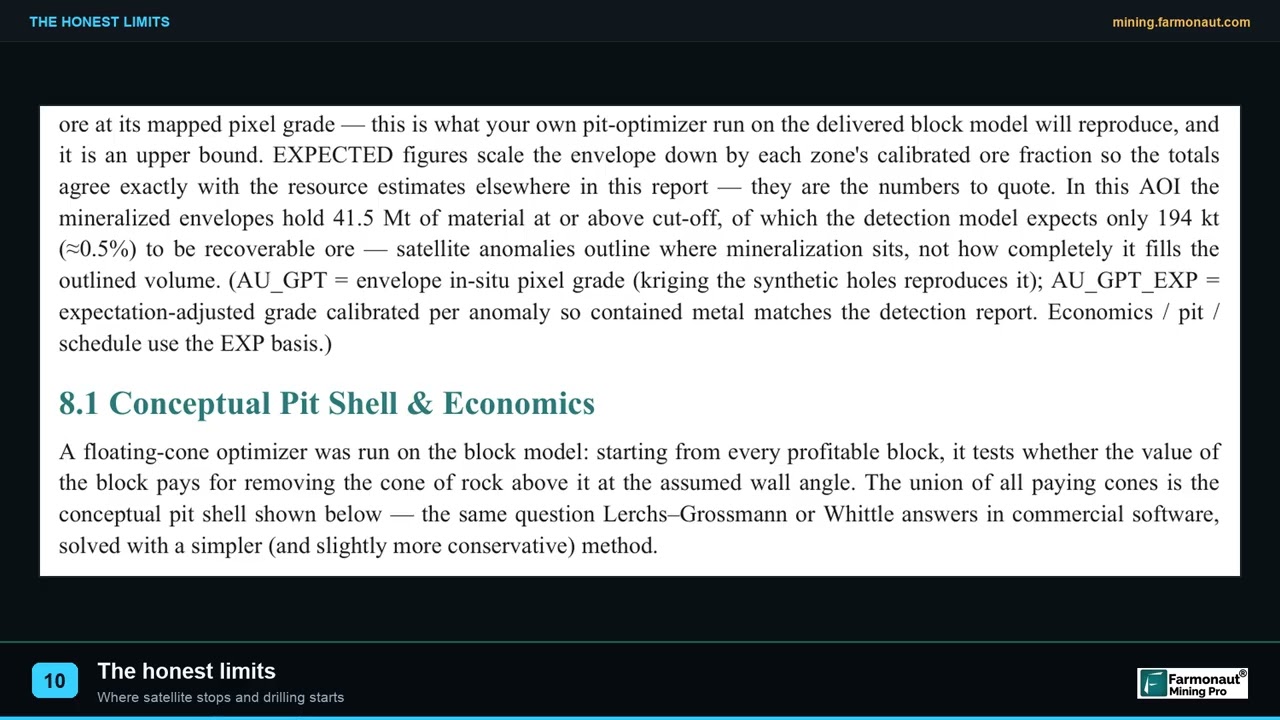
▶ What satellite exploration can and cannot show, and why those limits matter in mining due diligence. · 2:08
Taxes when you sell a mineral royalty: the general picture
Tax on a royalty sale depends on your country, how you acquired the royalty, whether you hold it as an investment or in a business, and how the deal is structured. Treat the points below as questions to put to a qualified tax adviser, not as an answer.
- United States. The IRS explains that the difference between your adjusted basis and the amount you realize on a sale of a capital asset is a capital gain or loss, and that an asset held more than one year gives a long-term result, where a lower rate may apply than on ordinary income (IRS Topic no. 409). Royalties add special cases: IRS Publication 544 has its own rules for owners who dispose of US coal or iron ore while keeping an economic interest, which is a different transaction from selling a royalty outright. Whether a given royalty sale produces capital gain or ordinary income depends on facts that only your adviser can assess, as do depletion and state tax.
- Canada. Archived CRA guidance dated 1995 says proceeds from disposing of a Canadian resource property are excluded from capital gains treatment and generally reduce cumulative expense pools instead, while proceeds from foreign resource property are included in income (CRA IT-125R4, archived). The page is archived and may not reflect current law, so confirm against the Income Tax Act and current CRA guidance.
- Elsewhere. Capital gains, resource-property and transfer-duty rules vary widely, and non-resident sellers can face extra withholding. Ask your tax authority or adviser how a sale of a royalty is classified before you agree a price.
- Deal structure. A lump sum, a deferred or milestone payment and a retained interest are taxed at different times. For example, Franco-Nevada’s i-80 deal pays US$225 million at closing and a further US$25 million that depends on 2026 spending at Mineral Point.
Selling part of a royalty or keeping it
You do not have to sell everything. A seller can sell a share of the royalty, keep a smaller percentage and still collect on it, sell for a fixed term, or raise funds against it, (the sale terms are for you and the buyer to agree; Clayton Utz notes only that royalties are increasingly used to finance mining projects, Clayton Utz). Keeping a portion lets you share in any rise in the metal price or an extension of mine life. Selling in full gives certainty and cash now. The right mix depends on your tax position and cash needs, which is another reason to speak to an adviser before you accept an offer.
Mistakes that lower the price
- Offering a royalty that is not registered, or whose registration you cannot show.
- Quoting a value before checking how the agreement defines allowed deductions in the NSR.
- Leaving a first refusal or consent clause until late in the deal, when it can change the buyer.
- Sharing technical reports before a confidentiality agreement is signed.
- Presenting a single price instead of a reasoned range, which weakens your position in negotiation.
- Missing recent payment statements, which makes the buyer assume the worst on the operator.
Selling the property itself rather than a royalty on it? See how to sell a mine: valuation methods, buyers and deal types.
Own mineral rights in Montana? See Montana mineral rights: who owns them, value, and how to buy or sell.
Frequently asked questions
How do I sell mineral royalties?
Collect the agreement and payment records, confirm title and any consent or first-refusal clauses, value the royalty as a range, approach buyers under a confidentiality agreement, negotiate a letter of intent, pass diligence, and close with notice to the operator and registration where the law allows. The six steps above set out the order.
How much is a mineral royalty worth?
It is worth the present value of the payments you expect, reduced for risk. For a producing mine that means discounting annual output times metal price times the royalty rate. For exploration-stage ground, comparable sales set the price; Revelo’s twenty royalties sold for US$1.5 million in total.
Who buys mineral royalties?
Listed royalty and streaming companies, private funds and individuals, the mine operator through a buy-back, and property owners with a first refusal. Franco-Nevada, Royal Gold, Triple Flag, Elemental Royalty, Gold Royalty and Metalla have all announced royalty or stream purchases.
Can I sell part of my mineral royalty?
That depends on the royalty agreement and local law, so have a lawyer read the assignment and consent clauses first. Where a split is allowed, a buyer will normally ask for the same diligence on the part it buys.
Do I pay tax when I sell a mineral royalty?
Often yes, but the rate and the type of tax depend on where you live and how you hold the royalty. In the United States the sale may produce a capital gain or ordinary income depending on the facts; in Canada, proceeds from resource property follow separate rules. Ask a tax adviser before you sign.
What is the difference between a mineral royalty and a stream?
A royalty gives a share of revenue or profit from a mine. A stream gives the right to buy a share of the production at a discounted price in return for an upfront payment, according to Clayton Utz. Both are sold to the same group of buyers.
What is the difference between a mineral royalty and a mine royalty?
People use both terms for the payment a holder receives from a mine. A private royalty is a contract you can sell. A government royalty is a statutory charge on the miner, such as Queensland’s 2.50% to 5.00% variable rate on base and precious metals (Queensland Revenue Office). It is set by law and paid to the state, so it is not something a private holder sells.
Can I sell mineral royalties online?
The large buyers announce their purchases in their own news releases, and diligence on title and the operator is the same however the buyer finds you. Do not share agreements or payment records until a confidentiality agreement is in place.
How long does it take to sell a royalty?
Public deals suggest roughly one to two months from signed terms to closing: the Revelo sale was announced in January 2020 and closed in March 2020, and Franco-Nevada’s i-80 royalty was agreed on 12 February 2026 with closing expected in March. A first refusal, a foreign investment approval or a consent can add time.
Do I need a lawyer to sell a mineral royalty?
Yes, in practice. Registration rules, assignment clauses and tax treatment differ by country, and the Quebec Court of Appeal’s 2013 decision shows how a royalty that looks valid can fail against a third party.
Does this page cover oil and gas royalties?
No. It covers metals, coal and industrial minerals. Oil and gas royalties are valued from well production and sold in a separate market, so speak to a petroleum adviser if that is your interest.
Can satellite imagery help value a royalty?
It can help screen the ground behind a royalty, for example by mapping surface alteration or land use around a deposit. The results are exploration targets and do not replace a resource estimate, drilling or a qualified person’s report.
This page is for information only. It is not investment, legal or tax advice, and it does not recommend buying or selling any royalty or security. Royalty law, registration rules and tax treatment differ by country and change over time; confirm them with a qualified lawyer and tax adviser and with the regulator.
Farmonaut mining
Screen the ground behind a royalty from space
Licence owners and consultants can request a satellite report that maps alteration and land use on the ground behind a royalty as exploration targets, ahead of any resource estimate.

Mining Pro sample view, synthetic data
Keep reading
Sources
- Franco-Nevada, Reports Record 2025 Results (10 March 2026): newswire.ca
- Clayton Utz, Digging into mining royalties (August 2024): claytonutz.com
- CIM MES, CIMVal: Standards and Guidelines for Valuation of Mineral Properties: cimmes.org
- Langlois Lawyers, Crafting the Next Generation of NSR Agreements in Quebec (CIM Magazine, 2015): langlois.ca
- Queensland Revenue Office, Mineral royalty rates: qro.qld.gov.au
- Revelo Resources, Closes the Sale of its Generative NSR Royalty Portfolio (March 2020): miningstockeducation.com
- Royal Gold Q4 earnings call highlights (MarketBeat, 20 February 2026): finance.yahoo.com
- Wheaton Precious Metals, record annual results for 2025 (12 March 2026): finviz.com
- Triple Flag, US$440 million gold stream on Ravenswood (12 June 2026): bnnbloomberg.ca
- Elemental Altus and EMX, Completion of Merger (13 November 2025): newsfilecorp.com
- Gold Royalty Corp., 2025 results (18 March 2026): finviz.com
- Metalla Royalty & Streaming, 2025 results (26 March 2026): finviz.com
- IRS, Topic no. 409, Capital gains and losses: irs.gov
- IRS, Publication 544, Sales and Other Dispositions of Assets: irs.gov
- CRA, IT-125R4 Dispositions of Resource Properties (archived, 1995): canada.ca
Discussion
Questions, corrections or field experience? Share them below. First-time comments are reviewed before they appear, and your email is never published.
No comments yet. Be the first to add a question or your experience.

 Process Metrology LLC
 Dalgety Minerals Pty Ltd
 Vortex Minerals Pty Ltd
 Faith At Work (Pty) Ltd
 Geotech Mining Solutions plc
 Vulcan International Limited
 Kidepo Associates
 GKY Mining
 Alkimy SARL
 Double A Trading
 GemSprout Metals Limited
 Qader Group
 Ileys General Trading
 SG Gold Mining LLC
 VRV Global Pte Ltd
 Omsri International FZE
 G.I.T.T.
 Jaunita Erss Ltd
 Almosi SARL
 SRK Consulting
 Berks Gold Limited
 Mwerezi Minerals Company Limited

 Exploration consultancy · South Africa · Gold










