

Mining Transportation 2025: Sustainable Innovations
Meta Description: Mining Transportation 2025 unleashes sustainable technological innovations, revolutionizing the efficiency, safety, and environmental impact of mineral movement worldwide.
Table of Contents
- The Critical Role of Mining Transportation in 2025
- Key Drivers and the Transformation of Mining Transport Systems
- Comparative Table: Traditional vs. 2025 Mining Transportation Innovations
- Autonomous and Electric Vehicles: Shifting the Mining Haul Paradigm
- The Internet of Things, Digital Twins, and Data-Driven Operations
- Sustainability, Carbon Reduction, and Environmental Standards
- Mining Transportation Infrastructure & Connectivity in Rugged Environments
- How Farmonaut Revolutionizes Mining Transportation Systems
- Future Outlook: What Lies Ahead for Mining Transportation?
- FAQ: Mining Transportation 2025
- Farmonaut Satellite Technology Subscriptions
“By 2025, over 60% of mining transport fleets will use electric or hybrid vehicles for mineral movement.”
The Critical Role of Mining Transportation in 2025
Mining transportation is the lifeline of the mining industry, serving as the critical link between remote extraction sites and processing facilities, markets, or export terminals. As we step into 2025, our sector is driven by innovation and the escalating imperatives of sustainability, operational efficiency, and environmental responsibility.
Mining involves the movement of raw minerals like copper, iron ore, lithium, rare earths, and coal from the mine face to processing plants and onward to distribution points. Numerous transportation systems are historically used for this, including haul trucks, overland conveyors, rail transport, and ocean-going vessels or shipping containers.
The quality and efficiency of mining transportation directly impacts operational costs, production schedules, and overall profitability. Delays, breakdowns, or bottlenecks in the transport chain can lead to substantial financial losses, supply disruptions, and the inability to meet global demand for essential raw minerals used in electronics, renewable energy projects, and manufacturing.
It is this pivotal role that makes the transformation of mining transportation systems in 2025 so significant—impacting every company, operator, and stakeholder in the sector.
“Automated haulage systems are projected to increase mining transport efficiency by up to 30% in 2025.”
Key Drivers and the Transformation of Mining Transport Systems
What is Fueling Change in Mining Transportation?
Several intertwined drivers are accelerating the transformation of mining transportation as we look to 2025:
- Technological Innovations: The rise of autonomous vehicles, electric and hydrogen-powered trucks, and advanced data analytics.
- Sustainability Imperatives: Environmental regulations and global sustainability standards must be met to control carbon emissions and reduce mining’s ecological footprint.
- Efficiency Demands: To keep up with increasing global demand for minerals in high-tech, green tech, and urbanization projects, operations need to become more efficient and responsive.
- Remote and Rugged Environments: Mining sites are often in inaccessible regions where infrastructure and connectivity challenges are presented.
- Digital Transformation: The internet of things, IoT sensors, and digital twins enable predictive, transparent, and scalable fleet management and operations optimization.
Combined, these elements are pushing mining companies and operators to adapt, invest, and innovate at an unprecedented pace.

Comparative Table: Traditional vs. 2025 Mining Transportation Innovations
Below is a comprehensive table comparing key mining transportation systems and technologies, highlighting their status in 2023 alongside the cutting-edge innovations and sustainability improvements projected for 2025.

Autonomous and Electric Vehicles: Shifting the Mining Haul Paradigm
Among the most celebrated technological innovations in mining transportation are the rise of autonomous haul trucks and electric vehicles (EVs).
Autonomous Haul Trucks: From Prototype to Mainstream
- Self-driving haulage trucks leverage AI-powered navigation, LiDAR, radar, and GPS to move minerals round the clock, in all weather and terrain.
- These trucks are now able to operate 24/7, drastically reducing risk of human error, especially in difficult terrains.
- Sensors constantly track vehicle conditions, load weights, and route selection, optimally distributing fleet assets.
- Real-time safety systems ensure immediate response to site hazards or obstacles, improving overall safety records.
In 2025, automated haulage is not just a novelty—it is central to how new mining operations are designed, massively reducing both fuel consumption and downtime.

Electric Trucks & Hydrogen Haulage: Cutting Carbon, Cutting Costs
Mining transportation has traditionally been a major source of greenhouse gas emissions, but 2025 marks a turning point:
- Electric trucks and loaders are now able to haul heavier loads further, with enhanced battery technology and rapid on-site charging hubs.
- Hydrogen-powered trains and utility vehicles are in pilot or early commercial operation on major mine-rail corridors in Australia, Canada, and South Africa.
- The deployment of EVs and hydrogen haulage is drastically cutting fossil fuel dependency, aligned with global regulations on emissions and sustainability goals.
The integration of both autonomous and electric technologies is redefining what’s possible for safe, efficient, and sustainable movement of minerals—especially as companies and regulators raise the bar for future projects.

The Internet of Things, Digital Twins, and Data-Driven Operations in Mining Transportation
Smart, Integrated Fleets: The Power of IoT and Real-Time Monitoring
Increasingly, mining transportation fleets in 2025 are widely integrated with an array of sensors (IoT devices) that track every vehicle, its conditions, load weights, driver/operator status, and route history in real time.
- Sensors can automatically detect wear on tires, brakes, and suspension, triggering proactive maintenance before failures occur—reducing disruption and lowering operational costs.
- Fleet scheduling software uses this data, plus AI, to dynamically optimize truck routes and load distribution based on current conditions and site priorities.
- Digital twins—virtual copies of vehicles, roads, and logistics workflows—enable mining operations managers to run scenario analysis and optimize for efficiency or safety before changes are made in the real world.
- Timing, coordination, and energy use across a network of assets are visualized and improved for maximum throughput and minimum waste.
This real-time, data-driven approach fundamentally revolutionizes the movement of minerals, especially at large or remote sites with complex logistical challenges.
Discover how advanced satellite fleet management can cut operational costs and improve vehicle safety for mining companies: Farmonaut Fleet Management Solutions
Sustainability, Carbon Reduction & Environmental Standards in Mining Transportation
From High Emissions to Net-Zero Targets: Meeting Sustainability Imperatives
Traditionally, mining transportation has been responsible for a high percentage of carbon and particulate pollution produced from haul trucks, rail, and ships. In 2025, however, environmental standards have tightened significantly:
- Electric and hydrogen-powered haulage systems are prioritized to reduce fossil fuel usage dramatically.
- AI-driven logistics planning has minimized empty return trips (“deadheads”), further cutting fuel usage and emissions.
- Dust suppression and automated air quality management on haul roads are now must-have features, protecting onsite staff, neighboring communities, and local ecosystems.
- Many companies have adopted full emissions tracking—including carbon accounting for scope 1, 2, and even scope 3 emissions—often required for ESG compliance, government reporting, or financing.
By employing smart data and next-gen green transport, companies are finally aligning with sustainability goals and meeting the global push for responsible mining.
Farmonaut’s Carbon Footprinting Services empower mining companies to monitor real-time emissions, proving invaluable for regulatory reporting, ESG compliance, and sustainability audits.

Learn how secure, blockchain-based traceability is ensuring the authenticity of mined minerals throughout the supply chain, essential for meeting global export and ESG standards: Farmonaut Product Traceability
Mining Transportation Infrastructure & Connectivity in Rugged Environments
Mining sites are often located in remote, rugged regions where infrastructure presents unique challenges:
- Developing all-weather roads, reliable rail links, and upgraded port facilities is essential for efficient mineral movement from extraction points to markets.
- Advanced satellite-based navigation and communication systems have improved connectivity and safety, even in isolated areas without traditional telecoms infrastructure.
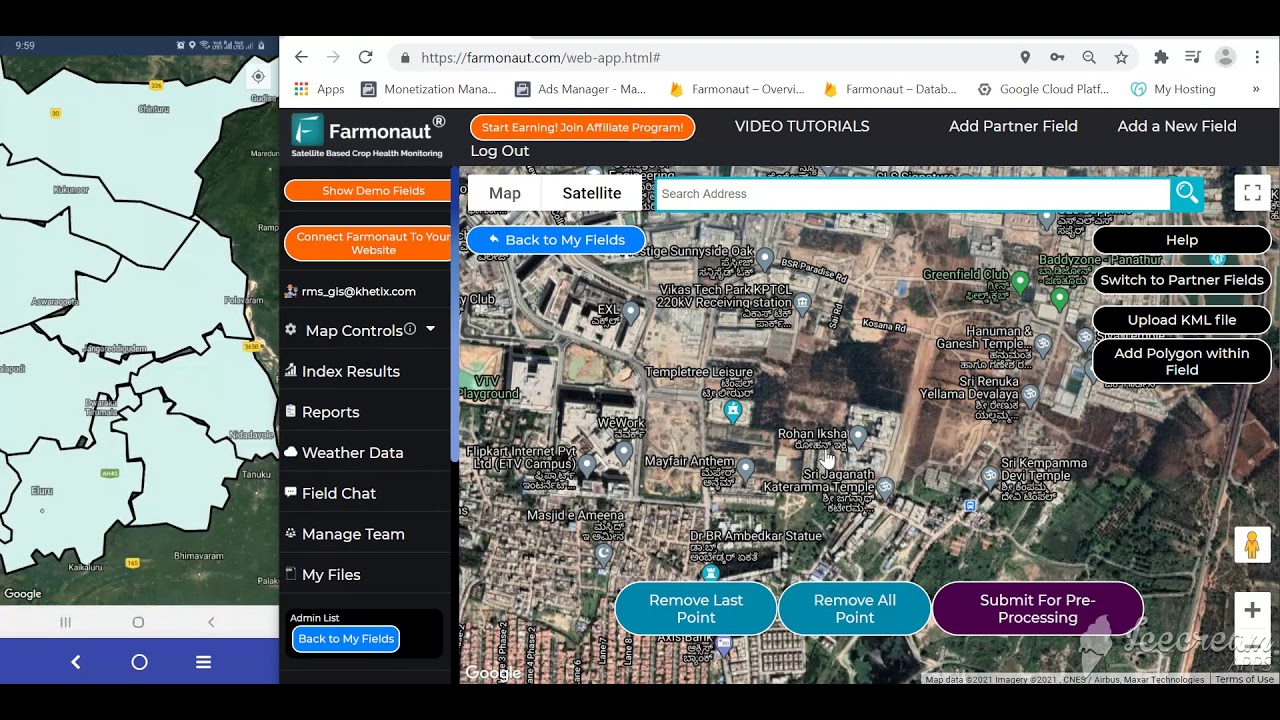
Farmonaut’s Platform provides mining operators and logistics planners with instant access to up-to-date satellite data, weather overlays, and route planning tools, improving operational resilience and real-time resource allocation.
For large-scale operators needing unified management of multiple sites, our integrated satellite-based tools support seamless oversight and decision-making: Farmonaut’s Large Scale Farm & Resource Management Platform

Drones and Lightweight Delivery: The New Transport Frontier
- Unmanned drones are now increasingly used for surveying, rapid equipment delivery, and even sample retrieval from remote or hazardous environments.
- This dynamic approach is complementing traditional road and conveyor transport for faster and more flexible service.
Access Farmonaut satellite-driven mining solutions on your device or API for seamless integration:



Developers: Build custom mining logistics solutions with Farmonaut Satellite API & review API Documentation for seamless integration.

How Farmonaut Revolutionizes Mining Transportation Systems
As a leading provider of satellite-driven insights and fleet management tools, we at Farmonaut are committed to making advanced monitoring and analytics affordable and accessible for the global mining industry. Here’s how our technology is directly addressing 2025’s mining transportation challenges and supporting sustainable transformation:
- Real-Time Satellite Monitoring: Our platform uses multispectral imagery to track site activity, structural changes, and logistics bottlenecks, empowering efficient response to operational breakdowns or delays.
- Jeevn AI Advisory System: Provides mining operators with custom, real-time advice based on satellite data, weather analysis, and predictive modeling—supporting safer routing, asset scheduling, and maintenance plans to minimize disruption.
- Blockchain-Based Traceability: Ensures mineral provenance from mine to port, greatly enhancing trust, compliance, and export value for companies required to prove sustainable sourcing.
- Fleet and Resource Management Tools: Our fleet management dashboard boosts asset usage and reduces redundant trips, cutting operational costs and lowering emissions per ton moved.
- Environmental Impact Monitoring: Our carbon tracking tools help mining companies meet regulatory and ESG requirements, proving decisive for eco-conscious investors and customers.
With Farmonaut, mining transportation is not only safer, cleaner, and more efficient; it is smarter and future-proof—ready for the imperatives of 2025 and beyond.
Mining operators and financial institutions can benefit from satellite-driven verification for quicker and more accurate insurance or loan approvals, minimizing fraud and delays: Farmonaut Crop Loan & Insurance Satellite Verification
Future Outlook: What Lies Ahead for Mining Transportation?
The decade beyond 2025 promises even greater transformation for mining transportation as digital, green, and autonomous systems merge into everyday practice:
- Regulatory Pressure and Standards: The imperative to meet net-zero targets and traceability requirements will push the sector to upgrade fleets, digitize operations, and comply with new environmental legislation worldwide.
- Supply Chain Resiliency: Mining companies will have to diversify export routes, develop rapid-response capabilities (including drones and hybrid assets), and seamlessly exchange information across regions and partners.
- AI-Driven Optimization: AI will increasingly automate not only the trucks themselves, but the complex orchestration of entire fleet and resource allocation, driving new levels of cost control and efficiency.
- Sustainable Mining as Standard: Sustainability will cease to be a differentiator and become an absolute baseline expectation for all new mining transportation projects.
The mining industry must continue to balance digital innovation, sustainability imperatives, and cost management to thrive. At its core, the movement of minerals in 2025 will be smarter, safer, faster, and much cleaner than ever before.
FAQ: Mining Transportation 2025
What is the main focus of mining transportation innovation in 2025?
The primary focus is on integrating autonomous and electric systems, advanced digital monitoring (IoT, data analytics), robust environmental safeguards, and cost-effective, efficient movement of minerals while reducing carbon emissions.
How are emissions being reduced in mining transportation?
Through widespread adoption of electric vehicles, hydrogen-powered trains, optimized logistics planning, satellite monitoring for fleet management, and emissions tracking solutions.
Check out Farmonaut’s Carbon Footprinting services for more information.
What role does the Internet of Things (IoT) play?
IoT enables real-time tracking of vehicles, load weights, conditions, and routing, improving efficiency, safety, and enabling predictive maintenance—all reducing downtime and operational costs.
How does Farmonaut contribute to mining transportation sustainability?
We provide affordable satellite-based fleet management, carbon tracking, blockchain traceability, route monitoring, and AI-powered operational tools essential for modern, sustainable, and profitable mining logistics.
Are these new technologies widely implemented?
Many are now being rapidly adopted, especially at new mines or where return on investment is high. By 2025, over 60% of new haulage fleets are electric or hybrid, and up to 30% more efficient thanks to autonomy and advanced scheduling.
Farmonaut Satellite Technology Subscriptions
Benefit from scalable, cost-effective access to the latest in satellite-based mining transportation technology, available via web, app, or direct API integration.
Conclusion: Mining Transportation’s Sustainable Revolution
The movement of minerals is being transformed—ushering in a new era where advanced systems, robotics, data-driven platforms, and sustainability are not options, but necessities. The critical role of mining transportation in 2025 goes beyond logistics: it is about enabling a responsible, efficient, and ethically-driven supply chain for the world’s essential minerals.
With autonomous fleets, electric vehicles, satellite monitoring, and smarter logistics, the sector is finally addressing the imperative to operate in tune with both economic and environmental realities—making mining safer, cleaner, and more efficient globally.
We at Farmonaut continue to make these advances accessible, affordable, and impactful—empowering mining, logistics, and infrastructure sectors to thrive in the next era of mining transportation.

 GKY Mining
 Alkimy SARL
 Double A Trading
 GemSprout Metals Limited
 Qader Group
 Ileys General Trading
 SG Gold Mining LLC
 VRV Global Pte Ltd
 Omsri International FZE
 G.I.T.T.
 Jaunita Erss Ltd
 Almosi SARL
 SRK Consulting
 Berks Gold Limited
 Mwerezi Minerals Company Limited
 Mining SARL
 SenGold Invest SAS
 Sean Mining Limited
 NTS Group (Pty) Ltd
