

Potash · Mine guide
Mosaic Potash Mines in Canada: Output and Capacity
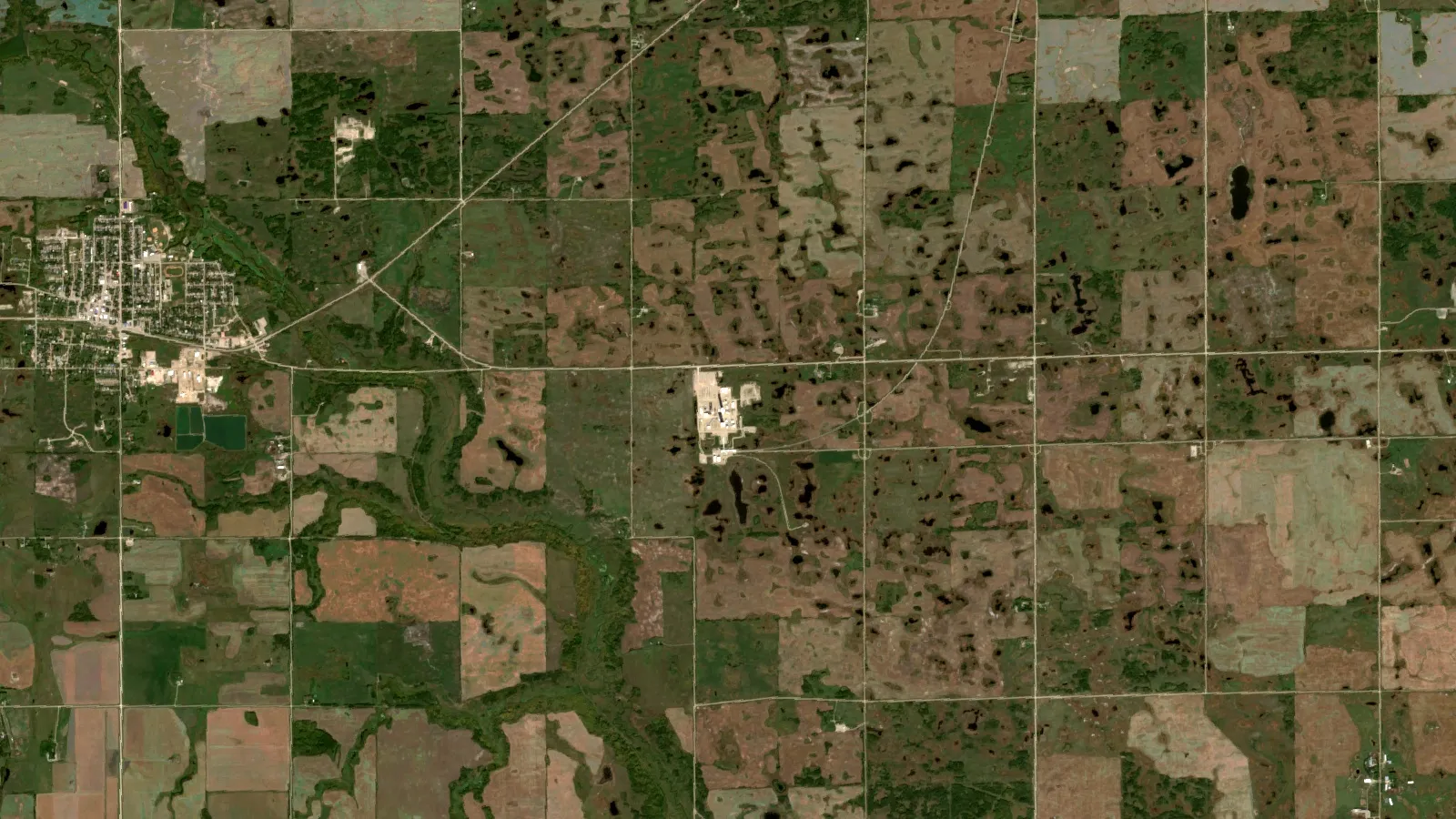
Mosaic runs three potash mines in Saskatchewan. They can make about 10.8 million tonnes a year and made 8.5 million tonnes in 2025.
Key takeaways
- Mosaic’s Canadian potash mines are Esterhazy (6.3 Mt/yr operational capacity), Belle Plaine (3.0) and Colonsay (1.5), all in Saskatchewan (Mosaic 10-K, 2025).
- Canadian output was 8.5 million tonnes in 2025, about 79% of the 10.8 million tonnes of operational capacity (Mosaic 10-K, 2025).
- Reserve grades differ: Colonsay 26.5% K2O, Esterhazy 20.8%, Belle Plaine 19.3% (Mosaic 10-K, 2025).
- Mosaic’s mine-gate potash price averaged US$275 per tonne in the second quarter of 2026, against a cash cost of US$84 (Mosaic results, 4 August 2026).
- Canada produced about 25 million tonnes of potash in 2024, roughly 33% of the world total; Mosaic’s Canadian mines made about a third of it (Natural Resources Canada; Mosaic).
In this article
- Mosaic potash mines in Canada at a glance
- Esterhazy: the largest of Mosaic's Canadian potash mines
- Belle Plaine: the solution mine near Regina
- Colonsay: the swing mine with the richest ore
- How much potash Mosaic's Canadian mines actually produce
- What Mosaic's potash costs and sells for
- Where Mosaic fits among Saskatchewan potash producers
- Why potash matters for crops
- Reserves and resources: how to read Mosaic's numbers
- Water, brine and other risks at the mines
- Can satellites help explore for potash?
- Frequently asked questions
Mosaic runs three potash mines in Canada, all in Saskatchewan: Esterhazy, Belle Plaine and Colonsay. Together they can make about 10.8 million tonnes of finished potash a year and made 8.5 million tonnes in 2025, according to Mosaic’s annual report filed with the US Securities and Exchange Commission (Mosaic Form 10-K, 2025). Potash here means potassium chloride (KCl, also called muriate of potash or MOP), the main potassium fertilizer. This page gives the size, location, mining method and reserves of each mine, then what the potash costs to make and sell, using Mosaic’s own filings and government data.
Mosaic potash mines in Canada at a glance
Mosaic reports two capacity numbers for each mine. Annual operational capacity is the long-run average the company expects after planned downtime. Proven peaking capacity is the best-case rate with no maintenance stops, and it is the number that sets Mosaic’s share of sales through Canpotex, the export marketing company in which Mosaic is one of two members. The table uses the figures at 31 December 2025 (Mosaic Form 10-K, 2025). Tonnes are metric tonnes of finished product; reserve grade is the percentage of potassium oxide (K2O) in the ore, the standard way to state potash grade.
Chart
Capacity versus actual output at each mine
Million tonnes of finished potash per year, 2025
| Mine | Mining method | Operational capacity (Mt/yr) | Peak capacity (Mt/yr) | 2025 output (Mt) | Reserve grade (% K2O) |
|---|---|---|---|---|---|
| Esterhazy | Underground shaft mine | 6.3 | 6.3 | 4.7 | 20.8 |
| Belle Plaine | Solution mine (brine) | 3.0 | 3.9 | 3.0 | 19.3 |
| Colonsay | Underground shaft mine | 1.5 | 2.6 | 0.8 | 26.5 |
| Canada total | 10.8 | 12.8 | 8.5 |
The table covers Canada only. Mosaic also owned a potash mine at Carlsbad, New Mexico. It was held for sale at the end of 2025, and the company said the sale was completed in the second quarter of 2026 (Mosaic second-quarter 2026 results, 4 August 2026). That mine is covered on its own page, so this guide stays with Canada.
Esterhazy: the largest of Mosaic’s Canadian potash mines
Esterhazy is in eastern Saskatchewan, about 220 km east of Regina. It is a conventional underground mine: crews cut a flat-lying potash bed with continuous mining machines, and the ore is hoisted up shafts to mills on site. The bed sits roughly 950 to 1,150 metres down and is about 30 to 40 metres thick (Mosaic Form 10-K, 2025).
The site has a long history of water trouble. Salty brine has leaked into the older K1 and K2 workings since 1985, and in June 2021 Mosaic closed the K1 and K2 shafts as the inflows sped up. Production moved to the newer K3 shaft, which is not connected to the flooded area (Mosaic Form 10-K, 2025). The company’s reserve estimate puts Esterhazy at 476 million tonnes of ore at 20.8% K2O, and its mine plan runs K3 mining to about 2049 at an average of 6.1 million tonnes a year.
Two facts matter when you read the headline capacity. First, an independent audit after K3 was finished assessed the nameplate capacity at 7.8 million tonnes, but Mosaic has not been able to use that audit to raise its Canpotex share, so it reports 6.3 million tonnes. Second, 2025 output was 4.7 million tonnes, well under capacity, partly because Mosaic reported a fatality at Esterhazy in early December 2025 and idled the site for a time (Mosaic fourth-quarter 2025 results). In 2025 the company also commissioned a Hydrofloat circuit at K2 (an extra separation step in the mill), lifting site throughput to 3,000 tons of ore an hour. For 2026 it expects a record year at Esterhazy.
Belle Plaine: the solution mine near Regina
Belle Plaine is about 51 km west of Regina, between Regina and Moose Jaw. It does not send miners underground. Instead, wells pump water down to a potash bed 1,630 to 1,750 metres deep. The water dissolves the potash, the brine is pumped up, and the potash is crystallised and dried at the surface. Mosaic describes it as the oldest and largest potash solution mine in the world (Mosaic Form 10-K, 2025).
Solution mining burns natural gas for steam and drying, so Belle Plaine uses about 80% of the gas that Mosaic’s whole potash business needs, and gas prices feed straight into its cost. Water comes from Buffalo Pound Lake, which also supplies the cities of Regina and Moose Jaw, so the lake level is a shared concern. Because the method dissolves everything the brine touches, there is no ore cut-off grade; reserves are drawn around the cavern design instead. Reserves are 639 million tonnes at 19.3% K2O, the largest of the three mines.
The 3.9 million tonne peak figure in the table comes from a Canpotex proving run in 2016 and 2017, but the sustainable rate is 3.0 million tonnes. In 2025 the mine hit that rate and set a production record, per the company’s fourth-quarter results.
Colonsay: the swing mine with the richest ore
Colonsay is a smaller underground mine in central Saskatchewan that uses the room-and-pillar method in the upper part of the Patience Lake potash bed. Mosaic leases about 118,000 acres of mineral rights for it from the province under a 21-year lease that it can renew (Mosaic Form 10-K, 2025).
Chart
Average reserve grade by mine
Percent K2O in reserves, 31 December 2025
The company calls it a swing mine: it is run up or down to meet demand. Output in 2025 was 0.8 million tonnes against 1.5 million tonnes of operational capacity, and Mosaic says it could reach 2.1 million tonnes over time with more staff and mine development. Its ore is the richest of the three, with reserves of 262 million tonnes at 26.5% K2O. Mosaic noted that its 2025 cost per tonne rose partly because more potash came from Colonsay, which suggests Colonsay costs more per tonne than the other two mines (Mosaic does not give mine-level costs).
How much potash Mosaic’s Canadian mines actually produce
Capacity and output are different numbers, and the gap is where the story is. In 2025 the Canadian mines made 8.5 million tonnes against 10.8 million tonnes of operational capacity, about 79%. Belle Plaine ran at its sustainable rate; Esterhazy and Colonsay left room. Mosaic’s total potash production including the Carlsbad mine was 8.8 million tonnes, and it guides to about 9 million tonnes for 2026 after the Carlsbad sale, with the second half heavier than the first.
Output in the second quarter of 2026 was 1.8 million tonnes, down from 2.1 million a year earlier, because of a routine Esterhazy turnaround (a planned shutdown for maintenance) and the Carlsbad sale (Mosaic second-quarter 2026 results). A single quarter is a poor guide to a mine that runs on a yearly maintenance cycle, so compare full years.
The calculator below lets you test any mine: enter output and capacity to get utilisation, then add a price and a cost to see the simple cash margin. The cash margin is only price minus Mosaic’s reported cash cost; it leaves out depreciation, freight beyond the mine gate and corporate costs, so it will not match the company’s reported gross margin.
Calculator
How busy is a potash mine, and what is the cash margin?
Enter a mine’s yearly output and capacity, then a price and a cost per tonne.
- Cash margin per tonne (US$): $191
- Simple annual cash margin (US$): $897,700,000
Example values only (Esterhazy 2025 output and capacity from Mosaic’s 2025 Form 10-K; price and cost are examples, use today’s price). The margin is price minus cash cost, before depreciation, freight and corporate costs.
What Mosaic’s potash costs and sells for
Mosaic reports a selling price at the mine gate (FOB mine, meaning before freight) and a cash cost of production per tonne. The cash cost includes Canadian resource taxes, which are the Saskatchewan potash production tax and a resource surcharge. Mosaic paid $273 million in these taxes in 2025, up from $232 million in 2024 (Mosaic fourth-quarter 2025 results). Taxes, royalties and jobs are part of how mining supports a province’s economy, a theme covered in our look at the economic benefits of mining.
Chart
Mosaic MOP selling price and cash cost per tonne
US$ per tonne, selected quarters; price is FOB mine
- Full year: the average MOP price was $255 per tonne in 2025 against $222 in 2024, and cash cost was $75 against $71.
- Second quarter of 2026: price $275 per tonne, cash cost $84, as turnaround work at Esterhazy pushed unit costs up. Mosaic expects costs to fall as Esterhazy volumes rise.
- Third quarter of 2026 guidance: sales of 2.0 to 2.2 million tonnes at realized mine-gate prices of $270 to $290 per tonne.
The province takes a share before profit. Under the Ministry of Energy and Resources circular (February 2023), producers pay a potash production tax made of a base payment (35% of resource profits, held between C$11.00 and C$12.33 per tonne of K2O sold) and a profit tax, plus a Crown royalty of 3% of the value of potash produced from Crown mineral land (Government of Saskatchewan, Potash Production Tax and Crown Royalty circular). Check the current regulations before modelling a project, because the circular is a summary.
All figures are in US dollars. For wider price context, see our guide to potash price per tonne.
▶ How mining pays for itself in exports, jobs and public revenue. · 5:03
Where Mosaic fits among Saskatchewan potash producers
Canada produced about 25 million tonnes of potash in 2024, roughly 33% of world output, and all 10 active mines are in Saskatchewan, run by Nutrien, Mosaic, Compass Minerals and K+S Potash Canada (Natural Resources Canada, potash facts). Mosaic’s Canadian mines produced 8.3 million tonnes of MOP in 2024 (Mosaic fourth-quarter 2025 results), about a third of the national figure. Nutrien, the larger producer, guides to potash sales of 14.1 to 14.8 million tonnes for 2026 (Nutrien full-year 2025 results).
Provincial figures show how big the industry is. Saskatchewan potash sales rose more than 18% to C$9.3 billion in 2025 (Canadian dollars) (Invest Saskatchewan, May 2026), and the 2026-27 provincial budget forecasts sales of 25.5 million tonnes of KCl at a realized price of US$289 per tonne, rising to 29.6 million tonnes by 2030-31 as BHP’s Jansen mine is scheduled to start operating in 2027 (Saskatchewan 2026-27 Budget). New supply is the main thing to watch for any existing producer. Mosaic sells outside North America through Canpotex, which says it ships Canadian potash to more than 40 overseas countries.
The geology explains the concentration. The Elk Point Basin, a huge salt basin under the Canadian prairies, holds one of the world’s largest potash resources (Mosaic Form 10-K, 2025). The US Geological Survey puts Canada’s potash reserves at 1.1 billion tonnes of K2O equivalent, the second largest after Russia’s 2.0 billion (USGS Mineral Commodity Summaries, 2026), and Canada supplied 79% of US potash imports from 2021 to 2024. For the map of every mine, see where potash is mined in Saskatchewan, and for the other producers, the largest potash producers.
Why potash matters for crops
Potassium helps plants use water and build stronger stems. World use of potash in fertilizer was estimated at 41.6 million tonnes of K2O in 2025, up from 40.6 million in 2024, with Asia and South America growing fastest (USGS Mineral Commodity Summaries, 2026). Potash is one of several mined crop nutrients; our guide to minerals in fertilizer compares them. Mosaic sells outside North America mainly through Canpotex, with Brazil, China, Indonesia and Belgium among its largest overseas buyers by volume (Mosaic Form 10-K, 2025).
For a closer look at a related question, see our guide: Carlsbad NM Potash Mines: Who Owns Them Now.
If this topic matters to you, read Desalination Plants for Mining in Chile: Capacity Ranked next.
Reserves and resources: how to read Mosaic’s numbers
A mineral reserve is the part of a deposit that a qualified person has shown can be mined at a profit. A mineral resource is a larger body of mineralisation that has not yet passed that test. Mosaic reports both under US rules (Regulation S-K 1300). At the end of 2025 it listed 1,377 million tonnes of potash reserves in Canada across the three mines (639 at Belle Plaine, 476 at Esterhazy and 262 at Colonsay), set against much larger resources outside the reserves: 4,647 million tonnes at Belle Plaine (19.0% K2O, inferred), 2,350 million tonnes at Esterhazy (22.9%, measured and indicated) and 977 million tonnes at Colonsay (29.0%, inferred). Resources are not reserves, and Mosaic warns that none of the resource tonnage is certain to become reserves. The economics also rest on price assumptions: the reserve work used potash prices of about US$251 to US$256 per tonne and a Canadian-dollar rate of 1.37 per US dollar.
Chart
Proven and probable potash reserves by mine
Million tonnes of ore, 31 December 2025
Water, brine and other risks at the mines
Mosaic’s own risk disclosures are the best guide. Brine inflow is the main underground hazard: Mosaic says Colonsay and the K3 shaft at Esterhazy are also exposed to inflow risk, although minor inflows are routinely managed. Natural gas prices matter for Belle Plaine. Labor is a factor too: as of 31 December 2025, about 51% of the hourly employees covered by union agreements in the US and Canada were on contracts that expire in 2026 (Mosaic Form 10-K, 2025). Water licences and operating approvals are tied to permit dates; at Colonsay, the water rights licence runs to 2032 and the pollution-control approval to July 2028.
For broader sustainability reporting on Saskatchewan potash mining, see our companion piece on Saskatchewan potash mine sustainability. Sustainability claims about any company should be checked against its own sustainability report and the regulator’s permits.
▶ The seven environmental impacts of mining, explained in clay. · 2:31
Can satellites help explore for potash?
Only partly. Potash beds in Saskatchewan lie 950 to 1,750 metres underground, far below what an optical satellite can see, so explorers there rely on seismic surveys and drilling: Mosaic’s filing lists a 3D seismic survey of about 232 square kilometres around K3. Satellites help in other ways, such as mapping surface land use, water, roads and disturbance around a licence area, and screening for the minerals Farmonaut lists on its satellite-based mineral detection page, where potash is not one of them. If you hold a licence and want a screening of the ground, send the area through the mining query form or contact us.
▶ Remote sensing for mining explained in three minutes. · 2:01
Frequently asked questions
How many potash mines does Mosaic have in Canada?
Three: Esterhazy, Belle Plaine and Colonsay, all in Saskatchewan (Mosaic Form 10-K, 2025).
Where is the Mosaic potash mine?
Esterhazy is in eastern Saskatchewan near the Manitoba border, Belle Plaine is about 51 km west of Regina, and Colonsay is in central Saskatchewan. Mosaic’s only other potash mine, at Carlsbad, New Mexico, was sold in the second quarter of 2026.
Which is Mosaic’s biggest potash mine?
Esterhazy, with 6.3 million tonnes of operational capacity and 4.7 million tonnes of output in 2025.
How much potash does Mosaic produce a year?
8.8 million tonnes in 2025 in total, of which 8.5 million tonnes came from the Canadian mines. It guides to about 9 million tonnes in 2026.
Is the Colonsay mine closed?
No. Mosaic’s 2025 annual report shows 0.8 million tonnes of output there and describes it as a swing mine that is run up or down to match demand.
What is a solution mine?
A mine that dissolves the mineral in water pumped down wells and brings the brine to the surface, instead of sending miners underground. Belle Plaine is Mosaic’s solution mine.
What grade is Mosaic’s potash ore?
Reserve grades are 19.3% K2O at Belle Plaine, 20.8% at Esterhazy and 26.5% at Colonsay. Pure potassium chloride is about 63% K2O, so these are ore grades before milling.
Why did Mosaic close the K1 and K2 shafts at Esterhazy?
Brine inflows accelerated, and Mosaic closed the shafts in June 2021 and moved production to the K3 shaft.
How much does Mosaic sell potash for?
Its average selling price at the mine gate was $275 per tonne in the second quarter of 2026, with third-quarter guidance of $270 to $290 per tonne. These are company averages, not today’s market price.
Who else mines potash in Saskatchewan?
Nutrien, Compass Minerals and K+S Potash Canada, according to Natural Resources Canada.
Is this investment advice?
No. The page lists company-reported facts and does not rate any company or share.
This page is for information only. It is not investment advice. Company figures are as reported by Mosaic and may be revised.
Farmonaut mining
Map your licence area from space
Consultants can send a licence boundary and get a satellite screening of surface features and the minerals Farmonaut covers, delivered as exploration targets.
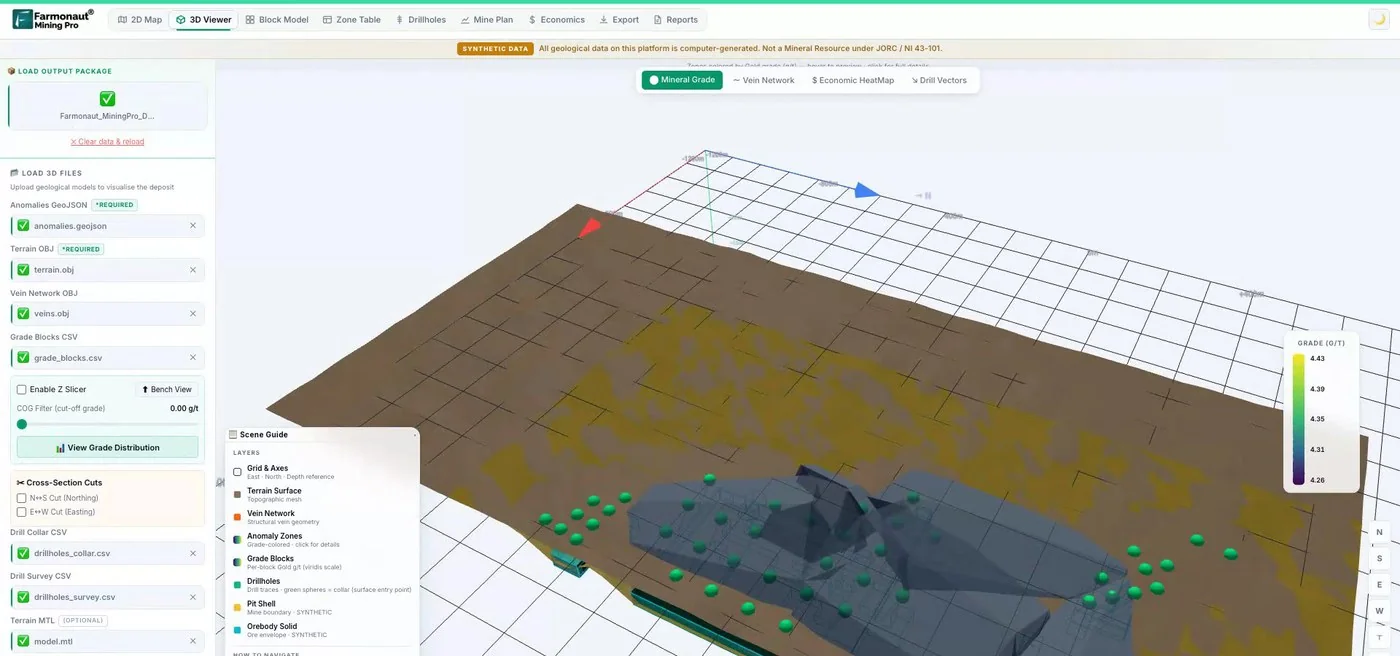
Mining Pro sample view, synthetic data
Keep reading
Sources
- Mosaic Company, Form 10-K for 2025 (SEC): sec.gov
- Mosaic, fourth-quarter and full-year 2025 results: s1.q4cdn.com
- Mosaic, second-quarter 2026 results (4 August 2026): s1.q4cdn.com
- USGS, Mineral Commodity Summaries 2026: Potash: pubs.usgs.gov
- Natural Resources Canada, Potash facts: natural-resources.canada.ca
- Nutrien, full-year 2025 results and 2026 guidance: placera.se
- Government of Saskatchewan, Potash Production Tax and Crown Royalty circular (February 2023): publications.saskatchewan.ca
- Government of Saskatchewan, 2026-27 Budget document: budget.saskatchewan.ca
- Invest Saskatchewan, Saskatchewan mining sector results (7 May 2026): investsk.ca
- Canpotex, company site: canpotex.com
Discussion
Questions, corrections or field experience? Share them below. First-time comments are reviewed before they appear, and your email is never published.
No comments yet. Be the first to add a question or your experience.

 Mwerezi Minerals Company Limited
 Congo Mining Solutions
 Mining SARL
 SenGold Invest SAS
 Sania Corporation
 Sean Mining Limited
 NTS Group (Pty) Ltd
 Mine4Africa
 Lithspo Minerals Limited
 Tintina Mining Group
 Dalgety Minerals Pty Ltd
 Vortex Minerals Pty Ltd
 Faith At Work (Pty) Ltd
 Geotech Mining Solutions plc
 Vulcan International Limited
 Kidepo Associates
 GKY Mining
 Alkimy SARL
 Double A Trading
 Licence holder · Nigeria · Gold + lithium










