

Nevada gold · Buyer guide
Gold Mines for Sale in Nevada: Prices and Buyer Guide
Unpatented Nevada claims were listed at about US$5,000 to US$35,000 in October 2026, and two 2026 project deals paid roughly US$16 to US$75 per resource ounce. This guide sorts what is for sale, what it costs to hold and how to check it.
Key takeaways
- Nevada made about 102 tonnes of gold in 2025, about 64% of US output (USGS, 2026; tonnage from Major Mines via Elko Daily), but one joint venture produced roughly three-quarters of the state’s gold (Nevada Division of Minerals, via Elko Daily, October 2026).
- Nevada claim listings seen on 15 October 2026 asked US$5,000 to US$35,000; BLM then charges US$200 per claim each year to hold them.
- StrikePoint’s Northumberland deal (August 2026) works out near US$16 per resource ounce upfront; SSR’s Roxmore deal (October 2026) near US$75 per ounce on enterprise value.
- An unpatented claim is a right to federal minerals, not title to the land; BLM has taken no new patent applications since 1994.
- Check BLM serial numbers in MLRS, the county recorder filing and the Nevada reclamation permit before paying anything.
In this article
- What Nevada gold property is actually for sale
- Who owns the producing Nevada gold mines
- Recent Nevada gold deals and what buyers paid per ounce
- Nevada gold claims for sale: asking prices and where they are listed
- What it costs to hold Nevada claims after you buy
- Patented or unpatented: what you own in Nevada
- How to buy a Nevada gold property in six steps
- Due diligence checklist before you sign
- How the gold price shapes what sellers ask
- Where satellite data fits in a Nevada property screen
- Frequently asked questions
Nevada gold properties that change hands fall into three price bands. Unpatented claims were listed at about US$5,000 to US$35,000 on seller sites in October 2026. Advanced exploration projects with a resource sold for roughly US$16 to US$75 per ounce in the two deals announced in August and October 2026. Producing mines almost never reach the open market, because one joint venture alone produced roughly three-quarters of the state’s gold in 2025, according to the Nevada Division of Minerals’ Major Mines report as reported by Elko Daily.
This guide is written for consultants and advisers who are asked “what could my client buy in Nevada, and what should it cost?” It sorts the property types, shows dated asking prices and deal prices, explains what a claim costs to hold, and gives a six-step purchase route and a due-diligence list. Two calculators turn an asking price into a price per ounce and a ten-year holding cost. Every price is a dated example, not a quote, and it changes as listings sell.
What Nevada gold property is actually for sale
Nevada produced about 102 metric tonnes of gold in 2025, as reported by Elko Daily from the state’s Major Mines report. That is about 64% of the US total of 160 tonnes, per the US Geological Survey’s Mineral Commodity Summaries 2026. That output sits on a mix of federal land and private land. The Bureau of Land Management (BLM) manages nearly 48 million acres in Nevada, about 63% of the state, so most gold ground is open to staking under the 1872 Mining Law and is held as unpatented claims. A lode claim covers gold in hard-rock veins; a placer claim covers gold in loose gravel, sand or soil. The Nevada Division of Minerals website showed 277,266 BLM mining claims in the state on 26 September 2026, according to Elko Daily.
“Gold mine for sale” can therefore mean five different things. The table below separates them, with the price evidence for each.
| Property type | What the buyer gets | Price evidence | Who usually sells |
|---|---|---|---|
| Unpatented placer or lode claim | The right to explore and mine federal minerals; the surface stays federal | US$5,000 to US$35,000 asking, Nevada listings, 15 October 2026 | Prospectors, claim locators, estates |
| Patented claim or private acreage | Title to the land and the locatable minerals | Priced parcel by parcel; no common benchmark | Landowners, claim holders |
| Exploration project with a resource estimate | Drill data, claims, permits in progress | US$70 million upfront for 4.43 million ounces gold-equivalent (August 2026) | Majors selling non-core ground, juniors |
| Development project or its owner company | A deposit near an operating plant, often with a mine plan | US$464 million equity value for a company with 5.2 million ounces of resource (October 2026) | Public juniors, through a takeover |
| Producing mine | Plant, reserves, permits, reclamation duties | No public price list; deals are private or through company takeovers | Large and mid-tier operators |
Most people who search for a Nevada gold mine for sale can only buy the first two rows, so the claim sections below go into those in detail. Consultants working for funds and mid-tier producers will spend more time on the third and fourth rows, covered in the deals section.
Who owns the producing Nevada gold mines
Before looking at prices, it helps to know who already holds the ounces. In 2025, Nevada Gold Mines produced nearly 2.6 million ounces, roughly three-quarters of the state’s gold. It is a joint venture in which Barrick holds 61.5% and Newmont 38.5%. Our separate page on the Nevada Gold Mines company, its data and what is real covers that operator; this page deals with property you could buy.
Chart
Nevada gold output by operator, 2025
Thousand troy ounces; the largest figure is reported as nearly 2.6 million
The next largest producers are far smaller. Kinross made 318,547 ounces from Bald Mountain and Round Mountain, SSR Mining 153,536 ounces at Marigold, Integra Resources 70,927 ounces at Florida Canyon, and i-80 Gold 62,074 ounces, mainly from Granite Creek. These are listed companies with their own growth plans, not sellers. The chart shows the top eight.
The practical reading for a buyer is that the supply of whole producing mines is thin. What does trade is ground around them: development projects, exploration ground next to an existing plant, and claims. Exploration spending among reporting companies fell from about US$450 million in 2023 to about US$283 million in 2024 (Major Mines, via Elko Daily), so some owners of early-stage ground have had less money to drill it.
Recent Nevada gold deals and what buyers paid per ounce
Three public deals give the best price evidence for larger Nevada gold assets. The figures below come from company releases and trade reports, linked under the table. A price per resource ounce divides the deal value by the ounces in the resource estimate. It is a rough yardstick, because a resource is not a reserve and the ounces in different categories carry different confidence.
Chart
Price paid per ounce of resource in two 2026 Nevada deals
US$ per resource ounce; our arithmetic from the deal values and resource estimates
| Deal | Date announced | Asset | Price | Resource |
|---|---|---|---|---|
| SSR Mining buys Roxmore Resources | 13 October 2026 | Converse, 6 km west of the Marigold mine | US$464 million cash for the shares, C$6.75 each; enterprise value US$392 million | 2.2 million ounces indicated and 3.0 million inferred |
| StrikePoint Gold buys Northumberland from Newmont | 18 August 2026 | Northumberland gold project | US$70 million upfront, plus US$25 million after a feasibility study and US$25 million after production milestones | 2.86 million ounces gold-equivalent indicated and 1.57 million inferred |
| AngloGold Ashanti buys Augusta Gold | 16 July 2025 | Bullfrog and Reward projects near Beatty | C$1.70 per share in cash; equity value about C$152 million, enterprise value about C$197 million | Not stated in the release |
Sources: Mining.com on SSR and Roxmore, eResearch on the Roxmore enterprise value, Streetwise Reports on Northumberland and Augusta Gold’s announcement. The SSR price includes shares in a new exploration company that Roxmore holders also receive, so the headline equity value is not the same as the cash paid for Converse alone.
Our arithmetic from those numbers: the Northumberland upfront payment is about US$16 per resource ounce (US$70 million divided by 4.43 million ounces), or about US$27 if both contingent payments are made (US$120 million). Roxmore’s enterprise value (the equity price plus debt, minus cash) of US$392 million over 5.2 million ounces is about US$75 per ounce, which matches the figure eResearch published. The gap is large because Northumberland is a past-producing site sold by Newmont, a major, to a junior explorer, and mostly on private land, while Converse is an open-pit heap-leach project next to a working plant. Roxmore’s April 2026 preliminary economic assessment put the initial capital cost at US$829 million, so the buyer still has to spend money to turn ounces into a mine.
A resource estimate must meet a disclosure standard before it can be quoted. In the United States, Regulation S-K 1300 requires a qualified person to support a mineral resource and says an initial assessment cannot be used to declare reserves. Canadian-listed companies follow NI 43-101. If a seller quotes ounces without naming the standard, the category and the cut-off grade (the lowest grade that still pays to mine), treat the number as a sales claim.
Calculator
What is an asking price per ounce of resource?
Enter the seller’s price and resource figures. Results update as you type.
- Contained ounces: 964,522 oz
- Value of recoverable gold at your price, before costs: 3,086.5 US$ million
- Asking price as a share of that value: 1.0 %
Example values only, not benchmarks. The gold price is an input: use today’s price. The resource is the seller’s figure, so confirm its category and standard. Contained ounces = tonnes x grade / 31.1035. Recoverable value uses your recovery assumption and ignores mining, processing and capital costs.
Nevada gold claims for sale: asking prices and where they are listed
Claims are the part of the market a private buyer can reach. We read two seller sites on 15 October 2026: Mountain Man Mining’s claim list and the MiningClaimSales listings page. The listings below are examples of what a claim seller asks, not an endorsement, and a sale price can differ from an asking price. The Nevada entries ranged from US$5,000 for a 20-acre placer claim in Washoe County to US$35,000 for a 20.66-acre lode claim sold as a historic producer.
Chart
Asking prices of five Nevada gold claims, October 2026
US$ thousand; claim size differs (20 to 40 acres)
| Listing | County | Type and size | Asking price | Listing site |
|---|---|---|---|---|
| Eureka Comstock Placer | Washoe | Placer, 20 acres | US$5,000 | Mountain Man Mining |
| Belcher Canyon | Nye | Unpatented placer, 20 acres | US$9,997 | Mountain Man Mining |
| Winna-Winner Claims | Humboldt | Past producer, 40 acres | US$10,000 | Mountain Man Mining |
| Rye Patch gold claim, Section 14 | Not stated on the list page | Placer | US$11,700 | MiningClaimSales |
| Nevada historic producer | Not stated on the list page | Lode, 20.66 acres | US$35,000 | MiningClaimSales |
The seller of the Belcher Canyon claim says it sits in Big Smoky Valley, in the same valley as Kinross’s Round Mountain mine, on a 20-acre unpatented placer claim for a cash price of US$9,997. The listing locates the claim from a US Geological Survey database point for a nearby gold prospect and states that the outline on its map is illustrative, not a surveyed boundary. That is typical: the price pays for a legal position and a story about the district, not for a measured deposit. The 20.66-acre size is the maximum for a Nevada lode claim, 1,500 feet by 600 feet, set out in the Nevada Bureau of Mines and Geology’s claim procedures guide. A placer claim is limited to 20 acres per locator under BLM rules.
Listing sites, claim brokers, classified ads and auction platforms all carry Nevada claims. The BLM Mineral and Land Records System (MLRS) is the place to confirm that a claim exists and who holds it, whichever platform you use. A seller of properly recorded claims should be able to give you the BLM serial numbers, as BLM’s claims packet explains.
What it costs to hold Nevada claims after you buy
The purchase price is the smaller part of owning a claim over a decade. The BLM charges an annual maintenance fee of US$200 per claim, due on or before 1 September. A lode claim pays that per claim; a placer claim pays it per 20 acres or part of that. New lode, mill and tunnel claims located on or after 1 September 2024 also pay a US$25 processing fee and a US$49 location fee, which makes US$274 for a new claim in its first year. A buyer of an existing claim does not repeat the location fees, but pays US$15 per claim to record the transfer with BLM.
Chart
Federal cost of holding claims you buy
US$ cumulative; US$15 transfer per claim, then US$200 per claim each year; no county fees or waiver
Claimants with ten or fewer claims nationwide can file a small-miner waiver (Form 3830-2) instead of paying the US$200 fee. They then file an affidavit of assessment work with a US$15 per claim fee by 30 December, and in the first waiver year also a notice of intent to hold (another US$15 per claim). Nevada adds county steps on top of the federal ones. Per the Nevada Division of Minerals filing calendar, a new claim needs a certificate of location and a claim map filed with the county recorder and with BLM within 90 days, and the county affidavit of annual assessment work and notice of intent to hold is due on 1 November. Filing the wrong one of the two federal documents can forfeit the claim, so the calendar is worth reading before each autumn. County recording fees vary, and the claim procedures guide tells claimants to check with the recorder.
The chart multiplies the federal numbers for several holdings. It assumes the buyer pays US$15 per claim for the transfer, pays the US$200 fee each year, ignores county fees and does not use the waiver. Ten claims cost about US$20,150 in federal fees over ten years, which is about US$2,015 per claim, or 20% to 40% of the US$5,000 to US$10,000 asking prices for single claims listed above. Use the calculator for your own count, years and fee basis.
Calculator
What will your claims cost to hold?
Enter your number of claims and years. Results update as you type.
- Cost per claim: $2,015
- Average cost per year: $2,015
Example values only. Defaults use the BLM transfer fee of US$15 per claim and the US$200 annual maintenance fee (BLM, fetched 15 October 2026). To model the small-miner waiver, enter 15 as the yearly fee. County recording fees vary, so ask the county recorder and enter them as a one-off cost per claim.
Patented or unpatented: what you own in Nevada
An unpatented claim gives the holder the right to the minerals, not ownership of the land. The BLM’s claims packet states that the surface of an unpatented claim is not private property and that ownership stays with the United States. Since 1 October 1994, Congress has barred BLM from accepting new patent applications, so the stock of patented claims, which are private land with title to the locatable minerals, is essentially fixed, as BLM’s mining claims overview explains. A patented claim can be bought and sold like other real estate, and the deed is recorded with the county. An unpatented claim is transferred with a quitclaim deed (a deed that passes whatever interest the seller holds, without warranting it). BLM requires the deed to be recorded with the county first and then filed with BLM, at US$15 per claim per transferee.
The difference matters in three ways. First, an unpatented claim carries yearly fees and filing deadlines that a buyer inherits, and a missed deadline can end the claim. Second, unpatented claims limit surface use to mineral prospecting, mining and related activity (30 USC 612), so a buyer who wants a home, farm or road on the land needs patented or private ground. Third, the transfer paperwork differs: an unpatented claim moves by deed and a BLM filing, while patented land follows ordinary county land records. Our earlier page on land use on Nevada mining ground covers the surface side.
How to buy a Nevada gold property in six steps
The order below keeps the cheap checks ahead of the expensive ones. A consultant can run steps one to three from a desk in a day or two.
- Name the property type. Decide whether the client needs a claim, private land, or a project with a resource. The type sets the price band, the paperwork and the adviser you need.
- Confirm the legal position. Ask for the BLM serial numbers, look each one up in MLRS, and check that the county recorder holds the same filing. Confirm that the current maintenance fee or waiver is paid.
- Check the ground and the land around it. Mark the claim boundary on a map and test it against other claims, private parcels, roads, towns and protected areas before any site visit.
- Test the geology. Ask for assays, drill logs and maps. Compare the district’s history with the claim’s own evidence, because the district’s ounces do not belong to a single claim.
- Agree terms. Use a written purchase agreement, an escrow or title company where available, and a deed that names each claim by BLM serial number. Options and staged payments are common for projects.
- Record the transfer. Record the deed with the county recorder, then file the transfer with BLM, and diarise 1 September, 1 November and 30 December.
The Farmonaut video below explains why a claim is not the same as owning the land, which is the point many first-time buyers miss.
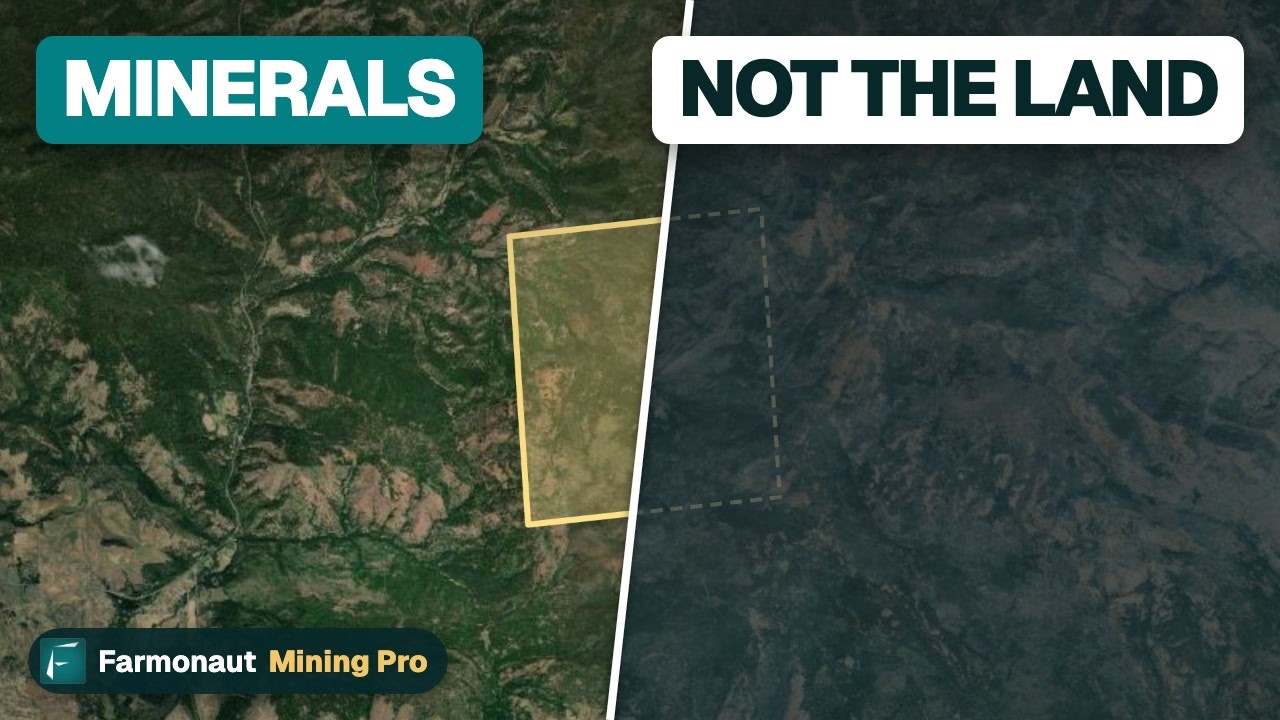
▶ Explains why owning a gold claim is not owning the land, and how to check the ground before buying. · 3:19
Due diligence checklist before you sign
Use these checks in order of cost. Each one can end a deal early.
Land access and ownership
List every owner of surface and minerals. Check whether other claims overlap the ground, whether a patented parcel splits it, and whether a town, road or protected area blocks the best part. A good deposit can be unmineable if the land cannot be reached.
Permits and reclamation
Nevada’s Division of Environmental Protection says an operator needs a Reclamation Permit before any exploration, mining or milling that disturbs more than 5 acres, and must file a surety (a financial guarantee) with the state or the federal land manager so that reclamation is paid for if the operator walks away. The agency’s Bureau of Mining Regulation and Reclamation also issues Water Pollution Control Permits. For a past-producing site, ask who holds the permits and the surety today and whether they transfer with the property.
Resource quality
Ask for the resource category, the cut-off grade, the gold price used, and the name of the qualified person. A resource at a low cut-off grade can look large and still not support a mine at a normal gold price.
Taxes on a producing mine
Mines that produce pay Nevada’s net proceeds of minerals tax, a sliding scale between 2% and 5% of net proceeds. Per the Nevada Division of Minerals’ May 2026 presentation, the industry paid US$191 million of that tax in 2024 on US$9.7 billion of gross proceeds. A separate gold and silver excise tax, introduced in 2021, takes 0.75% of taxable revenue between US$20 million and US$150 million and 1.1% above US$150 million. The state’s Department of Taxation bases the net proceeds tax on actual production from operating mines, so a claim that is not producing does not trigger it.
Seller and records
Ask for the chain of title, the assessment-work filings for past years, and any dispute notices. Keep the originals of anything the seller supplies and cross-check them against MLRS and the county.
The next video shows how a good rock can still be unmineable when land access blocks it.
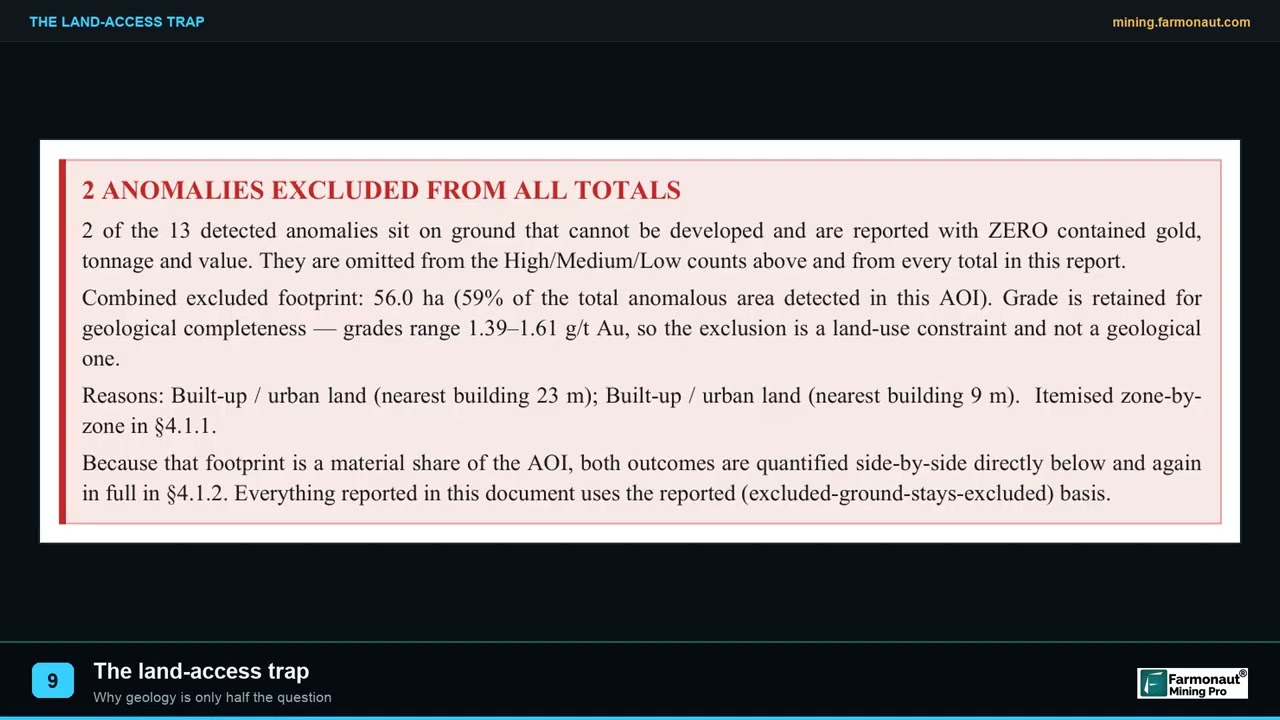
▶ A short example of rock that is good on paper but blocked by land access. · 2:05
How the gold price shapes what sellers ask
Asking prices move with gold, but with a delay and a lot of noise. Gold spot was US$4,157.70 per troy ounce on Kitco on 15 October 2026 at 2:50 pm Eastern time, with a day range of US$4,099.20 to US$4,169.40. The USGS series in the chart shows the longer move: the average price in 2021 was US$1,801 per troy ounce and its estimate for 2025 is US$3,300, an increase of 83%.
Chart
US average gold price, 2021 to 2025
US$ per troy ounce; 2025 is a USGS estimate
The price matters most for the resource-based deals, because a resource only counts if the gold price supports it. The Nevada Division of Minerals puts Nevada’s 2024 gold output at 3,479,748 ounces, worth about US$8.29 billion, and Elko Daily reports 2025 output at a little over 3.38 million ounces, down 2.81%, with value up 42.16%. Higher prices therefore lifted the value of the same ground without more ounces. Before you accept any price, rerun the economics at a price lower than today’s spot, so the deal still works if gold falls. The second calculator on this page does that for an asking price.
Where satellite data fits in a Nevada property screen
A satellite screen cannot replace drilling or a resource estimate, and it does not give a result that meets a reporting standard. What it can do is cut the list of properties to visit. Farmonaut analyses satellite data over an area of interest supplied as coordinates, a KML or KMZ file, or a polygon, and flags alteration zones, faults and other patterns linked to mineralisation. The output is an exploration target map that sits ahead of any resource estimate, and it can cut months of early screening to days. You can send a boundary through the satellite mineral detection service or ask for a quote through the mining query form.
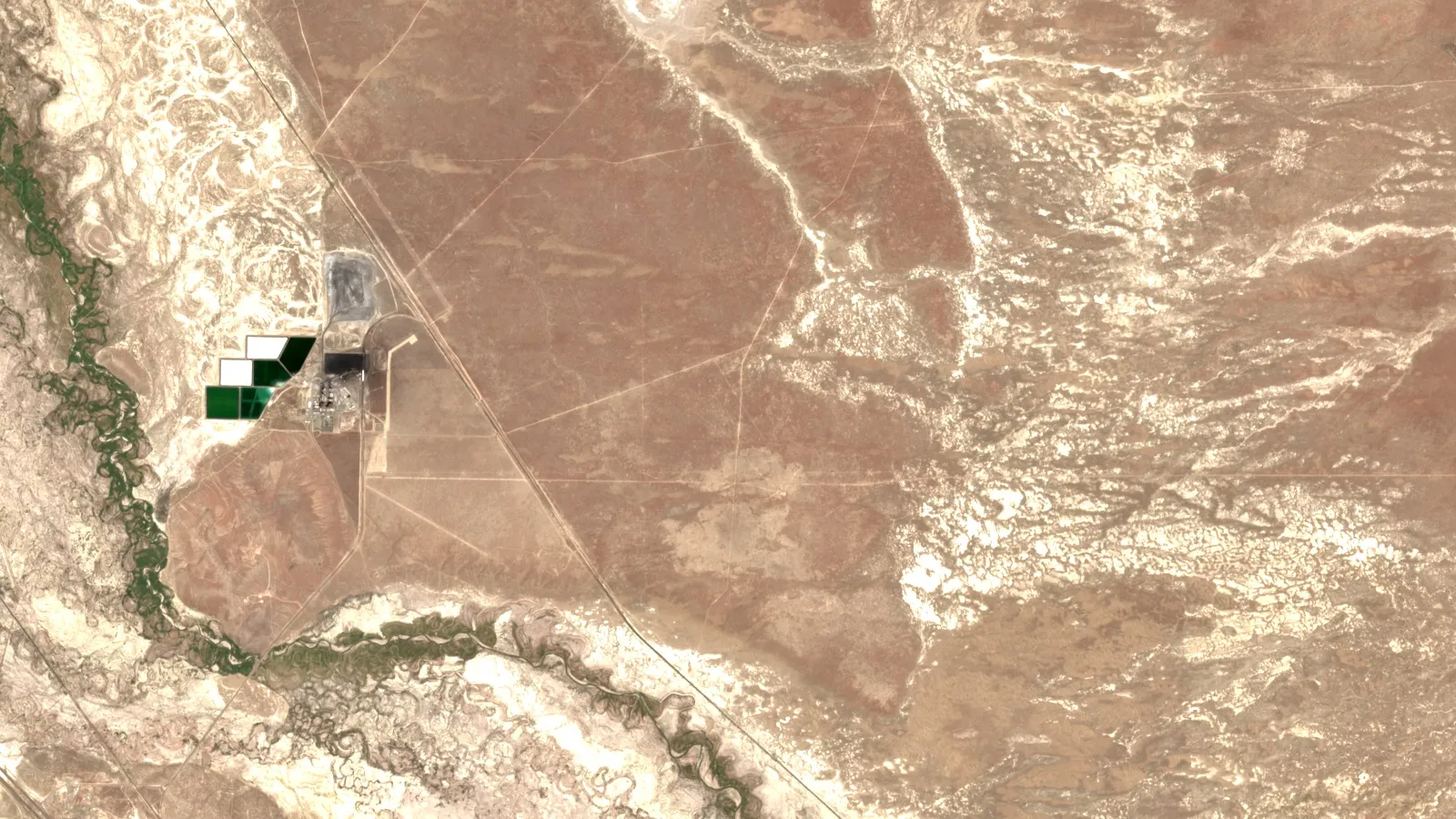
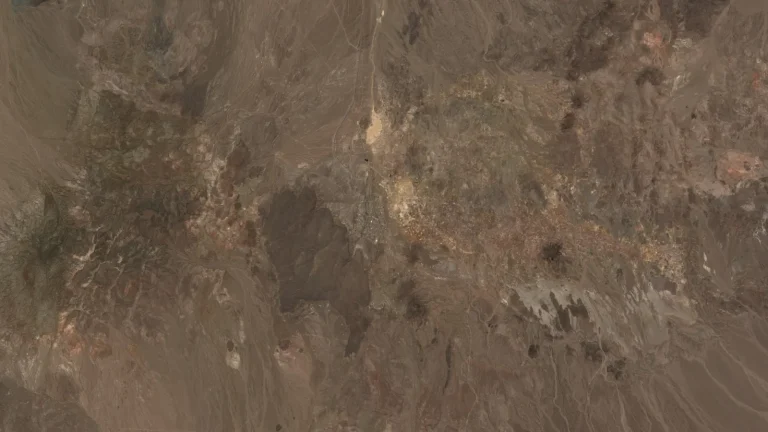
The hero image at the top of this page is a Sentinel-2 summer composite of the Marigold and Converse area in Humboldt County, built from public satellite data. The same kind of image, laid over a claim map, shows roads, disturbance and neighbouring ground before anyone drives out. For a deeper look at the geology of the state’s other main gold belt, see our guide to the Walker Lane gold trend, and for district maps by claim date, gold deposits in Nevada with claim dates and satellite targets. A related earlier guide covers how mining land is managed in Nevada.
The last video lists what a satellite screen cannot do, which is the part to read before paying for one.
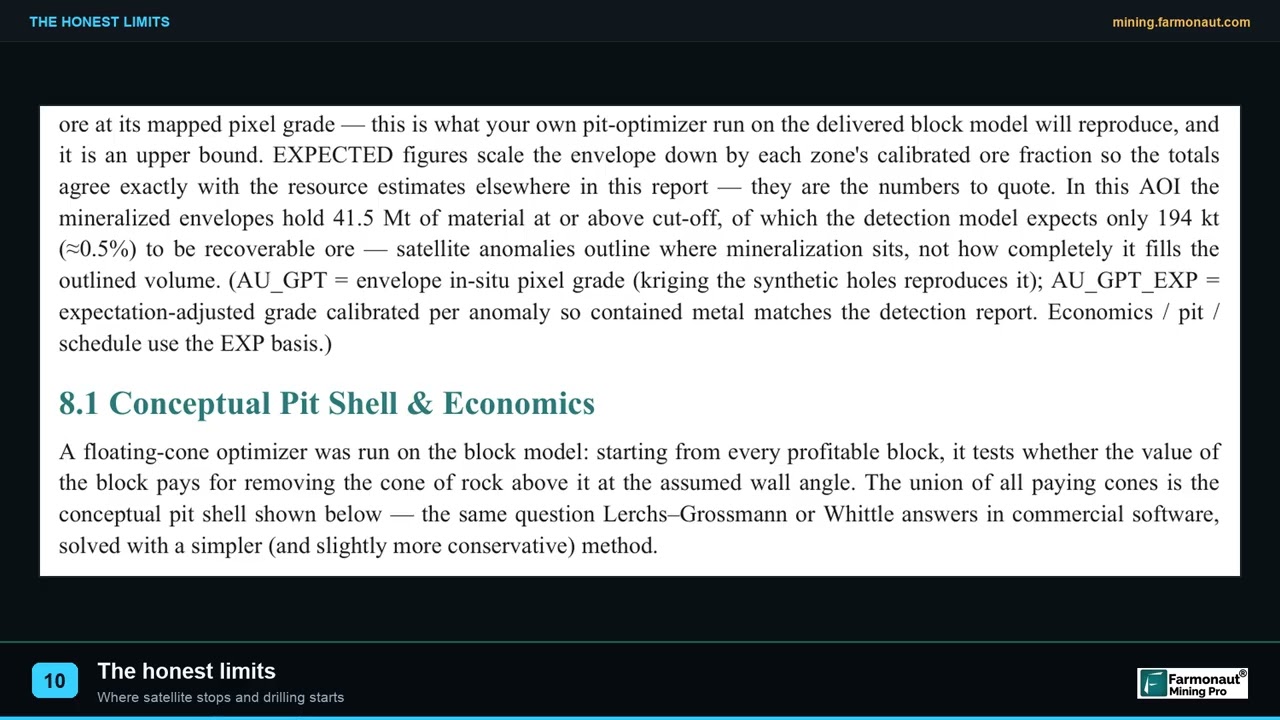
▶ The three limits of satellite mineral exploration that matter in due diligence. · 2:08
If this topic matters to you, read Gold Mines for Sale in Africa: Buyer Guide and Rules next.
Frequently asked questions
Are there gold mines for sale in Nevada?
Yes, but mostly small ones. Unpatented claims and small past-producers are listed on claim-selling sites for US$5,000 to US$35,000 (October 2026). Larger projects change hands through company takeovers, such as the Roxmore and Northumberland deals in 2026. Whole producing mines are rarely offered.
How much does a gold mine cost in Nevada?
There is no single price. A claim costs thousands of dollars, an exploration project with a resource has sold for US$16 to US$75 per resource ounce in recent public deals, and a producing mine is valued on its reserves, costs and gold price. Use the price-per-ounce calculator above to compare an asking price with the ounces on offer.
How much is a gold claim in Nevada?
Seller listings seen on 15 October 2026 asked US$5,000 for a 20-acre placer claim in Washoe County, US$9,997 for one in Nye County and US$35,000 for a 20.66-acre lode claim. Holding costs add US$200 per claim per year in BLM fees, plus county filings.
Can I buy a producing gold mine in Nevada?
You can buy one only if the owner chooses to sell or if you buy the owning company. The state’s output is concentrated: one joint venture produced roughly three-quarters of Nevada’s gold in 2025. A buyer needs to be able to fund the permits, the reclamation surety, the plant and working capital.
Who owns the most gold mines in Nevada?
Nevada Gold Mines, the Barrick and Newmont joint venture, produced nearly 2.6 million ounces in 2025, followed by Kinross, SSR Mining, Integra Resources and i-80 Gold. See our page on the Nevada Gold Mines company for that operator.
How do I check that a Nevada mining claim is valid?
Ask the seller for the BLM serial number of each claim and look it up in MLRS, then confirm the filing at the county recorder and check that the maintenance fee or waiver for the current assessment year is paid. MLRS shows claim status; it does not prove that the claim contains gold.
What are the yearly fees on a Nevada claim?
BLM charges US$200 per claim by 1 September, or the small-miner waiver route with a US$15 per claim affidavit by 30 December for holders of ten or fewer claims. Nevada also requires an affidavit of assessment work and notice of intent to hold with the county recorder by 1 November. County fees vary.
What is the difference between a patented and an unpatented claim?
A patented claim is private land with title to the locatable minerals. An unpatented claim is a right to explore and mine federal minerals; the surface stays federal and the claim needs yearly fees. BLM has accepted no new patent applications since 1 October 1994.
How big is a Nevada lode claim?
A lode claim can be up to 1,500 feet long and 600 feet wide, which is 20.66 acres. A placer claim is up to 20 acres per locator, and an association of eight or more locators can hold up to 160 acres.
Do I need a permit to mine a claim in Nevada?
Owning a claim does not give permission to disturb the ground. In Nevada an operator needs a Reclamation Permit before exploration or mining that disturbs more than 5 acres, with a reclamation surety, and may need BLM approval on federal land. Check with BLM and the Nevada Division of Environmental Protection before any work.
Does a Nevada gold mine pay tax if it is not producing?
The net proceeds of minerals tax is based on actual production from operating mines, so a non-producing claim does not owe it. Property on the site, such as buildings and equipment, is taxed separately, so confirm the full tax position with the county assessor and the Department of Taxation.
This page is for information only. It is not investment advice and it is not legal advice. Asking prices are dated examples from seller sites and change as listings sell. Confirm claim status, fees and permits with the BLM, the county recorder and the Nevada regulators before you buy. Old mine workings are dangerous: never enter shafts or adits, and take advice and get access rights before any site visit.
Farmonaut mining
Map your mining site from space
Send a KML, KMZ or polygon and Farmonaut screens the ground for exploration targets before your client pays for a site visit.

Mining Pro sample view, synthetic data
Keep reading
Sources
- USGS, Mineral Commodity Summaries 2026: Gold (February 2026): pubs.usgs.gov
- Elko Daily, Nevada’s gold production dips, but value hits new record (October 2026; reports the Nevada Division of Minerals Major Mines report): elkodaily.com
- Nevada Division of Minerals, 2024-2026 Nevada Mining State of the State (4 May 2026): minerals.nv.gov
- Nevada Division of Minerals, Mining claims filing timelines: minerals.nv.gov
- Nevada Bureau of Mines and Geology, Mining claim procedures for Nevada prospectors and miners (Special Publication 6, 2019): minerals.nv.gov
- BLM, Nevada frequently requested maps: blm.gov
- BLM, Mining claims and sites: blm.gov
- BLM, Mining claim fees: blm.gov
- BLM, Mineral and Land Records System (MLRS): blm.gov
- BLM, Mining Claims and Sites on Federal Lands: blm.gov
- BLM, Mining claims packet (February 2026): blm.gov
- Nevada Division of Environmental Protection, Bureau of Mining Regulation and Reclamation: ndep.nv.gov
- Nevada Department of Taxation, Net Proceeds of Minerals Tax: tax.nv.gov
- Cornell Law School, 17 CFR 229.1300 (Regulation S-K 1300): law.cornell.edu
- Kitco, Gold price chart (15 October 2026): kitco.com
- Mining.com, SSR to buy Roxmore for $464M (13 October 2026): mining.com
- eResearch, SSR Mining to acquire Roxmore for US$464 million (14 October 2026): eresearch.com
- Streetwise Reports, StrikePoint agrees to acquire Northumberland for US$70M upfront (20 August 2026): streetwisereports.com
- Augusta Gold, Acquisition by AngloGold Ashanti for C$1.70 per share (16 July 2025): newswire.ca
- Mountain Man Mining, Belcher Canyon claim listing (seen 15 October 2026): mountainmanmining.com
- Mountain Man Mining, Active claims list (seen 15 October 2026): mountainmanmining.com
- MiningClaimSales, Active claim listings (seen 15 October 2026): miningclaimsales.com
Discussion
Questions, corrections or field experience? Share them below. First-time comments are reviewed before they appear, and your email is never published.
No comments yet. Be the first to add a question or your experience.

 Huckleberry Garnet LLC
 Dalgety Minerals Pty Ltd
 Vortex Minerals Pty Ltd
 Faith At Work (Pty) Ltd
 Geotech Mining Solutions plc
 Vulcan International Limited
 Kidepo Associates
 GKY Mining
 Alkimy SARL
 Double A Trading
 GemSprout Metals Limited
 Qader Group
 Ileys General Trading
 SG Gold Mining LLC
 VRV Global Pte Ltd
 Omsri International FZE
 G.I.T.T.
 Jaunita Erss Ltd
 Almosi SARL
 SRK Consulting
 Berks Gold Limited
 Mwerezi Minerals Company Limited

 Exploration consultancy · South Africa · Gold










