

Pebble Mine Alaska: Project 2026 Impact & Updates
Meta Description: Pebble Mine Alaska balances economic potential and environmental concerns for 2026. Explore project updates, economic impact, indigenous rights, and environmental stewardship.
“Over 80% of Bristol Bay’s 46 million salmon are at risk if the Pebble Mine project proceeds.”
Overview of Pebble Mine Alaska: Location, Scale & Contention
The pebble mine alaska endeavor is one of North America’s largest, most closely scrutinized mining projects. The alaska pebble mine project is located in southwest Alaska, near the headwaters of the prolific Bristol Bay watershed, and comprises a vast copper, gold, and molybdenum deposit. As a contentious and extensive mining proposal, it continues to hold significant relevance for the region’s future, particularly as the world navigates supply chain disruptions and a rapidly increasing demand for critical minerals.
This project sits atop one of the world’s largest undeveloped resources of copper and gold, crucial for many industries, including electronics, renewable energy technologies, and major infrastructure projects. With global attention intensifying around mining and resource extraction in sensitive environments, Pebble Mine Alaska is both promising and polarizing.
The alaska pebble mine project is poised to become a leading source of copper, gold, and molybdenum, offering both substantial economic benefits and deep-rooted environmental and indigenous rights concerns. This unique intersection of opportunity and challenge defines the debate around the mine as of 2025, and looking ahead to 2026 and beyond.

Geographic Context and Natural Value
- Location: Near Illiamna Lake, southwest Alaska, at the headwaters of the Nushagak and Kvichak rivers – the lifeblood of the Bristol Bay watershed.
- Watershed Importance: Home to the world’s largest wild salmon populations, vital to the local and indigenous communities as well as global seafood markets.
- Deposit Scale: One of the largest undeveloped copper-gold-molybdenum deposits in the world, with significant untapped economic potential.
“The Pebble Mine area is home to 25 indigenous communities relying on the ecosystem for cultural and economic survival.”
Economic Potential of Pebble Mine Alaska: Output, Jobs, and Infrastructure in 2026
Proponents highlight that developing this mine could spur significant economic growth in Alaska and contribute to the United States’ strategic resource independence.
- Copper: Essential for electric vehicles, wind turbines, solar panels, and advanced electronics due to its superior electrical conductivity. As the green energy transition accelerates, demand is increasing globally.
- Gold: Traditionally a safe-haven asset; critical for finance, jewelry, electronics, and now renewable technology components.
- Molybdenum: Used in steel alloys, chemicals, and oil & gas industries for its strength and corrosion resistance.
With the Pebble Mine Alaska project, the region could see:
- Substantial job creation – Thousands of direct and indirect jobs during both construction and operation phases.
- Business opportunities for local communities – From hospitality, logistics, to materials supply and equipment maintenance.
- Tax revenues and royalties – Boosting Alaska’s dependency on the resource extraction sector for statewide development.
- Infrastructure improvements – New roads, ports, and power generation facilities built for the mine, but offering long-term legacy benefits for remote communities and broader commercial activities.
Amid global supply chain disruptions, the alaska pebble mine project promises to shore up critical mineral supply for domestic industries. Such development, however, must be cautiously balanced to prevent over-dependence on a single sector of the economy and to diversify Alaska’s long-term prosperity.

Key Infrastructure Developments
- Roads: 90+ miles of new routes to link the mine with ports and air transport hubs.
- Ports: Enhanced harbors to enable shipping of extracted minerals and supply delivery.
- Power Generation: New transmission lines and power facilities serving both the mine and adjacent communities, potentially reducing the region’s dependence on diesel generators.
These projects would not only facilitate the Pebble Mine but could also transform accessibility, efficiency, and economic activity throughout southwest Alaska.



Our Farmonaut platform provides real-time satellite monitoring, resource management, and AI advisory for large infrastructure and mining projects like Pebble, empowering stakeholders to optimize decisions, manage environmental impact, and support sustainable economic activities directly from any device.
Environmental Impact of Pebble Mine Alaska: Ecosystem, Water, and Salmon
The primary opposition to Pebble Mine Alaska stems from its proximity to one of the world’s richest and most sensitive aquatic ecosystems. The Bristol Bay watershed, where the deposit is located, supports the world’s largest wild salmon fishery — a vital engine for the region’s commercial, recreational, and indigenous communities.

Why Is the Ecosystem at Risk?
- Water Quality: Mining processes often involve large-scale extraction, use of chemicals, and tailings ponds — containment structures for waste byproducts. Any accidental leaks or failures could irreparably harm water quality downstream.
- Salmon: Salmon populations are extremely sensitive to water quality changes. Even slight alterations can disrupt spawning cycles, impacting not just fish but the entire food web.
- Ecosystem Impacts: Disrupted habitats and increased sedimentation can jeopardize birds, bears, and other species, destabilizing the rich and interconnected ecosystem of southwest Alaska.
Key Environmental Concerns:
- Mine Tailings: Large quantities of mine tailings stored in artificial dams present a risk of leaks/spills that could devastate thousands of acres of wetlands, rivers, and lakes. Lessons from past mining disasters underscore the gravity of these threats.
- Land Disturbance: The project’s scale would require removing vast amounts of overburden, clearing forests, and altering waterways, which may have lasting effects on flora, fauna, and hydrological cycles.
- Long-Term Management: Even after mine closure, continual monitoring and remediation are necessary to ensure that no harmful chemicals (e.g., cyanide, heavy metals) leach into the environment.

Conservation groups, fisheries experts, and community activists believe the risks to Bristol Bay’s salmon and local biodiversity may outweigh the potential economic benefits. The threat of even a 4-5% annual reduction in salmon stocks could lead to cascading impacts on both ecology and economy.
The need for robust environmental stewardship, transparent accountability, and comprehensive risk assessments has never been more critical for the region’s future.
Indigenous Rights and Impacts: Alaska Pebble Mine Project
The alaska pebble mine project area is home to a vibrant tapestry of indigenous peoples, including the Yup’ik, Dena’ina, and Alutiiq — whose livelihoods, cultural traditions, and spiritual beliefs are interwoven with the land and water. The project‘s footprint would intersect traditional hunting, fishing, and gathering grounds, threatening not only sustenance but cultural survival.
- Food Security: Indigenous communities rely on wild salmon, berries, and game as dietary staples. Disruptions would increase dependency on shipped foods, raising costs and health issues.
- Cultural Sovereignty: The mine could compromise access to sacred sites and erode the intergenerational knowledge passed down through fishing, trapping, and land stewardship.
- Legal and Ethical Challenges: Recent years (2020–2025) have seen a surge in tribal activism, legal objections, and national calls for respecting indigenous sovereignty in permitting and policy.
Respect for indigenous rights entails genuine consultation, the right to free, prior, and informed consent (FPIC), and equitable participation in decision-making as outlined in both US and international frameworks.
Our Farmonaut platform offers traceability tools using blockchain for mining and supply chain transparency, supporting both industry accountability and indigenous stakeholder inclusion. Learn more about traceability and indigenous inclusion here.

Policy and Permitting in 2025–2026: Pebble Mine Alaska
The permitting process for Pebble Mine Alaska is amongst the most closely scrutinized and complex in North America, involving overlapping federal, state, and tribal authorities. As of 2026, the regulatory path remains fraught with legal challenges, political shifts, and growing public scrutiny.
Current Regulatory Landscape and Legal Challenges
- Federal Oversight: The U.S. Army Corps of Engineers (USACE) leads the environmental impact statement (EIS) process, assessing threats to watersheds under the Clean Water Act.
- State of Alaska: State agencies balance ecological responsibility with economic interests, issuing water discharge, habitat, and land use permits.
- Biden Administration: Policy shifts in 2021–2025 emphasized environmental justice and indigenous partnerships, increasing requirements for cumulative impacts analysis, social outreach, and transparent reporting.
- Legal Actions: Ongoing lawsuits by tribes, municipalities, and environmental groups assert lapses in due diligence and consultation.

Emerging regulations require continuous environmental monitoring, advanced tailings management protocols, robust emergency response plans, and more effective mechanisms for indigenous consultation and consent.
For businesses and regulatory bodies, utilizing resources like the Farmonaut API (see Farmonaut API for integration) enables live compliance monitoring and evidence-backed reporting on land disturbance, carbon outputs, and real-time environmental changes.
For developers:
Access the Farmonaut API documentation for seamless integration.
For financial institutions:
Satellite-based verification services from Farmonaut foster more transparent loans and insurance processes for mining and infrastructure projects in Alaska. Learn more about our verification solutions.
Comparative Impact Assessment Table: Pebble Mine Alaska Project 2026
Below we present a comprehensive table summarizing core estimations regarding the economic benefits, environmental impacts, and indigenous community effects for Pebble Mine Alaska. These values are synthesized from available projections (2025), peer-reviewed studies, and policy documents.
| Factor | Estimated Value (2025) | Potential Positive Impact | Potential Negative Impact | Source/Notes |
|---|---|---|---|---|
| Economic Output | $500 million/year (operation phase est.) | State revenue, export diversification, economic growth | Over-reliance on extraction economy | USGS, Alaska DNR, Pebble Partnership |
| Job Creation | ~2,000 direct, up to 5,000 indirect | Job and skills development for local residents | Displacement of traditional jobs (fishing, tourism) | Alaska Dept. of Labor, EIS |
| Water Usage | ~12 million gallons/year | None | Increased stress on watershed, pollution risk | EIS, company reports |
| Risk to Salmon Population | Up to 30% in key tributaries; 5–10% region-wide | None | Loss of biodiversity and fishery revenues | Bristol Bay Research, peer journals, EPA |
| Land Disturbance | +12,000 acres (approx., construction/operation) | Temporary job influx | Destruction of habitats, landscape alteration | EIS, conservation groups |
| Affected Indigenous Communities | 25 (entire region) | Potential for local consultation jobs & revenue sharing | Disruption of food security, cultural loss, health risks | Tribal council filings, EIS, Alaska Native Groups |
Note: All data points are estimates, subject to revision with more detailed project disclosures and ongoing assessments. Sources: EIS, USGS, Alaska DNR, academic research, and indigenous council submissions.
Innovation and Monitoring: Technologies for Sustainable Mining
As the debate around Pebble Mine Alaska intensifies, there is consensus on one essential point—robust environmental monitoring and innovative management will be necessary, regardless of whether the project ultimately proceeds.
Advances in satellite technology, AI, and blockchain have enabled real-time, large-scale monitoring of ecological variables, supporting transparency, compliance, and adaptive management in mining projects like Pebble.

- Satellite-Based Monitoring: Organizations can use satellite imagery to track mine expansion, vegetation disturbance, water quality anomalies, and land reclamation efforts.
- Advanced Tailings Management: New containment systems leverage sensors, geotextiles, and AI alerts, reducing risk of breaches that threaten sensitive ecosystems.
- Continuous Water Quality Monitoring: IoT devices and remote sensors provide ongoing data for public transparency and rapid response.
- Blockchain Traceability: Ensures every material or product extracted from mining sites is traceable, reducing environmental crime and promoting responsibly sourced minerals.
For operations managers seeking multi-site fleet monitoring, our Fleet Management module helps optimize logistics and reduce carbon emissions across mines and infrastructure assets using satellite and telematics data.
We empower mining operators to track their carbon output and implement reduction strategies with Farmonaut Carbon Footprinting services.
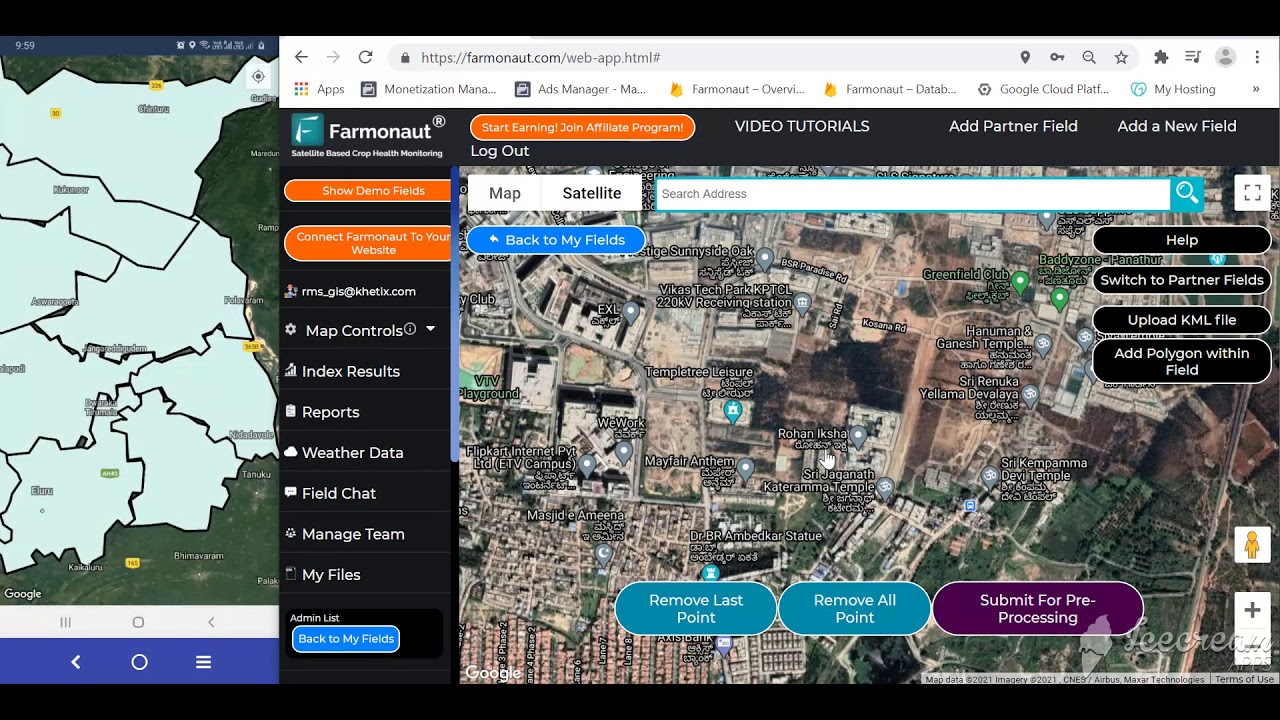
The Future Outlook: Balancing Economic and Environmental Concerns in Pebble Mine Alaska
Looking ahead to 2026 and beyond, Pebble Mine Alaska stands at a crossroads reflective of broader global debates around resource extraction, climate change, and indigenous rights. The future will be shaped by:
- Rising Global Demand: Critical minerals like copper are essential to the green transition and digital infrastructure, pushing up demand and investment in new mining projects.
- Sustainable Mining Practices: Pressure from stakeholders, consumers, and regulators for low-impact, high-transparency supply chains is intensifying. Asset owners must invest in green tech and adaptive restoration strategies.
- Stakeholder Engagement: Lasting, equitable benefits for local and indigenous communities will require ongoing consultation, revenue-sharing models, and respect for sovereignty.
- Legal and Policy Evolution: With each permit cycle, legal decisions set precedents for other resource-rich but environmentally sensitive regions globally.
The ultimate test for Pebble Mine Alaska—and future projects in the region—will be whether sustainable development is truly achievable. Transparent, rigorous, and participatory processes, rooted in science and indigenous knowledge, are vital for the region’s resilience and prosperity.
How Farmonaut’s Satellite Technology Advances Sustainable Mining and Resource Management
At Farmonaut, we believe that satellite-driven digital transformation can play a pivotal role in making natural resource development more sustainable, efficient, and inclusive.
- Satellite-Based Monitoring: We enable remote, frequent tracking of mine boundaries, disturbances, vegetation loss, and recovery in Alaska and other resource-rich areas.
- AI-Driven Analysis: Our Jeevn AI system delivers real-time, actionable insights tailored to the unique operational challenges in mining, alerting managers to emerging risks and inefficiencies.
- Blockchain Traceability: We help clients assure responsible sourcing and supply chain transparency for critical minerals, enhancing trust and reputation.
- Carbon Footprint Tracking: Farmonaut quantifies and verifies carbon emissions linked to mining activity, supporting compliance and enabling positive ESG (Environmental, Social, and Governance) reporting.
- Stakeholder Tools: From governments to indigenous councils, our solutions support evidence-based decisions in permitting, planning, and community engagement.
Try our Farmonaut apps and API for robust, affordable satellite monitoring worldwide:
Subscribe to Farmonaut’s satellite-based mining, agriculture, and infrastructure management plans below:
FAQ – Pebble Mine Alaska: Project 2026 Impact & Updates
- What is the Pebble Mine Alaska project?
The Pebble Mine project in Alaska is a large-scale mining proposal to extract copper, gold, and molybdenum from deposits near the headwaters of the Bristol Bay watershed in southwest Alaska. - Why is Pebble Mine so controversial?
Pebble Mine is controversial due to its location near Bristol Bay, one of the world’s most productive and sensitive wild salmon ecosystems, and concerns about environmental damage, indigenous rights, and cultural preservation. - What are the economic benefits?
If implemented, the project could generate around $500 million/year in economic output, create thousands of jobs, and result in substantial infrastructure investments in Alaska. - What are the environmental risks?
Main risks include water pollution from tailings, habitat destruction, reduced salmon populations, and potential long-term consequences for the wider region’s biodiversity and ecosystem stability. - How could Pebble Mine affect indigenous communities?
The mine may disrupt food security, access to sacred lands, and cultural practices for at least 25 indigenous communities, risking loss of traditions and increasing social and health challenges. - What’s new in the 2025–2026 permitting process?
New federal and state guidelines emphasize environmental review, cumulative impacts, and mandatory indigenous consultation, leading to prolonged legal processes and uncertain operational timelines. - Are there sustainable ways to manage projects like Pebble Mine?
Yes. Integrating satellite monitoring, blockchain traceability, and carbon footprint tracking can promote transparency, minimize impacts, and help reconcile economic, environmental, and social objectives. Farmonaut’s platform supports these innovations. - How can Farmonaut’s technology help mining projects in Alaska?
Farmonaut offers real-time, cost-effective satellite insight for environmental monitoring, resource management, fleet tracking, and traceability, supporting compliance, reporting, and sustainable operations across mining and adjacent sectors.
Conclusion: Pebble Mine Alaska – Weighing the Future
As the world braces for more profound disruptions in supply chains, critical mineral demand, and environmental priorities, the Pebble Mine Alaska controversy epitomizes the challenge of balancing economic potential and environmental concerns in 2025 and 2026.
The choices made in Alaska ripple far beyond its borders, setting precedents for resource management in North America and globally. Whether the Pebble Mine project proceeds or is halted, the lessons learned will be invaluable as we all grapple with the need for sustainable growth without sacrificing the ecosystems and communities that define our most precious landscapes.
Together, we must approach every new mine, infrastructure project, and regulatory process with a full understanding of the trade-offs involved – supported by transparent data, technological innovation, and deep respect for the land’s original stewards.
The future of sustainable mining in Alaska, and the legacy of the Pebble Mine Project, remains to be written.
Discussion
Questions, corrections or field experience? Share them below. First-time comments are reviewed before they appear, and your email is never published.
No comments yet. Be the first to add a question or your experience.

 Mulopwe Metals Mining Ltd
 Tintina Mining Group
 Dalgety Minerals Pty Ltd
 Vortex Minerals Pty Ltd
 Faith At Work (Pty) Ltd
 Geotech Mining Solutions plc
 Vulcan International Limited
 Kidepo Associates
 GKY Mining
 Alkimy SARL
 Double A Trading
 GemSprout Metals Limited
 Qader Group
 Ileys General Trading
 SG Gold Mining LLC
 VRV Global Pte Ltd
 Omsri International FZE
 G.I.T.T.
 Jaunita Erss Ltd
 Almosi SARL
 SRK Consulting
 Berks Gold Limited
 Mwerezi Minerals Company Limited
 Exploration consultancy · South Africa · Gold










