

Placer Gold Flakes vs Pyrite Flakes: 7 Key Differences for Mining, Soil Health, and Environmental Stewardship (2026 Edition)
Summary:
Placer gold flakes: distinguishing gold from pyrite in agricultural, mining, and environmental contexts. Learn to accurately differentiate gold flakes vs pyrite flakes, explore their relevance across agriculture, forestry, and progressive mineral exploration, and ensure responsible soil management and environmental protection in 2026 and beyond.
“Placer gold flakes are 19 times denser than pyrite flakes, aiding precise mineral identification in sustainable mining.”
Table of Contents
- Placer Gold Flakes vs Pyrite Flakes: Definition & Contexts
- Why Distinguishing Gold Flakes vs Pyrite Flakes Matters
- 7 Key Differences: Placer Gold Flakes vs Pyrite Flakes
- Comparative Table: Gold Flakes vs Pyrite Flakes
- Field Identification Methods & Tools
- Relevance in Agriculture, Forestry & Environmental Stewardship
- Soil Health Management & Environmental Control Measures
- Satellite-Based Mineral Intelligence: Farmonaut’s Approach
- How Farmonaut Supports Responsible Exploration
- FAQ: Placer Gold Flakes vs Pyrite Flakes
- Key Takeaways & Final Insight
Placer Gold Flakes vs Pyrite Flakes: Definition & Contexts
In field geology, mining, and land management, placer gold flakes describe tiny, flat pieces of gold deposited by the flow of water in stream beds, riverbanks, and floodplains. These flakes commonly occur in alluvial deposits where historic or ongoing fluvial processes have shaped local soils and sediment blankets.
Pyrite flakes, meanwhile, are frequently referred to as fool’s gold. They form when larger pyrite (FeS₂) grains break down from metamorphic rock fragments, quartz veins, or sediment weathering into flake-like shapes that superficially resemble gold.
- Gold flakes vs pyrite flakes – a practical field challenge demanding disciplined observation, especially in agricultural, forestry, and exploration contexts
- Both minerals are metallic, yellow (gold: bright yellow, pyrite: brassy yellow), and can be flat and small
- However, their chemical properties, density, environmental impact, and relevance for land management diverge sharply
Understanding these differences is essential for:
- Farmers & agricultural managers conducting soil stewardship and land valuation
- Foresters & silvicultural planners overseeing land adjacent to fluvial gold-bearing zones
- Mineral exploration teams evaluating placer deposits and minimizing environmental risk

Why Distinguishing Gold Flakes vs Pyrite Flakes Matters in Modern Land Use
Correct identification of placer gold flakes versus pyrite flakes affects agricultural productivity, forestry planning, mineral exploration investment, and environmental stewardship. A misidentification can lead to costly errors and regulatory setbacks – especially as climate and soil management planning in 2026 and beyond requires sustainable practices.
- ✔ Environmental Stewardship: Mining activity unintentionally extracting or exposing excessive pyrite can trigger acid mine drainage, impacting soil health and water quality.
- 📊 Land Valuation: Accurate placer gold assessments can significantly boost land value; pyrite presence, by contrast, may indicate the need for extra soil remediation.
- ⚠ Site Planning: Detection of placer gold flakes may draw exploration investment, requiring land managers to plan for temporary mining operations and soil restoration.
- ✅ Regulatory Compliance: Environmental agencies demand clear distinction between gold and sulfides (such as pyrite) in impact assessments.
- 💡 Sustainable Yield: In agriculture or forestry, the presence of pyrite flakes (especially post-mining) can jeopardize crop or tree root health if acidification is not managed.
Key Insight
Accurately distinguishing gold flakes vs pyrite flakes helps land managers, growers, and exploration teams minimize environmental risk, protect soil health, and make informed assessments about feasibility and restoration planning in agricultural and forestry zones.
7 Key Differences: Placer Gold Flakes vs Pyrite Flakes
While placer gold flakes and pyrite flakes often share superficial visual clues, a careful field test or disciplined observation will reveal major contrasts in physical, chemical, and environmental properties. Below, we detail seven essential differences for technical, responsible land and mineral management.
-
Color & Luster
Gold flakes are bright, metallic yellow and retain a distinct shine even when viewed at different angles or under soil coating. Pyrite flakes look brassy yellow to greenish gold, often with a “glittery” surface but less saturation. -
Malleability & Hardness
Gold remains malleable—flakes will bend with effort and not break. Pyrite is brittle and snaps into sharper, angular chips when stressed. Mohs Hardness: Gold 2.5–3, Pyrite 6–6.5. -
Density & Weight
Gold is extremely dense (19.3 g/cm³)—even tiny flakes feel noticeably heavy. Pyrite is far lighter (approx. 5 g/cm³), often floating up when panned gently. -
Crystal Habit & Fracture Pattern
Gold forms irregular, smooth, rounded flakes due to water transport. Pyrite often forms cubic or octahedral fragments or breaks with sharper, more angular shapes. -
Streak Test
A simple scratch on porcelain: Gold leaves a yellow streak; pyrite yields a greenish-black or brownish-black streak. Useful for field labs or preliminary testing. -
Environmental Impact on Soil
Gold is chemically inert and will not affect soil health or pH. Pyrite can oxidize to form sulfuric acid, acidifying the soil and releasing heavy metals – especially in disturbed or wetland adjacent sites. -
Implications for Agriculture & Land Management
Gold flakes have minimal direct soil impact; their main implication is the economics or disturbance from mining. Pyrite flakes, if not managed, can cause acidification, inhibit plant growth, and degrade water quality.

Pro Tip
Apply a density pocket test: Place a handful of sediment with visible flakes on a calibrated digital scale. The “heavy” feel or higher reading is a strong indicator of gold presence versus pyrite.
“Pyrite flakes oxidize in soil within 2 years, while gold flakes remain chemically stable for centuries, impacting soil health management.”
Comparative Feature Table: Placer Gold Flakes vs Pyrite Flakes
| Property | Placer Gold Flakes | Pyrite Flakes |
|---|---|---|
| Color | Bright yellow, metallic | Brassy yellow, metallic (may show green tint) |
| Streak | Yellow | Greenish-black or brownish-black |
| Hardness (Mohs) | 2.5 – 3 (soft, malleable) | 6 – 6.5 (brittle, hard) |
| Density | Approx. 19.3 g/cm³ (very dense) | Approx. 5 g/cm³ (less dense) |
| Crystal Habit | Flat, rounded, smooth flakes | Cubic, octahedral, angular chips |
| Environmental Impact | Mostly inert; mining may disrupt soil, requiring restoration | Can generate acid drainage when oxidized; risks for soil and water health |
| Detectability in Soil | High, due to strong metallic luster and density | Often mistaken for gold at first glance; must check streak, shape |
| Agricultural Implications | Mining may offer economic value but risks temporary soil disruption | If not managed, can acidify soil and reduce crop/root health |
📑 Visual Reference List: How to Tell Placer Gold Flakes from Pyrite Flakes
- 👁️ Visual Cues: Gold is bright yellow and malleable; pyrite is brassy with a harsh luster
- 🔬 Streak Test: Gold leaves yellow streak, pyrite leaves a dark streak on porcelain
- 🪙 Weight Check: Gold flakes feel heavy even when small
- 🔻 Fracture Pattern: Gold bends, pyrite breaks into sharp chips
- 🧪 Soil Response: Pyrite may cause acidic conditions, especially if uncovered or stockpiled

Field Identification Methods & Tools for Placer Gold Flakes vs Pyrite Flakes
The separation of gold flakes vs pyrite flakes requires a combination of quick visual cues and portable field tests. Below are effective methods:
- Panning and Gravity Separation: Gold, being much denser, will always settle at the deepest part of the pan; pyrite may float up or mix with lighter minerals.
- Streak Plate Test: Use a ceramic tile to scratch the mineral – gold: yellow streak; pyrite: black/brown streak.
- Bend Test: Try carefully bending a flake – gold bends, pyrite snaps.
- Weight Check: Use a pocket digital scale; gold samples weigh much more than their volume suggests.
- Hand Lens / Magnification: Gold flakes appear irregular and rounded when magnified; pyrite shows sharper, geometric edges.
- Advanced Field Tools: Handheld XRF analyzers or portable gold test acids can be used for technical confirmation, especially in regulated mining.

Common Mistake
Assuming all yellow or metallic flakes in sediment blankets are gold is a frequent error. Pyrite is far more common and can easily mislead field teams, resulting in wasted exploration efforts or improper soil management planning.
Placer Gold Flakes in Agriculture, Forestry & Environmental Stewardship
Growers, farmers, and foresters increasingly address placer gold flakes and pyrite flakes in their site assessments, soil management, and restoration plans, especially near historic or active placer mining zones. While gold itself is inert and non-toxic, the mining activity associated with its extraction can cause soil compaction, altered drainage, and vegetation loss.
- Soil Texture & Drainage: Placer zones typically have gravels, alluvium, and sandy soils – soils shaped by historic fluvial processes (essential for mapping satellite-based mineral detection).
- Groundwater Patterns: Fluvial placer regions affect soil moisture and seasonal flood risk.
- Environmental Stewardship: After mining, erosion control, runoff management, and revegetation are needed to maintain healthy land and downstream water quality.
- Pyrite Flake Risks: Soil acidification due to pyrite oxidation can stress crops and trees, particularly in peat soils and riparian buffers.
- Historic Assessment: Some agricultural lands are undervalued or overvalued if placer gold occurrences are misunderstood; satellite intelligence offers clarity (see Farmonaut’s platform).

Investor Note
Sustainable placer gold mining requires precise mapping and understanding of sediment blankets, adjacent soil types, and potential for acid drainage—all of which can now be streamlined using satellite-based mineral prospectivity analysis (see Farmonaut’s solution).
Soil Health Management & Environmental Control Measures
Soil health is central to sustainable agriculture, forestry, and responsible placer mining. The presence of placer gold flakes typically necessitates only physical restoration of the site post-mining, whereas pyrite flakes demand special chemical management.
- Sediment & Tailings Management: Where placer gold is concentrated, tailings piles should be stabilized, capped, and revegetated to minimize erosion and chemical leaching.
- Acid Control (for Pyrite): Liming (agricultural lime) can neutralize acidic soils – essential where pyrite flakes occur or have been mined and exposed.
- Water Quality Monitoring: Monitor adjacent streams for pH, sulfate, and metal content during and after mineral extraction.
- Vegetative Buffer Strips: Planting native grasses and deep-rooted species along riverbanks, floodplains, and terraces enhances soil resilience.
- Soil Test Regimes: Implement regular soil testing for affected plots post-mining, leveraging satellite data to optimize monitoring strategy.
Proper planning and early assessment are now industry standards for 2025 and 2026 mining permit applicants. Environmental stewardship is achieved by integrating soil, water, and mineral mapping into land management operations.
🌍 Map Your Mining Site Here
Upload your site boundary, select target minerals, and get an expert satellite-based mineral prospectivity analysis with Farmonaut.
🌱 Visual Checklist: Sustainable Soil and Sediment Management
- 🛡️ Erosion Control: Stabilize disturbed soils with vegetation post-mining
- 🌊 Monitor Runoff: Regularly test pH and metals in adjacent waterways
- 📉 Neutralize Acid: Apply lime where pyrite is present to mitigate acidification
- 🛰️ Satellite Monitoring: Use remote sensing for large-scale assessment
- 🔁 Restoration Planning: Integrate ongoing soil and vegetation assessment into post-mining plans
Satellite-Based Mineral Intelligence: Farmonaut’s Approach for Responsible Exploration
At Farmonaut, our satellite-based mineral detection platform empowers mining companies, agricultural stewards, and forestry managers to:
- Rapidly screen large landscapes for high-potential placer gold zones and risk-prone pyrite-bearing zones
- Map sediment blankets, alluvial gravels, and fluvial deposit patterns remotely
- Characterize mineralized zones, alteration halos, and drainage pathways with high-resolution satellite imagery
- Reduce exploration costs and time by 80–85% versus traditional methods – avoid unnecessary ground disturbance
- Deliver professional intelligence reports for investment, regulatory, and operational decision-making
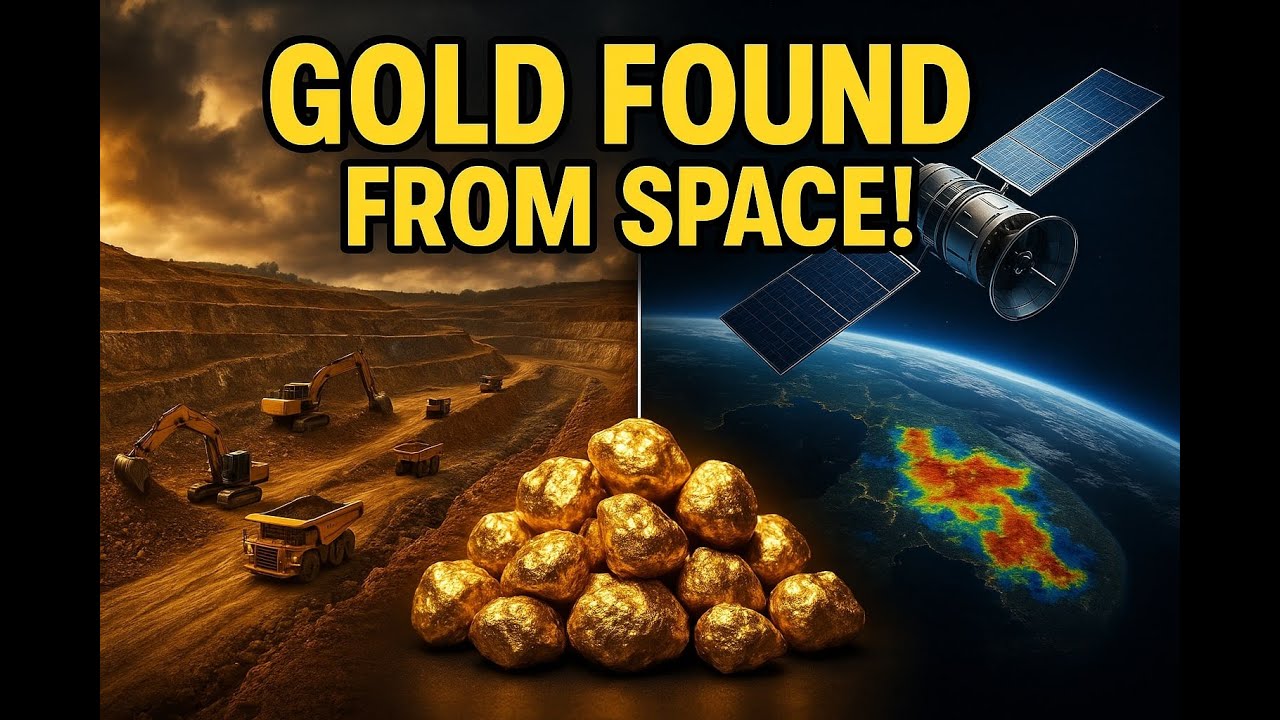
Our innovative analysis workflows can reveal placer gold flakes, related vein structures, and pyrite concentrations before any ground activity begins. This optimizes:
- Land-use and reserve planning (for agriculture, forestry, and mining companies)
- Soil conservation by minimizing unnecessary field intervention
- Compliance with ESG (environmental, social, governance) best practices
For those ready to explore responsible, high-definition mineral mapping, visit: Satellite-Based Mineral Detection – Farmonaut
Explorer Insight
Satellite-driven 3D mineral prospectivity mapping provides deeper operational intelligence—supporting safe, cost-effective drilling programs and reducing the risk of ground disturbance. View a sample report here.
How Farmonaut Supports Responsible Exploration
Our workflow for supporting mineral exploration and responsible land management is straightforward, efficient, and ESG-aligned:
- Clients provide coordinates, boundary (polygon/KML), and desired target minerals (gold, pyrite, etc.)
- We select the best satellite data—multispectral or hyperspectral—for the geology in question
- Advanced AI-driven analysis parses spectral signatures specific to placer gold flakes, pyrite flakes, and associated alteration zones
- Heatmaps, mineral prospectivity zones, and structural features are produced—often within 5 to 20 business days
- Deliverables include georeferenced maps, PDF reports, and commercial conclusions to boost confidence for investors and land managers
By leveraging this satellite-based approach, exploration teams and stewards avoid unnecessary soil disruption, reduce carbon emissions, and enhance their land-use and restoration plans for 2026 and beyond. Ready for rapid, responsible exploration? Get a Quote Today.

Sustainability Tip
Integrating geospatial satellite intelligence in the exploration phase is the fastest, most environmentally responsible way to minimize on-ground risk and maintain soil health in areas where placer gold flakes and pyrite flakes often occur.
For further technical or commercial support, visit our Contact Page.
FAQ: Placer Gold Flakes vs Pyrite Flakes
Q1: What are placer gold flakes, and how do they form?
Placer gold flakes are tiny, flat pieces of native gold that are deposited by water flow in stream beds, riverbanks, and floodplains. They form when gold erodes from lode or vein deposits, is carried by rivers, and accumulates in alluvial sediments.
Q2: How can I tell if a flake is gold rather than pyrite in the field?
Gold is bright yellow, very dense, malleable (bends, doesn’t break), and leaves a yellow streak. Pyrite is brassy, lighter, brittle (breaks into sharp chips), and leaves a dark streak. Try panning, weight test, and streak plate for reliable ID.
Q3: Does pyrite flake oxidation affect soil health?
Yes, pyrite can oxidize rapidly, generating sulfuric acid that lowers soil pH, releasing metals and negatively impacting crop and forest growth—a key consideration for environmental stewardship.
Q4: Do placer gold flakes themselves have any direct soil or crop impact?
No. Gold is chemically inert. Impact comes from mining operations that may disrupt soils, requiring thoughtful restoration and erosion control.
Q5: How can Farmonaut help with field mineral identification and risk reduction?
Farmonaut delivers satellite-based mineral detection and prospectivity analysis that rapidly locates gold-bearing zones, pyrite-prone zones, and key alteration halos—without soil disturbance. Our intelligence reports guide exploration, investment, and restoration plans for sustainable land and mineral management.
Key Takeaways & Final Insight on Placer Gold Flakes vs Pyrite Flakes
- Always distinguish gold flakes vs pyrite flakes using a combination of visual cues, density checks, and streak tests.
- Gold is bright yellow, malleable, and very dense; pyrite is brassy, brittle, angular, and causes environmental acid issues.
- Soil stewardship in agriculture and forestry demands careful soil management near placer or pyrite deposits to maintain productivity and comply with 2026 environmental standards.
- Modern mineral exploration is best achieved with satellite-based intelligence—fast, non-invasive, and cost-effective.
- Plan your exploration or restoration project the responsible way: Map Your Mining Site Using Farmonaut Here

Explore More & Responsible Mining Links
- Satellite Based Mineral Detection – Farmonaut: Accelerate your mineral assessment, mapping, and ESG compliance with satellite AI analytics.
- 3D Mineral Prospectivity Mapping Sample: Discover advanced 3D geology and drilling intelligence in action.
- 🌐 Map Your Mining Site Here – Your portal to upload coordinates, define minerals of interest, and receive a world-class satellite mineral prospectivity report.
- Get Quote for a Project
- Contact Us for Support
Discussion
Questions, corrections or field experience? Share them below. First-time comments are reviewed before they appear, and your email is never published.
No comments yet. Be the first to add a question or your experience.

 Double A Trading
 GemSprout Metals Limited
 Qader Group
 Ileys General Trading
 SG Gold Mining LLC
 VRV Global Pte Ltd
 Omsri International FZE
 G.I.T.T.
 Jaunita Erss Ltd
 Almosi SARL
 SRK Consulting
 Berks Gold Limited
 Mwerezi Minerals Company Limited
 Mining SARL
 SenGold Invest SAS
 Sean Mining Limited
 NTS Group (Pty) Ltd
 Mine4Africa










