

Precision Agriculture AI Market Size 2025 Forecast: How AI Is Shaping Sustainable Farming’s Future
- Overview: Precision Agriculture AI Market Size 2025
- Global Precision Agriculture AI Market: 2024–2025 Context
- Key AI Capabilities Fueling Precision Agriculture
- AI Applications Across Sectors: Farming, Forestry & More
- Key Drivers and Barriers in Market Adoption
- AI’s Impact on Sustainability & Productivity
- AI-Driven Precision Agriculture Market Forecast Table
- 2025 Strategic Outlook & Beyond
- Farmonaut: Satellite AI for Modern Agriculture & Allied Industries
- Frequently Asked Questions
Overview: Precision Agriculture AI Market Size 2025
The *precision agriculture ai market size 2025* sits at the crossroads of advanced technology, sustainability, and increasing demands for efficient food production. With global agriculture facing unprecedented challenges—from labor shortages, climate variability, and rising input costs to urgent ecological imperatives—AI-enabled solutions are emerging as a pivotal force shaping the landscape.
The global *precision agriculture market size* has exhibited a remarkable upward trajectory, and *analysts project* this robust growth will accelerate even further as we move through 2024 and into 2025. AI-driven innovations—encompassing satellite-based *sensing*, predictive analytics, automated field machinery, and real-time data platforms—are not only boosting *crop yields* but also optimizing *resource management* and *input use*, aligning agriculture firmly with the goals of sustainable development.

In this comprehensive report, we dissect the current *precision agriculture market size 2024*, illuminate the latest AI technologies powering the *global precision agriculture market size 2025*, and forecast trends to 2026 and beyond. We explore pivotal AI innovations, sector-specific applications, market *drivers and barriers*, and the unparalleled value Farmonaut brings to the evolving agri-tech ecosystem.
- ✔ Boosted Crop Yields: AI optimizes planting, fertilization, and irrigation, directly increasing output and quality.
- 📊 Data-Driven Decisions: Machine learning models synthesize weather, soil, and pest data for informed strategies.
- ♻ Sustainability: AI-driven systems reduce environmental impact through precise input use and runoff reduction.
- 🔬 Early Detection: Remote sensing and computer vision enable early diagnosis of disease, pest, and climate stress.
- ⚡ Operational Efficiency: Autonomous machinery and scalable AI solutions address farm labor shortages and lower costs.


Global Precision Agriculture AI Market: 2024–2025 Context & Market Size Forecast
The world is witnessing the rapid digital transformation of agriculture. As the *precision agriculture ai market size 2025* approaches the $2.5 billion milestone, it’s clear that AI is becoming an integral, not optional, component of modern farming systems. Reports and analysts project that both the precision agriculture market size 2024 and the *global precision agriculture market size 2025* will be driven by three fundamental forces:
- Robust growth in agricultural and forestry economies
- Rising imperative to increase yields while reducing input and resource use
- Widespread labor shortages and mounting regulatory pressure for environmental stewardship
Collectively, these drivers are expanding the overall market size forecast 2025. Industry estimates for 2024 show consistent double-digit annual growth, while advanced SaaS and modular hardware models are making scalable AI solutions increasingly accessible to smallholders worldwide.
For agriculture producers, forestry managers, mining operators, and governments alike, 2025 represents a watershed moment: AI is no longer just a “nice to have”—it is a strategic imperative for competitiveness and sustainability in the new era of land and resource management.
Widespread AI adoption in precision agriculture will push the global market size beyond $2.5 billion by 2025, with uptake driven not just by large commercial farms but by smallholders integrating scalable SaaS solutions and real-time remote sensing platforms.
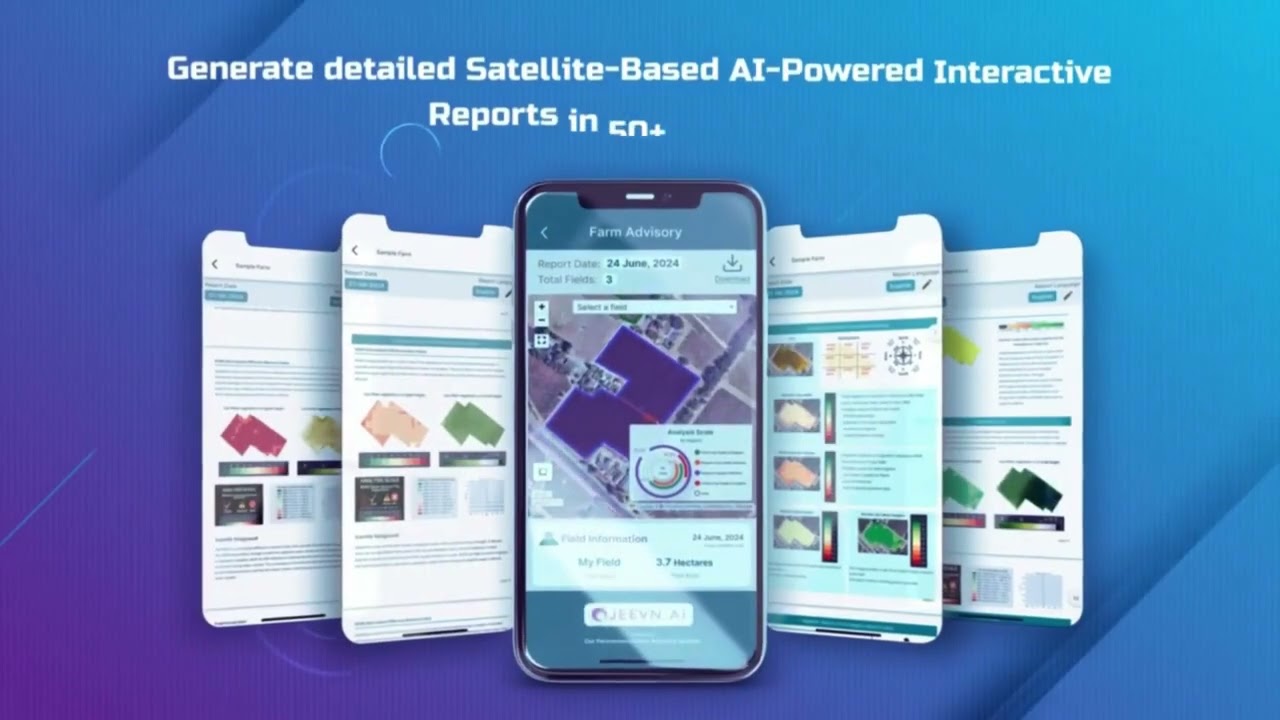
Precision Agriculture Market Size 2025 Forecast: By the Numbers
Industry sources indicate the *precision agriculture market size forecast 2025* is being propelled by the confluence of smart sensors, drone-enabled monitoring, AI-powered field management, and enhanced interoperability between platforms. The market trendlines for 2024-2025 show a continued upward trajectory:
- Market Value (2025): Projected to exceed $2.5 billion globally for AI-powered platforms, within a broader $12–14 billion smart agriculture sector
- Annual Growth Rate: 12%–20% across most global regions, with APAC and North America leading the way
- Core Applications: Variable-rate input application, water/irrigation optimization, automatic machinery, and sustainability-driven remote monitoring
- Adoption: By 2025, more than 60% of commercial-scale farms will deploy at least one AI-enabled system—with rapid increase in smallholder accessibility via affordable SaaS/predictive analytics
As a pivotal force shaping the future of sustainable production, these AI advancements are not just transforming *farming*, but are being deployed across *forestry, mining, and land management* segments as well.
Key AI Capabilities Fueling Precision Agriculture Market Growth

- 🌐 Sensor Fusion and Remote Sensing: Satellite, drone, and ground sensors provide a multispectral and thermal imagery-rich view of soil, microclimate, and crop health, enabling precision management across vast fields.
- 🔎 Computer Vision for Crop Health: AI models analyze leaf-level imagery to diagnose nutrient deficiencies, foliar diseases, water stress, and pest pressure, flagging issues early for measured interventions.
- 📈 Predictive Analytics & Decision Support: Machine learning aggregators synthesize weather, soil, historical yield, and pest data to optimize planting, irrigation timing, and harvest logistics.
- 🤖 Autonomous Machinery: Robotics and unmanned vehicles enable targeted input application, automatic weed and pest control, and precision harvesting, all orchestrated by AI-driven analytics.
- ⚙ Resource Optimization: AI-powered scheduling and scouting platforms enable farms to reduce water, fertilizer, and chemical usage while maximizing output and minimizing environmental impact.
For large-scale farms and agri-businesses, tools like Farmonaut’s Agro Admin App deliver AI-powered field, crop, and resource management for planning, monitoring, and optimization across distributed operations.
- 🔭 Multispectral Imagery: Satellite & drone-based for detailed crop/soil analytics
- 📡 Real-Time Monitoring: Live data streams for accurate, actionable field decisions
- 🔗 Interoperable Platforms: SaaS models enabling integration across hardware
- 📰 Blockchain Traceability: Verifies supply chain authenticity for end-to-end transparency
- ⚡ Edge AI Computing: Enables rapid, in-field analytics and autonomous machinery response

From Field to Analytics: How AI Is Reshaping Input Use
Variable-rate technology, powered by AI, enables tailored application of inputs—fertilizer, nutrients, water, and pesticides—only where and when they are truly needed. This optimizes input use, ensuring higher yields while reducing costs and environmental impact. Visual data from remote satellites and drones seamlessly integrates with on-the-ground sensors to build a comprehensive field “health map.”
Underestimating the need for data interoperability among platforms can stall precision agriculture AI adoption and undermine market ROI. Focus on solutions with open APIs, standardized formats, and scalable modular hardware.
AI Applications Across Sectors: Farming, Forestry, Mining, and Land Management
While precision agriculture ai market size 2025 discussions often center on crop farming, the ripple effects of AI adoption are revolutionizing forestry, mining, infrastructure, and broad land management.

Agriculture: Precision Inputs, Crop Health, and Smart Irrigation
- Input Optimization: AI-powered software prescribes exact rates of nitrogen, phosphorus, potassium, and micronutrients based on real-time sensing of crop and soil status.
- Irrigation Management: Data-driven insights help schedule and target watering, reducing water consumption, energy use, and risk of disease.
- Pest, Disease, and Weed Control: AI-driven drones and sensors enable rapid detection and targeted treatment, lowering chemical loads and environmental impact.
- Yield Forecasting & Harvest Planning: Machine learning models use weather, historical yield, and microclimate data to predict output, allowing better logistics and pricing strategies.
- Data Integration: Platforms aggregate satellite, sensor, and drone data for comprehensive field analytics.
Our capability in carbon footprint assessment delivers crucial insights to track and reduce emissions in agriculture, aligning your operations with sustainability standards and compliance.
Forestry: Monitoring, Reforestation & Site-Specific Management
- Remote Sensing for Health: Satellites and AI models detect pest infestations, disease, and drought stress before visible symptoms appear.
- Reforestation Planning: AI predicts optimal planting windows and sites, enhancing growth success and natural resource stewardship.
- Automated Thinning and Harvesting: Machinery guided by real-time data optimizes timber yield and supports sustainable land use.
- Forest Carbon Accounting: Quantify biomass, carbon stocks, and GHG reduction potentials for climate-smart forestry.
Farmonaut provides advanced forest and crop plantation advisory using satellite AI, improving survival rates, productivity, and compliance with environmental norms.
Mining: Land Rehabilitation and Environmental Remediation
- Pre- and Post-Mining Site Analysis: AI-enhanced imagery determines optimal reclamation inputs and monitors bioremediation progress.
- Erosion Control: Machine learning models prescribe tailored interventions for effective landscape restoration and compliance.
For enhanced risk mitigation, our satellite verification solutions for crop loan and insurance are empowering banks and insurers in agriculture and mining by reducing fraud and improving access to crucial financing.
Infrastructure & Defense: Resource Monitoring at Scale
- Land and Corridor Monitoring: Remote sensing assists in tracking large utility corridors, transport routes, and critical infrastructure for compliance and environmental protection.
- Resource Planning: AI enables quick response to changes in land use or climate stressors affecting major infrastructure projects.
Optimize logistics and reduce operational costs with Farmonaut’s AI-driven fleet management tools for agriculture, mining, or infrastructure projects.
For robust compliance and asset traceability, leverage blockchain-verified records from Farmonaut’s satellite-based traceability platform—crucial for food safety, sustainable mining, and export markets.
Key Drivers and Barriers in Precision Agriculture AI Adoption
Top Market Drivers
- Global demand for food security and sustained higher yields—despite decreasing arable land and rising population
- Water scarcity and climate variability—necessitating conservation-oriented input optimization
- Labor shortages—accelerating the need for autonomous machinery and remote-management solutions
- Advancements in affordable sensors and high-resolution imagery—making AI accessible even to smallholders
- Government incentives and extension services—facilitating platform adoption across regions
Major Barriers Hindering Market Growth
- Data Fragmentation: Disparate formats and proprietary hardware impede broad adoption unless platforms are truly interoperable.
- Upfront Technology Costs: Hardware investments and premium data subscriptions remain challenges in select regions, especially for smallholder farmers.
- Interoperability Issues: Integration gaps between legacy and AI-enabled machinery slow down scaling potential.
- Digital Literacy & Access: Despite SaaS evolution, some end users require additional support and training to tap into fully optimized platforms.
Geospatial data platforms are unlocking entirely new value in mining and environmental sectors. AI-driven land remediation models and satellite analytics are essential for ESG compliance and sustainability-linked financing.

AI’s Impact: Sustainability and Productivity in Farming & Allied Industries
AI-enabled precision agriculture is helping producers optimize inputs, minimize run-off, and reduce greenhouse gas (GHG) intensity for every ton of crop produced. By allowing for *site-specific management* of nutrients, water, and chemical applications, these digital tools ensure both short-term productivity gains and long-term sustainability.
The key sustainability impacts are:
- Reduced chemical use and lower risk of contamination of waterways
- Data-driven irrigation schedules cutting water consumption and drought risk
- Regenerative soil health through balanced input application and real-time feedback
- Early pest and disease detection, preventing major infestations or yield losses
- Biodiversity retention, as reduced chemical loads help preserve beneficial species
In forestry, proactive monitoring translates to early detection of blight, improved thinning or reforestation timing, and increased carbon sequestration—crucial for meeting national and corporate climate commitments.
For exporters and food producers, our Traceability platform utilizes blockchain and AI-powered satellite insights to guarantee supply chain transparency—vital for both regulatory compliance and consumer trust.

Bullet Points: AI-Enabled Sustainability Advances
- 🌱 Soil Health: AI continuously tracks regeneration, compaction, moisture, and fertility indicators.
- 💧 Efficient Water Use: Predictive irrigation models cut water consumption by up to 30% on advanced platforms.
- ☀ Climate Resilience: Real-time analytics and risk maps enable dynamic drought, pest, and disease response strategies.
- 🕸 Biodiversity Preservation: Automated chemical controls reduce non-target species harm, supporting ecosystem services.
- 📉 Emissions Mitigation: Platforms quantify GHG savings per operation, supporting carbon credit generation.
AI-Driven Precision Agriculture Market Forecast Table 2022–2025
| Year | Estimated Market Size (USD Billion) | Major AI Applications | Projected Annual Growth Rate (%) |
|---|---|---|---|
| 2022 | $1.4 | Yield Prediction, Remote Sensing, Input Mapping | 13.5 |
| 2023 | $1.8 | Resource Optimization, Pest Detection, SaaS Analytics | 14.9 |
| 2024 | $2.2 | Autonomous Machinery, Decision Support AI | 16.3 |
| 2025 (F) | $2.5+ | Edge AI, Blockchain Traceability, Real-Time Monitoring | 17.9 |
Source: Industry estimates and aggregated market research reports; (F) = Forecast
2025 Strategic Outlook & Beyond: The Road to 2026+ in Precision Agriculture AI
Looking past the precision agriculture ai market size 2025 milestone, the market is set for continued transformation as emerging technologies mature and platforms become even more integrated. The most successful solutions will address interoperability, edge AI for in-field, real-time analytics, robust data stewardship, and transparent farmer ownership of agricultural data.
- Interoperable Ecosystems: Expect consolidation and standardized frameworks for seamless data exchange among sensors, drones, SaaS, and on-ground hardware.
- Edge Computing Evolution: Analysis will increasingly happen at the point of collection, enabling proactive farm and resource interventions.
- Secure, Farmer-Owned Data: Blockchain, encryption, and regulatory standards will ensure trust and support finance, insurance, and input sourcing.
- Integrated Sustainability Compliance: AI will drive environmental compliance, biodiversity tracking, and carbon accounting by default.
Market growth projections beyond 2025 show multi-billion-dollar expansion driven by uptake in new regions (Africa, LATAM, Southeast Asia) and strong extension services supporting *smallholders*.

🛒 Choose Your Farmonaut Subscription Plan
Our flexible pricing tiers let users of every scale—individual, business, or government—leverage real-time, satellite-powered insights for smarter resource planning, fleet management, and AI-optimized farming.
Farmonaut: Satellite & AI-Driven Solutions for the Precision Agriculture AI Market Size 2025 and Beyond
At Farmonaut, we are proud to advance the mission of democratizing access to satellite and AI-powered insights across agriculture, mining, forestry, infrastructure, and defense. Our cutting-edge platform leverages *multispectral satellite imagery, advanced machine learning, and AI-driven advisory* to help users worldwide optimize yield, resource, and input management at any operational scale.
- Real-Time Monitoring: Our platform uses satellite-based NDVI, soil, and structural analytics for instant decision support and historical benchmarking.
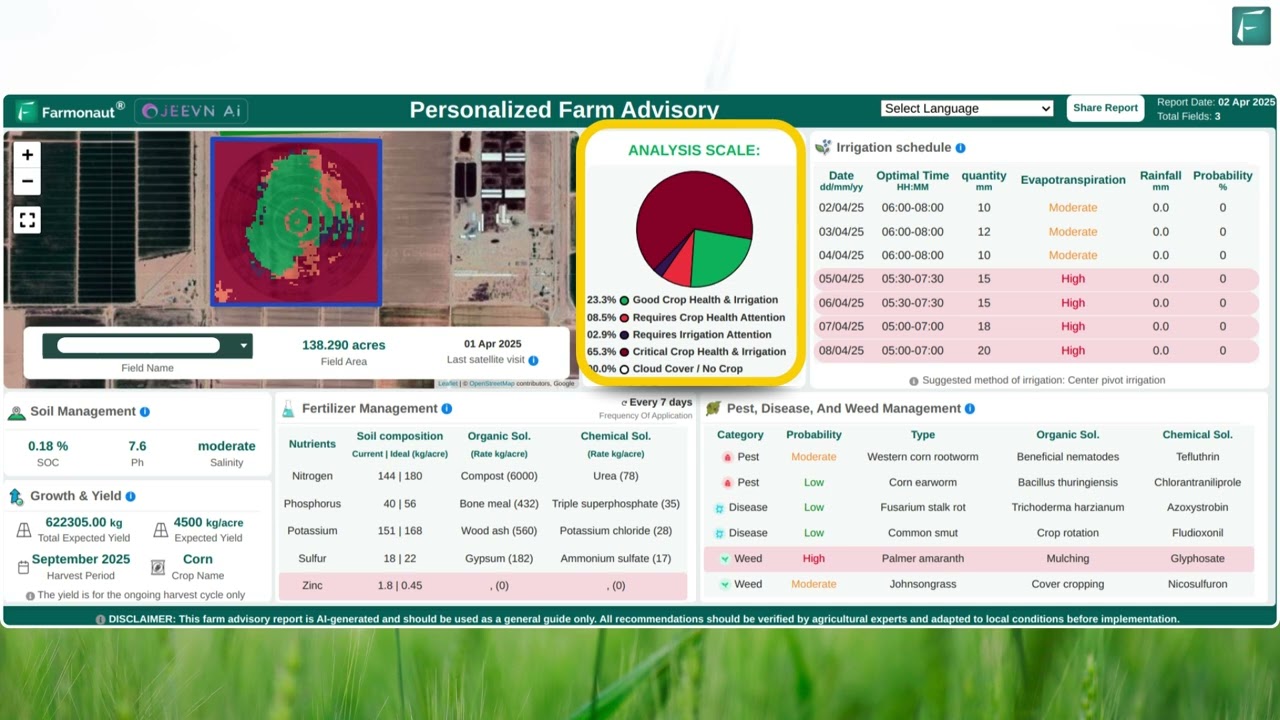
- Jeevn AI Advisory: This AI system delivers actionable recommendations for crop, forestry, and mining operations by analyzing weather, trends, and intervention strategies.
- Blockchain Traceability: We offer transparent, secure product and input verification, critical for regulatory and market needs.
- Fleet and Resource Management: Our tools optimize on-ground logistics, cut costs, and ensure sustainability across all major sectors.
- Environmental Monitoring: With robust carbon, GHG, and impact dashboards, users can ensure compliance and take action on sustainability KPIs.
Accessible through our web and mobile apps, our platform’s API opens up seamless integration for businesses, developers, and government agencies.
Get started today:
- Farmonaut App – Android, iOS, and web/browser versions for real-time, cross-device monitoring
- Farmonaut API – Integrate satellite AI into third-party SaaS and field platforms
- Developer Documentation for fast onboarding and customization
- 🚀 Scalable & Modular: Seamlessly usable from smallholders to large agribusinesses, with affordable, customizable packages.
- 🚜 No Expensive Hardware: Pure satellite and API-driven insights accessible via any device—web, tablet, or smartphone.
- 🌍 Sustainability at the Core: Environmental impact tracking and compliance reporting built-in.
- 📉 Lower Costs, Higher ROI: Evidence-based input, water, and fleet management reduce losses and raise yields.
- 🔐 Transparency & Trust: Blockchain traceability for agriculture, mining, and infrastructure supply chains.
Frequently Asked Questions: Precision Agriculture AI Market Size 2025 & Modern Tech
What is driving the precision agriculture AI market size 2025 to record highs?
Multiple factors—rising crop demand, labor shortages, water scarcity, and the imperative for sustainable inputs—are converging with advances in affordable AI, sensors, and remote-sensing platforms. The integration of these technologies is empowering both large and small-scale farmers, resulting in market growth estimates exceeding $2.5 billion globally for 2025.
Which AI capabilities are most pivotal for modern agriculture?
Sensor fusion, remote sensing (via satellites and drones), computer vision for diagnosis, predictive analytics, autonomous machinery, and blockchain traceability are the leading AI-driven innovations enabling efficient, sustainable management of fields, forests, and resource extraction projects.
How does AI reduce costs and enhance yields?
AI optimizes all critical decisions—variable-rate input application, tailored irrigation, and early intervention for pest or disease—minimizing resource wastage and maximizing each field’s productive potential. This increases ROI while supporting environmental stewardship.
What are current adoption barriers for AI in global precision agriculture?
Key barriers include data fragmentation (lack of platform interoperability), upfront tech costs (hardware, premium data subscriptions), digital literacy gaps, and uneven extension support in some regions. However, SaaS, modular, and subscription models are closing these gaps fast by 2025.
How can I get started with satellite- and AI-powered agriculture solutions?
We provide seamless onboarding for individual users and enterprises: Access real-time crop, soil, and resource analytics via our web and mobile apps. For technical integration, use our API and developer documentation.
- 🌿 Enhanced Yields: AI-powered input optimization ensures every kilo of input drives output.
- 💡 Data Insight: Predictive analytics enable customized strategies for all stakeholders.
- ⚠ Limitation: Ensure proper interoperability to unlock full value of new platform investments.
- 🔒 Traceability: Secure, blockchain-verified supply chains win in global export markets.
- 🌱 Sustainable Practices: Satellite-based platforms support long-term environmental and productivity goals.
Summary: Precision Agriculture AI Market—A Pivotal Force Shaping Farming, Forestry, and Land Management in 2025
The *precision agriculture ai market size 2025* stands as the linchpin for smarter, more sustainable primary production globally. As AI platforms mature and SaaS solutions democratize access, farmers, businesses, and policymakers unlock powerful levers to boost yields, cut waste, manage risk, and meet ever stricter environmental standards. Farmonaut remains dedicated to providing the tools, insights, and traceability essential for success in this new era, ensuring that technology serves both productivity and stewardship as the market looks toward an even brighter, more data-driven future.

 Godrej Agrovet
 Hayleys Agriculture
 Linx Agritech
 Adinet
 Save Your Soils
 GalaxEye Space
 Grandstream Algérie
 XOS Realty
 Geospatial Lab Africa
 Agro La Gándara
 HIPSAC
 ZOL Zimbabwe
 Juligerm
 AdBio
AdBio MISE Maroc
 NWNS
NWNS Red August Group
 Farm Inc
 WeMe Global
 Agrotoken
 Blue BearX
 Insignito
 DnCubed
 Indosistim Teknologi
 Liquify Digital
 CU Foods
 BeyondTech Global
 Rouge VC
 AgroRisk
 Oath Inc
 Esri North East Africa
 MDCV UK
 Etech Consulting Madagascar
 Vestlandsforsking
 WB Dev
 Sama Premium
 Tres Valles
 Blickwinkel
 Agricultural Credit Policy Council
 eKGIS
eKGIS Mostas Tech
 Andex
Andex Deluxe Conseil
 WICO
WICO Chimera Innovation
 SkyHarvest
 Teledarbas
 Exurbia Geospatial
 FieldZero
