

Company guide · Rare earths
Lynas Rare Earths: Output, Plants and Prices in Charts
Lynas mines Mt Weld in Western Australia and processes its ore in Kalgoorlie and Malaysia. It made 7,260 tonnes of NdPr oxide in the year to June 2026 and sold A$977.9 million of product.
Key takeaways
- Lynas sold A$977.9 million in the year to June 2026, up 76%, with net profit of A$222.4 million (Lynas Annual Report, 2026).
- Output was 13,089 t of rare earth oxide, including 7,260 t of NdPr; the June 2026 quarter average price was a record A$98.2/kg (Lynas, 2026).
- Mt Weld’s Ore Reserve is 31.5 Mt at 6.4% TREO, supporting more than 20 years at the expanded rate (Lynas Annual Report, 30 June 2026).
- Malaysia renewed the Kuantan licence for 10 years from 3 March 2026, with residue limits from 2031 (Reuters, Lynas, 2026).
- A binding deal to buy Meteoric Resources (Brazil) was signed on 1 October 2026 and still needs approval (Lynas, ASX).
In this article
- Where Lynas mines, cracks and separates rare earths
- How much Lynas produces and sells
- What Lynas is paid per kilogram
- Mt Weld: grade, reserve and mine life
- Lynas compared with other rare earth producers
- Customers, price floors and the magnet supply chain
- Heavy rare earths, Meteoric and what comes next
- Environment, radioactivity and the Malaysian licence
- Risks that have slowed Lynas
- Estimate rare earth sales revenue yourself
- Screening rare earth ground from space
- Frequently asked questions
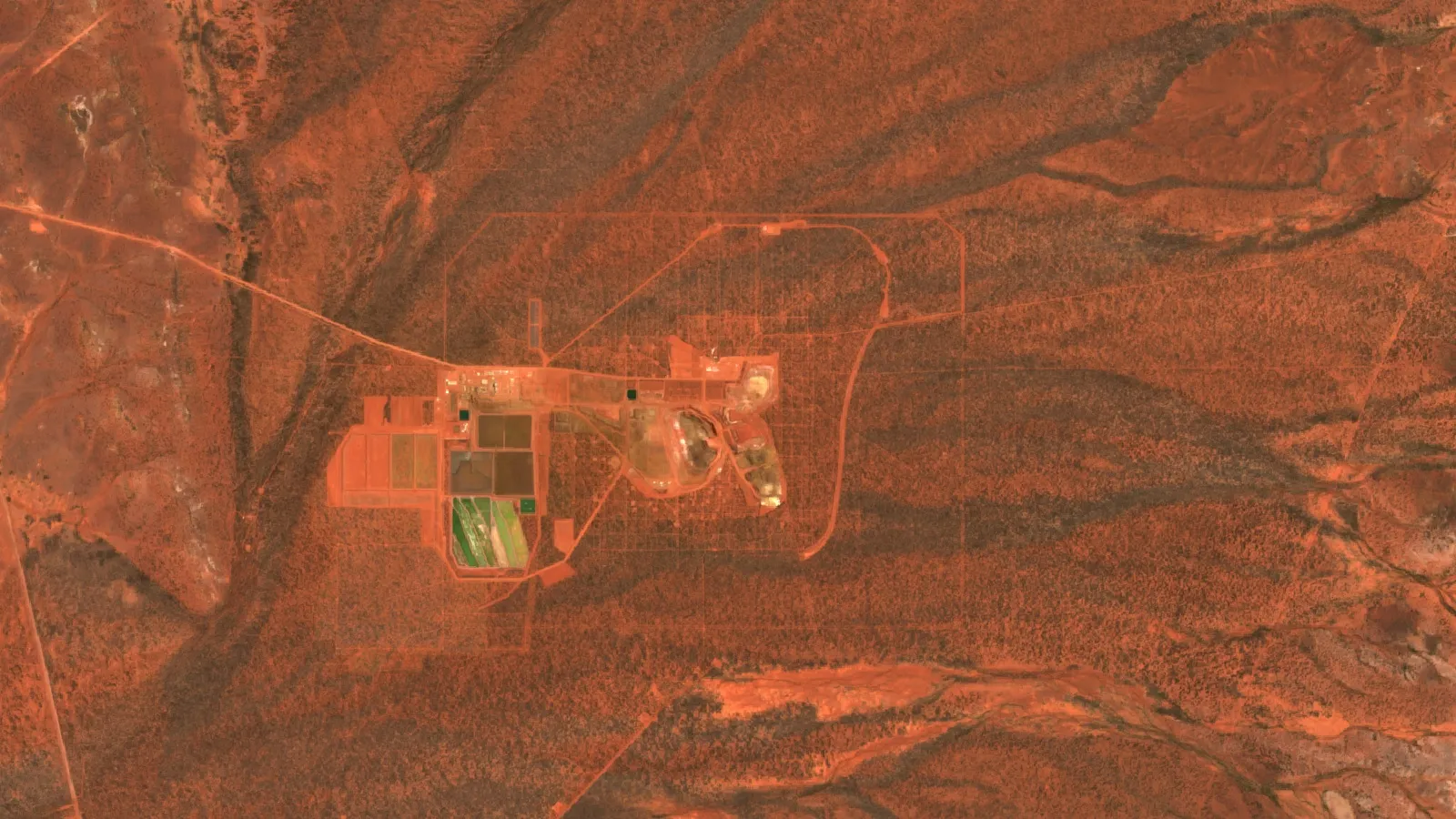
Lynas Rare Earths Ltd (ASX: LYC, Perth, Australia) mines rare earth ore at Mt Weld in Western Australia and processes it into separated oxides, with cracking and leaching in Kalgoorlie and Kuantan, Malaysia, and separation in Kuantan. In the year to 30 June 2026 it sold A$977.9 million of product, made a net profit of A$222.4 million and produced 13,089 tonnes of rare earth oxide (REO) ready for sale, including 7,260 tonnes of neodymium-praseodymium (NdPr) oxide (Lynas Appendix 4E and 2026 Annual Report, 26 August 2026). Lynas says it is the only commercial producer of both light and heavy rare earth oxides outside China (Lynas quarterly report, 22 July 2026). This page sets out the plants, the output, the prices the company gets, the ore body, the licence in Malaysia and the risks, with charts and a revenue calculator you can change.
Rare earth elements are 17 metals, from lanthanum to lutetium, plus scandium and yttrium. They are not rare in the crust, but minable concentrations are less common than for most metals (USGS, Mineral Commodity Summaries 2026). Our guide to the 17 rare earth elements and their uses covers the basics. Here we stay with one company.
Where Lynas mines, cracks and separates rare earths
Lynas runs three sites. Each does a different job, and a problem at one site slows the whole chain.
Infographic
From Mt Weld ore to oxides in 3 steps
- 1Mine and concentrateMt Weld ore is crushed, ground and concentrated in Western Australia.
- 2Crack and leachKalgoorlie and Kuantan treat concentrate so the rare earths dissolve.
- 3SeparateKuantan splits the mix into individual oxides such as NdPr, Dy and Tb.
- Mt Weld mine and concentration plant, Western Australia. The project sits 35 km south-east of Laverton in the Northern Goldfields region (Western Australia EPA, Report 1752). Ore is crushed, ground and concentrated here. A hybrid renewable power station supplied an average of 90% renewable electricity in the June 2026 quarter, against a target of more than 70% (Lynas quarterly report, 22 July 2026).
- Kalgoorlie Rare Earths Processing Facility, Western Australia. It cracks and leaches rare earth concentrate and produces a mixed rare earth carbonate (MREC), an intermediate product. In the June 2026 quarter the team commissioned a continuous precipitation process to improve MREC quality.
- Lynas Malaysia advanced materials plant, Kuantan. It cracks and leaches concentrate and separates the individual elements into oxides. This is also where the heavy rare earth expansion is being built.
Cracking means baking the concentrate with acid so the rare earths can be dissolved. Leaching means washing the dissolved metals out of the solid. Separation uses solvent extraction, where liquids pull one element at a time out of the mix. Light rare earths such as neodymium and praseodymium are the volume products. Heavy rare earths such as dysprosium (Dy) and terbium (Tb) are scarcer and are added to high-temperature magnets, which is why customers pay more attention to them.
How much Lynas produces and sells
Output has been uneven. Total REO ready for sale was 3,993 tonnes in the September 2025 quarter, fell to 2,382 tonnes in the December quarter, and recovered to 3,233 and 3,481 tonnes in the next two (Lynas quarterly reports, 21 April and 22 July 2026). Power supply disruptions in the December quarter and an ore variation at Mt Weld in the June quarter explain much of the swing. Over the year, NdPr production was 7,260 tonnes, with record NdPr output in the second half; NdPr sales were 7,337 tonnes and total REO sales 12,122 tonnes (Lynas Annual Report, 2026).
Chart
Lynas sales revenue by financial year
A$ million, years ending 30 June
The June 2026 quarter produced 1,857 tonnes of NdPr, lower than the March quarter’s 1,996 tonnes. Lynas links this to concentrate quality: a moveable crusher was replaced by a fixed one, which gave less control over impurities, and the company says operating standards have been adjusted. Dy and Tb output was 19 tonnes in the quarter, down from 26 tonnes in the March quarter.
Revenue has moved more than volume. Sales of A$977.9 million in the year to June 2026 were 76% above the A$556.5 million of the year before, on 11% more tonnes sold. Most of the gain came from price and product mix, not from a bigger mine.
What Lynas is paid per kilogram
The average selling price across all Lynas rare earth products reached a record A$98.2 per kg in the June 2026 quarter, up 63% on the year-earlier quarter. Lynas credits better NdPr prices, a larger share of heavy rare earth sales and higher premiums over the market index (Lynas quarterly report, 22 July 2026). The average mixes cheap cerium and lanthanum with expensive NdPr, Dy and Tb, so it is not the NdPr price.
Chart
Average oxide prices, selected products
US$ per kg, annual averages
Chart
Lynas average selling price, all rare earth products
A$ per kg, quarterly, unaudited
For the market price of single oxides, the US Geological Survey publishes annual averages. NdPr oxide (99% minimum) averaged about US$55 per kg in 2024 and an estimated US$69 per kg in 2025. The 2022 average was US$124 per kg (USGS, Mineral Commodity Summaries 2026). Prices move month to month and differ between China and the rest of the world, so check a live assessment from a price reporting agency before using any number in a model. We give no live price here.
Mt Weld: grade, reserve and mine life
A grade is the share of valuable material in the rock. For rare earths it is reported as total rare earth oxide (TREO) per cent. A cut-off grade is the lowest grade that still pays to mine. Under the JORC Code, the Australian reporting standard, a Mineral Resource is rock with reasonable prospects of eventual extraction, and an Ore Reserve is the part shown to be economic with the mining, processing and cost assumptions applied.
At 30 June 2026 Lynas reported a Mineral Resource of 109.2 million tonnes at 4.2% TREO (2.5% cut-off) and an Ore Reserve of 31.5 million tonnes at 6.4% TREO (2.8% cut-off), an update of its 2024 estimate (Lynas Annual Report, 2026). The 2024 figures were 106.6 million tonnes at 4.12% and 32.0 million tonnes at 6.44% (Lynas, 2024 Mineral Resource and Ore Reserve Update, 5 August 2024). The reserve supports more than 20 years of mining at the expanded rate needed for 12,000 tonnes a year of NdPr oxide, and more than 35 years at 7,200 tonnes a year. The reserve now includes stored tailings, which the new fine-grinding flowsheet can reprocess. The ore body is a carbonatite, a rock formed from carbonate-rich magma. Lynas finished a scoping study on developing the Mt Weld carbonatite further in the 2026 financial year, and a feasibility assessment team is in place (Lynas Annual Report, 2026).
These are company estimates reported under JORC, not USGS numbers. For scale, the USGS puts Australia’s rare earth reserves at 6.3 million tonnes of REO content, with 29,000 tonnes mined in 2025 (estimate) (USGS, Mineral Commodity Summaries 2026).
Lynas compared with other rare earth producers
China dominates the mine count. The USGS estimates world mine output at 390,000 tonnes of REO in 2025, of which China 270,000 tonnes (about 69%), the United States 51,000, Australia 29,000 and Burma 22,000.
Chart
Rare earth mine production, selected countries
Tonnes of rare earth oxide content, 2025 estimate
Lynas is not the largest miner outside China. MP Materials produced 50,692 tonnes of REO in concentrate at Mountain Pass, California, in calendar 2025, and 2,599 tonnes of NdPr oxide, double the year before (MP Materials, 2025 results). Lynas is the larger separated-oxide supplier, with 7,260 tonnes of NdPr in its financial year. The two use different periods and product forms, so treat the table as a guide, not a ranking.
| Item | Lynas (year to June 2026) | MP Materials (calendar 2025) |
|---|---|---|
| Main mine | Mt Weld, Western Australia | Mountain Pass, California |
| Output measure | 13,089 t REO ready for sale | 50,692 t REO in concentrate |
| NdPr oxide produced | 7,260 t | 2,599 t |
| Listing | ASX: LYC | NYSE: MP |
Customers, price floors and the magnet supply chain
Magnets are the largest end use of rare earths worldwide, according to the USGS. NdPr goes into neodymium-iron-boron (NdFeB) magnets for electric vehicle motors, wind turbines and electronics, and dysprosium and terbium are added so magnets keep their strength when hot. Lynas does not make magnets. It sells oxides, and has signed deals to move closer to them:
- Japan. In March 2026 Lynas updated a 12-year supply agreement with Japan Australia Rare Earths (JARE): firm offtake of 5,000 tonnes a year of NdPr at a US$110 per kg floor price, with upside sharing above US$150 per kg capped at US$10 million a year (Lynas Annual Report, 2026).
- United States. A binding letter of intent signed in March 2026 covers about US$96 million of light and heavy oxides over four years, with a NdPr floor of US$110 per kg. The money was reallocated from a planned heavy rare earth plant in Texas, which will no longer proceed (Lynas Annual Report, 2026). Lynas also signed a memorandum of understanding with Noveon Magnetics in October 2025 to support a US magnet chain. See our note on Lynas and the NdFeB magnet strategy.
- South Korea and Malaysia. On 7 July 2026 Lynas agreed a long-term partnership with JS Link for a 3,000 tonnes a year NdFeB magnet factory near Kuantan. Lynas will invest about A$50 million in JS Link and supply materials under an exclusive arrangement until January 2038 (Lynas quarterly report, 22 July 2026).
- Vietnam. A framework agreement with LS Eco Energy in March 2026 aims at a rare earth metal-making facility in Vietnam (Lynas Annual Report, 2026).
A price floor is a minimum price in a contract. It protects the seller when the market falls and is why contract prices can differ from spot prices. For the wider story of why mining matters to economies and the energy transition, the video below follows the money from the ground up.
▶ Follows the money from the ground up: what mining does for an economy and why energy-transition minerals are in demand. · 5:03
Heavy rare earths, Meteoric and what comes next
Lynas made its first dysprosium and terbium oxide in the June 2025 quarter and its first samarium oxide in March 2026. As of July 2026, customer qualification for samarium was under way, and first orders were expected in the September 2026 quarter (as of 22 July 2026). Gadolinium is expected in early FY28 and yttrium in early calendar 2028, then lutetium. The estimated cost of the expanded heavy rare earth facility rose from about A$180 million to about A$294 million including contingency, because of extra equipment for purity needs, higher costs for equipment sourced outside China and cost escalation (Lynas quarterly report, 22 July 2026).
On 1 October 2026 Lynas and Meteoric Resources signed a binding scheme implementation deed under which Lynas would buy all Meteoric shares for stock, valuing the equity at about A$968 million. Meteoric’s Caldeira project in Minas Gerais, Brazil, is an ionic clay deposit. Lynas says Caldeira holds an estimated 802 thousand tonnes of NdPr oxide and 41 thousand tonnes of DyTb oxide in its resources, and that adding it would lift Lynas’s Measured and Indicated TREO resources by about 79% and its Ore Reserve by about 26% on a pro forma basis. Meteoric’s feasibility study gives a production target averaging about 3,862 tonnes of NdPr a year. The deal needs court approval and shareholder votes, and it has not completed (Lynas and Meteoric ASX announcement, 1 October 2026).
Leadership has also changed. Amanda Lacaze retired as chief executive on 30 June 2026, and Pol Le Roux, previously chief operating officer, is interim CEO while the board searches for a successor (Lynas quarterly report, 22 July 2026).
Environment, radioactivity and the Malaysian licence
Rare earth ores often contain thorium and uranium, so processing leaves low-level radioactive residue. The residue of concern at Kuantan is water leach purification (WLP) residue. Malaysia renewed the Lynas operating licence for 10 years from 3 March 2026, after a series of shorter licences (Reuters via Kitco, 2 March 2026). The licence requires an alternative cracking process so that, after 2 March 2031, the plant no longer makes WLP residue with activity above 1 becquerel per gram. Work on the change must start by March 2028 under an agreed plan. Lynas is moving to an industrial pilot trial and trials of reusing the residue (Lynas Annual Report, 2026).
In the year to June 2026 a Malaysian Department of Environment audit found 31 best practices, no observations and no non-compliances. At Mt Weld the new water recycling plant showed it could recycle 90% of tailings water, and the plant is still ramping up. The Western Australian EPA assessed the Mt Weld life-of-mine proposal in its Report 1752, which is the place to read the formal conditions.
▶ A plain-language claymation on the seven environmental impacts of mining. · 2:31
Risks that have slowed Lynas
- Ore and feed quality. Variations in Mt Weld ore and concentrate impurities lowered NdPr output in the June 2026 quarter.
- Power and water. Lynas lists electricity, water and chemical reagents as inputs whose loss could hurt operations, and Kalgoorlie draws recycled water from the city (Lynas Annual Report, 2026).
- Licence conditions. The 2031 residue limit means a new process must work at plant scale.
- Cost growth. The heavy rare earth plant estimate rose by about 63% in one revision.
- Price swings. NdPr averaged US$124 per kg in 2022 and US$55 in 2024 (USGS), so revenue can move sharply even at steady volume.
- Deal risk. The Meteoric acquisition needs approvals and Caldeira still has to be built.
Estimate rare earth sales revenue yourself
Revenue is tonnes sold times price. The calculator below applies one price to NdPr and another to everything else, then converts to Australian dollars. Lynas sold 7,337 tonnes of NdPr and 12,122 tonnes of total REO in its 2026 financial year, so the defaults are round examples near those volumes. They are not forecasts, and Lynas contract prices differ from any spot price you enter.
Calculator
What would my rare earth sales be worth?
Enter tonnes sold and your own prices for NdPr and the other products.
- In A$ million at your rate: 915.0
- Average price, all products (US$/kg): 50.8
- NdPr share of revenue (%): 91.8
Example values only, not a forecast or Lynas guidance. Lynas sold 7,337 t NdPr and 12,122 t total REO in its 2026 financial year (Lynas Annual Report, 2026); other-product tonnes and all prices here are examples. Prices are inputs: example, use today’s price (US$ per kg). Revenue is gross sales, before costs, royalties and tax.
Screening rare earth ground from space
Explorers use multispectral and radar data to screen ground for alteration, structures and access before they spend on drilling. Satellite results are exploration targets that sit ahead of a resource estimate, and they are not a substitute for sampling. Farmonaut Mining Pro turns a licence boundary into a satellite-based geological picture; see Farmonaut for how it works.
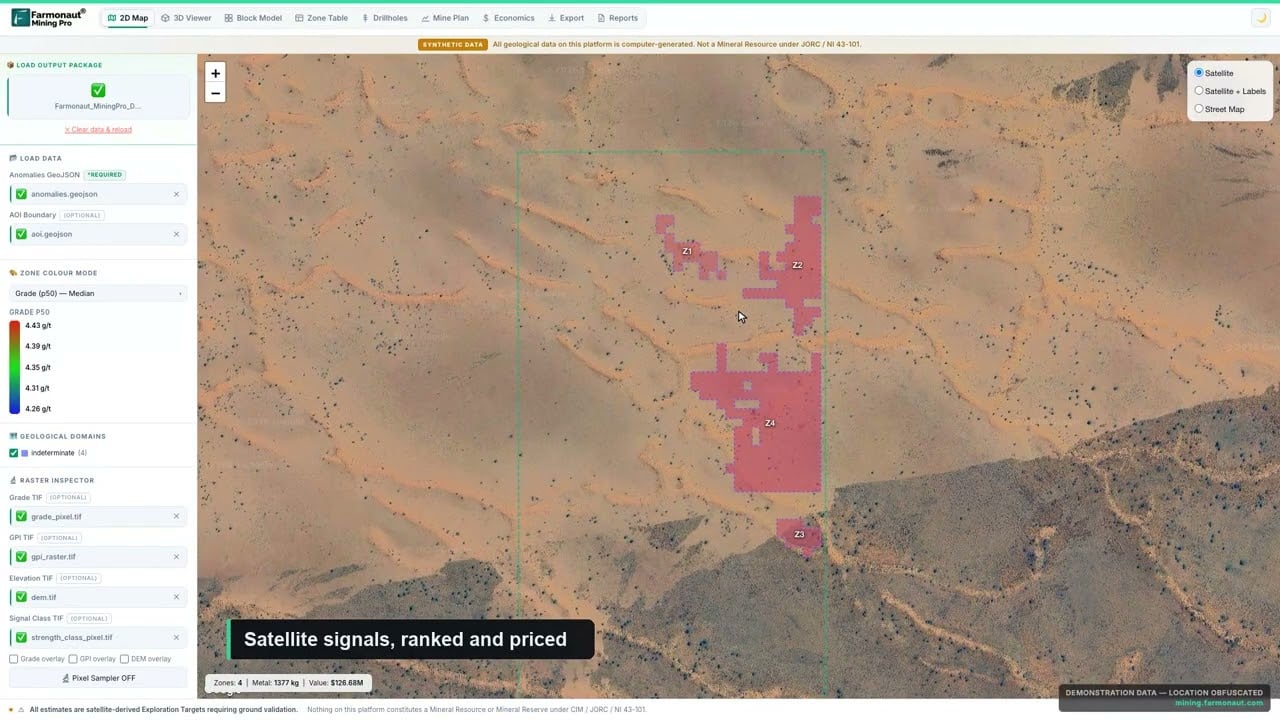
▶ A quick look at Farmonaut Mining Pro, which turns a licence boundary into a satellite-based geological picture (de-identified demo data). · 4:56
We cover a connected topic in Rare Earth Metals Prices: Chart and Drivers.
Frequently asked questions
What does Lynas Rare Earths do?
It mines rare earth ore at Mt Weld in Western Australia and processes it at Kalgoorlie and Kuantan into separated oxides, mainly NdPr, with smaller amounts of dysprosium, terbium and samarium. It sold A$977.9 million of product in the year to June 2026.
Where is the Mt Weld rare earth mine?
About 35 km south-east of Laverton in the Northern Goldfields region of Western Australia, according to the state EPA.
Is Lynas the biggest rare earth producer outside China?
It is the largest producer of separated oxides outside China by its own account, and Reuters calls it the largest rare earth producer outside China. USGS puts the United States (mostly Mountain Pass) at 51,000 t against 29,000 t for Australia in 2025, so the answer depends on whether you count ore concentrate or separated products.
What is NdPr?
NdPr is neodymium and praseodymium oxide, sold as a blend and used to make NdFeB permanent magnets. Lynas produced 7,260 tonnes in the year to June 2026.
Does Lynas make magnets?
No. It sells oxides. In July 2026 it agreed to invest about A$50 million in JS Link, which plans a 3,000 tonne a year magnet factory in Kuantan.
Is the Lynas plant in Malaysia licensed to operate?
Yes. Malaysia renewed the operating licence for 10 years from 3 March 2026, with a condition to change the cracking process by 2031 so residue is below 1 Bq/g.
What is TREO?
Total rare earth oxide, the combined grade of all rare earth oxides in a rock, shown as a percentage. Mt Weld’s Ore Reserve averages 6.4% TREO (31.5 million tonnes at 30 June 2026).
Is Lynas buying another company?
On 1 October 2026 it agreed to acquire Meteoric Resources, owner of the Caldeira project in Brazil, by a scheme of arrangement that still needs approval.
Who runs Lynas now?
Pol Le Roux has been interim chief executive since 1 July 2026, after Amanda Lacaze retired.
Why did the planned Texas plant stop?
Lynas says funds meant for a heavy rare earth facility in Texas were reallocated to a binding letter of intent with the US Government for about US$96 million of oxide supply over four years, so the Texas facility will no longer proceed.
This page is for information only. It is not investment advice. It gives no share prices or targets. Check Lynas’s ASX filings before you decide anything.
Farmonaut mining
Map your own mining site from space
Consultants can see how satellite data screens a licence area for minerals as an exploration target, ahead of a resource estimate.
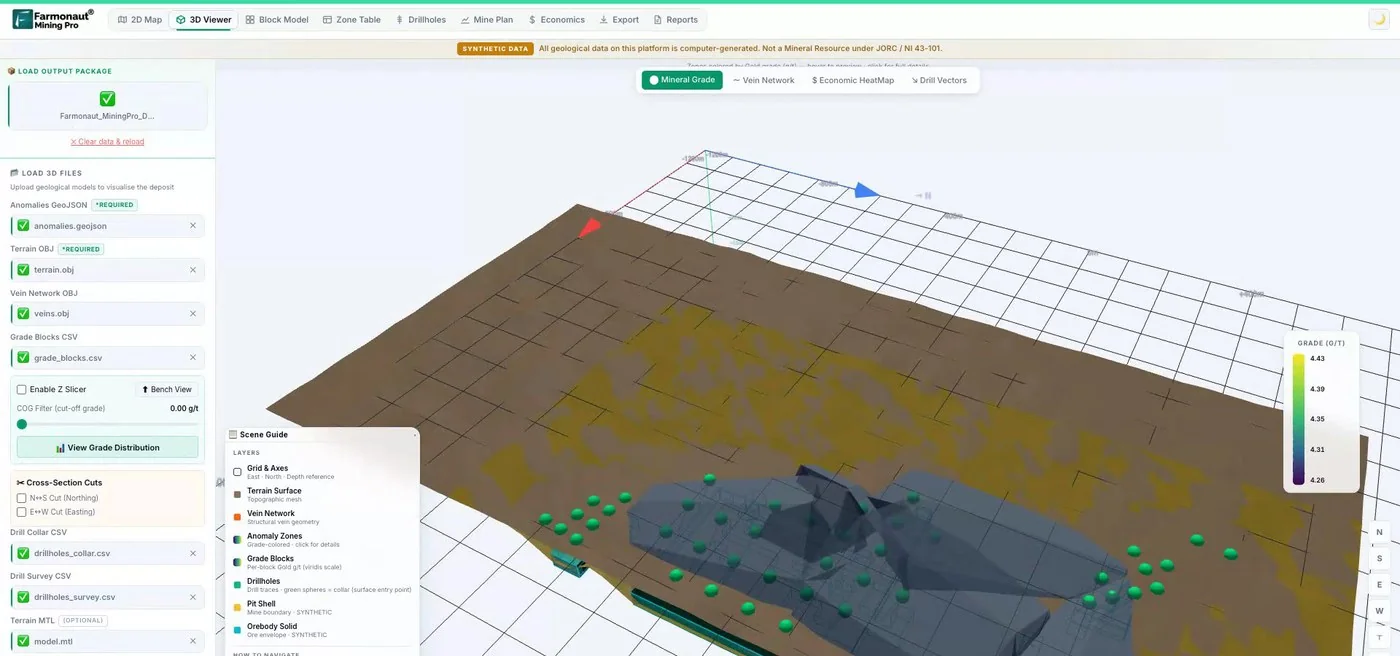
Mining Pro sample view, synthetic data
Keep reading
Sources
- Lynas Rare Earths, Appendix 4E and 2026 Annual Report (26 Aug 2026): announcements.asx.com.au
- Lynas Rare Earths, Quarterly Report for the period ended 30 June 2026: announcements.asx.com.au
- Lynas Rare Earths, Quarterly Report for the period ended 31 March 2026: announcements.asx.com.au
- Lynas Rare Earths and Meteoric Resources, scheme announcement (1 Oct 2026): announcements.asx.com.au
- Lynas Rare Earths, 2024 Mineral Resource and Ore Reserve Update (5 Aug 2024): announcements.asx.com.au
- USGS, Mineral Commodity Summaries 2026: Rare Earths: pubs.usgs.gov
- Reuters via Kitco, Malaysia renews Lynas operating licence for 10 years (2 Mar 2026): kitco.com
- MP Materials, Fourth Quarter and Full Year 2025 Results: mpmaterials.com
- Western Australia EPA, Report 1752: Mt Weld Rare Earths Project, Life of Mine: epa.wa.gov.au
- Mining Technology, Lynas announces first samarium oxide output in Malaysia: mining-technology.com
Discussion
Questions, corrections or field experience? Share them below. First-time comments are reviewed before they appear, and your email is never published.
No comments yet. Be the first to add a question or your experience.

 Berks Gold Limited
 Mwerezi Minerals Company Limited
 Congo Mining Solutions
 Mining SARL
 SenGold Invest SAS
 Sania Corporation
 Sean Mining Limited
 NTS Group (Pty) Ltd
 Mine4Africa
 Lithspo Minerals Limited
 Tintina Mining Group
 Dalgety Minerals Pty Ltd
 Vortex Minerals Pty Ltd
 Faith At Work (Pty) Ltd
 Geotech Mining Solutions plc
 Vulcan International Limited
 Kidepo Associates
 Licence holder · Nigeria · Gold + lithium










