

How Can You Find Gold: 7 Proven Methods for Africa 2026
Gold has fascinated humankind for millennia, prized for its rarity, intrinsic value, and the beauty it bestows upon art and currency. Yet in 2026, the process of finding gold is more sophisticated than ever—combining traditional methods with advanced technology, data analytics, geophysics, and AI to uncover new riches in Africa and across our planet. As industry leaders focus on sustainable mining and green technologies, the question remains: How can you find gold today, and where can you find gold in rapidly changing environments?
This article explores the 7 proven gold exploration methods in Africa for 2026, evaluates where gold is found, how new technologies are transforming discovery, and how sustainable practices are reducing environmental impact. Whether you are a geologist, a mining executive, or simply curious about the modern-day gold rush, our comprehensive guide distills the latest science and innovation for you.
Where Can You Find Gold? Understanding Deposits & Regions
Finding gold starts with an understanding of geology and mineral environments. Where can you find gold? It’s not random—gold occurs in specific types of deposits, located in geological zones with the right chemical, physical, and tectonic conditions.
The Three Main Types of Gold Deposits
- Lode (Vein) Deposits: Gold is embedded in rock veins, often within quartz-filled fissures deep underground. Typically formed by hydrothermal fluids depositing gold and minerals within cracks and fault systems, these are the archetypal “mother lodes.” Mining these veins requires advanced geophysical surveys, targeted drilling, and detailed mapping.
- Placer Deposits: Placer gold is found as concentrations of particles in alluvial sediments—riverbeds, streambeds, and ancient river channels. Gold erodes from lode sources over time, accumulates due to its high density and resistance to weathering, and settles in bends, cracks, and sedimentary traps of waterways.
- Byproduct Deposits: This is gold found as a secondary product during the mining of other metals such as copper or lead. Often, large-base metal mining projects yield significant gold as a byproduct, especially in polymetallic environments.
Typical Geological Environments
Gold deposits are typically located in regions characterized by:
- Ancient greenstone belts (e.g. West Africa, parts of Australia, and the Canadian Shield)
- Folded mountain ranges with active fault systems (e.g. South Africa’s Witwatersrand, Russian Urals)
- Stable cratonic regions with long geological histories (e.g. Congo, Brazil, Alaska, and parts of the United States – especially Nevada)
- Areas with extensive hydrothermal activity, where fluids have altered and deposited minerals over millions of years (Mali, Tanzania, Mauritania in Africa; also Nevada, Australia, and Russia)
In 2026, emerging gold provinces in West Africa—including Ghana, Mali, Burkina Faso, and the newly accessible Arctic frontier—are drawing global attention. This is due to both new exploration initiatives and the opening of previously inaccessible areas caused by climate change.
Let’s look into how we find gold in these promising environments, combining centuries-old fieldwork with the power of data, sensing, and AI.




Access Farmonaut’s satellite-powered insights for mining, agriculture, and natural resources. Get real-time monitoring and AI-driven analytics for responsible gold exploration.
Quick Facts on Major Gold Regions (as of 2026):
- West Africa: Ghana, Mali, Burkina Faso, and Côte d’Ivoire lead Africa’s gold production.
- South Africa: Remains globally significant due to massive lode and placer deposits.
- Other Key Areas: Australia, Russia, Canada, the USA (Nevada, Alaska), and emerging parts of the Arctic.
Why Africa Is the Hotspot
- Rich, underexplored geological terrains
- High potential for both lode and placer gold
- Increased access thanks to modern exploration methods, improved infrastructure, and climate-driven geographical changes
How Do We Find Gold in 2026? 7 Proven Exploration Methods
The search for gold in 2026 blends traditional geological techniques with the latest in technology, AI, geophysics, and remote sensing. Innovations in data integration, satellite analytics, and sustainable practices are reshaping how we find gold in Africa and beyond. Here we break down the 7 proven methods that define gold exploration today:
-
1. Geological Mapping and Field Sampling (How Can You Find Gold on Foot)
Experienced field geologists start by mapping rock formations, fault patterns, and surface mineral indicators. Field sampling targets:
- Exposed quartz veins and altered rock zones
- Soil and stream sediment for anomalous gold concentrations
- Physical evidence of hydrothermal alteration
By studying alteration zones and gathering physical samples, geologists can identify areas likely to host gold deposits. These classical mapping techniques, when merged with GPS, digital mapping tech, and AI-assisted pattern recognition, boost precision and efficiency.

-
2. Geochemical Analysis: Tracing Gold and Associated Elements
How can you find gold where it isn’t visible? Geochemical analysis is the answer. Soil, rock, and sediment samples are analyzed in labs to detect:
- Trace amounts of gold (down to ppb—parts per billion!)
- Associated indicator elements like arsenic, antimony, tellurium, copper, and lead
- Anomalous geochemical patterns that signal proximity to gold zones
Modern labs apply high-resolution mass spectrometry and AI-powered data analytics to process thousands of samples quickly and cost-effectively. Geochemical data is then mapped over GIS layers, highlighting promising gold environments in Africa.
-
3. Geophysical Surveys: Revealing Gold Below the Surface
Geophysical surveys have revolutionized how we find gold. In 2025 and beyond, the following geophysics methods dominate African gold exploration:
- Induced Polarization (IP): Measures electrical conductivity differences in soils to reveal sulfide minerals and possible gold-hosting veins or alteration zones.
- Magnetometry: Detects subtle changes in magnetic fields caused by mineralized rock and fault structures.
- Seismic Surveys: Use sound waves to map the subsurface, ideal for identifying deep lode systems.
State-of-the-art drone-mounted sensors and satellite geophysics allow rapid, wide-area coverage—even over jungle or desert. AI analyzes geophysical datasets to target zones with the highest gold discovery potential.
“AI-driven gold exploration methods in Africa have boosted gold discovery accuracy by over 40% compared to traditional techniques.” -
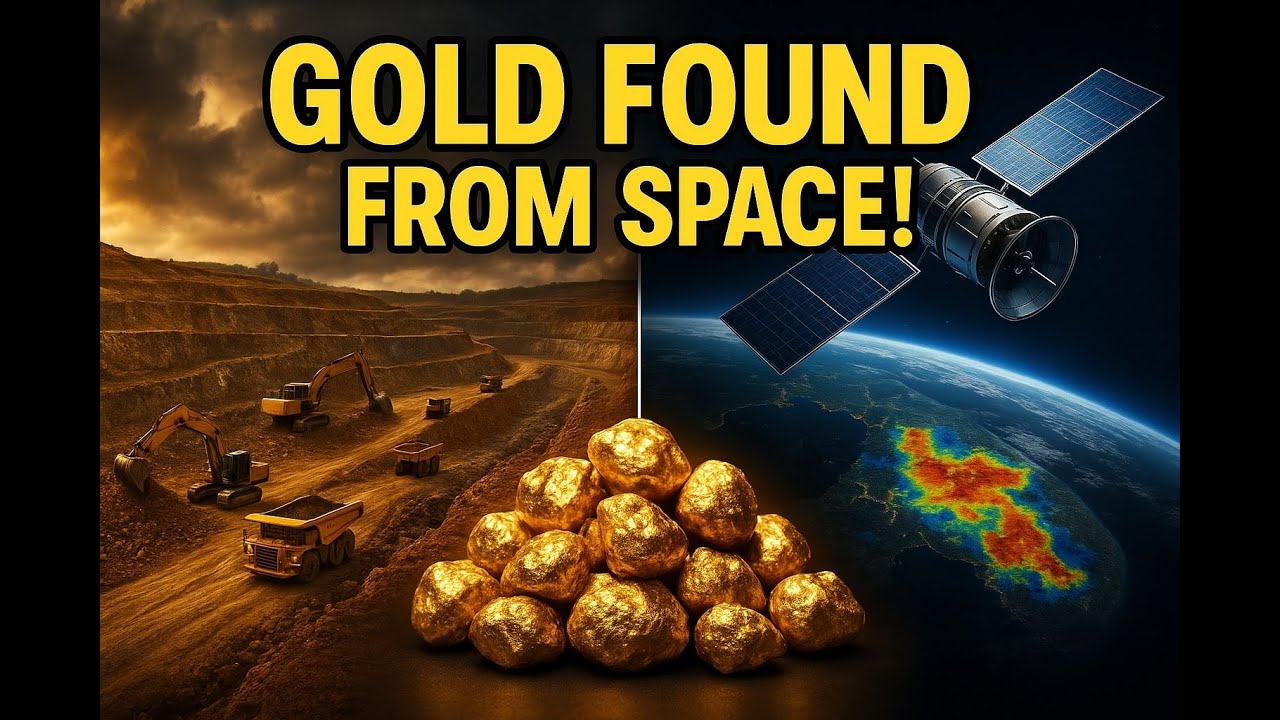
4. Remote Sensing & Satellite Imagery: Eyes in the Sky
Remote sensing and satellite imagery are indispensable in 2026. How can you find gold from above? Emerging satellite sensors:
- Identify alteration minerals (clays, iron oxides, carbonates) associated with gold zones
- Reveal subtle vegetation stress from underlying mineralization
- Map geological structures—faults, lineaments, and veins—with centimeter-scale precision
AI-driven platforms parse massive multispectral and hyperspectral datasets to pinpoint high-probability exploration targets across Africa. Farmonaut’s satellite technology solutions leverage these capabilities for affordable, accessible gold exploration, ensuring teams receive up-to-date maps and monitoring tools via web, iOS/Android apps, and API integrations.

Farmonaut’s satellite-powered gold exploration technology allows mining teams, businesses, and government bodies to discover, monitor, and sustainably manage African gold resources with Farmonaut APIs and seamless mobile/web app access.
Learn more about developer API documentation here. -
5. Artificial Intelligence & Multisource Data Integration
In 2026, AI transforms raw data into gold discoveries. How we find gold is fundamentally changing. Key innovations include:
- AI-driven predictive models: AI combines geological, geochemical, geophysical, and remote sensing data to generate target probability maps, ranking exploration sites.
- Machine learning: Finds hidden relationships, anomalies, and patterns that elude human experts.
- Automated exploration workflows: Accelerate project timelines, reduce costs, and minimize environmental impact.
Farmonaut’s advanced satellite platform harnesses AI for real-time gold zone mapping, resource monitoring, and sustainable planning.

-
6. Drilling & In-Situ Sampling: Unlocking the Subsurface
Even the best AI needs confirmation. Drilling is the only way to directly sample subsurface gold deposits. In 2026, modern drilling is:
- Precision-guided by AI and remote surveys
- Environmentally managed to reduce footprint (using biodegradable fluids, containment systems)
- Fully integrated with 3D core analysis and high-throughput laboratory assays
New rigs in Africa can extract continuous core samples up to 1,000 meters, supporting detailed deposit modeling and rapid resource definition.
-
7. Blockchain-Based Traceability & Environmental Impact Monitoring
How can you find gold—and prove it’s sustainably sourced? Blockchain-based traceability is central to future mining:
- Documents gold from discovery to product, enhancing transparency and combating fraud in global supply chains
- Meets regulatory, ESG, and ethical sourcing standards
- Pairs with real-time satellite monitoring to assess carbon footprint, water use, and site rehabilitation progress
Farmonaut provides tools for carbon footprinting and environmental tracking—learn more at Carbon Footprinting Solutions and Traceability.

Why Are These Modern Methods Superior?
- Speed: Find and evaluate new gold deposits 10x faster than 20 years ago
- Accuracy: Improve discovery rates and reduce exploration costs
- Sustainability: Minimize environmental disturbance by targeting only the best zones
Critical Requirements for African Gold Exploration (2026):
- Adaptability to both tropical rainforests and arid zones
- Remote, low-cost monitoring possible via satellite and mobile apps
- ESG best practices: carbon footprint tracking, reduced water/energy use, full traceability

Comparison Table of Gold Exploration Methods (2025)
This comprehensive table compares each of the 7 gold exploration methods discussed above in terms of technology, accuracy, cost, environmental impact, and suitability for African terrains. Use it to select the optimal strategy for your region and project.
| Method Name | Technology Used | Estimated Detection Accuracy (%) | Environmental Impact | Cost Estimate (USD/ha) |
AI Integration | Suitability for African Terrains |
|---|---|---|---|---|---|---|
| Geological Mapping & Sampling | Fieldwork, digital mapping, GPS | 60-70 | Low | $30–$80 | Partial | Yes |
| Geochemical Analysis | Soil & rock assays, mass spectrometry | 70-85 | Medium | $50–$150 | Yes | Yes |
| Geophysical Surveys | IP, magnetometry, seismic, drone, satellite | 75-92 | Medium | $100–$400 | Yes | Yes |
| Remote Sensing & Satellite Imagery | Multispectral/hyperspectral satellite, AI | 80-95 | Low | $20–$70 | Yes | Yes |
| AI & Data Integration | Machine learning, predictive analytics | 85-98 | Low | $15–$50 | Yes | Yes |
| Drilling & Core Sampling | Rotary/core drills, real-time logging | 90-99 | Medium/High | $500–$2,000 | Partial | Yes |
| Blockchain Traceability & Environmental Monitoring | Blockchain, satellite, IoT sensors | N/A (Not discovery, but traceability) | Low | $10–$30 | Yes | Yes |

Sustainable Mining and Green Technologies (2026+)
Modern gold mining in Africa and globally comes with big opportunities and responsibilities. The industry is under pressure to reduce emissions, minimize water and chemical use, rehabilitate lands, and deliver traceable, ethically sourced gold. Here are the key green technologies and sustainable practices shaping the future:
- Closed-loop cyanide systems: Recycle process water & capture chemicals to avoid lakes & rivers being harmed.
- Automated dust and noise controls: Essential for mining near communities and sensitive wildlife environments.
- On-site renewable power: Solar and wind farms are powering remote African mines, reducing reliance on diesel.
- Reforestation & land reclamation: Satellite monitoring helps track restoration progress and ensure compliance.
- Carbon footprint monitoring: Tools like Farmonaut Carbon Footprinting provide real-time analytics on emissions from mining and exploration activities, helping miners meet ESG goals.
- Blockchain for ethical supply chain: Guarantees consumers and investors that traceable gold was responsibly sourced.
Key benefits of sustainable gold mining:
- Protect ecosystems in Africa’s rainforests, savannahs, and fragile rivers
- Empower local communities through new tech, jobs, and compliance with international standards
- Future-proof mining businesses against tightening global regulations and consumer demand for ethical products
Explore Farmonaut Fleet & Resource Management to optimize mining logistics and equipment usage—reducing costs and environmental impact.
For government and business users, Farmonaut’s Crop Loan & Mining Insurance Verification solution offers satellite-based monitoring to simplify credit and insurance in remote African mining regions.
How Satellite Technology Supports Greener Mining
Real-time satellite monitoring is the backbone of environmental oversight. It allows authorities, companies, and local communities to:
- Track land degradation, water quality, and vegetation regrowth after mining
- Monitor air quality and illegal activities instantly
- Share transparent reports with stakeholders worldwide
This is where Farmonaut’s AI-powered platform excels, offering satellite-driven sustainability tracking for the entire gold mining life cycle.
Farmonaut’s Role in Modern Gold Exploration & Mining
At Farmonaut, we believe that satellite, AI, and blockchain-powered monitoring are game-changers for the mining sector. Our solutions enable:
- Mining teams: Use affordable satellite data and real-time analytics to pinpoint gold targets, track environmental impact, and manage assets on-the-go (web/app/API access).
- Government & regulators: Ensure legal compliance, verify environmentally sustainable practices, and streamline approvals with Farmonaut’s scalable admin platform.
- Financiers & stakeholders: Secure, easy-to-audit traceability trails for gold via blockchain traceability.
Our advanced multispectral imaging and AI tools deliver high-resolution, up-to-date maps for mapping gold alteration zones, vegetation, and land use change—anywhere in Africa or the world. You can utilize our platform by downloading our app (web, iOS, Android) or integrating APIs for tailored workflow automation.
Affordable Gold Exploration Tools: Farmonaut Subscription Plans
Choose a subscription that fits your mining, exploration, or resource monitoring requirements—no expensive hardware or hidden costs.
FAQ: How Can You Find Gold in Africa and Beyond?
-
Q: What is the most effective method for finding gold in 2026?
A: The most effective approach blends AI-powered data integration, remote sensing, and targeted drilling. While each deposit is unique, combining technologies boosts discovery rates and sustainability. -
Q: Where can you find gold in Africa?
A: The richest gold provinces are in West Africa (Ghana, Mali, Burkina Faso), South Africa, and the Sahara (Mali, Mauritania, Senegal) as well as emerging Arctic-accessible regions due to climate change. -
Q: How can I access satellite data and AI tools for gold exploration?
A: You can download the Farmonaut app (web/mobile) for immediate access, or use Farmonaut’s API for seamless integration into your resource management workflow. -
Q: Is it possible to find new gold deposits in 2026, or is most gold already discovered?
A: New technologies are opening vast unexplored areas—notably in Africa and the Arctic. AI, remote sensing, and geophysics make new discoveries both possible and cost-effective. -
Q: How is gold exploration becoming more environmentally friendly?
A: Green mining practices—enabled by satellite and blockchain monitoring, water/chemical recycling, and environmental restoration—are becoming standard, especially aided by carbon tracking tools and traceability technology. -
Q: What role does blockchain serve in gold mining?
A: Blockchain-based traceability guarantees gold is sourced responsibly from discovery to market—critical for compliance, consumer trust, and fraud prevention.
Conclusion: The Future of Gold Exploration
Gold remains a cornerstone of value for humankind—from jewelry to electronics and renewable technologies. But as we move into 2026 and beyond, how we find gold is changing faster than ever. Combining field geology, geophysical surveys, satellite sensing, AI predictive models, and blockchain-based traceability, the next era of mineral discovery is smarter, greener, and more inclusive.
African gold provinces—from Ghana to Mauritania and Kenya—stand at the forefront of this transformative wave. Mining companies, scientists, and governments willing to embrace advanced tools and sustainable practices will reap the benefits, discovering new reserves while preserving the landscapes and communities integral to our shared future.
At Farmonaut, we are committed to democratizing access to satellite-powered exploration and sustainable mining tools. Our mission is to continue lowering barriers for businesses and governments so that everyone—regardless of budget or scale—can benefit from transparent, data-driven gold discovery and monitoring in Africa and across the globe.
The gold rush of the 21st century is a race for innovation, ethics, and sustainability. Partner with technology and nature, and your next major discovery might be only data points away.
Discussion
Questions, corrections or field experience? Share them below. First-time comments are reviewed before they appear, and your email is never published.
No comments yet. Be the first to add a question or your experience.

 NTS Group (Pty) Ltd
 Mine4Africa
 Lithspo Minerals Limited
 Tintina Mining Group
 Dalgety Minerals Pty Ltd
 Vortex Minerals Pty Ltd
 Faith At Work (Pty) Ltd
 Geotech Mining Solutions plc
 Vulcan International Limited
 Kidepo Associates
 GKY Mining
 Alkimy SARL
 Double A Trading
 GemSprout Metals Limited
 Qader Group
 Ileys General Trading
 SG Gold Mining LLC
 VRV Global Pte Ltd
 Omsri International FZE
 G.I.T.T.
 Jaunita Erss Ltd
 Almosi SARL
 SRK Consulting
 Berks Gold Limited
 Mwerezi Minerals Company Limited










