

Rio Tinto and Lithium: Powering Clean Energy Innovation 2026
“In 2026, Rio Tinto aims to produce enough lithium to power up to 1 million electric vehicles annually.”



Table of Contents
- Summary: Rio Tinto and the Expanding Role of Lithium Mining in the Global Transition to Clean Energy
- The Global Context: Lithium and the Clean Energy Transition
- Rio Tinto and Lithium: Strategic Mining Operations in North America, Australia, and Argentina
- Key Flagship Projects: Rincon, Wodgina & the Lithium Triangle
- Production Growth: Meeting Surging Lithium Demand Through Innovation
- Sustainability and Environmental Stewardship in Rio Tinto Lithium Mines
- Rio Tinto Diamond Mines: Portfolio Balance and Clean Energy Transition
- Comparative Impact Table: Lithium vs. Traditional Mining for Clean Energy Applications
- Technology & Innovation: Transforming Mining for the Greener Future
- Farmonaut’s Role: Satellite-Driven Monitoring & Sustainability for Mining
- Key Challenges: Supply Chain, Geopolitics & Environmental Balancing
- The Road Ahead: Rio Tinto and Lithium in 2026 and Beyond
- Farmonaut Subscription Plans
- Frequently Asked Questions (FAQ)
Summary: Rio Tinto and the Expanding Role of Lithium Mining in the Global Transition to Clean Energy
Lithium has rapidly ascended from a relatively obscure mineral to a critical driver of clean energy innovation. In 2026, Rio Tinto and lithium stand at the forefront of the global energy transition, powering sectors from electric vehicles (EVs) to grid-scale storage and portable electronics. As demand for rechargeable batteries surges, Rio Tinto’s lithium mining operations in Australia, North America, and the Argentinian Lithium Triangle are evolving to meet stringent expectations for both scale and sustainable development. Concurrently, Rio Tinto diamond mines remain pillars of supply in the global luxury market, providing balance and resilience in the company’s mineral portfolio. This blog explores how the expansion and modernization of lithium mining and clean energy technologies drive industry-wide shifts—highlighting the key challenges, technological breakthroughs, and sustainability principles guiding Rio Tinto and the broader mining sector in the 2026 landscape.
The Global Context: Lithium and the Clean Energy Transition
“Global lithium demand is projected to triple by 2026, driving major technological innovation in mining at Rio Tinto.”
The imperative to transition away from fossil fuels toward cleaner energy solutions has galvanized governments, companies, and industries worldwide. Lithium—a lightweight, highly conductive mineral—has become a strategic resource, enabling the proliferation of EVs, renewable energy storage systems, and advanced electronics. Its role as a key component in rechargeable batteries is indispensable for reducing global carbon emissions and achieving climate targets set for mid-century.
- Electric Vehicles (EVs): The global shift toward EVs is propelled by emission regulations, advancing battery technology, and consumer demand for greener transportation. Lithium-ion batteries remain the standard for their energy density, reliability, and fast-charging capabilities.
- Grid Energy Storage: Lithium-based solutions enable intermittent renewable energy sources like solar and wind to supply power on demand, enhancing energy security and grid reliability.
- Portable Electronics: Laptops, smartphones, and IoT devices are driven by lithium batteries, underscoring the mineral’s vital role in daily life.
- Future-Proofed Technologies: Innovations in lithium processing, recycling, and alternative chemistries continue to expand its applications—from aviation to smart appliances and industrial robotics.
As the worldwide appetite for lithium continues to grow, the expansion of Rio Tinto lithium mines is critical not only to meet surging market demand but to ensure responsible stewardship of critical mineral resources in the clean energy era.

Rio Tinto and Lithium: Strategic Mining Operations in North America, Australia, and Argentina
With a legacy as a global mining leader, Rio Tinto has positioned itself as a pivotal player in lithium extraction and supply. The company’s strategy hinges on expanding its reach across key geological hotspots:
- Australia – Host to some of the world’s richest hard rock lithium deposits, particularly in Western Australia at the renowned Wodgina Mine.
- North America – Emerging as a lithium growth region driven by clean energy ambitions and regional supply chain priorities.
- Argentina (Lithium Triangle) – Encompassing the flagship Rincon Lithium operation, located at the heart of South America’s preeminent lithium brine deposits.
Rio Tinto’s focus on lithium mining is not only about tapping into substantial spodumene deposits but optimizing production techniques to minimize the environmental impact. This underscores a transition from volume-centric extraction to sustainable, resilient, and technology-driven operations that align with both investor and public expectations for sustainable development and renewable energy.
- Portfolio Balance: Alongside its expanding lithium asset base, Rio Tinto diamond mines—such as Diavik in Northwest Territories, Canada—continue as world-class operations, solidifying the company’s role across diverse critical mineral markets.
- Operational Expertise: The company benefits from decades of experience navigating regulatory scrutiny, environmental stewardship, and community relations.

Modern lithium extraction at Rio Tinto employs tailored approaches to suit diverse geological settings: brine evaporation and direct lithium extraction (DLE) technologies in Argentina’s salt flats, and hard rock mining of spodumene in Australia’s mineral-rich terrains. Each method is continually refined for lower carbon emissions, water conservation, and ecosystem protection.
Key Flagship Projects: Rincon, Wodgina & the Lithium Triangle
Highlighting Rio Tinto’s dedication to lithium-driven clean energy technologies are its flagship projects, which form the pillars of global supply:
- Wodgina (Western Australia): Among the world’s largest hard rock lithium deposits, the Wodgina mine leverages open-pit mining and efficient spodumene processing to ensure robust, scalable production.
- Rincon Lithium Operation (Argentina): Located in the heart of the Lithium Triangle, the Rincon project focuses on direct lithium extraction (DLE) from brine, enabling more sustainable water use and faster scalability to meet global demand.
Other projects and continued investment in exploration across North America and Latin America reinforce Rio Tinto’s dominance in critical mineral resource development. These mines serve not only as industrial engines but also exemplify best practices in environmental management, indigenous community support, and socio-economic sustainability.

Innovative extraction technologies at projects like Rincon reduce water consumption and waste production, addressing both local and global environmental challenges. These methods are representative of an industry-wide transition toward responsible mining activities, ensuring that lithium production aligns with clean energy ambitions and environmental stewardship.
Production Growth: Meeting Surging Lithium Demand Through Innovation
As the EV and energy storage boom intensifies, Rio Tinto remains steadfast in scaling lithium production. Projections indicate that by 2026, the company will have the capacity to support global industries—fueling up to one million electric vehicles per year and contributing to grid-scale storage solutions for renewable energy.
- Continuous Investment: Rio Tinto’s ongoing investment in extraction and refining capacity at its lithium mines enables flexible, adaptive scaling to meet surging appetite.
- Technological Improvements: The company integrates automation, digitalization, and green chemistry in both brine and hard rock operations.
- Supply Chain Optimization: Moving beyond the mine, Rio Tinto also focuses on value chain efficiency, including the secure, sustainable supply of processed lithium to battery manufacturers and OEMs worldwide.
- Supply Diversity: With strategic geographical spread, Rio Tinto mitigates risks related to geopolitical tensions and market volatility—ensuring stable supply for industries driven by the clean energy transition.
Global energy industries count on Rio Tinto lithium mines to underpin the ongoing shift to cleaner technologies. This role is heightened by growing regulatory scrutiny and rising consumer demand for evidence-based sustainability.

Sustainability and Environmental Stewardship in Rio Tinto Lithium Mines
The clean energy transition relies on not just volume, but also sustainability in resource extraction. Rio Tinto’s strategy goes beyond mere production; it is grounded in responsible mining practices and technological leadership.
- Reducing Water Consumption: Lithium mining, particularly brine extraction in fragile arid environments, can impact water tables. Rio Tinto employs water-efficient technologies and recirculation systems at sites like Rincon to significantly reduce freshwater demands.
- Waste Management & Minimizing Ecological Footprints: Utilizing advanced processing methods, waste is minimized and managed to uphold strict environmental regulations.
- Collaboration with Indigenous Communities: Rio Tinto actively engages with local and indigenous populations—especially in Western Australia and Argentina—to ensure that mining activities provide socio-economic support and help preserve cultural heritage.
- Continuous Research & Development: Rio Tinto invests in years of research to advance low-footprint lithium extraction, automate monitoring, and enhance rehabilitation of disturbed sites.
This holistic approach aligns with societal expectations and regulatory requirements for environmental stewardship in mining, and represents the future of responsible lithium development.

Rio Tinto Diamond Mines: Portfolio Balance and Clean Energy Transition
While lithium remains central to Rio Tinto’s clean energy future, the company continues operating world-class diamond mines—primarily in Canada’s Northwest Territories: Diavik and formerly Ekati. These assets provide diversification, stabilize revenues, and enable the company to weather commodity price cycles.
- Diavik Mine: Among the largest diamond mines in the world, Diavik demonstrates Rio Tinto’s expertise in managing resource extraction in ecologically sensitive environments.
- Ekati Mine: Formerly operated by Rio Tinto, Ekati remains emblematic of technological innovation in diamond mining and rehabilitation in northern environments.
- Portfolio Synergy: By balancing lithium (for energy storage and EVs) with diamond (for luxury markets and industrial applications), Rio Tinto sustains a broad impact on both critical mineral markets and global industries.
Rio Tinto diamond mines are subject to strict environmental and social governance, offering a blueprint for other major miners to transition away from traditional extraction toward sustainable practices.

Comparative Impact Table: Lithium vs. Traditional Mining for Clean Energy Applications
| Mining Method | Annual Output (Metric Tons, est.) |
Est. Carbon Emissions (Tons CO2/Year) |
Energy Efficiency Rating (1-5) |
Key Applications | Innovation Level (1-5) |
|---|---|---|---|---|---|
| Lithium (Hard Rock & Brine – Rio Tinto) | 100,000+ (2026 projection) | 150,000+ | 4 | EV Batteries, Grid Storage, Portable Electronics | 5 |
| Diamond (Diavik – Rio Tinto) | 6,000 (carats: 4M+) | 50,000+ | 3 | Luxury Goods, Specialty Industrial Uses | 4 |
| Traditional Metals (Iron Ore, Copper – Average, Non-Lithium/Non-Diamond) | Variable (Millions) | 800,000+ | 2 | Construction, Transport, Industrial Machinery | 3 |
*Estimated values. Innovation and efficiency levels based on Rio Tinto’s publicly available reports and mining industry advancements as of 2026.
Technology & Innovation: Transforming Mining for the Greener Future
Modern mining is embracing a technological renaissance, especially at Rio Tinto’s lithium mines. Key technologies advancing the sector include:
- Automation & Robotics: Automated drilling, autonomous haulage trucks, and robotics reduce safety risks and increase productivity in both traditional and lithium mining operations.
- Digitalization & AI: Big data analytics, AI-powered models, and sensor-driven monitoring optimize extraction while reducing waste. Developers can leverage Farmonaut’s API for integrating satellite intelligence and AI into mining operations.
- Sustainable Chemistry: Environmentally friendly reagents, direct lithium extraction, and improved brine management lower water use and emissions.
- Satellite Monitoring: Real-time imagery tracks vegetation health, tailings stability, and land rehabilitation, supporting compliance and ecosystem resilience.
- Blockchain Traceability: Ensures transparency across supply chains from resource extraction to end-user, fostering accountability and trust. See how Farmonaut supports mining traceability and supply chain transparency.
- Environmental Impact Tools: Carbon tracking and impact assessments inform sustainable operations directions. Farmonaut’s carbon tracking modules offer actionable data for mining sustainability reporting.
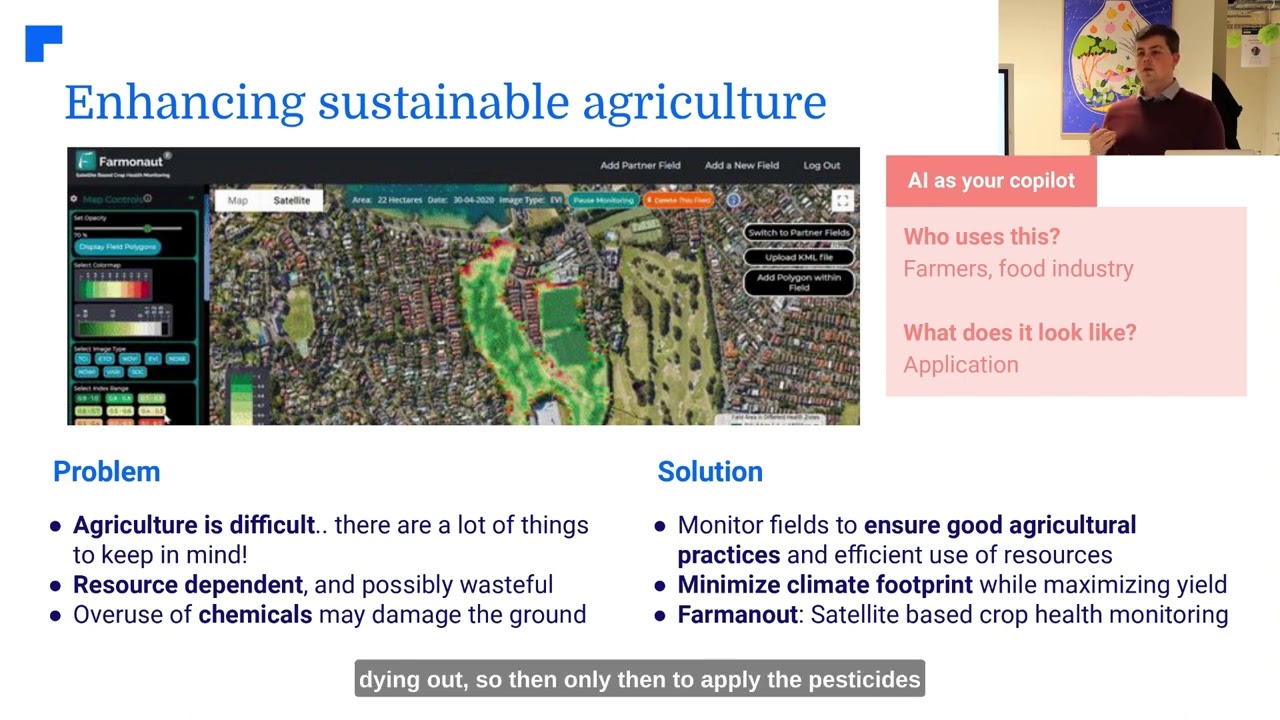
These technological innovations are central to Rio Tinto’s competitive edge in 2026. By continuously refining operations, tapping into digital ecosystems, and leveraging advanced monitoring, the company remains agile in the rapidly evolving clean energy mineral sector.

Farmonaut’s Role: Satellite-Driven Monitoring & Sustainability for Mining
As the need for real-time, actionable data intensifies in mining and clean energy transitions, Satellite technology emerges as a critical enabler. At Farmonaut, our mission is to democratize access to cutting-edge geospatial, AI, and resource monitoring tools for mining companies, governments, and infrastructure projects.
- Satellite-Based Monitoring: We offer live monitoring of vegetation health, water management, and site changes for lithium mines, enabling both operational efficiency and environmental compliance.
- AI-Powered Advisory: Our Jeevn AI system provides real-time weather forecasts, tailings safety recommendations, and customized operational strategies for large-scale mines.
- Blockchain-Based Transparency: We deliver secure, traceable records for mining supply chains, supporting consumer trust and auditability.
- Fleet & Resource Optimization: Using satellite data, we help optimize mining logistics, minimize energy use, and reduce downtime. Fleet management is essential in scaling complex mining operations sustainably.
- Environmental Impact Analysis: Our carbon and ecological monitoring tools empower mining stakeholders to meet sustainability targets and global reporting demands. Discover how our automated carbon tracking can drive mining sustainability progress.
Accessible via Android, iOS, web app, and API, our platform is designed for scalability—from small mine operators to nation-scale portfolios. If you are building mining or infrastructure tech, our developer API (Farmonaut API) and API developer docs let you integrate real-time satellite and AI insights.
Key Challenges: Supply Chain, Geopolitics & Environmental Balancing
Despite its innovation and global scale, Rio Tinto and lithium mining companies face complex, interlinked challenges in 2026:
- Price Volatility: Lithium prices are subject to rapid fluctuations due to variable supply, speculative trading, and demand uncertainty. This complicates both investment planning and long-term sustainability investments.
- Geopolitical Tensions: Increasing geopolitical competition over critical minerals—particularly lithium, cobalt, and nickel—places pressure on supply chains anchored in politically sensitive regions like South America and Africa.
- Technical Complexity: Lithium extraction is not trivial. Hard rock spodumene and brine-hosted operations require distinct, often resource-intensive, processing steps. Scaling new technologies (e.g., DLE) at industrial volumes introduces operational risk.
- Environmental & Water Impact: As lithium demand grows, so too does concern over water use, biodiversity loss, and waste management in mining regions—especially in fragile ecological zones such as the lithium triangle and Western Australia.
- Societal Expectations: Civil society demands for transparency and indigenous rights have become integral to project approvals and social license to operate. This necessitates not just compliance, but active engagement and benefit sharing with local communities.
Overcoming these challenges requires a combination of innovation, agile management, clear communication, and commitment to sustainability principles—qualities increasingly defining Rio Tinto’s strategy for 2026 and beyond.
The Road Ahead: Rio Tinto and Lithium in 2026 and Beyond
The coming years will define the legacy of Rio Tinto and lithium in the global energy transformation. By 2026:
- Lithium demand is expected to have tripled: The global shift away from fossil fuels will see lithium become even more strategic, with surging demand impacting supply chains, prices, and technological development.
- Rio Tinto lithium mines will be supplying the mainstream energy transition: Enabling clean mobility (EVs), supporting renewable grid storage, and serving as the backbone for next-generation, portable electronic devices.
- Sustainability will remain non-negotiable: Companies will increasingly be judged by their approaches to water, emissions, community engagement, and supply chain transparency.
- Technological leadership will differentiate industry success: Continuous investment in AI, automation, satellite intelligence, and green chemistry will drive both cost savings and regulatory compliance.
Rio Tinto and lithium mining ventures will shape the global mineral supply landscape, serving as a blueprint for responsible, scalable resource extraction in the era of clean energy innovation.
Farmonaut Subscription Plans
Looking to modernize your mining operations? Farmonaut’s satellite-support platform provides scalable, affordable solutions for professionals, businesses, and institutions seeking advanced monitoring, AI advisory, traceability, and sustainability intelligence—across mining, agriculture, and infrastructure sectors.
Frequently Asked Questions (FAQ) | Rio Tinto and Lithium
What is Rio Tinto’s main focus in clean energy minerals for 2026?
In 2026, Rio Tinto and lithium mining are cornerstones of the company’s drive to fuel the global clean energy transition. Its main focus is on scaling sustainable production of lithium for electric vehicle batteries, grid storage, and portable electronics—while maintaining environmental stewardship and community engagement.
How does Rio Tinto balance lithium extraction and environmental sustainability?
By investing in water-efficient technologies, advanced waste management, and ecological monitoring, particularly at flagship sites like Wodgina (Australia) and Rincon (Argentina), Rio Tinto ensures lithium development occurs with minimized environmental impact and in alignment with local community expectations.
What role do Rio Tinto diamond mines play in the company portfolio?
Rio Tinto diamond mines—notably Diavik in Canada—provide portfolio diversification, stabilize revenues, and support both luxury and industrial mineral markets. Their management demonstrates Rio Tinto’s ability to conduct complex operations in sensitive environments.
Why is lithium considered a ‘critical mineral’ for clean energy?
Lithium is essential for manufacturing rechargeable batteries used in EVs, renewable energy storage, and electronics. It is classified as a critical mineral due to its scarcity, high demand, and centrality to meeting global clean energy goals.
How are satellite and AI technologies transforming mining?
Satellites provide real-time data for monitoring land change, water use, and emissions. AI enables predictive maintenance, safety advisories, and operational optimization—collectively driving more sustainable and data-driven mining operations.
What is the “Lithium Triangle” and why does it matter?
The Lithium Triangle encompasses parts of Argentina, Bolivia, and Chile—holding over half of the world’s known lithium brine reserves. Rio Tinto’s Rincon operation leverages direct lithium extraction (DLE) for sustainable supply to global clean energy industries.
Can Farmonaut solutions be used by mining companies?
Yes. As a satellite technology company, we at Farmonaut offer satellite-based monitoring, AI-powered advisory, traceability, and carbon footprinting for mining sectors—enhancing sustainability, compliance, and operational excellence.
Where can I access Farmonaut’s satellite solutions?
Access via our Web App, Android App, iOS App, or directly integrate with our API for custom needs. Developer docs are available here.
In conclusion: Rio Tinto and lithium represent the vanguard of the clean energy transition. 2026 will see the world’s appetite for sustainable energy minerals soar—with Rio Tinto lithium mines powering the backbone of electric mobility and grid innovation, even as diamond mines sustain the company’s broader mineral portfolio. The intersection of technology, sustainability, and responsible stewardship will define both industry leaders and the future of global energy infrastructure.
At Farmonaut, our suite of satellite-driven solutions is ready to empower mining and clean energy industries, delivering the intelligence, transparency, and sustainability needed for the road ahead.
Explore more about our platform and solutions at Farmonaut.com

 Ileys General Trading
 SG Gold Mining LLC
 VRV Global Pte Ltd
 Omsri International FZE
 G.I.T.T.
 Jaunita Erss Ltd
 Almosi SARL
 SRK Consulting
 Berks Gold Limited
 Mwerezi Minerals Company Limited
 Mining SARL
 SenGold Invest SAS
 Sean Mining Limited
 NTS Group (Pty) Ltd
 Mine4Africa
 Lithspo Minerals Limited
 Tintina Mining Group
