

Rosatom Uranium One: Strategic Global Mining Trends 2026
Meta Description: Explore Rosatom Uranium One’s dominating role in global uranium mining, strategic supply security, and future nuclear energy trends for 2026. Discover how mining innovations and geopolitical shifts shape the world’s energy future.
Summary: In 2025 and beyond, Rosatom Uranium One consolidates its pivotal position within the international uranium supply chain, with profound implications for resource security and the rapidly changing nuclear energy landscape.
“Global uranium demand is projected to rise by 27% by 2026, driven by energy security and nuclear expansion.”
- Introduction: Uranium’s Resurgence in Global Energy Security
- Rosatom Uranium One Overview: At the Heart of Global Nuclear Supply
- Strategic Importance of Uranium Mining and Supply Chain Security
- Rosatom Uranium One Global Mining Assets & Trends for 2026
- Comparative Industry Trends Table: Global Uranium Mining 2026
- Technological Advancements & Sustainable Mining Practices
- Geopolitical and Economic Impacts: Russia’s Influence & Global Response
- Future Prospects, New Innovations & ESG Drivers
- How Farmonaut Empowers the Mining Sector in 2026
- Frequently Asked Questions
- Conclusion: Mining, Security, and Strategic Futures
Introduction: Uranium’s Resurgence in Global Energy Security
Uranium is once again shaping the future of clean power and energy security, as countries seek resilient, sustainable, and decarbonized power solutions. The strategic role of the rosatom uranium chain and its subsidiary Uranium One Rosatom in the global mining sector is more pivotal than ever; the forecast for 2026 and beyond indicates rising demand, heightened market complexity, and competitive geopolitical maneuvering.
As nuclear plants expand worldwide to meet net-zero targets, uranium’s indispensability grows. Rosatom—Russia’s state nuclear corporation—and its globally integrated unit Uranium One are central to this shift. Their influence extends from advanced extraction to supply chain dominance, making them a focal point in international strategic planning.
This blog delivers an in-depth look at mining sector trends, supply chain security, and the future-shaping implications of Rosatom Uranium One. We’ll cover their global asset footprint, technological advances, geopolitical leverage, and the industry transformation underway as we approach 2026.

Rosatom Uranium One Overview: At the Heart of Global Nuclear Supply
Rosatom: A State Player in Global Uranium Leadership
Rosatom is not just a top-tier uranium and nuclear fuel supplier but a vertically integrated force fundamentally influencing world energy. As Russia’s state corporation, Rosatom orchestrates a vast portfolio—including uranium mining, nuclear fuel cycle services, and power generation.
Uranium One: The Global Subsidiary and Asset Footprint
As Rosatom’s international subsidiary, Uranium One manages mining operations across Kazakhstan, Canada, Australia, and the United States. This geographic breadth, spanning the world’s largest and most productive uranium fields, is the backbone of their supply chain resilience.
- Kazakhstan: The world’s #1 uranium producer, with Uranium One controlling shares in multiple joint ventures.
- Canada: Historic mining legacy and high-grade assets, supporting supply to North America and globally.
- Australia: Key sites with future expansion potential, benefitting from stable governance and high ESG credentials.
- United States: Strategic holdings maintaining a foothold in a major consuming nation.
Their operations tightly integrate extraction (including advanced in-situ recovery), processing, enrichment, and delivery to nuclear power plants. This seamless link from ground to fuel assembly underpins Rosatom’s status as a leading global supplier.

Implications for Industry and Energy Security
The integrated model ensures resilience and reliability, two elements increasingly vital in an environmental and geopolitically sensitive sector. Rosatom’s position is not simply about scale but also about safety, sustainable practices, and end-to-end control of the nuclear fuel cycle.
Strategic Importance of Uranium Mining and Supply Chain Security
Uranium mining is not just a matter of resource extraction—it’s central to national security and energy independence. Nuclear plants run on uranium, making a stable supply indispensable.
- Low-carbon Energy: Uranium’s use in nuclear power is critical in the transition away from greenhouse gas and fossil-fuel power generation. It is a primary route for nations to reduce emissions and meet climate targets, making reliable supply strategic at national and global levels.
- Vertically Integrated Structures: As a vertically integrated supplier, Rosatom/One can mitigate supply risks, buffer market volatility, and reduce the threat of resource nationalism—issues that commonly disrupt open commodity markets.
- Energy Security Implications: The ability to guarantee mining, processing, fabrication, and fuel delivery gives Rosatom unique leverage in the worldwide energy system.
- Global Influence: By shaping trade flows, pricing, and the availability of uranium, Rosatom’s role extends beyond commerce into foreign policy and strategic alliances.
As 2026 approaches, these aspects combine to make uranium mining and supply the lynchpin of the next phase in the world’s low-carbon transition.




Rosatom Uranium One Global Mining Assets & Trends for 2026
Kazakhstan: The Crown Jewel
Kazakhstan remains the cornerstone of rosatom uranium one production. The Central Asian country accounted for over 40% of globally mined uranium in 2024, and its output—managed through joint ventures with Uranium One—will remain the strategic engine room into 2026. Significant investments and stable government frameworks bolster its high-security asset status.
Canada: High-Grade, High Strategic Value
Production in Canada, primarily in the Athabasca Basin, is characterized by extremely high ore grades and advanced regulation. Uranium One’s Canadian interests position Rosatom as a participating player in the North American nuclear market, enabling both supply diversification and market influence.
Australia & United States: Local Assets, Global Leverage
While Australia’s uranium output is projected to grow post-2025, aided by ESG leadership and high operational transparency, rosatom uranium one maintains a significant presence. In the United States, changing security policies have increased emphasis on uranium stockpiling, but Rosatom’s holdings still maintain connectivity with the world’s largest nuclear market.
- Strategic Trends: By embedding itself in all major uranium-producing regions, Rosatom insulates its operations from future regional disruptions and maintains global supply security at scale, with direct strategic implications for 2026 and beyond.
“Rosatom Uranium One controls nearly 13% of worldwide uranium production, shaping strategic trends in mining and supply chains.”

Comparative Industry Trends Table: Global Uranium Mining 2026
| Country/Region | 2024 Estimated Uranium Production (tons) | 2026 Projected Uranium Production (tons) | Key Mining Companies (Rosatom Uranium One Involvement) |
Supply Chain Security Level | Strategic Significance (2026 Outlook) |
|---|---|---|---|---|---|
| Kazakhstan | ~24,500 | ~29,000 | Kazatomprom, Rosatom Uranium One (Joint Ventures) | High | Global uranium supply cornerstone, high export dependency. |
| Canada | ~7,100 | ~9,400 | Cameco, Orano, Uranium One (legacy shareholdings) | Medium | Leading high-grade supplier; strategic for US, EU markets. |
| Australia | ~4,200 | ~5,200 | BHP, Rio Tinto, Rosatom Uranium One (minority interests) | High | Stable governance; future growth hub with strong ESG credentials. |
| Russia | ~3,400 | ~4,100 | Rosatom, ARMZ, Uranium One | High | Vertically integrated; supports Russia’s domestic and export ambitions. |
| Africa | ~5,200 | ~6,000 | Orano, CNNC, Uranium One | Medium | Emerging region; increasing Chinese, Russian involvement. |

Technological Advancements & Sustainable Mining Practices
ISR Mining: Reducing Environmental Footprint
In-situ recovery (ISR) is Rosatom Uranium One’s primary extraction method in Kazakhstan and elsewhere. ISR injects solutions directly into ore bodies, dissolving uranium underground and pumping it back to the surface. The method:
- Greatly minimizes environmental impact compared to open-pit or conventional mines.
- Improves operational efficiency and lowers remediation costs.
- Sets benchmarks for responsible mineral resource development.
It aligns with growing investor and government demands for sustainability and enables the company to promote globally sustainable practices.
Advanced Monitoring & Digitalization
Technological integration boosts safety standards (remote monitoring, real-time environmental assessment), improves compliance, and sets new benchmarks for mining efficiency.
- Automation: Reduces workforce exposure to hazards, increases consistency, and boosts output.
- Satellite Technologies: Satellite-based monitoring (like Farmonaut’s solutions) supports operational oversight and environmental stewardship across vast, remote sites.
Safety & Rehabilitation Programs
Rosatom Uranium One’s stringently regulated projects emphasize exhaustive rehabilitation—returning sites to safe, ecologically sound states post-extraction—responding to ESG and regulatory requirements worldwide.
For Mining Operations: Farmonaut’s Monitoring Solutions
Our Fleet Management solutions use multispectral satellite images and AI-powered dashboards to help mining and infrastructure enterprises oversee machinery, optimize logistics, and ensure safe and efficient deployment of resources. This leads to cost savings, increased asset security, and compliance across geographically dispersed mining sites. We also enable remote monitoring and strategic planning using satellite-based data and AI-driven insights.
To learn about how our Fleet Management and remote monitoring services can benefit mining site operators and logistics managers, click here: Fleet Management by Farmonaut.
Geopolitical and Economic Impacts: Russia’s Influence & Global Response
Uranium mining and supply remain not just economic but intensely geopolitical. The world uranium market is tightly controlled and production is dominated by a few countries and actors—including rosatom uranium one. The implications for 2026 are significant.
- Strategic Leverage: Rosatom’s control over a large share of global uranium acts as a lever in broader economic and foreign policy negotiations, particularly with countries reliant on nuclear power.
- Secure Supply: The seamless, vertically integrated supply chain—spanning Kazakhstan, Russia, Canada, and Australia—guarantees customers reliability, minimizing the risks of resource nationalism, embargoes, and market volatility.
- Diversification Efforts: The United States and European Union are both building up domestic uranium reserves and considering legislative actions to reduce dependency on Russian-origin uranium. However, cost and quality advantages continue to favor Rosatom Uranium One.
The future market will likely see increased investments and partnerships with non-Russian uranium producers, yet Rosatom’s competitive structure and asset base ensure its position as a pivotal player.
Future Prospects, New Innovations & ESG Drivers
2026 and Beyond: Meeting Soaring Demand
Driven by climate initiatives and electrification, uranium demand is projected to rise by 27% by 2026 (World Nuclear Association). Rosatom and Uranium One are responding through:
- Exploration & Expansion: New resource discoveries and brownfield expansions, particularly in Kazakhstan and potentially Africa, focusing on environmentally friendly ISR methods and minimizing footprint.
- Advanced Processing: Investment in new enrichment and fuel fabrication technologies, including high-assay low-enriched uranium (HALEU) for next-generation, small modular reactors (SMRs).
- ESG Compliance: Emphasis on transparency, stakeholder engagement, and strong community programs enhances Rosatom’s position among sustainably responsible mining producers.
Resilience Through Digitization and Data
Continual investments in digitization, automation, and real-time monitoring improve operational efficiency and help mitigate volatility in global commodity markets. Satellite-based solutions not only support regulatory compliance but elevate Rosatom Uranium One’s capacity for predictive risk management.
For mining authorities and sustainability teams, we provide Carbon Footprinting Services — allowing for real-time environmental impact tracking and actionable data on emissions, a growing requirement for large-scale extractive operations. Our service aligns with global ESG and emissions targets, essential in qualifying for international finance and responsible investing.
Blockchain Traceability in Mining Supply Chains
Ensuring uranium’s journey from mine to nuclear plant remains tamperproof and authentic is vital. Leveraging blockchain-based verification, as in Farmonaut’s Product Traceability suite, increases trust in ethically and sustainably sourced uranium—resonating with global regulators, investors, and the public.
How Farmonaut Empowers the Mining Sector in 2026
Satellite Technology, AI, and Blockchain for Modern Mining
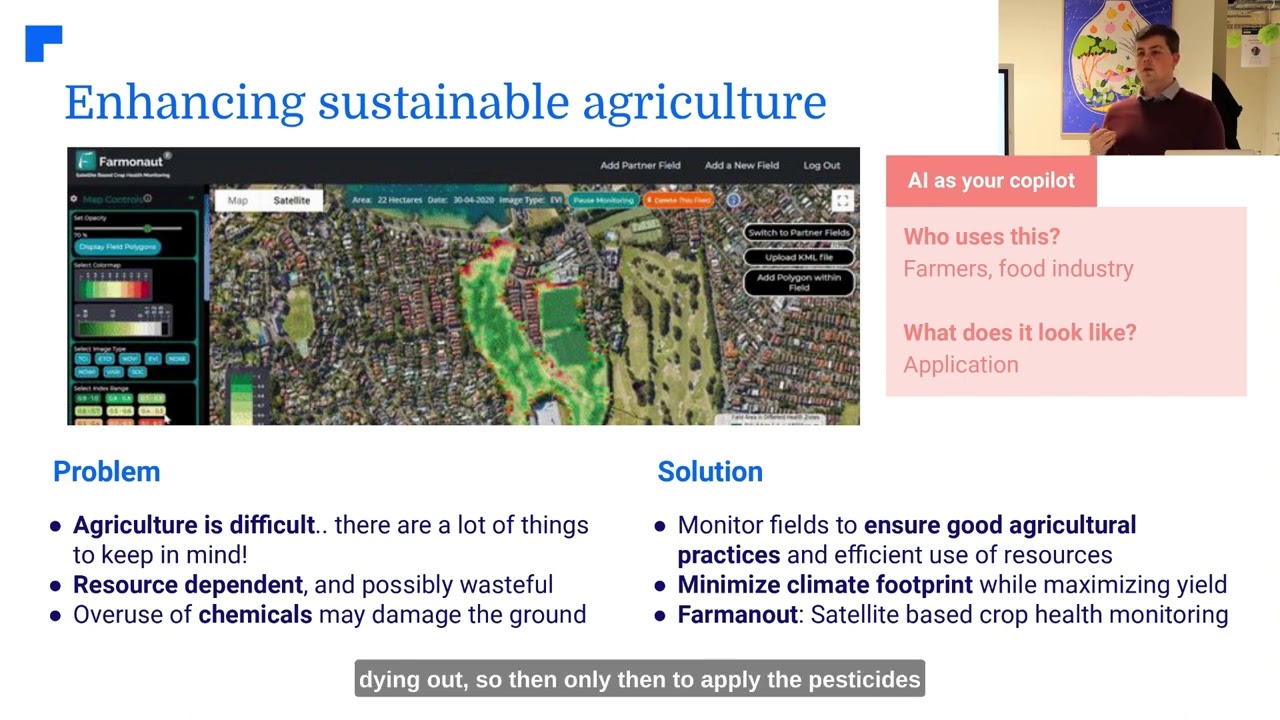
We at Farmonaut deliver world-class satellite-driven solutions tailored to mining, resource extraction, and infrastructure industries. Here’s how our platform advances mining efficiency, regulatory compliance, and environmental responsibility in alignment with sector demands for 2026:
- Satellite-Based Monitoring: Our multispectral imaging and remote sensing tools are invaluable for tracking vegetation, soil, and site infrastructure. Mining companies rely on us for precise, real-time updates on site health, safety, and compliance obligations.
- AI-Powered Insights (Jeevn AI Advisory): We harness satellite and environmental data, processing it with AI and machine learning to generate actionable insights—vital in dynamic mining operations, resource planning, and risk management.
- Blockchain Traceability: Enhance transparency and security at every stage of the supply chain, ensuring the authenticity and responsible sourcing of uranium and other extractive resources.
- Satellite-Based Verification for Mining Loans & Insurance: Lenders and insurers use our verification protocols to lower risks and verify claims for mining operations in high-stakes environments.
- Environmental Impact Monitoring: From emissions to site rehabilitation, we give mining companies the data they need to not only comply with stringent ESG requirements but also to benchmark and improve their sustainable practices.
Our API and Developer Docs allow seamless integration of our data streams into your internal mining management or analytics solutions—fueling transformative business intelligence with real-time geospatial data.
For operators or administrators managing expansive mines, our Large-Scale Resource Management system is designed for scalable oversight, integrating fleet, safety, regulatory, and environmental monitoring in a unified dashboard.
Explore our full range of subscription plans to access real-time monitoring and AI advisory for mining and resource management:
Frequently Asked Questions about Rosatom Uranium One & Global Uranium Mining Trends 2026
What is Rosatom Uranium One?
Rosatom Uranium One is a wholly owned subsidiary of Rosatom, Russia’s state nuclear corporation. It operates mining and resource development projects in major uranium producing countries, controlling nearly 13% of global uranium output and serving as a major supplier for the world’s nuclear energy sector.
Why is uranium mining so important in 2026 and beyond?
Uranium is indispensable for nuclear power, which is emerging as a primary low-carbon energy source. As nations work to reduce emissions, the strategic importance of uninterrupted uranium supply is set to rise further, shaping national energy, economic, and security strategies into 2026 and beyond.
How does Rosatom’s global asset base enhance supply chain security?
By operating mines and securing assets across Kazakhstan, Canada, Australia, the United States, Russia, and Africa, Rosatom Uranium One is less vulnerable to disruptions in any single market. This ‘distributed dominance’ underpins high supply chain security and strategic flexibility for delivering nuclear fuel globally.
What innovative technologies are being used for sustainable uranium extraction?
Rosatom Uranium One employs advanced techniques like In-Situ Recovery (ISR), reducing environmental footprint and improving resource efficiency. These practices set new industry standards, demanded by ESG investors and regulatory authorities worldwide.
Can supply diversification efforts by the US or EU diminish Rosatom’s dominance?
While there is substantial investment in revitalizing Western mining and stockpiling, Rosatom maintains key advantages through cost leadership, quality, and integrated global supply chains. Their dominance is likely to persist, though market strategies by major economies may alter bargaining dynamics over time.
Conclusion: Mining, Security, and Strategic Futures
As we enter 2026, Rosatom Uranium One’s grip on the uranium mining sector is both a testament to the power of vertically integrated resource management and a challenge to nations seeking supply chain autonomy. The role of Russia in the strategic distribution, pricing, and destination of nuclear fuel will continue to underpin global energy security, influence geopolitical alliances, and shape the future of sustainable power production.
For mining and energy leaders, the imperative is clear—embrace technology-driven monitoring, commit to sustainability, and invest in resilient partnerships to weather the economic and political complexities of uranium’s next evolution.
At Farmonaut, we support this transformation through affordable, integrated satellite and AI-driven intelligence, empowering mining and resource operators with foresight, accountability, and operational excellence—wherever they are in the world.
Explore the future of mining, resource security, and sustainable development—backed by the latest technology, data, and global sector trends.
Discussion
Questions, corrections or field experience? Share them below. First-time comments are reviewed before they appear, and your email is never published.
No comments yet. Be the first to add a question or your experience.

 Kidepo Associates
 GKY Mining
 Alkimy SARL
 Double A Trading
 GemSprout Metals Limited
 Qader Group
 Ileys General Trading
 SG Gold Mining LLC
 VRV Global Pte Ltd
 Omsri International FZE
 G.I.T.T.
 Jaunita Erss Ltd
 Almosi SARL
 SRK Consulting
 Berks Gold Limited
 Mwerezi Minerals Company Limited
 Mining SARL
 SenGold Invest SAS
 Sean Mining Limited
