

Tenke Fungurume · Mine profile
Tenke Fungurume Mine DRC: Owner, Output, Water Data
CMOC owns 80% and Gécamines 20% of Tenke Fungurume. The mine made 450,147 t of copper and 28,248 t of cobalt in 2024 (TFM ESG report). Ownership history, cobalt quotas, land and water data, and a metal-value calculator.
Key takeaways
- CMOC Group owns 80% of Tenke Fungurume Mining S.A. and the state miner Gécamines owns 20% (CMOC).
- 2024 output was 450,147 t of copper and 28,248 t of cobalt, up from 209,120 t of copper in 2021 (TFM ESG report; Mining Technology).
- The Cobalt Institute ranks TFM the second-largest mined cobalt asset, at about 14% of world supply; DRC exports sit under a quota of 87,000 t for 2026.
- In 2024 TFM used 92.7 million m³ of water, 75.3% of it recycled, and restored 90,000 m² of vegetation (TFM ESG report).
- The operator and the Environmental Investigation Agency disagree on sulfur dioxide levels near the plant; both views are given.
In this article
- Tenke Fungurume mine DRC: key facts at a glance
- Who owns Tenke Fungurume now, and how it changed hands
- How much copper and cobalt does Tenke Fungurume produce
- Why the ore is so rich: the geology of the Central African Copperbelt
- Cobalt export quotas and what they mean for the mine
- Five land and water measures at the mine, and the evidence for each
- Land and water scorecard: what is reported and what to verify
- Jobs, royalties and the Gécamines settlement
- Estimate the metal value of a copper-cobalt ore block
- Checking a site from space: what satellite screening can and cannot show
- Frequently asked questions
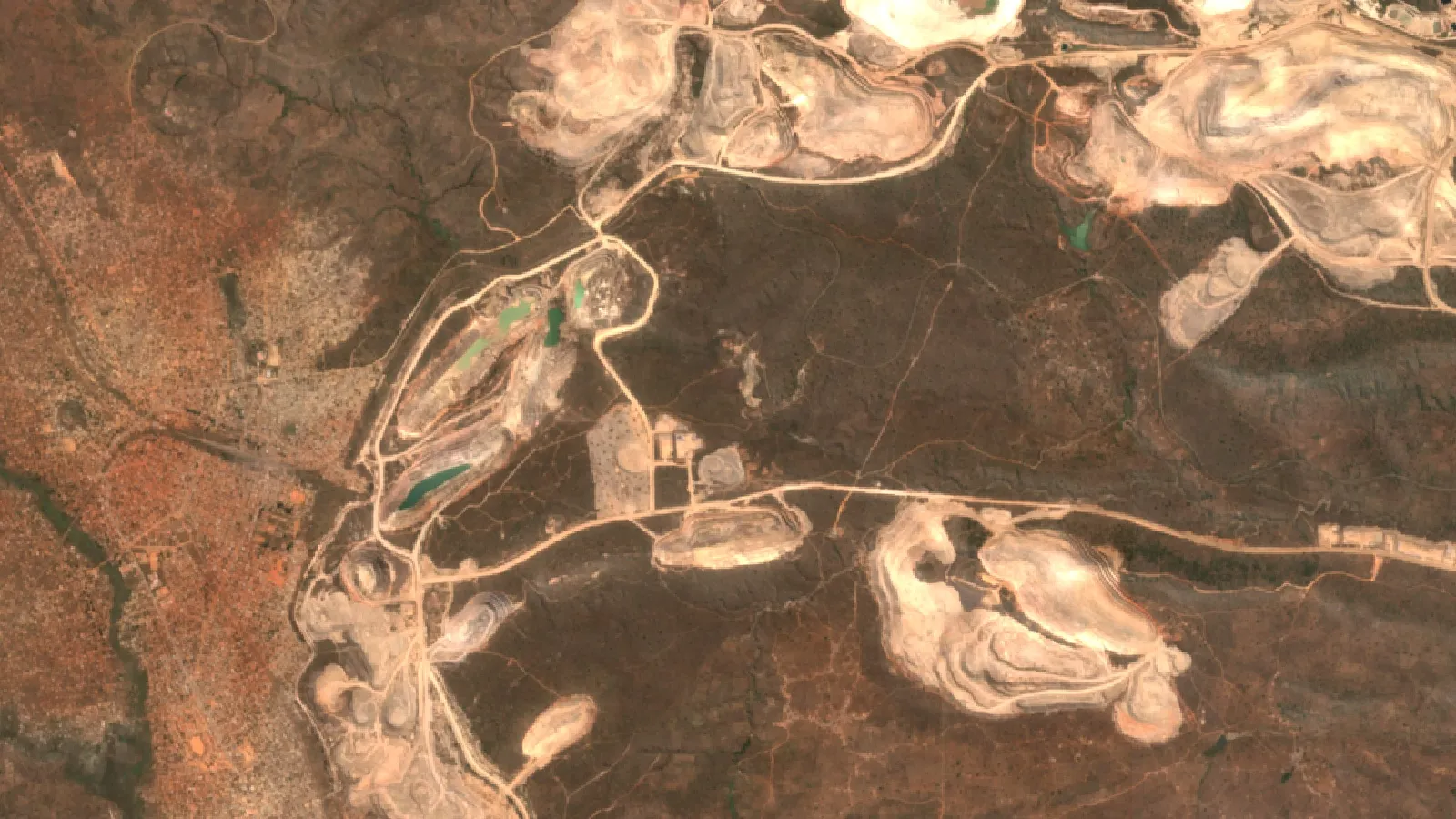
Tenke Fungurume Mining S.A. (TFM) is an open-pit copper and cobalt mine in Lualaba Province, in the south of the Democratic Republic of the Congo (DRC). CMOC Group owns 80% of it and the state miner Gécamines owns 20% (CMOC). In 2024 the mine produced 450,147 tonnes of copper and 28,248 tonnes of cobalt, according to its own 2024 ESG report.
This page is written for consultants, analysts and licence owners who need the facts in one place: who owns the mine, what it produces, how the cobalt export quota affects it, and what the operator and outside groups report about land and water. Every figure carries its source and date. Where the operator and an outside group disagree, both views are given.
Tenke Fungurume mine DRC: key facts at a glance
The table lists the facts people search for most. Output and workforce figures are for the end of 2024; reserves are 2023 estimates.
| Item | Detail | Source |
|---|---|---|
| Owners | CMOC Group 80%, Gécamines 20% | CMOC |
| Location | Lualaba Province, formerly part of Katanga Province | AidData, 2025 |
| Concession area | More than 1,500 square kilometres | TFM ESG report, 2024 |
| Mine type and products | Open pit; copper cathode and cobalt hydroxide | TFM ESG report, 2024 |
| First commercial production | First half of 2009 | AidData, 2025 |
| Output in 2024 | 450,147 t copper; 28,248 t cobalt | TFM ESG report, 2024 |
| Capacity | More than 450,000 t copper a year; 37,000 t cobalt (2023 figure) | CMOC; AidData, 2025 |
| Reserves (2023 estimate) | 7.89 Mt copper and 0.82 Mt cobalt contained | AidData, 2025 |
| People at end of 2024 | 3,927 employees and 13,829 contractors; 88.2% local citizens | TFM ESG report, 2024 |
| Responsible-production audit | Copper Mark awarded 2024; re-audit completed August 2025 | Copper Mark; Ecofin Agency |
A few terms used on this page. A reserve is the part of a deposit that can be mined at a profit with current methods. Grade is the share of metal in the rock, such as 2.5% copper. Cobalt hydroxide is an intermediate cobalt product that refiners turn into battery chemicals. SX-EW (solvent extraction and electrowinning) is the route that turns dissolved copper into cathode sheets. TFM crushes the ore, leaches it with sulfuric acid, and then recovers the metals (AidData, 2025). For the operator’s own updates, see our note on TFM’s official website updates.
Who owns Tenke Fungurume now, and how it changed hands
The project passed through several owners before CMOC. The main steps are below. The 80% held by the operating holding company has stayed fixed since 2010; what changed was who stood behind it.
| When | What happened | Source |
|---|---|---|
| 1998 to 2005 | BHP gets an option from Gécamines in 1998; Phelps Dodge replaces it in 2002 and exercises the option in 2005 | AidData, 2025 |
| 2006 to 2009 | Site work starts late in 2006; commercial production begins in the first half of 2009 | AidData, 2025 |
| 2007 | Freeport-McMoRan holds 70% and Lundin Mining 30% of the holding company TF Holdings | AidData, 2025 |
| October 2010 | Gécamines’ share rises from 17.5% to 20% after a contract amendment | AidData, 2025 |
| November 2016 | CMOC buys Freeport’s 70% of TF Holdings for US$2.65 billion in cash, an effective 56% of the mine | International Mining |
| April 2017 to September 2019 | BHR buys Lundin’s effective 24%; CMOC buys BHR in September 2019 and reaches 80% | AidData, 2025 |
| July 2022 to 2023 | Royalty dispute with Gécamines; settled with US$800 million paid between 2023 and 2028 | Mining Technology |
The 2016 sale was the largest step. Freeport-McMoRan said it would use the cash to repay debt, and CMOC’s board described a mine that produced about 204,000 tonnes of copper and 16,000 tonnes of cobalt in 2015 at a net cash cost of about US$1.21 per pound of copper (International Mining, November 2016).
How much copper and cobalt does Tenke Fungurume produce
Output has more than doubled since the 2016 sale. The mine made about 204,000 tonnes of copper in 2015 and 209,120 tonnes in 2021 (Mining Technology, 2022). It reached 280,300 tonnes in 2023 and 450,147 tonnes in 2024. The jump came from a US$2.5 billion plan announced in 2021, two new ore processing plants commissioned in 2023 and a plant extension finished in 2024 (AidData, 2025).
Chart
TFM copper and cobalt output, selected years
Thousand tonnes, 100% basis; only 2015, 2021, 2023 and 2024 are shown, so the gaps between points are uneven
Cobalt grew more slowly, from 16,000 tonnes in 2015 to 28,248 tonnes in 2024. At the end of 2024 TFM said the mixed-ore project had reached full production capacity. CMOC lists the mine’s capacity at more than 450,000 tonnes of copper a year, so 2024 output sat right at the stated capacity.
CMOC’s group copper output was a record 741,100 tonnes and its cobalt output 117,500 tonnes, driven by the six production lines at its two Congo mines, TFM and Kisanfu (KFM). CMOC also says preparation for a third expansion phase at TFM is speeding up (CMOC, April 2026). Our earlier note on the Tenke Fungurume expansion covers the capacity plans in more detail.
The Cobalt Institute ranks TFM as the second-largest mined cobalt asset in the world, with about 14% of global mined cobalt, behind KFM at 25%. CMOC as a whole produced 117.5 thousand tonnes of cobalt in 2025, a 39.5% share of the world total (Cobalt Institute, Cobalt Market Report 2025, May 2026).
Why the ore is so rich: the geology of the Central African Copperbelt
TFM sits in the Central African Copperbelt, which runs through the DRC and Zambia. The ore belongs to the class of sediment-hosted stratabound copper deposits, in which copper and cobalt minerals sit in layers of sedimentary rock. The U.S. Geological Survey says this deposit class supplies about 20% of the world’s copper and ranks first among all deposit types for cobalt (USGS Scientific Investigations Report 2010-5070-M).
Grades explain the economics. In the Copperbelt, reduced-facies deposits average 2.59% copper, against 1.38% for the same deposit type elsewhere (USGS). In the 14% of deposits of this class that contain cobalt, primary ore grades run from 0.05% to 0.5% cobalt. TFM’s reported ore bodies include Kwatebala, Goma and Fwaulu, held under six exploitation permits (AidData, 2025). For a wider view of deposit types, see our guide to copper deposits and where to explore, and for cobalt-bearing targets in other rock types, the guide to nickel, cobalt and vanadium targets.
Cobalt export quotas and what they mean for the mine
The DRC mined about 230,000 tonnes of cobalt in 2025, out of a world total of about 310,000 tonnes, and holds an estimated 6 million of the world’s 12 million tonnes of reserves (USGS, Mineral Commodity Summaries 2026; 2025 figures are estimates). That weight is why the country’s export rules move the world price.
Chart
World mined cobalt by country, 2025 estimate
Thousand tonnes of contained cobalt; selected countries
In February 2025 the DRC banned cobalt exports. In October 2025 the strategic minerals regulator ARECOMS replaced the ban with a quota system that runs to the end of 2027. The quota for 2026 is 87,000 tonnes of cobalt, or 7,250 tonnes a month, plus 9,600 tonnes held as a strategic quota. The 18,125 tonnes set for the last quarter of 2025 were rolled into 2026. Miners must prepay a 10% royalty on their maximum quota before exporting, and in February 2026 the regulator briefly halted exports from Lualaba after differences in sample assays (Cobalt Institute, May 2026).
Quotas were based on average output over the previous three years, so newer mines such as KFM received smaller shares than long-running ones. For CMOC, Bankable reported in October 2025 that the group could ship 6,500 tonnes in the last quarter of 2025 and 31,200 tonnes in 2026, while it produced 87,974 tonnes in the first nine months of that year alone (Bankable, October 2025). The gap stays in stockpiles inside the country. Copper is not under the quota. Our earlier note on TFM’s cobalt and copper plans gives more background on how the mine plans around this.
Prices reflect the squeeze. The Cobalt Institute reports that cobalt hydroxide prices rose more than 300% during 2025. Trading Economics showed cobalt at US$39,345 per tonne on 14 October 2026, down 4.5% over the month (cobalt page), and copper at US$6.52 per pound on 15 October 2026 (copper page). These are single-day readings and change daily.
Five land and water measures at the mine, and the evidence for each
A mine this size changes land, water and air over a very large area. TFM’s 2024 ESG report names five areas where it acts, and outside groups have commented on several. Here are the five, with the numbers each source gives.
Chart
Where TFM’s water came from in 2024
Share of 92.7 million m³ of water used
1. Progressive reclamation and revegetation
Reclamation means restoring disturbed ground, usually by shaping slopes, spreading topsoil and planting. TFM says it reclaims tailings storage facilities and waste rock dumps every year. In 2024 it restored 90,000 square metres (9 hectares) of vegetation: 40,000 in the Kwatebala area, 20,000 at the Mixed Ore East Plant and 30,000 in a buffer zone near the Mano Mapia community. Its nursery grew more than 20,000 saplings. The report adds that most sites are still in planned mining, so reclamation cannot start there yet. The concession is not all disturbed ground, so the 9 hectares is not a share of the footprint. A reviewer should ask for the disturbed-area total and a closure plan.
2. Water recycling and runoff control
TFM used 92.7 million cubic metres of water in 2024, or 4.56 cubic metres per tonne of ore processed, and says use rose because the East Plant started up. Dividing one by the other gives about 20 million tonnes of ore processed. Recycled water supplied 75.3% of the total, groundwater 24.5% and surface water 0.2%. Clean rainfall runoff is kept apart from process water in collection basins, and retaining walls and drains surround waste rock piles. The company also began a water resources survey and risk assessment in 2024 and said a full overhaul of its water policies was under way (TFM ESG report, 2024).
3. Gas scrubbing at the acid plant and crop compensation
Leaching needs sulfuric acid, and acid plants release sulfur dioxide (SO2) if the scrubbers fail. TFM’s report says unstable scrubbers at the new acid plant caused SO2 spikes during commissioning in 2024 and drew collective complaints. It states that ambient air quality meets the IFC guidelines, that no air complaints came in after May 2024, that a third party tests air in neighbouring communities each year, and that it compensated all affected residents for verified damage to corn crops.
The Environmental Investigation Agency (EIA) and PremiCongo reached a different view. Their report says an independent air study from September 2024 to January 2025 found SO2 well above international standards and links the processing plant to health complaints. TFM answered that its own data from late 2024 and early 2025 show SO2 within the regulatory limit (EIA, Toxic Transition).
4. Resettlement, buffer zones and grievance handling
The new plant has a buffer zone, and residents living in it were relocated under TFM’s resettlement procedures, which it says follow IFC Performance Standard 5 on land acquisition. In 2024 TFM logged 1,158 grievances and resolved 75.6% of them. Of the total, 604 were about the environment and 413 about resettlement. About 400,000 people live inside the concession, up from roughly 50,000 when construction began (the TFM ESG report puts the 2024 figure at 500,000) (the TFM ESG report puts the 2024 figure at 500,000) (Copper Mark case study, 2024). The Copper Mark evaluators found that the grievance procedure was not clearly aligned with the UN Guiding Principles and might not be applied consistently (AidData, 2025). EIA alleges that more than 10,000 people have been displaced; the operator’s published answer in that report covers air quality.
5. Independent assurance of the whole site
The Copper Mark is an assurance scheme in which an accredited team checks a site against 32 criteria that cover water, closure and community issues. TFM was the first mine in Africa to receive it, in 2024, and had to close identified gaps within 24 months to keep it. TFM reported in October 2025 that its August 2025 re-audit rated it “Fully Meet” on all 32 criteria (Ecofin Agency, October 2025). The Cobalt Institute notes that TFM is also in the process of assessment under the IRMA mining standard. Outside checking of this kind is the fifth measure, because it is the only one that does not rest on the operator’s own numbers.
Land and water scorecard: what is reported and what to verify
Use this table as a checklist for due diligence or a site visit. The middle column is what the operator reports; the right column is what an independent reviewer can check.
| Measure | What TFM reports (2024) | What to verify |
|---|---|---|
| Reclamation | 90,000 m² revegetated; 20,000+ saplings grown | Total disturbed area, closure plan and financial provision |
| Water | 92.7 million m³ used; 75.3% recycled | Groundwater levels, river quality upstream and downstream |
| Air and crops | No air complaints after May 2024; corn damage compensated | Independent SO2 data, health clinic records |
| Resettlement | Buffer zone created; IFC Performance Standard 5 followed | Household counts, compensation records, grievance trends |
| Assurance | Copper Mark re-audit “Fully Meet”; IRMA assessment under way | Published audit reports and corrective actions |
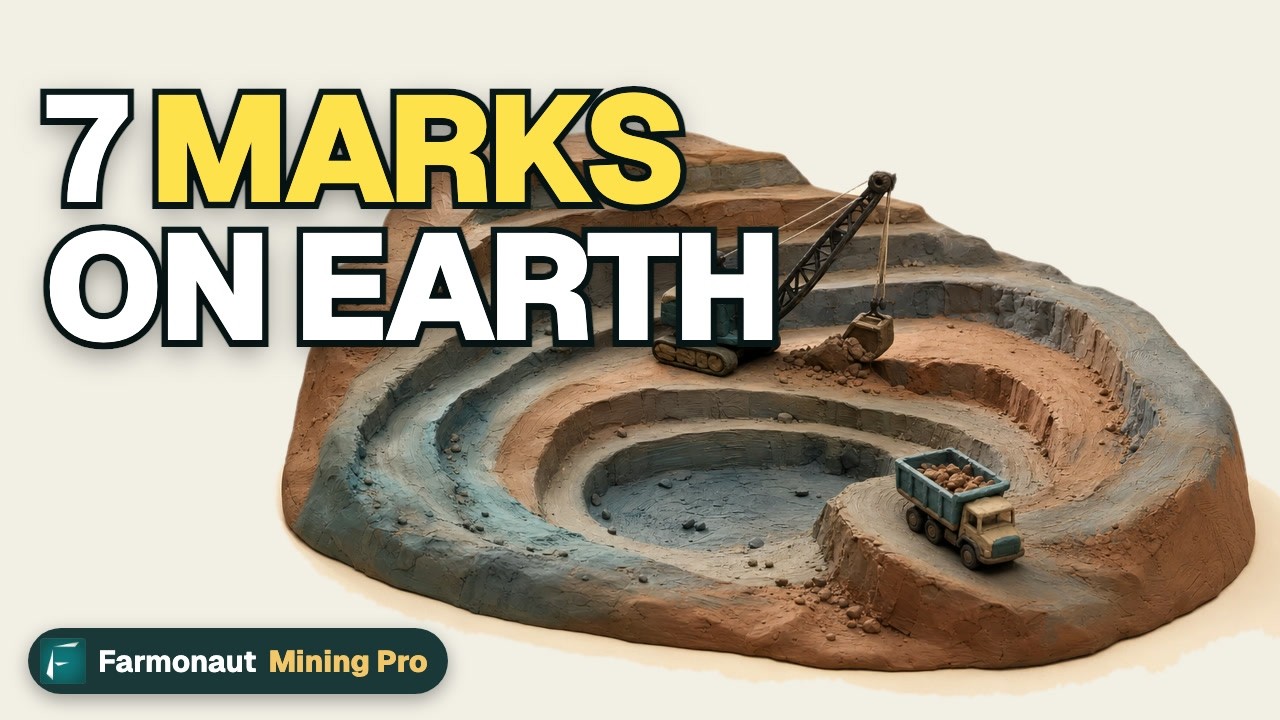
▶ Walks through the seven environmental impacts of mining in plain words, with satellite maps. · 2:31
Jobs, royalties and the Gécamines settlement
At the end of 2024 TFM had 17,756 people on site: 3,927 employees and 13,829 contractors. About 88.2% were local citizens, and the report says the high contractor count came mainly from construction work (TFM ESG report, 2024).
The state’s share has been a repeated point of conflict. In August 2021 the Congolese government formed a commission to reassess the mine’s reserves and resources, and in July 2022 Gécamines ordered exports halted, claiming CMOC owed US$7.6 billion in royalties and interest. The final deal, announced in July 2023, has CMOC pay US$800 million between 2023 and 2028 and distribute at least US$1.2 billion in dividends, with Gécamines entitled to 20% of the value of subcontracting and the right to buy production in proportion to its 20% stake (Mining Technology, July 2023).
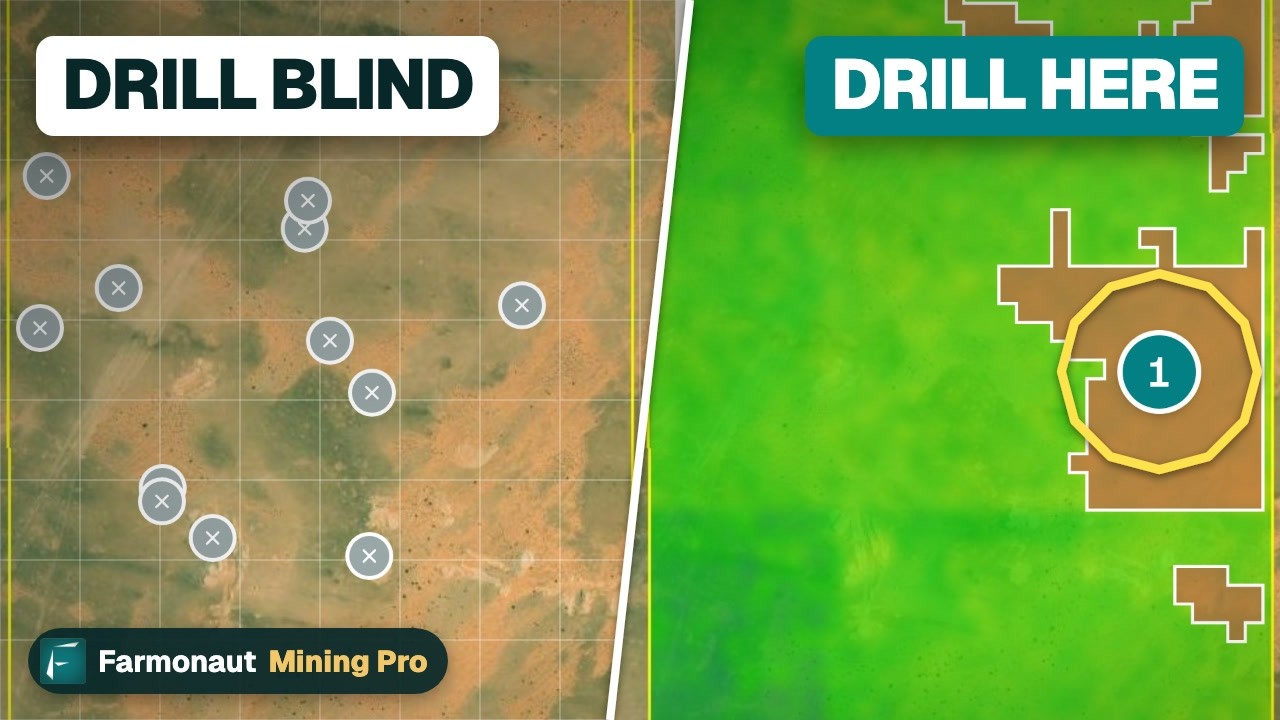
▶ Follows the money from the ground up: exports, jobs, revenue and energy-transition minerals. · 5:03
Estimate the metal value of a copper-cobalt ore block
The calculator below turns an ore tonnage and grades into recoverable copper and cobalt and a gross metal value. It is a screening tool: it ignores mining cost, processing cost, payables, royalties and the export quota. Enter your own grades, recoveries and prices. The defaults are round examples, not TFM’s figures, and the prices are examples that you should replace with today’s price.
Calculator
What could a copper-cobalt ore block be worth?
Enter your own tonnage, grades, recoveries and prices. Results update as you type.
- Recoverable cobalt (tonnes): 1,800,000
- Gross copper value: $292,500,000,000
- Gross cobalt value: $72,000,000,000
- Total gross metal value: $364,500,000,000
- Cobalt share of gross value: 19.8%
Example values only, not TFM figures and not a benchmark. Prices are inputs: use today’s price. The result is gross metal value before mining and processing cost, payable terms, royalties, taxes and export limits. Recoverable metal = ore tonnes x grade x recovery.
Checking a site from space: what satellite screening can and cannot show
Satellite images cannot read a mine’s air quality or water chemistry, but they show land change over years: the growth of pits, waste dumps and tailings areas, bare ground, new roads, settlement edges and revegetated slopes. Comparing images from the same season across several years lets a reviewer test a claim such as “we restored vegetation here” against the ground itself. Any change found is a lead for a site visit and field sampling, not proof of cause.
Farmonaut Mining Pro takes a KML, KMZ or polygon of a licence area and returns satellite-based exploration targets in 5 to 20 business days. Those results sit ahead of a resource estimate and are not an environmental or social clearance. To discuss a project, use the mining quote form, read about satellite-based mineral detection, or contact the team.
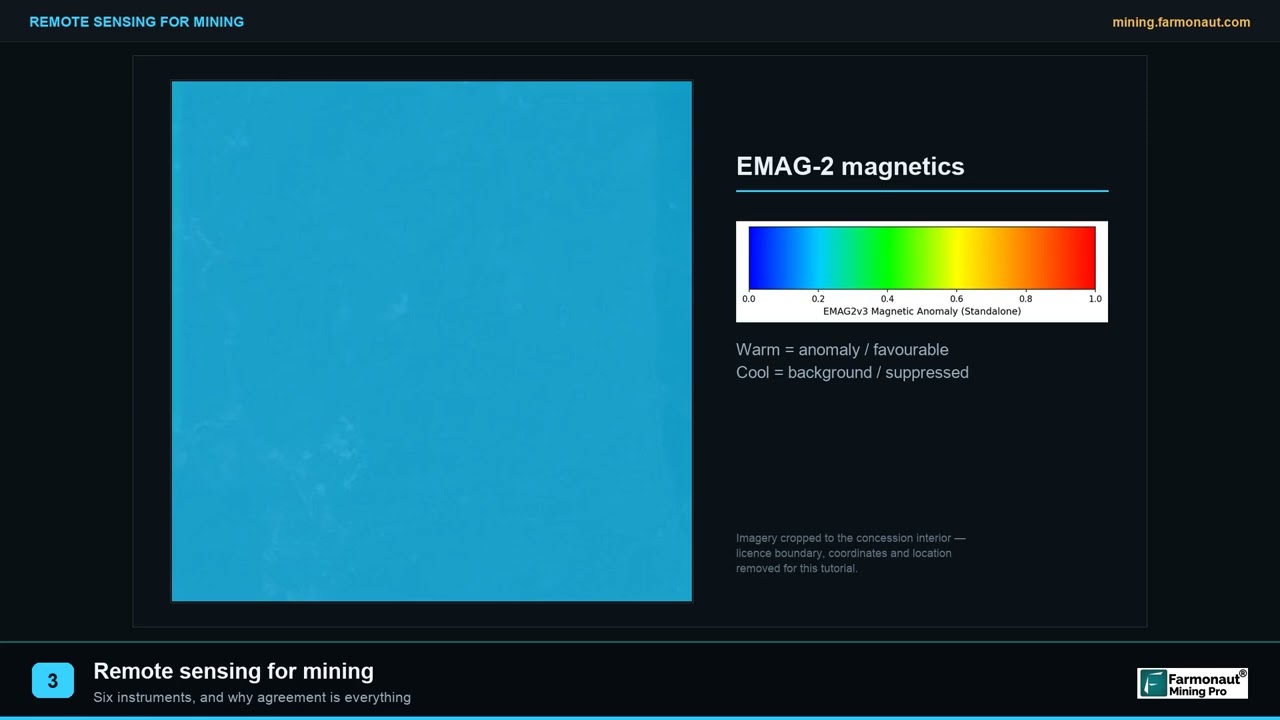
▶ Explains remote sensing for mining in plain words: the instrument families and why agreement between them matters. · 2:01
For a closer look at a related question, see our guide: Pilbara Mine Rehabilitation: 7 Methods and the Data.
If this topic matters to you, read Geita Gold Mine Contact: Owner, Output and Who to Ask next.
Frequently asked questions
Who owns the Tenke Fungurume mine?
CMOC Group owns 80% of Tenke Fungurume Mining S.A. and the DRC state miner Gécamines owns 20% (CMOC). CMOC reached 80% in September 2019, after buying Freeport-McMoRan’s stake in 2016 and, through BHR, Lundin Mining’s stake between 2017 and 2019 (AidData, 2025).
Where is the Tenke Fungurume mine located?
It is in Lualaba Province in the south-east of the DRC, a region that was formerly part of Katanga Province (AidData, 2025). The concession covers more than 1,500 square kilometres (TFM ESG report, 2024).
How much copper and cobalt does Tenke Fungurume produce?
In 2024 the mine produced 450,147 tonnes of copper and 28,248 tonnes of cobalt (TFM ESG report, 2024). CMOC lists its capacity as more than 450,000 tonnes of copper a year. For 2025, CMOC publishes group totals, driven by TFM and Kisanfu: 741,100 tonnes of copper and 117,500 tonnes of cobalt.
Is Tenke Fungurume the largest cobalt mine in the world?
No. The Cobalt Institute names Kisanfu (KFM) as the largest mined cobalt asset, with about 25% of world output, and TFM as the second largest, at about 14%. Both are owned by CMOC.
What is the difference between TFM and Kisanfu?
They are separate CMOC mines in the same region. CMOC holds 80% of TFM, which CMOC puts at 1,600 square kilometres, and 71.25% of KFM, which covers 33 square kilometres (CMOC). KFM has a second expansion phase planned for 2027 that would add 100,000 tonnes of copper capacity.
When did Tenke Fungurume start producing?
Site work started in late 2006 and the mine reached commercial production in the first half of 2009 (AidData, 2025). A second expansion phase ran from late 2011 to 2013.
Who owned Tenke Fungurume before CMOC?
Before 2016, the holding company TF Holdings was held by Freeport-McMoRan (70%) and Lundin Mining (30%), with Gécamines holding its own 20% of the mine. Phelps Dodge held the controlling interest from 2005, and Freeport-McMoRan took the 70% holding in 2007 (AidData, 2025).
How much did CMOC pay for Tenke Fungurume?
CMOC paid US$2.65 billion in cash in November 2016 for Freeport-McMoRan’s 70% of TF Holdings, an effective 56% of the mine. It added the remaining 24% by buying BHR in September 2019 (International Mining; AidData, 2025).
Does the DRC cobalt export quota apply to Tenke Fungurume?
Yes. The quota covers all cobalt exports from the DRC, with 87,000 tonnes allocated for 2026 across eligible producers plus a 9,600-tonne strategic quota (Cobalt Institute, May 2026). Mine output continues, but cobalt above a company’s allocation stays in the country. Copper exports are not under the quota.
What was the Gécamines royalty dispute about?
Gécamines claimed in 2022 that CMOC owed US$7.6 billion in royalties and interest, a dispute that followed the government’s reassessment of the mine’s reserves. The 2023 settlement has CMOC pay US$800 million between 2023 and 2028 and distribute at least US$1.2 billion in dividends (Mining Technology).
Is the Tenke Fungurume mine certified for responsible production?
TFM received The Copper Mark in 2024 and reported a “Fully Meet” result on all 32 criteria in its August 2025 re-audit. EIA published a report that disputes the air-quality position and questions the standard, citing 31 applicable criteria as of July 2025, and TFM has responded with its own monitoring data. TFM is also under assessment for IRMA.
How can I check land change around a mine from satellite images?
Compare images without cloud cover, taken in the same season, across several years, and map pits, dumps, tailings areas and bare ground against the licence boundary. Treat the result as a lead for field work. Farmonaut accepts a KML, KMZ or polygon for this kind of screen.
This page is for information only. It is not investment advice. Ownership, quota and price information changes; confirm current figures with company filings and the regulator.
Farmonaut mining
Map your mining site from space
Send a KML, KMZ or polygon and Farmonaut screens the area from satellite images before ground crews go in.
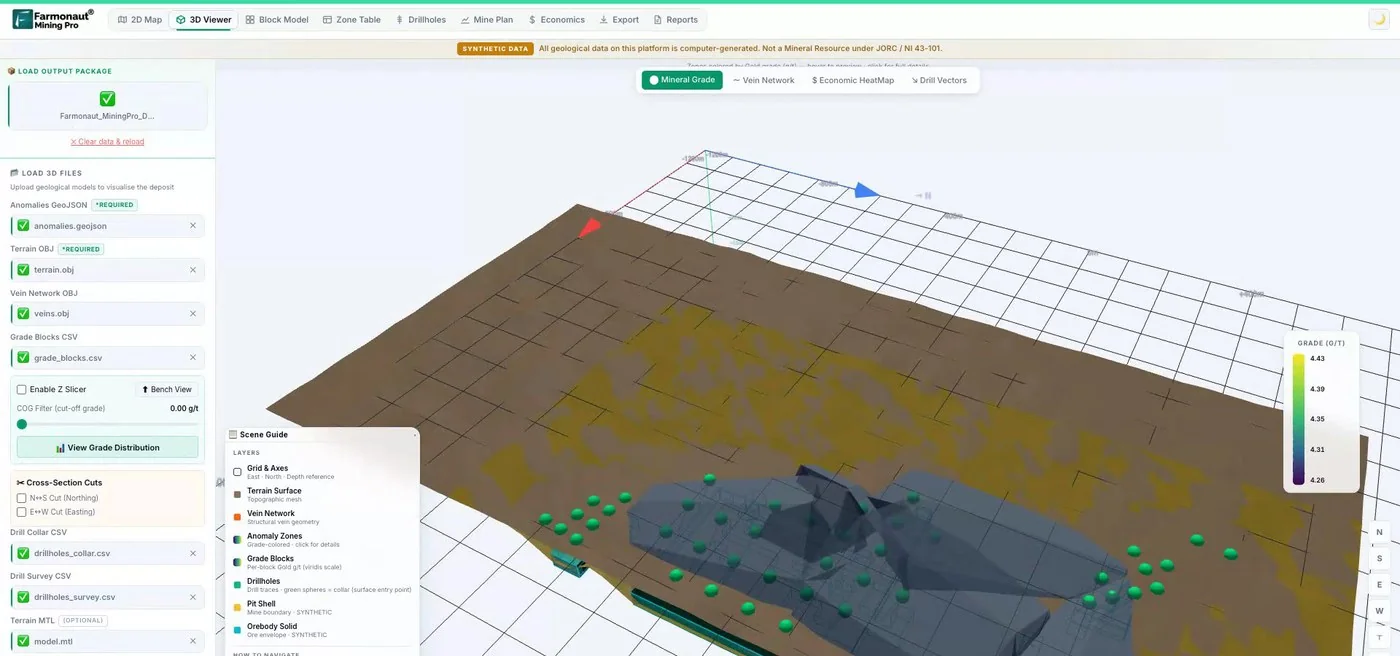
Mining Pro sample view, synthetic data
Keep reading
Sources
- CMOC Group, The DRC – copper and cobalt: en.cmoc.com
- TFM, 2024 ESG report: cms.tfmofficial.com
- AidData, Tenke Fungurume Copper-Cobalt Mine (February 2025): docs.aiddata.org
- International Mining, Freeport completes sale of Tenke majority stake (November 2016): im-mining.com
- Mining Technology, Congo halts court case against China Moly (2022): mining-technology.com
- Mining Technology, CMOC to pay $800m to Gécamines (July 2023): mining-technology.com
- CMOC, 2025 annual results release (April 2026): en.cmoc.com
- Cobalt Institute, Cobalt Market Report 2025 (May 2026): cobaltinstitute.org
- USGS, Mineral Commodity Summaries 2026: Cobalt: pubs.usgs.gov
- USGS, Sediment-hosted stratabound copper deposit model (SIR 2010-5070-M): pubs.usgs.gov
- Bankable, CMOC nine-month cobalt output and export quotas (October 2025): bankable.africa
- Trading Economics, Cobalt price: tradingeconomics.com
- Trading Economics, Copper price: tradingeconomics.com
- Environmental Investigation Agency, Toxic Transition press release: eia.org
- The Copper Mark, Case study Tenke Fungurume Mining (July 2024): coppermark.org
- Ecofin Agency, TFM achieves full compliance in The Copper Mark re-audit (October 2025): ecofinagency.com
- CMOC, TFM becomes the first mine in Africa to receive The Copper Mark (June 2024): en.cmoc.com
Discussion
Questions, corrections or field experience? Share them below. First-time comments are reviewed before they appear, and your email is never published.
No comments yet. Be the first to add a question or your experience.

 Critica Metals Limited
 Congo Mining Solutions
 Mining SARL
 SenGold Invest SAS
 Sania Corporation
 Sean Mining Limited
 NTS Group (Pty) Ltd
 Mine4Africa
 Lithspo Minerals Limited
 Tintina Mining Group
 Dalgety Minerals Pty Ltd
 Vortex Minerals Pty Ltd
 Faith At Work (Pty) Ltd
 Geotech Mining Solutions plc
 Vulcan International Limited
 Kidepo Associates
 GKY Mining
 Alkimy SARL
 Double A Trading
 GemSprout Metals Limited
 Qader Group
 Ileys General Trading










