

Top 10 Copper, Silver & Uranium Producers: Power Trends 2026
“In 2025, the top 10 copper producers will supply over 60% of the world’s total mined copper.
The leading 10 uranium producers are expected to contribute nearly 70% of global uranium output by 2025.”
Table of Contents
- Global Outlook on Top Copper, Silver & Uranium Producers in 2025
- Industry Leader Comparison Table
- Top 10 Copper Producers: 2025 Power Overview
- Top Silver Producers in the World: 2025 Market Leaders
- Top Uranium Producers in the World: 2025 Nuclear Outlook
- Key Trends, Demand Drivers, and Strategic Implications
- Farmonaut’s Satellite Solutions for Mining, Industry, and Sustainability
- FAQ: Top Copper, Silver & Uranium Producers
- Conclusion: The Future of Global Metal Supply Chains
Global Outlook on Top Copper, Silver, and Uranium Producers in 2025: Implications for Mining and Industry
The global mining industry stands at a crossroads in 2025 as copper, silver, and uranium become more critical than ever. As the global economy advances into 2026, a surge in demand for critical minerals continues—driven by infrastructure megaprojects, green energy transitions, and evolving defense requirements. Understanding the top 10 copper producers, the top silver producers in the world, and top uranium producers in the world is now vital for stakeholders in mining, resource management, and global industry.
From Chile, Peru, and China’s copper dominance; to Mexico and Australia’s unrivaled silver output; and Kazakhstan’s and Canada’s leadership in uranium—these countries remain central to mining and energy trends. This blog delivers a deep dive into production figures, supply chains, environmental impacts, and the technological upgrades shaping the market for these critical minerals in 2025 and beyond.

Industry Leader Comparison Table: Top 10 Copper, Silver & Uranium Producers (2025 Projections)
| Rank | Company Name | Country | Metal | 2025 Est. Production | Global Market Share (%) | Notable Trends |
|---|---|---|---|---|---|---|
| 1 | Codelco | Chile | Copper | 1.7 million tonnes | ~10% | Sustainability, technological upgrades |
| 2 | Glencore | DRC/Peru | Copper | 1.3 million tonnes | ~7% | Resource diversification, ESG focus |
| 3 | BHP | Australia/Chile | Copper | 1.2 million tonnes | ~6% | Expansion, green mining |
| 4 | Grupo México | Mexico/Peru | Copper/Silver | 1.1 million tonnes (Cu) / 1,847 tonnes (Ag) | ~5-7% | Integrated mining, smelting |
| 5 | Polymetal International | Russia | Silver | 1,530 tonnes | ~6% | Advanced extraction, automation |
| 6 | Fresnillo plc | Mexico | Silver | 2,600 tonnes | ~10% | Polymetallic mining, tech upgrades |
| 7 | Kazatomprom | Kazakhstan | Uranium | 24,000 tonnes U3O8 | ~40% | In-situ recovery, green extraction |
| 8 | Cameco | Canada | Uranium | 10,000 tonnes U3O8 | ~17% | High-grade deposits, energy security |
| 9 | Orano | Niger/France | Uranium | 3,000 tonnes U3O8 | ~6% | Expansion in Africa, tech upgrades |
| 10 | Rio Tinto | Australia | Copper/Uranium | 525,000 tonnes (Cu) / 2,800 tonnes U3O8 | ~5% | Sustainability, multi-commodity |
Top 10 Copper Producers: 2025 Power Overview
Copper is the cornerstone metal for the world’s electrical infrastructure, renewable energy projects, and transportation technologies. Globally, the top copper producers in 2025 include:
- Chile: Leading with over 5.7 million tonnes annually, Chile’s investments in sustainable mining practices and technological upgrades ensure its market dominance.
- Peru: The world’s second largest copper producer, with rich mineral deposits and strong foreign investment, producing approximately 2.5 million tonnes.
- China: Producing close to 1.7 million tonnes, China is not only a producer but also a major consumer and processor, significantly influencing global copper supply chains.
- United States: A top five producer focusing on production and refining capacities that are essential for domestic industries and exports.
- Democratic Republic of Congo (DRC): With growing mining investments and focus on capacity expansion, the DRC is cementing its place among the top copper producers.
The strategic importance of copper stems from its wide applications in electric vehicles (EVs), expanding grids, and high-speed telecommunications. With governments worldwide pushing for electrification and low-carbon infrastructure, copper mining will set new benchmarks in sustainability, technological adoption, and capacity expansion.

- Major copper mines operating in Peru: Antamina (polymetallic), Cerro Verde, and Las Bambas—representing the vast, rich mineral deposits supporting the country’s production surge.
- Chile’s notable activity: The world’s largest copper mine Escondida (operated by BHP) continues to be a linchpin in the nation’s global leadership.
- Technological advancements: Satellite monitoring, AI-driven exploration, and blockchain-based resource management are now being adopted broadly for sustainable copper mining.
For those in mining, sustainable resource management is enhanced by embracing modern solutions. Our platform at Farmonaut leverages satellite-based data and AI-powered insights, ideal for copper mining businesses seeking to optimize large-scale mining and resource management and maintain sustainable, transparent operations.

Top Silver Producers in the World: 2025 Market Leaders
Silver maintains a crucial role in industrial applications, renewable energy, and the monetary asset market. Some of the top silver producers in the world in 2025 are: A fuller ranking of silver producing countries shows how these leaders compare on output.
- Mexico: Dominates worldwide silver production with annual output exceeding 6,000 tonnes, supported by numerous active mines, state-of-the-art processing facilities, and leading mining companies such as Fresnillo plc and Grupo México.
- Peru: With vast polymetallic mining operations, Peru maintains its rank among the top global silver producers.
- China: Combining substantial domestic demand with strong extraction technology adoption, China’s silver production remains significant in the international market.
- Russia: Polymetal International is a notable leader, introducing automation and advanced extraction methods to meet global demand.
- Australia: Associated with efficient mining and refining of both silver and base metals, Australia’s integrated mining sector enables sustained output.

The industrial demand for silver is rising, fueled by its strategic role in electronics, solar photovoltaics, new medical technologies, and catalysis. Meanwhile, investment demand (as a hedge against inflation and currency volatility) supports robust market dynamics.
Cutting-edge extraction technologies—such as blockchain-driven traceability for mining and AI-based advisory systems—are helping companies reduce environmental consequences while scaling production. For businesses interested in supply chain traceability and authenticity in precious metals, our traceability solution employs blockchain to promote transparency, support ESG goals, and foster trust across the value chain.
“In 2025, the top 10 copper producers will supply over 60% of the world’s total mined copper.
The leading 10 uranium producers are expected to contribute nearly 70% of global uranium output by 2025.”
Top Uranium Producers in the World: 2025 Nuclear Outlook
Uranium remains at the heart of the nuclear energy renaissance, which is gaining traction as governments prioritize low-carbon power generation and energy security. The top uranium producers in the world as of 2025 include:
- Kazakhstan: The world’s leading uranium producer, supplying nearly 40% of global uranium output (over 24,000 tonnes U3O8 annually), largely driven by in-situ recovery that reduces environmental effects.
- Canada: Home to high-grade mineral deposits in Saskatchewan, Canadian mines are major suppliers to global nuclear fuel markets, with a clear focus on sustainability and efficiency.
- Australia: Despite regulatory review, Australia’s substantial uranium reserves allow sizable production supporting domestic and international reactors.
- Namibia & Niger: Both significantly contribute to the uranium supply, hosting some of the world’s most productive uranium mines operated by companies like Orano and Paladin.
- Uzbekistan: Growing its uranium mining industry, strengthening supply for global nuclear sectors.
The resurgence of nuclear power in the pursuit of carbon neutrality, coupled with advances in uranium extraction and resource management technology, ensures that these top uranium producers remain pivotal through 2026 and beyond.
Key Trends, Demand Drivers, and Strategic Implications for Top Copper, Silver, and Uranium Producers (2025-2026)
1. Electrification and Green Transitions
- Electrification of infrastructure: Vast projects in the United States, China, and Europe fuel the demand for copper and silver, given their irreplaceable use in grids, EVs, and renewable energy installations.
- Global push for renewable energy: Silver’s role in photovoltaics and copper’s necessity in wind/solar systems make these metals fundamental to decarbonization goals.
- Nuclear resurgence: Uranium demand rises as nuclear is recognized as a baseload, low-carbon power source for industry and growing populations—particularly in Asia and the Middle East.
2. Technological Upgrades & Sustainable Mining
- Advanced remote sensing and AI-based exploration: Companies now use satellite technology and data analytics to locate rich mineral deposits, optimize extraction, and predict market movements.
- Blockchain and traceability solutions: Blockchain-driven product traceability tools strengthen transparency, sustainability, and stakeholder trust—especially for high-value metals.
- Environmental management: Technologies for carbon footprinting in mining offer actionable insights, enabling mining companies to comply with regulations and meet ESG objectives.
3. Market Dynamics, Geopolitical Risks & Resource Management
- Geopolitical risks: Market volatility can arise due to reliance on a handful of nations for critical mineral supply. This spurs investment in new mining projects, recycling, and circular economy initiatives.
- Supply chain diversification: To minimize disruption, producers and consumers seek alternative sources, invest in local extraction, and adopt fleet management systems that enable efficient resource movement and logistics optimization.
- Importance for agriculture and infrastructure: Advanced irrigation, precision agriculture, and modern infrastructure all rely on secure supplies of these critical minerals—underscoring the intersections between mining, agri-tech, and urban development.
4. Environmental and Regulatory Pressures
- Protecting biodiversity and reducing emissions: Strict environmental oversight challenges producers to innovate with low-impact extraction and restoration initiatives.
- Sustainable extraction practices: Satellite-enabled monitoring and carbon reporting empower stakeholders to make data-driven decisions and demonstrate compliance.



Powerful Insight for Mining, Industry, and Infrastructure: For developers and enterprise users, Farmonaut’s Satellite Data API and scalable Developer API Documentation provide direct integration with surveillance, fleet, and resource management applications. This boosts efficiency for copper, silver, and uranium extraction projects, environmental oversight, and supply chain traceability.

Farmonaut’s Satellite Solutions for Mining, Industry, and Sustainability
At Farmonaut, we empower agriculture, mining, and infrastructure industries through satellite-driven monitoring, AI-based advisories, traceability solutions, and resource management.
Our platform enhances the operational capabilities of mineral producers, mining companies, governments, and enterprises striving to achieve sustainability, efficiency, and transparent supply chains.
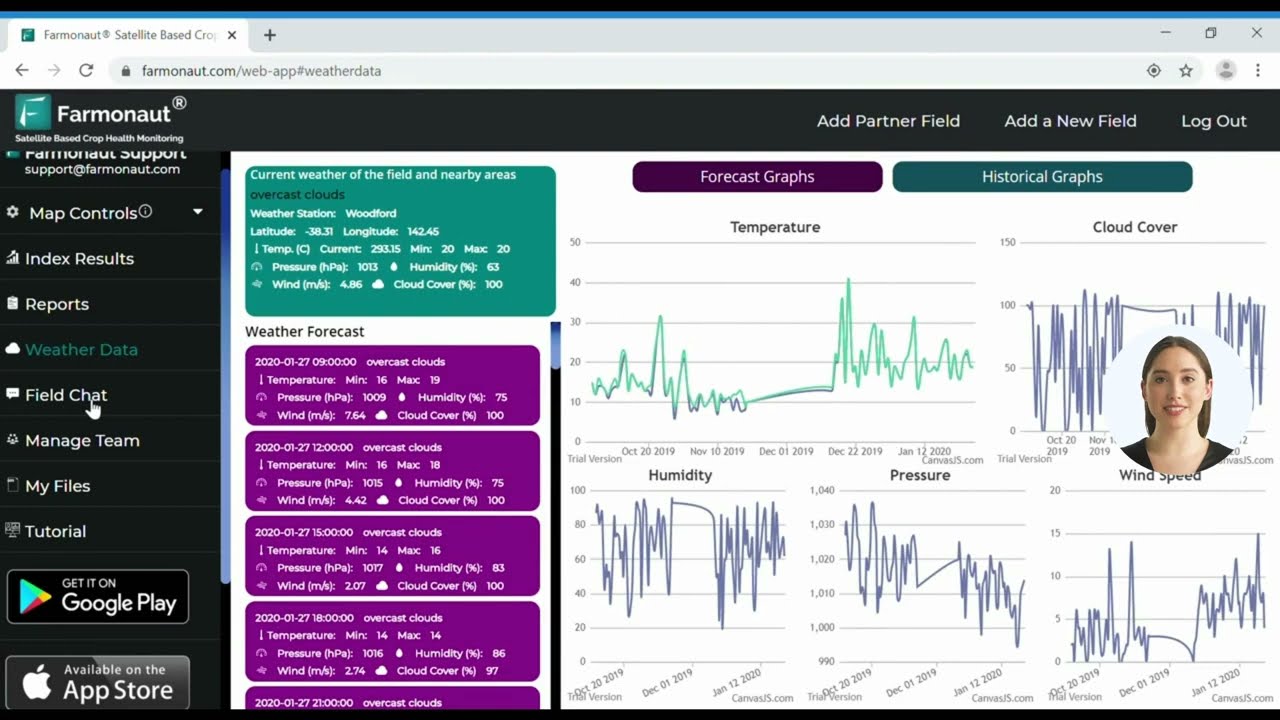
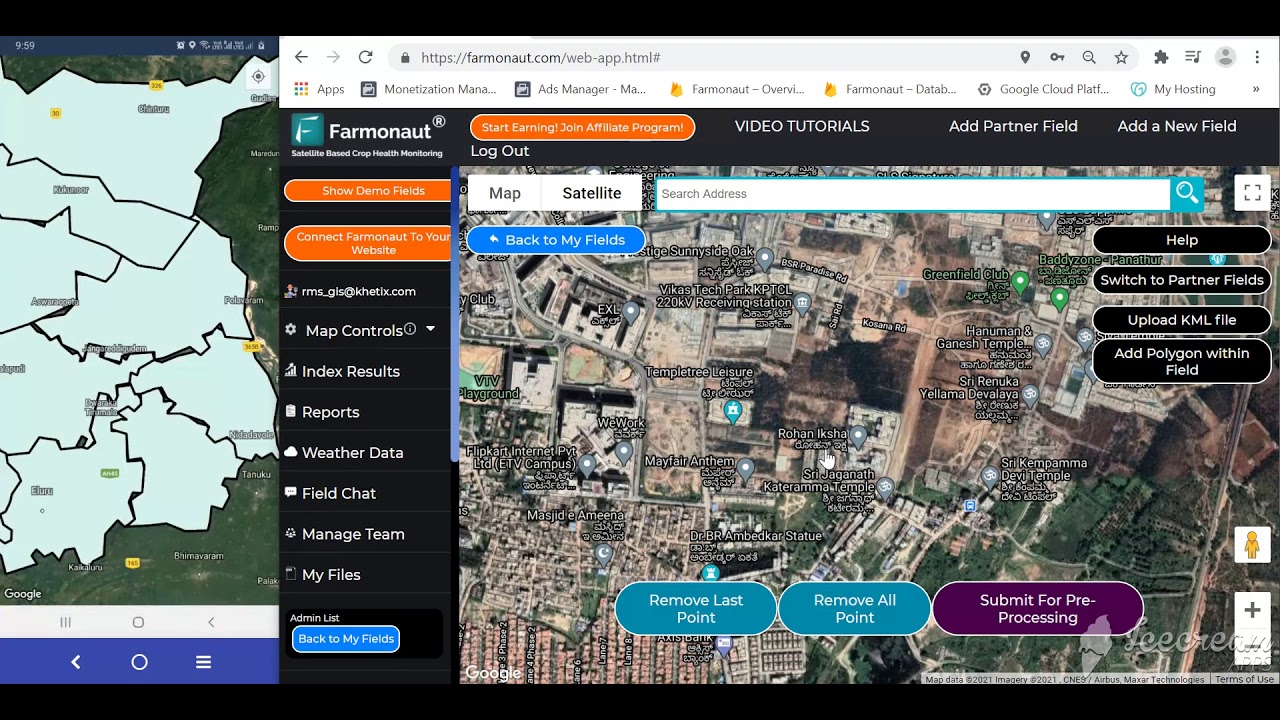
- Satellite-Based Monitoring: We provide high-resolution, multispectral monitoring of mines, infrastructure, and crops—enabling large-scale management of industrial and agricultural assets. This supports productivity, resource allocation, environmental impact tracking, and strategic decisions.
- AI & Blockchain Integration: We deploy AI-powered advisory tools and blockchain-traceable mining solutions, ensuring transparency, compliance, and cost reductions across the value chain for copper, silver, and uranium producers.
- Fleet and Resource Management: We offer advanced fleet management tools, enabling logistics optimization and equipment tracking for mining and infrastructure—reducing operational costs and supporting sustainable mineral extraction.
- Environmental Impact Monitoring: Our carbon footprinting solutions help stakeholders meet ESG requirements and regulatory standards while minimizing the environmental effects of mineral extraction.
- Crop Loan and Insurance Support: For mining and agricultural ventures seeking financing, our crop loan and insurance verification tools leverage satellite data to boost access to fair, fraud-resistant financing.
Sustainability, efficiency, and data-driven management define the future of copper, silver, and uranium production. Satellite monitoring and digital traceability—like those we deploy at Farmonaut—support major producers in optimizing extraction, reducing environmental impact, and building future-ready supply chains.

FAQ: Top Copper, Silver & Uranium Producers
Who are the top 10 copper producers in 2025?
The leaders are Codelco (Chile), Glencore (DRC/Peru), BHP (Australia/Chile), Grupo México (Mexico/Peru), and others including Freeport-McMoRan (US), Southern Copper, First Quantum (Zambia/DRC), China Nonferrous, KGHM Polska Miedź (Poland), and Rio Tinto (Australia).
Which countries dominate global silver production in 2025?
Silver production is topped by Mexico, followed by Peru, China, Russia, and Australia—these five countries account for the majority of mined silver annually.
Why is Kazakhstan the world’s leading uranium producer?
Kazakhstan’s dominance is due to large reserves, in-situ recovery methods (which are less disruptive), and continued investment in uranium mining technology. This enables the country to supply up to 40% of global uranium needs.
How does satellite technology benefit mining and mineral supply chains?
Satellite monitoring supports real-time oversight of mining operations, predicts resource discoveries, optimizes fleet logistics, and enables carbon and environmental impact tracking for sustainability.
Where can I access Farmonaut’s satellite-based monitoring tools?
Visit our web, Android, or iOS apps for mining, agriculture, and industrial project management, or use our satellite data API for custom solutions.
What are the main sustainability challenges for copper, silver, and uranium producers?
Key challenges include reducing emissions, protecting water resources and biodiversity, and adhering to environmental regulations. Technologies such as satellite monitoring, carbon footprinting, and blockchain-based traceability help address these challenges.
Conclusion: The Future of Global Metal Supply Chains
As we approach 2026, the world’s top copper, silver, and uranium producers hold the keys to economic resilience, low-carbon energy transitions, technological innovation, and industrial expansion. Securing efficient, sustainable, and transparent production of these critical minerals will determine the trajectory of infrastructure, defense, and technology sectors for the coming decade.
Mounting global demand, propelled by urbanization, the electrification of transport, decarbonization mandates, and digital transformation, will continue to drive investments in resource extraction, processing, and supply chain management.
At Farmonaut, we believe that advanced satellite-based technologies, AI, blockchain traceability, and resource management tools are essential for the future of sustainable mining, agriculture, and energy. Empowered by affordable, real-time insights, stakeholders can evolve alongside changing global trends, improving productivity, reducing environmental impact, and meeting the demands of tomorrow’s industries.
Connect with us today to discover how Farmonaut’s satellite solutions can benefit your mining, industrial, and resource management operations—securing your place in the future of sustainable extraction.

 SG Gold Mining LLC
 VRV Global Pte Ltd
 Omsri International FZE
 G.I.T.T.
 Jaunita Erss Ltd
 Almosi SARL
 SRK Consulting
 Berks Gold Limited
 Mwerezi Minerals Company Limited
 Mining SARL
 SenGold Invest SAS
 Sean Mining Limited
 NTS Group (Pty) Ltd
 Mine4Africa
 Lithspo Minerals Limited
 Tintina Mining Group
