

Innovation in Mining: The Technologies Changing the Industry
Reviewed August 2026 against Australian Mining Council data, the US Department of Energy, and Frontiers in Robotics and AI.
Innovation in the mining industry now means four concrete shifts: AI-driven geological modeling that finds ore deposits faster, autonomous drilling and haulage that pulls workers out of hazardous zones, satellite and remote-sensing systems that monitor environmental impact in near real time, and blockchain traceability that documents a mineral’s path from pit to buyer. None of these are speculative — Australian mining investment reached CAD 44.5 billion in 2024, and the US government committed USD 1.4 billion to critical minerals supply chain development in 2025. This article walks through what each technology actually does, what it costs to adopt, and how to verify the numbers yourself as they update.
Why Mining Investment Is Shifting Toward Technology
The mining industry is not adopting technology at the margins — it is redirecting capital toward it. Industry analysis tracked a 93% increase in mining technology investment by companies in 2024, according to Australian Mining, alongside total Australian mining investment (public and private combined) of CAD 44.5 billion for the same year, per the Australian Mining Council. On the US side, the Department of Energy committed USD 1.4 billion in 2025 toward critical minerals supply chain development, a figure confirmed in the joint US-Australia Minerals and Metals Investment Ministerial statement.
These are not one-off grants. They reflect a structural bet: that AI-driven exploration, autonomous equipment, satellite monitoring, and blockchain traceability reduce cost and risk enough to justify the capital outlay. The rest of this article breaks down what each of those four technologies does in practice, what adoption looks like at a working site, and where you can check the current numbers yourself — because investment figures like these are refiled annually and will not stay static.
What “Innovation in Mining” Actually Covers
“Innovation in mining” is a broad search term, and a lot of pages answer it with vague talk of “digital transformation.” In practice, it resolves into four categories that show up repeatedly across current capital spending:
- Exploration and geological modeling: machine learning applied to drill-core, geochemical, and geophysical data to locate ore deposits with fewer exploratory holes.
- Autonomous operations: drilling rigs, haul trucks, and loaders that operate under remote or AI control, removing workers from rockfall, blast, and traffic risk zones.
- Remote sensing and environmental monitoring: satellite and sensor networks that track water, air, soil, and vegetation conditions around a mine site without repeated field visits.
- Supply chain traceability: blockchain or similarly auditable digital ledgers that document a mineral’s custody chain from extraction through processing and sale.
Each category has a different adoption curve, a different capital profile, and a different measurable payoff — covered technology by technology below.
Video Case Studies: Innovation Applied in the Field

Satellites Find Gold! Farmonaut Transforms Tanzania Mining | News Report (watch on YouTube)
This kind of applied case — a satellite platform identifying and monitoring a mining operation in a specific region — is a more concrete signal of adoption than any adoption-rate percentage, because it shows the workflow rather than an estimate of it.
The Core Technologies Driving Change
1. Autonomous Equipment: Drilling Rigs and Haul Vehicles
Autonomous drilling rigs and haul trucks extend ore extraction into zones that were previously too hazardous to staff continuously — deep underground faces, unstable pit walls, blast-adjacent areas. The direct benefit is exposure reduction: fewer workers physically present where rockfall, vehicle collision, and air-quality risks concentrate. The secondary benefit is consistency — AI-controlled machinery repeats a drilling pattern or haul route without the variance a human operator introduces over a 12-hour shift.
- Autonomous systems pair with real-time sensor feeds so equipment adjusts to geological changes (rock hardness, seam angle) without a human recalculating on the fly.
- Adoption is concentrated at large-scale open-pit and underground operations first, since the fleet-management infrastructure has a fixed cost that amortizes better at scale.

Satellites Revolutionize Gold Exploration in Kenya’s Heartland (watch on YouTube)
2. AI-Powered Geological Modeling and Predictive Analytics
Machine learning applied to historical drill-core assays, geophysical surveys, and geochemical sampling lets exploration teams rank drill targets before committing rig time to them. The value proposition is straightforward: every exploratory hole costs money whether or not it hits ore, so a model that improves target-ranking accuracy directly cuts wasted drilling.
- Predictive models help companies prioritize which anomalies are worth drilling, rather than testing every geochemical or geophysical anomaly in sequence.
- The same modeling reduces avoidable environmental disturbance, since fewer unproductive holes means less surface disruption per tonne of ore eventually found.

Rare Earth Boom: AI, Satellites & Metagenomics Redefine Canadian Critical Minerals (watch on YouTube)
3. Satellite-Based Monitoring and Remote Sensing
Satellite imagery combined with AI analysis gives site managers a way to monitor land disturbance, water quality proxies, and vegetation stress around a mine without sending a crew out on every check. That matters most for compliance reporting under environmental permits, where regulators expect documented, dated evidence of conditions — not a periodic site visit summary.
- Remote monitoring reduces the number of field visits required for routine compliance checks, freeing site staff for higher-value work.
- It also creates a running, dated record — useful if a regulator or community group disputes a claim about site conditions at a specific point in time.
4. Blockchain for Supply Chain Traceability
Blockchain-based traceability records each custody transfer of a mineral — from extraction, through processing, to sale — on a ledger that is difficult to alter retroactively. For buyers who need to certify conflict-free or ESG-compliant sourcing, this replaces a paper trail that is easy to forge with one that is not.
Learn more about how blockchain-enabled traceability works for mining and other resource industries, including what it takes to integrate a traceability layer into an existing supply chain.
5. Resource and Fleet Management
Satellite-based fleet management tools track vehicle location, utilization, and maintenance status across a site, which matters disproportionately in mining because haul trucks and support vehicles are expensive assets operating in remote terrain where a breakdown is costly to service. Better tracking data reduces idle time and helps schedule preventive maintenance before a failure happens mid-shift.

Arizona Copper Boom: AI Drones, Hyperspectral & ESG Tech Triple Porphyry Finds (watch on YouTube)
6. Carbon Footprinting and Environmental Impact Monitoring
Regulators in the US, Canada, and Australia increasingly expect documented emissions reporting from mine operators, not estimates. Continuous carbon footprint monitoring gives operators a running dataset to report against, rather than reconstructing emissions figures at audit time.

Satellite Mineral Exploration: AI Soil Geochemistry Uncover Copper & Gold in British Columbia (watch on YouTube)



Satellite Monitoring and Farmonaut’s Role
Farmonaut provides affordable, data-driven satellite solutions for mining companies and governments looking to add remote monitoring without building an in-house geospatial team. Here is what that covers in practice:
- Satellite-Based Monitoring: multispectral imagery for tracking ore-site conditions, land disturbance, and operational anomalies over time.
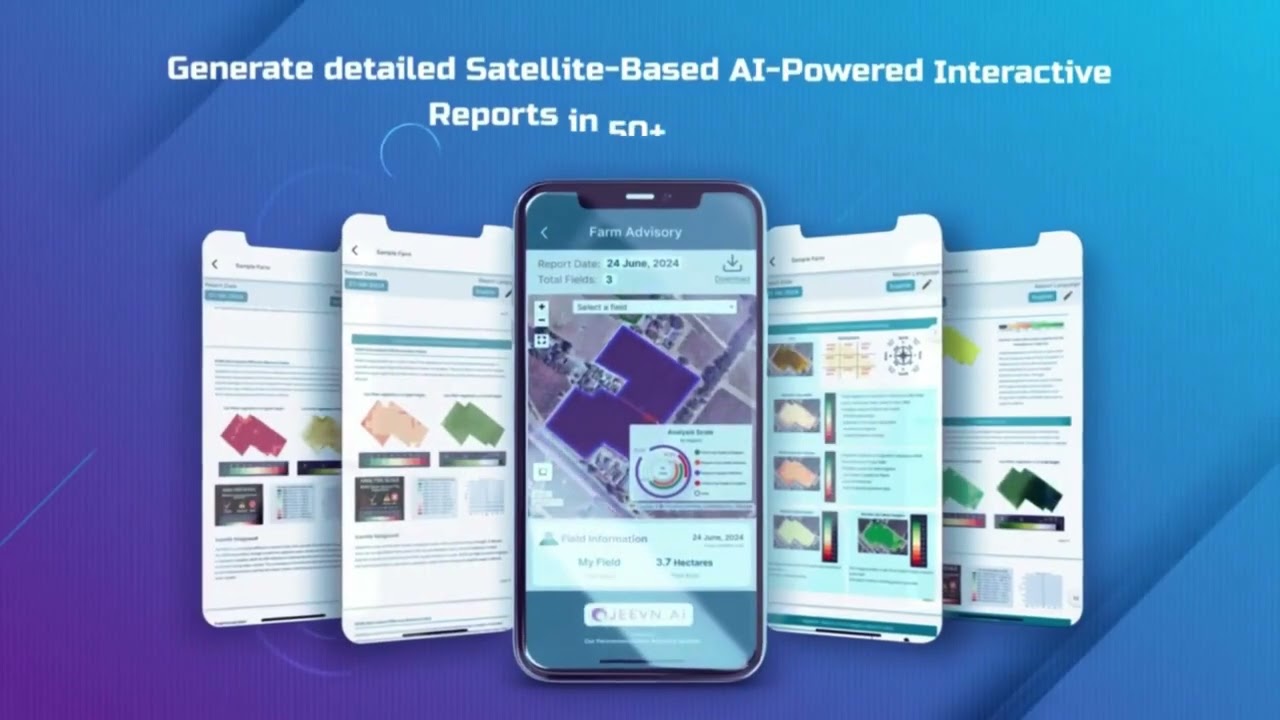
- AI-Based Advisory: Farmonaut’s Jeevn AI analyzes satellite data to flag conditions worth investigating, rather than requiring staff to review raw imagery.
- Blockchain Traceability: documented custody records for minerals moving from extraction through the supply chain.
- Environmental Monitoring: carbon footprint tracking plus water and soil quality assessment, feeding into the broader environmental impact of mining picture operators need for ESG and regulatory reporting.
For larger or higher-complexity mining projects, satellite-based verification tools originally built for agricultural loan and insurance verification apply the same logic to financing transparency — reducing fraud risk and improving access to project funding.
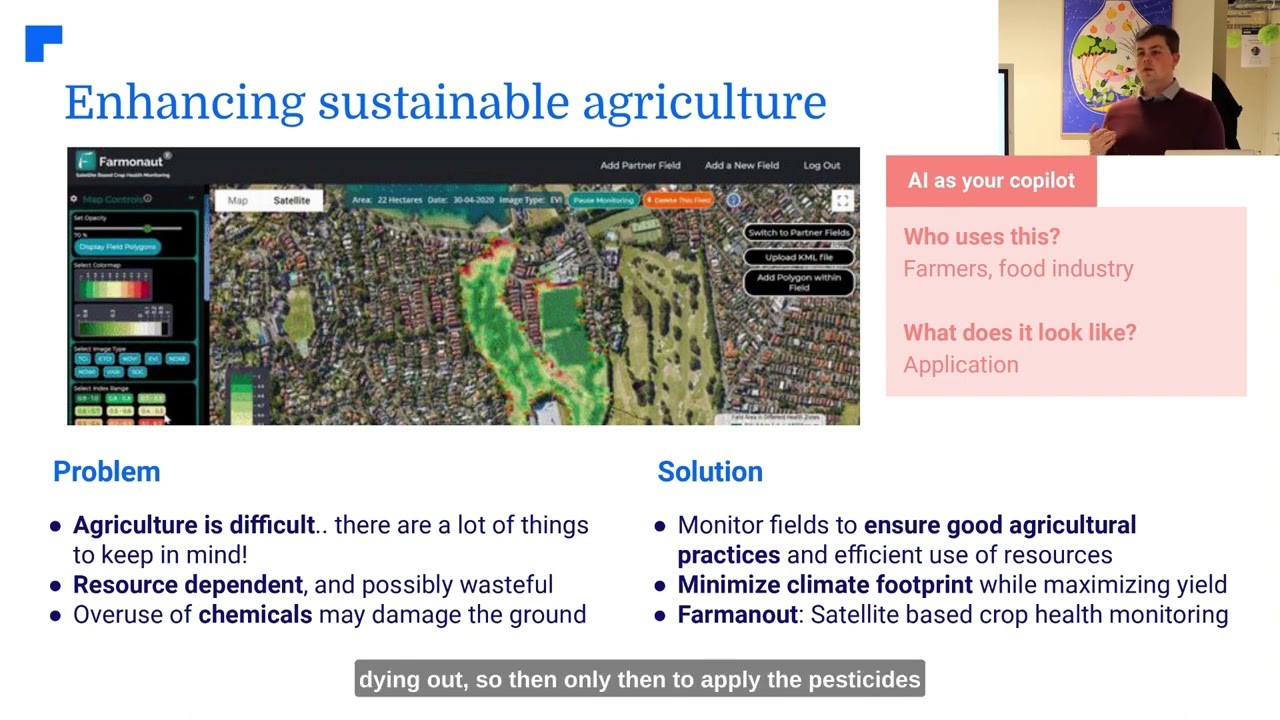
Farmonaut Covered By Radix AI: Leveraging Remote Sensing and Machine Learning for a Greener Future (watch on YouTube)
Developers and mining enterprises can integrate satellite analytics directly into existing workflows through the API platform. Explore the API or review the developer documentation for endpoint-level detail.
Environmental Stewardship and Responsible Practices
The technologies above only matter commercially if they also satisfy a harder constraint: reconciling rising mineral demand with credible environmental stewardship. Three shifts are doing the actual work here, not just the marketing language around them:
- Eco-efficient operations: circular-economy practices that cut water and energy draw per tonne processed, and prioritize material recovery over disposal.
- Community and social accountability: environmental impact assessment that extends past compliance minimums into site rehabilitation and local economic participation.
- Continuous monitoring: real-time environmental reporting that catches a disruptive incident (a tailings leak, a dust-plume event) within hours rather than at the next scheduled inspection.
Farmonaut’s carbon footprint solutions support the reporting half of this: tracking and documenting emissions in a form regulators and investors can audit, rather than a self-reported annual estimate.

1.5 M-oz Gold Find: Diamond Drilling, AI Satellite Mapping & ESG Mining in Oko, Guyana (watch on YouTube)
Sustainable Development Goals and Mining’s Social License
Operators pursuing a durable “social license to operate” tend to converge on the same three practices: equitable employment access for local and indigenous populations, rehabilitation of depleted sites into usable land (agricultural, conservation, or community use), and ongoing, documented dialogue with the communities nearest the operation. None of these are optional extras layered onto compliance — regulators in the US, Canada, and Australia increasingly treat community engagement records as part of permit renewal review.

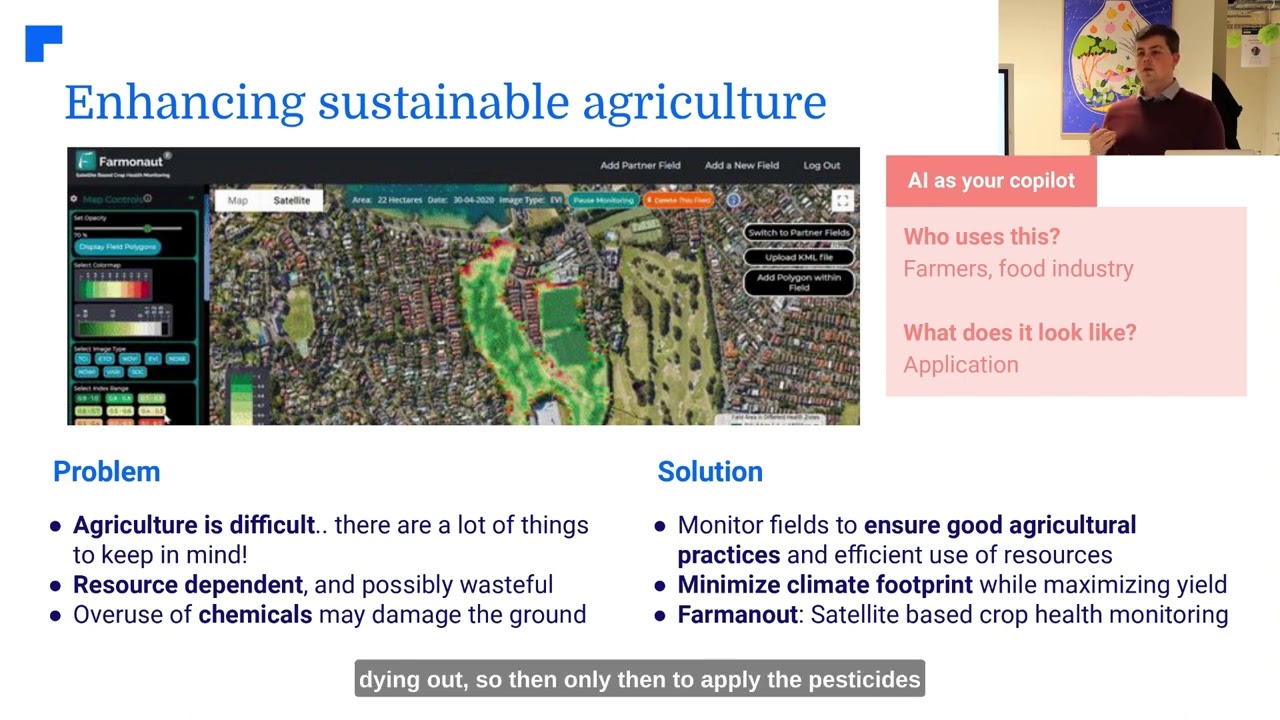
Farmonaut – Revolutionizing Farming with Satellite-Based Crop Health Monitoring (watch on YouTube)
Innovation Beyond Mining: A Meat-Processing Comparison
Mining is not the only capital-heavy, safety-critical industry going through a technology-adoption wave, and the comparison is useful for calibrating how fast this kind of shift typically moves. The global meat market is projected to reach USD 1,210.97 billion by 2027, growing at a 7% compound annual growth rate over 2025-2027, according to a peer-reviewed systematic review in Frontiers in Robotics and AI. Against a backdrop of roughly 80 billion animals slaughtered annually worldwide for meat processing, the same review found 3D vision systems now achieve 85-92% precision accuracy in livestock carcass cutting, and vision-based poultry evisceration defect detection systems run at 93% accuracy. That 93% figure lands in the same range as the 93% mining-technology-investment growth figure cited above — different industries, same order-of-magnitude signal that machine-vision and AI-assisted inspection have crossed from pilot projects into production-line standard practice. If you arrived here searching for meat-industry technology innovation specifically, the underlying pattern — computer vision replacing manual visual inspection at the point of highest labor cost and highest error risk — is the same one reshaping mineral exploration.
Skills, Education, and the Talent Pipeline
The technologies above only function if the workforce operating them has the right training, and that is reshaping mining education pipelines across North America and Australia. Universities and technical institutes are building curricula that blend geology and environmental science with data analytics and AI proficiency, rather than treating them as separate tracks. Apprenticeships and mentorship programs increasingly give early-career staff hands-on time with autonomous equipment and remote-sensing platforms before they’re responsible for a live operation.
For organizations managing large-scale, multi-site projects, Farmonaut’s large-scale resource management apps support planning, monitoring, and field coordination across dispersed teams — the same administrative layer that agricultural operations use, applied to mineral projects with comparable logistics complexity.
Adoption Barriers and Where the Opportunity Sits
Mining’s technology adoption is not friction-free. Four barriers show up consistently across operators moving from pilot to production:
- Conservative sector culture: mining has historically rewarded proven, low-variance methods over experimentation, which slows adoption of anything unproven at scale — even when the pilot data looks strong.
- Capital allocation for unproven ESG technology: funding for innovations aimed primarily at environmental improvement (rather than direct cost reduction) still competes for the same budget line as extraction-efficiency projects, and often loses.
- Community engagement complexity: a technically sound monitoring system does not automatically translate into community trust; that requires a separate, sustained communication effort.
- Pace of change: equipment and software refresh cycles now outpace the training cycles built to support them, creating a persistent skills gap at mid-sized operators without dedicated L&D budgets.
Against those barriers, the growth figures cited earlier point to where the capital is actually flowing: CAD 44.5 billion in total Australian mining investment for 2024, and USD 1.4 billion in US federal support for critical minerals supply chains in 2025 alone. Those numbers will be updated in each authority’s next reporting cycle — check the Australian Mining Council’s next annual release, and the US Department of Energy’s minerals program updates, for the current figures rather than relying on this snapshot indefinitely.
Farmonaut Subscription — Affordable Satellite & AI Solutions for Mining
Enhance your mining insights and leverage real-time environmental monitoring, AI advisory, and blockchain traceability by subscribing to Farmonaut’s suite of smart tools for mining and natural resources management.
Calculator: Estimating Your Site’s Automation Payback
The business case for automation and AI-driven monitoring comes down to hours saved on manual field checks versus the cost of the technology — use the calculator below with your own site’s numbers to see where that breaks even.
Enter your numbers and click Calculate.
Assumptions: this calculator only estimates direct labor-hour savings from reduced manual site visits; it excludes equipment capex, training costs, autonomous-vehicle savings, and any regulatory-penalty avoidance. Use it as a starting comparison, not a full ROI model.
Key Technological Innovations in Mining: A Comparison
| Technology | What It Does | Primary Adoption Driver | Evidence of Adoption |
|---|---|---|---|
| AI-Powered Exploration | Machine learning and predictive modeling for deposit identification and geo-risk analysis. | Fewer unproductive exploratory holes, lower per-tonne discovery cost. | Mining technology investment up 93% in 2024 (Australian Mining). |
| Remote Sensing & Satellite Monitoring | Multispectral imagery and continuous environmental tracking; automated anomaly detection. | Reduced field-visit burden; documented, auditable compliance record. | Farmonaut satellite tools deployed across active mining sites, including Tanzania. |
| Autonomous Drilling & Mining Equipment | Robotic rigs and vehicles guided by AI and sensors; remote operation in hazardous zones. | Worker exposure reduction; consistent, repeatable operation. | Concentrated at large-scale open-pit and underground operations with fleet infrastructure. |
| Blockchain-Based Traceability | Digital ledger for supply chain transparency and anti-fraud protection. | Buyer demand for certifiable, conflict-free sourcing documentation. | Growing integration with ESG-linked procurement requirements globally. |
| AI-Powered Fleet & Resource Management | Optimization of machinery and vehicle logistics via predictive maintenance and usage analytics. | Asset-utilization gains on high-cost equipment in remote terrain. | Standard offering across major satellite fleet-management providers. |
| Machine Vision (Comparison: Meat Processing) | 3D vision and defect-detection systems replacing manual visual inspection on production lines. | Labor-cost reduction and error-rate reduction at highest-risk inspection points. | 85-92% precision (carcass cutting), 93% accuracy (poultry defect detection) — Frontiers in Robotics and AI, 2025. |
Figures in this table carry their source and, where dated, their reporting period — check the linked source directly for any update past that period rather than assuming the number above still holds.
Frequently Asked Questions
1. What counts as “innovation” in the mining industry right now?
In practice, four categories: AI-driven geological modeling and exploration targeting, autonomous drilling and haulage equipment, satellite and remote-sensing environmental monitoring, and blockchain-based supply chain traceability. Adoption is uneven across these — automation is concentrated at large operations with the capital to build fleet infrastructure, while satellite monitoring and traceability are accessible to smaller operators through subscription platforms.
2. How much is being invested in mining technology right now?
Industry analysis recorded a 93% increase in mining technology investment by companies in 2024, and total Australian mining investment (public and private) reached CAD 44.5 billion the same year, per the Australian Mining Council. Separately, the US Department of Energy committed USD 1.4 billion in 2025 to critical minerals supply chain development. These figures are tied to specific reporting years and will be updated in each authority’s next release — check the linked sources directly for the current figure.
3. How does satellite technology help modern mining operations?
Satellite platforms like Farmonaut’s provide multispectral monitoring of mining sites, environmental impact assessment, resource tracking, and compliance documentation, without requiring a field visit for every check. This reduces cost, supports faster incident detection, and creates an auditable, dated record for regulators and stakeholders.
4. What role does blockchain play in mining supply chains?
Blockchain traceability documents each custody transfer of a mineral — extraction, transport, processing — on a ledger that is difficult to alter after the fact. This matters most to buyers who need to certify conflict-free or ESG-compliant sourcing, since it replaces an easily-forged paper trail with an auditable digital one.
5. Is machine-vision automation happening outside mining too?
Yes — meat processing is a useful comparison. A peer-reviewed review in Frontiers in Robotics and AI found 3D vision systems achieving 85-92% precision in livestock carcass cutting and 93% accuracy in poultry evisceration defect detection, against a global meat market projected to hit USD 1,210.97 billion by 2027 at a 7% CAGR. The underlying pattern — machine vision replacing manual inspection at the highest-labor-cost, highest-error-risk point in the process — mirrors what AI-driven exploration targeting is doing in mining.
6. How can mining professionals prepare for a career shaped by this shift?
A background in geology, environmental science, or engineering combined with hands-on exposure to data analytics, remote sensing, and autonomous-systems platforms is the most direct path. Technical institutes across the US, Canada, and Australia increasingly blend these disciplines into single curricula rather than teaching them separately, and apprenticeship programs at major operators now build in rotation time on automated equipment before assigning full operational responsibility.




Where Mining Innovation Goes From Here
Mining’s technology shift is not a forecast — it is a current capital allocation pattern, evidenced by a 93% jump in company-level tech investment in 2024, CAD 44.5 billion in total Australian mining investment the same year, and a USD 1.4 billion US federal commitment to critical minerals supply chains in 2025. What changes year to year is the specific figure; what does not change is the underlying method for evaluating any new mining technology claim: ask what category it falls into (exploration, autonomy, monitoring, or traceability), what capital it actually requires versus what the pilot data implies, and whether the source publishing the adoption number is an operator’s own marketing or an independent industry tracker like the Australian Mining Council or a federal agency.
That method — category, capital reality, source independence — is what keeps this article useful past the numbers printed in it today. When Australian Mining Council or US Department of Energy release their next reporting cycle, re-run the same three questions against the new figures rather than assuming last year’s numbers still hold.
Discussion
Questions, corrections or field experience? Share them below. First-time comments are reviewed before they appear, and your email is never published.
No comments yet. Be the first to add a question or your experience.

 SRK Consulting
 Berks Gold Limited
 Mwerezi Minerals Company Limited
 Mining SARL
 SenGold Invest SAS
 Sania Corporation
 Sean Mining Limited
 NTS Group (Pty) Ltd
 Mine4Africa
 Lithspo Minerals Limited
 Tintina Mining Group
 Dalgety Minerals Pty Ltd
 Vortex Minerals Pty Ltd
 Faith At Work (Pty) Ltd
 Geotech Mining Solutions plc
 Vulcan International Limited
 Licence holder · Nigeria · Gold + lithium










