

Mastering Soil pH: The Key to Optimal Plant Nutrition and Yield for Growers

As agricultural technology experts at Farmonaut, we understand the critical role that soil pH plays in plant nutrition and overall crop yield. In this comprehensive guide, we’ll explore the intricate relationship between soil pH and plant health, and how growers can optimize their soil conditions for maximum productivity.
Understanding Soil pH
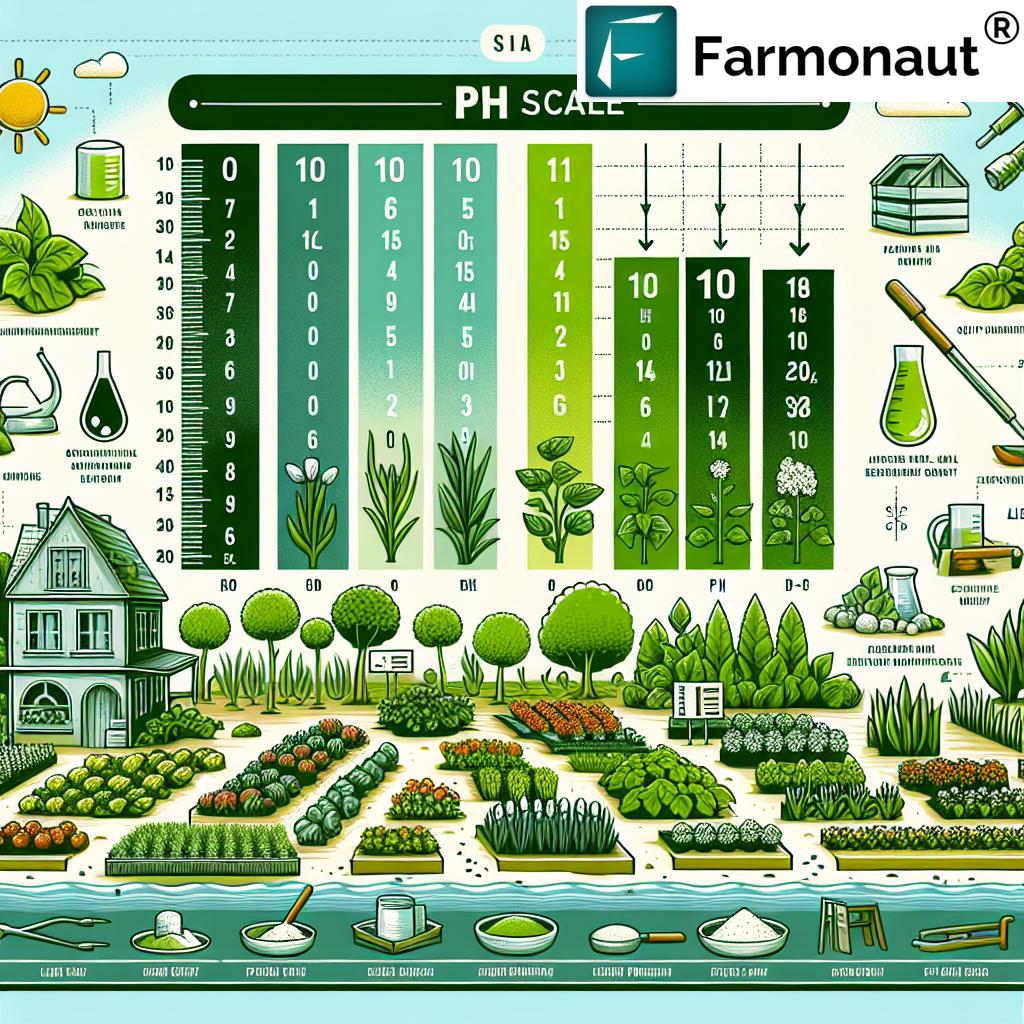
Soil pH is a measure of the acidity or alkalinity of soil on a scale from 0 to 14. A pH of 7 is considered neutral, while values below 7 are acidic, and those above 7 are alkaline. This seemingly simple number has a profound impact on plant growth and nutrient availability.
- Acidic soils: pH below 7
- Neutral soils: pH of 7
- Alkaline soils: pH above 7
The ideal pH range for most plants is between 6.0 and 7.0, as this is where the majority of essential nutrients are most readily available. However, some plants have adapted to thrive in more acidic or alkaline conditions.
The Impact of Soil pH on Nutrient Availability
Soil pH affects the solubility and availability of essential nutrients in the soil. When the pH is not within the optimal range, certain nutrients may become less available to plants, leading to deficiencies even when those nutrients are present in the soil.
Nutrient Availability in Acidic Soils
In acidic soils (pH below 6.0), the following nutrients can become less available:
- Phosphorus
- Calcium
- Magnesium
- Molybdenum
However, acidic soils can increase the availability of:
- Iron
- Manganese
- Boron
- Copper
- Zinc
Nutrient Availability in Alkaline Soils
In alkaline soils (pH above 7.5), the following nutrients can become less available:
- Iron
- Manganese
- Boron
- Copper
- Zinc
Alkaline soils can increase the availability of:
- Calcium
- Magnesium
Optimal pH Ranges for Different Crops
While most plants prefer a slightly acidic to neutral pH, some crops have specific pH preferences. Here’s a table showing optimal pH ranges for different crops, alongside corresponding nutrient availability and Farmonaut’s satellite-based pH monitoring capabilities:
| Crop | Optimal pH Range | Nutrient Availability | Farmonaut’s Monitoring Capabilities |
|---|---|---|---|
| Corn | 5.8 – 7.0 | High N, P, K availability | Real-time pH anomaly detection |
| Soybeans | 6.0 – 7.0 | Optimal for N fixation | Soil acidity mapping |
| Wheat | 6.0 – 7.5 | Good Ca and Mg availability | Historical pH trend analysis |
| Potatoes | 5.0 – 6.5 | High P and K availability | pH-based fertilizer recommendations |
| Blueberries | 4.5 – 5.5 | High Fe and Mn availability | Acidic soil suitability mapping |
Our satellite-based technology at Farmonaut allows growers to monitor soil pH across their fields, identifying areas that may require adjustment for optimal crop growth. This data-driven approach enables precise management of soil conditions, leading to improved nutrient uptake and higher yields.
Factors Affecting Soil pH
Several factors can influence soil pH, including:
- Parent material: The type of rock from which the soil formed
- Precipitation: High rainfall can lead to leaching of basic cations, making soil more acidic
- Fertilizer use: Some fertilizers can increase soil acidity over time
- Organic matter decomposition: Can produce organic acids
- Root exudates: Plants can release acids or bases into the soil
- Microbial activity: Can produce acids as a byproduct of metabolism
Measuring Soil pH
Accurate measurement of soil pH is crucial for effective soil management. There are several methods available:
- Soil pH test kits: Inexpensive and easy to use, but less accurate
- pH meters: More accurate, but require proper calibration
- Laboratory testing: Provides the most accurate results and additional soil analysis
- Satellite-based monitoring: Farmonaut’s technology offers large-scale pH mapping and trend analysis
At Farmonaut, we recommend a combination of on-site testing and our satellite-based monitoring for comprehensive pH management. Our mobile app allows growers to input their soil test results and receive personalized recommendations based on our satellite data analysis.
Adjusting Soil pH
Once you’ve determined your soil’s pH, you may need to adjust it to create optimal growing conditions for your crops. Here are some common methods for adjusting soil pH:
Lowering Soil pH (Making Soil More Acidic)
- Sulfur: Elemental sulfur is often used to lower pH in alkaline soils. Soil bacteria convert sulfur to sulfuric acid, which reduces pH.
- Aluminum sulfate: This compound reacts quickly with water to form an acid that lowers soil pH.
- Organic matter: Adding organic materials like peat moss or pine needles can help lower pH over time.
Raising Soil pH (Making Soil More Alkaline)
- Lime: Agricultural lime (calcium carbonate) is the most common material used to raise soil pH.
- Dolomitic limestone: Similar to agricultural lime but also contains magnesium, which can be beneficial in magnesium-deficient soils.
- Wood ash: Can be used in small amounts to raise pH, but be cautious as it’s very alkaline.
It’s important to note that changing soil pH is a gradual process and should be done carefully to avoid shocking plants. Our Farmonaut app can help you calculate the appropriate amount of amendment needed based on your current pH and target pH.
The Role of Organic Matter in pH Buffering
Organic matter plays a crucial role in soil health and pH management. It acts as a buffer, helping to stabilize soil pH and resist rapid changes. Additionally, organic matter improves soil structure, water retention, and nutrient availability.
Benefits of organic matter for pH management:
- Increases soil’s cation exchange capacity (CEC)
- Provides a slow-release source of nutrients
- Supports beneficial soil microorganisms
- Improves soil structure and water infiltration
At Farmonaut, we encourage growers to incorporate organic matter management into their soil health strategies. Our satellite imagery can help identify areas with low organic matter content, allowing for targeted application of compost or cover crops.
pH and Nutrient Interactions
Understanding the complex interactions between soil pH and nutrient availability is crucial for optimal plant nutrition. Here’s a deeper look at how pH affects specific nutrients:
Macronutrients
- Nitrogen (N): Generally available across a wide pH range, but nitrification (conversion of ammonium to nitrate) is reduced in very acidic soils.
- Phosphorus (P): Most available between pH 6.0 and 7.0. In acidic soils, P can bind with aluminum and iron, while in alkaline soils, it can bind with calcium.
- Potassium (K): Generally available across a wide pH range but can be less available in very acidic soils.
- Calcium (Ca) and Magnesium (Mg): Less available in acidic soils, as they can be leached out and replaced by hydrogen ions.
- Sulfur (S): Generally available across a wide pH range but can be less available in very alkaline soils.
Micronutrients
- Iron (Fe), Manganese (Mn), Copper (Cu), and Zinc (Zn): More available in acidic soils. In alkaline soils, these nutrients can form insoluble compounds, leading to deficiencies.
- Boron (B): Most available between pH 5.0 and 7.0. Can become less available in very acidic or alkaline soils.
- Molybdenum (Mo): One of the few micronutrients that becomes more available as pH increases.
Our Farmonaut platform integrates soil pH data with nutrient availability models to provide growers with comprehensive insights into their soil’s nutritional status. This allows for more precise fertilizer applications and reduced nutrient waste.
pH-Induced Nutrient Deficiencies and Toxicities
When soil pH is outside the optimal range, plants can experience nutrient deficiencies or toxicities, even when those nutrients are present in the soil. Here are some common pH-related issues:
Acidic Soil Problems
- Aluminum toxicity: In very acidic soils (pH < 5.0), aluminum becomes soluble and can be toxic to plant roots.
- Calcium and magnesium deficiencies: These nutrients are often leached from acidic soils.
- Phosphorus fixation: Phosphorus can bind with aluminum and iron, becoming unavailable to plants.
Alkaline Soil Problems
- Iron chlorosis: A common issue in alkaline soils where iron becomes insoluble, leading to yellowing of leaves (chlorosis).
- Zinc deficiency: Often occurs in alkaline soils, affecting plant growth and fruit development.
- Phosphorus precipitation: In highly alkaline soils, phosphorus can form insoluble compounds with calcium.
Recognizing these pH-induced issues is crucial for effective crop management. Our Farmonaut satellite imagery can detect early signs of nutrient stress, allowing growers to address pH-related problems before they significantly impact yield.
pH Management Strategies for Different Cropping Systems
Different cropping systems may require specific pH management strategies. Here are some considerations for various agricultural practices:
Conventional Farming
- Regular soil testing and pH adjustment using lime or sulfur
- Careful selection of fertilizers to avoid excessive acidification
- Crop rotation to help balance nutrient uptake and pH changes
Organic Farming
- Use of organic amendments like compost to buffer pH
- Application of approved natural minerals for pH adjustment (e.g., ground limestone)
- Cover cropping to improve soil structure and organic matter content
Precision Agriculture
- Variable rate application of lime or sulfur based on GPS-mapped soil pH data
- Integration of Farmonaut’s satellite imagery for large-scale pH monitoring
- Use of pH sensors on farm equipment for real-time soil analysis
Hydroponics and Soilless Culture
- Continuous monitoring and adjustment of nutrient solution pH
- Use of pH buffers to maintain stable conditions
- Selection of pH-appropriate growing media
At Farmonaut, we provide tailored pH management recommendations based on your specific cropping system and local conditions. Our API allows for seamless integration of our pH data with your existing farm management software.
The Economics of Soil pH Management
Proper soil pH management is not just a matter of plant health; it’s also an economic consideration. Here’s how optimizing soil pH can impact your bottom line:
- Improved nutrient use efficiency: Optimal pH ensures better uptake of applied fertilizers, reducing waste and lowering input costs.
- Higher yields: Crops grown in optimal pH conditions generally produce higher yields, increasing revenue.
- Better crop quality: Proper pH management can improve crop quality, potentially commanding higher market prices.
- Reduced disease pressure: Some soil-borne diseases are less prevalent in soils with optimal pH, potentially reducing pesticide costs.
- Long-term soil health: Maintaining proper pH contributes to overall soil health, ensuring sustained productivity.
While there are costs associated with soil testing and pH amendments, the long-term benefits often outweigh these expenses. Our Farmonaut platform can help you analyze the cost-effectiveness of your pH management strategies, ensuring you get the best return on your investment.
Advanced pH Management Techniques
As agricultural technology continues to advance, new methods for managing soil pH are emerging. Here are some cutting-edge techniques that growers can consider:
1. Precision Liming
Using GPS-guided equipment and variable rate technology, growers can apply lime or other pH-adjusting materials at precise rates across their fields. This approach ensures that each area receives the exact amount of amendment needed, optimizing efficiency and reducing waste.
2. Biochar Application
Biochar, a form of charcoal produced from plant matter, can help stabilize soil pH while improving soil structure and water retention. It’s particularly useful in acidic soils and can provide long-lasting benefits.
3. Microbial Inoculants
Certain beneficial microorganisms can help buffer soil pH and improve nutrient availability. These inoculants can be especially useful in organic farming systems.
4. Nano-materials for pH Adjustment
Researchers are exploring the use of nano-sized particles for more efficient and targeted pH adjustment. These materials could provide faster and more precise pH control in the future.
5. Remote Sensing and AI-Driven pH Management
At Farmonaut, we’re at the forefront of using satellite imagery and artificial intelligence to map and predict soil pH changes across large areas. Our technology allows for proactive pH management, helping growers address issues before they become visible problems.
To learn more about how our advanced pH monitoring capabilities can benefit your operation, visit our API documentation.
Case Studies: Successful pH Management
To illustrate the importance of proper pH management, let’s look at some real-world examples of how growers have improved their yields and soil health through effective pH strategies:
Case Study 1: Corn Production in the Midwest
A corn grower in Iowa was experiencing consistently low yields in certain parts of his fields. After using Farmonaut’s satellite imagery to identify potential pH issues, he conducted targeted soil tests which revealed highly acidic conditions in the low-yielding areas. By applying variable-rate lime based on our pH maps, he was able to:
- Raise soil pH from 5.2 to 6.5 in problem areas
- Increase corn yields by 20% in treated sections
- Improve nitrogen use efficiency, reducing fertilizer costs
Case Study 2: Blueberry Farm Expansion
A blueberry farmer in Michigan wanted to expand her operation but was concerned about soil pH in the new plot. Using Farmonaut’s historical pH trend analysis, she discovered that the new area had a pH of 6.8, which is too high for optimal blueberry growth. By implementing a pH lowering strategy, including:
- Application of elemental sulfur
- Incorporation of pine bark mulch
- Installation of a drip irrigation system for applying acidified water
She successfully lowered the pH to 5.2 over two growing seasons, creating ideal conditions for her new blueberry plants.
Case Study 3: Precision pH Management in Wheat
A large-scale wheat producer in Australia used Farmonaut’s pH mapping technology to identify significant pH variability across his 5000-hectare farm. By implementing a precision pH management plan, including:
- Variable-rate lime application in alkaline areas
- Targeted use of acidifying fertilizers in high-pH zones
- Cover cropping with pH-moderating species in transitional areas
He was able to achieve a more uniform pH across his fields, resulting in:
- 10% increase in overall wheat yield
- Improved protein content in harvested grain
- 30% reduction in fertilizer use due to better nutrient availability
These case studies demonstrate the significant impact that proper pH management can have on crop productivity and farm profitability. By leveraging Farmonaut’s advanced monitoring tools, growers can achieve similar results on their own operations.
Future Trends in Soil pH Management
As we look to the future, several emerging trends are shaping the way we approach soil pH management:
- Integration of IoT sensors: Real-time pH monitoring through in-field sensors connected to the Internet of Things (IoT) will allow for more responsive pH management.
- Machine learning predictions: Advanced algorithms will be able to predict pH changes based on weather patterns, crop rotations, and management practices.
- Automated pH adjustment systems: Development of automated systems that can apply pH-adjusting materials in real-time based on sensor data.
- Genome-edited crops: Research into developing crops with better tolerance to suboptimal pH conditions could reduce the need for intensive pH management in some situations.
- Nanotechnology in amendments: More efficient pH-adjusting materials using nanotechnology could provide faster, more targeted pH correction.
At Farmonaut, we’re continuously innovating to stay ahead of these trends. Our research and development team is working on integrating machine learning algorithms with our satellite data to provide even more accurate pH predictions and management recommendations.
Conclusion: The Path to pH Mastery
Mastering soil pH management is a critical step towards optimizing crop yields and ensuring long-term soil health. By understanding the complex interactions between pH, nutrients, and plant growth, growers can make informed decisions that lead to more productive and sustainable farming practices.
Key takeaways from this guide include:
- The importance of regular soil testing and pH monitoring
- Understanding how pH affects nutrient availability and plant health
- Implementing targeted pH adjustment strategies based on crop needs
- Leveraging technology like Farmonaut’s satellite imagery for large-scale pH management
- Considering the economic impact of proper pH management on farm profitability
As we move towards more precise and data-driven agricultural practices, tools like Farmonaut’s satellite-based monitoring and AI-driven recommendations will become increasingly valuable. By combining traditional knowledge with cutting-edge technology, growers can achieve unprecedented levels of control over their soil conditions, leading to healthier crops, higher yields, and more sustainable farming practices.
To start optimizing your soil pH management strategy with Farmonaut’s advanced tools, download our app for Android or iOS today.
FAQ: Soil pH Management
Q: How often should I test my soil pH?
A: We recommend testing soil pH at least once every 2-3 years. However, if you’re actively managing pH or growing pH-sensitive crops, annual testing may be beneficial.
Q: Can I use household vinegar or baking soda to test soil pH?
A: While these can give a rough indication, they’re not accurate enough for proper agricultural use. We recommend using a professional pH meter or lab testing for reliable results.
Q: How long does it take to change soil pH?
A: The time it takes to significantly change soil pH can vary from a few weeks to several months, depending on the amendment used, soil type, and the magnitude of change required.
Q: Are there any risks to changing soil pH too quickly?
A: Yes, rapid pH changes can shock plants and disrupt soil microbial communities. It’s generally best to make gradual adjustments over time.
Q: Can I use the same pH management strategy for all my crops?
A: Different crops have different pH preferences, so it’s important to tailor your pH management strategy to the specific needs of each crop you’re growing.
Q: How does irrigation water affect soil pH?
A: Irrigation water can significantly impact soil pH over time, especially if it’s high in bicarbonates (which can raise pH) or if it’s naturally acidic. It’s important to test your irrigation water and consider its impact on your soil pH management strategy.
Q: Can organic matter replace the need for lime or sulfur in pH management?
A: While organic matter can help buffer pH, it typically can’t replace the need for lime or sulfur entirely, especially in soils that are significantly out of the desired pH range.
Q: How does Farmonaut’s technology help with pH management?
A: Our satellite imagery and AI algorithms can detect patterns indicative of pH issues across large areas, allowing for more targeted testing and treatment. We also provide historical pH trend analysis and integration with precision agriculture equipment for variable rate applications.
Subscribe to Farmonaut
Ready to take your soil pH management to the next level? Subscribe to Farmonaut’s advanced agricultural monitoring services:
Discussion
Questions, corrections or field experience? Share them below. First-time comments are reviewed before they appear, and your email is never published.
No comments yet. Be the first to add a question or your experience.

 LACOS Geoinformation
 Pulsar Supernova
 Magrifly
 LatConnect 60
 Disease Free Life
 WebsEdge
 Blickwinkel
 Agricultural Credit Policy Council
 MCSOD
MCSOD Marei Nursery
 eKGIS
eKGIS Mostas Tech
 Andex
Andex FCF India
 Unifrutti Gulf
 Deluxe Conseil
 WICO
WICO
