

Ag Drone Sprayer: 7 Benefits of Agriculture Sprayer Drone Technology in 2025
“By 2025, ag drone sprayers are projected to cover over 40% of large-scale farms globally.”



Table of Contents
- Introduction: Agriculture Sprayer Drones in 2025
- Understanding Ag Drone Sprayer Technology
- 7 Key Benefits of Agriculture Sprayer Drone
- 1. Precision Spraying & Targeted Application
- 2. Enhanced Efficiency & Productivity
- 3. Reduced Chemical Use & Minimizing Waste
- 4. Improved Environmental Sustainability
- 5. Reduced Labor Dependency & Safety Boost
- 6. Scalability & Adaptability for Modern Farms
- 7. Advanced Integration & Real-Time Insights
- Benefit Impact Table: Ag Drone Sprayer vs Traditional Methods
- The Future of Crop Management: Drone Sprayers & Digital Agriculture
- Farmonaut: Satellite-Powered Insights for Precision Agriculture
- Frequently Asked Questions
- Conclusion
Introduction: Agriculture Sprayer Drones in 2025
The year 2025 marks a turning point in agriculture, driven by a surge in technology and innovation that continues to reshape traditional farming practices. Among the most transformative tools in this revolution is the ag drone sprayer—unmanned aerial vehicles (UAVs) equipped with advanced sprayer systems. These spray drones deliver precise, efficient, and sustainable crop management solutions.
Agricultural drone sprayers have gone from experimental to essential, especially amidst the push for higher yields, sustainability, and climate adaptation. As global food demand rises along with unpredictable weather patterns, the integration of advanced technologies in crop spraying is helping farmers cope and thrive.
This in-depth post explores how the agriculture sprayer drone is revolutionizing farming in 2025. We’ll outline the seven key benefits of adopting drone sprayer technology, from precision and efficiency to environmental stewardship and flexible scalability—empowering modern farmers and land managers to optimize every square meter of their fields.

Understanding Ag Drone Sprayer Technology
What is an Agriculture Sprayer Drone?
An agriculture sprayer drone is a type of unmanned aerial vehicle (UAV) specifically designed for spraying fertilizers, pesticides, herbicides, and other agrochemicals directly over crops. These advanced systems are controlled remotely and are equipped with GPS navigation, precise nozzles, automated controls, and advanced sensors.
- Unlike traditional, ground-based sprayers or manned aircraft, ag drone sprayers offer a targeted approach, reducing waste and exposure to chemicals.
- Their flight abilities enable access to hard-to-reach areas (like hilly or water-logged fields) that are challenging or even impossible for tractors or humans to traverse.
- These drones can map entire fields, create precise spraying plans, and automatically adjust droplet size or spray pattern based on real-time conditions and input data.
How Advanced Are Sprayer Drones in 2025?
Agricultural drone sprayer technology in 2025 has reached new heights. Today’s drones feature:
- Multi-nozzle spray systems for broad or targeted applications
- Onboard AI & machine learning to analyze crop health mid-flight and adjust spray parameters accordingly
- Multispectral & hyperspectral imaging for precise detection of pest hotspots, disease outbreaks, and nutrient deficiencies
- Real-time GPS guidance and mapping to ensure maximum accuracy and efficient coverage of irregularly shaped or large fields
- Automated obstacle avoidance and weather-resistant designs for reliable operation in a variety of environmental conditions
The result? These drone sprayers empower farmers to optimize input use, lower operational costs, and safeguard crops more quickly, economically, and sustainably than ever before.

“Precision drone spraying can reduce chemical usage by up to 30% compared to traditional methods.”
7 Key Benefits of Agriculture Sprayer Drone Technology
The agricultural spraying drone is not just a new gadget—it’s an essential tool for modern crop management. Here’s a deep dive into seven transformative benefits for farmers and producers in 2025 and beyond.
1. Precision Spraying & Targeted Application
Precision is the backbone of effective, eco-friendly farming. Ag drone sprayers utilize
GPS mapping, real-time sensors, and AI-powered analysis to identify specific zones that actually require treatment—instead of blanketing entire fields with chemicals.
- How it works: Drones scan fields, create digital maps, and pinpoint precise locations for spot spraying.
- What it means: Farmers reduce the overuse of chemicals, save money, and minimize negative environmental impact on surrounding ecosystems.
The ability to target each crop zone and adjust droplet size depending on crop need and weather further boosts efficacy and reduces drift or runoff.
Farmers can now address pest outbreaks, nutrient deficiencies, or disease threats exactly where they occur—maximizing crop health and yield.

2. Enhanced Efficiency & Productivity
Efficiency is critical for farmers—especially those managing expansive landholdings, irregular field shapes, or difficult terrains.
Ag spray drones cover large fields quickly and efficiently:
- Operate in challenging areas—including hilly, muddy, or wet soils—where ground machinery is impractical or at risk of getting stuck.
- Function soon after rain or in soft soil, reducing treatment delays and protecting crops on time.
- Work day or night, regardless of sunlight, maximizing windows of opportunity when crops need urgent attention.
- Reduce labor requirements, allowing operators to manage more land with smaller teams.
With agricultural drone sprayers, jobs that used to take hours (or days) with ground-based sprayers can now be done in a fraction of the time—helping boost overall farm productivity.

3. Reduced Chemical Use & Minimizing Waste
One of the greatest advantages of agricultural drone sprayers is the substantial reduction in chemical use. By deploying chemicals only where needed and only in the necessary amounts, these drones dramatically lower input costs and reduce chemical runoff into non-target areas.
- Estimated reduction: Up to 30% reduction in chemical usage compared to traditional blanket application methods.
- Environmental impact: Less chemical contamination of soil, water, and beneficial organisms.
- Regulatory compliance: Eases the pressure on farmers to meet strict environmental standards.
As environmental regulations tighten and costs rise, optimizing chemical inputs with drone spraying is both an economic and ecological necessity.
4. Improved Environmental Sustainability
Agriculture sprayer drones are at the forefront of sustainable crop management. Their ability to limit drift and target specific crops dramatically reduces environmental contamination:
- Protects beneficial insect populations (including pollinators) by avoiding non-target spraying.
- Reduces chemical leaching into groundwater and streams.
- Supports climate-resilient farming by minimizing dependency on chemical solutions.
- Promotes compliance with sustainability standards globally.
Sustainability isn’t just a buzzword—it’s a central component of agricultural policy, market access, and consumer demand in 2025. Deploying agricultural drone sprayers helps producers claim a leadership role in protecting our shared planet.
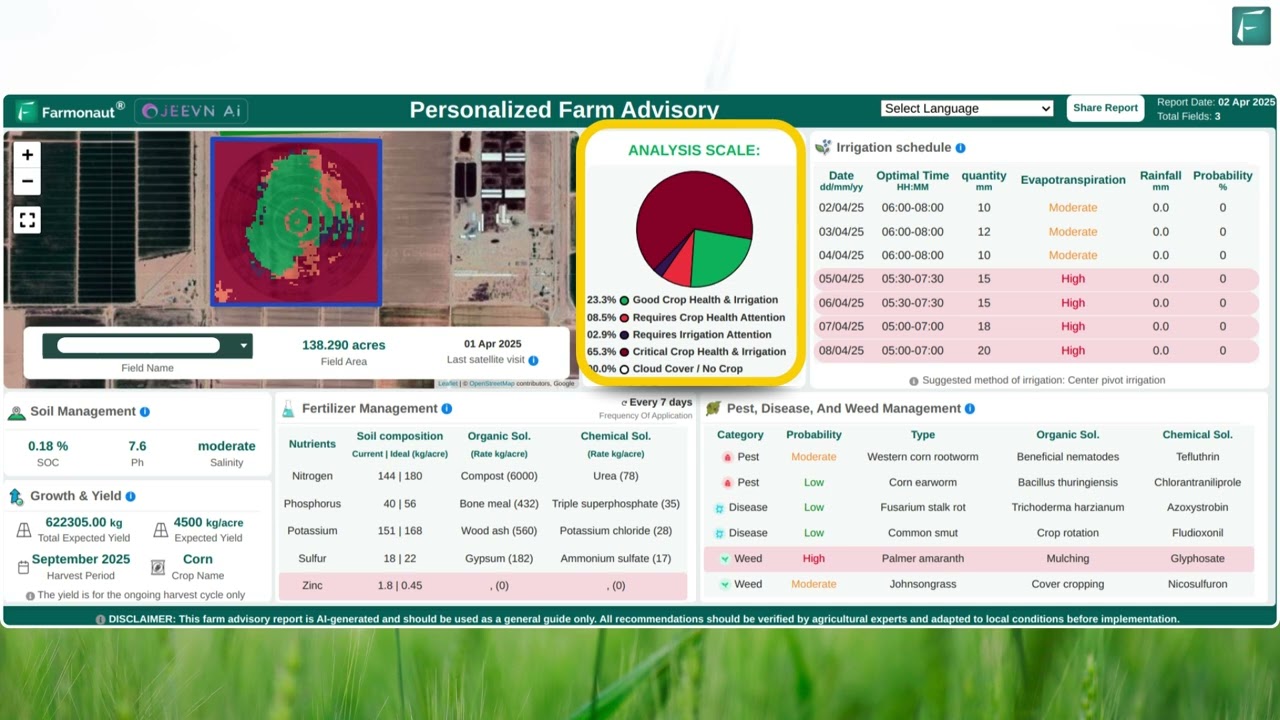
Are you interested in tracking and reducing your farm’s carbon footprint? Explore Farmonaut’s Carbon Footprinting Solution—a powerful tool for monitoring and improving environmental impact.
5. Reduced Labor Dependency & Safety Boost
Traditional spraying methods often require heavy machinery and considerable manual labor—exposing workers to potentially harmful agrochemicals. With agricultural drone sprayers:
- The need for manual labor is dramatically reduced.
- Operators remain safely at a distance from toxic substances and physically challenging terrains.
- Drones can handle dangerous or inaccessible areas (steep slopes, muddy or flooded zones) safely.
- Labor requirements decrease by up to 70% for certain spraying operations.
For farmers facing labor shortages, health risks, and surging wage costs, ag drone sprayer technology is not just an innovation—it’s a necessity for safe and efficient farm management.
6. Scalability & Adaptability for Modern Farms
The flexibility of agricultural drone sprayers means this technology fits both expansive commercial farms as well as smaller, irregularly-shaped holdings. Farmers can rapidly scale operations—using multiple drones in parallel for large estates, or a single UAV for targeted work on smaller plots.
Whether you farm 20 or 2,000 hectares, these tools adapt instantly to your seasonal needs, changing crop types, and evolving weather patterns.
Large farm managers will especially benefit from dedicated software platforms designed to orchestrate fleet management for multiple drone sprayers. To optimize your farm’s machinery, fleet, and operations, review Farmonaut’s Fleet Management Suite.

7. Advanced Integration & Real-Time Insights
The true power of agriculture sprayer drones lies in their ability to integrate with other digital and satellite technologies.
In 2025, top-performing drone sprayer systems can:
- Connect with satellite-derived crop health data—like Farmonaut’s Large Scale Farm Management Tool—to optimize spray times and input application.
- Integrate with blockchain-based traceability, ensuring transparent and verifiable application records for compliance and food safety—for details, see Farmonaut’s Traceability Product.
- Utilize weather and soil forecasts to avoid spraying in suboptimal conditions, improving efficacy and safety.
- Enable automated, real-time adjustments to spray plans as pest outbreaks or weather hazards emerge.
This seamless integration of drones, satellites, and smart farm management platforms puts actionable insights directly into the hands of modern farmers—delivering unparalleled operational agility.
Benefit Impact Table: Ag Drone Sprayer vs Traditional Methods
| Benefit | Description | Estimated Improvement | Traditional Method Comparison |
|---|---|---|---|
| Precision Spraying | Targets only required zones, avoiding blanket application | Up to 95% application accuracy | Ground sprayers often treat entire fields regardless of need |
| Reduced Chemical Use | Minimizes chemical input by targeting specific areas | 30% less chemical use | Excessive chemicals usually applied across fields |
| Labor Efficiency | Reduces manual labor and exposure risks | Up to 70% reduction in labor needs | Manual or tractor-based spraying labor-intensive |
| Environmental Sustainability | Limits drift, runoff, and non-target impact | 50% less off-target contamination | Drift and runoff much higher with conventional methods |
| Operational Speed | Covers large, hilly, or wet areas quickly | 2–5x faster treatment time | Machinery often delayed by soil/weather |
| Adaptability | Flexible for small/large and irregularly shaped fields | Instant task switching, minimal downtime | Machinery reconfiguration/time-consuming for each field |
| Data Integration | Combines with satellite, weather, and AI analytics | Automated action based on real-time data | Manual scouting and fixed spray programs |

The Future of Crop Management: Drone Sprayers & Digital Agriculture
Drone sprayer technology is a crucial pillar of digital transformation in agriculture. In 2025 and beyond, the integration of AI, satellites, blockchain, and advanced analytics will continue to accelerate the effectiveness of ag spray drones.
These advances offer new solutions for:
- Adaptive pest and disease management as climate variability increases
- Reducing global input costs through data-driven applications
- Ensuring regulatory compliance with detailed, geolocated spray records
- Enhancing food security by protecting yields and quality across variable seasons
- Supporting sustainability claims for certification and consumer trust
As agriculture continues to evolve, ag drone sprayers enable growers to respond rapidly to threats and optimize every hectare for the best possible outcomes.
Farmonaut: Satellite-Powered Insights for Precision Agriculture
At Farmonaut, we enable modern farmers, agribusinesses, and governments to make the most of emerging unmanned aerial spraying (UAS) by providing scalable, actionable satellite-driven insights. Our mission is to make advanced technology affordable and accessible for every player in agriculture—large or small.
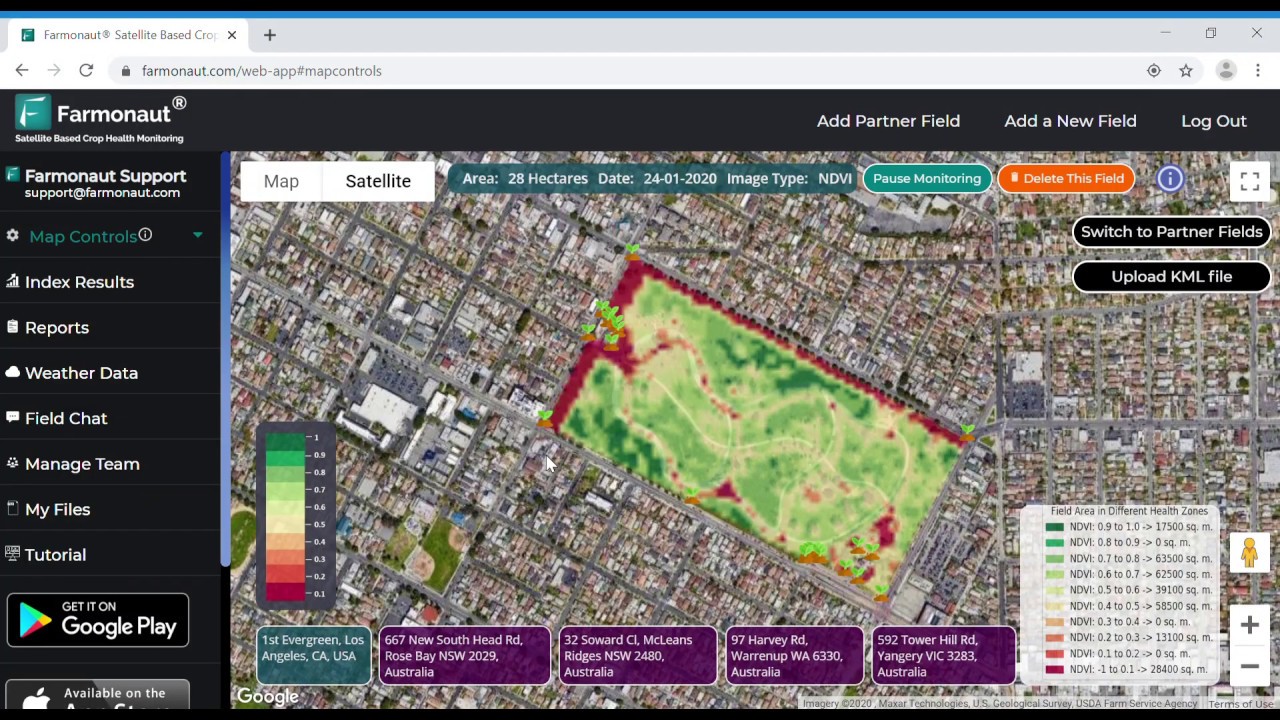
- Satellite-Based Monitoring: Our platform delivers multispectral analysis (NDVI) for crop health, soil conditions, and vegetation stress. Paired with ag drone sprayer technology, this allows farmers to plan ultra-precise spray missions and monitor treatment results from space.
- Jeevn AI Advisory: With real-time weather forecasts and AI-powered recommendations, users gain strategies for pest/disease control that synchronize perfectly with their drone spraying plans.
- Blockchain-Based Traceability: Our system enables transparent, tamper-proof tracking of agrochemical usage. This supports regulatory compliance and food chain assurance—a must-have for exporters and advanced input management. Explore more about traceability here.
-
Fleet and Resource Management: We offer integrated tools for efficient machinery and drone fleet management—lowering operational costs.
Read more about this benefit here. - Environmental Impact Monitoring: Use our carbon footprinting tool and satellite-powered analytics to demonstrate—and continually improve—your farm’s sustainability performance.
- Large Scale Farm Management: For big and diverse operations, our platform supports comprehensive management from planting through harvesting. More at Farmonaut’s Large Scale Farm Management app.
- API Integration: Looking to integrate robust satellite data into your custom farming or drone management applications? Access our API at Farmonaut API and API Developer Docs.
Our tools and data are accessible via Android, iOS, web platforms, and APIs—giving everyone from individual farmers to government agencies the power to optimize every input and operation across their crop cycles.
Frequently Asked Questions (FAQ) – Agricultural Drone Sprayers
Q1: What is an ag drone sprayer?
An ag drone sprayer is an unmanned aerial vehicle (UAV) equipped with a specialized spraying system for distributing fertilizers, pesticides, herbicides, and other agrochemicals over crops. Using GPS and smart sensors, it enables targeted, efficient, and precise spraying.
Q2: How does an agricultural drone sprayer increase efficiency?
By automating flight paths, avoiding obstacles, adapting to real-time field conditions, and covering large or irregular areas faster than ground machinery, agriculture sprayer drones boost overall productivity and minimize machine downtime due to weather or soil conditions.
Q3: Can ag spray drones really reduce chemical use?
Yes—by precisely targeting spraying zones and adjusting droplet size and rate based on specific crop health and pests, chemical usage can drop by up to 30% compared to traditional, ground-based methods. This leads to cost savings and environmental benefits.
Q4: Are ag drone sprayers suitable for small and irregularly shaped farms?
Absolutely. Modern drone sprayers offer rapid deployment, navigation flexibility, and the ability to quickly change locations—making them ideal for both large-scale and smaller, fragmented holdings.
Q5: What role does satellite technology play in drone spraying?
Satellite imagery and remote sensing (like Farmonaut provides) deliver vital data on crop health, pest outbreaks, and soil conditions. This data guides pilots or automated drones to target only affected zones, optimize spray timing, and track treatment outcomes.
Q6: How do agricultural drone sprayers promote environmental sustainability?
By minimizing off-target spraying, reducing chemical drift, and limiting agrochemical use to only what’s needed, these drones help protect water sources, beneficial organisms, and the surrounding ecosystem—ensuring long-term agricultural sustainability.
Q7: Can drone spraying records be used for traceability and compliance?
Yes, with proper software and integration (e.g., with Farmonaut’s Traceability Solution), every drone mission can be geo-tagged, timestamped, and linked to blockchain-based ledgers, enabling verifiable and complaint treatment records.
Conclusion: Ag Drone Sprayers — Pioneering the Future of Sustainable Agriculture
As we move deeper into 2025, ag drone sprayer technology stands at the frontline of agricultural innovation. The integration of unmanned aerial vehicles with precision software, sensors, satellite analytics, and blockchain traceability dramatically transforms how we approach crop management, input optimization, and environmental responsibility.
- Reduced chemical usage and labor costs make operations more profitable and sustainable.
- Precision, flexibility, and integration means a greater ability for farmers to adapt to changing climates, regulatory demands, and shifting pest pressures.
- Better data, actionable insights, and continual innovation will push farming into a new era of productivity and ecological stewardship.
At Farmonaut, we are committed to making satellite-driven intelligence accessible and actionable for everyone in agriculture. By combining our platform with the latest in agriculture sprayer drone systems, farmers can finally realize the vision of intelligent, efficient, and sustainable food production for the future.

 Mobitech Wireless
 FCF India
 Unifrutti Gulf
 Deluxe Conseil
 TVS Electronics
 BW Pipelines
 WICO
WICO Gen Chayat
 Chimera Innovation
 SkyHarvest
 Polaris Digitech
 Teledarbas
 Wild Oak Farm
 SFX
SFX Doodlakine
 Exurbia Geospatial
