

Agricultural Computerized Technology: 7 Game-Changers 2026
Summary: Agricultural Computerized Technology: Revolutionizing Farming in 2025 & Beyond
The agricultural sector is rapidly undergoing a transformative phase, propelled by the rise of agricultural computerized technology. As we approach 2026—amidst a global population nearing 8 billion and intensifying climate concerns—the role of digital, precision-driven solutions in modern agriculture has become essential. From AI-powered satellites to automated machinery, the revolutionization is touching every facet: growers, agribusinesses, and communities alike are witnessing unmatched boosts in efficiency, productivity, and sustainability.
“Over 80% of large farms are projected to adopt AI-driven precision farming tools by 2026.”
Why 2026? Drivers of Agricultural Digital Tech Adoption
- ✔ Global Population Approaches 8 Billion: Intensifying food security and resource management challenges.
- 🌱 Climate Variability: Unpredictable weather patterns demand adaptive, rapid-response systems.
- 💡 Technological Innovations: New breakthroughs in IoT, satellite imagery, and AI foster smart farming.
- ⚠ Environmental Concerns: Sustainability and greenhouse emissions reduction are now regulatory and reputational imperatives.
- 📲 Automation & Data Analytics: Digitization empowers precision, speed, and reduced waste.
In 2026, agricultural computerized technology is not a luxury or a trend—it’s a transformation at the core of the global food sector. Let’s explore how!



Agricultural Computerized Technology: 7 Game-Changers 2026
The agricultural sector in 2026 is shaped by dynamic and computerized technologies that integrate digital intelligence into every stage of farming. The following are the seven most consequential innovations, each revolutionizing global productivity, sustainability, and resilience.
- 🚁 Drones & UAVs for Precision Aerial Assessment
- 🛰️ Satellite Imaging & Remote Crop Monitoring
- 🤖 Autonomous Machinery and Agricultural Robotics
- 📡 IoT-powered Sensors for Soil, Water, and Climate
- 🧠 Artificial Intelligence & Predictive Data Analytics
- 🔗 Blockchain-Based Traceability Systems
- 🌎 Sustainability Tools: Carbon Footprinting & Environmental Impact Solutions

1. Drones & UAVs: Revolutionizing Aerial Crop Assessment
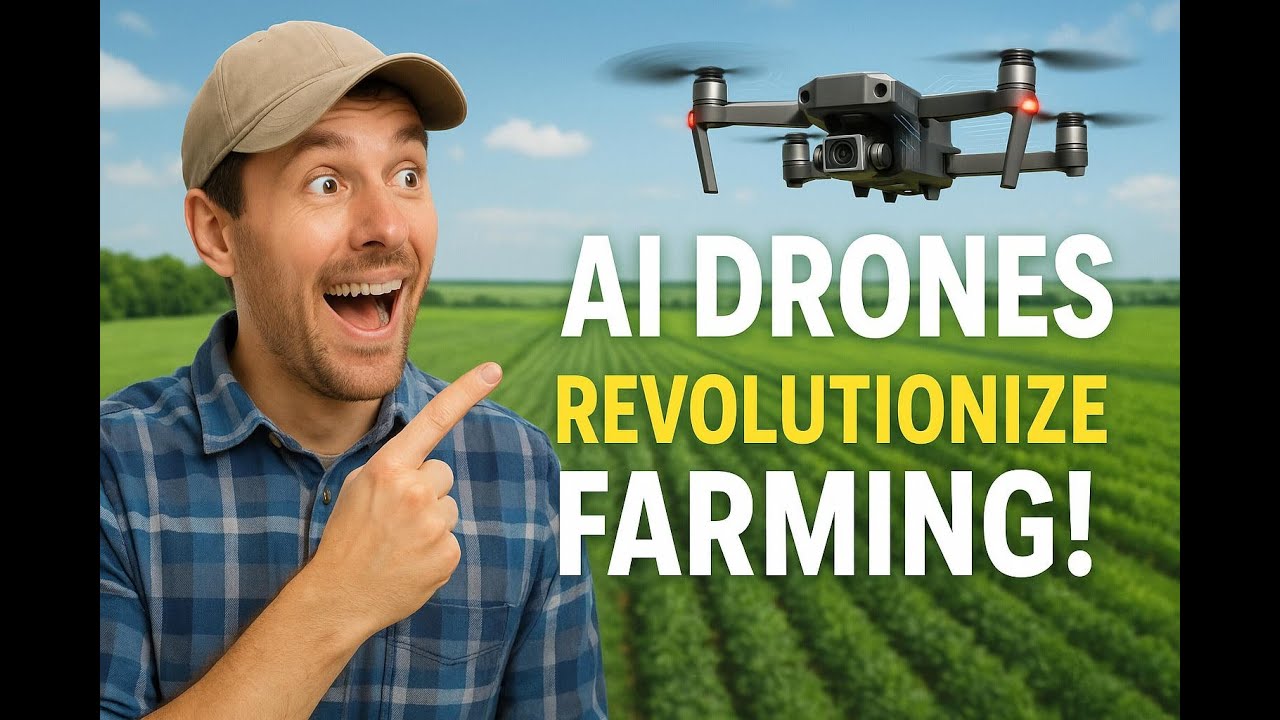
Drones and unmanned aerial vehicles (UAVs) have become indispensable tools in precision agriculture. Equipped with multispectral cameras and AI-driven analytics, these computerized systems provide actionable aerial insights—from crop health assessment to early pest detection and disease identification.
- 🛩️ Computerized Precision: Enables early interventions and minimizing losses across large farmlands.
- 🔍 Crop & Soil Health Assessment: High-resolution imagery monitors patterns in real-time—boosting yields & reducing waste.
- ⏱️ Efficiency: Swiftly surveys large areas—an impossible feat for manual scouting.
- 🚀 Optimal Harvest Timing: Data-driven models forecast the perfect time to optimize harvests.
2. Satellite Imaging & Remote Crop Monitoring
With the advancement of satellite-based agricultural computerized technology, remote sensing is now a vital resource for farmers worldwide. Detailed satellite imagery enables accurate real-time monitoring of crop health, soil conditions, and even structural integrity on vast commercial fields.
- 🛰️ Vast Coverage: Consistent monitoring of large, difficult-to-access areas.
- 🌡️ Precision Data: NDVI, soil moisture, vegetation indices, and weather patterns can all be tracked via satellites.
- ⚡ Speed: Frequent image updates monitor crop performance and enable rapid response.
- 🔎 Resource Management: Informs smarter decisions for fertilizers, pesticides, and irrigation timing and quantities.


3. Autonomous Machinery & Agricultural Robotics
Autonomous tractors, harvesters, and robotic systems offer 24/7 productivity. Guided by GPS, computer vision, and AI, these computerized machines can apply fertilizers, plant seeds, and harvest crops with pinpoint accuracy.
- 🤖 Workforce Solution: Addresses labour shortages and rising operational costs.
- 🔄 Automated Precision: Ensures exact quantities of inputs are delivered to targeted areas.
- 🌙 Continuous Operations: Efficiently works around the clock.
- 📉 Waste Reduction: Automation reduces excess input usage, lowering ecological impact.

4. IoT-Powered Sensors for Soil, Water & Climate
Connected sensors—deployed throughout fields—continuously monitor soil moisture, temperature, pH, nutrients, and weather parameters. Their integration with cloud-based analytics brings real-time, hyperlocal intelligence for timely decisions.
- 💧 Efficient Water Use: Irrigation is precisely delivered when and where soil moisture sensors dictate, conserving resources amid climate variability.
- ⚡ Automation Linkages: IoT data triggers automated responses in connected systems (e.g., greenhouses, irrigation pumps).
- ⏳ Early Warning: Sensors detect deviations in crop health early—minimizing yield losses.
5. AI & Predictive Analytics: Data-Driven Precision Agriculture
AI and machine learning are at the forefront of agricultural computerized technology. These advanced solutions analyze datasets spanning weather, soil, crop history, pests, and pricing markets to power intelligent advisory and predictive modeling.
- 📈 Actionable Models: Algorithms enhance productivity by informing what, when, and where to plant—boosting yields and reducing input waste.
- 🥇 Competitive Edge: Predicts weather risks and market changes, reducing uncertainty.
- 🌾 Farmer Empowerment: Delivers advisory on-the-go via mobile/web platforms.

Farmonaut’s Jeevn AI Advisory System is one such innovation—analyzing multispectral satellite data to deliver tailored, real-time advice on weather, fertilization, and irrigation. This system empowers users with deep insight and hyperlocal recommendations for enhanced productivity and resilience.
6. Blockchain-Based Traceability Systems
Transparency is imperative in the modern digital food system. Blockchain-powered platforms record transaction flows and geotag each stage in the supply chain for authentic, tamper-proof traceability.
- 🔎 Complete Visibility: From seed to market, every input/output is trackable.
- 🛡️ Enhanced Food Safety: Rapid identification in food safety recalls, minimizing health risks.
- 🌍 Trust & Sustainability: Proof of sourcing ethics, organic compliance, and environmental claims.
Interested in absolute transparency? Farmonaut’s Blockchain-Based Product Traceability delivers resilient, digital proof and documentation across the agricultural value chain.

7. Sustainability Tools: Carbon Footprinting & Environmental Monitoring
As greenhouse gas reduction and water conservation become priorities, computerized technology is enabling smarter, sustainable agriculture at scale. Carbon accounting, water usage tracking, and environmental compliance are increasingly automated and data-driven.
- 🌍 Real-Time Impact: Monitoring, managing, and reporting carbon footprints or water metrics for compliance and marketing.
- ⏲️ Efficiency Insights: Tracks progress towards optimizing resource use and meeting reduction goals for emissions and water.
- ✔️ True Regenerative Farming: Tech facilitates measurement and expansion of climate-smart practices and soil health.
Farmonaut’s Carbon Footprinting Solutions allow farmers, businesses, and governments to quantify and report their agricultural climate impact—supporting sustainability goals with science-based precision.

—
Comparison Table of 7 Key Computerized Technologies in Agriculture (2026)
| Technology Name | Core Functionality | Estimated Adoption Rate (2026) | Predicted Impact on Yield (%) | Sustainability Contribution | Example Use Case |
|---|---|---|---|---|---|
| AI-Driven Drones & UAVs | Real-time aerial crop health monitoring, pest & disease detection | 60% | +20% | Reduces pesticide use (by 35%), improves water targeting | Early intervention in pest outbreaks over 500+ hectares |
| Satellite Imaging & Crop Monitoring | Field-wide NDVI, soil, vegetation, & structure analysis via imagery | 70% | +18% | Optimizes input use, prevents over-fertilization (-22% N2O) | Large-scale rice field health using NDVI heatmaps |
| Autonomous Machinery & Robotics | Automated seeding, fertilizing, irrigation, and harvesting | 55% | +23% | 25% less fertilizer, 40% lower water waste | Night-time autonomous wheat harvests with precision |
| IoT-Enabled Field Sensors | Continuous monitoring of soil, water, & weather parameters | 68% | +17% | Reduces irrigation water use by up to 50% | Soil moisture-based automated greenhouse watering |
| AI & Predictive Analytics | Modeling for risk/advisory, input optimization, & harvest timing | 80% | +27% | 15% fewer emissions via input planning | Optimizing corn planting windows based on multi-year weather data |
| Blockchain Traceability Solutions | End-to-end tamper-proof product track & trace | 42% | Improves food safety & recall efficiency | Verifiable reduction in fraud & waste (est. +30% trust) | Brand-protected organic cocoa traceability |
| Carbon Footprinting & Env. Monitoring | Quantifies GHG, tracks water, and supports compliance | 37% | +5%-10% | Annual CO2 reduction: up to 1.2 tons/ha; 35% water saved | Certification for regenerative, low-carbon wheat |
🚀 Key Insights, Pro Tips & Visual Lists
Integration of AI, IoT, and satellite analytics delivers end-to-end digital transformation, multiplying productivity, yield, and sustainability for both smallholder and industrial farmers by 2026.
- 🌾 Boosted Crop Yields — up to 27% higher with integrated data-driven systems.
- ⏱️ Time Savings — Field-wide insights in minutes, not days.
- 💧 Water Conservation — 50% less water used thanks to sensor-driven precision irrigation.
- ♻️ Carbon Reduction — Measurable drop in GHG emissions across operations.
- 🔎 Transparency and Traceability — Verified origin, process, and compliance for every food item.
Align IoT sensors with satellite imagery for spot-on input delivery and real-time local intelligence. Adopt platforms with API access for seamless integration. Farmonaut Satellite API is industry-leading and has API documentation supporting fast deployment.
- ⚠ Common Mistake: Over-reliance on legacy data—ensure you combine real-time sensor feedback with predictive models.
- ⚡ Infrastructure Gap: Underserved regions may lack connectivity; off-grid IoT options are rising.
- 🛡️ Data Security: Safeguard digital infrastructure against cyber threats—choose platforms with robust architecture.
- 💸 Initial Investment: Evaluate ROI and seek subscription-based, modular adoption to manage costs.
- 🚚 Scalability Hurdle: Begin with pilot fields and scale as confidence and digital literacy grow.
Markets in computerization, automation, and agricultural AI are projected to surpass $18B by 2026, driven by SaaS platforms, satellite analytics, and regulatory demands for sustainable practices.
Failing to update field boundaries and crop classification data can skew yield forecasts and advisory outputs—routinely update your digital field maps!
Environmental compliance is now digitally verifiable. Use carbon tracking systems, like Farmonaut’s Carbon Footprinting Solutions, for reporting and eco-labelling.
“Automated machinery is expected to reduce fertilizer usage by 25% in computerized agriculture by 2025.”
Spotlight: How Farmonaut Advances Agricultural Computerized Technology
As a satellite technology leader, Farmonaut is driven by a mission to democratize satellite-driven insights for agriculture worldwide. Our satellite-based monitoring, AI-powered advisory, blockchain, and sustainability analytics make our solutions accessible for individuals, enterprises, and governments across continents.

- 📊 Satellite-Based Monitoring: Using multispectral satellite imagery and real-time analytics, we enable monitoring of crop health, soil, water resources, and infrastructure conditions.
- 🤖 AI-Powered Jeevn Advisory: Our systems deliver tailored, hyperlocal recommendations to maximize yield, minimize waste, and optimize resource allocation throughout the agricultural value chain.
- 🔒 Blockchain Traceability: Enabling transparent, tamper-proof supply chain tracking for safer food and trusted sourcing.
- 🌱 Carbon Footprinting: Assisting in real-time environmental monitoring for compliance and certification efforts.
- 🚚 Fleet & Resource Management: Supporting mining, infrastructure, and logistical operations through advanced fleet tracking tools. Explore Farmonaut’s Fleet Management Suite
Looking to manage large-scale or plantation enterprises? Utilize our Agro-Admin App for centralized, AI-powered oversight and resource optimization. Learn more about Farmonaut Large Scale Farm Management.
Our platform is accessible via web, Android, and iOS apps for mobile-friendly, real-time management. APIs are open to developers and businesses for systematic integration and custom deployment.
We provide tools for crop loan and insurance verification (see details), helping financial institutions streamline risk assessment with satellite-verified data. Our blockchain-backed solutions drive supply chain trust and product traceability— integral for food brands, processors, and cooperatives.
Challenges & Solutions for Computerized AgriTech
Despite the massive benefits, adoption of agricultural computerized technology faces a distinct set of hurdles, especially for smallholder and developing world stakeholders:
- Initial Investment Costs: High start-up expenses can slow down technology adoption. Subscription-driven, modular software (like those offered by Farmonaut) can mitigate capital barriers.
- Connectivity & Rural Infrastructure: Many regions face bandwidth gaps affecting real-time IoT and remote sensing. Satellite-based and offline-compatible systems provide partial relief.
- Data Privacy Concerns: Advanced analytics require secure, encrypted cloud infrastructure—always verify data integrity credentials.
- Technical Literacy: Training and extension services must complement digital hardware to ensure usable outcomes.
- Regulatory Compliance: Evolving standards around traceability, emissions, and resource use require tech-forward, adaptable platforms to ensure ongoing compliance.
Ready to jump into the digital revolution? Start with Farmonaut’s satellite-based solutions for crop health, environmental monitoring, and agri-intelligence, accessible via web and mobile.
Frequently Asked Questions (FAQ)
What is agricultural computerized technology?
It refers to the use of digital, automated, and AI-powered solutions across farming operations—covering everything from sensors, robotics, satellite imagery, and data analytics, to platforms for environmental monitoring and supply chain traceability.
How do satellite images help farmers?
Satellite imagery offers real-time insights into crop health, soil conditions, and large-area trends, enabling farmers to identify and address issues before they escalate—boosting yields, ensuring optimal input use, and enhancing sustainability.
Are computerized farming technologies expensive?
While initial costs can be high, subscription-based and modular platforms (like Farmonaut) provide scalable, cost-effective routes to digital adoption.
Can computerized technologies improve food safety?
Absolutely—blockchain traceability and digital supply chain systems offer rapid, tamper-proof tracking from field to fork, lowering the risk and impact of food safety incidents.
How can smallholders benefit?
With affordable, mobile-accessible solutions, small farmers can access satellite, AI, and advisory services, optimizing yields and resource use even on limited acreage. How widely farmers actually use mobile farming apps, and what they cost, is covered separately.
Conclusion: The Future of Digital Farming is Now
The next leap in agricultural progress is being driven by the rise of computerized technology—unifying precision, data, automation, sustainability, and transparency. From AI-powered drones to blockchain traceability and carbon footprinting tools, these game-changers are revolutionizing global agriculture, ensuring that we can feed a growing population while safeguarding our planet.
The agricultural sector—across every continent, crop, and scale—now has access to the same cutting-edge tools that once only belonged to research labs and industrial giants. Agricultural computerized technology will define productivity, resilience, and sustainability for the farms of 2026 and beyond.
Ready to join the digital agriculture revolution? Start with Farmonaut’s 360° satellite platform for insights, compliance, and growth.

 Godrej Agrovet
 Hayleys Agriculture
 Linx Agritech
 Adinet
 Save Your Soils
 GalaxEye Space
 Grandstream Algérie
 XOS Realty
 Geospatial Lab Africa
 Agro La Gándara
 HIPSAC
 ZOL Zimbabwe
 Juligerm
 AdBio
AdBio MISE Maroc
 NWNS
NWNS Red August Group
 Farm Inc
 WeMe Global
 Agrotoken
 Blue BearX
 Insignito
 DnCubed
 Indosistim Teknologi
 Liquify Digital
 CU Foods
 BeyondTech Global
 Rouge VC
 AgroRisk
 Oath Inc
 Esri North East Africa
 MDCV UK
 Etech Consulting Madagascar
 Vestlandsforsking
 WB Dev
 Sama Premium
 Tres Valles
 Blickwinkel
 Agricultural Credit Policy Council
 eKGIS
eKGIS Mostas Tech
 Andex
Andex Deluxe Conseil
 WICO
WICO Chimera Innovation
 SkyHarvest
 Teledarbas
 Exurbia Geospatial
 FieldZero
