

Reviewed September 2026 against UK Defra/Open Access Government reporting and the AEM–Kearney precision agriculture study.
Try it: Run your own numbers →
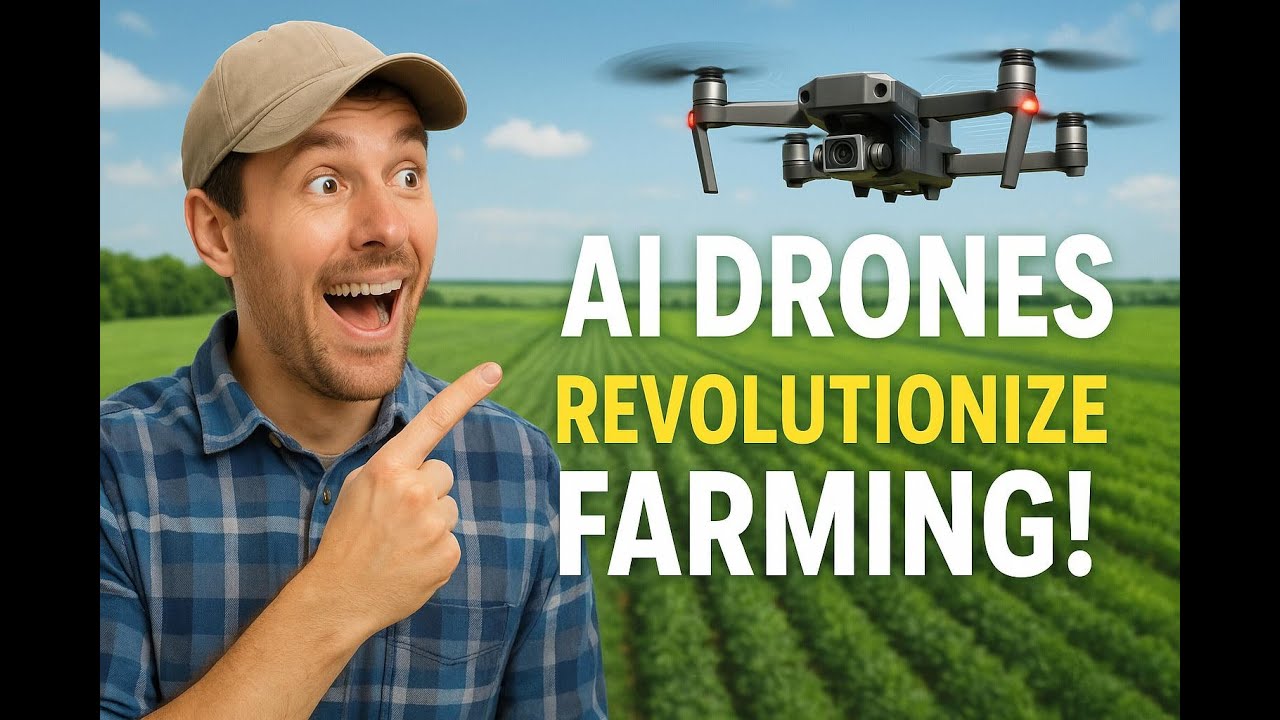
AI in agriculture projects and IoT based farming systems work together in a specific way: sensors and satellite imagery collect field data, machine learning models turn that data into irrigation, fertilizer, and pest decisions, and connected equipment or apps carry out the action. In the UK, government and industry tracking puts precision agriculture adoption at 60% of farmers as of 2023, backed by £165 million in cumulative Defra Farming Innovation Programme commitments and a further £50 million in combined public and private agri-tech investment announced in 2026. In the US, the clearest independent numbers come from a 2025 Association of Equipment Manufacturers (AEM) and Kearney study, which found precision agriculture lifts average crop farming productivity by 5%, cuts fertilizer use by 8%, and reduces herbicide use by 9%. This article works through what an ai driven farm management system and an iot based monitoring system in smart agriculture actually consist of, what they cost to run, and how to check whether a specific project is worth adopting on your own acreage.
Contents
Overview: What AI and IoT Agriculture Projects Actually Are
An ai driven farm management system is not one product — it is a stack of three layers working together. The first layer is data collection: IoT sensors in soil and equipment, plus satellite or drone imagery overhead. The second layer is analysis: machine learning models that turn raw readings into a recommendation — irrigate this zone, apply less nitrogen here, scout that block for disease. The third layer is action: either an automated system (a variable-rate sprayer, a solenoid valve) or a human operator following an app alert. Projects described as ai in agriculture projects usually emphasize the middle layer; projects described as iot based farming usually emphasize the first. In practice a working system needs all three, and most commercial platforms — Farmonaut included — combine them.
- ✔ Data-driven Decision Making: Real-time analytics and predictive models inform irrigation scheduling and pest interventions, replacing calendar-based spraying and watering.
- ✔ Connectivity & Automation: IoT networks and connected equipment execute precision tasks with reduced manual monitoring.
- ✔ Resource Optimization: The AEM–Kearney 2025 study found average reductions of 8% in fertilizer use and 9% in herbicide use among surveyed US precision agriculture adopters.
- ✔ Sustainability & Compliance: Environmental impact is tracked more precisely, including carbon footprint monitoring for compliance reporting.
- ✔ Transparency & Finance: Tools such as satellite-based crop loan and insurance verification give lenders independent field data instead of self-reported claims.
Key Technologies: IoT Sensors, AI Models, Satellite and Drone Imaging
Whether a project is described as an agriculture based iot project or an AI-first initiative, the underlying components repeat across implementations. Here is what each layer does and where it fits.
1. IoT Sensor Networks and Sensing Platforms
IoT based agriculture projects deploy sensor arrays across fields, greenhouses, orchards, and livestock sites to monitor soil moisture, temperature, pH, nutrient availability, canopy density, and local weather. This is the core of what a search for iot based monitoring system in smart agriculture is usually looking for: a network of low-power field sensors reporting back to a dashboard or app, rather than a single device.
- 🌡 Soil & Microbiome Health: Sensors detect moisture, temperature, pH, and nutrient levels to support precise input recommendations.
- 📡 Edge Devices: On-site processing reduces bandwidth needs and cuts data latency — relevant where rural connectivity is inconsistent (see the challenges section below).
- 🌱 Plant Stress & Disease Detection: Canopy and leaf sensors flag early nutrient deficiencies and disease signs ahead of visible symptoms.
- 💧 Water Management: Groundwater monitoring and weather stations feed irrigation scheduling to cut water waste.
2. Precision Agriculture Leveraging AI and Machine Learning
AI in agriculture projects use machine learning models to interpret sensor data, imagery, and historical agronomic records. A 2025 systematic review published via the National Center for Biotechnology Information covering 149-plus studies, and a related 2025 comparative machine learning study in Springer’s journal series, both track how model accuracy for crop yield prediction is reported and benchmarked across regions — useful background if you want to evaluate a vendor’s accuracy claims rather than take them at face value. Typical model outputs include:
- 📊 Variable Rate Irrigation: Adjusts watering frequency and volume by crop stage and forecast.
- 💊 Fertilization & Pesticide Targeting: Applies inputs only where needed, reducing runoff risk.
- 🔬 Computer Vision: Spectral analysis for disease, pest, and weed detection at field scale.
- 📅 Crop Rotation & Scenario Planning: Farm Management Information Systems (FMIS) integrate model outputs into rotation and input schedules.
3. Drone and Satellite Imaging
Drone and satellite imagery with multispectral and hyperspectral sensing extends precision agriculture beyond manual field scouting, covering whole farms or estates in a single pass.
- 🛰 Crop Vigor Indices (NDVI, NDRE): Estimate chlorophyll content and plant health at scale to guide input allocation.
- 🔥 Thermal Imaging: Detects heat and water stress, flagging irrigation needs and disease hotspots across wide areas.
- 🌿 Forest & Land-Use Monitoring: Supports silviculture planning and forestry management on mixed estates.

4. Autonomous Machinery and Automation
- 🤖 Robotic Weed Control: Autonomous machines target weeds, cutting herbicide use and labor hours.
- 🚜 Self-operating Harvesters & Planters: Deliver site-specific management with consistent execution.
- 🛣 Infrastructure Optimization: Automated monitoring extends to roads, supply chains, and post-mining reclamation sites.
5. Data Fusion, FMIS and Decision Support
- 📈 Data Integration: Merges weather forecasts, market prices, soil data, and operational records for scenario-based planning.
- 🎯 FMIS Platforms: Consolidate data across devices and sources to support governance and capital allocation decisions.
- 🔒 Blockchain Traceability: Provides tamper-proof records for agriculture and mining supply chains, as in Farmonaut’s traceability product.

Applications Across Crops, Livestock, Forestry, Mining and Infrastructure
AI based agriculture projects and iot based farming systems have branched into sector-specific deployments well beyond row-crop fields. Here is how they show up across use cases.
A. Crop Agriculture and Horticulture
- 🌾 Irrigation Optimization: Sensor-triggered irrigation systems direct water precisely when and where soil moisture and weather data indicate need.
- 🌱 Variable-Rate Nutrient Management: Model-based fertilizer recommendations reduced fertilizer use by an average of 8% in the AEM–Kearney 2025 study of US precision agriculture adopters.
- 🦠 Proactive Disease & Pest Detection: Computer vision and multispectral analysis identify hotspots for early, targeted treatment.
- 🍇 Canopy Monitoring in Orchards: Sensors and drone imagery support pruning and irrigation decisions to protect fruit quality.
- 🌡 Climate Control in Greenhouses: Automated systems adjust temperature, humidity, and lighting for consistent growth cycles.
B. Livestock and Forestry
- 🐄 Animal Welfare Monitoring: Biosensors track health, feeding efficiency, and environmental conditions.
- 🌲 Sustainable Forest Management: Satellite and IoT tools monitor biomass, assess pest and disease risk, and support wildfire detection.
C. Mining and Environmental Reclamation
- 🏭 Extraction Site Monitoring: IoT sensors track air, water, and soil conditions to support regulatory compliance.
- 🌱 Reclamation Planning: AI analysis of satellite data supports post-mining land restoration and vegetation recovery strategies.
- 🚚 Access Route Surveillance: Drones and AI models help plan and monitor infrastructure condition around mining sites.
D. Infrastructure and Supply Chain Optimization
- 🏢 Storage & Logistics: AI-assisted platforms help manage storage conditions to reduce spoilage.
- 🚚 Fleet & Resource Management: Farmonaut’s Fleet Management tools let agribusinesses track vehicles and machinery for lower operating costs.
- 🖥 Digital Twins: Virtual replicas of farms or processing facilities support scenario testing and asset optimization.
Comparison Table: AI-Based vs IoT-Based Agriculture Projects
The two project types are complementary, not competing. The table below separates them by what each is designed to do, using the sourced figures above rather than round marketing numbers.
| Project Type | Primary Function | Sourced Effect | Example Applications | Best Fit |
|---|---|---|---|---|
| AI-Based Disease & Yield Forecasting | Predictive modelling from imagery and historical records | Model accuracy benchmarked across 149+ studies (NCBI systematic review, 2025) | Early disease/pest detection, yield forecasting, proactive interventions | Operations with multi-season historical data |
| AI-Driven Precision Fertilizer Management | Model-based nutrient rate recommendations | −8% fertilizer use (AEM–Kearney 2025, US average) | Nutrient optimization plans, reduced runoff | Row-crop farms with variable-rate equipment |
| IoT-Based Smart Irrigation Systems | Sensor-triggered watering control | Part of the 5% average productivity gain from precision agriculture (AEM–Kearney 2025) | Soil moisture-triggered irrigation, remote valve control | Irrigated farms in water-constrained regions |
| IoT Environmental Monitoring for Mining Reclamation | Continuous air/water/soil sensor logging | Non-yield domain; compliance and risk reduction focus | Post-mining site sensors for water/soil recovery | Mining and reclamation operators |
| AI & IoT Automated Harvesters | Combined sensing plus autonomous execution | Herbicide use down 9% where automated weeding is paired with precision spraying (AEM–Kearney 2025) | Robotic and GPS-enabled machinery, automated picking | Larger operations with labor cost pressure |
UK and US Adoption Data: What’s Verified and What Isn’t
Because this article is aimed at readers in the United States and the United Kingdom, it is worth being precise about which adoption numbers are actually published for those markets, and which are not.
In the UK, market research reported in 2023 puts precision agriculture technology adoption at 60% of farmers. Government backing has scaled since: Defra’s Farming Innovation Programme has committed £165 million cumulatively through 2026, and a further £50 million in combined public and private investment in agri-tech acceleration was announced in 2026. These are policy and funding figures, not usage-by-technology breakdowns — Defra does not publish a UK-specific IoT adoption percentage broken out by sensor type, so a claim like “40% of UK farms use soil moisture sensors” is not something you will find in official statistics as of this review.
In the US, the clearest independent figures come from the AEM–Kearney 2025 study: 5% average productivity increase, 8% fertilizer reduction, and 9% herbicide reduction among precision agriculture adopters. What that study does not break out is a cost-benefit timeline for farms under 500 acres — the published analysis focuses on medium-to-large operations, so smaller US and UK holdings should treat these percentages as directional rather than a guaranteed return, and validate against a pilot on their own acreage before scaling spend.
Two further gaps are worth naming plainly rather than papering over. First, no peer-reviewed study directly compares AI-predicted yields against farmer-observed yields under US or UK field conditions with published results — USDA pilot work in this area exists but results were not published as of this review. Second, Defra and UK government sources do not publish real-time rural broadband coverage by postcode, so connectivity as a barrier to IoT adoption is documented qualitatively but not mapped geospatially. If you need current figures on either point, the method is to check Defra’s Farming Innovation Programme page directly and the USDA’s National Agricultural Statistics Service (NASS) release calendar, since both republish data on a rolling basis rather than a fixed annual cycle.
Calculator: Estimate Your Input Savings from Precision Agriculture
Use your own acreage, current fertilizer and herbicide spend, and current yield value to apply the AEM–Kearney 2025 study’s averages (+5% productivity, −8% fertilizer, −9% herbicide) to your own operation and see an estimated first-year net effect.
Run your own numbers

Benefits and Impact: Yield, Efficiency, Sustainability
The convergence of ai based agriculture projects and iot projects on agriculture produces measurable value across several dimensions, though the size of that value depends on which study you cite and which market it covers.
- ✔ Resource Efficiency: The AEM–Kearney 2025 study recorded an average 8% reduction in fertilizer use and 9% reduction in herbicide use among US adopters.
- 📊 Yield & Quality Gains: The same study recorded a 5% average crop farming productivity increase; earlier detection of disease and stress supports more consistent output season to season.
- ♻ Environmental Sustainability: Lower input use reduces runoff and supports more precise land-use planning.
- ⚠ Climate Resilience: Predictive analytics flag drought, pest, or weather threats ahead of visible damage, enabling earlier response.
- 💰 Economic Value: Reduced input costs plus improved access to finance via data-verified risk assessment — see the crop loan and insurance link above.
Challenges and Considerations
The value case for ai based agriculture projects and agriculture based iot projects is real, but adoption in the US and UK runs into specific, documented friction points.
- ⚡ Data Interoperability: Ensuring seamless integration across sensor systems, platforms, and FMIS software.
- 📶 Connectivity Limitations: Rural bandwidth is inconsistent in both countries; Defra does not publish postcode-level broadband coverage data, so treat connectivity as a site-specific risk to check directly with your provider before committing to a cloud-dependent system.
- 💸 Capital and Upkeep: Initial investment, ongoing maintenance, and periodic upgrades need to be budgeted in advance — published ROI studies like AEM–Kearney focus on medium-to-large operations, so smaller farms should pilot before scaling spend.
- 🎓 Skill Development: Operators may need training to interpret AI outputs and manage automated equipment.
- 🔒 Privacy and Data Ownership: Clear data governance policies are needed when sharing farm data with vendors, lenders, or government programmes.
- ⚠ Cybersecurity: Protect IoT devices from unauthorized access.
- ⚠ Hardware Longevity: Regular sensor and device maintenance keeps data accurate over multiple seasons.
- ⚠ Scalability: Choose modular architectures that expand as needs and acreage grow.
- ⚠ Legacy Integration: Harmonize new systems with existing management software to avoid disruption.
- ⚠ Regulatory Compliance: Adhere to evolving agtech, environmental, and data privacy standards in your jurisdiction.
Implementation Blueprint
Successful deployment of ai based agriculture projects and iot projects on agriculture follows a phased sequence rather than a single big rollout. This structure holds regardless of which technology generation you are on when you read it.
- Begin with a Focused Pilot: Test IoT sensors and AI tools on a representative field or plot, targeting one problem — irrigation optimization, disease detection, or canopy monitoring.
- Scale Gradually: Add drone or satellite imaging, edge processors, and automated machinery in phases as ROI is confirmed on the pilot area.
- Leverage Expert Guidance: Use service providers and platforms with proven experience in data integration, device management, and AI analytics — such as Farmonaut’s satellite-driven solutions.
- Establish Strong Data Governance: Set clear data policies, privacy protocols, and an integrated FMIS for centralized scenario planning and KPI tracking.
- Monitor, Measure and Improve: Track water use, yield, input costs, carbon footprint, and pest outbreaks each season, and adjust based on what the data actually shows rather than the vendor’s marketing claim.


- 🚀 Wide field coverage with satellite and drone imaging
- 📡 Real-time alerts for stress, disease, or equipment issues
- 🧬 Data-driven risk assessment for crop insurance and financing
- 💰 Faster payback via reduced input costs and improved harvests
- 🌐 Scalable tools adaptable from small farms to large operations
Farmonaut: Satellite-Powered Data for Agriculture, Mining and Infrastructure
Farmonaut offers a suite of AI and data-driven solutions across agriculture, mining, infrastructure, and geospatial intelligence:
- 🛰 Satellite-Based Monitoring: High-resolution multispectral imagery turned into real-time crop, soil, and infrastructure health maps for actionable resource management.
- 🤖 AI-Driven Advisory: The Jeevn AI Advisory System provides tailored strategies, disease and stress alerts, and weather forecasts for agriculture, mining, and infrastructure operations.
- 🔗 Blockchain Traceability: Transparent, tamper-proof product verification via traceability for agri-food and mineral supply chains.
- 🚛 Fleet & Resource Management: Tools that optimize agricultural fleets and mining equipment for lower costs and less downtime — see the Fleet Management Platform.
- ♻ Environmental Impact Tracking: Carbon footprint monitoring and compliance support for sustainable farming and reclamation projects.
- 💧 Crop Loan & Insurance: Satellite-based verification that smooths loan and insurance access and reduces fraud risk.
| Farmonaut Feature | Agriculture | Mining | Infrastructure | Value Proposition |
|---|---|---|---|---|
| Satellite Monitoring | NDVI crop health, irrigation, nutrient & disease stress | Vegetation/land cover, air/water/soil compliance | Asset & project status, structural safety | Complete, cost-effective project oversight |
| AI/ML Analysis | Disease alerts, weather-driven irrigation | Reclamation recommendations, risk mapping | Predictive maintenance, usage insights | Predictive, adaptive cost saving |
| Blockchain Traceability | Supply chain trust, anti-fraud, market access | Origin certification, compliance logs | Supply & asset verification | Transparency & trust for stakeholders |
Farmonaut subscriptions are flexible and scalable:

- 👨🌾 Farmers: Real-time field health, financing support, optimized operations
- 🏭 Mining Operators: Compliance, reclamation planning, and cost control
- 🏢 Businesses: Large-scale monitoring and risk reduction
- 🏛 Governments: Policy making and resource allocation
- 🏦 Financial Institutions: Trusted loan/insurance verification via satellite data
What Changes Next, and How to Track It
The direction of ai based agriculture projects and iot based agriculture projects is toward deeper integration and automation, but the specific numbers in this article will age — here is what to re-check and where.
- UK funding commitments: Defra’s Farming Innovation Programme total (£165 million cumulative through 2026) is a running figure — check Defra’s programme page directly for the current cumulative total rather than relying on this snapshot.
- US precision agriculture ROI: The AEM–Kearney figures (+5% productivity, −8% fertilizer, −9% herbicide) reflect the 2025 study; watch for AEM’s next release cycle for updated figures.
- Crop yield model accuracy: The NCBI systematic review and Springer comparative ML studies are refreshed periodically — set a journal alert for “crop yield prediction machine learning” on both platforms to catch new benchmark comparisons as they publish.
- Rural connectivity data: No current geospatial mapping of UK broadband-by-postcode adoption constraints exists in Defra publications as of this review — check Ofcom’s connected nations reporting directly if this is a deciding factor for your site.
- Environmental and traceability standards: AI/IoT-enabled carbon tracking and blockchain-based traceability continue to expand into mainstream compliance reporting — verify current requirements with your local regulator before budgeting a compliance-driven rollout.
FAQ: AI and IoT in Agriculture
Q1. How do AI and IoT based agriculture projects work together?
A: IoT devices collect real-time data on soil, weather, plant, and equipment condition. AI then interprets that data — predicting risks, recommending interventions, and in some systems automating the response — to improve yield and resource efficiency.
Q2. What measurable benefits have been documented for US and UK farmers?
A: The AEM–Kearney 2025 study found US precision agriculture adopters averaged a 5% productivity increase, 8% fertilizer reduction, and 9% herbicide reduction. In the UK, 60% of farmers had adopted precision agriculture technology as of 2023, backed by £165 million in cumulative Defra Farming Innovation Programme funding through 2026.
Q3. What is an iot based monitoring system in smart agriculture, specifically?
A: It is a network of field-deployed sensors — soil moisture, temperature, pH, weather stations — that report continuously to a dashboard or app, often paired with edge processing to reduce bandwidth needs. It is the data-collection layer that AI models then analyze.
Q4. How is Farmonaut different from other providers?
A: Farmonaut focuses on satellite-driven, accessible tools for real-time monitoring, AI-based advisory, and blockchain traceability, with a modular platform aimed at agriculture, mining, and infrastructure users of varying scale.
Q5. Do I need advanced technical knowledge to use these tools?
A: Not necessarily. Platforms like Farmonaut offer dashboards and apps that translate AI outputs into plain-language recommendations, reducing the need for advanced technical skills.
Q6. Can AI and IoT be integrated into my existing farm management system?
A: Yes — look for solutions with open APIs and industry-standard integrations, such as Farmonaut’s API integration for connecting with FMIS and legacy software.
Conclusion: Verify the Numbers Before You Scale
AI in agriculture projects and IoT based farming systems have moved from pilot novelty to documented practice in the US and UK: a 2025 AEM–Kearney study puts average US gains at +5% productivity, −8% fertilizer use, and −9% herbicide use, and UK precision agriculture adoption stood at 60% of farmers in 2023 with £165 million in cumulative Defra programme funding behind it through 2026. What has not caught up is farm-size-specific and connectivity-specific data — those gaps are real, and the honest move is to pilot on your own acreage, using your own inputs in the calculator above, rather than assume a national average applies to your field.



Ready to apply AI and IoT to your agriculture, forestry, or mining operation? Book a Farmonaut subscription and start with satellite-driven insights on your own fields.

 Godrej Agrovet
 Hayleys Agriculture
 Linx Agritech
 Adinet
 Save Your Soils
 GalaxEye Space
 Grandstream Algérie
 XOS Realty
 Geospatial Lab Africa
 Agro La Gándara
 HIPSAC
 ZOL Zimbabwe
 Juligerm
 AdBio
AdBio MISE Maroc
 NWNS
NWNS Red August Group
 Farm Inc
 WeMe Global
 Agrotoken
 Blue BearX
 Insignito
 DnCubed
 Indosistim Teknologi
 Liquify Digital
 CU Foods
 BeyondTech Global
 Rouge VC
 AgroRisk
 Oath Inc
 Esri North East Africa
 MDCV UK
 Etech Consulting Madagascar
 Vestlandsforsking
 WB Dev
 Sama Premium
 Tres Valles
 Blickwinkel
 Agricultural Credit Policy Council
 eKGIS
eKGIS Mostas Tech
 Andex
Andex Deluxe Conseil
 WICO
WICO Chimera Innovation
 SkyHarvest
 Teledarbas
 Exurbia Geospatial
 FieldZero
