

Almond Farming Water Efficiency Innovations 2025: Top 7 Advances Reshaping Global Orchards
Table of Contents
- Introduction: Why Almond Farming Water Efficiency Innovations Matter in 2025
- Quick Trivia: What Makes Almond Water Savings Remarkable?
- Almond Farming Faces in 2025: The Challenge of Water Scarcity
- Top 7 Almond Farming Water Efficiency Innovations 2025
- Comparison Table of Top 7 Almond Farming Water Efficiency Innovations 2025
- 1. Precision Irrigation Tools & Scheduling
- 2. Advanced Irrigation Technology & Infrastructure
- 3. Fertilizer Efficiency & Nutrient Management
- 4. Energy and Farm Efficiency Systems
- 5. Agricultural Practices & Systems Thinking
- 6. Data, Monitoring, and Policy Innovations
- 7. Integration & Outlook: Where Water Efficiency in Almond Farming Is Headed (2026+)
- Trivia: Almond Farming’s Nutrient Tech Impact
- The Role of Farmonaut: Satellite-Driven Agricultural Water Efficiency
- Frequently Asked Questions – Almond Water Efficiency Innovations
- Conclusion: Sustainable Almond Yields Through Innovation



“In 2025, precision irrigation systems can reduce almond farm water use by up to 30% compared to traditional methods.”
Introduction: Why Almond Farming Water Efficiency Innovations Matter in 2025
Almond farming water efficiency innovations 2025 are not just a passing trend—they represent a transformative wave reshaping agricultural production in top almond regions like California, Spain, and Australia. These areas, often characterized by challenging climates and mounting water scarcity, are driving a remarkable surge in innovative practices and technologies that aim to deliver higher yields with lower water use. From precision irrigation tools and advanced sensor systems to cutting-edge nutrient management, the landscape of almond cultivation is evolving faster than ever.
Water use sits at the center of a wider debate, taken up in a look at almonds’ environmental footprint.
This blog explores the top 7 almond water efficiency innovations for 2025, examining advanced irrigation, sustainable nutrient practices, and the rise of integrated systems thinking that enable growers to thrive. With factory farming efficiency and environmental stewardship at the forefront, we also address how energy-saving systems and data-driven approaches are intersecting with classic agricultural wisdom. Are there innovations in agriculture aimed at making almond farming more water-efficient? Absolutely—and we’ll break down exactly how, with insights for 2026 and beyond.
Are you looking for satellite-driven actionable farm insights on-the-go? Our team at Farmonaut provides affordable, real-time monitoring and AI-powered agricultural advisory directly to your device. Try Farmonaut’s satellite-based app today.

Almond Farming Faces in 2025: The Challenge of Water Scarcity
In 2025, global almond production continues to be dominated by California, Spain, and Australia—regions frequently tested by drought, climate volatility, and regulatory scrutiny over agricultural water use. As populations grow and climate patterns shift, farming communities are under more pressure than ever to maximize water use efficiency while maintaining high-quality kernel production and stewarding precious natural resources.
- ✔ California: Almonds are California’s top agricultural export but rely on up to 3.5 million acre-feet of irrigation water annually.
- ✔ Spain: Mediterranean almond orchards face ongoing droughts, making water allocation and deficit strategies vital for continued nut production.
- ✔ Australia: With severe river variability, integrating efficient technology is essential to keep nut yields stable across diverse climates.
Key Questions for 2025:
- Are there innovations in agriculture aimed at making almond farming more water-efficient?
- How does factory farming efficiency intersect with energy and fertilizer use?
- What advanced systems can growers adopt to align water, nutrient, and energy savings?
Top 7 Almond Farming Water Efficiency Innovations 2025
As we enter 2025, a wave of almond farming water efficiency innovations is making a tangible impact from orchard floor to post-harvest processing. Here are the seven top advances every grower, agribusiness, and sustainability advocate should know:
- 🌱 1. Precision Irrigation Tools and Scheduling
- 🛠️ 2. Advanced Irrigation Technology & Infrastructure
- 💧 3. Fertilizer Efficiency & Nutrient Management
- 🔋 4. Energy and Farm Efficiency Systems
- 🌳 5. Agricultural Practices and Systemic Thinking
- 📡 6. Data, Monitoring, and Policy Innovations
- 🤖 7. Integration: The “Smart” Almond Orchard (2026+)
Comparison Table of Top 7 Water Efficiency Innovations in Almond Farming (2025)
| Innovation Name | Brief Description | Water Savings (Estimated %) | Energy Savings (Estimated %) | Cost Range (Estimated) | Implementation Complexity | Additional Benefits |
|---|---|---|---|---|---|---|
| Precision Irrigation Scheduling | Soil & canopy sensors, ET indicators for tailored irrigation | 18-30% | 8-12% | $$ | Medium | Improved yield, less nutrient loss |
| Subsurface/Micro-Irrigation Systems | Drip lines/economical micro-irrigation reduces evaporation | 25-40% | 8-18% | $$$ | High | Longer system life, less soil crusting |
| Variable Rate Irrigation (VRI) | Water applied variably based on vigor maps/soil texture | 12-23% | 6-10% | $$$ | High | Uniform tree health, reduced runoff |
| Precision Nutrient Management | Sensors & diagnostics tailor fertilizer use to crop needs | 7-18% | 5-11% | $$ | Medium | Reduced runoff, supports kernel quality |
| Energy-Efficient Pumps & Microgrids | Solar/hybrid power for irrigation & processing | 7-12% | 25-45% | $$$ | High | Stable energy budgets, lower peak costs |
| Climate-Adaptive Monitoring | Remote sensing, satellite data, and AI-driven advisories | 12-19% | 7-10% | $-$$ | Low | Resilient to weather variability |
| Integrated Resource Management | Unified control over water, nutrient, and carbon systems | 15-25% | 14-23% | $$$ | High | Maximal resource savings, ongoing adaptation |

1. Precision Irrigation Tools & Scheduling: The Backbone of Almond Farming Water Efficiency Innovations 2025
Precision irrigation and smart scheduling are becoming standard across major almond regions. Today’s systems leverage a spectrum of field-deployed and remote sensors—including soil moisture probes, plant water status indicators, and real-time evapotranspiration (ET) models. These technologies work together to tailor irrigation directly to crop demand, substantially reducing deep percolation losses and non-productive water use.
- 💡 Reduces water, fertilizer, and energy losses per kernel
- 📊 Enables precise scheduling—critical as climate varies in California, Spain, and Australia
- 🍃 Keeps almond tree vigor and yield stable: no more over- or under-irrigation
- 🏆 Factory farming efficiency aligned with environmental stewardship
- Robust deficit irrigation strategies—often guided by AI-powered crop models—allow growers to balance water savings with nut quality. Instead of continuous full irrigation, water application is regulated or combined with improved drought-tolerant rootstock choices, maintaining kernel count per tree while lowering total water input.
- Variable-rate irrigation (VRI) systems, which deliver water differentially across blocks or individual trees based on vigor maps, soil texture, and tree age. This approach targets water precisely where needed, reducing wasted runoff and increasing uniformity.

2. Advanced Irrigation Technology & Infrastructure
A major theme in almond farming water efficiency innovations 2025 is the leap from surface flood irrigation to subsurface drip and micro-irrigation systems. These new systems minimize evaporation losses, avoid soil crusting (a common issue in Spain and California), and support long-term fertility while maintaining almond tree vigor.
- Subsurface drip lines place water directly at the root zone, fostering more consistent soil moisture and reducing growth-inhibiting salt buildup.
- Micro-irrigation, paired with advanced tubing and emitter materials, extends system life and reduces maintenance—vital for large commercial plantings.
- Technologies such as pressure-compensating emitters and anti-rosion (anti-clogging) materials ensure uniformity across hundreds or thousands of trees.
- Regions facing limited freshwater supplies, like parts of Spain and Australia, are rapidly integrating treated effluent or brackish water sources—using on-orchard blending and pre-treatment for optimal nut production tolerance.
- ✔ Subsurface and micro systems minimize labor and season-long water input
- ✔ Reuse of alternative water sources (treated wastewater, brackish water) supported by blending systems keeps orchard water quality and production consistent, even under restrictions
- ✔ Technological upgrades (emitters, tubing, monitoring) reduce lifetime costs
3. Fertilizer Efficiency & Nutrient Management: A Hidden Driver of Water Savings
Fertilizer practices are evolving as a core part of water efficiency—in fact, fertilizer efficiency agriculture news 2025 isn’t just about reducing chemical input, but about minimizing nutrient leaching and runoff during deficit irrigation. With almond trees being deep-rooted but highly sensitive to nutrient imbalances during drought, the alignment of fertilizer application with crop demand is crucial.
The latest tools and tissue diagnostics combine:
- Digital soil sensors and in-field leaf/tissue tests for immediate nitrogen and nutrient status
- Fertigation optimization powered by online decision-support software—delivering nutrients exactly when irrigation is scheduled, cutting both tractor trips and pump energy use
- Slow-release and drought-stress-tolerant formulations that boost nutrient use efficiency in low-moisture years
The result? Reduced nitrogen losses, greater kernel fill, and overall boosted yield with lower water and energy inputs.

- 🌟 Aligning fertilizer use with water application prevents both wastage and orchard runoff
- 📒 Advanced nutrient sensors help maintain kernel quality while cutting input costs
- 🔗 Fertigation reduces tractor trips and pump energy—improving agriculture energy efficiency
Want satellite-based nutrient monitoring, leaf/livestock/crop traceability, and input optimization for your almond operation? Our platform at Farmonaut offers direct integration with blockchain traceability systems—empowering farmers and agribusinesses to prove quality and sustainability from soil to shelf.
4. Energy and Farm Efficiency Systems: Reducing the Power Footprint
Energy input is another critical intersection of factory farming efficiency with almond water use. On-farm solar arrays, hybrid microgrids, and ultra-efficient pumps are becoming mainstream at both individual and large-scale almond orchards. These upgrades directly counter rising electricity prices and peak demand charges.
- 🔋 Solar & hybrid microgrids power both irrigation pumps and post-harvest processing
- ⚡ Variable-frequency drives minimize pump stress and energy consumption during water delivery
- 💨 Efficiency upgrades in post-harvest dryers and coolers reduce overall resource intensity per kilogram of nut production
For large commercial plantings, integrated energy and irrigation systems can deliver up to 45% energy savings—crucial as orchards expand to thousands of hectares.
For enterprises seeking to cut their environmental impact while optimizing energy and logistics, Farmonaut’s fleet and resource management tools provide unified oversight for pumps, vehicles, and power assets, ensuring maximum operational returns per invested dollar.
5. Agricultural Practices & Systems Thinking
No single technology alone solves the water and sustainability challenge for the global almond industry. Advanced agricultural practices, grounded in decades of research but now enhanced through sensors, AI, and data-driven management, make a pivotal difference.
- 🌱 Canopy management, advanced pruning, and optimized rootstock (drought/ saline-tolerant) selections increase per-tree water use efficiency and maintain or boost yields even as water allocations tighten.
- 🌳 Agroforestry and field diversification—increasing perennial vegetation between or adjacent to almond blocks—improves water infiltration, heightens soil organic matter, and promotes moisture retention, thus reducing overall irrigation need.
- 🌦️ Climate risk monitoring and adaptive management frameworks enable growers in water-challenged regions (especially Spain and southern Australia) to fine-tune irrigation, fertilization, and harvest timing based on environmental forecasts.

Curious about monitoring, reporting, and reducing the carbon footprint of your almond operation? Farmonaut’s carbon-footprinting dashboard offers detailed environmental impact data, supporting sustainability certifications and compliance for 2026 and beyond.
“Advanced nutrient management technologies in almond farming are projected to boost water efficiency by 18% in the coming year.”
6. Data, Monitoring, and Policy Innovations Driving Almond Water Efficiency
The digital transformation of almond farming—fueled by satellite data, drone imagery, and AI-based advisory models—represents a major step forward in smart orchard stewardship.
- 🛰️ Remote sensing (NDVI, NDWI, crop vigor and canopy maps) enables site-specific irrigation scheduling and continuous monitoring of orchard health, even on scales of thousands of hectares.
- 🤖 AI-driven decision support platforms blend weather, soil, and plant status to recommend irrigation volumes, deficit timings, and precision fertigation windows—maximizing resource use at both the individual tree and orchard block level.
- 🌐 Public-private programs encourage transparent water-use reporting, farmer training, and coordinated watershed management, especially in water-limited basins across California and Spain.
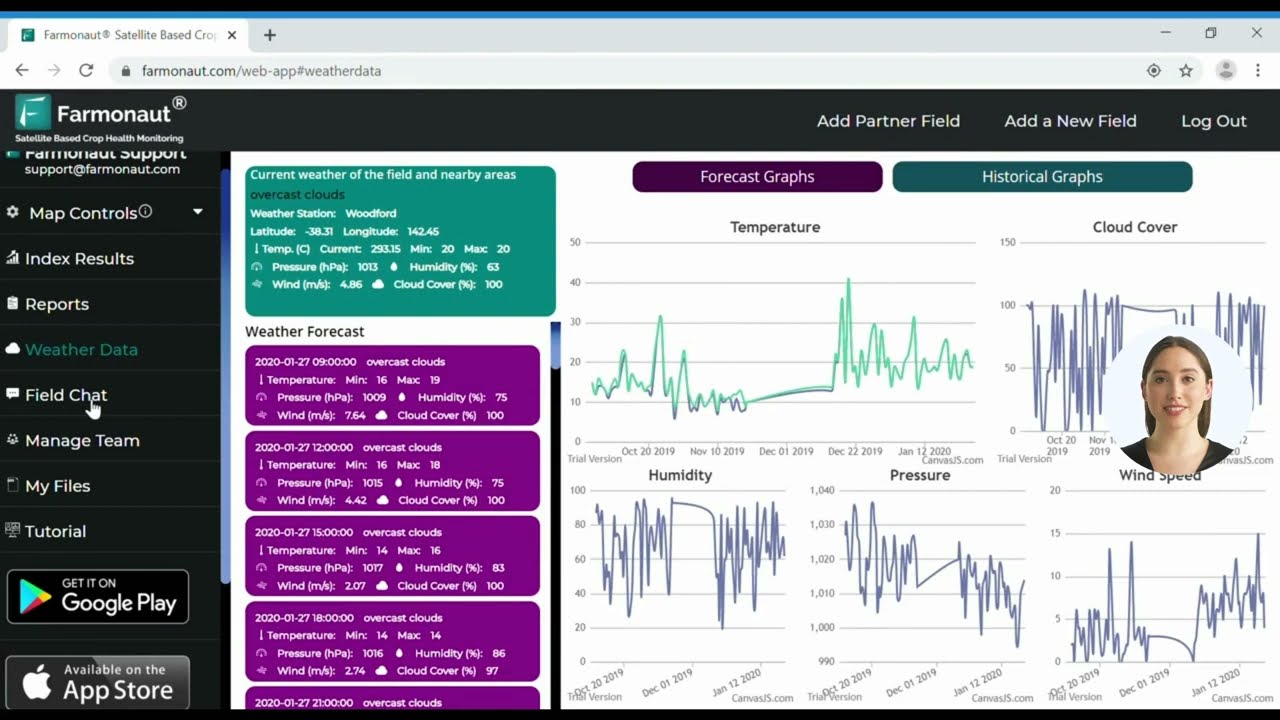
Are you a developer or agtech provider aiming to integrate high-resolution satellite monitoring into your own almond farming solutions? Access Farmonaut’s API for robust crop health, weather, and water-use datasets, with full developer documentation at Farmonaut Satellite Weather API Developer Docs.
7. Integration & Outlook: Where Almond Farming Water Efficiency Innovations Are Headed (2026+)
The next frontier in almond farming water efficiency innovations fuses monitoring, predictive analytics, and automation—creating “smart” orchards with minimal manual intervention and maximal resilience.
- 🤖 Unified dashboards now combine real-time sensor readings, satellite data, irrigation network controls, and fertigation plans for a holistic orchard view.
- ⚡ AI-driven automation can trigger pumps, valves, and fertilizer injectors in response to plant water status, ET models, or approaching weather events.
- 🌞 Advanced microgrid management lets growers “match” irrigation events to solar production, reducing dependence on grid electricity and lowering costs per kernel.
- 🔗 Blockchain traceability platforms integrate input tracking, harvest records, and sustainability metrics—bolstering transparency for conscious consumers and compliance markets.
Managing orchards across many regions or even continents? With Farmonaut’s large scale farm management suite, enterprises gain visibility and resource control across their full almond estate—leveraging global data for local water and input decisions. Learn more here.
The Role of Farmonaut: Satellite-Driven Agricultural Water Efficiency
For stakeholders seeking an actionable, technology-first approach, Farmonaut provides satellite-based solutions enabling data-driven resource management for almond water efficiency innovations 2025 and beyond. Our platform delivers:
- 📡 Field-scale & block-level monitoring for canopy vigor, plant stress, and anomaly detection
- 🤖 AI-based advisory system (Jeevn AI) for irrigation, fertilizer, and harvest optimization
- 🔗 Blockchain traceability—from fertilizer application to kernel shipment
- 💡 Fleet and pump management dashboards for energy and cost savings
- 🌱 Environmental and carbon impact tracking, supporting certifications and transparent reporting (Carbon Footprinting Dashboard)
Our subscription-based model and open API access make satellite insights scalable and affordable—from the individual smallholder to major agribusiness managing thousands of hectares. We empower almond growers to integrate remote monitoring, decision support, and sustainability metrics—all without costly hardware investments.
Download our Android or iOS app above or get started on the web for instant access to almond, orchard, and crop monitoring features. Benefit from unified water, nutrient, and carbon management—driving your orchard’s sustainability into 2026 and beyond.
Frequently Asked Questions – Almond Farming Water Efficiency Innovations 2025
Q1. Are there innovations in agriculture aimed at making almond farming more water-efficient?
Yes. The most impactful innovations for 2025 include precision irrigation scheduling with soil and plant sensors, subsurface drip and micro-irrigation technology, variable-rate irrigation based on vigor maps, advanced nutrient management (fertigation, diagnostics), and AI/remote-sensing-enabled advisory systems.
Q2. How much water savings can precision irrigation deliver for almond orchards?
Precision irrigation can reduce water use by 18–30% compared to traditional methods, depending on local soil conditions, crop vigor, and integration with monitoring technologies.
Q3. What role do energy-efficient pumps and solar systems play in overall almond farming water efficiency?
Energy-efficient pumps and on-farm solar/hybrid microgrids decrease irrigation energy costs by up to 45%. They stabilize energy budgets for large-scale operations and allow responsive control over water delivery, enhancing both factory farming efficiency and environmental stewardship.
Q4. How does Farmonaut support almond farming water efficiency innovations?
We at Farmonaut offer satellite-driven crop monitoring, AI-based advisory, and blockchain-powered resource traceability. Users gain real-time insights into crop water status, input use, and environmental impacts—boosting water and nutrient efficiency for both small and large almond farms.
Q5. Is it possible to combine nutrient management with precision irrigation for even greater efficiency?
Absolutely. Fertigation (nutrients applied via irrigation) reduces fertilizer waste and energy use. When paired with sensor-based irrigation scheduling and soil/tissue diagnostics, it supports both higher yields and lower environmental impact—especially during drought or deficit conditions.
Conclusion: Sustainable Almond Yields Through Innovation
The convergence of precision irrigation, nutrient stewardship, and on-farm energy efficiency is transforming almond farming into a model of resource-conscious, high-output agriculture. Almond farming water efficiency innovations 2025—and those developing for 2026 and beyond—empower growers in California, Spain, Australia, and worldwide to reduce water and energy input while maintaining or even improving kernel quality.
As early adopters report significant savings and resilience, it is clear that integrated systems, remote sensing, AI advisory, and digital traceability will define the next era of sustainable almond production. With accessible platforms like those from Farmonaut, both individual and corporate growers can ensure ongoing productivity, profitability, and environmental stewardship—making efficient almond production a global standard for the years ahead.

 Grandstream Algérie
 XOS Realty
 Geospatial Lab Africa
 KhetiBuddy
 Agro La Gándara
 HIPSAC
 ZOL Zimbabwe
 Juligerm
 AdBio
AdBio MISE Maroc
 NWNS
NWNS Red August Group
 Farm Inc
 WeMe Global
 Agrotoken
 Blue BearX
 Insignito
 Croptimum
 DnCubed
 Field Capacity
 Indosistim Teknologi
