

Arid Lands Greenhouses: AI, Automation & Insurance 2025
Table of Contents
- Introduction: The 2025 Agricultural Transformation in Arid Lands
- Trivia: Arid Lands Greenhouses in 2025
- Arid Lands Greenhouses: Revolutionizing Dryland Agriculture
- Automated Greenhouse Control & AI Integration
- AI Greenhouse Gas Emissions: Optimized Mitigation for Sustainability
- Are Greenhouses Covered by Insurance? Navigating 2025 Risk Solutions
- The 7-Tree Farm & Greenhouse Model: Integrating Agroforestry
- Comparative Table: AI-Driven Greenhouse Technologies in Arid Regions
- Farmonaut: Remote AI-Enriched Data for Greenhouse Agriculture
- Video Gallery: Watch AI, Automation & Smart Farming in Action
- FAQ: Arid Greenhouse Technologies & Insurance
- Conclusion: A Resilient, Data-Driven Future
- Farmonaut Subscriptions
Introduction: The 2025 Agricultural Transformation in Arid Lands
Arid lands greenhouses are leading a transformative shift in agriculture by 2025, unlocking productive potential in areas once deemed too harsh for farming. As climatic conditions become more unpredictable, with low rainfall, extreme temperatures, and water scarcity continuing to challenge traditional agriculture, the emergence of advanced greenhouse technologies has heralded a new era.
In today’s landscape, arid lands greenhouses are no longer experiments or academic showcases: they have emerged as pivotal solutions that address the challenges posed by soil degradation and ensure sustainable food security. By leveraging automation, cutting-edge AI-powered control, and new models in insurance, these systems are enabling efficient crop production in environments previously considered unsuitable for farming.
This comprehensive guide explores the latest technologies, innovative approaches like the 7-tree farm & greenhouse hybrid, and the role of insurance in arid zones, providing a blueprint for resilient agriculture in 2025 and beyond. We’ll unpack how AI-driven greenhouse gas mitigation, optimized energy management, and integrated data solutions are bolstering global efforts toward sustainable, climate-smart agriculture.
Arid Lands Greenhouses: Revolutionizing Dryland Agriculture
Arid and semi-arid regions, from North Africa’s Sahel to parts of Central Asia and southwestern USA, are characterized by low rainfall (less than 300 mm/year) and extreme temperatures. These conditions pose significant obstacles to traditional agriculture.
Dryland farming in such zones faces challenges including:
- Unpredictable weather and drought
- Lack of soil fertility and increased degradation
- Scarcity and inefficient use of water resources
- High evaporative losses and soil salinity expansion
Arid lands greenhouses are tailored to address these issues by engineering microclimates that preserve both water and soil health while optimizing crop production. These innovative systems are now a critical solution for ensuring food security and supporting rural economies in 2025.
Advanced Materials, Designs & Microclimate Control
- Double-layer polyethylene films enhance insulation, reducing energy demands for heating or cooling and preventing water loss.
- Reflective shading minimizes intensity from sunlight, protects crops, and helps maintain stable microclimates.
- Automated ventilation systems continuously monitor and adjust temperature and humidity to reduce evaporative loss and defend against dust storms or intense heat waves.
The integration of drip and fog irrigation systems is critical in conserving water—enabling cultivation of high-value crops like tomatoes, capsicum, cucumber, herbs, and leafy greens. These crops otherwise struggle to thrive in arid conditions, thus bolstering food security while stimulating rural economic development.

Key Features of 2025 Arid Lands Greenhouses
- Dynamic, responsive shading and insulation for temperature control
- AI-based API integration for real-time sensor insights and environmental predictions
- Water-efficient irrigation strategies (e.g., precision drip, mist, and reclamation loops)
- Crop health monitoring with satellite imagery and in-situ sensor fusion
- Carbon footprint computation and environmental impact assessment
From Unsuitable to Unstoppable: How Greenhouses Transform Arid Agriculture
Thanks to these advanced technologies, arid lands previously written off for agriculture are now productive landscapes—protectorates against climate adversity and vehicles for sustainable intensification. The integration of automation, AI-driven greenhouse management, and blockchain traceability ensures that food production adapts continually to a changing climate.



Automated Greenhouse Control & AI Integration
The automation revolution in greenhouse management has reached impressive sophistication in 2025. Automated greenhouse control is no longer a luxury but a necessity for arid region greenhouses where margins for error are razor-thin.
Sensors continuously monitor critical variables:
- Air temperature and humidity
- Soil moisture and electrical conductivity (EC)
- Leaf surface moisture and photonic response
- CO₂ levels for photosynthesis optimization
- Incoming/outgoing solar radiation, wind speed, dust indices
All this real-time data feeds into AI-powered control systems, which predict and adjust settings with minimal human intervention.
Key Processes Enabled by AI in Greenhouse Management
-
Predictive Analytics for Disease & Stress:
AI models analyze historical and current sensor inputs to detect early signs of disease, plant stress, or pest outbreaks, enabling preventive measures—significantly reducing crop losses in high-risk arid zones. -
Environmental Adaptation:
Integration with advanced weather models allows the greenhouse to proactively adjust internal climate in response to upcoming extreme events (heatwaves, dust storms, cold snaps). -
Resource Optimization:
Automated irrigation and fertigation systems meter water and nutrients on a zone-specific basis, minimizing waste and supporting sustainable production. -
Energy Management:
AI modules orchestrate heating, ventilation, lighting, and shading, often favoring renewable energy sources (solar integration) for lower emissions and operational costs.
Such advancements in automation mean that environmental parameters for each crop or zone are no longer static, but dynamic—constantly modulated for peak growth and resilience against climatic stressors.

Automated Greenhouse Control: Outperforming Human Management
- 24/7 system vigilance means no moment is missed, even during sudden shifts
- Self-learning algorithms optimize routines based on cumulative field and sensor data
- Feedback loops adjust for anomalies—unlike traditional farming’s slower, reactive response
- Allows scaling up commercial operations reliably, aiding investment and risk mitigation
Integration of Satellite & Remote Sensing Data
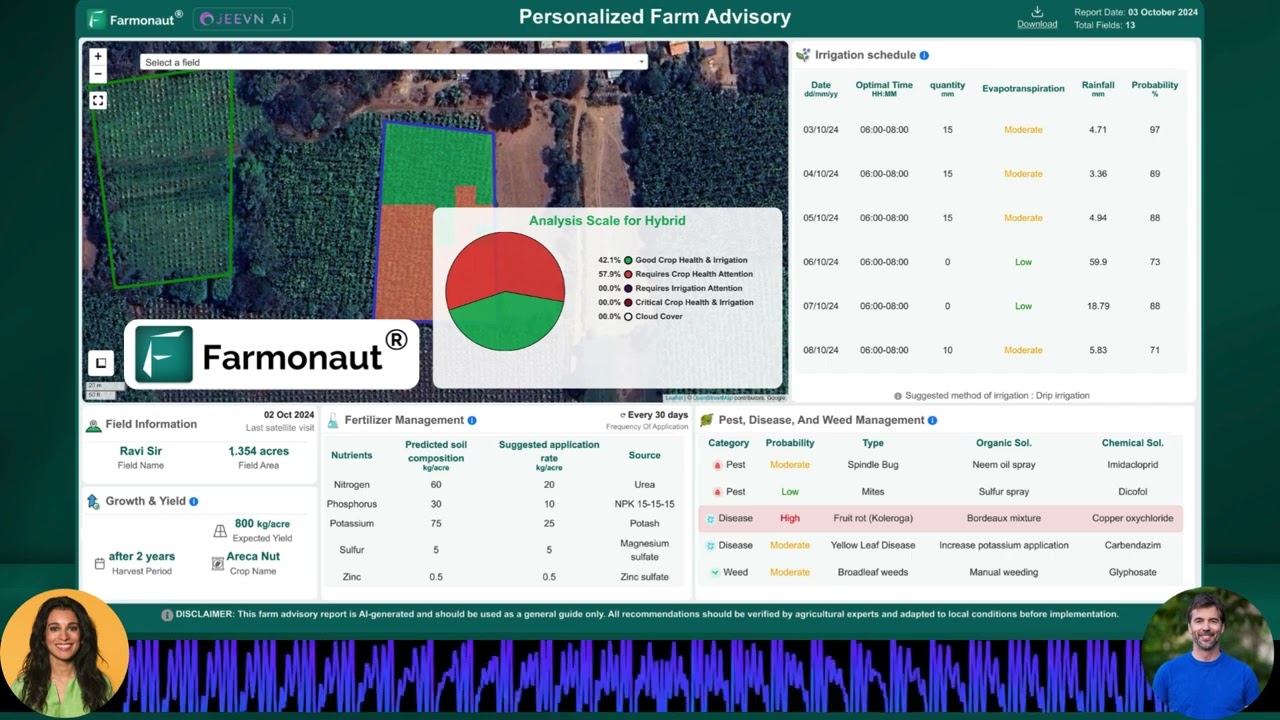
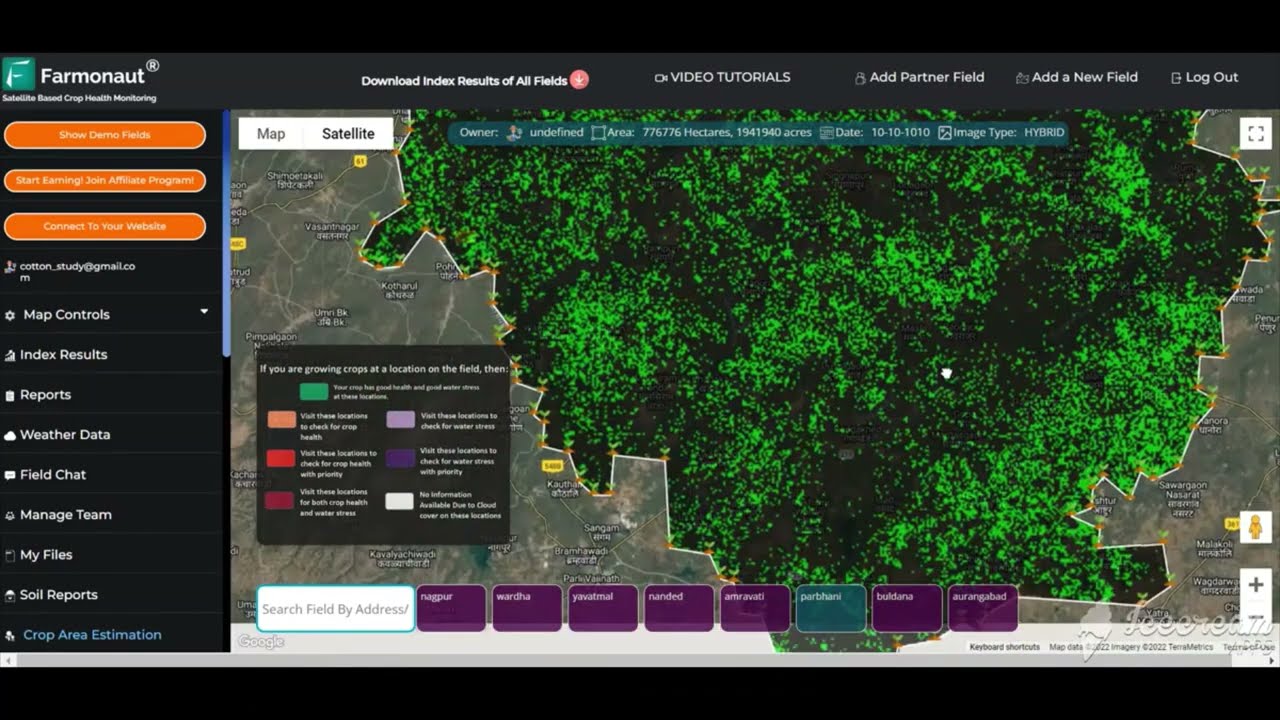
Platforms like Farmonaut enable layered insights via multispectral and thermal satellite monitoring. In arid environments, this means:
- Vegetation health mapping via NDVI, EVI, and other indices
- Spotting localized anomalies (water stress, heat islands, disease clusters)
- Automated insurance verification and claims assessment—reducing fraud and delays
- Long-term soil health and crop productivity benchmarking
This integration empowers both smallholder and large-scale operators with actionable data—reducing losses, securing loans, and enhancing sustainability.
AI Greenhouse Gas Emissions: Optimized Mitigation for Sustainability
One ongoing concern with controlled-environment agriculture is the potential for increased GHG emissions due to higher energy use—often for heating, cooling, and supplemental lighting—versus open-field farming. However, the tide in 2025 is turning thanks to AI-driven energy management and integration of renewables.
AI-Enhanced Sustainability Strategies
- AI-optimized scheduling ensures timed use of energy-intensive systems (e.g., ventilation, pumps) aligned with local grid loads or peak solar production.
- Lighting systems are dynamically dimmed or boosted based on weather and photosynthesis models, maximizing output for minimal energy input.
- Carbon capture devices in advanced greenhouses are supported by AI modules that analyze emissions and adjust operations to actively reduce CO₂ and other harmful gases.
- Nitrous oxide and methane emissions from soil and fertilizers are tracked, with AI prescribing mitigation actions (e.g., shifting nutrient regimes, optimizing irrigation schedules).
The net effect? GHG emissions per unit of crop yield in arid lands greenhouses are now lower than conventional field agriculture, while food production is significantly higher and more resilient to external risks. This enables arid lands to step confidently into climate change mitigation strategies—proving that sustainability and productivity can go hand in hand.

Are Greenhouses Covered by Insurance? Navigating 2025 Risk Solutions
With greenhouses now forming a critical pillar of dryland food systems, the question arises more often: Are greenhouses covered by insurance? In 2025, insurance providers have fully embraced this sector, offering specialized products tailored to the unique risk profiles of arid lands greenhouses.
Standard coverage now typically includes:
- Structural damage from extreme weather (sandstorms, hail, wind, seismic events)
- Equipment and automation system failure (sensors, irrigation controllers, climate AI hubs)
- Crop losses due to pest outbreaks or disease epidemics—even when mitigated by automation
- Input and operational interruption (water scarcity, energy grid outages)
Insurance providers use AI-driven risk assessment tools—incorporating regional climate trends and historical greenhouse performance—to tailor premiums and coverage. These tools leverage satellite imagery, multi-seasonal yield analysis, and data from integrated management systems (like Farmonaut’s Agro-Admin App for farm management). This not only manages financial risks but also drives best practices and incentivizes robust disease prevention, infrastructure upkeep, and climate resilience.
The Evolution of Parametric Insurance for Arid Region Greenhouses
New parametric insurance models are gaining traction—where payouts are triggered automatically by satellite/weather-data-indexed events (e.g., windstorms above a threshold, >40°C heat for 5 consecutive days, or extreme dust storm detected by satellite). Such automation reduces both claims processing time and fraud risks, empowering farmers to recover faster and reinvest in sustainable production.
For insurance and loan verification with high-fidelity data, users may utilize solutions like Farmonaut’s Crop Loan & Insurance verification, integrating satellite-based insights for claims and acreage checks. This dramatically reduces manual assessments, ensures transparency, and democratizes access to finance in arid regions.
The 7-Tree Farm & Greenhouse Model: Integrating Agroforestry
A notable and innovative approach in 2025 is the 7-tree farm & greenhouse model—a hybrid which unites the protective, controlled climate of greenhouses with the resilience and ecosystem services of agroforestry. This model addresses harsh arid conditions at multiple scales, maximizing land productivity, biodiversity, and sustainability.
What is the 7-Tree Farm & Greenhouse System?
- Strategic planting of seven types of drought- and salt-tolerant trees (such as neem, moringa, date palm, acacia, etc.) is interspersed with greenhouse houses.
- Trees serve as windbreaks, shade providers, and create buffer zones that limit temperature extremes and protect crops.
- Fallen leaf litter and tree root systems enhance soil health by boosting organic matter, improving water retention, and reducing salinity.
- AI-enabled management tracks both crop health inside greenhouses and tree ecosystem services outside—optimizing irrigation and microclimates.
These integrated systems foster ecological resilience even in the most extreme environments. Farmonaut’s plantation and forest advisory can support such strategies with satellite-based recommendations for optimal tree placement and monitoring.
Benefits of the 7-Tree / Greenhouse Hybrid
- Reduces wind and sun stress on greenhouses
- Improves rainfall capture, water infiltration, and soil fertility
- Increases biodiversity—attracting pollinators and beneficial insects
- Rehabilitates degraded arid lands and mitigates climate change impacts
- Sustains higher yields with improved ecosystem balance
Comparative Table: AI-Driven Greenhouse Technologies in Arid Regions
Below, we present a detailed comparative table of key automation technologies, AI applications, and insurance solutions in arid lands greenhouses 2025—highlighting their functions, estimated impact, AI roles, and insurance benefits.
| Technology/System | Function/Feature | Estimated Yield Improvement (%) | Water Use Reduction (%) | Automated Controls Involved | AI Role | Insurance Benefit (% risk reduction/coverage) |
|---|---|---|---|---|---|---|
| Climate Control AI | Maintains optimal temp/humidity via sensors & automated vents | 15–25% | 12–18% | Ventilation, shading, cooling, heating | Dynamic, real-time environmental adjustments | Reduces facility damages & crop loss by 20–30% |
| Automated Irrigation with AI Scheduling | Precise, sensor-fed drip/fog watering & fertigation | 18–25% | 35–45% | Drip/fog pumps, soil moisture sensors | Predicts plant demand, weather adaptation | Minimizes drought/loss risk ((30–40%) |
| AI Crop Health Monitoring (e.g., NDVI/thermal satellite) | Early disease/stress detection & yield forecasting | 8–15% | 5–12% | Sensor networks, remote sensing | Analyzes anomalies, prescribes action | Speeds payout (15–30% faster), reduces fraud |
| AI-Driven Energy Optimization | Synchronizes lighting, cooling, renewables | 4–8% | 5–10% | HVAC, solar control | Schedules for cost & emissions reduction | Mitigates energy-related downtimes, 5–12% |
| Parametric Insurance (AI powered) | Automated payouts based on weather/satellite triggers | N/A | N/A | Data & event monitoring | Assesses claim eligibility instantly | Up to 40% faster, more reliable compensation |
| 7-Tree Farm & Greenhouse (Agroforestry/AI) | Windbreaks, shade, soil health, microclimate AI management | 15–22% | 18–28% | Integrated irrigation & environmental sensors | Optimizes tree/crop synergy and resource use | Reduces structural/crop loss risks 18–24% |
Farmonaut: Remote AI-Enriched Data for Greenhouse Agriculture
In the rapidly evolving agricultural landscape of 2025, Farmonaut stands out by making satellite and AI-driven insights affordable and accessible to growers, businesses, and governments worldwide. For operators of arid lands greenhouses, the ability to gather real-time field, crop, and environmental data is transformative—supporting everything from risk assessment to precision decision-making.
- Real-time monitoring of greenhouse health, soil and water conditions, crop stress, and growth stages through mobile and web apps (with API integrations for business/enterprise users).
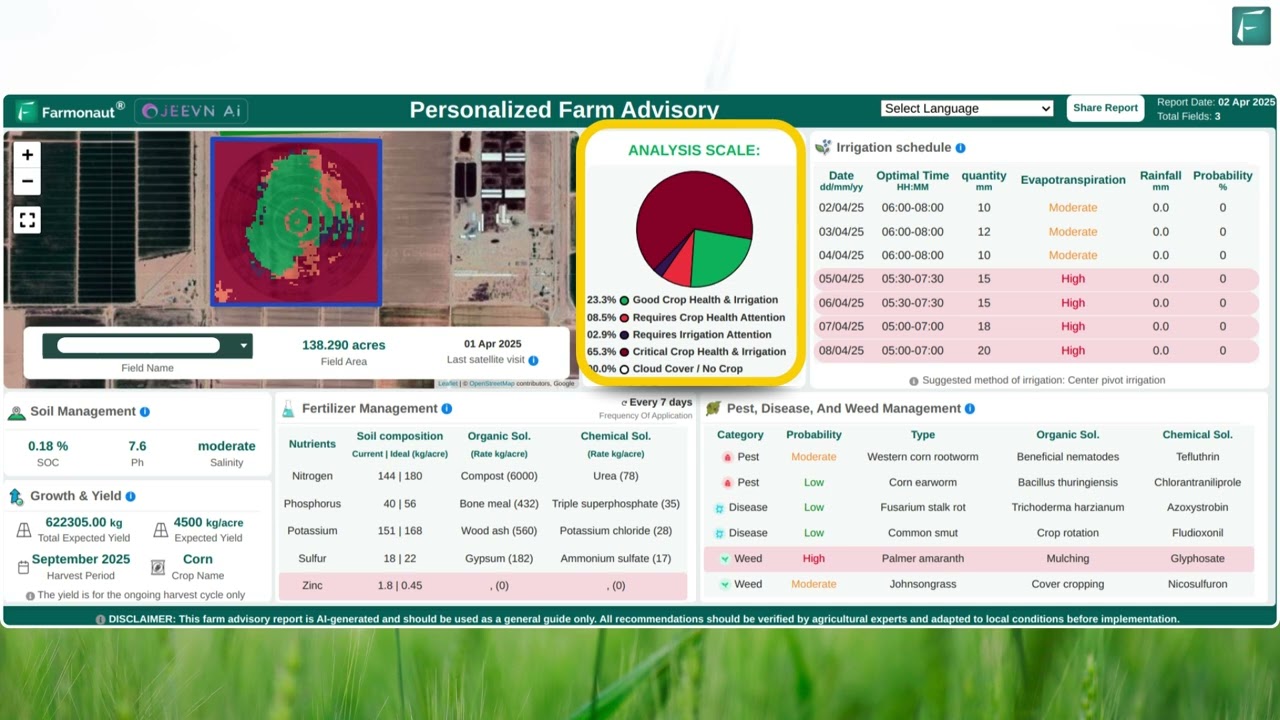
- Jeevn AI Advisory System provides location-specific insights, weather forecasts, and customized advisories to boost operational efficiency.
- Blockchain-based traceability for food safety and transparency across supply chains, essential for regulated arid lands exports.
- Environmental impact tracking, including carbon footprinting tools for sustainability reporting.
- Insurance support for arid lands greenhouses, enabling streamlined verification and faster claim settlements through data-driven risk profiles.
- Large-scale farm management solutions optimizing all aspects of operations—planning, execution, maintenance, resource tracking, and reporting—particularly crucial for commercial dryland greenhouse operators.
By merging automated greenhouse controls with satellite-derived data and AI decision support, Farmonaut empowers even smallholder greenhouse operators in arid zones to compete and thrive alongside industrial farms—reducing losses, enhancing productivity, and advancing the sustainability agenda.

Video Gallery: Watch AI, Automation & Smart Farming in Action
- Regenerative Agriculture 2025 ? Carbon Farming, Soil Health & Climate-Smart Solutions | Farmonaut
- How AI Drones Are Saving Farms & Millions in 2025 ? | Game-Changing AgriTech You Must See!
- AI Revolution in Farming: How Personalized Reports Are Changing Agriculture
- Farmonaut For Crop Area Estimation
- Farmonaut® Satellite Based Crop Health Monitoring
- Smart Farming Future : Precision Tech & AI: Boosting Harvests, Enhancing Sustainability
- JEEVN AI: The Future of Smart Farming with Satellite & AI Insights
- The Future of Farming: Satellites, AI, and Geotagging – Farmonaut’s Bold Vision!
FAQ: Arid Greenhouse Technologies & Insurance
Q1: What is an arid lands greenhouse, and how is it different from traditional greenhouses?
Arid lands greenhouses are specially engineered structures designed to optimize crop production in regions with extreme temperatures, low rainfall, and fragile soils. Unlike traditional greenhouses, these systems prioritize water conservation, utilize advanced insulation and materials, and heavily leverage automation and AI for environmental control and crop management.
Q2: What are the main benefits of automated greenhouse control in arid regions?
Automated greenhouse control ensures real-time adaptation to fluctuating weather, optimizes resource use (water, nutrients, energy), reduces human error, and enables the rapid detection and response to plant diseases and environmental risks—crucial for stable yields in challenging conditions.
Q3: How does AI help reduce greenhouse gas emissions and improve sustainability in greenhouses?
AI algorithms schedule energy-consuming processes for maximum efficiency, integrate renewable power sources, manage irrigation to reduce soil emissions, and help monitor and optimize all operational aspects for a smaller carbon footprint per kg of produce than open-field farming in arid lands.
Q4: Are greenhouses covered by insurance in 2025? If so, what is typically covered?
Yes, most arid region greenhouses are covered by specialized insurance products that include structural damages (from wind, dust, storms), automation system failures, crop losses from pests/diseases, and even water/energy supply interruptions. AI-powered parametric insurance models have also gained prominence for rapid, data-driven compensation.
How payouts are triggered and how AI speeds up loss assessment is covered in how parametric crop insurance works.
Q5: What is the 7-tree farm & greenhouse model, and why is it important for arid agriculture?
This model integrates greenhouse cultivation with carefully planned rows of drought-resistant trees. The trees create windbreaks, provide shade, bolster soil health, and enhance local biodiversity—together with AI/automation, this turns arid land into resilient, sustainable agricultural landscapes.
Q6: How can Farmonaut help greenhouse operators in arid regions?
We, at Farmonaut, offer remote, real-time monitoring of crop, soil, and environmental conditions—enabling growers to make data-driven decisions, minimize losses, and validate insurance or loan claims through affordable satellite and AI solutions. Our platform includes blockchain-based traceability and environmental impact tracking for compliance and market transparency.
Q7: How do these innovations affect food security in arid zones?
By enabling high-yield, resource-efficient production and reducing dependency on unpredictable weather, these technologies make stable, sustainable local food supplies possible in regions previously vulnerable to scarcity.
Conclusion: A Resilient, Data-Driven Future
Arid lands greenhouses have become the foundation for sustainable dryland agriculture—integrating AI-powered automation and innovative insurance models with nature-based solutions like the 7-tree farm & greenhouse system. These advanced technologies mitigate the challenges posed by harsh climates, empowering farmers, businesses, and governments in 2025 to optimize production, safeguard investments, and address climate change head-on.
As remote data platforms and precision controls become universal, any arid landscape—no matter how inhospitable—can be transformed into a resilient, productive food oasis. By embracing these advances, stakeholders are witnessing a transformative shift in how food is grown, harvested, insured, and brought to the world.
To explore how satellite-driven solutions can secure your arid zone farming ventures, try Farmonaut’s Apps or engage with our API (developer documentation) for next-generation greenhouse management, analytics, and insurance verification.
Farmonaut Subscriptions

 Farms Easy
 Rouge VC
 Yutz Automation
 AgroGreen Dynamics
 AgroRisk
 Oath Inc
 Reddane Farming
 Esri North East Africa
 Cresol
 Atur Kuliner
 MDCV UK
 Zerella Group
 Etech Consulting Madagascar
 Vestlandsforsking
 Delicio
 WB Dev
 Sama Premium
 Prochecker
 Tres Valles
 LACOS Geoinformation
 Magrifly
 LatConnect 60
 Blickwinkel
