

Artificial Intelligence for Agriculture Technology & Climate:
How AI is Advancing Precision Farming, Soil Health, and Resilient Agriculture
“AI-powered agriculture can increase crop yields by up to 30% through precision soil and climate analysis.”
Table of Contents
- Introduction
- The AI Transformation: Precision in Agriculture Technology and Climate Change
- The Role of Data, Sensors, and Remote Sensing in Modern Farming
- Optimizing Soil and Water Management with Artificial Intelligence
- Crop Health and Early Stress Detection: AI at the Frontline
- AI in Climate Adaptation and Risk Management for Resilient Agriculture
- Artificial Intelligence for Livestock and Supply Chain Efficiency
- Automation, Robotics, and Labor Efficiency: Future of Farm Work
- Integration, Governance, and Farmonaut’s Role in Enabling AI for Agriculture
- Comparative Impact Table: Traditional Methods vs. AI-Powered Agriculture
- Expert Callouts: Insights & Tips for Stakeholders
- Essential Bullet Points and Visual Lists
- Driving AI Adoption: Policy, Education, and Industry Drivers
- Accessing Farmonaut’s AI & Satellite Solutions
- Frequently Asked Questions
- Conclusion
Introduction: The New Era of Artificial Intelligence for Agriculture Technology and Climate Change
Artificial intelligence for agriculture technology and climate change is fundamentally transforming how we cultivate, manage, and secure our global food supply. From analyzing multi-terabyte datasets captured by satellites and drones, to automating field tasks and enabling real-time decision support, AI has emerged as the backbone of next-generation farming, forestry, and related sectors. With urgent resource constraints, shifting weather patterns, and rising climate risks, adopting AI-driven technologies is critical if we are to enhance soil health, boost productivity, and ensure farming remains climate-resilient for future generations.
This comprehensive exploration covers the end-to-end impact of artificial intelligence in agriculture: from improving precision in soil monitoring, optimizing inputs and resource use, to supporting adaptation and sustainability. For those seeking a deep dive, downloadable resources such as our artificial intelligence in agriculture PDF and visually-rich artificial intelligence in agriculture PPT are recommended for further reading and presentations.
The AI Transformation: Precision in Agriculture Technology and Climate Change
At the core of artificial intelligence for agriculture innovation is the principle of precision agriculture—using advanced data, sensors, remote-sensing via drones, and satellites along with machine learning to drive smarter decisions tailored to each parcel of land. Gone are the days of uniform input applications and reactive farming practices.
Today’s AI-integrated systems support a move towards spatially variable management that maximizes yields, conserves resources, and reduces environmental footprints:
- Precision Crop Monitoring: Drones, satellites, and in-field sensors gather high-resolution data on soil moisture, nutrient status, and crop health, updating in real-time.
- Data-driven Analysis: Machine learning models analyze vast datasets, predict yields, detect threats, and suggest targeted interventions—often before visual symptoms manifest.
- Efficient Resource Management: Inputs like water, fertilizers, and chemicals are optimized both spatially and temporally, minimizing waste and cost.
- Environmental Stewardship: AI reduces unnecessary chemical applications, lowers runoff, and aligns agricultural practices with sustainability and climate adaptation goals.
By addressing the urgency of shifting climate patterns and resource constraints—without relying on outdated methods—AI is ushering in a resilient and sustainable era in global agriculture.

The Role of Data, Sensors, Drones, and Remote Sensing in Modern Agriculture
One of the defining features of artificial intelligence in precision agriculture is continuous, high-resolution monitoring through a fusion of data sources:
- Soil and Crop Sensors: Measure moisture, salinity, temperature, and nutrient status directly in the field.
- Drones and Ground Cameras: Conduct quick, extensive image analysis for crop stress, detecting pests, disease outbreaks, leaf spot, nutrient deficiencies, and growth anomalies.
- Satellites (Multispectral and Hyperspectral): Enable landscape-scale agriculture monitoring—mapping microclimates, soil health, and even tracking changes in biomass, evapotranspiration, and crop productivity over entire seasons.
- Weather Stations & IoT: Collect robust data for forecasting weather, precipitation regimes, and potential drought or flooding.
These data streams empower AI systems to detect early stress signals, optimize intervention schedules, and support farmers in making proactive, climate-resilient decisions.

Optimizing Soil and Water Management with Artificial Intelligence
Soil and water management represent two of the most resource- and climate-sensitive aspects of agriculture. By combining multispectral data, machine learning models, and real-time sensing, AI radically improves efficiency and sustainability in both rain-fed and irrigated systems:
- Real-Time Soil Sensing: AI analyzes sensor and satellite readings to assess soil moisture, organic content, and compaction, improving the precision of inputs like fertilizer and irrigation water.
- Weather-Fed Forecasting: Robust AI-enabled models predict rainfall and shift irrigation schedules dynamically—enabling deficit irrigation and limiting the leaching of nutrients.
- Optimized Irrigation Control: Automated valves and pumps, guided by real-time AI analytics, harmonize water use with crop demand. This minimizes waste under erratic precipitation and reduces production costs.
The results are transformative: higher water use efficiency, reduced risk of drought or runoff, and improved long-term soil health.

Crop Health and Early Stress Detection: AI at the Frontline
AI’s greatest advantage lies in enabling timely, site-specific interventions—critical for reducing input costs, improving crop yields, and meeting environmental standards. Here’s how:
- Automated Image Analysis: Using drones and ground cameras, AI detects subtle indicators of disease, pest infestations, or nutritional deficiencies weeks before visible damage, supporting early-stage interventions.
- Spectral Analytics: With multispectral and hyperspectral satellite imagery, AI integrates these data with agronomic records to predict stress and optimize fertilizer or pesticide application, minimizing chemical use and environmental contamination.
- Targeted Remediation: Instead of blanket chemical applications, AI enables site-specific spraying or nutrition, ensuring precision and reducing waste.

AI in Climate Adaptation and Risk Management for Resilient Agriculture
As climate change intensifies, extreme events and unpredictable weather patterns demand smarter, more adaptive farming systems. AI delivers essential tools for farmers, agronomists, and policymakers:
- Integrating Climate Projections: AI-driven simulations use both past production data and future climate projections to model scenarios, optimize planting dates, and recommend resilient crop cultivars.
- Forest and Silviculture Management: AI supports forest health monitoring, pest outbreak prediction, and adaptive thinning/reforestation—safeguarding carbon sequestration and key ecosystem services.
- Insurance and Financial Security: By providing objective, satellite-verified insights, AI enables better access to crop loan and insurance solutions (details here).
AI–powered climate analytics align directly with the goals of sustainable agriculture and long-term farm security.
“Over 60% of farmers using AI report improved soil health and greater resilience to climate variability.”

Artificial Intelligence for Livestock, Supply Chain, and Market Resilience
Artificial intelligence in agriculture isn’t limited to crops. Livestock management and post-harvest supply chains benefit from AI systems through:
- Sensor Networks: Wearable and environmental sensors continuously monitor health, nutrition, feed intake, and stress indicators in cattle and other livestock.
- Predictive Analytics: AI models anticipate disease outbreaks, heat stress, and feed requirements, enabling proactive interventions—reducing losses and improving efficiency.
- Supply Chain Optimization: AI-powered analytics determine optimal harvest schedules, monitor post-harvest storage, and align production with market demand, reducing spoilage and climate-induced price volatility.
- Blockchain Traceability: For complete supply chain transparency, trace agricultural and food product origins using Farmonaut’s blockchain-based traceability.
These tools help ensure that food systems remain secure and responsive under changing economic and climatic pressures.
Automation, Robotics, and Labor Efficiency: The Next Leap in Agriculture Technology
With increasing labor shortages and the urgency to cut operating costs, AI is revolutionizing farm work through:
- Autonomous Machinery: Self-driving tractors, automated weeding robots, and smart harvesters equipped with computer vision, depth sensing, and reinforcement learning—lowering labor dependency and chemical use.
- Precise Task Execution: Robots conduct delicate field tasks (e.g., fruit-picking) with minimal soil disturbance, helping maintain biodiversity and soil structure.
- Fleet Management Technologies: Track equipment usage, reduce fuel, and optimize logistics using solutions like Farmonaut’s fleet management platform.
Integration, Governance, and Farmonaut’s Role in Enabling AI for Agriculture
Data integration and governance are essential for successful AI adoption in agriculture. Here’s what’s required:
- High-Quality Data Curation: Reliable, interoperable data from satellites, sensors, and machinery for robust AI analytics.
- Privacy and Security: Protecting farmer and enterprise data with state-of-the-art blockchain traceability and secure interfaces.
- User-Friendliness: Creating dashboards and advisories that are accessible to both large agribusinesses and smallholders.
- Capacity Building: Training agronomists, extension workers, and farm staff in AI literacy is critical to translating model insights into effective field practices.
As a satellite technology leader, Farmonaut provides a suite of accessible AI-powered solutions for agriculture, infrastructure, and resource management:
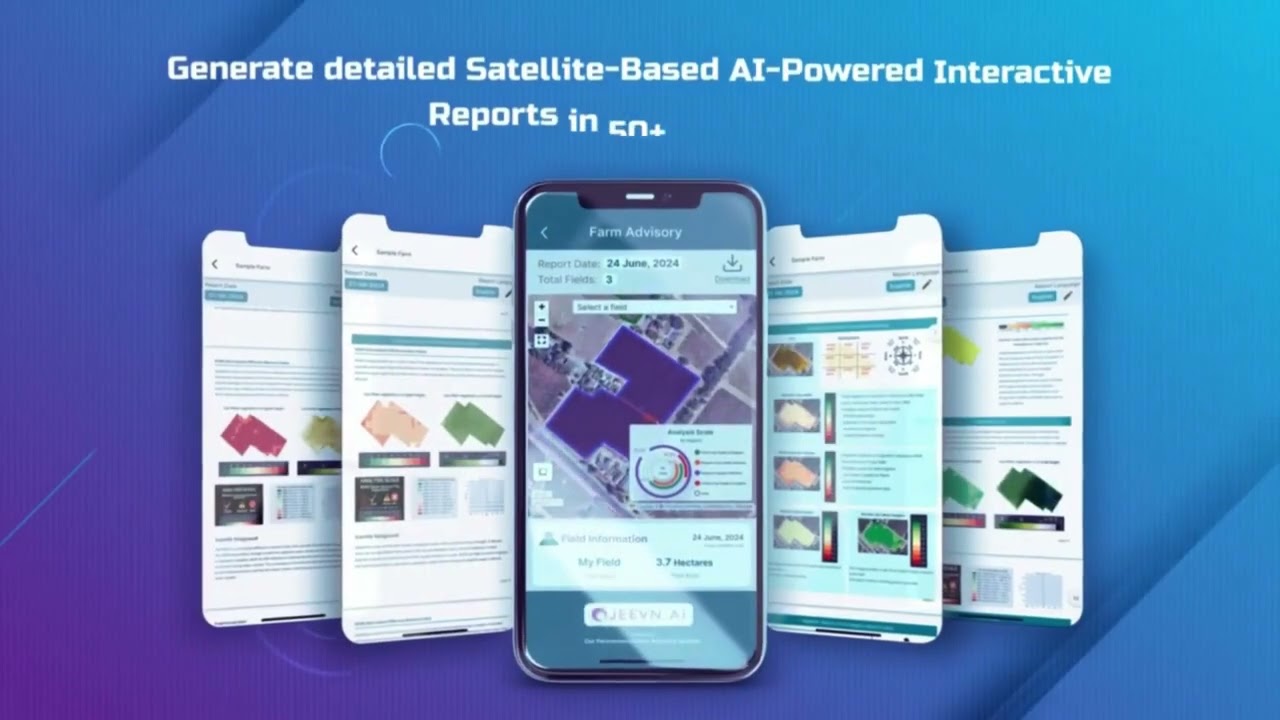
- Multi-Platform Access: Our affordable, subscription-based platform is available via Android, iOS, web/browser, and custom API integration.
- Comprehensive Monitoring: We deliver real-time advisory, blockchain traceability, and environmental impact tracking for carbon footprinting, helping farmers and businesses adopt sustainable practices and demonstrate progress to stakeholders.
- Fleet, Forest, and Crop Management: We offer fleet tracking and manage large-scale farm operations with modules like Agro Admin App and Crop Plantation & Forest Advisory.

Comparative Impact Table: Traditional Methods vs. AI-Powered Agriculture
The table below highlights the empowerment brought by artificial intelligence for agriculture technology and climate change compared to traditional farming methods. This evidence-driven comparison focuses on soil health, precision, and climate-resilient outputs.
| Aspect | Traditional Methods | AI-Driven Methods | Estimated Improvement with AI |
|---|---|---|---|
| Crop Monitoring | Visual inspection; infrequent manual sampling; limited by observer expertise | High-resolution, multi-spectral remote sensing via drones & satellites; AI analytics for early stress detection | Up to 30% increase in early issue detection; 10–20% yield boost |
| Irrigation Management | Fixed schedules; manual checks; generic water application | AI-optimized, real-time irrigation based on soil moisture and climate data | 20–40% reduction in water usage |
| Yield Prediction | Manual records, historical trends; low accuracy | AI/machine learning models leveraging big data and real-time crop status | 15–35% improvement in forecast accuracy |
| Pest & Disease Management | Routine, blanket pesticide use; late detection | Automated detection from drones/images; targeted site-specific interventions by AI | 30–50% reduction in chemical use; early intervention reduces crop loss by 15–25% |
| Resource Usage (Fertilizer, Labor) | Uniform application; high labor cost; risk of over-/under-application | AI-prescribed, spatially-variable rates; efficient labor allocation via robotics | Minimizes fertilizer wastage by 20–35%; labor costs cut by 20–40% |
| Climate Risk Resilience | Reactive; dependent on limited forecasts and experience | AI-enabled scenario planning, crop adaptation, and insurance verification | Improved resilience; 10–25% reduction in climate-related losses |
Expert Callouts: Insights & Tips for Stakeholders
Key Insight
AI-driven precision farming increases both yields and sustainability by ensuring each area of the field receives exactly what it needs, when it needs it—nothing more, nothing less.
Pro Tip
Leverage multispectral and hyperspectral satellite imagery for advanced crop monitoring. Early detection of crop stress can reduce chemical applications by up to 50%!
Common Mistake
Ignoring data integration from diverse sources leads to less accurate AI recommendations—always aim for unified field, satellite, and sensor data onboarding.
Investor Note
AI adoption in agriculture is projected to be a multi-billion dollar industry by 2028, with highest growth in precision ag, automation, and climate analytics.
Sustainability Highlight
AI-powered carbon footprint monitoring tools help farmers meet climate targets and access green finance by verifying and reporting emission reductions transparently. Explore our Carbon Footprinting Service.
Essential Bullet Points and Visual Lists for AI in Agriculture Technology & Climate
- ✔ Precision Agriculture: AI enables real-time, data-driven decisions for optimal crop management.
- 📊 Data Analytics: Machine learning models analyze vast multispectral datasets to predict weather risks, yield, and stress.
- ⚠ Risk Mitigation: Early detection of pests and diseases reduces dependency on blanket chemical applications.
- 💧 Water Security: AI-driven irrigation cuts water usage and enhances resilience in shifting climate and precipitation regimes.
- 🌿 Sustainable Stewardship: Site-specific soil monitoring and input management lower environmental footprints and help restore soil health.
Visual List: How AI Enables Sustainable Agriculture Practices
- AI collects and merges satellite, drone, and ground sensor data in the field for all-in-one monitoring.
- Machine learning models analyze datasets to predict yields and provide targeted interventions for each microclimate.
- Automated advisories help farmers shift away from uniform input application towards spatially variable management—minimizing waste and costs.
- AI-powered robots and smart machines perform field labor with precision, reducing soil disturbance and labor requirements.
- Agricultural stakeholders benefit from transparent reporting and carbon tracking for climate adaptation progress.
Visual List: Key Benefits of Artificial Intelligence in Precision Agriculture
- Enables proactive decisions with early stress prediction and yield forecasts
- Reduces inputs (water, chemical, fertilizer) and associated costs
- Improves resilience to climate extremes and market volatility
- Supports sustainability through reduced environmental impact
- Facilitates traceability and transparent supply chains
Driving AI Adoption: Policy, Education, and Industry Support for Agricultural Transformation
The wide-scale success of artificial intelligence for agriculture technology and climate change depends on several enabling drivers:
- Access to Affordable Technologies: Lower cost sensors, drones, and satellite services empower adoption—from smallholders to large enterprises. (Try our Crop Plantation & Forest Advisory platform.)
- Open Data and API Integration: Farmonaut’s API and developer docs help organizations embed AI insights into their own management systems.
- Demonstration Farms: Showcase sites where measurable climate-resilience and sustainability gains have been achieved with AI.
- Performance Metrics Aligned with Climate Goals: Monitor resource efficiency, emissions, soil health, and yield stability to provide tangible ROI for stakeholders.
- Ongoing Training and Education: Building AI literacy among farmers and advisors is essential to maximize the benefits of these complex technologies.
A collaborative approach grounded in data stewardship, user-friendly technology, and shared climate goals will accelerate the adoption of sustainable farming practices worldwide.
Accessing Farmonaut’s AI & Satellite Solutions for Agriculture Technology & Climate Change
To ensure AI and satellite-powered agriculture is available globally, Farmonaut offers a subscription-based platform accessible on web, Android, iOS, and via API. With focus on affordability and modularity, our users—from farmers to large agribusinesses—can easily scale up monitoring and advisory as their needs grow.



Explore our Agro Admin App for large scale farm management and fleet management solutions for logistical optimization.
For developers and system integrators, full documentation is available in our API Developer Docs.
Subscription Plans:
Frequently Asked Questions (FAQ) on Artificial Intelligence in Agriculture Technology & Climate Change
What is artificial intelligence in precision agriculture?
Artificial intelligence in precision agriculture refers to using AI technologies—such as machine learning, data analytics, and automation—to optimize every step of farming. This includes crop monitoring, irrigation, pest management, yield prediction, and sustainable resource management, all tailored by high-resolution field data.
How do AI-driven systems improve soil health?
AI systems analyze sensor and satellite data to assess real-time soil moisture, nutrient status, and organic matter. They then recommend precise interventions—adjusting irrigation, fertilizer, and tillage—to avoid under- or over-application. This improves soil structure and long-term fertility while minimizing environmental impact.
Can AI help with climate change adaptation in farming?
Yes. AI enables scenario planning by integrating climate models with historical and real-time farm data. This supports optimal planting dates, selection of resilient crop varieties, adaptive irrigation, and insurance verification for climate risk, increasing resilience to unpredictable weather events.
How do farmers access Farmonaut’s AI technologies?
Farmonaut provides satellite and AI-driven monitoring via web/browser, Android, iOS apps, and API integration. The platform offers real-time crop and resource advisories, blockchain traceability, fleet management, and environmental monitoring on a subscription basis.
Is Farmonaut an online marketplace or farm input supplier?
No. Farmonaut is a satellite technology company focusing on delivering multispectral monitoring, AI-powered advisories, and resource management tools for agriculture, mining, and infrastructure. We do not sell farm inputs or machinery.
Conclusion: A New Future for Agriculture Technology & Climate Resilience
Harnessing artificial intelligence for agriculture technology and climate change is not just about adopting the latest technology—it is about enabling intelligent resource stewardship, championing targeted interventions, and constructing resilient, sustainable farming systems for an era of ecological uncertainty.
Through high-resolution monitoring, predictive models, and proactive solutions—supported by platforms like Farmonaut—agriculture worldwide can become data-driven, climate-adaptive, and aligned with the demands of both productivity and sustainability. AI is the key to transforming our approach to food security, environmental stewardship, and rural livelihoods in a rapidly changing world.
Let’s embrace this shift and empower farms, supply chains, and entire landscapes to thrive—no matter what the climate brings next.

 Godrej Agrovet
 Hayleys Agriculture
 Linx Agritech
 Adinet
 Save Your Soils
 GalaxEye Space
 Grandstream Algérie
 XOS Realty
 Geospatial Lab Africa
 Agro La Gándara
 HIPSAC
 ZOL Zimbabwe
 Juligerm
 AdBio
AdBio MISE Maroc
 NWNS
NWNS Red August Group
 Farm Inc
 WeMe Global
 Agrotoken
 Blue BearX
 Insignito
 DnCubed
 Indosistim Teknologi
 Liquify Digital
 CU Foods
 BeyondTech Global
 Rouge VC
 AgroRisk
 Oath Inc
 Esri North East Africa
 MDCV UK
 Etech Consulting Madagascar
 Vestlandsforsking
 WB Dev
 Sama Premium
 Tres Valles
 Blickwinkel
 Agricultural Credit Policy Council
 eKGIS
eKGIS Mostas Tech
 Andex
Andex Deluxe Conseil
 WICO
WICO Chimera Innovation
 SkyHarvest
 Teledarbas
 Exurbia Geospatial
 FieldZero
