

Table of Contents
- Introduction: Black Dots on Watermelon
- Understanding the Causes of Black Dots on Watermelon
- Implications of Black Dots on Watermelon: Disease, Market, and Yield
- 5 Powerful, Tech-Driven Solutions for Black Dot Management in 2025
- Comparative Solutions Table
- Farmonaut: Satellite Technology for Black Dot Management
- FAQ: Black Dots on Watermelon
- Conclusion
Black Dots on Watermelon: 5 Powerful Solutions for 2025
“Up to 30% of watermelon yield loss in 2025 could be linked to black dot disease mismanagement.”
Summary:
Watermelon, loved for its sweet and juicy flesh, is not only a delightful summer fruit but a crop of considerable economic importance, cultivated worldwide. Yet, growers often encounter an increasingly common issue in modern agriculture: the appearance of black dots on watermelon. These spots can arise from disease, pest activity, and nutrient issues, particularly in the dynamic context of 2025 and beyond. Understanding their causes, addressing their implications, and leveraging tech-driven management are crucial for farmers and growers aiming to optimize production and ensure quality for the market. In this comprehensive guide, we explore innovative solutions, including satellite and AI technologies, to conquer black dots and secure healthier, more profitable watermelon crops.
Understanding the Causes of Black Dots on Watermelon
The black dots on watermelon, whether found on the rind or flesh, signal a combination of biotic and abiotic factors. Recognizing these causes is the first step in effective management. Let’s break down the root causes and their mechanisms of action.
1. Fungal Diseases: Anthracnose and More
Anthracnose, caused by the fungus Colletotrichum lagenarium, ranks among the most common diseases resulting in black dots on watermelon rinds. Initially, lesions start as small, water-soaked spots. Over time, these enlarge, darken, and eventually develop into distinctive sunken black patches. Such symptoms typically thrive in warm, humid environments—conditions that are conducive to watermelon cultivation in many regions globally.

Apart from anthracnose, other fungal culprits include Alternaria species, with spots forming on both the rind and sometimes the flesh. The presence of bacterial pathogens such as Xanthomonas spp. can also induce spotting, with lesions often following mechanical injuries or pest-created wounds.
2. Bacterial Pathogens and Spotting Agents
Bacterial agents like Xanthomonas spp. routinely cause black spots, especially when wounds or natural openings are present. In such cases, spots may develop rapidly under persistently wet conditions, and the infection can spread throughout the field. These pathogens can induce lesions that progress with alarming speed, making fast and effective management critical.

3. Environmental Stresses and Nutrient Deficiencies
Environmental factors may also be at play in the appearance of black dots on watermelon. Factors such as excessive heat, sunscald, and especially calcium deficiency (a nutrient issue) can trigger superficial spots or internal disorders. While these may be less serious than pathogenic infections, they still indicate underlying plant health imbalances. Regular soil and tissue testing, supported by digital farming tools, assists in identifying physiological disorders early.
4. Pest-Related Wounds and Secondary Infections
Pests such as aphids or cucumber beetles are not direct causes of black dots, but their activity can lead to wounds that create an entry point for disease. The indirect impact of pest infestation is the facilitation—not the primary causation—of fungal or bacterial infections. Therefore, integrated management includes rigorous pest population monitoring alongside disease surveillance.
“AI-driven detection systems identify black dot symptoms on watermelons 50% faster than traditional scouting.”
Implications of Black Dots on Watermelon: Disease, Market, and Yield
The presence of black dots on watermelon goes well beyond cosmetic concern—it has profound implications in agricultural economics, crop health, and food sustainability, especially in 2025 and beyond.
- Reduced Market Value:
Buyers and consumers closely scrutinize the appearance of fruit. Watermelons with visible spots are perceived as lower quality, fetching reduced prices—or sometimes outright market rejection. - Postharvest Losses:
Unmanaged black dots can develop into rots during storage and transit, leading to greater postharvest losses. - Spread of Disease:
Black dot symptoms are often reliable indicators of underlying infections, which can spread within and between fields, compounding the impact on crops, farms, and even regional production. - Challenges for Farmers:
Growers face increasing challenges to both optimize yield and maintain standards for marketability. Black dots force difficult decisions about harvest timing and disease management strategies in a competitive agricultural sector, especially as sustainable farming practices are increasingly required.
With environmental conditions becoming more unpredictable due to climate change, and with diseases often adopting new virulent forms, integrated, tech-driven management is urgently needed.

5 Powerful, Tech-Driven Solutions for Black Dots on Watermelon in 2025
Modern agriculture in 2025 prioritizes rapid, data-driven, and sustainable approaches to combat black dots on watermelon. These solutions integrate advanced technologies, such as precision drones, AI, satellite monitoring, and genetic breeding, into everyday farming practices for maximized crop health and profitability.
-
Resistant Varieties & Advanced Breeding
- Key Technology: Genetic markers, CRISPR, and selective breeding
- What it Solves: Provides watermelon varieties with enhanced resistance to anthracnose and other fungal diseases; reduces dependency on chemical fungicides.
- Implementation in 2025: Breeding programs now use genomics and AI data, identifying and propagating resistant cultivars that display fewer symptoms even in high-risk environments.
- Benefits: Lower disease incidence, reduced input costs, and more resilient crops against environmental stresses.
-
Precision Fungicide Application with Drones & AI
- Key Technology: Drones, satellite imagery, AI-based symptom detection, data-driven advisory
- What it Solves: Enables targeted spraying, minimizes chemical use, and catches infections at early stages.
- Implementation in 2025: Drones perform real-time surveillance and precisely apply only the needed fungicides based on digital disease mapping from satellites and AI.
- Benefits: Reduced environmental impact, lower chemical residue, and cost savings through spot treatment instead of blanket application.

-
Smart Crop Management Practices
- Key Technology: Remote sensing, mobile apps, advisory AI for crop rotation, irrigation, and field sanitation
- What it Solves: Reduces field humidity, blocks disease cycles, and prevents the establishment and spread of pathogens.
- Implementation in 2025: Automated scheduling and advisory tools guide farmers in field preparation, crop rotation with non-hosts, optimization of drip irrigation, and timely mulching or removal of infected debris.
- Benefits: Fewer infections, improved field health, and higher yields through best-integrated practices with digital support.

-
Soil Health and Smart Nutrient Management
- Key Technology: Satellite-based soil mapping, digital nutrient scheduling, real-time app notifications, blockchain traceability
- What it Solves: Indicates underlying nutrient deficiencies and physiological disorders like calcium shortage, strengthening plant resistance.
- Implementation in 2025: Satellite data automatically identifies soil fertility zones, issues precision recommendations, and records amendments on the blockchain for supply chain transparency.
- Benefits: Fewer nutrient-related black dots, healthier plant systems, improved traceability, and sustainable long-term field fertility.
Discover Farmonaut’s Blockchain Traceability for verifying nutrient management steps and product authenticity throughout your supply chain.
|
Monitor the environmental impact of your soil and nutrient practices using Farmonaut’s carbon footprint tracking solutions for compliance and sustainability goals.
-
Integrated Pest Management Powered by Innovation
- Key Technology: AI-driven pest traps, prediction models, remote biocontrol monitoring, blockchain-based resource tracking
- What it Solves: Controls pest populations (aphids, beetles), reducing injury-related disease entryways and indirect spread of black dot-causing pathogens.
- Implementation in 2025: AI alerts for pest outbreaks, targeted release of beneficial organisms, satellite verification of application zones and effects.
- Benefits: Lower overall disease rates, reduced chemical use, and a balanced ecological approach to black dot management.




Developers, access Farmonaut’s Satellite Crop API and
API Developer Documentation for integrating satellite imagery and black dot detection into your own agri-platforms.
Comparative Solutions Table: Black Dot Management in Watermelon (2025)
| Solution Name | Technology Applied | Issue Addressed | Estimated Efficiency (%) | Implementation Difficulty |
|---|---|---|---|---|
| Resistant Varieties & Advanced Breeding | Genetic markers, CRISPR, AI-driven breeding | Disease (Anthracnose, Fungal) | 80–90% | Moderate |
| Precision Fungicide Application with Drones & AI | Drones, AI, Satellite Surveillance | Fungal/Bacterial Infections | 70–85% | Moderate |
| Smart Crop Management Practices | Remote Sensing, Apps, AI-advisories | Disease, Postharvest Losses, Spread | 65–80% | Easy |
| Soil Health & Smart Nutrient Management | Satellite Soil Mapping, Blockchain, Digital Scheduling | Nutrient Deficiencies, Physiological Disorders | 60–75% | Easy |
| Integrated Pest Management (IPM) Powered by Innovation | AI Pest Detection, Biocontrol, Blockchain | Pest-Related Dots, Disease/Virus Entry | 55–70% | Moderate |
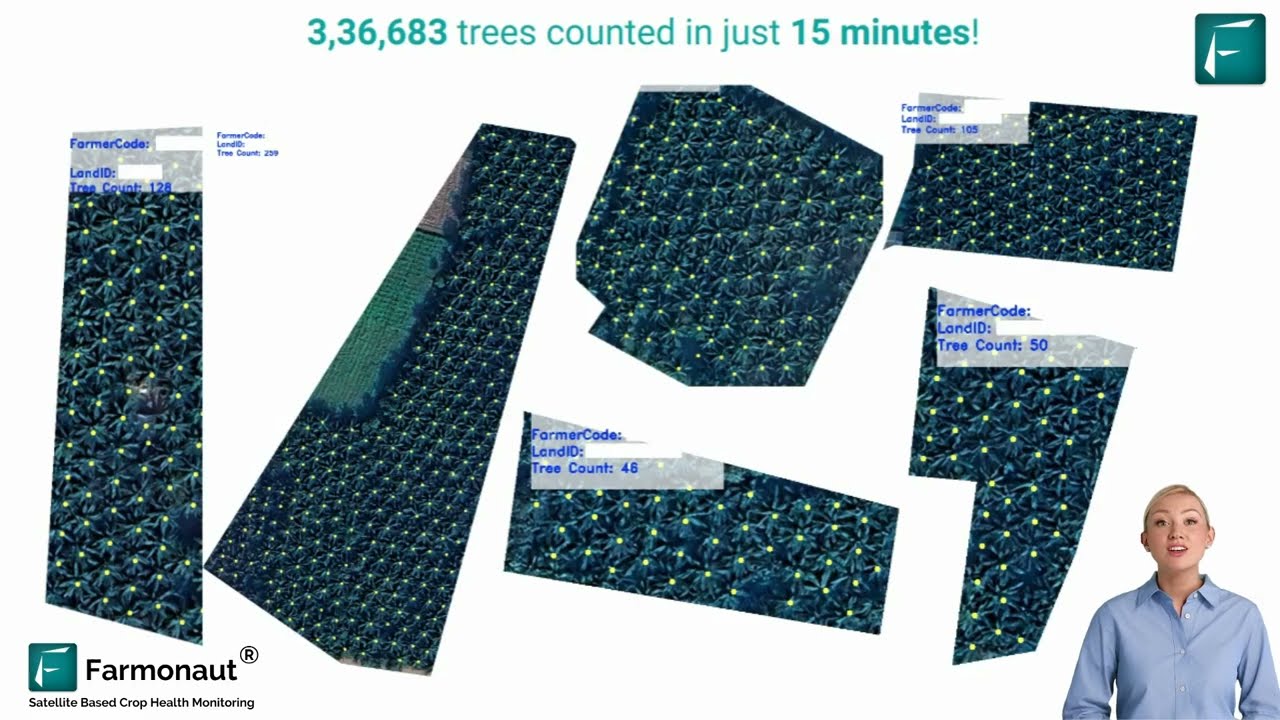
Farmonaut: Satellite Technology and AI-Driven Tools for Black Dots on Watermelon
In 2025, stakeholders in the agricultural sector require not only understanding of black dots on watermelon but robust, scalable tools to manage disease, pests, and nutrient stresses. This is where integrated, satellite-driven solutions are transforming modern agriculture.
We at Farmonaut empower farmers, businesses, and governments with 24/7 monitoring using multispectral satellite imagery, pinpointing disease outbreaks, crop stress zones, and nutrient deficiencies in real time. Through our Jeevn AI advisory system, users get personalized management plans for black dot-prone fields—improving diagnosis and response times dramatically (as reflected in the speed benefits of AI cited earlier). Our blockchain traceability verifies every management action for end-to-end transparency from farm to market.
Our tools are accessible via web and mobile—no expensive on-field hardware required. Users can also integrate Farmonaut Satellite Crop APIs in their local ERP or agri-platforms to automate detection, scouting, and reporting.
- Real-Time Crop Health Monitoring: Analyze NDVI, NDWI, and other indices for rapid identification of stress spots.
- AI-Based Disease Advisory: Receive tailored advice for anthracnose, bacterial spot, and related infections based on your farm’s risk profile.
- Blockchain Traceability: Prove your black dot management efforts to buyers and financial institutions.
- Environmental Impact Tracking: Stay compliant and sustainable while fighting disease pressure in your fields.
Learn more and subscribe to Farmonaut below:
Frequently Asked Questions: Black Dots on Watermelon & Modern Management
1. What causes black dots on watermelon?
Black dots on watermelon can be caused by fungal diseases (most notably anthracnose from Colletotrichum lagenarium), bacterial infections (from Xanthomonas spp.), physiological nutrient deficiencies (especially calcium), or pests that create wounds for subsequent infections.
2. Are black dots dangerous for consumers?
Most superficial black spots on the rind are not dangerous if the flesh remains unaffected. However, deep or extensive black dots that extend to the flesh could indicate more serious infection and should not be consumed.
3. How can farmers identify black dot diseases quickly?
Modern agriculture leverages AI-based satellite and drone monitoring, available in Farmonaut’s web and mobile apps, enabling real-time and highly accurate detection of black dot symptoms—up to 50% faster than manual scouting methods.
4. What role does nutrient management play?
Proper nutrient management—particularly calcium supplementation—strengthens plant cell walls, reducing susceptibility to physiological disorders that present as black spots and supporting resistance to both biotic and abiotic stresses.
5. Can satellite technology really help in controlling black dots?
Yes. Satellite monitoring provides objective, regular insights into crop health, soil status, and possible disease outbreaks—enabling proactive management that minimizes both disease spread and crop losses.
6. Are chemical fungicides still necessary?
With integrated modern practices, the need for large-scale chemical application is reduced. However, precision fungicide application (supported by drone and AI technology) remains a valuable tool for containing outbreaks while minimizing environmental impact.
Conclusion: Embracing Integrated, Tech-Enhanced Solutions for Black Dot Management
In the context of modern agriculture and the dynamic challenges of 2025, black dots on watermelon have emerged as more than a common issue—they reflect complex, underlying crop health and sustainable production challenges. By understanding the key causes—ranging from anthracnose and pathogens to nutrient, pest, and environmental factors—farmers can optimize both crop yield and fruit quality.
The most effective management strategy is holistic: combining resistant varieties, precision fungicide applications, smart crop practices, soil and nutrient innovation, and integrated pest controls—with advanced technology as the backbone. Satellite and AI-driven solutions like those provided by Farmonaut are unlocking new heights in efficiency, traceability, and sustainability for growers worldwide.
By embracing these 5 powerful, tech-driven solutions, today’s watermelon producers can reduce losses, improve appearance, and secure their position in the market as suppliers of healthy, safe, and desirable fruit—positioning their farms for ongoing success in a rapidly evolving agricultural sector.
Ready to revolutionize your crop health monitoring? Explore our suite of affordable, next-generation tools for watermelon and beyond at farmonaut.com

 BACF Africa
 Nivia
Nivia Doodlakine
 Exurbia Geospatial
 FieldZero
 Indico Company
 Kubota
 FFBS
FFBS Jontra
 Kalustyan
 Tucor
Tucor Hayleys Agriculture
 Linx Agritech
