

Enhancing Precision Agriculture: Crop Yield Prediction Review for 2025 & Beyond
“Machine learning models can improve crop yield prediction accuracy by up to 30% compared to traditional methods.”
Introduction: The 2025 Context for Precision Agriculture
Enhancing precision agriculture: a comprehensive review is more relevant than ever in 2025 as farming systems globally are transformed through digital innovation, machine learning, IoT (Internet of Things), and advanced analytics. The intersection of crop yield prediction in agriculture: a comprehensive review and sustainability demands has led to a revolution in resource management, precision technologies, and climate-resilient methodologies.
Modern agriculture in 2025 is driven by three critical forces: global food security, climate change, and the need to optimize resources and reduce environmental impact. In this detailed review, we will delve into the technological foundations, advances in prediction models, the role of remote sensing and the IoT, and the importance of actionable data. We’ll incorporate expert insights and accessible technologies—like those offered by Farmonaut—to provide a forward-looking perspective relevant for all stakeholders.



Technological Foundations: Devices, Data & Connectivity
At the core of precision agriculture is the integration of advanced data collection mechanisms. The ecosystem comprises diverse sources including:
- Satellite imagery (multispectral and hyperspectral for high-resolution vegetation analysis)
- Drones for field-level crop imaging
- Ground sensors for real-time soil moisture, nutrient levels, and microclimate mapping
- Weather stations for localized meteorological tracking
- IoT devices for continuous, seamless data transmission to the cloud and centralized platforms
The deployment of 5G connectivity in 2025 farms enables low-latency communication and supports the dynamic needs of modern agriculture environments. Enhanced connectivity means information flows instantly from field sensors to cloud-based analytical engines, allowing for timely interventions across geographically dispersed zones and diverse environments.

Advances in Crop Yield Prediction Models
Yield prediction stands as a pivotal component for farmers and the entire agricultural supply chain. Reliable forecasts help optimize resource allocation, inform financial planning, mitigate risks, and streamline supply chains—fundamental in addressing global food demand and ensuring sustainability.
Traditional crop yield prediction models primarily used empirical growth stages and historical weather data. However, these methods struggled with adapting to the complexities of climate change and rapidly fluctuating growing conditions.
By 2025, AI and machine learning now dominate yield forecasting using vast datasets that integrate soil data, real-time weather trends, remote imagery, and farming management practices. This shift allows for:
- Nonlinear modeling of complex growth and climatic interactions
- Integration of phenological and genotype-specific data to increase prediction accuracy for diverse crops and zones
- AI crop simulation models that reduce uncertainty caused by unpredictable environmental changes
Cutting-edge algorithms in 2025 include Random Forests, Convolutional Neural Networks (CNNs), and Long Short-Term Memory (LSTM) networks. Learning from multilayered inputs, these algorithms deliver significantly higher prediction accuracy when compared to classical approaches.
Crop Yield Prediction in Agriculture: A Comprehensive Review of Model Types and Their Impact
- Deterministic Models: Rely on fixed variables such as typical weather patterns and defined growth stages—simple but lack adaptability to climate variability.
- Stochastic Models: Use probability distributions to reflect uncertainty and variability in climate and resource conditions, offering more nuanced risk assessment.
- AI-Driven Predictive Models: Leverage machine and deep learning to model complex, nonlinear relationships—critical for timely predictions across regions and crops.
The integration of AI with crop-specific environmental impact monitoring (see carbon footprinting product) further empowers farmers to adapt, mitigate risks, and implement smarter strategies within modern farming domains.

Remote Sensing, IoT, and Smart Monitoring
Remote sensing technologies have emerged as a transformative approach in precision agriculture by enabling detailed monitoring of crop health across large and small farms. Multispectral and hyperspectral imaging from satellites, integrated with drones and sensors, allow for:
- Early detection of crop stress (drought, pest infestations, nutrient deficiency)
- Tracking of vegetation growth stages for yield prediction
- Identification of spatial variations in soil moisture and nutrient status
- Real-time pest and disease monitoring to facilitate timely interventions
The **deployment of IoT devices** on farms, including ground-based sensors and weather stations, delivers a continuous, detailed stream of information. Integrated platforms aggregate this data, which can then be analyzed centrally or at the edge to allow actionable recommendations.
Learn how continuous monitoring via AI and remote sensing is revolutionizing agricultural productivity in the following in-depth video:
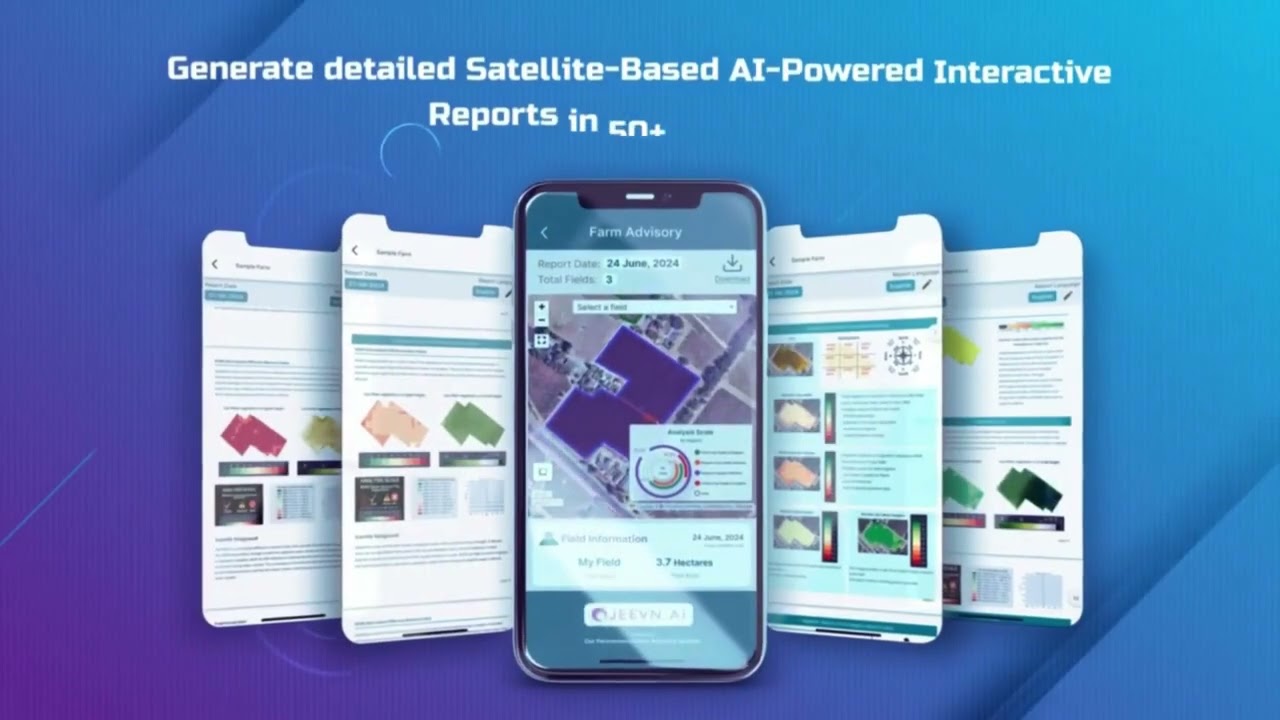
“Over 60% of precision agriculture systems now integrate real-time data analytics for resource management and yield forecasting.”
Satellite Imagery & AI: Detailed Monitoring and Analysis
Satellite imagery—especially when paired with advanced AI analysis—enables high-accuracy crop yield prediction and fine-grained monitoring. Farmonaut, as a satellite technology leader, offers multispectral and hyperspectral imaging with NDVI indicators to track vegetation health, soil moisture, and stress zones over time. These datasets are crucial for:
- Assessment of crop development patterns
- Identification of yield-limiting factors such as drought or pest infestation
- Dynamic resource allocation (fertilizers, irrigation) in real time
For deeper insight into the future of satellite and AI-driven agriculture, explore this video on smart farming, AI, and sustainability:
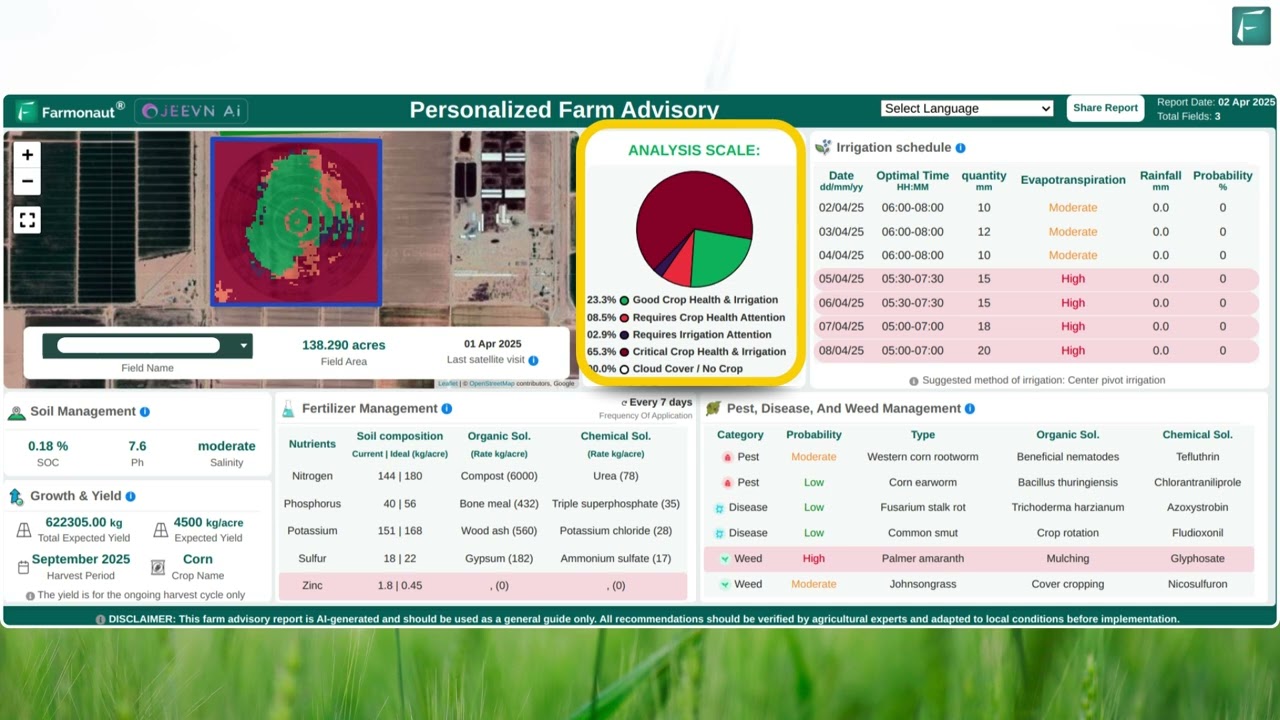
Thanks to advanced analysis platforms, such as those provided by Farmonaut’s large-scale farm management solution, major agribusinesses can implement highly detailed, scalable, and cost-effective yield monitoring systems—making high-level precision tools accessible across the agricultural spectrum.
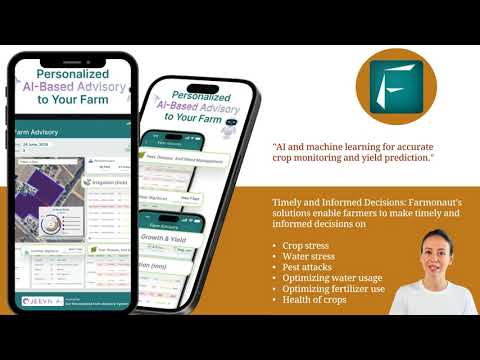
Technology Comparison Table: Crop Yield Prediction Solutions
As this table demonstrates, while initial investment and complexity can vary, integrating satellite, IoT, and AI delivers superior accuracy, resource management, and environmental benefits, making these solutions critical for the future of precision agriculture and smart farm management.

Environmental Impact & Sustainability in Modern Agriculture
One major benefit of **enhancing precision agriculture** in 2025 is the positive impact on sustainability. Smart data-driven predictions allow **farmers to reduce fertilizer and pesticide use**, lower water consumption via targeted irrigation, and minimize environmental degradation.
- Carbon Footprinting tools (like those available from Farmonaut) help monitor and manage carbon emissions in the field.
- Blockchain-backed traceability solutions (read more here) ensure transparency in crop production, with eco-friendly practices traceable from seed to shelf—building consumer trust and supporting green initiatives.
- Real-time environmental monitoring helps governments and regulators enforce best practices for ecosystem conservation.
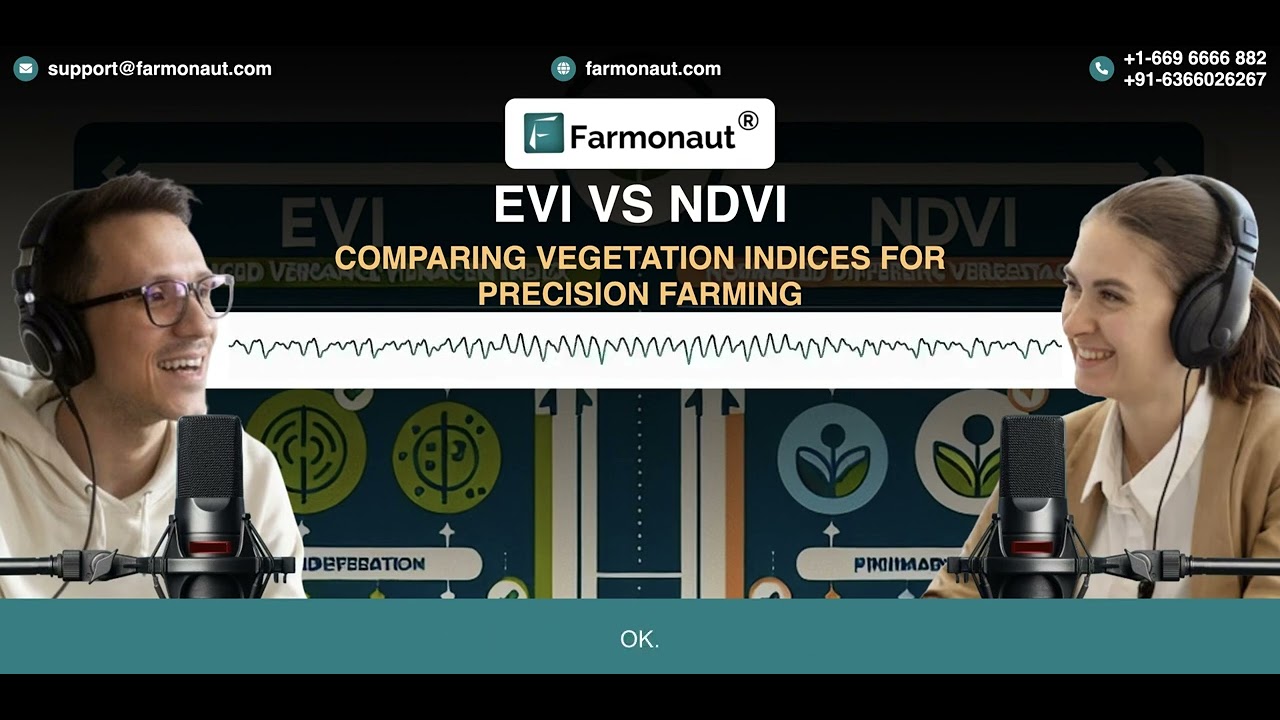
Watch this informative video to better understand how satellites, NDVI/EVI, and hyperspectral imaging support the sustainability transition in farming:
Resource Management & Farm Optimization
Precision agriculture relies on detailed data analysis and timely interventions for optimum resource management. With yield prediction being more accurate, farms can:
- Apply variable-rate fertilizers and irrigation instead of field-wide uniform treatments, reducing costs and environmental waste.
- Predict pest outbreaks and schedule timely interventions using real-time monitoring.
- Adjust planting dates and crop selections based on microclimate analysis and forecasts.
- Plan harvest and logistics for supply chains aligned with near-real-time yields prediction output.
Discover how fleet and resource management solutions assist modern agribusinesses in enhancing efficiency and reducing operational costs by leveraging data from connected machinery and vehicles.
Additionally, satellite-driven crop loan and insurance verification enables financial institutions to reduce fraud, offer better terms to farmers, and expand access to essential agricultural financing.
Farmonaut: Satellite-Driven Advances for Precision Agriculture
As a pioneering satellite technology company, we at Farmonaut are dedicated to democratizing access to advanced crop monitoring and yield prediction capabilities. By leveraging a unique combination of satellite imagery, AI-based advisory systems, blockchain traceability, and actionable resource management tools, we empower farmers, businesses, and governments worldwide.
- Satellite-Based Monitoring: Our platform utilizes multispectral satellite images to monitor crop vegetation health (e.g., NDVI), assess soil moisture/nutrients, and enable informed in-season decisions.
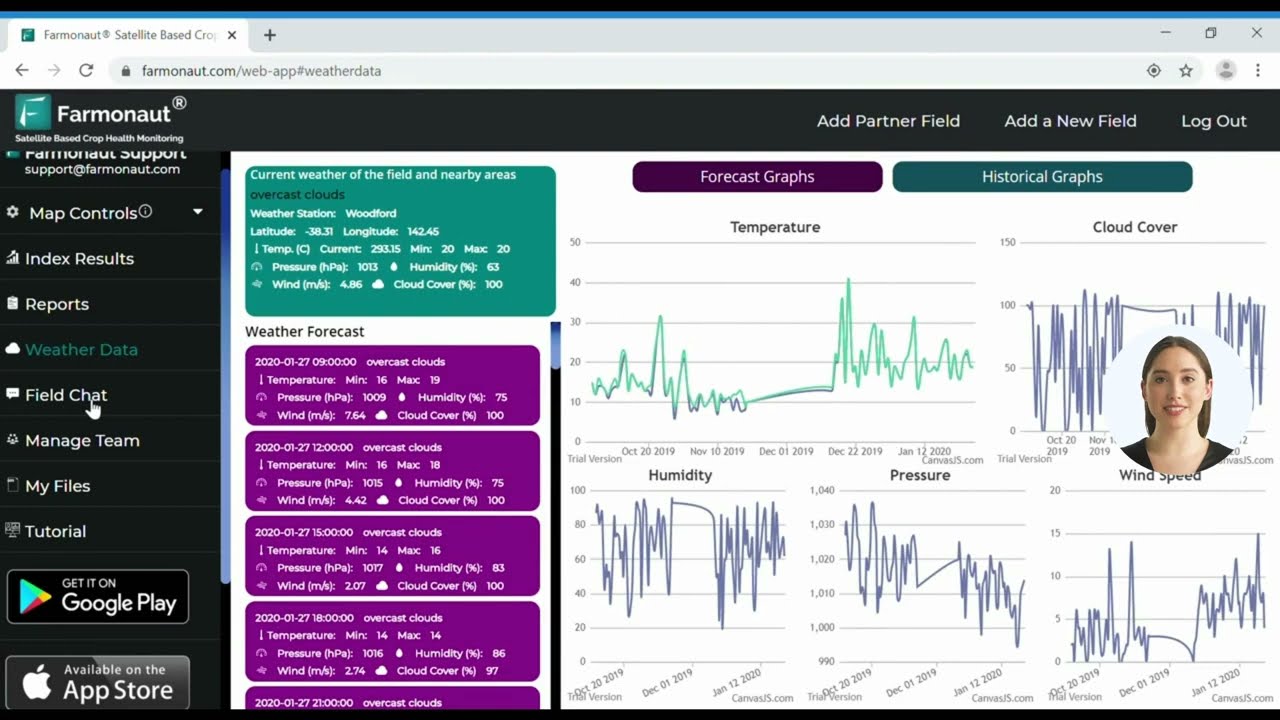
- AI Advisory: Jeevn AI System: Our AI-driven Jeevn solution delivers tailored advice, weather forecasts, and actionable strategies, all based on current satellite data, optimizing productivity for users of every scale.
- Blockchain Traceability: By tracking each step of production, it is possible to ensure authenticity, quality, and sustainability—unlocking premium markets and earning consumer trust.
- Fleet and Resource Management: Our comprehensive tools help businesses efficiently track and allocate resources, reduce fuel costs, and maximize machinery lifespan.
- Environmental Monitoring: Our platform supports regulatory compliance and sustainable management by providing real-time carbon footprint and ecosystem impact metrics.
Our Satellite and AI API and Developer Docs allow seamless integration of these datasets into existing agri-software, CRMs, or new applications—helping digital innovators build the future of precision agriculture.
For those managing large plantation and advisory projects, our specialized plantation/forest advisory solutions help maximize land stewardship and yield outcomes.
Farmonaut Pricing & Subscriptions
Challenges & Future Directions in Crop Yield Prediction
Although the pace of innovation in precision agriculture is rapid in 2025, a few challenges must still be addressed for global scalability and impact:
- Data heterogeneity: Integrating disparate datasets (soil, weather, field, management, remote) remains complex.
- Lack of standardized protocols: Without industry-wide data and model standards, interoperability and benchmarking are difficult.
- Accessibility for smallholder farmers: High complexity or upfront cost can sometimes hinder adoption in developing areas.
- Model generalization across zones: Ensuring robust performance across diverse agroecological regions requires continuous refinement and incorporation of local data.
Future research and development in crop yield prediction focuses on several key areas:
- Integrating genomics and microbiome data for predicting stress resilience, disease resistance, and growth potential of emerging crop varieties.
- Edge computing on the farm: Processing sensor and imagery data locally for faster insights and reduced dependency on Internet connectivity.
- User-friendly actionable platforms: Emphasizing intuitive dashboards and customized advisory outputs aligned with farmer realities.
- Greater sustainability integration: Expanding environmental and carbon metrics to help reduce global agriculture’s ecological footprint.
As precision agriculture evolves, platforms that democratize cutting-edge analysis and foster “smart farming everywhere”—such as Farmonaut—will play an outsized role in closing the global yield gap and delivering on the promise of sustainable food security.
Frequently Asked Questions (FAQ)
Machine learning models analyze vast, diverse datasets—including satellite imagery, soil data, real-time weather, and historical management—to model complex, nonlinear relationships. This enables much higher prediction accuracy and adaptability across climates and crops (up to 30% improvement over traditional methods).
Q2: What types of data are most critical for accurate yield prediction?
Crucial inputs include soil moisture and nutrient levels, weather and microclimate data, satellite imagery indices (e.g., NDVI), crop management records, and pest/disease monitoring data. Integrating these improves both local and regional forecasts.
Q3: How does precision agriculture contribute to environmental sustainability?
Precision agriculture optimizes input use (water, fertilizer, pesticide), reduces waste, and minimizes environmental impact. Carbon footprint monitoring, traceability, and variable-rate application strategies collectively lead to more sustainable food systems.
Q4: What are the major barriers to the adoption of advanced crop prediction technologies?
Common challenges include limited access to quality data and digital platforms in developing regions, lack of standardized protocols, model complexity, and sometimes cost. Ongoing efforts in affordability and user-friendly design are expanding access steadily.
Q5: What makes Farmonaut’s technology suitable for all types of users?
Farmonaut’s solutions are affordable, modular, and scalable. Our platform serves individual farmers, large agribusinesses, governments, and financial institutions—delivering actionable insights via web, Android, iOS apps, and API integrations.
Conclusion: The Path Ahead
In summary, enhancing precision agriculture: a comprehensive review reveals that the synergy of satellite, AI, IoT, and advanced machine learning platforms is reshaping the future of global food production. Accurate crop yield prediction, resource-efficient management, and integrated environmental oversight are critical to sustainability and food security challenges in 2025 and beyond. As platforms like Farmonaut continue to evolve and democratize these tools, farmers, agribusinesses, and communities worldwide stand to benefit from higher yields, smarter decisions, and reduced environmental impacts. The ongoing innovation in this domain ensures that precision agriculture will remain a cornerstone of agricultural transformation in the modern era.

 Magrifly
 LatConnect 60
 Disease Free Life
 WebsEdge
 Blickwinkel
 Agricultural Credit Policy Council
 BayWa
BayWa MCSOD
MCSOD Marei Nursery
 eKGIS
eKGIS Mostas Tech
 Native Seeds
 Andex
Andex FCF India
 Unifrutti Gulf
 Deluxe Conseil
 WICO
WICO Chimera Innovation
