

Estimating Corn Yield: 5 Powerful Tech Trends for 2026
Why Corn Yield Estimation Matters in 2026
Estimating corn yield remains a cornerstone of effective agricultural management in 2026. In a world facing unpredictable climate challenges, volatility in global supply chains, and pressure to boost food security, accurate yield estimation takes on new urgency for farmers, agribusinesses, and policymakers.
- ✔ Optimize Inputs: Precise corn crop yield per acre predictions inform fertilizer, irrigation, and pest control strategies, minimizing waste and maximizing returns.
- 📊 Data-Driven Decisions: Modern approaches allow real-time estimation and enable midseason adjustments for crop management.
- 📦 Forecast Market Supply: Accurate yield forecasts underlie commodity pricing, storage, and marketing decisions.
- 🔒 Enhance Food Security: Projected yields impact regional and global food reserves and allocations.
- 🌱 Support Sustainable Practices: Data-supported decisions promote resource efficiency and reduced environmental impact.
In 2026, corn yield estimation is not just about counting kernels—it is about using technology, data integration, remote sensing, and advanced analytics to drive transformative, scalable decision-making across the agri-food sector.
Traditional vs. Emerging Yield Estimation Approaches
Historically, methods like estimating corn yield by kernel count dominated. This laborious process involves:
-

Manual sampling and counting of ears and kernels in multiple sample areas. -

Calculating average kernel weight and extrapolating results per acre. -

Recording phenological observations and physically measuring selected plants.
Limitations of this traditional approach include high labor costs, human error, limited scale, and low temporal frequency.
Over-reliance on manual kernel counts in large-scale corn production misses spatial variability and may lead to inaccurate yield forecasts. Integrating digital data sources is essential for reliability in 2026.
Emerging methods, leveraging remote sensing, drone data, sensor networks, and machine learning models, now complement and sometimes replace manual processes. These technologies facilitate high-frequency, field-scale monitoring, offering better coverage and more accurate estimation models for corn, soybeans, wheat, and other staple crops.

5 Tech Trends: Estimating Corn Yield in 2026
Let’s explore the five most impactful trends and technologies for estimating corn yield in 2026—each revolutionizing how data is captured, processed, and delivered for actionable insights.
-
1. Multispectral Drone Surveys and Imagery
Drones, equipped with multispectral, RGB, and thermal sensors, are dramatically enhancing field-level yield estimation. By flying at low altitudes and high frequencies, these devices produce ultra-detailed data on canopy, biomass, and kernel development.
Key Features:- Automated crop scouting across extensive fields
- Localizes crop stress and differentiates microzones by biomass and canopy index
- Captures high-definition plant growth stages to support manual counts when needed
- Suitable for precision agriculture operations—targeted interventions in real time
Example:
Using drone-based NDVI vectors to detect early nitrogen deficiency, preventing untimely yield drop.
-
2. Satellite-Based NDVI and Remote Sensing
Satellite imagery, including high-frequency hyperspectral and multispectral data, offers large-scale, objective monitoring. Indices like NDVI (Normalized Difference Vegetation Index) and EVI provide quantifiable measures of vegetation cover, vigor, and projected yield.
- Enables farm-to-regional yield forecasts
- Correlates vegetation index changes to in-field measurements like kernel count and biomass
- Accessible even in cloudy or tough terrain conditions (especially with new SAR and LIDAR advancements)
-
3. Kernel Count Algorithms and Digital Sampling
In 2026, digital imaging and AI-based kernel count algorithms automate what was once purely manual labor. Field imagery—captured by drones or high-resolution satellites—enables accurate, time-logged kernel and ear identification, minimizing bias and human error.
- Auto-counts kernel rows and ears across sample plants—feeding models for timely, localized estimation
- Integrates with climate and soil data for robust yield prediction
Kernel count digital methods can increase corn yield prediction accuracy by up to 30% compared to traditional approaches.
-
4. AI-based Sensor Platforms & Machine Learning Analytics
Ground sensors provide continuous data on soil moisture, nutrient levels, weather variables, and even plant physiological status. Machine learning analytics fuse this data with aerial or satellite inputs to dynamically adjust yield models.
- Improves yield estimation by learning from previous years, current field conditions, and real-time observations
- Detects anomalies, midseason disease risks, or moisture stress, triggering interventions
Explore JEEVN AI: Smart Farming with Satellite & AI Insights
-
5. IoT-Integrated Weather and Growth Modeling
IoT weather stations and plant growth sensors across the field quantify microclimate variance. Combined with meteorological forecasts and past yield responses, they support robust localized yield predictions.
- Automated tracking of degree days, rainfall events, evapotranspiration, and stress periods
- Alerts for severe weather, supporting pre-harvest planning

Comparative Technology Impact Table: 5 Precision Corn Yield Estimation Technologies (2026)
| Technology/Method | Key Features | Data Source | Estimated Accuracy (%) | Estimated Cost per Hectare (USD) | Projected Adoption Rate by 2026 (%) |
|---|---|---|---|---|---|
| Multispectral Drone Surveys | High-resolution, targeted crop imagery; detects micro-variations; supports real-time interventions | Drone imagery (multispectral / RGB / thermal) | 93–96% | $17–$35 | 52% |
| Satellite-Based NDVI Analysis | Large-area monitoring; regular updates; validates trends across regions | Satellite (NDVI, EVI, hyperspectral) | 88–93% | $3–$12 | 78% |
| AI-Powered Kernel Count Algorithms | Automates ear tracing, kernel identification, minimizes bias, scalable for large fields | Drone and satellite imagery analyzed by AI | 95–98% | $20–$42 | 41% |
| AI-Based Sensor Platforms | Continuous ground truth data; integrates weather, soil, plant growth metrics; anomaly alerts | Ground sensors (soil, growth, weather) | 90–95% | $25–$56 | 38% |
| IoT-Integrated Weather & Growth Models | Microclimate tracking; dynamic growth prediction; pre-harvest advisories | IoT weather stations, models, cloud analytics | 85–91% | $14–$32 | 55% |
Technologies with remote or automated data capture, scalable analytics, and low per-hectare costs are positioned for the fastest adoption and greatest impact in global corn, wheat, and soybean yield estimation markets.

- 🛰️ Remote Sensing detects macro patterns and field growth discrepancies often invisible to the naked eye.
- 🤖 AI & IoT Platforms enable real-time, high-frequency monitoring, critical for mitigating yield risks early.
- 🔒 Blockchain Traceability guarantees transparency from sourcing to harvest—essential for supply chain compliance.
- 📱 Mobile Access puts yield estimation, field mapping, and advisory tools directly in farmers’ hands worldwide.
- 🔬 Big Data Analytics ties together season-long insights, climate variables, and historic patterns for predictive power.
How Farmonaut Redefines Precision Yield Estimation
At Farmonaut, we combine cutting-edge satellite-based monitoring, AI-driven advisory systems, and blockchain traceability to deliver affordable and actionable crop yield estimation for corn, wheat, soybeans, and beyond.
-

JEEVN AI: Our advanced AI analyzes real-time satellite data (multispectral, NDVI, hyperspectral) for precision yield forecasts, stress detection, and personalized advisories. -

Blockchain Traceability
: Securely links field-level data to supply chain checkpoints, improving trust and traceability for grains, produce, and resources. -

Large Scale Farm Management
: Integrated dashboard for monitoring multiple fields, benchmarking corn crop yield per acre, and comparing performance year-on-year. -

Crop Loan & Insurance Verification
: Validates loan and insurance claims with satellite data, reducing fraud and expediting financial access for corn and soybean growers.



Farmonaut Plantation and Forest Advisory
enables ecological monitoring, optimizing long-term production across diverse landscapes.
Satellite-based NDVI, when paired with in-field kernel count samples, delivers the most accurate yield predictions for commercial corn and soybean fields—especially at scale.
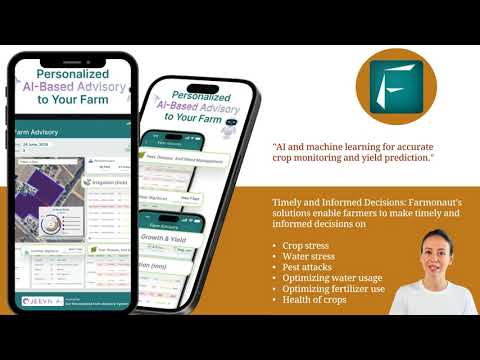
Estimating Crop Yield: Modern Approaches for Corn, Soybean, and Wheat
Corn may be the focus of this article, but the estimation principles and transformative tech trends apply to soybeans, wheat, and other key crops as well:
- Estimating soybean yields combines pod count, LAI (Leaf Area Index), and advanced modeling, for more timely market projections.
- Estimating wheat yield leverages tiller and spike density measurements, vegetation indices, and biomass data for multi-stage forecasts.
- All major crops now benefit from multispectral, hyperspectral, and AI-integrated data fusion throughout the growing season.
With climate-driven variability intensifying, precision agriculture and robust yield estimation models remain indispensable for reliable field-to-market supply chain planning through 2026 and beyond.
Modern remote sensing estimation models for wheat, soybeans, and corn have improved projection reliability by over 20% since 2020—empowering farmers to optimize planting, input application, and storage allocation with greater confidence.

Satellite and AI-based solutions integrate diverse datasets—yield predictions no longer rely solely on in-season human observation but are empowered by decades of historical, local, and global field data. Machine learning models now capture factors such as precipitation history, temperature trends, varietal performance, and real-time stress signals, fueling higher accuracy in corn crop yield per acre projections.
Stepwise Processes: Kernel Count and Beyond
1. Traditional Kernel Count Method: Manual Steps
- Choose representative sample plots (at grain fill stage) across the field.
- Count ears per plant and plants per acre.
- Remove a set of ears, count the total kernels per ear (rows × kernels per row).
- Weigh a representative batch (e.g., 500 kernels) to determine average kernel weight (g).
- Calculate projected yield per acre:
Yield (bu/ac) = ((Avg. ears/acre) × (Avg. kernels/ear) × (Kernel weight, g)) ÷ (Factor for unit conversion)
For example, if you have 30,000 plants/acre, each averaging an ear with 16 rows × 32 kernels (512 kernels/ear), and a standard kernel weight of 0.35 g, your calculation will align with expected benchmarks—but requires significant effort and is limited by human sampling capacity.
2. Digital Sampling and AI-based Kernel Counting
- Drone or high-resolution satellite images of multiple ear zones (automated geo-sampling).
- AI-powered kernel and ear feature extraction using computer vision and pattern recognition models.
- Autonomous data fusion with weather, soil, NDVI, and historic plot data.
- Real-time calibration, reducing the impact of human error and enabling field-scale scalability.
The result? Consistently more accurate, timely yield predictions with less labor, higher coverage, and superior spatial resolution.
Excluding data from low-vigor or problem areas (e.g., drowned-out corners, pest-damaged rows) skews average yield estimates. Ensure estimation models are fed comprehensive sample data from across the field for dependable decision support.
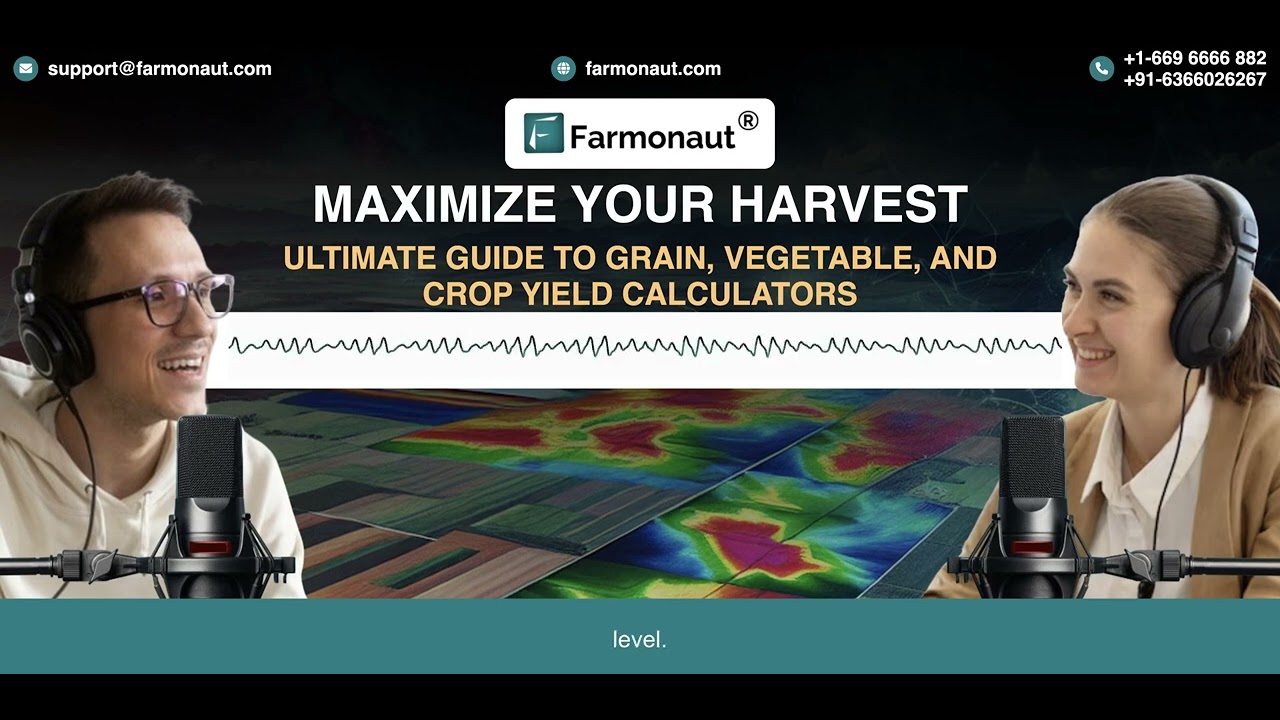
Accuracy and Limitations in Contemporary Practice
- 🎯 Best Accuracy: Achieved by integrating remote sensing, AI, and ground sensor data.
- ⚡ Timeliness: Automated and real-time; manual counts risk becoming outdated due to dynamic crop development.
- 🌩️ Weather Risk: Unless weather and soil variables are dynamically modeled, estimates can miss late-stage stress impacts.
- 🕵️ Human Error: Subjective sampling in field yield estimation remains a risk where automation is lacking.
- 🔄 Scalability: Tech-driven approaches scale to hundreds of fields and millions of acres with no proportional increase in effort or errors.
Enhanced remote sensing now enables entire country-level corn yield projections, supporting government resource allocation, market stabilization, and food security policy.
Farmonaut Solutions for Advanced Agricultural Management
At Farmonaut, we believe in empowering everyone—from the individual producer to entire governments—with cost-effective satellite and precision analytics. Our open access, multi-platform system delivers:
- Subscription scalability: Pricing tiers match user scope—from single-field to multi-region monitoring.
- APIs and mobile access: Seamlessly integrate our API into business and government systems. Explore our developer docs.
- Automated advisory workflows: Leverage our Jeevn AI platform for stress alerts, harvest recommendations, and yield benchmarks. Preview on web, Android, or iOS.
- Premium traceability: Guarantee your crop’s journey with blockchain-backed proof—from planting to end market.
- Sustainability tools: Quantify, reduce, and report your carbon footprint—future-proofing your operation for eco-conscious compliance.
FAQ: Estimating Corn Yield and Precision Agriculture in 2026
1. Which method gives the most accurate corn yield estimation?
Integrating remote sensing (satellite or drone), kernel count AI, and ground sensors gives the highest reliability—often exceeding 95% accuracy when calibrated for local zones.
2. Is manual kernel count still needed in 2026?
Manual kernel counts remain a valuable field reference, especially for research plots or calibrating models on new varieties. For commercial scale, digital methods dominate.
3. How often should remote sensing be performed during the growing season?
Every 7–14 days during key growth windows (V6 to R6 stages for corn) is ideal, allowing for timely interventions and accurate cumulative yield estimation.
4. What are the unique benefits of Farmonaut’s system?
Farmonaut combines multi-satellite imagery, AI-driven insights, blockchain traceability, and accessible APIs. This democratizes precision yield monitoring for any user or organization, reducing cost and complexity.
5. Can Farmonaut’s solutions be used for crop loans and insurance verification?
Yes. Our platform delivers satellite-based farm health and yield records that streamline crop loan and insurance approval—reducing fraud and time-to-finance for agribusinesses and financial institutions.
Conclusion: A Smart Future for Yield Estimation
The landscape for estimating corn yield, along with soybean and wheat yield estimation, is fundamentally changing. Moving past the limitations of traditional sampling, farmers in 2026 now harness a fusion of remote sensing, AI, digital kernel count methods, and IoT platforms for timely, accurate, data-driven decision-making.
- ✔ Optimize Resources: Data-backed yield forecasts prevent over-input and under-performance, supporting both sustainability and profitability.
- 📊 Precision at Scale: From individual plot to entire supply chain, AI and remote sensing avoid the abstraction errors of past models.
- 🔒 Transparency & Trust: Blockchain traceability underpins credibility and compliance for product origin and quality.
- 📲 Universal Access: With cross-platform compatibility—web, mobile, and APIs—data-driven yield estimation is now accessible to all.
- 🚀 Sustainable Future: Yield monitoring ties into carbon accounting and climate-smart management, vital for a resilient agricultural ecosystem.
Accurate, timely, and scalable corn yield estimation empowers better resource allocation, market planning, and food security—making it mission-critical for modern agriculture in 2026 and beyond.

 Crossprod
 Aamoksh One Eighty
 Patrick America
 Liquify Digital
 CU Foods
 BeyondTech Global
 Rouge VC
 AgroGreen Dynamics
 AgroRisk
 Oath Inc
 Reddane Farming
 Esri North East Africa
 Cresol
 MDCV UK
 Zerella Group
 Etech Consulting Madagascar
 Vestlandsforsking
 Delicio
 WB Dev
 Sama Premium
