

Reviewed September 2026 against Penn State Extension, SARE (Sustainable Agriculture Research and Education), and USDA NASS.
“Golden zest” is a nickname that traces back to saffron — the deep-red stigma spice that has been called “red gold” for centuries because of its color and its price. When search results tie the phrase to Indian agriculture, they’re pointing at saffron’s most famous origin story: Kashmir’s Pampore belt, historically the source of most of the world’s supply. This article answers the “golden zest” question directly, then does something an AI summary can’t: it walks a US grower through what saffron actually costs to plant, how long it takes to pay off, and what the crop is worth in dollars per acre, using field-trial data instead of folklore.



Monitor soil moisture and field conditions on specialty-crop plots from your phone.
Table of Contents
- Which Indian Agriculture Crop Is Known as “Golden Zest”?
- Why This Matters for US Growers
- Yield Data: What a US Acre Actually Produces
- The Economics: Revenue, Price, and Payback
- Soil, Planting Depth, and Site Selection
- How Saffron Compares to Other High-Value US Crops
- Monitoring the Crop: What Technology Can and Can’t Tell You
- Calculator: Estimate Your Plot’s Payback Timeline
- What’s Not Yet Published — and How to Get It
- Frequently Asked Questions
- Summary
- Jump to the calculator
Which Indian Agriculture Crop Is Known as “Golden Zest”?
The crop tied to “golden zest” in Indian agriculture is saffron (Crocus sativus), grown chiefly in the Kashmir Valley’s Pampore region. The name reflects two things at once: the deep golden-red color the stigmas impart to food, and the crop’s status as one of the highest-value agricultural products by weight anywhere in the world. Saffron isn’t a Farmonaut product line or a farming technique — it’s a specific spice crop, and its US relevance is what the rest of this article covers.
That’s the direct answer. What actually matters to a US reader searching this phrase is different: can this crop be grown domestically, what does it yield, and is it worth the labor. The data below comes from Penn State Extension’s cultivation guide and a two-year Sustainable Agriculture Research and Education (SARE) field trial — not from general claims about “the golden zest of Indian agriculture,” which is a phrase with no standardized agronomic meaning outside that regional nickname.
Why This Matters for US Growers
Saffron is not a commodity crop the USDA’s National Agricultural Statistics Service (NASS) tracks at a national level — there is no annual acreage or production count in NASS QuickStats the way there is for corn, soybeans, or even a newer specialty crop like industrial hemp. What exists instead is a growing body of research-station and small-grower data, most notably from Penn State’s College of Agricultural Sciences and a SARE-funded trial (project OS23-166) that ran field and high-tunnel plots over two seasons.
That gap matters for anyone deciding whether to plant: you’re relying on research-plot numbers, not a commodity market with established regional benchmarks. Global demand is real — Mordor Intelligence sized the worldwide saffron market at $631.48 million in 2024 — but almost none of that supply currently originates in US fields. The opportunity for domestic growers is in direct-to-consumer and specialty-market sales, not displacing imports at commodity scale.
Yield Data: What a US Acre Actually Produces
Penn State Extension’s baseline figure for saffron grown to research-station standard in the US is 3 pounds of dry stigma per acre. That’s the number to anchor expectations to — not a marketing estimate, but an extension baseline for the crop grown to full maturity under recommended spacing and care.
Getting to that baseline takes years, not one season. Each corm (the bulb-like structure saffron grows from) produces only 1 flower in its first year, rising to 6–9 flowers per corm by years 2–3 as the corm multiplies underground, per Penn State Extension. The SARE OS23-166 trial’s year-one harvest — combining open-field and high-tunnel plots — produced 59.61 grams of fresh stigma from 1,907 flowers, illustrating just how labor-intensive the flower count is relative to the eventual dried weight. Because fresh stigma loses roughly 80% of its weight in drying, that 59.61-gram fresh harvest reduces to a small fraction once dried — consistent with why full commercial yield doesn’t arrive until the planting matures.
UMass/SARE research quantifies that ramp-up directly: expect 0.1–0.2 grams of dried stigma per square foot in year one, climbing to 0.5–1.5 grams per square foot by year three as corms multiply and flower counts rise. Scaled to an acre (43,560 sq ft), the year-three range works out to roughly 22–65 pounds per acre under trial conditions — well above the Penn State 3-pound baseline, which reflects a more typical, less-intensive planting density. The spread between those two figures is exactly why site-specific piloting matters more than a single published number.
The labor reality behind these numbers: it takes 4,000 flowers to produce one ounce (28 grams) of dried saffron, per Penn State Extension. Every flower is hand-picked at dawn while closed, and the three stigmas inside each bloom are separated by hand. There is no mechanized harvest path for saffron at any yield level published in current US research.
The Economics: Revenue, Price, and Payback
US saffron wholesale priced at $32 per gram under SARE’s OS23-166 economic model (2023–2024 seasons). At that price, Penn State’s 3-pound (1,361-gram) per-acre baseline yield would be worth roughly $43,500 — but Penn State’s own market estimate is more conservative and regionally grounded: Farmers’ Almanac cites an annual revenue range of $11,350 to $34,000 per acre at US market prices for a three-pound yield, reflecting the discount growers typically take against research-plot wholesale pricing when selling into real retail and specialty channels.
SARE’s trial reported $5,189 in net revenue from a 0.25-acre plot over two years, combining saffron sales with secondary corm sales — corms multiply underground each season and can be sold on for propagation at roughly $0.35 per corm, per the same SARE economic projection. That two-year, quarter-acre result scales to roughly $20,750 per acre over two seasons before the planting reaches full maturity — a useful real-world anchor alongside the higher theoretical wholesale figures above, since it already nets out the trial’s actual costs rather than projecting from a price-per-gram alone.
For scale comparison: the entire US industrial hemp market was valued at $712 million in 2021, grown across 54,152 acres planted and 33,480 acres harvested, according to USDA NASS commodity data. Hemp is a NASS-tracked commodity with established acreage; saffron is not. That distinction should shape expectations — saffron in the US today is a specialty/direct-market crop, not one with commodity-scale price discovery or crop insurance products behind it.
Soil, Planting Depth, and Site Selection
Saffron corms need soil pH in the 7.0–8.0 range — slightly alkaline — according to Penn State Extension. That rules out naturally acidic soils common in parts of the Southeast and Northeast without amendment, and favors regions with well-drained, alkaline-leaning ground. Farmers’ Almanac specifically flags California and the Pacific Northwest as regions with climate suitability for saffron, given their dry summers (critical for corm dormancy) and mild, wet winters that match the crop’s native Mediterranean-to-Central-Asian growing pattern.
Drainage is the single most important site factor: corms rot in waterlogged soil, which is why raised beds or naturally free-draining sites are standard in both the Penn State guide and the SARE trial design. Full agronomic detail on planting depth, spacing, and drying technique is in the Penn State Extension guide linked below — it’s the most complete free US-specific cultivation reference currently published.
How Saffron Compares to Other High-Value US Crops
The table below puts saffron’s numbers next to industrial hemp — the closest available comparison, since both are specialty crops with per-acre revenue well above row-crop commodities, and both have current, sourced US figures.
| Metric | Saffron (US, mature planting) | Industrial Hemp (US, 2021) |
|---|---|---|
| Per-acre revenue | $11,350–$34,000/acre (Farmers’ Almanac, US market prices) | Market value $712M ÷ 33,480 harvested acres ≈ $21,270/acre (USDA NASS, 2021) |
| National tracking | Not tracked by USDA NASS; research-project data only (SARE, Penn State) | Tracked annually by USDA NASS commodity survey |
| Time to full yield | 2–3 years for corms to reach 6–9 flowers each (Penn State Extension) | Annual crop, full yield in first season |
| Harvest method | 100% hand-picked; 4,000 flowers per ounce dried (Penn State Extension) | Mechanically harvestable at scale |
The comparison shows why saffron sits in a different category from most specialty crops: the revenue-per-acre ceiling is competitive with or above hemp’s, but it takes two to three years of establishment and all-manual harvest labor to get there — costs that don’t show up in a bare price-per-gram figure.
Monitoring the Crop: What Technology Can and Can’t Tell You
Because saffron’s value is concentrated in a few weeks of hand-harvest each fall, timing matters more than with most crops — a missed bloom window or waterlogged bed can wipe out a season’s flowers before they’re picked. Satellite and soil-sensor monitoring won’t identify individual saffron flowers (the plant’s canopy is too small and low for NDVI-scale remote sensing to resolve bloom timing), but it can track the two things that most threaten a planting: soil moisture during the critical late-summer dormancy period and drainage patterns across a field before corms go in the ground.
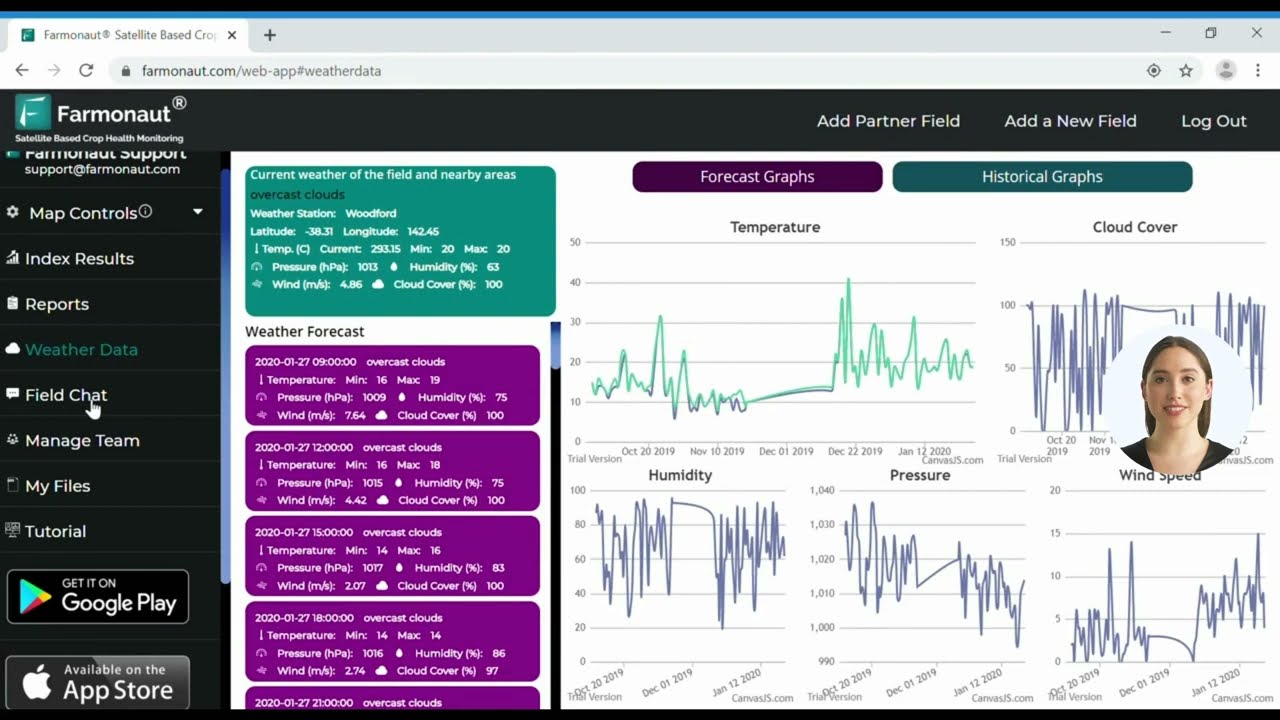
Farmonaut’s Web & Mobile App provides field-level soil moisture and satellite imagery that specialty-crop growers use to catch drainage problems before planting — relevant given saffron’s strict need for well-drained, non-waterlogged beds. For growers integrating monitoring data into their own systems, Farmonaut’s API and its developer documentation support custom data pulls.

For growers running saffron alongside other specialty plantings — vegetables, herbs, or small orchard blocks — carbon footprinting tools can document sustainable soil practices for direct-market buyers who ask about growing methods, and product traceability tools let a grower document lot-level provenance — useful for a spice this expensive, where buyers routinely ask for origin verification given how much adulterated saffron circulates globally.

Growers scaling beyond a garden-sized plot into multiple fields or coordinating harvest-day labor across sites may also find fleet management tools useful for organizing the intensive hand-harvest logistics saffron demands, and farm management tools for tracking corm inventory, planting blocks, and multi-season yield records across a growing operation.
Calculator: Estimate Your Plot’s Payback Timeline
Enter your plot size and expected year-3 yield density to see rough revenue at both ends of the published US price range.
Assumptions: yield density figures come from UMass/SARE trial data (0.1–0.2 g/sq ft year 1, rising to 0.5–1.5 g/sq ft by year 3). This tool projects year-3 dried-stigma revenue only — it excludes corm costs, labor, irrigation, and site prep, and it does not model years 1–2 while corms establish. Actual results depend heavily on local climate, drainage, and corm source.
What’s Not Yet Published — and How to Get It
Several figures a serious US grower would want simply aren’t published yet at a reliable, sourced level:
- National acreage and production totals: USDA NASS does not currently run a commodity survey for saffron. Check data.nass.usda.gov periodically under “specialty crops” — if acreage grows enough to warrant tracking, this is where it would first appear.
- Regional yield benchmarks outside California, the Pacific Northwest, and the SARE trial’s Northeast/Midwest plots: there’s no published breakdown for Southern or Mountain West growing conditions yet. The SARE project database (projects.sare.org) adds new regional trial reports as grants close out — filtering by region there is the most direct way to check for newer data.
- Water requirements in gallons per acre by climate zone: not quantified in current published research. A grower needs to work this out locally with an extension agronomist based on regional evapotranspiration data.
- Hourly labor cost per gram of dried saffron: SARE reported total trial labor costs but not a per-hour breakdown, so translating the 4,000-flowers-per-ounce figure into a dollar labor cost requires plugging in your own local wage rate.
- Pest and disease loss rates by region: research notes Fusarium and spider mites as risks but does not publish quantified regional loss percentages.
This is the honest state of US saffron data as of this review: strong on cultivation method and small-trial economics, thin on the national-scale numbers a commodity crop would have. Recheck the SARE and Penn State links below periodically — both organizations update their published trial and extension data as new seasons complete.

Frequently Asked Questions (FAQ)
Which Indian agriculture crop is known as “golden zest”?
Saffron (Crocus sativus), grown predominantly in Kashmir’s Pampore region, is the crop tied to this nickname — a reference to its golden-red color and its status as one of the world’s most valuable crops by weight.
Can saffron actually be grown in the United States?
Yes — Penn State Extension and SARE-funded trials confirm it, with regions like California and the Pacific Northwest cited by Farmers’ Almanac as climate-suitable due to dry summers and mild wet winters. It is not yet a USDA NASS-tracked commodity crop.
How much does an acre of saffron yield in the US?
Penn State Extension’s baseline is 3 pounds of dry stigma per acre at maturity. Trial-density plots (UMass/SARE) suggest a wider range, roughly 22–65 pounds per acre by year three under intensive planting, depending on density and site conditions.
How long until a saffron planting is profitable?
Corms produce only 1 flower each in year one, rising to 6–9 flowers by years two to three (Penn State Extension). SARE’s two-year trial on a 0.25-acre plot netted $5,189 including corm sales — full maturity and peak yield take at least two to three growing seasons.
What does US-grown saffron sell for?
SARE’s 2023–2024 economic model used $32 per gram wholesale. Farmers’ Almanac estimates $11,350–$34,000 in annual revenue per acre at US market prices for a mature planting.
Further reading:
Summary
“Golden zest” in Indian agriculture refers to saffron — and the US data on growing it domestically is real but still early-stage: strong cultivation guidance from Penn State Extension, solid two-year field economics from SARE’s OS23-166 trial, but no national USDA tracking yet. The durable way to evaluate this crop for your own operation is the same regardless of what year you’re reading this: check Penn State Extension’s cultivation guide for current agronomic recommendations, check SARE’s project database for the latest regional trial reports, and check USDA NASS QuickStats to see if national tracking has started. Those three sources, in that order, will always be more current than any single article’s numbers.
- SARE OS23-166 final report — full yield and two-year economic data
- Penn State Extension saffron guide — planting, soil, and harvest technique
- Farmers’ Almanac saffron market guide — US pricing and regional suitability
- Test your soil pH — saffron needs 7.0–8.0 (Penn State Extension).
- Start with a small pilot plot to validate local yield before scaling.
- Use the calculator above to model revenue at your own plot size and price assumptions.
- Track soil moisture and drainage through establishment using field-monitoring tools.
Track your plot’s soil and moisture conditions:
Start with Farmonaut’s satellite monitoring platform today



 Save Your Soils
 YelloSkye
 GalaxEye Space
 Grandstream Algérie
 XOS Realty
 Geospatial Lab Africa
 Agro La Gándara
 HIPSAC
 ZOL Zimbabwe
 Juligerm
 AdBio
AdBio MISE Maroc
 NWNS
NWNS Red August Group
 Farm Inc
 WeMe Global
 Agrotoken
 Blue BearX
 Insignito
