

Table of Contents
- Introduction: High Tech Agriculture Equipment 2026
- The Rapid Rise of High-Tech Agriculture in 2025–2026
- Key Drivers of the Agricultural Tech Revolution
- Precision Agriculture: The Heart of High Tech Farming
- Comparison Table of High-Tech Agriculture Equipment (2025 vs 2026)
- Automation, Robotics & Autonomous Machinery in Farming
- Advanced Sensor Data & Smart Soil Management
- AI & Data Analytics: Supercharging Agriculture Technical Solutions
- Building Climate-Resilient Agriculture in 2026
- Revolutionizing Supply Chains: Digital Traceability & Infrastructure
- Societal Benefits & Global Impact of High Tech Agriculture
- How We at Farmonaut Empower the High-Tech Agriculture Revolution
- Future Trends: Where is High Tech Agriculture Headed Post-2026?
- FAQs: High Tech Agriculture Equipment 2026
- Conclusion: Embracing the High-Tech Agriculture Revolution
High Tech Agriculture Equipment: 2026 Tech Revolution
“In 2025, smart data systems are projected to boost crop yields by up to 30% using high-tech agriculture equipment.”
Meta Description: High tech agriculture equipment is transforming farming in 2025 and beyond with precision, sustainability, and smart data systems. Discover how the revolution is unlocking a sustainable and productive future for agriculture.
Agriculture is experiencing a profound transformation as we approach 2026. The sector, once governed by hard-earned tradition and local knowledge, now also thrives on groundbreaking technology and advanced agriculture tech solutions. No longer are precision, sustainability, and data-driven approaches simply a futuristic concept—they’ve become operational reality, empowering farmers worldwide to meet global food demands sustainably and efficiently.
This rapid rise of high tech agriculture equipment is revolutionizing farming for a sustainable future. At its core lies the synergy between traditional wisdom and cutting-edge advancements. In this comprehensive guide, we dive deep into:
- How agriculture tech companies are redefining farming with smart tools and systems
- The role of AI-powered analytics, IoT sensors, and autonomous machinery in addressing 2025–2026’s top challenges
- Key breakthroughs in precision agriculture driving sustainable growth
- The future outlook for agricultural equipment, climate resilience, and global food systems
- How Farmonaut is at the forefront, making satellite and AI-driven insights accessible for all
The Rapid Rise of High-Tech Agriculture in 2025–2026
“By 2026, over 40% of farms worldwide are expected to integrate precision tech for sustainable agriculture practices.”
The agriculture sector is at a pivotal juncture—where tradition meets innovation. Between 2025 and 2026, high tech agriculture equipment is not just a trend; it is a necessity, driven by an ever-growing global population, escalating food demands, and the mounting pressures of climate change. The need to optimize productivity, reduce environmental impact, and operate sustainably has brought about a revolution, led by agriculture tech companies and pioneering agric tech solutions.
Key Focus Keyword: high tech agriculture equipment
Major technological advancements have transformed how crops are planted, managed, and harvested. We are witnessing the integration of AI, IoT-enabled sensors, smart data systems, autonomous tractors, robotic harvesters, and precision drones—all managed by robust digital platforms. Farmers can now leverage these systems to monitor soil health, optimize irrigation, tailor fertilization, and forecast market trends—moving from reactive to proactive decision-making.
2026 and beyond will see these innovations scale exponentially, transforming agriculture technical solutions from niche applications to industry standards. These shifts are not only about increasing yield; they also directly address sustainability concerns, resource management, and profitability for both smallholders and large farms alike.
Key Drivers of the Agricultural Tech Revolution (2025–2026)
- Escalating Global Food Demands: With the global population projected to near 8.5 billion by 2030, agriculture must produce more food with less land and fewer resources.
- Climate Change & Environmental Pressures: Climate change is causing erratic weather, water scarcity, and increased pest risks. High-tech agriculture equipment is now essential for climate resilience and adaptive agriculture management.
- Digital Transformation in Farming: The adoption of Artificial Intelligence (AI), IoT, and digital platforms allows farmers to make informed decisions, reducing waste and boosting productivity.
- Consumer Demand for Transparency: People increasingly demand traceability and sustainably-produced food, driving adoption of agriculture technical systems for monitoring and reporting.
- Sustainable Resource Management: The need to minimize fertilizer, pesticide, and water use is fueling demand for precision agriculture tools that optimize resource application.
- Rising Labour Costs & Skill Gaps: Automation and robotics are alleviating human labor shortages by enabling autonomous equipment that can operate 24/7.
- Advanced Satellite and Sensor Data: With real-time satellite imagery, multispectral sensor data, and AI analytics, crop health monitoring has reached new heights of accuracy and scale.
Below, we’ll break down these drivers, focusing on the equipment and solutions making the biggest impact across global agriculture.
Focus on Precision Agriculture: The Heart of High Tech Farming
Precision agriculture stands as one of the most significant breakthroughs in modern agro-tech. By leveraging digital technologies—from GPS-guided machinery and IoT sensors to AI-powered analytics—precision agriculture is enabling farmers to apply resources with pinpoint accuracy.
Let’s explore some leading-edge examples of precision agriculture in action:
- GPS and GNSS Guidance: Modern tractors and harvesters use GPS (and global navigation satellite systems) for centimeter-level field mapping, ensuring planting, fertilizing, and pesticide applications are optimized across variable field conditions.
- Drone Surveillance & Satellite Imagery: Fleets of drones and satellites provide continuous oversight, mapping out areas of pest stress, nutrient deficiency, or improper irrigation at a granular, plant-by-plant level.
- Variable Rate Technology (VRT): Smart equipment automatically adjusts the amount of fertilizer, seed, or pesticide applied in real-time, based on precise soil and crop health data. This targeted approach reduces waste and chemical runoff.
- AI & Machine Learning Algorithms: Advanced AI platforms synthesize real-time data—from soil sensors, weather stations, and satellite feeds—to recommend exactly when and where actions will have maximum impact, boosting yields while minimizing resource use.
Precision agriculture’s eco-friendly approach both increases productivity and reduces farming’s environmental footprint, making it a core strategy for sustainable food systems.

Comparison Table of High-Tech Agriculture Equipment (2025 vs 2026)
To help you navigate the 2025–2026 revolution in high tech agriculture equipment, here’s a table comparing top innovations, their adoption rates, key features, and projected impact on productivity:
| Equipment Name | Technology Type | Adoption Rate (2025) | Adoption Rate (2026 est.) | Key Features | Projected Impact on Productivity (%) |
|---|---|---|---|---|---|
| Precision Drones | Drones, AI, IoT | 24% | 38% | Aerial mapping, target spraying, NDVI analysis, real-time data upload | +20% |
| Autonomous Tractors | AI, IoT, Autonomous Systems | 14% | 30% | Self-ploughing, seeding, weeding, remote monitoring, 24/7 operation | +17% |
| Smart Irrigation Systems | IoT Sensors, AI | 17% | 29% | Moisture monitoring, weather integration, precision water delivery | +22% |
| AI-Powered Soil Sensors | Soil Sensors, AI, IoT | 19% | 32% | Granular soil health tracking, real-time alerts, tailored recommendations | +15% |
| Data Management Platforms | AI, Cloud, Analytics | 22% | 41% | Integration of real-time data from all devices, actionable dashboards, user-friendly interfaces | +30% |
Data are estimated based on industry sources and projected trends for 2025–2026. Impact reflects average yield gains and operational efficiencies observed in test deployments.

Automation, Robotics & Autonomous Machinery in Modern Farming
A core pillar of high tech agriculture equipment is autonomous machinery—tractors, robotic harvesters, seeders, and drones that require minimal human intervention, operating efficiently and consistently.
Why Is Automation a Game-Changer for Agriculture?
- 24/7 Operations: Machines don’t tire, allowing for continuous planting, harvesting, and crop management even during peak seasons.
- Precision and Uniformity: Autonomous equipment delivers consistent results, reducing operational mistakes and maximizing resource efficiency.
- Labour Shortage Solution: As rural labour becomes scarcer, autonomous tractors and robots close the gap and keep farms productive.
For instance, robotic harvesters use computer vision to distinguish ripe from unripe fruit, picking with surgical precision and minimizing waste. Light electric vehicles sow seeds on GPS-coordinated maps, while autonomous sprayers target only infected zones with pesticides—reducing chemical use and environmental impact.

Advanced Sensor Data & Smart Soil Management: A Technical Evolution
Another breakthrough in the agriculture technical landscape is the proliferation of soil and crop sensors. These sensors provide continuous, granular data on nutrient levels, moisture content, and microbial activity at multiple soil depths. Unlike traditional manual sampling, advanced silicon-based IoT sensors now provide:
- Real-Time Reporting: Instant notifications about fertility, moisture, and pest outbreaks
- Micro-Zone Analysis: Map variability within fields to ensure inputs are applied precisely where beneficial
- AI-powered Trend Analysis: Combined with satellite and weather data, sensors help tailor interventions for each crop’s optimal health
As a result, soil health can be managed actively—fertilizer or water can be supplied only when and where needed, optimizing cost, yield, and soil sustainability for generations to come.

Integrating this sensor data with cloud analytics platforms gives farmers a powerful tool for proactive agriculture management. This is where solutions like Farmonaut’s carbon footprinting tools (learn more here) shine, allowing detailed environmental impact analysis and compliance with global sustainability standards.
AI & Data Analytics: Supercharging Agriculture Technical Solutions in 2026
With sophisticated AI-powered analytics and big data platforms, modern agriculture taps into real-time intelligence, converting millions of data points into actionable insights. This drives more strategic decision-making and enables smarter operations.
- Predictive Yield Modelling: AI systems forecast expected yields under various climate and input scenarios, reducing financial risks for farmers and agribusinesses.
- Disease and Pest Prediction: By analyzing weather, soil, and crop imagery data, advanced models identify outbreaks before they become visible—enabling early interventions.
- Resource Allocation: Exact quantities of water, fertilizers, and pesticides can be allocated based on sensor feedback and AI simulation, slashing waste and cost.
- Field-Level Dashboards: Cloud-based dashboards integrate data from all sources (sensors, satellites, drones, IoT devices), allowing remote management of extensive farm operations.
For developers and agritech companies looking to build on these advances, Farmonaut’s Satellite & Weather API (explore the API | API Docs) makes it easy to integrate multispectral crop and weather data, enabling deeper AI-powered insights for agriculture.

It’s not just individual farms that benefit. Entire agriculture supply chains can now be monitored, analyzed, and optimized for efficiency and transparency.
Building Climate-Resilient Agriculture Through High Tech Equipment
As climate change causes more frequent droughts, floods, heatwaves, and pest invasions, it’s critical for agriculture to become resilient and adaptable. High tech agriculture solutions in 2026 will focus on:
- Stress-Tolerant Crop Varieties: Using gene-editing (such as CRISPR) to develop plants that can thrive under erratic climate conditions.
- Smart Water Management: IoT-powered irrigation systems monitor real-time weather patterns and soil moisture, automatically adjusting water flow to avoid waste.
- Precision Inputs: Drones and smart equipment apply fertilizers and pesticides only when and where necessary—reducing run-off and environmental impact.
- Digital Early Warning: Satellite imagery and predictive analytics flag risks early, empowering timely response to extreme events or pest outbreaks.
These advances mean agriculture is no longer reactive—but proactively managed for optimal resilience and yield.
Discover how real-time environmental monitoring also helps reduce farming’s carbon footprint. Farmonaut’s advanced tools are at the forefront here: learn about carbon footprinting for agriculture.
Revolutionizing Agricultural Supply Chains: Digital Traceability & Infrastructure
Sustainability isn’t just about how food is produced in the field—it’s also about how it travels from farm to plate. That’s why digital traceability, cloud platforms, and robust infrastructure are fundamental in modern agriculture.
- Traceability Systems: Cloud-based systems (see Farmonaut’s product traceability tools) track a crop’s journey—providing consumers, businesses, and regulators with a transparent record from cultivation to delivery.
- Smart Resource & Fleet Management: Digital tools (learn about Farmonaut’s fleet management) optimize the usage, deployment, and maintenance of farming equipment, reducing operational costs and boosting logistics efficiency.
- Loan & Insurance Verification: Satellite-based data supports fraud-free agriculture financing—making it easier for banks and insurers to verify claims and process crop loans or insurance payouts.
Such advanced agriculture management systems ensure food supply chains are both resilient and consumer-friendly—meeting regulatory requirements and building trust.

Global Societal Benefits of High Tech Agriculture Equipment
Beyond boosting productivity and environmental sustainability, the rapid adoption of agricultural tech is also fostering societal and economic growth by:
- Empowering Farmers: Access to affordable, data-driven solutions reduces risks and increases profitability for smallholders and commercial farms alike.
- Generating New Technical Jobs: Agri-tech creates demand for software engineers, precision farming specialists, drone pilots, and data analysts—revitalizing rural communities.
- Enabling Digital Education: Farmonaut’s user-friendly platforms (see large-scale farm management) allow both experienced and novice farmers to learn and leverage technology easily.
- Ensuring Food Security: Proactive management of disease, climate, and supply chain risks means reliable food supplies for both local and global populations.
Together, these advances promise not just individual gain, but also resilient, climate-smart food systems that support billions globally.
How We at Farmonaut Empower the High-Tech Agriculture Revolution
At Farmonaut, we are passionate about democratizing access to high-tech agriculture equipment and data-driven solutions for farmers, agribusinesses, governments, and developers worldwide. Our suite of digital tools makes advanced satellite imagery, AI analytics, resource management, and real-time monitoring affordable and accessible, ensuring that the power of innovation reaches every corner of the agricultural sector.
- Satellite-Based Crop and Environmental Monitoring: Our monitoring systems use the latest multispectral imagery to deliver actionable insights on crop health, soil conditions, and resource usage.
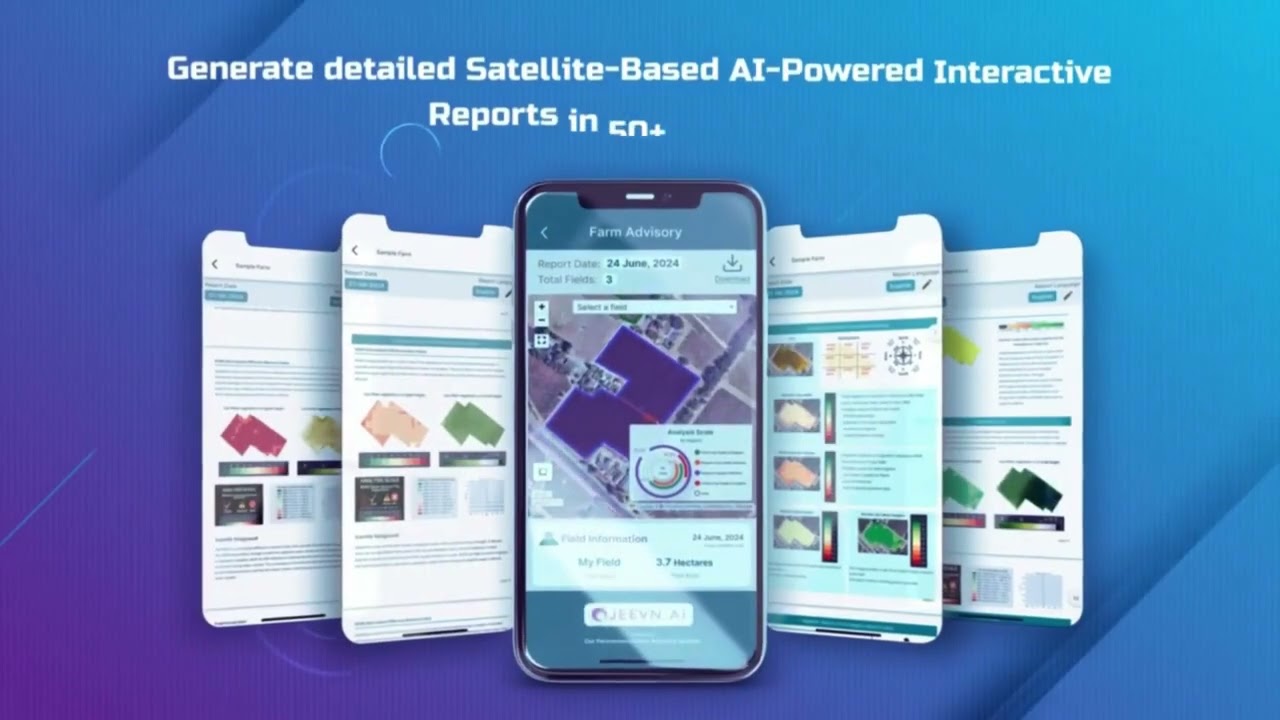
- Jeevn AI Advisory Platform: By combining AI, satellite data, and real-time analytics, Jeevn AI empowers users with tailored advice on weather, irrigation, and input timing.
- Blockchain-Enabled Product Traceability: Our blockchain traceability tools create transparent supply chains—from the farm to the consumer.
- Fleet and Resource Management Tools: We help users optimize logistics and asset usage, improving efficiency across agriculture, mining, and infrastructure sectors.
- APIs for Developers: With our easy-to-integrate APIs, businesses and developers can embed advanced satellite and weather insights into their platforms, amplifying the impact of smart agriculture worldwide.



Want to scale your agricultural operations and access cutting-edge monitoring? Get started with Farmonaut’s Large Scale Farm Management platform. Discover how to manage farms, forests, and plantations at scale using affordable satellite-driven insights.
For lenders and insurance providers, our crop loan and insurance solutions are helping verify claims and improve access to agricultural finance—visit crop loan & insurance for more details.
With a commitment to affordable subscriptions, we enable every user—from individual farmers to large organizations—to benefit from the latest high tech agriculture equipment and insights. See our flexible plans below!
Future Trends: Where is High Tech Agriculture Headed Post-2026?
Looking beyond 2026, the high tech agriculture sector holds spectacular promise. Here’s what’s on the horizon:
- Collaborative Robotics (“Cobots”): Smart machines working alongside human operators for precision tasks in complex environments.
- Massive IoT Networks: Billions of interconnected sensors will relay crop, soil, equipment, and logistics data for global predictive models.
- Regenerative and Carbon-Negative Systems: Carbon farming (learn more about carbon footprinting) is becoming a cornerstone for sustainable agriculture—locking atmospheric carbon in soil while restoring degraded lands.
- AI-Powered Market Platforms: Real-time algorithms for supply, demand, and pricing will empower producers to adjust output and supply chain flows instantly.
- Automated Financing and Insurance: Seamlessly satellite-verified claims and finance solutions that remove friction from agricultural lending.
- Augmented Reality Training: On-the-job guidance for machinery repair, scouting, or planting using AR/VR overlays and remote diagnostics.
The future of agriculture equipment is deeply digital. By combining data-driven decision-making, advanced analytics, and sustainable practices, both current and future generations of farmers will sustain a rapid rise in food production while safeguarding our planet.
FAQs: High Tech Agriculture Equipment 2026
What is high tech agriculture equipment?
High tech agriculture equipment refers to advanced machinery and systems—such as drones, autonomous tractors, smart irrigation, and AI-powered sensors—that leverage modern technology to make farming more precise, efficient, and sustainable.
How does precision agriculture support sustainable farming?
Precision agriculture uses GPS, IoT sensors, and AI analytics to apply water, fertilizers, and pesticides exactly when and where needed. This reduces input waste, lowers environmental impact, and maximizes crop yields, supporting both productivity and sustainability.
What role does AI play in agriculture technical management?
AI enables predictive modelling, early disease detection, resource optimization, and automated decision-making—helping farmers respond proactively to climatic, market, and operational challenges.
Which high tech equipment are most widely adopted in 2026?
By 2026, precision drones, smart irrigation systems, AI-driven soil health sensors, and autonomous tractors are among the most widely adopted solutions—offering measurable benefits in yield and sustainability.
Can small farmers access high tech agriculture solutions?
Yes! Cloud-based platforms and subscription models (like Farmonaut’s) make advanced monitoring, analytics, and management tools affordable for farms of all sizes—including smallholders.
How does digital traceability benefit the food supply chain?
Digital traceability ensures transparency from production to distribution, enabling better compliance, food safety, and consumer confidence. It also supports carbon and sustainability claims.
Where can I learn more or try high tech agriculture solutions?
Visit Farmonaut’s app platform for a demo, or explore our developer documentation to build custom agriculture solutions.
Conclusion: Embracing the High-Tech Agriculture Revolution
As we move into 2026 and beyond, high tech agriculture equipment stands front and center in addressing the world’s most significant farming challenges. By integrating smart data systems, AI-powered analytics, and resilient machinery, farmers and agriculture businesses are redefining productivity, sustainability, and food security.
At Farmonaut, our mission is to make this transformation affordable, accessible, and actionable for all—empowering users with high-tech agriculture tools, data analytics, and real-time insights via web and mobile apps. As the sector continues to grow, innovate, and adapt, the synergy between tradition and technology will lead us toward a sustainable, resilient, and secure food future worldwide.
Ready to explore the future of agriculture? Try our platform today, or visit our API Developer Docs for technical integration and innovation in your projects.

 Inclusive Growth Chain
 AdBio
AdBio MISE Maroc
 Drift-Sense
 NWNS
NWNS Red August Group
 Farm Inc
 WeMe Global
 Agrotoken
 Blue BearX
 Insignito
 Croptimum
 DnCubed
 Field Capacity
 Indosistim Teknologi
 Liquify Digital
 CU Foods
 BeyondTech Global
