

Precision Agricole: 7 Trends Revolutionizing Farming 2026
Meta Description:
Precision agriculture: Transforming farming for a sustainable future in 2025 and beyond with actionable data, advanced sensors, and innovative IoT systems.
- Introduction: Precision Agricole and the Future of Farming
- Why Precision Agriculture is a Game Changer
- Seven Technology Trends Revolutionizing Precision Farming by 2026
- Comparative Trends Impact Table
- Innovative Solutions in Precision Agriculture for 2026
- Farmonaut: Making Precision Agricole Accessible
- Challenges & Best Practices in Precision Agriculture
- FAQs: Transforming Farming with Precision
- Key Takeaways & Action Points



Introduction: Precision Agricole and the Future of Farming
Precision agriculture (also known as precision farming, or agriculture de précision) represents a revolutionary approach to farming for a sustainable future. Heading into 2026, it becomes the critical system at the heart of addressing global challenges—like food security, climate change, and resource scarcity. By leveraging data-driven insights, advanced sensors, the Internet of Things (IoT), AI, and automation, it’s rapidly transforming how farmers manage soil, water, nutrients, and crops in real time.
This blog explores how seven critical trends—from remote sensing to blockchain—are pushing the boundaries of agriculture toward greater sustainability, efficiency, and profitability.
Modern farmers don’t manage crops “by the acre” anymore; they optimize production down to field zones, or even individual plants, using detailed analytics and IoT systems for precision and efficiency.
Why Precision Agriculture is a Game Changer
The shift toward precision agriculture is not just about new gadgets or buzzwords. It’s a fundamental approach that optimizes the entire system of production using data collected from a variety of modern sources. Here’s how this innovative trend is defining agriculture in 2025 and beyond:
- ✔ Boosts Yields: Crop management at the micro-level translates to higher average yields.
- 📊 Cuts Input Costs: Tailored recommendations for fertilization, irrigation, and pesticide use reduce waste—and associated costs.
- ⚠ Mitigates Risk: Site-specific management lets farmers address weather variability, pest populations, and disease threats in real time.
- ✔ Enhances Environmental Responsibility: Targeted actions shrink the environmental footprint of farming by reducing chemical and water usage.
- 🛰 Improves Data-Driven Decisions: Smart sensors, drones, and satellite imagery make continuous field monitoring possible.
The Core Principles of Precision Agricole
- Data-Driven Management: Use of actionable insights from sensors, imagery, and analytics for better decision-making.
- Targeted Resource Application: Inputs (e.g., water, nutrients, pesticides) applied only where and when needed.
- Sustainability Focused: Designed to minimize waste, preserve the environment, and improve ROI for farmers.
- Integrated Digital Platforms: Connectivity across devices, from drones to field equipment to mobile apps.
- Constant Monitoring: Satellite, IoT, and sensor-based surveillance to obtain real-time updates on crop conditions.

Seven Technology Trends Revolutionizing Precision Farming by 2026
Precision agriculture represents a revolutionary approach to how farmers interact with their fields. Let’s break down the seven most significant technology trends shaping precision farming for 2026 and beyond:
- AI-Driven Drones for Real-Time Crop Analysis
- IoT Soil Sensors & Networks
- Satellite Remote Sensing & Analytics
- Smart Irrigation Systems (Variable-Rate)
- Autonomous Farming Machinery
- Blockchain-based Traceability
- Predictive Analytics & Weather Intelligence
1. AI-Driven Drones for Real-Time Crop Analysis
- How it Works: Drones equipped with multispectral cameras and AI software fly over farms, capturing detailed imagery and identifying issues—such as pest populations, nutrient deficiencies, or disease pockets—in real time.
-
Benefits:
- Early detection of problems, so precise interventions can be deployed.
- Reduced chemical use by targeting only affected zones instead of blanket applications.
- Higher yields and optimized production from granular insights.

Did you know? In 2026, AI-powered drones will be standard on many commercial farms, helping to realize the promise of agriculture de précision.
2. IoT Soil Sensors & Networks
- How it Works: Advanced wireless soil sensors are placed across farmland to monitor pH, moisture, temperature, and nutrient content—delivering real-time notifications and datasets to a centralized system.
-
Benefits:
- Customized irrigation scheduling for each field zone, reducing water usage.
- 30% fertilizer reduction on average, thanks to precise input applications ( “Smart sensors can reduce fertilizer use by up to 30% in precision farming operations.” ).
- Prevents over-irrigation or under-fertilization, which means healthier soil and less runoff.

3. Satellite Remote Sensing & Analytics
- How it Works: Satellite imagery captures multi-spectral data about crop health, soil conditions, and overall vegetation status, processed by AI to reveal actionable patterns.
-
Benefits:
- Large-scale monitoring of land—even in remote or inaccessible fields.
- Historical trend analysis for better long-term decision making.
- Early warning systems for disease, drought, and pest outbreaks.
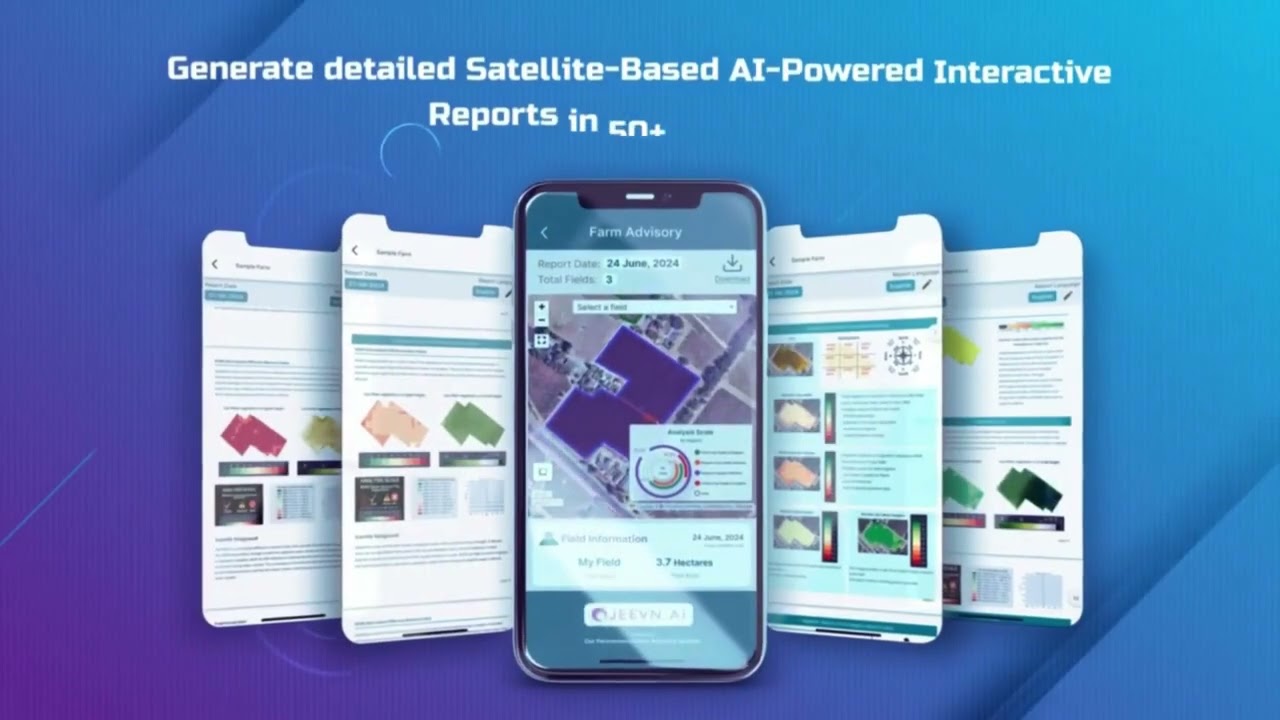
Satellite-based crop health monitoring is now available easily. If your goal is to track vegetation health, soil moisture, or analyze NDVI (Normalized Difference Vegetation Index), using real-time remote-sensing platforms delivers comprehensive oversight.
Interested in satellite-derived agricultural monitoring?
Try the Farmonaut Platform for Remote Sensing & AI Monitoring today.
4. Smart Irrigation Systems (Variable-Rate)
- How it Works: Smart irrigation platforms use sensors and weather data—along with crop evapotranspiration models—to automate or recommend optimal watering schedules for different zones within a field.
-
Benefits:
- Conserves water by using only the minimum necessary amount.
- Reduces labor costs and fertilizer runoff from overwatering.
- Adaptive to climate change as weather variabilities increase.

Looking for seamless irrigation management?
Check out Farmonaut’s Fleet Management System for optimizing irrigation equipment and resource use.
5. Autonomous Farming Machinery
- How it Works: Autonomous tractors and sprayers use GPS, machine learning, and advanced navigation to operate with minimal human intervention—making field passes, planting, spraying, and harvesting with pinpoint precision.
-
Benefits:
- Addresses labor shortages in agriculture, especially as skilled workers become scarcer.
- Highly repeatable and scalable operations reduce error and physical fatigue.
- Reduces input wastage and emissions by applying resources only where required.
6. Blockchain-Based Traceability
- How it Works: Blockchain records each step of the food production process, from planting to delivery, ensuring every input and event is digitally verified and impossible to tamper with.
-
Benefits:
- Strengthens consumer trust through verified, transparent supply chains.
- Facilitates compliance with food safety and export regulations.
- Potential to command premium prices for verified, sustainable produce.
For state-of-the-art blockchain agriculture solutions, visit Farmonaut’s Blockchain-Based Product Traceability.

7. Predictive Analytics & Weather Intelligence
- How it Works: Leveraging historical and real-time datasets (satellite, weather stations, sensors), AI analytics platforms generate actionable recommendations—such as optimal planting dates, crop rotations, or pest alerts.
-
Benefits:
- Reduces risk associated with unpredictable climate and other global challenges.
- Saves input costs while boosting yields year over year.
- Early pest/disease detection before crop loss reaches critical levels.

Next-gen predictive analytics are available to every farmer, thanks to AI-based advisors. For on-demand recommendations and advanced operational planning, explore Farmonaut’s Carbon Footprinting & Sustainability Solutions.
Comparative Trends Impact Table: Technology’s Influence on Farming Metrics through 2026
| Trend Name | Brief Description | Estimated Yield Increase (%) | Estimated Cost Reduction (%) | Estimated Sustainability Impact | Adoption Rate by 2026 (%) |
|---|---|---|---|---|---|
| AI-Driven Drones | Autonomous drones analyzing field health, pest, and disease in real time. | 10-15% | 8-12% | 30% reduction in pesticide use | 55% |
| IoT Soil Sensors | Wireless sensors monitoring soil moisture, pH, nutrients, and temperature across zones. | 12-18% | 10-20% | 20-35% decrease in water & fertilizer use | 65% |
| Satellite Remote Sensing | Multispectral satellite imagery and analytics platforms for crop health and trends. | 8-15% | 5-10% | 15% reduction in unplanned losses | 70% |
| Smart Irrigation | Variable-rate and automated irrigation based on sensor and weather data. | 9-13% | 12-20% | Up to 40% reduction in water use | 60% |
| Autonomous Machinery | Self-driving tractors/sprayers with machine learning and GPS guidance. | 7-11% | 20-30% | 25% decrease in fuel/emissions | 40% |
| Blockchain Traceability | Decentralized digital ledgers for supply chain transparency and security. | 3-6% | 4-8% | 50% less fraudulent claims | 25% |
| Predictive Analytics | AI-driven analytics for forecasting weather, pests, and optimal scheduling. | 12-20% | 15-22% | 35% less crop failure from known threats | 50% |
Innovative Precision Agriculture Solutions for 2026
Each of the trends above does not stand alone. In fact, their combined application—along with AI-based platforms—enables next-level results for farmers and agricultural businesses. Here’s how these pieces fit together:
- Combining Datasets: Cross-referencing satellite, soil sensor, and drone analytics enables holistic farm oversight.
- Decision Support: Digital advisors offer field-specific guidance, boosting productivity & sustainability.
- Traceable Supply Chains: Blockchain links harvests to consumers, retailers, and exporters transparently.
- Autonomous Operations: Driverless tractors run entire operations overnight, guided by smart algorithms.
- Real-Time Alerts: On unforeseen weather or pest threats, instant notifications dispense targeted advice.
Visual List: Key Components of a Precision Agriculture Ecosystem
- 🛰 Satellite Imaging — Gives wide-area, high-frequency views of crop conditions.
- 🌱 IoT Sensors — Measure ground-level factors in real time (moisture, pH, nutrients).
- 🚁 AI Drones — Pinpoint disease, weed, or pest outbreaks fast.
- 🤖 Autonomous Equipment — Plant, spray, and harvest with robot-like precision.
- 🔗 Blockchain Networks — Certify farm outputs for supply chain integrity.
- 📈 Data Analytics Engines — Interpret field conditions and generate recommendations.
- 💧 Smart Irrigation Controllers — Optimize water as field and weather change.
Farmonaut: Making Satellite-Driven Precision Agricole Affordable and Accessible
We at Farmonaut firmly believe that the future of precision agriculture lies in making actionable insights accessible to all—from individual farmers to large-scale agricultural enterprises. Our platform addresses this need by offering:
- 📡 Satellite-Based Crop Monitoring: Track crop health (NDVI), soil moisture, and other key parameters, with multispectral imaging and AI analytics.
- 📲 AI-Driven Advisory (Jeevn): Receive tailored strategies and weather insights for in-field decisions via web, Android, or iOS app.
- 🔗 Blockchain Traceability: Secure and transparent product tracking from farm to table, boosting trust and market value.
- 🚚 Fleet & Resource Management: Optimize the use and maintenance of equipment and vehicles to drive down operation costs.
- 🌎 Environmental Impact Monitoring: Carbon footprint tracking for sustainable compliance and branding.
Discover Large-Scale Precision Farm Management Tools with Farmonaut—ideal for agribusinesses aiming to optimize outputs across hundreds or thousands of hectares.
Mobile Apps, APIs, and Real-Time Access
You can access Farmonaut’s tools directly through our web and mobile apps, or integrate our data into your internal systems via our Precision Agriculture API.
Developers can leverage detailed documentation at Farmonaut Satellite API Developer Docs.

Challenges & Best Practices in Precision Agriculture Adoption
Despite rapid adoption of precision systems, several challenges and potential missteps remain. Here’s how to maximize benefits from agriculture de précision technologies:
- ⚠ Digital Divide: Smallholder and resource-limited farmers may face barriers to adoption—such as connectivity issues or initial costs. Pro Tip: Mobile-based solutions and modular subscriptions help bridge this gap.
- ⚠ Data Privacy: With the increase in shared field data and centralized analytics, ensuring farmer data security is a growing priority.
- ⚠ Ongoing Technical Support: Advanced equipment and IoT systems require regular updates and maintenance—continuous support is essential for reliability.
- ⚠ Integration Complexity: Syncing legacy equipment and multiple data streams remains a technical challenge for some operations.
- ⚠ Local Adaptation: Each region or microclimate presents unique variations; customizable analytics are critical for optimum results.
FAQs: Transforming Farming with Precision Agricole
What is precision agriculture and how does it differ from traditional farming?
Precision agriculture leverages detailed data from sensors, IoT devices, and satellite imagery to optimize every farming activity—whereas traditional farming relies on averages and broad field management. The result: higher yields, lower costs, and much less waste. For current figures on uptake, robotics and costs, see precision agriculture adoption and costs across farms of different sizes.
How do IoT soil sensors reduce fertilizer use?
By providing real-time feedback on soil nutrient levels, moisture, and temperature, IoT sensors allow for highly targeted fertilizer application, which can lower overall input by up to 30% and minimize environmental runoff.
Can precision agriculture really support climate adaptation?
Yes. Smart irrigation, predictive analytics, and adaptive crop planning empower farmers to respond dynamically to changing weather patterns and microclimate shifts, protecting crops and stabilizing yields amid increasing volatility.
Is Farmonaut a farm equipment manufacturer or an online marketplace?
No, Farmonaut is neither. We provide satellite technology platforms, AI analytics, and blockchain traceability for agriculture and related industries, making sophisticated monitoring and advisory tools accessible on the web and mobile devices.
Where can I access Farmonaut’s services?
You can use Farmonaut’s apps and web platform, or integrate satellite data through our API.
Key Takeaways & Action Points
- ✔ Precision agriculture is redefining global farming by making every decision data-driven and efficient.
- ✔ Smart technology adoption in IoT, satellite sensing, AI, and blockchain enhances farm productivity and sustainability.
- ✔ Farmers using advanced solutions report significant cost savings and improved resilience to climate variability.
- ✔ Farmonaut’s platform is ideal for satellite crop monitoring, resource management, traceability, and environmental compliance.
- ✔ Scalable mobile and API solutions ensure every business can access actionable insights—regardless of size.
Visual List: Five Steps to Accelerate Your Precision Agricole Journey
- 🛰 Adopt Satellite & Sensor Monitoring
- 💧 Implement Smart Irrigation & Fertilization
- 📱 Deploy Digital Apps for In-Field Analytics
- 🔗 Ensure Supply Chain Traceability with Blockchain
- 🤖 Integrate Autonomous Equipment & Predictive AI
In summary, precision agriculture is no longer just a vision—it’s the critical strategy for ensuring a sustainable, resilient, and profitable farming future as we navigate the challenges of 2026 and beyond. By integrating advanced technologies and adopting a data-driven system, farmers, industry leaders, and policymakers can secure food supplies, combat climate risk, reduce waste, and grow economically—transforming agriculture worldwide for generations to come.

 Raintree Computing
 Agricultural Credit Policy Council
 BayWa
BayWa MCSOD
MCSOD Marei Nursery
 eKGIS
eKGIS Mostas Tech
 Native Seeds
 Andex
Andex FCF India
 Unifrutti Gulf
 Deluxe Conseil
 TVS Electronics
 WICO
WICO Chimera Innovation
 SkyHarvest
