

Precision Farming Components: The 9 That Drive Crop Optimization
Reviewed September 2026 against USDA Economic Research Service data and the American Spray Drone Coalition’s pricing guide.
Try it: Run your own numbers →
What Are the Components of Precision Farming?
The components of precision farming are the specific technologies that let a farm treat unequal ground unequally: sensing and data collection, GNSS positioning and field mapping, variable-rate input control, decision-support analytics, automated and precision-guided machinery, adaptive planting systems, forestry and land-management extensions, organic-compliant monitoring, and the connectivity infrastructure that ties all of it together. That’s nine components, and every one of them exists to answer the same question with better data than a uniform application ever could: where, exactly, does this acre need water, nitrogen, or a pesticide pass — and where does it not.
As of 2023, 27% of US farms report using some form of precision agriculture practice, according to USDA’s Economic Research Service (USDA ERS, Charts of Note). That average hides a wide split by farm size and by component — GPS guidance is used on 70% of large-scale crop farms but only 52% of midsize operations, while soil moisture sensors sit under 10% of irrigated acreage nationally (USDA ERS pub #105893). Precision crop spraying, input optimization, and the underlying components of GPS in agriculture are separate decisions with separate adoption curves, cost structures, and payback periods — this guide breaks out each one on its own terms rather than treating “precision farming” as a single line item.
Why These Components Matter for Crop Optimization
Crop optimization and crop input optimization are not the same goal, even though they’re often searched as if they were. Crop optimization means maximizing yield and quality per acre. Input optimization means minimizing the fertilizer, water, and chemical spent to get there — and the two only align when a farm has the data to know which zones respond to more input and which don’t. That’s the actual job of every component below.
- ✔ Input efficiency: 37.2% of Midwest grain farmers adopted variable-rate fertilizer application specifically as a cost-adaptation response to high fertilizer prices in 2022, per USDA-affiliated research in Choices Magazine — proof that input optimization tools get adopted fastest when input costs spike, not as a baseline good-practice choice.
- 📊 Data-driven management: Remote and on-field sensing gives real-time visibility that replaces calendar-based spraying and blanket fertilization with zone-specific timing.
- ⚠ Risk reduction: Early detection of moisture stress, nutrient gaps, and disease pressure turns a reactive season into a proactive one.
- 🌱 Soil health and longevity: Targeted cropping and irrigation management sustain productivity across seasons instead of mining the same zones every year.
- 🔒 Traceability: Digital record-keeping supports compliance and access to premium and export markets.
GPS-guided machinery is the single most widely adopted component of precision farming among large operations — 70% of large-scale US crop farms used GPS guidance systems in 2023, compared with 52% of midsize farms, according to USDA ERS.
The 9 Components of Precision Farming
1) Sensing and Data Collection: Foundation of Field Intelligence
The first component of precision farming is in-field sensing. Soil sensors measure moisture, temperature, electrical conductivity, nutrient levels, pH, and salinity. Crop sensing uses multispectral and hyperspectral imagery, NDVI indices, and chlorophyll proxies to gauge plant vigor and disease risk. Weather stations and microclimate monitors capture the local variability that drives irrigation and spraying timing.
Adoption here is uneven and that unevenness is the real story: over 40% of US grain crop acres now carry yield monitoring systems, but soil moisture sensors remain on under 10% of irrigated acreage nationally as of the 2023 USDA baseline (USDA ERS pub #105893). That gap matters for anyone comparing “components of precision agriculture” lists online — yield monitoring and moisture sensing are frequently bundled together as if adoption tracks evenly, and on US farms it does not.

In-field sensors and remote satellite-based analytics, like those offered via Farmonaut’s Carbon Footprinting platform, provide actionable environmental insight and support compliance with sustainability targets without requiring a farm to install a dense in-ground sensor network first.
2) Positioning & Field Mapping: One of the Core Components of GPS in Agriculture
The second component is GNSS positioning, field mapping, and zoning — the piece most people mean when they search for “components of GPS in agriculture.” Sub-meter GNSS accuracy underpins guidance, boundary mapping, and repeatable pass-to-pass operations. Combined with drone or RPAS survey data, it enables management zones based on real topography rather than a single farm-wide average.
- 📍 GNSS & drones: Deliver sub-meter accuracy for guidance, boundary mapping, and season-over-season repeatability.
- 🗺 Field zoning: Maps soil types, moisture gradients, and yield history into high-, medium-, and low-input zones for targeted application.
GPS guidance is the most widely adopted single component in this list — 70% of large-scale US crop farms and 52% of midsize farms used GPS guidance systems in 2023 (USDA ERS, Charts of Note 110550). USDA ERS and GAO reporting bundle standard GPS and RTK (real-time kinematic) guidance together in published figures — there is no disaggregated adoption rate for RTK specifically, so a farm comparing the two should get vendor-specific accuracy and subscription quotes rather than expect a published national RTK adoption number.
3) Resource Management & Input Optimization: Precision Crop Spraying and VRT
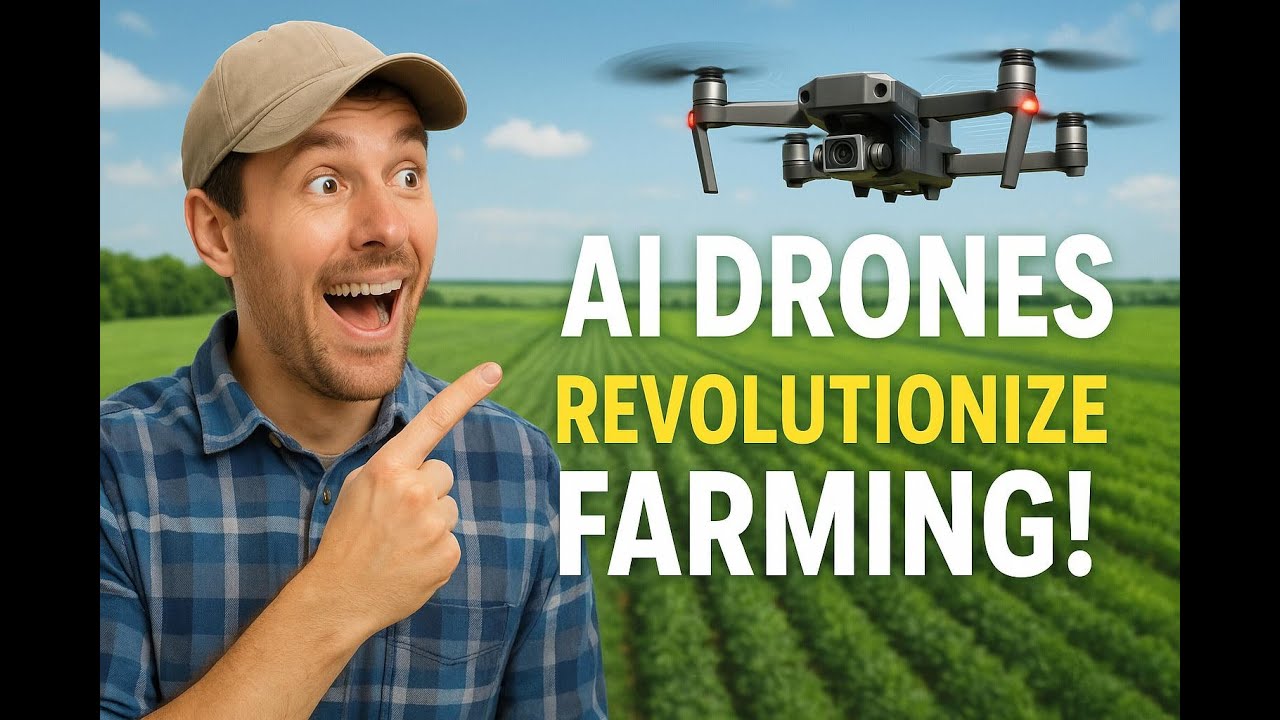
This is the component that answers “crop input optimization” and “precision crop spraying” directly. Variable Rate Technology (VRT) adjusts fertilizer, pesticide, and water rates by zone instead of applying one blanket rate across a field. Precision crop spraying — whether from ground rigs or drones — targets the pass to where pest, weed, or disease pressure actually is.
Drone spraying costs a national average of $13 per acre for contracted service, per the American Spray Drone Coalition’s 2025 pricing guide (agdronesprayers.com). A farm buying its own equipment instead of contracting is looking at roughly $25,000 for a ready-to-fly spray drone with 10–26 gallon tank capacity, as of the same 2025–2026 guide. The Coalition’s data shows drone service pricing has fallen 38% year-over-year between 2024 and 2025 — check the guide directly for the current quarter’s number before budgeting, since this segment is still repricing fast.
- 🌱 VRT application: Adjusts fertilizer, water, and pesticide rates to zone-specific needs, cutting over-application.
- 💧 Irrigation optimization: Uses soil moisture targets and evapotranspiration (ET) models to time water delivery.
- 💊 Nutrient management: Delivers site-specific fertilizer timing and formulation instead of a single farm-wide rate.
On the adoption side: 37.2% of Midwest grain farmers adopted variable-rate fertilizer specifically in response to high fertilizer prices in 2022 (Choices Magazine). That’s a cost-driven adoption spike, not a steady baseline — expect the rate to track fertilizer prices going forward rather than rising in a straight line.
Precision Spraying Cost Calculator
Compare contracted drone spraying against owning a spray drone outright for your own acreage and spray frequency.
Run your own numbers
Assumptions: uses the American Spray Drone Coalition’s national average contracted rate ($13/acre) and ready-to-fly drone price ($25,000) as defaults — both editable. Excludes financing interest, maintenance, pilot certification/training costs, and chemical costs, which are the same under either ownership model. Amortization is straight-line, not a full depreciation or tax calculation.
4) Decision Support & Analytics: Turning Data Into Action
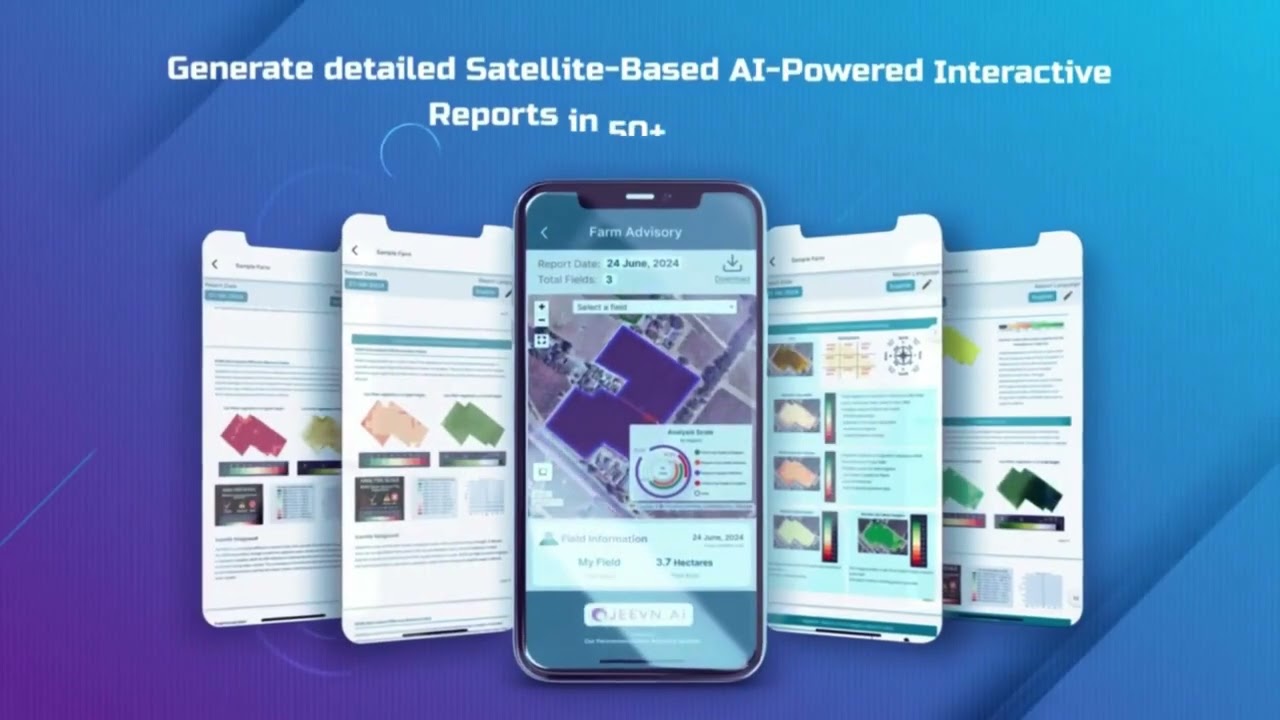
Sensing and mapping only matter if the data becomes a decision. Decision support platforms aggregate soil, crop, sensor, and weather data, then apply machine learning and anomaly detection to forecast risk and flag interventions before they become losses.
- 🧠 Integrated data platforms: Aggregate soil, crop, sensor, and environmental data into one view.
- 📈 Advanced analytics: Machine learning and yield forecasting identify trends and forecast risk ahead of harvest.
- ⚡ Actionable alerts: Timely prescriptions for irrigation, fertilization, and disease response reduce both waste and operational stress.
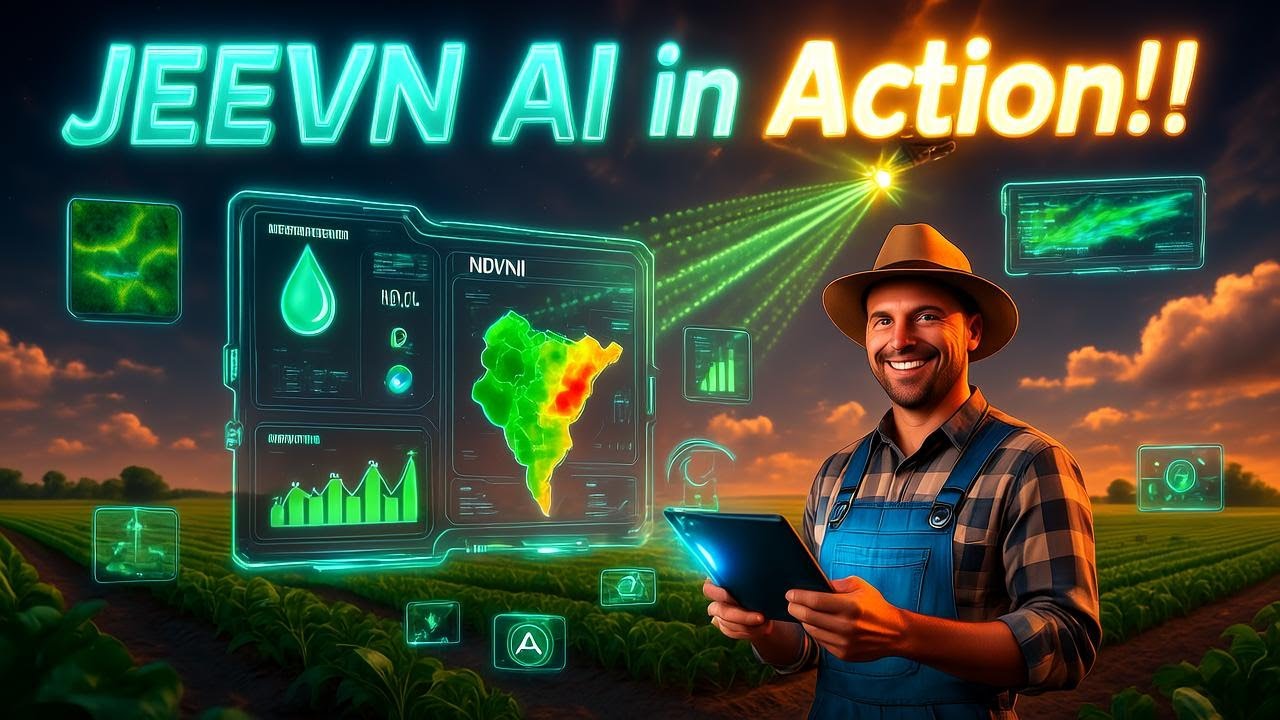
Farmonaut’s Jeevn AI Advisory System analyzes multispectral data for tailored recommendations, weather forecasts, and strategy planning across agriculture and allied sectors.
5) Automation & Machinery: The Engine of Efficiency
Automated and precision-guided machinery — autonomous tractors, robotic sprayers, and guided planters — scale the other eight components into repeatable field operations without proportional labor growth.
- 🚜 Autonomous equipment: Self-driving tractors, drones, and robotic sprayers enable repeatable input application while cutting labor hours and pass-to-pass error.
- 🧾 Machinery data capture: Automated logging of operations supports traceability and regulatory compliance.
- ⚗️ Precision sprayers & weeders: Lower chemical volume and reduce off-target drift.
For remote, large-scale monitoring and logistics, Farmonaut’s Fleet Management platform supports both asset efficiency and sustainability tracking across a working fleet.
6) Planting & Cropping Systems: Growing for Resilience
Adaptive, data-driven planting strategies and diversified cropping systems translate mapped variability into decisions made at the seed level, not just the input level.
- 🌰 Variable rate planting: Modulates seed rates by soil and moisture zone to maximize establishment and cut seed waste.
- 🌿 Cover crops & residue management: Aligns cover cropping and residue return with soil health and productivity goals for each zone.
- 📊 Phenology & stress indices: Monitors growth stages and biotic/abiotic stress signs to time harvest and inform variety selection.
- 🌱 Higher germination rates in variable soils
- 🔬 Better nutrient uptake and resilience by zone
- 💰 Reduced seed and input costs where rates are cut in low-response zones
- 🏆 More consistent yield and quality across a field’s full range of soil types
- ♻️ Sustained soil health from residue management matched to zone needs
7) Forestry & Land Management: Extending Precision Beyond Croplands
Precision components are not limited to row crops. Forestry and land management use the same sensing and GNSS mapping stack for site-specific planting, thinning, and environmental monitoring.
- 🌲 Forestry applications: Remote sensors, GNSS mapping, and satellite imagery support growth monitoring, yield estimation, and carbon accounting.
- 🌳 Reforestation & agroforestry: Targeted planting and input delivery improve establishment success and biodiversity outcomes.
For institutional and government users, Farmonaut Crop Plantation & Forest Advisory supports multi-sensor monitoring across landscapes where agriculture intersects forestry and land management.
8) Organic Farming & Sustainability: Precision Meets Certification
For growers managing organic components, precision technologies help maintain certified standards and soil health without reverting to manual, calendar-based scouting.
- 🌾 Cover cropping & soil monitoring: Deploys targeted cover crops and moisture monitoring using organic-approved amendments based on sensor data.
- 🦠 Biocontrol & targeted interventions: AI-based pest and disease detection supports rapid, organic-approved remedies instead of blanket treatment.
- 📝 Record-keeping & traceability: Digital compliance logs support audits, certification renewal, and farm-to-buyer transparency.
To strengthen transparency in organic value chains, see Farmonaut’s Blockchain Traceability for Agriculture, which provides end-to-end trackability of produce and supports compliance with organic and environmental standards.
- 🌱 Compost application targeted by soil status
- 🦗 Pest monitoring timed to biocontrol release windows
- 🍃 Real-time nutrient monitoring using organic-approved indicators
- 📋 Certified record-keeping with digital audit trails
- 🌎 Biodiversity monitoring via remote imaging
9) Infrastructure & Data Governance: The Digital Backbone
The final component is the connectivity and governance layer that ties field devices, machinery, and analytics platforms into one responsive system.
- 🌐 Connectivity & cloud platforms: Reliable networks, cloud storage, and secure APIs enable seamless data flow and remote management.
- 🔗 Data interoperability standards: Ensure sensors, equipment, and analytics platforms from different vendors can actually share data.
- 🔒 Privacy & ownership: Governance policies define who accesses field-generated data — critical for compliance and trust.
For developers and managers needing custom integrations, Farmonaut’s API and API Developer Docs provide access to satellite and weather datasets supporting automation and tailored analytics.

Comparison Table: Adoption, Cost, and Function
Figures below are drawn from USDA ERS’s 2023 baseline data and the Choices Magazine 2022 Midwest survey; USDA updates full adoption figures with each Census of Agriculture cycle (every 5 years — last full Census 2022, next 2027), with interim estimates published annually via ERS’s Charts of Note series linked throughout this article.
| Component | Primary Function | US Adoption (published figure) | Source & Year |
|---|---|---|---|
| GPS-guided machinery | Precision navigation, repeatable passes | 70% of large-scale farms; 52% of midsize farms | USDA ERS, 2023 |
| Yield monitoring systems | In-combine yield mapping by grain crop | Over 40% of grain crop acres | USDA ERS, 2023 |
| Soil moisture sensors | Real-time soil water status for irrigation timing | Under 10% of irrigated acreage | USDA ERS pub #105893, 2023 |
| Yield & soil maps (combined) | Field-level zoning and management-zone delineation | 68% of large-scale farms | USDA ERS, 2023 |
| Variable-rate fertilizer (VRT) | Zone-based nutrient application | 37.2% of Midwest grain farmers (adaptation-driven) | Choices Magazine / USDA, 2022 |
| All precision practices (any) | Composite of all component types | 27% of all US farms | USDA ERS, 2023 |
| Drone spraying (contracted service) | Targeted pesticide/fungicide application | $13/acre national average | American Spray Drone Coalition, 2025 |
| Spray drone (owned, ready-to-fly) | 10–26 gallon capacity, owner-operated | ~$25,000 purchase price | agdronesprayers.com, 2025–2026 |
Highlight Boxes and Insights
Benefits and Challenges of Precision Farming Components
Benefits
- ✔ Improved yield and crop quality: Matching inputs to zone-specific soil and status data improves outcomes across high-, medium-, and low-input areas of the same field.
- ✔ Resource conservation: Targeted fertilizer, water, and pesticide application cuts waste and cost — the 37.2% Midwest VRT adoption spike in 2022 is a direct example of cost pressure driving efficient input use.
- ✔ Risk management: Early alerts on stress, nutrient deficiency, and disease cut response time relative to fixed-schedule scouting.
- ✔ Traceability and market access: Digital records support certification and premium-market compliance.
- ✔ Sustainability and soil health: Cover cropping, balanced nutrient timing, and reduced-pass machinery align with regenerative goals.
Challenges
- ⚠ Capital cost: A ready-to-fly spray drone runs about $25,000 (2025–2026 pricing); sensor networks and GNSS-guided equipment carry separate upfront costs on top of that.
- ⚠ Data integration: Syncing sensors, machinery, and analytics platforms from different vendors remains an ongoing technical task, not a one-time setup.
- ⚠ Training and usability: Adoption depends on platforms that are easy to navigate and deliver clear actions, not raw data dumps.
- ⚠ No published RTK-specific adoption rate: USDA ERS and GAO bundle standard and RTK GPS guidance into one figure, so comparing RTK against standard GPS on your own farm requires vendor quotes, not a national benchmark.
- ⚠ Cybersecurity: Greater connectivity requires real data governance and privacy protocols for every stakeholder with field access.
Farmonaut: Satellite Tools for Crop Input Optimization
Farmonaut combines satellite-driven analytics, AI advisory, and blockchain traceability into an entry point for the sensing, decision-support, and traceability components covered above — without requiring a farm to first build a dense in-ground sensor network.
- ✔ Satellite-based monitoring: Real-time crop, forestry, and land health tracking using multispectral imagery, NDVI, soil, and environmental data.
- ✔ AI advisory (Jeevn AI): Custom strategies, weather forecasts, and operational guidance across agriculture, forestry, and land management.
- ✔ Blockchain traceability: Secure, transparent records for supply chains and organic compliance.
- ✔ Fleet management tools: Equipment efficiency and logistics tracking for automation-stage operations.
- ✔ Environmental impact monitoring: Carbon footprint and input-use analytics for sustainability reporting.
Access is available via Android, iOS, web browser, and custom API for teams building their own integrations.



Explore a free trial or the subscription packages below, built for farms, businesses, and government programs of any size.
Frequently Asked Questions
- What are the components of precision farming?
- Nine components: sensing and data collection, GNSS positioning and field mapping, resource management (VRT and precision spraying), decision-support analytics, automated machinery, adaptive planting systems, forestry and land-management tools, organic-sustainability monitoring, and data infrastructure/governance.
- What is included in the components of GPS in agriculture specifically?
- GNSS receivers for sub-meter positioning, guidance systems for auto-steer, boundary and yield mapping software, and RTK correction signals where used. USDA ERS reports 70% adoption on large-scale farms and 52% on midsize farms for GPS guidance as a category (2023), without breaking out RTK separately.
- How much does precision crop spraying cost?
- Contracted drone spraying averages $13 per acre nationally (American Spray Drone Coalition, 2025). A ready-to-fly owned spray drone with 10–26 gallon capacity costs about $25,000 (2025–2026 pricing). Use the calculator above to compare the two for a specific acreage and spray schedule.
- What does crop input optimization actually reduce?
- Fertilizer, water, and pesticide volume applied per acre, by matching rate to zone-specific need instead of a single field-wide rate. 37.2% of Midwest grain farmers adopted variable-rate fertilizer specifically as a response to high fertilizer prices in 2022 (Choices Magazine/USDA).
- Can precision farming support organic and sustainable certification?
- Yes. Precision components help maintain soil health, traceability, and certified input application while cutting environmental risk, through targeted cover cropping, biocontrol timing, and digital audit trails.
- Which Farmonaut services support these components?
- Farmonaut offers carbon monitoring, blockchain traceability, fleet management, and forest advisory tools, designed for integration with the components covered above.
Conclusion: Matching Components to the Problem You Actually Have
The nine components of precision farming aren’t a checklist to complete in order — they’re a set of independent decisions, each with its own adoption curve, cost, and payback period. GPS guidance is nearly mainstream on large US farms at 70% adoption; soil moisture sensing sits under 10% of irrigated acreage. Variable-rate fertilizer adoption tracks fertilizer prices, not a steady technology curve. Drone spraying costs have fallen 38% year-over-year as the equipment matures. None of that supports a single “precision farming adoption rate” — it supports picking the specific component that matches the specific input, cost, or risk a farm is actually trying to manage.
For a current number on any of the figures above, USDA ERS republishes precision-agriculture adoption data with each Census of Agriculture cycle (next full Census 2027, with annual interim updates via the Charts of Note series linked throughout this piece), and the American Spray Drone Coalition updates spray-drone pricing quarterly at the guide linked above.
Ready to start with the sensing and analytics layer? Explore satellite-powered tools below, sized for a single field or a multi-region operation.
Discussion
Questions, corrections or field experience? Share them below. First-time comments are reviewed before they appear, and your email is never published.
No comments yet. Be the first to add a question or your experience.

 Native Seeds
 Fresh Platter
 Andex
Andex FCF India
 Unifrutti Gulf
 Deluxe Conseil
 TVS Electronics
 BW Pipelines
 WICO
WICO Gen Chayat
 Chimera Innovation
 SkyHarvest
 Polaris Digitech
 Teledarbas
 Wild Oak Farm
 Licence holder · Niger · Gold










