

Remote Sensing Precision Agriculture: 2025 AI Playbook
Remote sensing precision agriculture has matured into an operational, multi-sensor toolset that improves productivity, cuts costs, and reduces environmental impact. In 2025, growers and forestry managers combine satellites, uav remote sensing agriculture, thermal, lidar, and sar to drive decisions in irrigation scheduling, nutrient detection, pest and disease scouting, yield prediction, and carbon accounting. This playbook explains platforms, sensors, data products, analytics, and adoption strategies—making it a practical guide and an “applications of remote sensing in precision agriculture: a review” in spirit.
SEO note: To support best practices, this article places the primary focus keyword in the title, URL suggestions, first 10% of content, and subheadings; maintains 1–1.5% keyword density; and provides a table of contents for navigation.
“Sentinel‑1 and Sentinel‑2 fusion improves crop classification F1-scores by 10–20% versus single-sensor baselines in studies.”
Table of Contents
- The 2025 Landscape of Remote Sensing Precision Agriculture
- Sensors and Platforms: Multispectral, Hyperspectral, Thermal, LiDAR, SAR
- Data Products and Analytical Methods: Indices, ML, and Explainable AI
- Operational Applications in Farm and Forestry
- Integration and Systems: IoT, Edge, FMIS, and Farmonaut
- Multi-Sensor Remote Sensing Comparison Matrix for Precision Agriculture (2025)
- Challenges and Constraints in 2025
- Adoption Playbook and 2025–2030 Outlook + FAQ
Remote Sensing Precision Agriculture in 2025: A Matured Toolset
By 2025, remote sensing precision agriculture is a mature, operational discipline. Core sensors—multispectral and hyperspectral imagers, thermal cameras, LiDAR, and SAR—deliver complementary data streams for mapping biomass, vigor, nutrient deficiencies, water stress, canopy structure, plant height, soil moisture, and surface roughness estimates. The toolset spans satellites (Sentinel, Planet, and commercial constellations) providing frequent, moderate resolution coverage, to manned aircraft and affordable small unmanned aerial vehicles (UAVs/drones) delivering ultra-high spatial resolution with flexible acquisition timing. On the ground, proximal instruments and in-situ probes close the scale gap, enabling validation and calibration.
This multi-sensor approach lets practitioners generate products from foundational vegetation indices—NDVI, NDRE, EVI, PRI—to hyperspectral unmixing that reveals spectral signatures of disease, nutrient deficiencies, and varietal differences. Thermal imagery supports irrigation scheduling and water-stress mapping, while LiDAR quantifies canopy structure and biomass. SAR provides all-weather observations for soil moisture, tillage, and surface roughness. The result is a robust precision agriculture toolset optimized for reducing costs, cutting inputs, and improving yields with measurable environmental impact.

Commercial platforms today emphasize data fusion—combining optical, thermal, LiDAR, and SAR—to increase robustness across seasons, clouds, and crop cycles. Machine and deep learning models trained on multi-temporal datasets drive automated classification, anomaly detection, yield prediction, and phenology mapping. Explainable AI and transfer learning reduce training needs when moving to new fields or crops, enabling fast, scalable adoption.
Sensors and Platforms: Multispectral, Hyperspectral, Thermal, LiDAR, SAR
Satellites: Sentinel, Planet, and Commercial Constellations
Satellites provide frequent, global coverage at moderate resolution. Sentinel‑2 offers 10–20 m multispectral imagery with 5-day revisit under the Copernicus program. Sentinel‑1 brings C-band SAR with day/night, all-weather reliability essential for soil moisture proxies and surface roughness monitoring. Commercial providers like Planet and other constellations deliver sub-weekly to daily coverage, increasingly at 3–5 m. These platforms are cost-effective for field-to-regional mapping, yield prediction, and irrigation prioritization.
UAV Remote Sensing Agriculture: Small Unmanned Aerial Vehicles
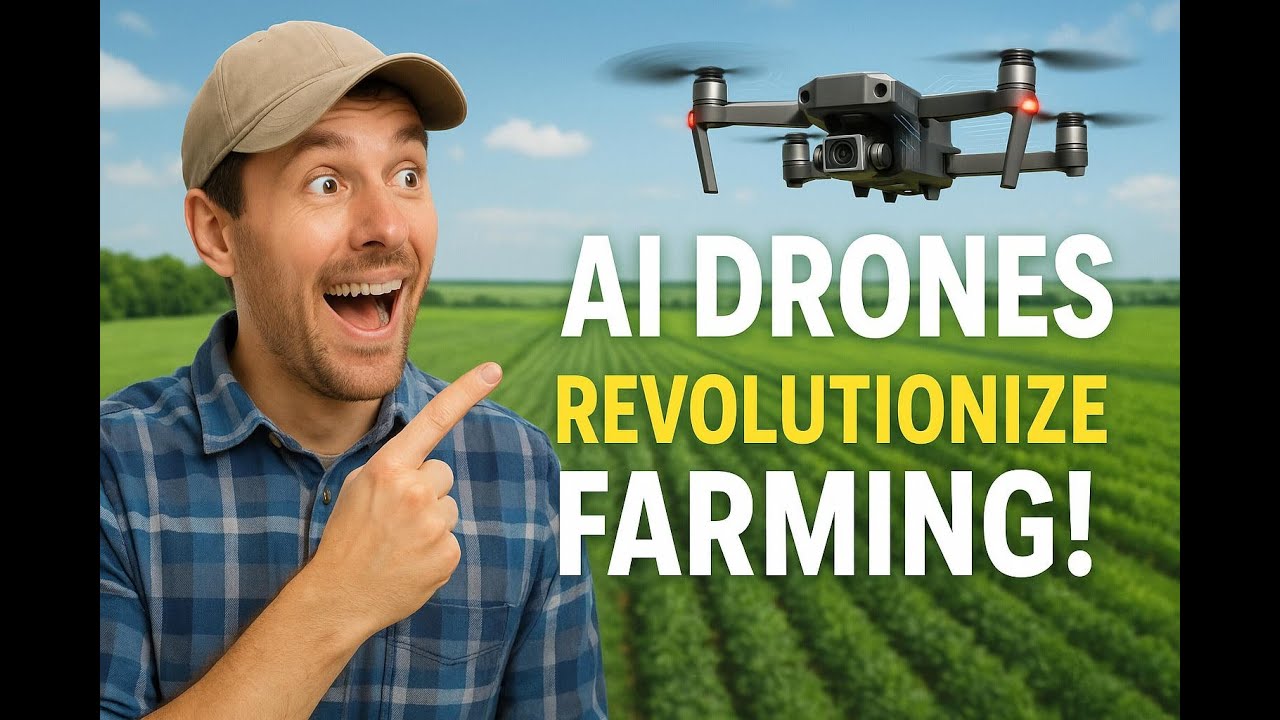
UAVs/drones deliver ultra-high spatial resolution (2–10 cm), flexible acquisition timing, and customizable payloads. UAV remote sensing agriculture workflows thrive when variability is high within a farm and tactical scouting is needed. Payloads include RGB, multispectral, hyperspectral, thermal, and LiDAR instruments, supporting mapping of stand gaps, disease patches, waterlogging, canopy structure, and exact plant height. With proper calibration and validation (reflectance panels, ground targets), drones create products that integrate with prescription-map systems.
Manned Aircraft
Manned aircraft still serve large estates and timber holdings. They carry advanced hyperspectral or LiDAR sensors to capture entire districts quickly, with higher payloads than small aerial vehicles. When field sizes expand beyond 5,000 ha or repeated flights are needed under tight windows, manned solutions complement satellite coverage.
Core Sensors and What They Provide
- Multispectral imagers: Foundational for vegetation indices (NDVI/NDRE/EVI/PRI). Support assessing vigor, uniformity, and early detection of stress.
- Hyperspectral: High spectral resolution detects subtle nutrient deficiencies, disease signatures, and varietal differences. Enables spectral unmixing and advanced chemometrics.
- Thermal: Canopy temperature maps support irrigation scheduling, stomatal conductance proxies, and water-stress mapping.
- LiDAR: 3D point clouds quantify canopy structure, biomass, and plant height; essential in orchards and remote sensing forestry.
- SAR: Penetrates clouds and operates at night; delivers soil moisture estimates, surface roughness, and flood detection with high robustness.

Data Products and Analytical Methods: Indices, ML, and Explainable AI
Vegetation indices remain foundational to remote sensing application in agriculture. NDVI (biomass/vigor), NDRE (chlorophyll/N status), EVI (reduced soil background effects), and PRI (photosynthesis dynamics) are practical for season-long mapping. Indices guide variable rate application and prescription maps for fertilizer, seed, and pesticide—helping reduce inputs while sustaining yields.
Hyperspectral advances allow index libraries and spectral unmixing to detect subtle deficiencies, disease patch signatures, and even varietal differences under mixed canopies. Thermal imagery enables crop water stress indices to prioritize irrigation sets by field zone and timing.
Modern pipelines leverage machine and deep learning. Models are trained on multi-year, multi-sensor datasets to drive classification (crop type, residue, cover crops), anomaly detection (pests, weeds, lodging), prediction (biomass, yield), and phenology (emergence, flowering, maturity). Explainable AI clarifies drivers (e.g., which spectral bands or indices influence a decision), and transfer learning reduces data needs when moving to new regions and crops.

Importantly, all methods depend on rigorous calibration and validation. Consistency across time requires atmospheric correction, sensor harmonization, and on-the-ground reference targets. Proximal tools—reflectance panels, soil probes, and handheld spectrometers—enable robust ground truthing that sustains high-quality products and replicable results.

Operational Applications in Farm and Forestry
Variable Rate Application and Prescription Mapping
Variable rate application (VRA) translates spatial variability into actionable prescription maps for fertilizer, seed, and pesticide. Using multisensor data, producers prioritize stable zones and tailor inputs by field management area. This use-case often offers the clearest ROI in precision agriculture: it optimizes productivity while reducing costs and environmental impact (less runoff, lower emissions).
Early Detection: Pests, Diseases, and Nutrient Stress
Multi-temporal imagery and indices enable early detection of pests and diseases as well as nutrient deficiencies. Hyperspectral fine-bands capture plant-pathogen signatures, while SAR and thermal reveal moisture anomalies that correlate with root stress or irrigation blockages. UAVs perform close-up scouting to confirm remote triggers, ensuring targeted, implemented interventions that reduce chemical use.
Irrigation Optimization and Water Management
Thermal maps and SAR-based soil moisture proxies inform scheduling, set-point adjustments, and repair prioritization. Combining satellite coverage with UAV hotspot checks allows dynamic reallocation of water to the zones that need it most—cutting losses and maintaining yields.
Yield Forecasting and Phenology
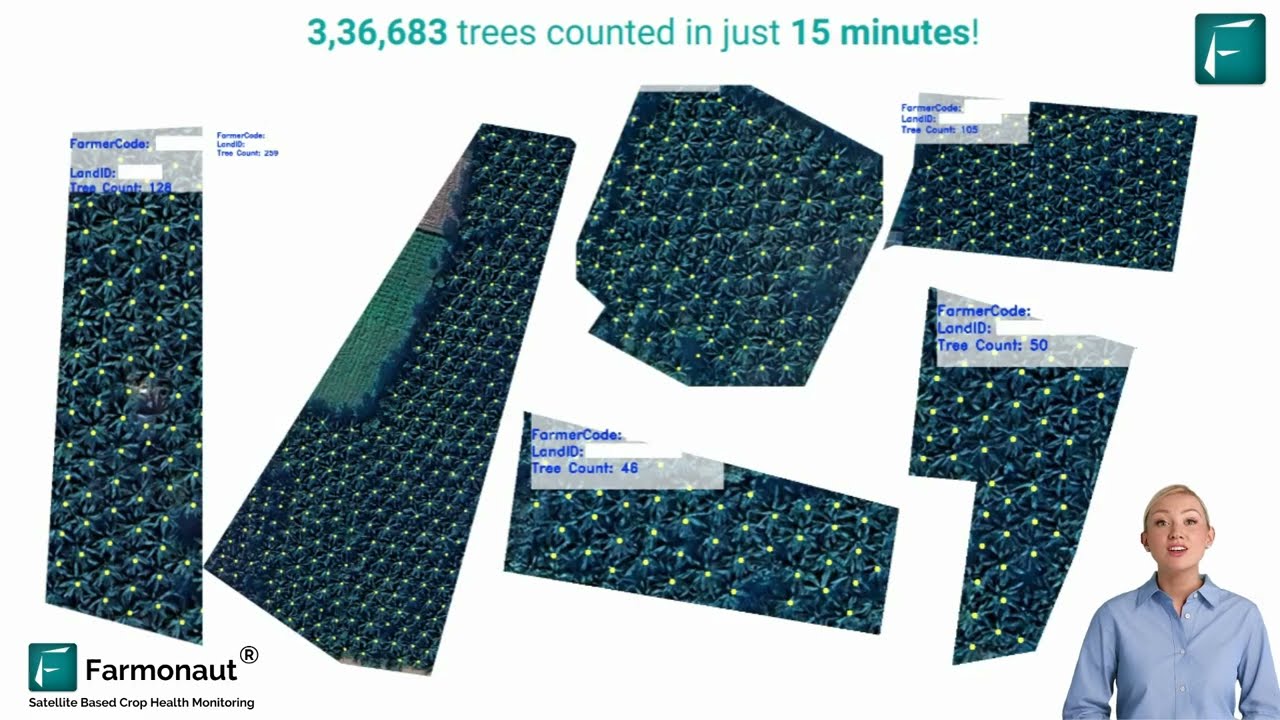
Yield prediction blends satellite time series (NDVI/EVI/NDRE/PRI) with weather and soil data. Machine-learning models track phenology events (emergence to maturity) to produce field-level predictions weeks to months ahead. This informs harvest logistics, storage, and marketing—particularly valuable for large-scale farm operations.
Soil Mapping, Salinity Detection, and Tillage Monitoring
Hyperspectral and multispectral spectral signatures flag salinity, sodicity, carbon proxies, and residue cover. SAR supports tillage and surface roughness tracking. Together, these products guide amelioration, reduce wasted inputs, and enhance long-term soil health strategies.
Remote Sensing Forestry: Biomass, Inventory, and Risk
In remote sensing forestry, LiDAR excels at biomass modeling, tree height, and stand density. SAR supports structure and moisture mapping, and optical time series help species classification and disturbance detection (logging, storm damage). UAV LiDAR is increasingly the go-to for high-accuracy forest inventory at operational scale.
“LiDAR surveys deliver ±15 cm vertical accuracy at 10 points/m², producing 5–10 GB/km² datasets for canopy modeling.”

Integration and Systems: IoT, Edge, FMIS, and Farmonaut
In 2025, the most effective deployments integrate satellite and UAV data with IoT sensors and farm machinery. Edge computing on tractors and drones enables near-real-time analytics for in-season corrections. APIs and cloud analytics bring scalable processing, while FMIS integrations apply prescription maps automatically to variable-rate equipment.
As a satellite technology company, we at Farmonaut provide accessible remote sensing capabilities across Android, iOS, web, and API. We focus on making satellite-driven insights affordable for farm businesses and governments. Our platform includes real-time monitoring, AI-based advisory (Jeevn AI), blockchain-based traceability, fleet/resource management, and environmental impact tracking such as carbon footprint monitoring.
- Real-time satellite monitoring: We deliver multispectral insights (e.g., NDVI) for crop health and soil conditions to support optimizing inputs and reducing costs.
- AI advisory (Jeevn AI): We provide tailored, operational guidance grounded in data and weather forecasts.
- Blockchain traceability: We support transparent supply chains from field to downstream buyers.
- Fleet and resource management: We help optimize logistics, reducing fuel and time.
- Environmental impact monitoring: We support emissions tracking and sustainability reporting.
Explore APIs and developer tools to integrate satellite products and SAR soil moisture proxies into your systems: Farmonaut API and API Developer Docs. For NDVI, NDRE, EVI, and thermal-driven irrigation, try the app: Farmonaut NDVI.



Selected product pages and use cases:
- Carbon Footprinting — quantify and report field-level emissions with satellite-derived activity data and proxies; valuable for sustainability audits and regenerative agriculture claims.
- Traceability — blockchain-backed transparency across the supply chain; improve buyer confidence and reduce fraud with satellite-verified events.
- Crop Loan & Insurance — satellite-based verification supports risk assessment and claim validation, streamlining finance access.
- Fleet Management — optimize equipment usage, routing, and safety with integrated monitoring to lower operational costs.
- Large-Scale Farm Management — oversee multiple fields and teams with scalable dashboards, prescriptions, and data flows.
- Crop Plantation & Forest Advisory — get satellite advisories for replanting, remote sensing forestry inventory support, and health tracking.
Multi-Sensor Remote Sensing Comparison Matrix for Precision Agriculture (2025)
Use this matrix to match platforms/sensors to agronomic objectives, cost envelopes, and compliance constraints. Ranges reflect typical 2025 operations; actuals vary by vendor, season, and field conditions.
| Platform / Sensor | Primary agronomic use cases | Estimated spatial resolution | Estimated revisit/on-demand | Estimated data volume/100 ha | Estimated AI processing/100 ha | Estimated cost/ha | Expected water savings | Expected yield lift | Cloud/lighting robustness | Integration complexity | Calibration/ground-truth need | Best growth stages | Field size sweet spot | Maturity/TRL | Notes on compliance/airspace |
|---|---|---|---|---|---|---|---|---|---|---|---|---|---|---|---|
| UAV RGB | Stand counts, emergence gaps, lodging, harvest planning | 2–5 cm | On-demand; same-day | 2–6 GB | 30–60 min | $5–$12 | 5–10% | 2–4% | Low (optical) | Low | 3–5 samples/100 ha | Emergence to pre-canopy closure | 50–1,000 ha | 9 | Follow local VLOS/BVLOS limits; buffer roads/people |
| UAV Multispectral | NDVI/NDRE maps, variable-rate fertilization, disease scouting | 3–10 cm | On-demand; same-day | 4–10 GB | 45–90 min | $8–$18 | 8–15% | 3–7% | Low (optical) | Medium | 5–8 samples/100 ha | Tillering/vegetative to heading | 50–2,000 ha | 9 | Observe altitude, no-fly zones, and payload regs |
| UAV Hyperspectral | Nutrient/disease signatures, varietal differences, chemometrics | 5–10 cm | On-demand; same-day | 10–30 GB | 60–120 min | $15–$25 | 8–15% | 4–8% | Low (optical) | High | 8–10 samples/100 ha | Vegetative to early reproductive | 100–1,000 ha | 8 | May require special permits due to payload |
| UAV LiDAR | Canopy structure, biomass, plant height, orchard/forestry inventory | 5–10 cm point spacing | On-demand; same-day | 8–20 GB | 60–120 min | $15–$25 | 5–10% | 3–6% | Medium (active sensor) | High | 5–8 samples/100 ha | Canopy development to late season | 100–2,000 ha | 8 | Extra care near populated areas; LiDAR eye-safety class |
| UAV Thermal | Irrigation scheduling, leak detection, water-stress mapping | 5–10 cm | On-demand; same-day | 4–8 GB | 45–90 min | $10–$20 | 10–20% | 3–6% | Medium (thermal daylight variations) | Medium | 5–8 samples/100 ha | Midday stress checks; peak ET | 50–1,000 ha | 8–9 | Follow thermal camera export/use regulations |
| Satellite Multispectral | Field-wide vigor, variable-rate zoning, yield forecasting | 3–10 m | Daily to 5-day | 0.5–2 GB | 30–60 min | $1–$5 | 5–12% | 2–5% | Low (optical; cloud-sensitive) | Low | 3–6 samples/100 ha | Full season | 500–5,000 ha | 9 | No airspace constraints; licensing terms apply |
| Satellite SAR | Soil moisture proxy, flood/waterlogging, surface roughness | 3–10 m | 6–12 days (constellation-dependent) | 0.5–2 GB | 45–90 min | $1–$8 | 8–15% | 2–5% | High (SAR=high) | Medium | 4–8 samples/100 ha | Wet/dry transitions, cloudy seasons | 500–5,000 ha | 8–9 | Data licensing; export controls in some regions |
Internal-link prompts: Explore “Farmonaut NDVI” features for vigor zoning and “SAR soil moisture” proxies via API.
Challenges and Constraints in 2025
Despite clear ROI, several constraints shape adoption and operations. Addressing these proactively improves outcomes for enterprises and smallholders alike.
- Cloud and lighting challenges (optical): Optical imagery remains cloud-sensitive. SAR mitigates through all-weather capability, and thermal helps during clear but harsh light windows. Fusion strategies balance coverage gaps.
- Radiometric calibration and temporal consistency: Accurate trend analysis needs consistent processing, sun angle normalization, and ground validation. Standard panels and cross-sensor harmonization are essential.
- Large, multi-source datasets: Multi-sensor datasets can overwhelm traditional workflows. Cloud-native pipelines and API-first systems streamline analytics, automated classification, and prediction.
- Regulatory constraints on drone operations: Airspace rules limit altitude, BVLOS operations, and flights near people. Compliance planning and waivers ensure safe, legal uav remote sensing agriculture missions.
- Data privacy and licensing: Clarify licensing for commercial products and protect grower data. Choose vendors with transparent terms and strong security.
- Upfront costs for smallholders: Even affordable tools may stretch budgets. Start with low-cost satellite subscriptions, pursue co-ops, and leverage open-data programs to reduce barriers.
- Algorithm generalizability: Models trained in one region may underperform in another. Explainable AI, transfer learning, and targeted ground samples improve generalization to new fields and crops.
Adoption Playbook and 2025–2030 Outlook + FAQ
Practical Steps to Start and Scale
The following sequence helps teams realize quick wins while building toward advanced, multi-sensor operations.
- Start with satellites: Subscribe to satellite multispectral time series for NDVI/NDRE/EVI/PRI. Target field-by-field vigor and zone delineation. This adoption step is low cost and high value.
- Validate with ground plots: Establish 3–10 sample locations per 100 ha. Use handheld sensors or soil tests for validation and calibration.
- Scale to UAVs where needed: If spatial variability is high or decisions require 2–10 cm resolution, run UAV missions for mapping and hotspot confirmation.
- Deploy fusion analytics: Combine optical, thermal, LiDAR, and SAR for robustness. Use transfer learning to move models across fields and seasons.
- Automate with FMIS: Export prescription maps and push to machinery for variable rate application of fertilizer, seed, and pesticide.
- Track ROI: Measure yields, water savings, input reductions, and environmental impact. Iterate on which products to use and how often to fly.
Use-cases with clear ROI to prioritize:
- Irrigation scheduling with thermal and SAR moisture proxies (often 10–20% water savings).
- Variable-rate fertilization using multi-temporal indices to reduce input costs and stabilize yields.
- Early disease/pest detection leveraging hyperspectral and UAV mapping to limit spread.
- Yield forecasting for logistics and market timing; blend satellite, weather, and soil data.
Public-Private Levers for Smallholders
- Leverage open-data (e.g., Sentinel) and cost-sharing co-ops for UAV flights.
- Encourage subsidies for calibration services and demonstration projects.
- Streamline drone regulations to improve access while maintaining safety.
We support adoption with subscription plans and APIs designed for scalability, helping teams grow from initial pilots to full-season programs across multiple fields and crops.
Near-Term Outlook (2025–2027)
- Commercial hyperspectral cubesats expand routine spectral diagnostics beyond research contexts.
- Operational SAR soil moisture products become standard for irrigation and flood risk management.
- Autonomous drone missions link with robotic applicators for closed-loop scouting-to-application.
- Carbon accounting and regenerative verification make remote sensing a compliance and premium-price enabler.
FAQ
Q1. What is the best starting point for remote sensing precision agriculture?
A1. Begin with satellite multispectral indices (NDVI/NDRE/EVI/PRI) for seasonal mapping. Validate with 3–10 ground plots per 100 ha. Scale to UAV where spatial resolution is critical.
Q2. When should I choose SAR over optical?
A2. Use SAR when clouds persist or at night, and for soil moisture and surface roughness estimates. Fuse with optical to improve robustness.
Q3. How much ground truthing do I need?
A3. For most products, plan 3–10 samples/100 ha. Complex hyperspectral models or new crops may require the higher end.
Q4. What ROI can I expect?
A4. Typical ranges: 5–20% water savings and 2–10% yield lift, depending on crop, climate, and the mix of sensors used. Input cost reductions often compound ROI.
Q5. How do I integrate with my existing FMIS and equipment?
A5. Export standard prescription formats (e.g., shapefiles, ISOXML). Use cloud APIs for automated data flow and near-real-time analytics.
Q6. Is UAV always necessary?
A6. Not always. Many operations succeed with satellite time series alone. Choose UAV where sub-decimeter mapping is essential (e.g., emergence counts, small hotspot detection).
Q7. How does Farmonaut fit in?
A7. We provide satellite-driven insights, AI advisory, blockchain traceability, fleet/resource management, and environmental impact tracking, accessible via apps and API. We are not a marketplace or equipment manufacturer; our role is to deliver data-driven products and tools that plug into your operations.
Summary and Next Steps
By 2025, remote sensing precision agriculture is a dependable way to optimize productivity, cutting costs and environmental impact. The mix of satellites, UAVs, thermal, LiDAR, and SAR supports everything from irrigation scheduling to yield prediction and compliance reporting. The most successful teams start with low-cost satellite indices, validate with a few ground plots, and then scale to UAV where field variability requires higher resolution. We recommend testing one high-ROI use-case (e.g., variable-rate fertilizer) and expanding as benefits are demonstrated.
Try Farmonaut today via our web, Android, or iOS apps and integrate programmatically through our API and Developer Docs. For large operations, explore Large-Scale Farm Management and consider adding Carbon Footprinting and Traceability to meet market and regulatory demands.
Additional Notes on Methods and Calibration
For consistent time-series analysis, practitioners should implement standardized calibration protocols: use reflectance panels for optical sensors, temperature references for thermal, and ground moisture probes for SAR-based soil moisture estimates. Integrated QC ensures products remain comparable across dates and platforms. Edge-device processing enables immediate detection of anomalies, while cloud pipelines perform heavy learning tasks such as multi-year yield prediction and classification.
Bridging Scales: From Satellite to Proximal Instruments
Fusing satellite overviews (3–10 m) with UAV detail (2–10 cm) and proximal instruments enabling validation close the gap between indicators and interventions. This scale-bridging is essential when implementing variable rate application and interpreting hyperspectral signatures in heterogeneous fields. Proper sampling design—stratified by variability zones—improves model transferability to new crops and geographies.
Compliance and Responsible Operations
- Adhere to local constraints on drone use (e.g., VLOS/BVLOS, altitude, geofencing) and maintain logs for auditability.
- Respect data privacy: secure storage, clear consent, and transparent licensing of commercial products.
- Document calibration, sampling, and validation methodologies to support audits and standards (e.g., carbon claims).
Whether you manage a single field or a large enterprise, 2025’s multi-sensor ecosystem—spanning satellites, UAVs, and on-ground probes—provides a practical pathway to smarter, more resilient agriculture.
Discussion
Questions, corrections or field experience? Share them below. First-time comments are reviewed before they appear, and your email is never published.
No comments yet. Be the first to add a question or your experience.

 AgroRisk
 Oath Inc
 Reddane Farming
 Esri North East Africa
 Farmer Amigo
 Cresol
 Atur Kuliner
 MDCV UK
 Zerella Group
 Etech Consulting Madagascar
 Vestlandsforsking
 Agritein
 Delicio
 WB Dev
 Sama Premium
 Prochecker
 Tres Valles
 LACOS Geoinformation
 Magrifly
 LatConnect 60
 Blickwinkel
 Agricultural Credit Policy Council
 Exploration consultancy · South Africa · Gold
 Licence holder · Niger · Gold
 Licence holder · Nigeria · Gold + lithium










