

Robotic Tractors & Harvesters: 7 Key Farming Trends for 2026
“By 2026, over 18% of new tractors sold globally are expected to be robotic or semi-autonomous.”
Summary: The Evolution and Impact of Robotic Tractors in Modern Agriculture
In recent years, the agricultural sector has undergone a remarkable transformation driven by automation and robotics. Among these innovations, robotic tractors have emerged as a game-changer, reshaping modern farming practices and enhancing productivity, sustainability, and efficiency. As we approach 2026, the integration of robotic tractors alongside both classic farm tractors and specialized models such as gumtree tractors, small acreage tractors, and even the collectible tomy tractor series, highlights a new era in agriculture.
Today’s robotic machinery merges precision, advanced sensors, AI-driven systems, and GPS navigation to optimize essential farming tasks—from plowing and seeding to harvesting. The autonomy now possible in these systems allows continuous operation, less manual labor, and more environmental preservation of soil health and resources. Notably, classic equipment is not obsolete; many traditional machines are being retrofitted or adapted, bridging the gap as we transition into a data-driven, tech-enhanced farming future.
Introduction: The New Era of Agricultural Automation
The rise of robotic tractors and robotic harvesters in modern agriculture presents some of the most transformative moments in the sector’s history. As global farming practices confront mounting challenges—including labor shortages, climate volatility, and the critical need for sustainability—the need for innovative solutions is urgent.
How are robotic tractors and automated harvesters fundamentally reshaping the farming landscape for the year 2026 and beyond? This comprehensive article explores the key trends, benefits, technology enhancements, and future impacts, comparing traditional and robotic models and offering actionable insights for farmers, agronomists, investors, and policy-makers.




✔ Key Benefits of Robotic Tractors & Harvesters
- 🚜 Increased Efficiency: Robotic tractors can work around the clock, maximizing operational hours without fatigue.
- 🎯 Precision Farming: Advanced sensors and GPS navigation ensure minimal resource waste and optimized input usage (seeds, water, fertilizer).
- 🌱 Soil Health: Automated path following reduces soil compaction, preserving structure and fertility.
- 💡 Lower Labor Demands: Minimal human intervention reduces reliance on seasonal/manual labor, addressing shortages.
- 🚀 Faster Harvests: Robotic harvesters increase crop collection speed—sometimes by up to 60% by 2026!
Automation is not about replacing farmers—it’s about empowering them to do more with less. By 2026, precision, scalability, and sustainability will define competitive advantage in agriculture.
7 Key Trends in Robotic Tractors & Harvesters for 2026
As robotic tractors and robotic harvesters gain momentum, several compelling trends are shaping the future of agriculture:
-
Widespread Adoption of Autonomous Machinery
The percentage of robotic and semi-autonomous tractors is expected to soar, with over 18% of new sales by 2026 globally. This includes both large industrial models and small acreage tractors—making automation accessible across farm sizes. -
Integration with IoT & Smart Data Platforms
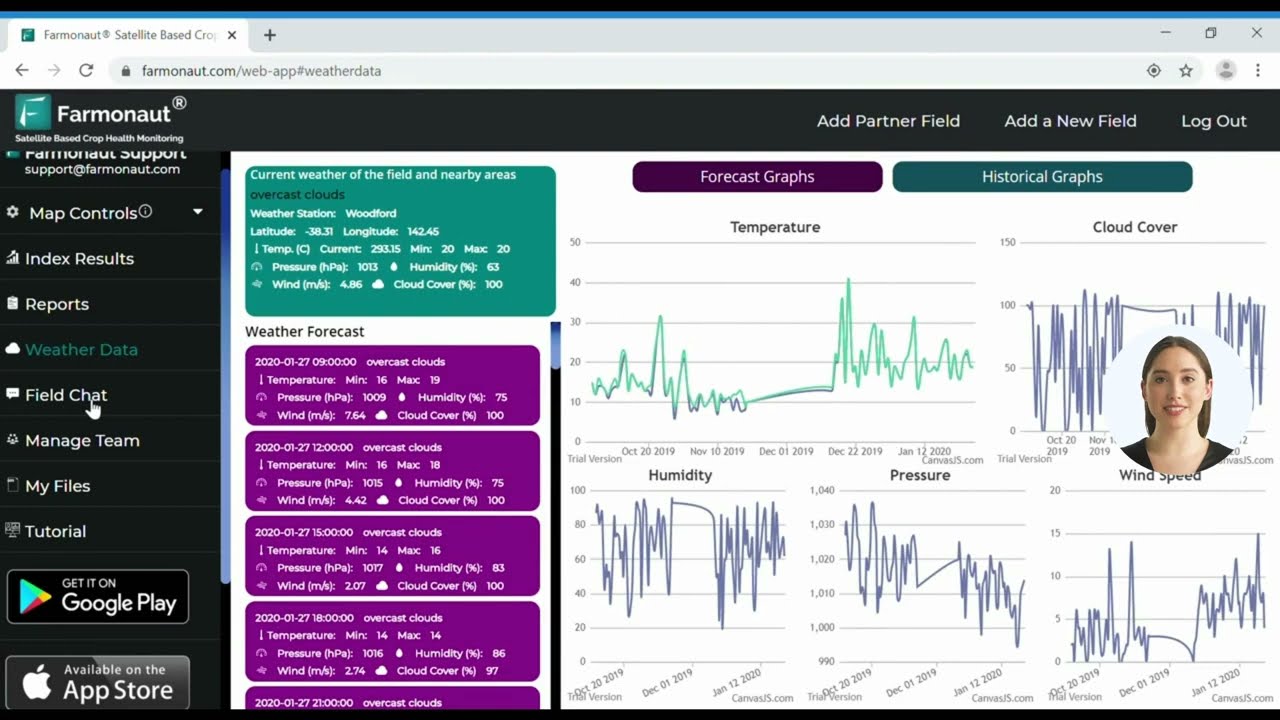
Robotic tractors now connect with cloud-based systems, satellite imagery, and platforms like the Farmonaut API for continuous farmland monitoring, input guidance, and accurate weather/pest risk tracking. -
Advances in Computer Vision and AI
Robotic harvesters employ advanced AI and sensors to distinguish, harvest, and sort ripe crops, further increasing productivity and reducing losses. -
Retrofit Solutions for Classic Tractors
New automation kits and assistive modules enable classic farm tractors to upgrade into semi-robotic machines, extending their working life. -
Emergence of Specialized and Niche Robotic Models
Solutions like gumtree tractors and small acreage robotic units are tailored for vineyards, orchards, and complex or sloped fields. -
Environmental & Carbon Monitoring Integration
Robotic tractors and their data link seamlessly with services like Farmonaut Carbon Footprinting, helping farms track and lower their carbon footprint—essential for sustainable production and regulatory compliance. -
AI-Based Fleet and Resource Management
Automated machinery can be orchestrated from a central dashboard, leveraging platforms like Farmonaut’s Fleet Management to minimize operational costs and optimize fleet movements.

To maximize the benefits of robotic tractors, use a trusted satellite-based platform for real-time field analytics. Platforms like Farmonaut provide satellite imagery and AI-powered insights that support precise intervention and long-term yield growth!

Technology Evolution and Key Drivers in Robotic Farming
The journey to highly automated, precision agriculture involves several breakthroughs:
- 🛰️ Satellite-Guided Navigation: GPS-enabled tractors use precise pathing for minimal overlap and maximum field coverage.
- 🤖 Sensor-Rich Robotics: Modern robotic tractors are equipped with sensors for soil, crop, and weather feedback.
- 🧠 AI & Machine Learning: Self-optimizing navigation and predictive maintenance extend machine uptime and adapt across diverse farms.
- ⏱️ 24/7 Operation: No fatigue, no breaks, leading to around-the-clock efficiency boosts.
- 📡 Real-Time Data Integration: Automated tractors sync with remote-control dashboards and field analysis apps for adaptive accuracy.
- 🌍 Blockchain Traceability: Technologies like Farmonaut Traceability ensure transparent, secure agricultural supply chains across production and distribution.
📊 Data Insights: Robotic Farming Technology Improvements
- 🔎 Precision input application enables targeted fertilizer and pesticide dispensing, reducing costs.
- 🌡️ Environmental sensors monitor soil moisture and health in real-time.
- 📲 Smart fleet management reduces idle time and synchronizes multiple machines for complex tasks.
- 🌐 Remote diagnostics enable quick responses to faults or inefficiencies, maximizing uptime.
- 🗺️ Farm maps and zones are auto-updated based on crop cycle analytics, supporting precision agriculture.
The market for robotic tractors, harvesters, and integrated farm management software is projected to surpass $24 billion worldwide by 2026—with robust demand fueled by advancements in AI, IoT, and sustainable farming mandates.

Classic Farm Tractors: Their Continuing Role Amidst Automation
Despite the ongoing rise of robotics, classic farm tractors remain vital in current and near-future agriculture. In regions facing technology access constraints or economic limitations, these classic machines serve as reliable workhorses for diverse farm needs.
- ✨ Longevity: Classic equipment is prized for its durability—even as automation tools allow for retrofit upgrades.
- 👩🌾 Operator familiarity: Farmers value the hands-on knowledge and adaptability offered by traditional models.
- 💸 Cost-effectiveness: Traditional tractors often present a lower upfront investment than new robotic units.
- 🔧 Upgradeable: Kits for GPS, AI/autonomous steering, and monitoring bridges the gap between classic and robotic tractors.
Assuming that robotic tractors make classic machines obsolete. In reality, hybrid fleets combining traditional, retrofit, and new autonomous models will coexist throughout the 2026 decade and beyond!
Robotic Harvesters & Complementary Technologies
Alongside robotic tractors, the emergence of robotic harvesters is dramatically reshaping agricultural production lines:
- 🤖 Computer Vision Harvesting: Robots equipped with AI and cameras identify ripe crops (e.g., tomatoes, berries, apples), and harvest gently to reduce crop damage.
- ⛓️ Automated Production Chains: Tractors paired with robotic harvesters create seamless, automated crop prep-to-harvest systems—with reduced need for manual labor.
- 🕒 Speed: Studies estimate up to 60% faster crop collection compared to purely human efforts by 2026.
- ⚖️ Consistency: Consistent, even harvesting preserves soil health and reduces long-term compaction when paired with precision tracks/paths.
⚠ Challenges Solved by Robotic Automation
- 🧑🌾 Labor Shortages: Automated machinery enables near-constant work even during labor crises or pandemics.
- ⏳ Short Harvest Windows: AI/robotic systems maximize yields within tight timeframes, mitigating losses from weather or logistics delays.
- 📉 Input/Ouput Imbalances: Sensors + analytics minimize fertilizer & pesticide waste while optimizing plant growth and yields.
- 🌡️ Climate Adaptation: Real-time weather and field condition inputs help adapt work to changing circumstances.
- 🌎 Sustainability Requirements: Tech-enabled crop/soil care speeds up adoption of carbon reduction and blockchain traceability standards.
Automated tractors and harvesters, when coupled with technology platforms like Farmonaut’s Crop Forest & Plantation Advisory (learn more here), empower farmers to increase productivity while preserving environmental health and soil quality.
“Automated harvesters can increase crop collection speed by up to 60% compared to conventional methods by 2026.”

Specialized Tractors: Small Acreage, Gumtree, and Tomy Models in Modern Farming
While substantial emphasis is rightfully given to mainstream robotic tractor platforms, specialized models—including gumtree tractors, small acreage tractors, and the educational tomy tractor—are increasingly important for various farming segments.
- 🍇 Gumtree Tractors: Ideal for orchards, vineyards, and tight-field applications. Newer units offer partial automation for precise navigation, canopy management, and input applications.
- 🌾 Small Acreage Tractors: Compact yet robust, perfect for small farms and hobby plots. Autonomous small acreage tractors allow for optimized resource allocation and automated repetitive tasks in restricted spaces.
- 🧸 Tomy Tractor Models: Though these are collectible and educational, tomy tractors play a unique cultural and educational role—helping demonstrate mechanization and inspire the next generation of tech-savvy farmers.
Notably, as robotics becomes more accessible, smaller farms—historically unable to afford advanced mechanization—are gaining access to automated solutions. These tailored machines allow precision seeding, spraying, and harvesting on uneven, challenging terrain often found in orchard or specialty agriculture.
Collectible tomy tractors serve as powerful tools in agricultural education and outreach, illustrating the evolution from manual to robotic farming and inspiring technology adoption in younger audiences.

Comparison Table: Traditional vs. Robotic Tractors & Harvesters – Key Trends for 2026
| Feature/Parameter | Traditional Tractors/Harvesters (2023 Est.) | Robotic Tractors/Harvesters (2026 Est.) |
|---|---|---|
| Operational Efficiency (%) | 65-75% | 90-95% |
| Labor Requirement (hours/acre) | 8-12 | 2-4 |
| Fuel/Energy Consumption (liters/acre or kWh/acre) | 8-12 liters | 4-6 liters / 8-10 kWh |
| Estimated Yield Increase (%) | 0-3% | 7-15% |
| Sustainability Score (1-10) | 4-5 | 8-9 |
| Adoption Rate (% of farms) | 2-5% | 18-30% |
As this table reveals, the shift toward robotic and semi-autonomous tractors is driving substantial efficiency, sustainability, and yield improvements in agriculture by 2026—especially as smart, automated solutions become standard across farm sizes and types.
Robotic tractors and smart farming systems will be especially impactful on small farms (5–30 acres), boosting yields while conserving both water and soil—a win-win for smallholder and specialty crop producers.
How Farmonaut Empowers Agricultural Automation & Sustainable Growth
At Farmonaut, our mission is to offer affordable, actionable satellite-based insights for modern agriculture. As robotic tractors, harvesters, and other smart machinery are increasingly adopted, Farmonaut’s technology ecosystem has become a natural enabler of this transformation.
- 🛰️ Satellite Crop Monitoring: Our platform delivers weekly, multispectral imagery to assess vegetation indices (NDVI), soil moisture, and field health—all critical for optimizing robotic tasks.
- 🌡️ Environmental Impact Tracking: Real-time carbon footprint monitoring and compliance analytics power conscious, sustainable decisions (learn more).
- 🤖 AI-Powered Advisory: Our Jeevn AI system provides guidance for fleet usage, field timing, and weather-responsive interventions, maximizing the ROI of automated machinery.
- ⛓️ Blockchain Traceability: Supply chain transparency tools for traceability from seed to supermarket.
- 🚚 Fleet & Resource Management: Smart dashboards for remote monitoring of both classic and autonomous tractor fleets (see features).
- 💧 Water & Input Optimization: Integrates field data with input/irrigation system controls—enabling precision agriculture and resource efficiency.
Developers and agri-tech companies can directly integrate Farmonaut satellite & weather insights into their robotic platforms via the Farmonaut API (docs here), enabling smarter, autonomous field operations at scale.
Our scalable solutions serve everyone from individual farmers managing small plots to large agribusinesses and government agencies overseeing large-scale farm management (learn more about admin tools). This approach aids not just in maximizing productivity, but also in achieving long-term resilience and sustainability.
Ready to empower your farm or agribusiness with AI-driven, satellite-backed automation?
Explore detailed subscription options below:
The Future Impact of Robotic Tractors on Farming: 2026 and Beyond
By 2026, the maturation and crossover of robotic tractors, robotic harvesters, and advanced automation technologies will make efficiency, productivity, and sustainability the core competitive pillars in agriculture.
- 🌎 Environmental Impact Reduction: Lower emissions, better soil conservation, and responsible water usage will become attainable for farms of all sizes.
- 🔗 Automated Supply Chains: Satellite monitoring, blockchain traceability, and AI-powered resource management enable secure, transparent farm-to-fork journeys.
- 💡 Knowledge Democratization: Platforms like Farmonaut help smallholder and large-enterprise farmers equally benefit from automated agri-innovation.
- 🚜 Labor Transformation: While demand for manual labor reduces, new job profiles emerge: robotics maintenance, data analytics, and AI-driven fleet managers.
- 📈 Increased Yields & Resilience: Predictive and precision agri-tech deploys the right inputs at the right time, regardless of farm size, weather unpredictability, or market volatility.
Failing to leverage satellite-based agricultural monitoring data in mining or infrastructure can mean missing vital insights on land-use change, environmental risk, and compliance. Farmonaut’s platform bridges these data silos for greater operational synergy.
FAQ: Robotic Tractors & Automation in Agriculture
What are robotic tractors?
Robotic tractors are autonomous or semi-autonomous machines equipped with sensors, GPS, AI, and sometimes computer vision—capable of performing farming tasks (plowing, seeding, spraying, harvesting) with minimal human intervention.
How do robotic harvesters differ from classic harvesters?
Robotic harvesters use advanced cameras and AI to identify optimal ripeness, harvest gently, and minimize losses. Unlike classic machines, they can work round-the-clock and synchronize with robotic tractors for seamless production lines.
Are classic farm tractors becoming obsolete?
No—classic tractors remain vital for many farms, especially in less-industrialized or capital-constrained regions. However, retrofit kits allow these machines to benefit from automation as well.
What is the role of satellite and AI in robotic farming?
Satellite imagery and AI platforms—such as those enabled by Farmonaut—provide field health, climate monitoring, crop advisories, and resource optimization to support precise, data-driven operation of robotic farm machinery.
How can Farmonaut help my farm?
We offer real-time satellite crop monitoring, AI-driven advisories, fleet/resource management, environmental impact analytics, and blockchain traceability. Our solutions empower both smallholder and large-scale farmers to leverage automation with ease and confidence.
Where can I access Farmonaut apps and developer resources?
Download our web, Android, or iOS apps for instant satellite-driven crop insights, or leverage our open API (with developer docs) to build your own custom tools.
Conclusion: Prepare for the Automated, Sustainable Farm of the Future
The integration of robotic tractors and harvesters represents not just an evolution, but a revolution in agriculture. The future is shaped by a blend of automation, precision farming, sustainability, and real-time intelligence—where farmers and agricultural stakeholders must embrace new tools to thrive.
As 2026 nears, robotic tractors and their supporting ecosystem are no longer optional—they’re essential for those aiming to lead in an ever-changing farming landscape.
Discover how Farmonaut can drive your farm forward—start your satellite-powered automation journey today!

 Agricultural Credit Policy Council
 BayWa
BayWa Azure Clouds
 MCSOD
MCSOD Marei Nursery
 eKGIS
eKGIS Mostas Tech
 Native Seeds
 Andex
Andex FCF India
 Unifrutti Gulf
 Deluxe Conseil
 TVS Electronics
 WICO
WICO Chimera Innovation
 SkyHarvest
