

Sensors for Agricultural Machinery: Prices, Tools & Finance
Enhancing Efficiency, Safety, and Sustainability in 2025 and Beyond
“By 2025, over 60% of new agricultural machinery will be equipped with advanced sensor technologies for precision farming.”
Introduction to Sensors for Agricultural Machinery
In the age of modern farming, sensors for agricultural machinery are rewriting the story of agriculture, forestry, and mining operations across the globe. By 2025 and leading into 2026 and beyond, the convergence of advanced sensor technologies, IoT platforms, and smart agricultural machinery tractors has propelled the industry towards unprecedented efficiency, productivity, and sustainability.
Precision sensors embedded in tractor platforms and agricultural machinery tools now deliver actionable data spanning soil health, crop growth, machine performance, fuel use, and operator safety. These developments are not mere technological trends—they are transforming how we guide implements, plan workflows, optimize asset utilization, and manage environmental stewardship.
Why does this matter? For farmers, operators, businesses, and finance professionals, understanding the cost dynamics, practical applications, and pricing of these sensors is crucial for making informed investment and procurement decisions heading into the next decade.
In this comprehensive guide, we explore:
- How sensors for agricultural machinery unlock precision, safety, and smarter management
- The best-in-class sensor types, their applications, and estimated 2025 prices
- Shifting trends in ownership, finance for agricultural machinery, and procurement models
- Industry best practices for integration, interoperability, and cybersecurity
- The future potential of data-driven, sensor-powered agriculture, forestry, and mining
Whether you’re optimizing a fleet of tractors, managing a large-scale plantation, or working within rugged mining operations, this blog provides you with unbiased, factual insights grounded in the latest sensor technology advancements.



Modern sensors for agricultural machinery are the backbone of precision agriculture, driving cost savings, higher yield quality, and improved environmental stewardship across the sector.

Key Sensor Domains and Their Applications in Agricultural Machinery for 2025
As digital technology matures, distinct domains of sensor applications emerge, each contributing to enhanced performance, efficiency, and sustainability of agricultural machinery, tractors, and tools. Let’s break down the most influential sensor categories for the modern farm, forest, and mine.
Sensors for Location and Navigation: GNSS, RTK, Steer-by-Wire
- Core Function: Precise positioning and navigation of machines and implements
- Technologies: GNSS (Global Navigation Satellite Systems), RTK (Real-Time Kinematic), inertial sensors
- Impact: Enabling autonomous and semi-autonomous tractors, improving row accuracy, reducing crop damage from overlap and skips, and supporting variable-rate operations over irregular field shapes
- Future Application: Seamless implement-to-tractor communication and coordinated machine fleets across large orchards, crop fields, and industrial sites

Sensors for Machine Health and Predictive Maintenance
- Core Function: Monitor critical machine components for maintenance needs and early fault detection
- Technologies: Vibration sensors, temperature probes, oil and fluid level sensors, bearing condition sensors
- Impact: Minimizes expensive downtime, extends life of machines, and lowers maintenance costs with IoT-enabled analytics and fleet-wide dashboards
- Future Application: Automated service scheduling and AI-powered predictive maintenance to maximize uptime across large-scale farming and extraction fleets
Sensors for Payload and Performance Sensing
- Core Function: Quantify forces, loads, hydraulic pressure, and implement capacities for optimal machine utilization
- Technologies: Load cells, torque sensors, hydraulic flow sensors
- Impact: Supports variable draft management, reduces soil compaction, and ensures machines operate within recommended limits
- Future Application: Closed-loop implement feedback and smart resource allocation based on real-time task demand
When evaluating new machinery, prioritize open data standards and interoperability in sensor packages. This enables plug-and-play upgrades and avoids vendor lock-in.
Environment and Soil Sensing
- Core Function: Real-time measurement of soil moisture, temperature, electrical conductivity (EC), and nutrient levels
- Technologies: Soil sensors, EC meters, NIR spectrometers (often mounted on planters/harvesters), multispectral cameras, LiDAR for terrain and canopy analysis
- Impact: Guides irrigation scheduling, fertilizer placement, harvest timing, and weed control—directly affecting yield and resource efficiency
- Future Application: Field-wide, AI-optimized variable rate application based on real-time, high-resolution sensor maps
Overlooking routine calibration for soil and environmental sensors. Regular calibration is essential for sustained data accuracy and consistent crop management results.

Machine-Vision and Operator Safety Sensors
- Core Function: Enhance operator safety and enable autonomous/automated controls
- Technologies: Cameras, LiDAR, radar, IR (infrared) sensors, operator fatigue monitoring
- Impact: Automatic obstacle detection, safe stop systems, zone mapping, and improved accident prevention—especially in rugged, industrial, or mining sites
- Future Application: Fully autonomous tractors and mining vehicles using redundant, multi-sensor fusion for all-weather, all-terrain operation
Energy and Fuel Management Sensors
- Core Function: Monitor and optimize fuel use, battery status, and energy efficiency
- Technologies: Fuel flow sensors, battery management systems, energy consumption telematics
- Impact: Supports cost reduction, decarbonization, and fleet-wide performance analytics
- Future Application: Data-driven eco-routing, battery life extension in electric tractors, and integrated carbon footprint monitoring
- ✔ Enhanced Productivity: Automated field coverage and resource allocation
- 📊 Data Insight: End-to-end machine and field performance statistics, accessible from the cloud
- ⚠ Risk: Compatibility gaps between proprietary sensor suites and existing farm management systems
- 🔒 Safety: Real-time operator alert and machine shutoff features minimize on-site incidents
- 🌱 Sustainability: Intensive mapping and optimization of water, nutrient, and chemical use
Global spending on agricultural sensors is projected to surpass $2.5 billion annually by 2025, accelerating the adoption of smart agricultural machinery, tractor tools, and rugged forestry equipment.
“Global spending on agricultural sensors is projected to surpass $2.5 billion annually by 2025, driving innovation in farm equipment.”

Comparative Table: Sensor Technologies, Pricing & Features (2025)
Informed decision-making for sensor-embedded agricultural machinery, tractors, and tools starts with understanding the features, prices, and advantages of key sensor technologies. The following table summarizes the most impactful sensors for 2025 and beyond, enabling you to benchmark value, estimate procurement cost, and identify the best fit for your unique operations.
| Sensor Type | Primary Application | Estimated 2025 Price Range (USD) | Major Benefits | Example Tools / Machinery | Potential Financing Options |
|---|---|---|---|---|---|
| Advanced GNSS/RTK Positioning Sensor | Autonomous tractor guidance, row navigation on uneven fields | $750 – $3,500/unit | High accuracy, reduced crop overlap, variable-rate enablement |
Autonomous tractors, combine harvesters, planters | Leasing, asset-backed lending, performance-based contracts |
| Soil Moisture / EC Sensor | Soil condition monitoring for irrigation/fertilizer scheduling | $80 – $400/unit | Input use efficiency, improved yields, real-time alerting | Sprayers, planters, harvesters, soil probe networks | Farm loans, micro-financing, government subsidies |
| Yield Monitor & NDVI Sensor | Quality and quantity mapping of harvested crops | $1,200 – $9,000/unit | Optimized harvest, yield data, disease/stress detection | Harvesters, drones, autonomous robots | Equipment financing, crop insurance, yield-based financing |
| LiDAR Sensor | Field, terrain, and object mapping; obstacle avoidance | $2,000 – $12,000/unit | 3D mapping, automated obstacle detection, on/off-field analytics | Tractors, sprayers, mining & forestry equipment | Leasing, structured finance, fleet investment |
| Vibration & Bearing Health Sensor | Predictive maintenance, early fault detection | $120 – $750/unit | Minimizes downtime, extends machine life, improves ROI | Tractors, combines, excavators | Predictive analytics contracts, lease upgrades |
| Hydraulic Pressure Sensor | Draft/implement force monitoring and safety | $200 – $850/unit | Prevents overload, protects soil and equipment | Seeding equipment, sprayers, excavators | Vendor financing, fleet management plans |
| Fuel/Battery Telemetry Sensor | Energy & fuel management | $95 – $650/unit | Reduces costs, supports decarbonization, boosts uptime | Tractors, harvesters, electric vehicles, mining haulage | Fleet finance, operational leasing |
The best total cost of ownership (TCO) strategies are built around sensor-driven savings, from reduced fuel use to higher resale value and performance-based financing.

Finance, Pricing, and Procurement: What’s Changing?
As the industry evolves towards sensor-rich agricultural machinery tractors and implements, traditional models of finance for agricultural machinery, pricing, and procurement are also transforming. New financial products and digital platforms enable farmers and businesses to align machine investments directly with performance data, optimizing total cost of ownership and unlocking new revenue models.
Key Shifts in Financing Models for Agricultural Machinery in 2025
-
Performance-Based Financing:
Lenders now structure loan repayments and lease terms around sensor-based KPIs—like uptime, maintenance cost per hectare, or field-level fuel use. This creates more predictable cash flows and aligns incentives for efficiency. -
Usage-Based Pricing:
Thanks to telematics and sensor-enabled platforms, equipment pricing reflects actual use. Dealers offer performance guarantees and remote diagnostics service contracts. -
Higher Resale Value:
Tractors or implements with a rich sensor ecosystem—including autonomous guidance, predictive maintenance history, and soil-sensing logs—fetch higher resale prices and move quicker on the secondary market. -
Modular Upgrades:
Procurement decisions favor platforms designed for rapid hardware upgrades and modular sensor add-ons. This enables futureproofing without costly, full system replacements. -
Simplified Ownership & Traceability:
With products like Farmonaut Traceability, accurate documentation of maintenance, upgrades, and ownership transitions reduces fraud and supports better access to financing.
Visual List: Top 5 Procurement Strategies
- 🛠 Choose Modular Platforms: Stop replacing whole machines—add or swap sensor packages as needed
- 📈 Benchmark Your TCO: Incorporate energy, maintenance, and operator safety data in your cost models
- 💼 Demand Interoperability: Reduce future risk by ensuring your sensor data integrates with third-party tools and analytics suites
- 🔎 Track Machine Health Digitally: Prioritize machines with proven predictive maintenance dashboards and remote diagnostics
- 🌐 Leverage Digital Twin Platforms: Use digital twins in procurement planning—model different sensor configurations for your fields or fleets before investing
For digital, satellite-powered fleet and resource management—including remote monitoring, environmental impact tracking, and AI-based advisory—visit our Farmonaut Fleet Management page.

Implementation Best Practices: Making the Most of Sensors for Agricultural Machinery
With technology investments rising, getting the most value from sensors for agricultural machinery in 2026 depends on strategic planning, platform selection, and ongoing maintenance of sensor suites. Here’s our checklist for optimizing integration into your farming, forestry, or mining operations:
- Standardize on Interoperability: Select platforms and tools that support open data standards; avoid limiting your options with proprietary-only hardware.
- Adopt Edge-to-Cloud Architecture: Use machine-level edge processing for rapid response, then aggregate data in the cloud for fleet-wide insights and benchmarking.
- Enforce Cybersecurity and Data Governance: Secure communication protocols, robust authentication, and clear data ownership policies are vital to protect farms and businesses.
- Prioritize Durability and Calibration: Regular checks and easy-to-follow guides maximize sensor accuracy, especially in environments with dust, moisture, and vibration.
- Map ROI to Field Results: Use high-resolution analytics and advisory tools such as the Farmonaut Large Scale Farm Management platform to correlate sensor investment with yield, input efficiency, and environmental sustainability.
Visual List: 👷 Operator and Stakeholder Best Practices
- 🧑🔧 Train All Operators on new sensor UIs and safety protocols
- 🔄 Establish Routine Data Backups for machine and environmental logs
- 🛡 Implement Redundancy in critical sensor applications (e.g., safety or navigation)
- 🔬 Log and Address Sensor Faults to prevent cascading machine failures
- 📑 Audit Data Privacy policies—ensure control over farm sensor data at all stages
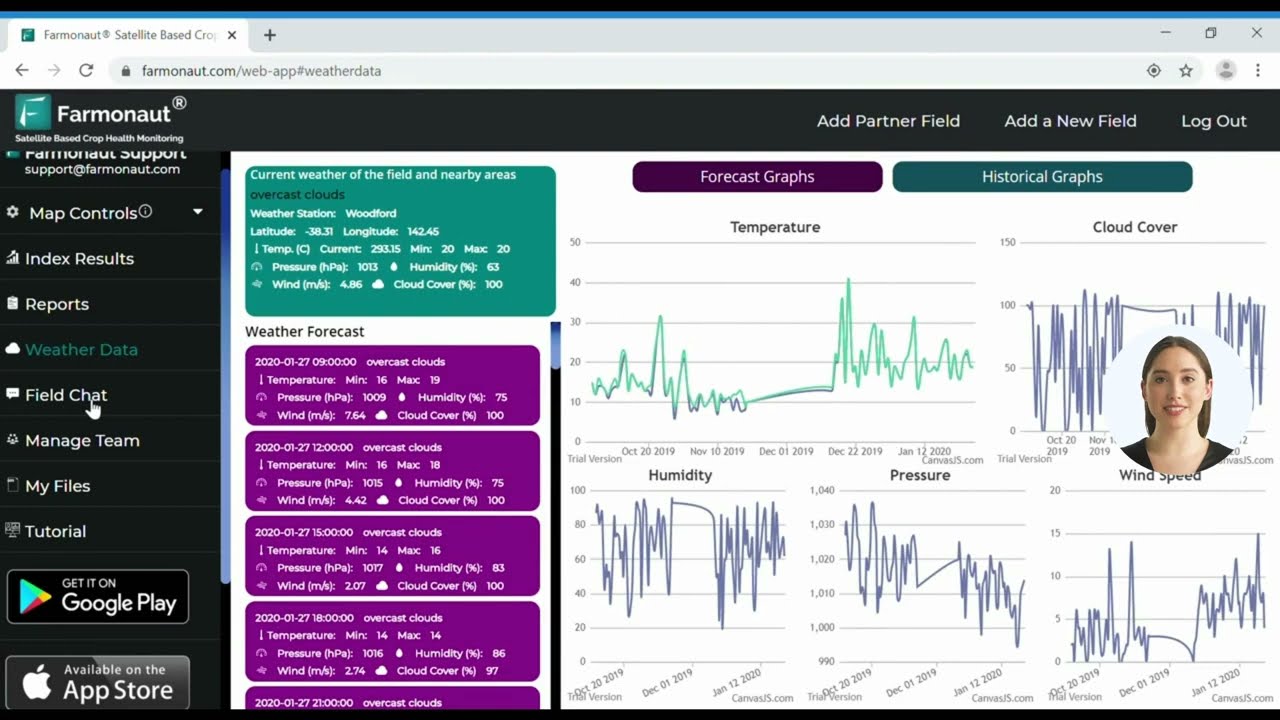
Use multi-layered data sources—combine machine-embedded sensor readings with satellite-derived soil and environmental analytics for best-in-class operational outcomes.
Future Outlook: Data-Driven Agriculture and Mining, 2026 and Beyond
The future of agriculture, forestry, and mining is no longer just automated – it is autonomously intelligent, coordinated, and data-driven. Sensors for agricultural machinery are at the core of this transformation, enabling:
- Coordinated, autonomous machinery fleets working in sync across vast crop fields and orchards
- Sensor networks that inform precision fertilizer placement, water management, and disease suppression in near-real-time
- Integrated resource and fleet management across rugged forestry and mining extraction sites
- Field-to-cloud feedback loops for predictive control, sustainability reporting, and digital compliance
As environmental regulations tighten and climate variability increases, investments in sustainability and data-backed stewardship will only accelerate.

- Autonomous, modular sensor suites will standardize across OEMs and fleets
- AI-based advisory and resource optimization platforms like those powered by satellite analytics will become indispensable
- Digital twins and blockchain-based traceability will govern asset use, service, and environmental impact reporting
- Sensor investment will be a key driver for competitive advantage in crop, forestry, and mining economies
For users seeking affordable, scalable access to satellite, AI, and blockchain-driven insights, digital platforms will play a central role in powering the next era of sustainable operations.
As agricultural machinery tractors become fully sensor-enabled, their resale and financing value will increasingly reflect certified data logs, not just age or engine hours—a game changer for agri-fintech.
Farmonaut: Satellite-Powered Insights & Technology Resources
At Farmonaut, our mission is to transform the accessibility of advanced satellite-driven data and AI advisory for agriculture, mining, infrastructure, and environmental management. Our platform unites multispectral satellite imagery, real-time monitoring, and blockchain-based traceability for cost-effective, scalable, and secure operation management.
- 🌍 Crop & Resource Monitoring: Satellite-based NDVI, soil health, and vegetation analysis to guide irrigation, scheduling, and harvest timing. Explore Farmonaut’s Crop & Forest Plantation Advisory
- 🛰 Fleet & Machine Management: Remotely oversee vehicle and implement utilization, location, and status in agriculture, mining, and logistics. More about Farmonaut Fleet Management
- 📈 Finance & Insurance Advisory: Secure, satellite-verified reports for loan and insurance qualification across farming, forestry, and extraction. Read about Crop Loan & Insurance Facilitation
- 🔗 Blockchain Traceability: Authenticated resource and supply chain documentation, supporting anti-fraud and regulatory compliance. See Farmonaut Traceability Solutions
- ♻️ Carbon Footprinting: Real-time environmental impact reporting to guide emission controls and improve sustainable practice. Discover Carbon Footprint Monitoring
For custom Satellite + AI integrations in your existing apps or ERP, access our Farmonaut API and developer documentation.
Frequently Asked Questions (FAQs)
1. Which sensors are most critical for improving agricultural machinery efficiency?
GNSS/RTK positioning sensors, soil moisture/EC sensors, vibration/bearing health monitors, and yield/NDVI sensors provide the highest direct impact on efficiency, downtime reduction, resource use optimization, and crop quality. Selecting sensor suites should match your operational focus: navigation for row planting, soil sensors for irrigation management, and health/maintenance sensors for longevity.
2. What’s the average cost of outfitting a modern tractor with these sensors in 2025?
Outfitting a tractor with essential navigation, soil, health, and energy monitoring sensors typically ranges from $2,500 to $12,000 (USD) depending on feature set, accuracy level, and add-ons such as LiDAR or real-time yield mapping.
3. How do sensor-powered platforms support sustainable management?
Platforms using embedded sensors collect detailed data on resource use, emissions, and field conditions, allowing for optimized fertilizer, water, and chemical application. In 2026, leading platforms support regulatory compliance and environmental reporting through automated, sensor-fueled dashboards.
4. Can I integrate satellite data with machinery sensors for holistic field analysis?
Yes! Hybrid sensor + satellite platforms (such as those offered via Farmonaut) provide unmatched spatial and temporal resolution for field analysis, crop health, and operational monitoring. This drives better input placement, early warning, and strategic decisions.
5. What financing options exist for sensor-rich machinery investments?
Performance-based leasing, asset-backed lending, operational microfinance, and government subsidy schemes are increasingly tied to sensor-derived KPIs. Many dealers and lenders now base financing terms on machine utilization and health logs.
Conclusion: From Sensors to Smarter Agricultural Futures
Sensors for agricultural machinery have become the linchpin of the modern agri-business, mining, and forestry sectors—equipping tractors and industrial platforms with powerful data for decision-making, cost control, and sustainable stewardship. By embracing standardized, modular, and scalable sensor suites, enterprises and individual operators alike can maximize uptime, reduce input waste, improve operator safety, and futureproof against both market volatility and environmental pressures.
As we look to 2026 and beyond, the trend toward sensor-enabled, AI-integrated, and cloud-connected machinery will only accelerate, positioning data-driven agriculture at the forefront of global food, fiber, and resource supply chains.
For the world’s farms, orchards, forests, and extraction sites, the journey to smarter, safer, and more sustainable operations starts with a clear view—made possible by the right sensors, data, and technology.

 XOS Realty
 Geospatial Lab Africa
 KhetiBuddy
 Agro La Gándara
 Global Agrifood
 HIPSAC
 ZOL Zimbabwe
 Juligerm
 AdBio
AdBio MISE Maroc
 NWNS
NWNS Red August Group
 Farm Inc
 WeMe Global
 Agrotoken
 Blue BearX
 Insignito
 Croptimum
 DnCubed
 Field Capacity
 Indosistim Teknologi
