

Smart Irrigation Controller 2026: Power Up Farming Yields
“By 2026, smart irrigation controllers can reduce farm water usage by up to 40% via precision scheduling.”
Table of Contents
- Introduction: The Smart Irrigation Revolution in 2026
- What is a Smart Irrigation Controller?
- How Does Smart Irrigation Work?
- The Key Benefits of Smart Irrigation Controllers
- Comparison Table: Traditional vs Smart Irrigation
- Leading Brands and Technologies: Spotlight on Gardena Smart Irrigation Control
- Features of the Best Smart Irrigation Controller in 2026
- How Farmonaut Powers Smart Irrigation with Satellite & AI Insights
- Sustainability: Water Conservation, Crop Health and Beyond
- The Future of Smart Irrigation: What’s Next Beyond 2026?
- FAQ: Smart Irrigation Control Explained
- Farmonaut Subscriptions
- Conclusion
Introduction: The Smart Irrigation Revolution in 2026
The year 2026 marks a pivotal milestone in global agriculture. With water resources becoming increasingly scarce and pressure mounting to feed a growing population, the adoption of smart irrigation control systems has surged. From the rice fields of Asia to orchards in Europe and vast farmlands in Africa and the Americas, smart irrigation controllers are redefining how farmers manage water, soil, and crop yields.
Unlike their traditional counterparts, these advanced controllers use real-time data, sensors, and AI-powered algorithms to automate irrigation schedules, helping to conserve water, reduce costs, and improve yields. In this comprehensive guide, we’ll explore how this technology is revolutionizing modern farming practices, the features of the best smart irrigation controllers (including industry leaders like Gardena), and how you can integrate these solutions for more efficient and sustainable crop management in 2026 and beyond.

As we progress into an era where advanced device control, mobile apps, and the Internet of Things (IoT) have become mainstream on the farm, understanding and embracing smart irrigation technology is vital for all growers, agronomists, and land management professionals.
What is a Smart Irrigation Controller?
A smart irrigation controller is an advanced device that automates the scheduling of irrigation based on real-time data inputs such as soil moisture, weather forecasts, temperature, and evapotranspiration rates.
Unlike traditional irrigation timers that only operate on preset schedules (regardless of actual need), a smart irrigation controller dynamically adjusts watering routines, ensuring that crops receive the right amount of water at the right time. This not only helps conserve one of our planet’s most increasingly scarce resources, but also reduces input costs for farmers and prevents crop stress.
- Automated Scheduling: No more manual switching on or off—let AI decide.
- Zonal Control: Different zones in your fields can receive custom watering by adjusting for varying soil types or crops.
- Data-driven Optimization: Use data from sensors for precise management and maximum efficiency.
- Remote Control & Monitoring: Change settings and monitoring from anywhere with mobile apps or web-based platforms.
This makes the irrigation system smart controller an essential tool for modern agriculture in 2026.

How Does Smart Irrigation Work?
The heart of smart irrigation is data-driven decision making. Here’s how it functions:
- Data Collection: Sensors are placed throughout fields to gather critical data on soil moisture, temperature, humidity, weather forecasts, and even evapotranspiration rates.
- Analysis & Scheduling: The smart irrigation controller uses advanced algorithms—in many cases, AI and machine learning—to analyze inputs, learning from past outcomes and building the most efficient irrigation schedules for each zone.
- Automated Water Application: The controller operates valves and pipes to apply the right amount of water, dynamically adjusting timing and volume based on real-time conditions.
- Remote Monitoring & Control: Farmers and managers use mobile apps or IoT-integrated platforms for remote access to monitor and adjust routines on-the-go. This also enables rapid response to unforeseen events like weather changes.
This seamless integration with IoT platforms and widespread connectivity allows for precise, efficient, and flexible irrigation management regardless of location or field size.

The Key Benefits of Smart Irrigation Controllers
Adopting smart irrigation control in farming brings a wealth of advantages—ranging from resource conservation to substantial yield increases:
- Water Savings: Modern controllers can reduce water usage by up to 40% compared to older methods, thanks to precision scheduling and zonal management.
- Higher Yields: Better water management means crops are less stressed and can focus energy on growth and nutrient uptake, boosting output (in some cases up to 25%).
- Cost Reduction: Minimized waste slashes bills for both water and energy, further decreasing input costs for farmers.
- Sustainable Farming: Smart watering prevents soil erosion and nutrient leaching, which are critical for environmental conservation.
- Remote Management: No matter where you are, instantly access field data and adjust irrigation routines through intuitive mobile or web apps.
- Data-driven Insights: Collect and analyze detailed soil, crop, and weather data to continuously refine and improve practices.
- Healthier Soils & Crops: Focused watering supports nutrient absorption and strengthens plant health, leading to better quality and more consistent yields.
To experience the benefits firsthand, download the Farmonaut app for powerful field monitoring and AI-driven farming insights:



Alternatively, integrate satellite and AI precision farming insights directly into your crop or irrigation software using the Farmonaut API:
Farmonaut API & API Developer Docs.
“Advanced irrigation management increases crop yields by nearly 25% while optimizing resource use and sustainability.”
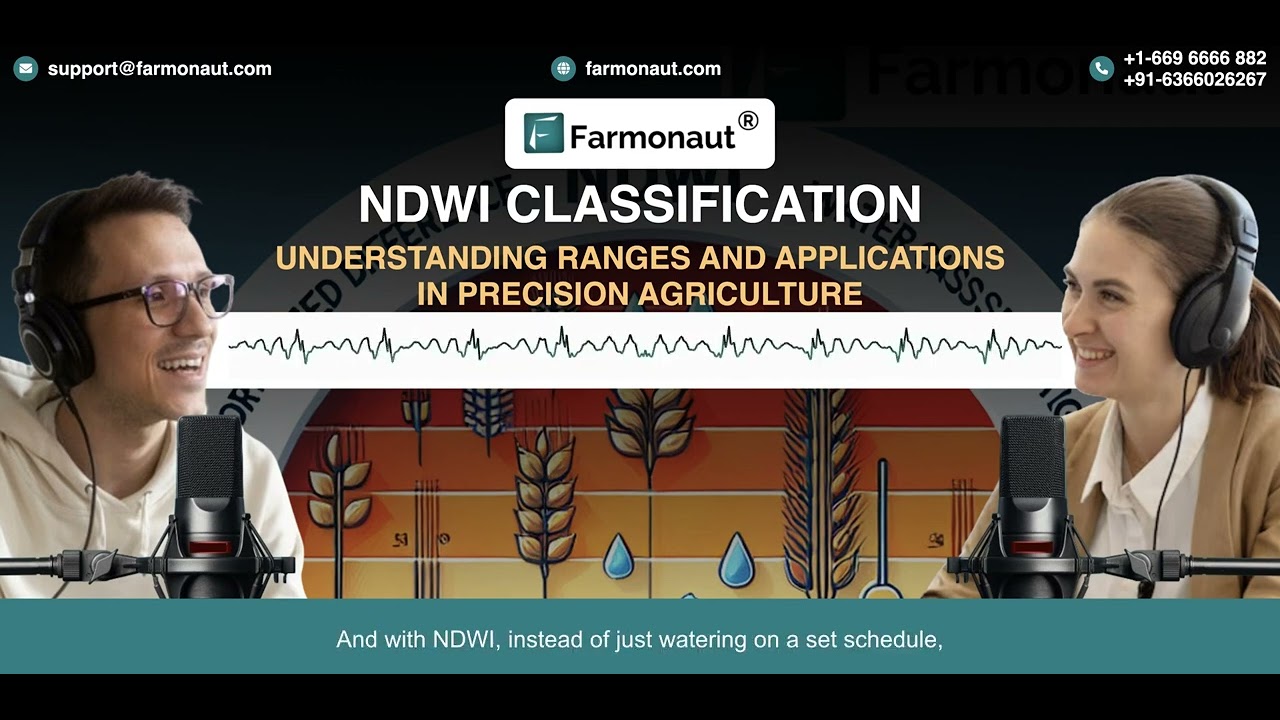
Comparison Table: Traditional vs. Smart Irrigation Systems
Understanding the fundamental differences between traditional and smart irrigation systems is crucial for farmers and land managers considering a transition. The table below highlights how smart irrigation controllers outperform conventional practices in key parameters.
| Feature | Traditional Irrigation Systems | Smart Irrigation Controllers |
|---|---|---|
| Water Usage Efficiency (%) | 50–60% | 80–90% |
| Estimated Water Savings | Low to Moderate | Up to 40% |
| Automated Scheduling | Preset Timers | Data-Driven, AI-Based, Dynamic |
| Remote Monitoring Capability | Not Available | Available via App/Web |
| Average Yield Increase (%) | 0–5% | Up to 25% |
| Sustainability Impact (Qualitative) | Moderate to Low; Higher Risk of Runoff & Erosion | High; Minimizes Runoff, Erosion, Leaching |
Leading Brands and Technologies: Spotlight on Gardena Smart Irrigation Control
In the crowded market of smart irrigation, a few leading brands have distinguished themselves through innovation, durability, and seamless integration with IoT platforms. Among these, Gardena smart irrigation control solutions stand out as a popular choice for both small and large-scale agriculture.
- Gardena Smart Irrigation Control: Offers sophisticated zone-based management, allowing users to tailor plans for different soil types, crop requirements, and microclimates within a single field.
- IoT and Mobile App Sync: Integrate seamlessly with mobile apps for remote scheduling, monitoring, and alerts.
- Compatibility with Multiple Sensors: Connects to a range of sensors, from weather stations to soil and moisture probes, capturing critical data for precision management.
- AI-based Decision-making: Uses machine learning algorithms that learn from historical watering outcomes and local environmental conditions.
- Robust Durability: Designed for outdoor agricultural environments—tough, weather-resistant, and low-maintenance.
Such solutions offer farmers and land managers peace of mind and a high degree of flexibility, optimizing irrigation routines for both large-scale and smallholder farming practices.
To further complement your smart irrigation transition, consider monitoring and optimizing your farm’s carbon footprint for sustainability using Farmonaut’s Carbon Footprinting Tools.
Features of the Best Smart Irrigation Controller in 2026
What separates a basic controller from the best smart irrigation controller? In 2026, top-performing models are defined by several key attributes:
1. User-Friendly Interfaces
Intuitive mobile and web dashboards allow for quick setup, real-time monitoring, and hassle-free adjustment of schedules or zones.
2. Compatibility with Multiple Sensors
Support for soil moisture, temperature, rain gauges, weather stations, and other specialized sensors enables all-season, multi-crop precision.
3. AI-Powered Scheduling & Machine Learning
Controllers equipped with machine learning analyze usage patterns, weather data, and crop outcomes. They learn to optimize water distribution—minimizing over-irrigation, reducing runoff, and adjusting dynamically as environmental factors change.
4. Wireless & IoT Connectivity
Allowing farmers to control and monitor their systems remotely, supporting real-time alerts, integration with platforms like Farmonaut for seamless data flow.
5. Robustness & Durability
Solutions designed for outdoor use withstand harsh climates, resist water and dust intrusion, and require minimal maintenance.
6. Zonal & Granular Control
Smart controllers support field segmentation—each zone can have a unique watering routine based on distinct soil, crop type, and topographical needs. Particularly valuable for heterogeneous fields.
7. Scalability and Expandability
Add more zones, integrate with additional sensors, or expand as your farming or land management needs grow.
When considering the best smart irrigation controller for your farm—or if you’re managing a large-scale operation—test for these features, compatibility, and long-term cost savings. For streamlined, data-driven farm management at scale, review Farmonaut’s Large Scale Farm Management Solutions.
How Farmonaut Powers Smart Irrigation with Satellite & AI Insights
Modern irrigation management thrives on data. As a satellite technology leader, we at Farmonaut provide advanced, satellite-based monitoring and AI advisory systems accessible via Android, iOS, web/browser App, and API. These services help users—farmers, businesses, and governments—optimize resource usage, ensure sustainability, and reduce costs.
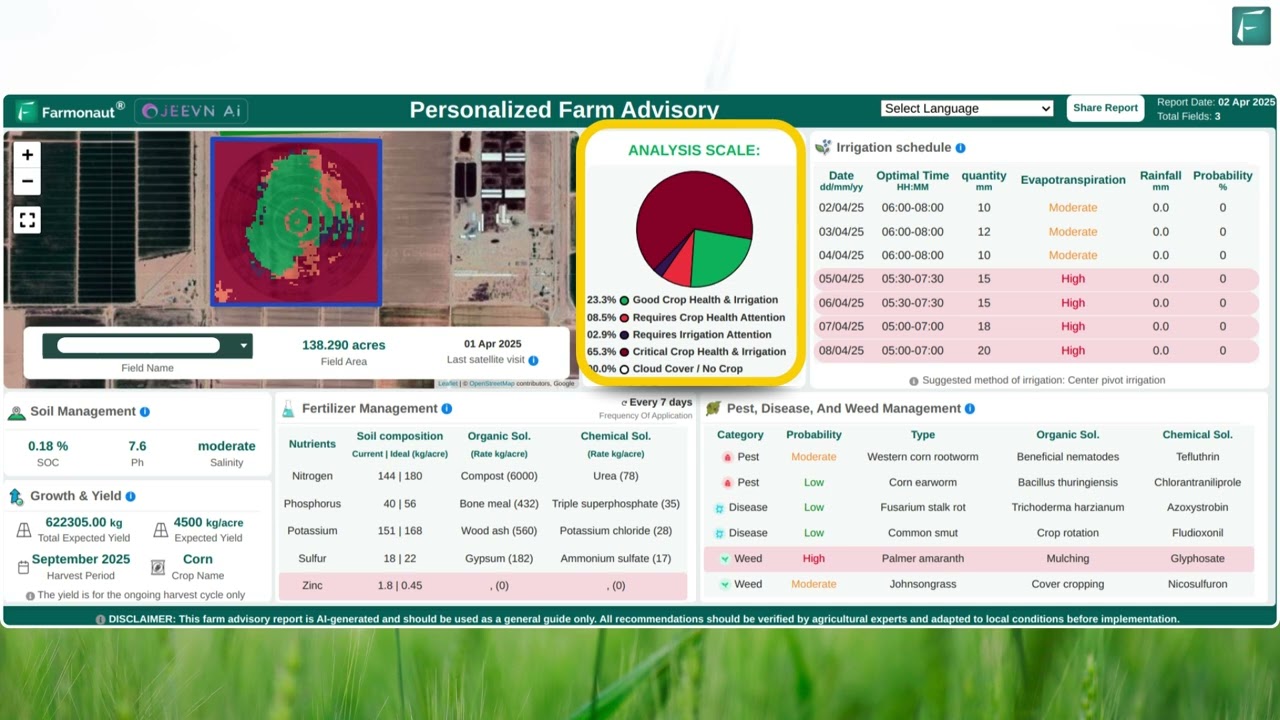
- Multispectral Satellite Monitoring: We use satellite imagery to assess soil moisture, crop health (NDVI), and even structural aspects for irrigation infrastructure.
- AI-Driven Jeevn Advisory: Our Jeevn AI provides tailored recommendations by analyzing on-the-ground sensor data blended with satellite sources—guiding optimal irrigation cycles based on real-time forecasts and conditions.
- Easy Accessibility & Remote Management: Our platform allows farmers and managers to remotely monitor and adjust irrigation using web or mobile apps on the go!
- Blockchain Traceability: We enable full traceability of crop irrigation events—boosting transparency for regulators and consumers. (Learn more at Product Traceability.)
- API & Integration: Developers can plug our data and insights directly into their platforms through Farmonaut API solutions.
- Cost-Effective, Scalable: We democratize access to satellite and AI-based farm management, providing affordable monitoring and management tools suitable for all scales—from smallholder to enterprise.
- Environmental Footprint Tracking: Our platform offers carbon footprint monitoring, helping users adopt more sustainable practices in irrigation and crop production.

Want to monitor your field or forest remotely, cut costs, and improve irrigation management with satellite data? Start with Farmonaut’s crop plantation & forest advisory solutions.
To further reduce operational costs in agriculture and land management, we also offer fleet and machinery tracking solutions. For more details, explore Farmonaut Fleet Management.
We are committed to making satellite-driven irrigation management affordable, universally accessible, and environmentally sustainable—now and in the future.

Sustainability: Water Conservation, Crop Health & Beyond
Adopting smart irrigation control is not only a move towards higher yields and greater efficiency—it’s an investment in sustainable agriculture. Here’s how:
- Water Conservation: Up to 40% water savings mean resilience against drought and compliance with global water management standards.
- Soil Health Protection: Controlled water input prevents erosion and leaching, thus preserving soil quality and fertility.
- Reduced Carbon Footprint: Integrating with renewable energy sources such as solar-powered pumps further decreases the environmental impact of irrigation.
- Improved Crop Quality: Perennial crops like vineyards and orchards benefit from more consistent, high-value harvests.
- Resource Optimization at Scale: For forestry management and land reclamation, smart irrigation ensures efficient establishment and maintenance of vegetation with minimal labor.
By combining smart irrigation with regenerative agriculture principles, you lay the foundation for resilient, climate-smart farming. Watch the transition in action:

The Future of Smart Irrigation: What’s Next Beyond 2026?
Smart irrigation controllers are evolving rapidly. Your field in 2026 may already look very different from 2020! Here’s what’s on the horizon:
- Next-Gen Sensors: Sensors capable of detecting even more nuanced plant and soil data, from root zone temperature to micro-climate variations at sub-field levels.
- 5G and Hyper-Connectivity: Ultra-fast data transfer between devices, sensors, and cloud services for real-time, high-definition monitoring and instant response.
- AI & Robotics: True self-learning systems that not only adapt schedules but can autonomously adjust fertigation, pest management, and multi-factor decisions.
- Integration with Weather Prediction Networks: Direct links into national/global climate models to predict and mitigate drought, excessive rain, or heatwaves.
- Solar and Renewable-Driven Systems: Sustainable irrigation fully powered by renewables, reducing operational costs and environmental impact.
- Blockchain Logistics and Traceability: From every drop of irrigation water to final crop delivery, blockchain provides a secure, tamper-evident record for buyers, regulators, and insurers.
These advancements further empower farmers, farm managers, and agronomists to deliver efficient irrigation at scale—boosting yields while supporting sustainability and transparency.
Want to use satellite data for crop insurance or loan verification? Discover how satellite-powered audits can secure your finances at Farmonaut Crop Loan & Insurance.
Farmonaut Subscriptions
If you’re ready to embrace smart irrigation management with real-time monitoring, AI-based advisory, traceability, and environmental tracking, choose a subscription tier tailored to your needs! We offer scalable plans for individuals, businesses, and government institutions worldwide.
FAQ: Smart Irrigation Control Explained
- What is the main function of a smart irrigation controller?
- A smart irrigation controller uses real-time sensors and AI algorithms to automatically adjust irrigation routines, ensuring each zone receives the optimal amount of water for healthy crop growth.
- How does smart irrigation reduce water usage?
- By continuously monitoring soil moisture, weather forecasts, and crop needs, smart controllers precisely apply water only when and where it’s needed, minimizing waste and runoff.
- Are smart controllers difficult to install and operate?
- Top smart irrigation controllers are designed for easy installation and come with user-friendly interfaces via web or mobile apps. Integration with existing systems is usually straightforward.
- Can smart irrigation systems be used for both small and large-scale farms?
- Absolutely. From small plots with basic sensor setups to expansive, zoned, data-rich operations, smart irrigation solutions are scalable for any agricultural environment.
- How do I monitor my fields remotely?
- With apps (such as Farmonaut), you can view real-time data, receive alerts, and make adjustments from anywhere—integrating satellite and local sensor data for maximum insight.
- What are the advantages of integrating satellite-based monitoring with smart irrigation?
- Satellite imagery provides a macro-view of crop health, moisture variation, and stress across whole regions, making it ideal for large or complex holdings and for decision-making that extends beyond the reach of local sensors.
Conclusion
The future of farming is intelligent, data-driven, and sustainable. Smart irrigation controllers in 2026 are already revolutionizing agriculture by enabling farmers and land managers to conserve water, reduce costs, and improve crop productivity with unprecedented precision and efficiency.
Industry leaders like Gardena are raising the bar with IoT-integrated, AI-powered, and ultra-durable smart irrigation control solutions. Meanwhile, we at Farmonaut are empowering stakeholders with affordable satellite monitoring, AI-driven advisory, and resource management tools for a truly modern approach to sustainable agriculture.
By embracing smart irrigation control today, you’re not just making a technological upgrade—you’re cultivating a future of efficient, productive, and environmentally responsible agriculture.
Ready to transform your yields? Power up your farm with precision—switch to smart irrigation management and join the agricultural revolution of 2026!

 Godrej Agrovet
 Hayleys Agriculture
 Linx Agritech
 Adinet
 Save Your Soils
 GalaxEye Space
 Grandstream Algérie
 XOS Realty
 Geospatial Lab Africa
 Agro La Gándara
 HIPSAC
 ZOL Zimbabwe
 Juligerm
 AdBio
AdBio MISE Maroc
 NWNS
NWNS Red August Group
 Farm Inc
 WeMe Global
 Agrotoken
 Blue BearX
 Insignito
 DnCubed
 Indosistim Teknologi
 Liquify Digital
 CU Foods
 BeyondTech Global
 Rouge VC
 AgroRisk
 Oath Inc
 Esri North East Africa
 MDCV UK
 Etech Consulting Madagascar
 Vestlandsforsking
 WB Dev
 Sama Premium
 Tres Valles
 Blickwinkel
 Agricultural Credit Policy Council
 eKGIS
eKGIS Mostas Tech
 Andex
Andex Deluxe Conseil
 WICO
WICO Chimera Innovation
 SkyHarvest
 Teledarbas
 Exurbia Geospatial
 FieldZero
