

Best Soil Moisture Meter: Types, Costs & How to Test Soil
Reviewed August 2026 against USDA’s National Agricultural Statistics Service (NASS), Cornell University’s Nutrient Management Spear Program, and the University of New Hampshire Extension soil testing laboratory.
Try it: Calculator: Days Until Your Root Zone Needs Water →
The best soil moisture meter depends on what you’re checking and how often. A $10–$20 analog dial or basic digital probe is accurate enough to tell you whether a houseplant or garden bed needs water. A $25–$80 digital capacitance meter with a metal probe is the right call for raised beds and container collections. A permanently installed capacitance (FDR) or TDR sensor, priced $80–$350 per station, is the standard tool for scheduling irrigation on row crops, orchards, and vineyards. None of these — by themselves — measure nitrogen, phosphorus, potassium, or pH; for that you need a multi-parameter soil tester, an NPK test kit, or a laboratory soil test, each covered below with real prices and what each one actually reports.
This guide compares every category of soil tester on the market — from a $10 analog dial to a certified lab panel — on what it measures, how it works, what it costs, and when it’s the wrong tool for the job. It also includes a calculator that turns a soil-texture and root-depth input into an actual watering schedule, because a moisture reading by itself doesn’t tell you when to act.
Table of Contents



What a Soil Tester Actually Measures
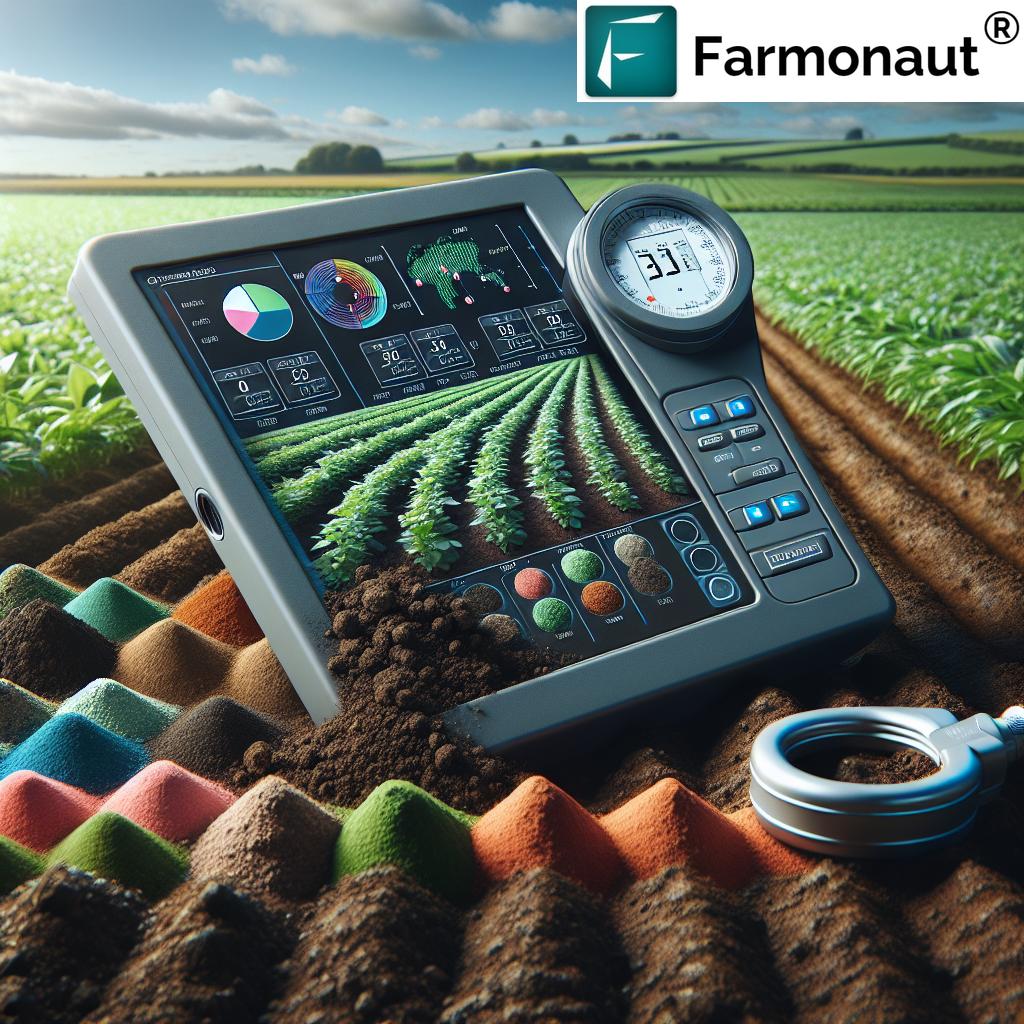
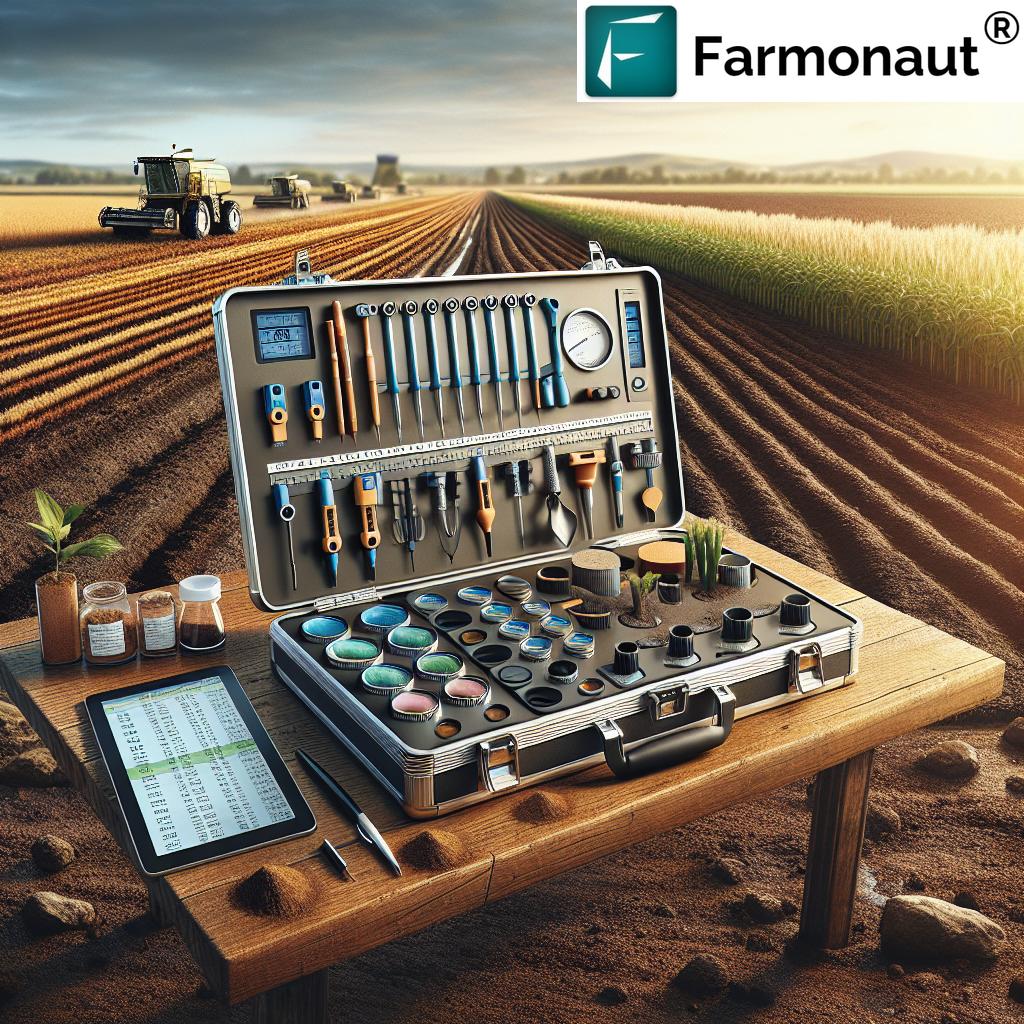
A “soil tester” is any device that reports a measurable soil characteristic — moisture, pH, electrical conductivity (EC), or nutrient content — instead of leaving you to guess from the color or feel of the dirt. The University of California Agriculture and Natural Resources (UC ANR) irrigation and nutrient management program groups the moisture-measuring half of this category into four main technologies: neutron probes, TDR/FDR (dielectric) sensors, tensiometers, and gypsum blocks, with TDR/FDR and tensiometers the most common in current use, according to UC ANR’s soil moisture sensor guide.
None of these tools do everything. A moisture meter tells you how wet the soil is right now; it says nothing about nitrogen or phosphorus. A pH tester tells you acidity; it says nothing about moisture. A lab test covers nutrients, organic matter, and texture in depth but takes days to come back and can’t be read in the field. Picking “the best” soil tester means picking the one that answers the specific question you have — which is also why the same soil-health monitoring approach that improves sustainable productivity on a farm applies to sustainable land use more broadly: match the tool to the decision, not the other way around.

Why Most Growers Still Guess Instead of Test
USDA NASS’s 2023 Irrigation and Water Management Survey — a follow-up to roughly 35,000 producers identified in the 2022 Census of Agriculture — found 212,714 U.S. farms irrigating a combined 53.1 million acres with 81 million acre-feet of water applied, an average of about 1.5 acre-feet per acre, according to the USDA NASS press release published October 31, 2024. Both irrigated acreage and total water applied fell between the 2018 and 2023 survey rounds.
Pennsylvania’s state-level breakdown of the same survey shows exactly how rarely instruments — rather than instinct — drive the decision to irrigate. Among 2,362 Pennsylvania farms that reported how they time irrigation, per the Penn State Extension summary of the survey, 2,095 farms watched crop condition, 1,341 relied on the feel of the soil, and only 130 used a soil moisture sensing device (farms could report more than one method, so the figures don’t sum to the total). That’s about 5.5% of reporting farms using an instrument at all — the gap a soil moisture meter is built to close.
Types of Soil Testers and Soil Moisture Meters
Here’s what’s actually sold under the “soil tester” and “soil moisture meter” names, from cheapest to most involved.
1. Analog dial (galvanic) moisture meters
These are the $10–$20 probes sold at garden centers, including the Luster Leaf Rapitest line — Home Depot’s own listings show the Rapitest 1810X analog moisture tester and 1825X digital version priced in the low teens in current online catalogs. They use two dissimilar metal probes that generate a small current in damp soil, need no battery, and read out on a 1–10 or “dry/moist/wet” dial. They’re the right choice for houseplants and small garden beds, but the probe corrodes with repeated use in wet soil and salts from fertilizer can skew the reading high, so treat the dial as a relative indicator, not an absolute percentage.
2. Digital capacitance and pin moisture meters
Digital versions replace the analog needle with an LCD readout and, on multi-in-one models, add a second probe for pH or a light sensor — the “4-in-1” testers in this category list for around $75–$80 at major hardware retailers. These are the tools most searches for “soil moisture meter for plants” and “best garden soil moisture meter” are really asking about: a handheld probe you push into a container or bed and read immediately, no calibration required, but still sensitive to soil texture and mineral content.
For digital tracking beyond a single handheld reading, Farmonaut’s crop plantation and forest advisory suite logs soil and crop-health data over time from your phone or desktop instead of a single point-in-time dial reading.
3. Multi-parameter “soil parameter testers”
Marketed variously as a soil parameter tester or 3-in-1/4-in-1 tester, these combine a moisture probe with a coarse pH indicator and sometimes a light meter in one $15–$40 housing. They’re convenient for a first pass on a new garden bed, but the pH reading is a rough indicator, not a lab-grade measurement — if a crop’s yield depends on hitting a specific pH band, confirm with a lab test before amending.
4. NPK soil test kits (chemical/colorimetric)
A “soil fertility meter” or “soil nutrient meter” sold as a kit usually works by chemical extraction: soil mixed with a reagent produces a color that’s matched against a reference chart or read by a small digital colorimeter, reporting nitrogen, phosphorus, and potassium. These run $20–$60 for a kit good for multiple tests and are the fastest way to get an N-P-K estimate without shipping a sample to a lab — accuracy depends heavily on following the sample-prep steps exactly, since over- or under-diluting the extract shifts the color reading.
5. Field-installed capacitance (FDR) and TDR sensors
Buried at one or more depths and left in place, these sensors measure the soil’s dielectric constant continuously and transmit readings to a dashboard — the tool set behind most “wireless IoT soil moisture sensor” listings. UC ANR notes that TDR/FDR sensors are usually simpler to install than tensiometers but need site-specific calibration for absolute accuracy and are sensitive to soil-water salinity, per the UC ANR sensor comparison. Expect $80–$350 per sensor or monitoring station depending on depth channels and telemetry.
6. Tensiometers
A tensiometer measures how hard a root has to pull to extract water — soil water tension, not a volumetric percentage — using a water-filled tube, ceramic tip, and vacuum gauge. UC ANR describes tensiometers as better suited to water-sensitive crops like berries and vegetables and, unlike capacitance sensors, they don’t require soil-specific calibration. Expect roughly $60–$150 per unit.
7. Laboratory soil test kits
A soil sample mailed to a university or commercial lab returns the deepest dataset available: full N-P-K, pH, organic matter, texture class, micronutrients, and — for an added fee — heavy metals. This is the category behind “soil tester machine” searches, since the actual instruments doing the work in a lab (spectrophotometers, flame photometers) are lab-scale machines, not handheld tools. Costs and turnaround are covered with real, dated prices in the comparison table and chart below.
8. Satellite and AI-based soil monitoring
Rather than a probe in the ground, remote-sensing platforms use vegetation indices (like NDVI) captured from satellite imagery, combined with AI models, to flag soil-moisture stress and crop-health issues across an entire field or farm without a site visit. Farmonaut integrates this alongside ground-based data through its large-scale farm management platform and covers the broader practice in its guide to sustainable crop management.

Reading the Numbers: Field Capacity, Wilting Point & Nutrients
A moisture-meter reading only means something once you know the range for your soil. Two numbers set that range: field capacity (the water content left after a soil has drained freely for about a day) and the permanent wilting point (the water content below which a plant can no longer pull water out of the soil). Cornell University’s Nutrient Management Spear Program (NRCCA) puts field capacity at 15–25% volumetric water content in sandy soils, 35–45% in loam, and 45–55% in clay, with wilting point at 5–10% for sand, 10–15% for loam, and 15–20% for clay, per its soil-water fundamentals page. The gap between those two figures — the water actually available to roots — is why the same meter reading means “irrigate now” in sand and “still fine” in clay.
The interactive tool below turns those figures into a watering schedule. Pick your soil texture, tell it your root depth and how fast your crop is using water, and it converts your moisture-meter reading into “irrigate again in X days.”
Calculator: Days Until Your Root Zone Needs Water
Assumes a single-layer soil-water budget using average available-water-capacity figures by texture (Cornell NRCCA) and ignores rainfall, uneven root density, and runoff. Use a lower depletion percentage (30–40%) for shallow-rooted, drought-sensitive crops like lettuce or strawberries, and a higher one (50–60%) for deep-rooted, drought-tolerant crops like corn or established turf. Confirm the starting point with your own moisture meter or tester reading before irrigating.
How Does a Soil Tester Work? A Step-by-Step Method
Regardless of brand, every soil tester relies on one of three underlying methods — and knowing which one you're holding tells you how to get a reliable reading from it.
- Electrical/galvanic: two dissimilar metal probes generate a tiny current when soil moisture is present between them; more moisture and more dissolved salts mean a stronger current, which the meter converts to a dial or digital reading. No battery is needed, but corrosion and fertilizer salts distort the number over time.
- Dielectric (capacitance/FDR or TDR): the probe measures how the soil affects an electrical field or pulse, which changes predictably with water content. This is more stable than galvanic sensing but needs calibration for a specific soil's texture and bulk density to convert the raw signal into an accurate percentage, per UC ANR's guidance.
- Chemical/colorimetric (lab and NPK kits): a soil sample is mixed with an extracting reagent, and the resulting color or the chemical concentration in the solution is measured — by eye against a reference chart in a home kit, or by spectrometry in a lab — to report nutrient levels.
For a reliable reading with any handheld probe: water the area lightly if the soil is dust-dry (a completely dry probe can under-read), insert the full probe length rather than just the tip, take three readings 6–12 inches apart and average them rather than trusting one spot, and clean the probe after each use to stop corrosion or residue from skewing the next reading.

Comparison Table: 8 Soil Testing Tools
The table below lines up every category from the section above on what it measures, how it works, what it costs, and where it fits.
| Tool | What It Measures | How It Works | Price (USD) | Best For | Calibration Needed? |
|---|---|---|---|---|---|
| Analog dial moisture meter | Moisture only, relative scale | Galvanic current between two metal probes | $10–$20 | Houseplants, small beds | No, but drifts as probe corrodes |
| Digital capacitance/pin meter | Moisture %, some add pH/light | Dielectric change between probe pins, LCD readout | $12–$80 | Raised beds, containers | Minimal; soil texture affects absolute accuracy |
| Multi-parameter soil parameter tester | Moisture + coarse pH (+ light on some models) | Probe electrode plus a simple pH indicator | $15–$40 | First-pass check on a new garden bed | No; pH read is a coarse indicator, not lab-grade |
| NPK soil test kit | Nitrogen, phosphorus, potassium, sometimes pH | Reagent color-matched to a chart or colorimeter | $20–$60 per kit | Vegetable gardens before planting | No, but technique affects repeatability |
| Field-installed FDR/TDR sensor | Volumetric water content, some add EC and temperature | Buried probe reads soil dielectric constant continuously | $80–$350 per station | Row crops, orchards, vineyards | Yes, site-specific per UC ANR |
| Tensiometer | Soil water tension, not volumetric % | Water-filled tube, ceramic tip, vacuum gauge | $60–$150 | Water-sensitive crops (berries, vegetables) | No soil calibration needed per UC ANR |
| Laboratory soil test | Full N-P-K, pH, organic matter, texture, micronutrients, heavy metals | Certified lab extraction and spectrometry | $5–$110 per panel | Baseline testing, high-value crops, compliance | N/A — professionally calibrated instruments |
| Satellite/AI soil monitoring (Farmonaut) | Moisture proxy, vegetation stress, crop-health indices | Remote sensing (NDVI and related indices) plus AI advisory | Subscription-based | Whole-field or whole-farm monitoring | N/A |
For programmatic access to satellite-derived soil and crop data instead of a manual dashboard check, see the Farmonaut Satellite & Weather API and its developer documentation.
What Testing Actually Saves You
The clearest way to see what a test is worth is to look at what it costs against what happens if you skip it: applying fertilizer without knowing your existing nutrient levels risks both underfeeding a nutrient-poor field and overspending on one that didn't need it, and neither error is visible until the crop is already grown. On the lab side, prices are concrete and dated: the University of New Hampshire Extension's soil testing lab, in its price list updated April 1, 2026, charges $10 for a standalone pH check, $5 to add organic matter content, $25 for its Standard Gardening nutrient panel (N-P-K plus pH), $10 for micronutrients, $40 for a soil texture class determination, and $110 for a heavy-metals screen, per UNH Extension's published pricing.
Farmonaut's monitoring platform extends this same logic to the whole field: pairing point-based soil tests with satellite-derived carbon footprinting tools lets a farm track both nutrient status and its sustainability reporting from the same dataset instead of running two separate systems.
Guide: Selecting the Right Soil Tester
Work through these questions in order rather than shopping by star rating alone:
- What decision are you making? "When do I water" needs a moisture meter or tensiometer. "What do I fertilize with" needs an NPK kit or lab test. "Is my whole field stressed" needs satellite monitoring, not a handheld probe.
- How many spots do you need to check? One houseplant or a small bed: a $10–$20 handheld probe. A field with variable soil: multiple buried FDR/TDR sensors or a remote-sensing platform, since a single spot reading won't represent the whole area.
- Do you need continuous data or a single reading? A one-time check before planting favors a lab test or NPK kit. Ongoing irrigation scheduling favors a permanently installed sensor with telemetry.
- What's your soil texture? Sandy soils hold less available water in a narrower band (see the chart above), so a sandy field needs more frequent, more sensitive monitoring than a clay field with the same crop.
- Cost versus what a wrong guess costs you. A $110 heavy-metals screen matters for compliance or unfamiliar land; it's overkill for checking whether a tomato bed needs water this week.
- Does it need to talk to anything else? If you're already tracking fields digitally, choose a tester or sensor that can feed a farm management platform rather than a standalone dial you have to log by hand.
For logistics around deploying testers, sampling routes, and field visits across multiple plots, Farmonaut's resource and fleet management tools help coordinate the people and equipment doing the testing, not just the readings themselves.
Farmonaut Subscriptions & Pricing
Farmonaut's own satellite-based monitoring plans are priced and listed below for comparison against the point-based tools above.
Putting Soil Testing Into a Routine
- Set a schedule, not a one-off: test before planting each season at minimum; high-value crops or fields new to you warrant a mid-season check too.
- Sample more than one spot: take readings or samples from several representative points per management zone rather than one corner of the field.
- Layer your tools: use a handheld meter for daily go/no-go watering decisions, and reserve the lab test for the nutrient questions a meter can't answer.
- Log every reading: feed results into a farm management app on Android or web so trends are visible across weeks, not just the moment you took the reading.
- Act on the number: adjust the irrigation or fertilizer plan based on what the tester actually reported, not on what you expected it to say.
- Check outcomes: compare interventions against yield mapping data to see whether the change in watering or fertilizing actually moved yield.
- Keep records: dated test results support insurance claims, certification audits, and season-over-season comparisons.
For operations that need to document soil and input decisions end-to-end, Farmonaut's blockchain-powered traceability system ties testing records into the same chain of custody as the harvested crop.
FAQs: Soil Testers & Soil Moisture Meters
What is the best soil moisture meter overall?
There isn't one meter that's best for every use. For houseplants and small garden beds, a $10–$20 analog or basic digital dial is enough. For raised beds or a container collection, a $25–$80 digital capacitance meter is more repeatable. For row-crop irrigation scheduling, growers use a permanently installed FDR/TDR sensor ($80–$350) or a tensiometer ($60–$150), not a handheld dial.
What's the difference between a soil moisture meter and a soil parameter tester?
A soil moisture meter reports one thing: how wet the soil is. A soil parameter tester (sometimes sold as a 3-in-1 or 4-in-1 device) combines a moisture probe with a coarse pH read and, on some models, a light sensor, in one $15–$40 housing — convenient for a quick first look, but the added readings are indicators, not lab-grade measurements.
Is a "soil tester machine" different from a handheld soil tester?
Yes. Consumer soil testers are handheld probes. The instruments actually used inside a testing lab — spectrophotometers and flame photometers that measure nutrient concentrations in an extracted soil solution — are lab-scale machines, which is what most "soil tester machine" searches are really describing.
How does a soil tester work?
It depends on the type: galvanic meters read a small electrical current between two probes; capacitance and TDR sensors read how soil affects an electrical field or pulse; chemical and lab tests extract nutrients into a solution and measure the resulting color or concentration. See the step-by-step method above for how to get a reliable reading from each.
How often should I run a soil nutrient test?
At least once a year, before the main planting season. High-value crops, new fields, or soils under active amendment justify a mid-season retest as well.
Does a digital soil moisture meter replace a lab test?
No. A meter tells you moisture; it can't report nitrogen, phosphorus, potassium, organic matter, or heavy metals. Most operations use a handheld meter for daily watering decisions and a lab panel, priced from $5 to $110 per test per UNH Extension's 2026 list, for nutrient planning.
Are soil testers useful outside crop farming, such as forestry or lawns?
Yes. Regular pH, moisture, and nutrient checks apply the same way to forestry plots and turf as to row crops — the parameters that limit plant growth don't change by land use.
Farmonaut: Satellite Monitoring Alongside Ground Testing
Ground-based soil testers answer "what's happening at this exact spot." Farmonaut's satellite-based platform answers "what's happening across this whole field or farm," and the two are meant to work together rather than compete:
- Satellite-based crop and soil monitoring: NDVI and related vegetation indices flag moisture and nutrient stress across a whole property, pointing you to where a ground-based tester is worth deploying.
- AI advisory: Jeevn AI combines field-tester readings with satellite trends into a single recommendation instead of two separate data streams to reconcile by hand.
- Blockchain-based traceability: soil and input records feed into Farmonaut's traceability solution for supply-chain documentation.
- Fleet and resource management: coordinate sampling routes and field visits with Fleet Management tools.
- Carbon footprinting: soil and crop data doubles as input for carbon tracking dashboards for sustainability reporting.



Conclusion
There's no single "best" soil moisture meter or soil tester — only the right tool for the specific question in front of you. A $10–$20 dial answers "does this houseplant need water." A $25–$80 digital capacitance meter answers the same question more precisely for a raised bed. A field-installed FDR/TDR sensor or tensiometer answers it continuously for a row crop. An NPK kit or a lab panel — priced from $5 to $110 per University of New Hampshire Extension's 2026 list — answers the nutrient question none of those moisture tools can touch.
USDA NASS's 2023 survey data shows that instrument-based irrigation timing is still the exception rather than the rule on U.S. farms, which means the gap between guessing and testing is exactly where a well-matched soil tester pays for itself — whether that's a $12 probe checked before a re-check next season's NASS figures come out, or a full sensor network feeding a farm management platform year-round.

 Jontra
 Yaduka Agrotech
 Kalustyan
 Tucor
Tucor Geno
Geno Hayleys Agriculture
 Linx Agritech
 Adinet
 Save Your Soils
 Grandstream Algérie
 XOS Realty
 Geospatial Lab Africa
 Agro La Gándara
 HIPSAC
 ZOL Zimbabwe
 Juligerm
 MISE Maroc
