

- Introduction: The Era of Sustainable Agriculture Projects
- IoT Agriculture Projects: The Backbone of Modern Sustainable Farming
- Trends Impact Comparison Table: 7 ML Trends for 2026
- Agriculture ML Projects: Decision Support, Soil Health, and Beyond
- Satellite, Drones, and Sensors: Key IoT Devices
- Sustainable Practices Enabled by IoT & ML Technology
- Farm-to-Fork Supply Chain: Blockchain, Transparency, and Traceability
- Implementation Strategies: Scalable, Resilient Pathways for 2025 & 2026
- Farmonaut: Satellite-Powered Solutions for Agriculture, Mining & More
- FAQ: Your Sustainable Agriculture & IoT Questions Answered
- Looking Ahead: Trends Shaping Sustainable Farming in 2026 and Beyond
Sustainable Agriculture & IoT Projects: 7 ML Trends 2026
Sustainable agriculture projects are rapidly evolving in the era of 2025 and beyond, propelled by the convergence of IoT, artificial intelligence, and machine learning (ML). As resource constraints intensify and environmental standards tighten, the fusion of sensors, data-driven platforms, and precision farming is redefining how we manage soil, optimize irrigation, and ensure resilient agricultural and forestry systems. This trend extends even to mining-adjacent zones, where land-use stewardship and sustainable practices are not just necessary, but urgent.
In this comprehensive article, we’ll explore the transformative impact of IoT agriculture projects and agriculture ML projects on sustainable practices — from precision water management to carbon sequestration — and detail the seven most significant ML-driven trends taking shape for 2026. We’ll also include practical implementation insights, highlight benefits for farmers, technologists, miners, and policymakers, and present future-proof pathways for operational and environmental success.



Introduction: The Era of Sustainable Agriculture Projects
The global landscape of sustainable farming projects is witnessing a dramatic shift in 2025–2026. Climate volatility, resource depletion, and the demand for food security are driving a new wave of innovation. IoT and machine learning are no longer just buzzwords—they’re the backbone of modern sustainable agriculture projects and forestry management efforts. These digital tools feed real-time data into responsive platforms, ensuring precise use of irrigation, nutrients, and energy.
- ✔ Key Benefit: Significant reduction in water and chemical waste
- 📊 Data Insight: ML-powered forecasting reduces over-application of pesticides and nutrients by 20–45%
- ⚠ Risk or Limitation: Requires stable connectivity and skilled personnel for sensor deployment
- 💡 Innovation Driver: IoT and ML integrations are boosting soil carbon sequestration and resilience
- 🌍 Sustainability Metric: Supports compliance with new global environmental standards & biodiversity goals
As we approach 2026, the convergence of IoT and ML within sustainable agriculture projects (spanning pure agriculture, forestry, agroforestry, and mining-adjacent zones) is proving indispensable for:
- Boosting yields—while reducing chemical inputs
- Monitoring soil health, organic matter, and carbon stocks
- Ensuring efficient resource management in even the most challenging environments
The integration of IoT and ML in sustainable agriculture projects is accelerating—enabling precision soil, water, and carbon management, while enhancing resilience across agriculture, forestry, and mining landscapes.
IoT Agriculture Projects: The Backbone of Modern Sustainable Farming
IoT agriculture projects form the backbone of modern, sustainable farming projects. The Internet of Things (IoT) spans a network of smart sensors, weather stations, and drones—each feeding live data into cloud-based platforms to enable rapid, informed interventions. Let’s break down the key capabilities and environmental benefits delivered by this digital backbone:
- 📶 Soil Health Sensors: Continuously monitor moisture, nutrient status, and temperature—optimizing irrigation and fertilizer application while minimizing overuse and environmental runoff.
- 🌦️ Weather Stations: Feed localized data on rainfall, wind, humidity, and temperature into ML models, supporting adaptive irrigation scheduling and pest/disease forecasting.
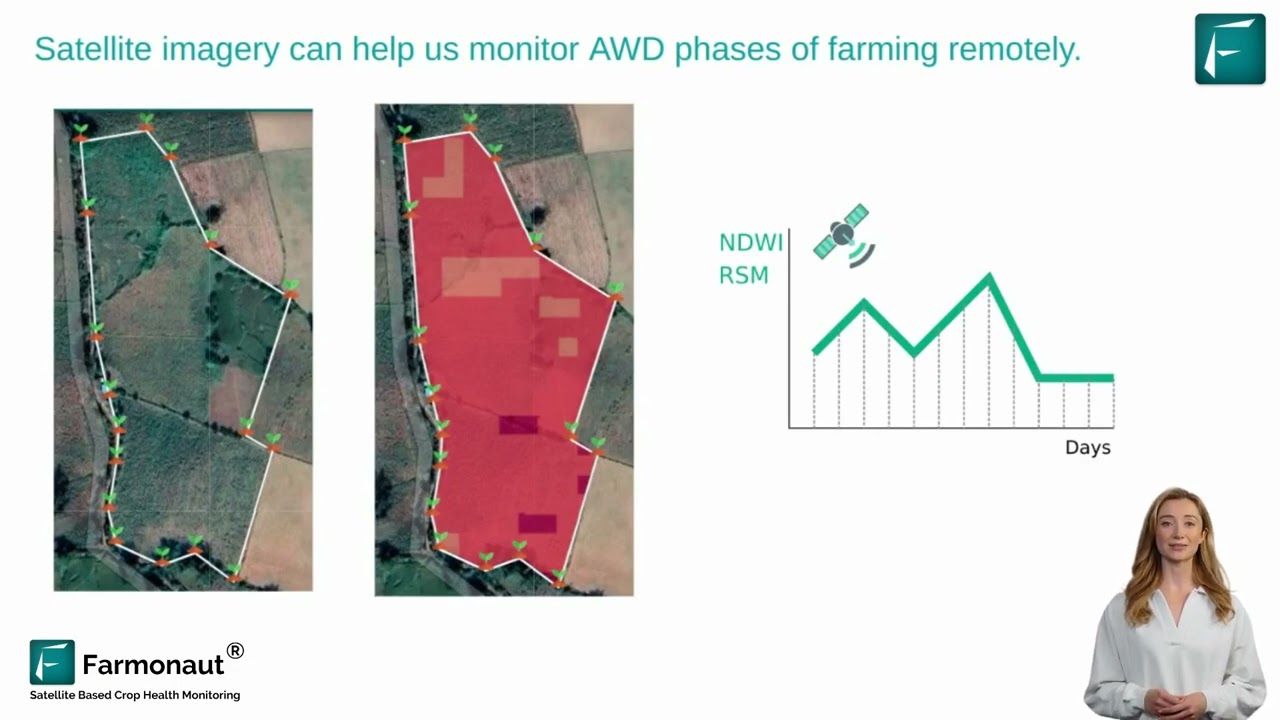
- 🛰️ Drones & Satellite Imagery: Enable precision crop health assessment, soil variation mapping, and early detection of stress, disease, or pest incursions.
- 🔒 Blockchain Integration: When paired with IoT, ensures traceability for sustainability certifications and resource-efficient supply chains.
In forestry and agroforestry contexts, these smart networks track soil carbon cycles, moisture patterns, and system resilience—vital for reforestation, silviculture, and ecosystem stewardship.

Mining-Adjacent Agriculture & IoT: Managing Risks and Compliance
Within or near mining zones, IoT devices are increasingly used to monitor soil degradation risk, sedimentation events, and runoff. Such data informs remediation, compliance with environmental standards, and supports habitat restoration efforts—helping balance mineral extraction and resilience in adjacent agricultural areas.
- 🌱 Soil sensors detect contamination or loss of soil fertility
- 🌊 Runoff monitoring systems trigger alerts for sediment or pollutant spikes
- 🌲 Remote sensing platforms support reforestation and ecosystem recovery strategies
Prioritize interoperable standards (like MQTT, REST, and open APIs) when deploying IoT agriculture projects. This ensures seamless data exchange across devices and platforms—crucial for scalable, future-ready sustainability initiatives.
Trends Impact Comparison Table: 7 Emerging ML Trends in Sustainable Agriculture Projects (2026)
| ML Trend | IoT Application | Projected Adoption Rate by 2026 (%) | Expected Resource Savings (% Water, Energy) | Projected Improvement in Soil Health Index | Example Use Case |
|---|---|---|---|---|---|
| Smart Irrigation Prediction | Soil Moisture & Weather Sensors | 62% | 35% (Water), 15% (Energy) | +0.18 (normalized index) | Adaptive water scheduling in drought-prone zones |
| Crop Health & Stress Detection | Drones, Multispectral Cameras, Satellites | 59% | 10% (Energy via targeted interventions) | +0.15 | Early diagnosis of pest, disease, or nutrient stress |
| Yield Forecasting | Cloud Data, Historical Records | 52% | 15% (Waste reduction) | +0.10 | Production planning for supply chain resilience |
| Soil Carbon Sequestration Modelling | Soil Carbon & Biomass Sensors | 41% | 25% (Emissions reduction) | +0.25 | Carbon credit generation via sustainable practices |
| Pest & Disease Early Warning | Cameras, Drones, AI Models | 56% | 30% (Pesticide reduction) | +0.20 | Integrated pest management in large and small farms |
| Land Use Optimization in Mining Zones | Remote Sensing, GIS Platforms | 24% | 18% (Land and habitat restoration) | +0.12 | Guiding remediation and habitat protection near mines |
| Blockchain-based Supply Chain Traceability | IoT + Blockchain Platforms | 38% | 12% (Waste/spoilage reduction) | +0.10 | Sustainable sourcing and certification compliance |
- ⚡ Smart Irrigation Prediction: Major leap for sustainable farming projects
- 🌽 Crop Health Detection: ML models + drones/IoT for timely, targeted treatments
- 📈 Yield Forecasting aligns resource usage to true production estimates
- 🌱 Soil Carbon Monitoring: Unlocks sustainability finance and carbon markets
- 🦟 Pest & Disease alerts: Early intervention reduces chemical footprints
- 🌐 Land Use Optimization in mining-adjacent agriculture projects
- 🛡️ Blockchain Traceability: Transparency in supply chains

Agriculture ML Projects: Decision Support, Soil Health, and Beyond
Agriculture ML projects are at the heart of decision support in today’s sustainable agriculture landscape. These machine learning models analyze multispectral imagery, sensor data, weather stations, and historical records to deliver actionable insights:
- Forecasting Drought & Disease Outbreaks: By combining satellite weather data with historical patterns and soil moisture profiles, ML models can forecast drought risk and pest/disease outbreaks—enabling early preventive action.
- Yield Potential & Resource Allocation: ML analyzes crop health indices, previous yields, and current soil/fertilizer conditions, directing resources where they will make the biggest impact.
- Anomaly Detection: Rapidly identifies nutrient deficiencies, pest incursions, or irrigation failures, supporting prompt, precise interventions for optimal outcomes.
- Growth Modeling in Forestry: In forestry and agroforestry projects, ML supports canopy assessment, smart growth modeling, and selective logging practices that safeguard biodiversity and ecosystem function.
- Land Use and Soil Health Assessment: ML-based assessment guides remediation of soil compromised by mining operations, aligning restoration practices to achieve resilient agricultural zones.
Overlooking the calibration and regular maintenance of IoT sensors can erode the quality of data feeding agriculture ML projects. Always follow the manufacturer’s or provider’s standards for sensor placement, calibration, and replacement.

Satellite, Drones, and Sensors: Key IoT Devices in Sustainable Agriculture Projects
- 🛰️ Satellite Imagery Platforms: Enable regular, wide-area monitoring for soil health, carbon sequestration, and crop yield prediction. Essential for remote and large-scale sustainable farming and mining-adjacent land management. Farmonaut’s platform delivers high-resolution NDVI and other vegetation indices to users worldwide.
- 🚁 Drones and Multispectral Cameras: Collect granular data on crop health, pest presence, and nutrient stress. ML models rapidly process this imagery, flag anomalies, and support site-specific interventions (See: How AI Drones Are Saving Farms & Millions in 2025).
- 🌱 Soil Moisture and Fertility Sensors: Measure key variables for precision irrigation and fertilization. Integration with local weather and farm data boosts resource efficiency and yield per water/fertilizer input.
By 2026, agricultural technology ventures focused on IoT-ML integration—particularly those offering subscription models for real-time environmental monitoring and supply chain transparency—are projected to see above-average growth and M&A interest. Learn about carbon footprinting solutions for scalable new sustainability markets.

Sustainable Practices Enabled by IoT & ML Technology
The digital transformation of sustainable agriculture projects is unlocking new practices that were previously impractical or impossible to execute at scale. Here are the leading technology-enabled strategies:
Smart Water Stewardship
- 💧 Sensor-driven irrigation ensures crops only receive as much water as their growth stage and soil moisture profile demand, minimizing overwatering and aquifer depletion.
- ⛈️ Integration of real-time weather data empowers rainwater harvesting and optimized irrigation timing.
- 💦 Precision fertigation (nutrients via drip irrigation) reduces leaching and lowers greenhouse gas emissions.
Soil Health Management & Carbon Sequestration
- 🌾 Continuous soil monitoring guides cover cropping, reduced tillage, and organic amendments, boosting organic matter and building long-term soil carbon.
- 🌱 Synergy with carbon markets allows eligible agriculture, forestry, and agroforestry projects to earn credits for carbon sequestration.
Integrated Nutrient & Pest Management
- 🐞 Drones and AI cameras provide early detection of pest/disease issues
- 🦋 ML-guided thresholds enable judicious pesticide application, promoting biocontrol and sustaining beneficial insects
- 🌿 Real-time nutrient monitoring supports targeted, low-emissions fertilizer use
Agroforestry and Mixed Land-Use Synergies
- 🌳 IoT monitoring in mixed-species plantations ensures resilient biomass production and biodiversity gains.
- 🍃 Microclimate management supports productivity and aligns with forestry conservation goals.
-
🔆 Renewable Energy
Solar-powered IoT sensors/enabled platforms make remote projects self-sustaining and lower carbon footprints. -
🌡️ Edge Computing
Local data processing at the sensor lowers latency for urgent interventions. -
🛡️ Data Security
Blockchain and encrypted APIs ensure agricultural and environmental data privacy and compliance. -
⚡ Predictive Modelling
ML-based prediction optimizes every input—reducing costs and boosting resilience.
Farm-to-Fork Supply Chain: Blockchain, Transparency, and Traceability
Future-ready sustainable agriculture projects and forestry initiatives must go beyond production—they must guarantee traceability, compliance, and resilience all the way to the consumer. Blockchain-based platforms linked to IoT ensure:
- Traceability and Certification: Blockchain-labeled products can prove provenance—whether organic, fair-trade, or compliant with climate-friendly management (CFM) protocols (Product traceability details).
- Data-Driven Forecasting: IoT supply chain data allows smarter inventory, reduced spoilage, and stable market pricing.
- Responsible Sourcing in Mining-Adjacent Supply Chains: Blockchain frameworks empower buyers to demand mitigation of mining impacts and restoration of agricultural value in mineral-extraction regions.
- Rural and Urban Livelihoods: Transparent value chains stabilize prices, lift incomes, and ensure that environmental and social standards are met at every step.
-
🔄 Supply Chain Resilience
Digital verification reduces the risk of counterfeiting and ensures compliance in every transaction. -
🚚 Transportation Optimization
Fleet management platforms lower logistics costs and improve delivery efficiency (Fleet Management). -
🔗 Digital Asset Verification
Blockchain-based records support insurance and sustainable finance.


Implementation Strategies for 2025–2026: Scalable, Resilient Pathways
To unlock the full promise of IoT agriculture projects and ML-powered sustainable farming, projects must balance advanced technology with local adaptation and finance. Here’s how leading actors are deploying sustainable solutions:
- Start with Modular Pilots: Launch with scalable, modular IoT kits (soil, weather, and drone platforms), ensuring data standardization and secure cloud governance.
- Build Local Capacity: Train farmers and technicians in ongoing sensor maintenance, data interpretation, and ML model customization. Digital extension platforms are vital here.
Connect Your Farms With Satellites in Just 2 Minutes Using WhatsApp - Leverage Blended Finance: Blend grants, carbon credits, and equipment subsidies for adoption; use satellite-verified insurance/loans where eligible.
- Ensure Policy Alignment & Compliance: Adopt best-in-class policies for data privacy, environmental reporting, and sustainable land management, especially for mining/infrastructure corridors.
- Collaborate Across Sectors: Foster active exchanges between agritech innovators, miners, forestry agencies, universities, and NGOs to evolve shared standards and value chains.
Don’t underestimate the power of APIs & Integration.
Farmonaut’s API platform and developer docs are ideal for integrating satellite, IoT, and ML-powered insights into your own custom software and dashboards.
If you manage multiple or large-scale farms or forests, opt for dashboard-based solutions supporting multi-field, multi-user, and real-time alerts. Perfect for contractors, agencies, and businesses overseeing hundreds or thousands of hectares.
Farmonaut: Satellite-Powered Solutions for Agriculture, Mining & More
As leaders in satellite technology solutions, we at Farmonaut are committed to making affordable satellite-driven data a reality for every business, user, and government worldwide. Our platform is designed to:
- 📡 Deliver powerful real-time monitoring of fields, forests, and mines using satellite, drone, and IoT data
- 🤖 Provide AI-based advisory for yield, irrigation, and resilience through our Jeevn AI system
- 🔗 Ensure blockchain-powered traceability for product origin, compliance, and certification
- 📝 Equip businesses, policymakers, and technologists with actionable insights for sustainable land and resource management
By combining low-cost subscriptions with API access and digital extension tools, we democratize access to actionable remote sensing—enabling robust, climate-smart strategies for sustainable agriculture, forestry, and mining projects.
Our Jeevn AI system delivers crop and weather advisories to both smallholders and enterprise users, supporting precision agriculture and forecasting for complex environmental zones.
FAQ: Your Sustainable Agriculture & IoT Questions Answered
What is a sustainable agriculture project?
A sustainable agriculture project balances productivity with environmental health, social responsibility, and economic viability. These projects rely on efficient resources, minimize waste and emissions, and protect biodiversity and soil health.
How does IoT transform sustainable farming projects?
IoT devices such as sensors, weather stations, and drones provide real-time data on soil, climate, and crop conditions. This data enables precision management — smarter irrigation, targeted fertilization, early pest detection, and optimized operations, often using AI and ML algorithms.
Why is machine learning important in agriculture?
Machine learning (ML) uncovers patterns in data that humans might miss, such as predicting pest outbreaks, forecasting yield, or modeling soil health trends. This automatic analysis shapes faster, more informed decisions and reduces risks from weather or pests.
What is blockchain-based supply chain traceability?
It’s a digital record-keeping system that ensures every transaction or handoff in the supply chain is securely documented and verified. This guarantees product authenticity, sustainable sourcing, and certification compliance for food, timber, minerals, and more.
Can I integrate satellite/IoT data with my farm or mining management system?
Absolutely — with platforms like ours at Farmonaut, subscription and API options are available to integrate satellite imagery, environmental sensors, and ML analytics directly into your existing dashboards or apps.
How do IoT agriculture projects minimize the environmental impact of mining?
By continuously monitoring soil, vegetation, and water conditions, IoT and remote sensing solutions help detect degradation, guide rehabilitation, and support compliance in mining-adjacent agricultural and forestry zones.
Looking Ahead: Trends Shaping Sustainable Farming in 2026 and Beyond
The era of sustainable agriculture projects enabled by IoT and ML is here — and its breadth extends from regenerative village plots to vast, mining-impacted landscapes and digital supply chains. By 2026:
- 🌍 Over 60% of new agricultural and forestry projects will have sensor-driven data monitoring for soil, water, and crop health.
- 🔗 Supply chain traceability will be standard for premium and certified crops, timber, and minerals.
- 📉 Use of water, chemical inputs, and carbon emissions will decline, even as yields rise thanks to ML-based prediction and targeted intervention.
- 💰 Access to climate and sustainability-linked finance will expand, especially for projects with verifiable carbon sequestration and resource footprints.
- 🤝 Farmer, business, and policy coordination across sectors will be crucial—facilitated by interoperable, open-data platforms and transparent reporting tools.
With robust IoT agriculture projects and agriculture ML projects in play, a more resource-efficient, resilient, and compliant food, fiber, and biomass system isn’t just possible—it’s happening. Will your farm, business, or landscape be ready for 2026?

 Sapoznick Farms
 Agrotoken
 Blue BearX
 Insignito
 Croptimum
 Dalmia Bharat Sugar
 DnCubed
 Field Capacity
 Indosistim Teknologi
 Liquify Digital
 CU Foods
 BeyondTech Global
 Rouge VC
 AgroGreen Dynamics
 AgroRisk
 Oath Inc
 Reddane Farming
 Esri North East Africa
 MDCV UK
