

The Future of Farming: 7 Innovations in Agriculture 2026
“By 2026, precision agriculture is projected to increase crop yields by up to 25% using advanced data analytics.”
“Regenerative farming practices could restore over 100 million hectares of degraded land globally by 2026.”
The Future of Farming and Agriculture: 2026 At a Glance
What is the future of farming and agriculture? As we step into 2026, the trajectory of modern agriculture is defined by a bold shift. Technology-driven, expertise-blending, and sustainability-focused frameworks are now the backbone of our food systems, forestry, mining-related land use, and minerals-enabled value chains. The question—“is organic farming the future of agriculture?”—is answered by a sector that sees a pluralistic blend of regenerative, organic, and precision systems, each dominating where climate, market, and consumer needs align.
Climate resilience, drought-hardened crops, adaptive land management, and soil biology stewardship are at the forefront. Supply chains are rapidly decarbonizing and adopting more circular, nature-positive outcomes—especially in landscapes overlapping with mining and critical infrastructure projects. Integrated with this transition are new digital solutions: AI-powered analytics, real-time drones, advanced sensing, and data integrity unlocked by blockchain transparency. Productivity, ecological integrity, and rural livelihoods form the triple bottom line that increasingly shapes the sector’s social license to operate.
Key Drivers: Data, Technology, & Resilience
What is driving the future of farming and agriculture? Three intertwined forces:
- Resilience: Severe weather, drought, pest outbreaks and climate risks make adaptive planning, drought-resistant crops, and improved soil health a baseline for sustainability.
- Technology: From satellite data, remote sensing, AI decision support, to drones and autonomous tractors, digital infrastructure is a lever for progress, equity, and sustainable outcomes.
- Social License & Policy: Regulatory clarity, public expectations, and transparent emission and biodiversity impact reporting shape how farmers, foresters, and mining operators earn trust—driving adoption of new systems across value chains.
Let’s explore the 7 innovations set to transform agriculture by 2026—each one answering important questions like: “what is the future of agriculture ffa?”, “is regenerative organic farming the future of agriculture?” and “how does precision farming optimize yields, minimize waste, and restore landscapes?”

Comparison Table of Agricultural Innovations (2026) (Industry Estimates)
Innovation 1: AI-Driven Precision Farming
The heart of what is the future of farming is an ecosystem where digital insights steer planning, inputs are hyper-targeted, and yield, cost-efficiency, and resilience all curve up together. AI systems analyze real-time data from satellites, weather stations, drones, and sensors in the field. The result?
- Early-warning forecasts for pest outbreaks and extreme weather
- Dynamic planting calendars that optimize for climate, soil, and market signals
- Resource-saving, variable-rate application of water, fertilizer, and chemical inputs
Farmers benefit from increased productivity, lower inputs, and higher climate resilience.
Foresters and mining operations use the same tools to manage vegetation, combat soil erosion, and meet biodiversity targets.
Farmonaut’s satellite-based platform exemplifies this future by enabling farmers, mining managers, and infrastructure operators to monitor crops, soils, and land in real time. With the Farmonaut App (available on web, Android and iOS), users access Jeevn AI advisory for field-level action.
Farmonaut’s API also empowers integration into any agtech, mining, or supply chain system, delivering remote sensing, weather analytics, and advisory directly into management platforms.

- ✔ Dynamic weather risk forecasts & timing optimization
- 📊 Yield analysis pre- and post-season for improved market planning
- ⚠ Risk: Data overload or poor-quality inputs can skew recommendations—select trusted platforms and verify local calibrations.
- ✔ Labor efficiency—less time spent, fewer mistakes
- ✅ Targeted response to pest and disease outbreaks with minimal waste
Key Benefits of Precision Agriculture (Visual List)
-

Real-time Crop and Soil Monitoring -

Automated Decision Support -

Pest/Disease Outbreak Alerts -

Input Savings & Waste Reduction
Innovation 2: Regenerative Soil Management
Regenerative agriculture, once considered a niche, is rapidly being recognized as both a climate solution and a pathway to resilient land. Restorative soil management isn’t just about reducing chemical inputs; it’s about re-establishing natural nutrient cycling, boosting organic matter, and sequestering carbon.
Core Practices Include:
- Rotational grazing and managed livestock mobility
- Diverse cover cropping (legumes, brassicas, native species)
- Minimum or no-tillage, integrating crop-root health with soil biology
- On-farm composting, reducing input waste and closing nutrient loops
- Agroforestry and woodland buffer restoration boosting biodiversity
This movement blends with advanced systems: digital platforms now monitor soil health (NDVI, EC, pH, carbon levels), sense compaction, and guide targeted improvements. Soil restoration in mining-adjacent lands and infrastructure projects is integral to post-extraction reclamation and biodiversity protection.

- ✔ Soil resilience: 30–90% less erosion, drought buffer
- 🌱 Soil organic matter: Increases by 0.4–0.9 t/ha/year
- 🦉 Biodiversity returns: More birds/insects/pollinators, higher profits for premium markets
- ⚠ Risk: Early implementation may show lower yields and requires skills/training for success
- ✔ Market premiums: Traceability unlocks access to higher-value, climate-conscious buyers
Is organic farming the future of agriculture? For select regions and value chains, organic/regenerative systems will continue to grow in both adoption and profitability, especially when paired with reliable digital traceability (see Farmonaut’s product traceability here).
“By 2026, precision data and regenerative approaches are on track to make farming ecosystems both more profitable and ecologically robust.”
Innovation 3: Drones & Remote Sensing in Agriculture
Drones have transitioned from novelty to necessity. The future of farming and agriculture is being rewritten by high-res multispectral imaging, NDVI data, and digital radar that maps soil and plant health in real time—across vast landscapes and for farms of all sizes.
- 🚁 Crop monitoring: detect stress, disease, or nutrient gaps days before they are visible
- 🍀 Input targeting: reduce chemical and water use by up to 40%
- 🌏 Compliance: drones assist foresters and mining sites in meeting reforestation and restoration standards by mapping regrowth, erosion control, and biodiversity offsets
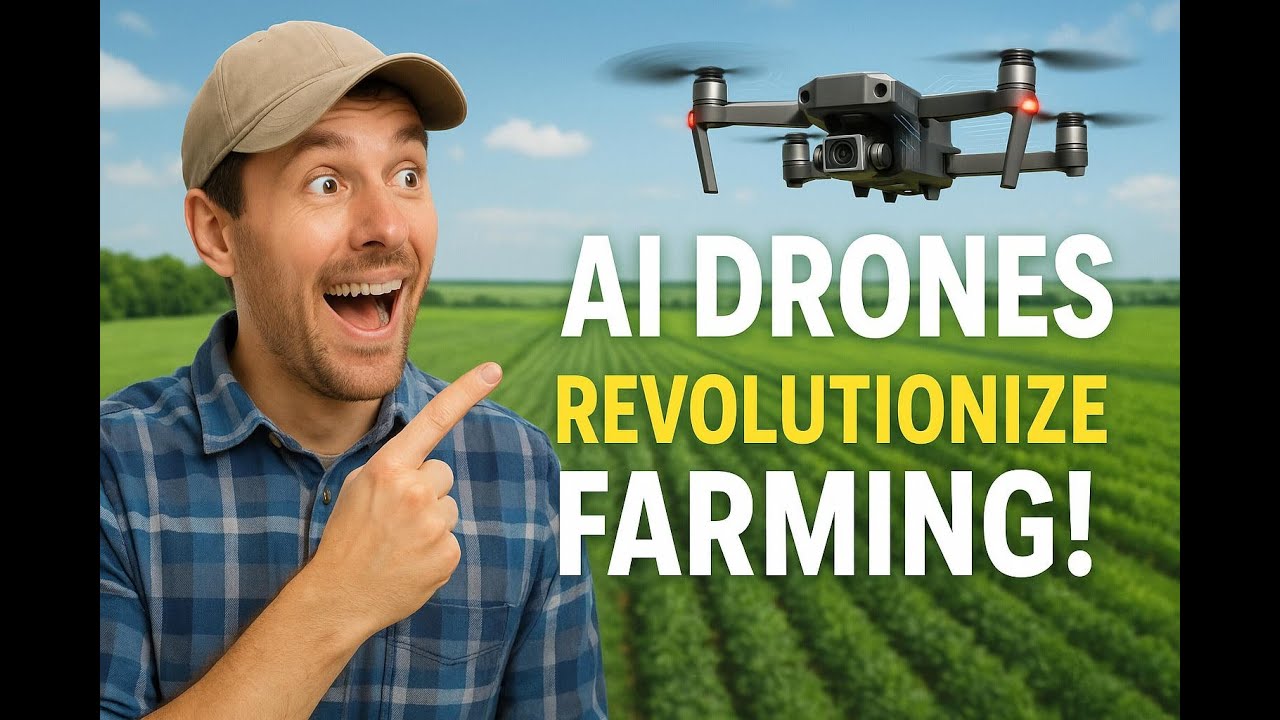
Visual List: Top Outcomes of Drone-Powered Farming in 2026
- 🌽 Immediate stress mapping
- 💧 Water savings, up to 30% per field
- 🧬 Data for AI-driven decision tools
- 🌿 More sustainable, less chemical-intense harvest
- 🛰️ Integration with satellites for 24/7 remote monitoring
If you manage operations across continents—mining, infrastructure, or commercial agriculture—satellite-enabled fleet and resource management is essential for efficiency, compliance, and ecological impact tracking.
Innovation 4: Biotechnology & Crop Genomics
Genomics and biotechnology are redefining what is possible with staple crops. With advances in gene editing, smart breeding, and omics analytics, farmers now have access to crops that are:
- More drought-tolerant and resilient
- Resistant to major pests and diseases
- Less reliant on chemical fertilizers and pesticides
- Better suited for marginal or degraded lands
Key Example: Genome-enabled selection allows for crops that mature faster, require less input, and yield nutrition for both human and animal market demands.
The adoption of these crops is shaped heavily by public acceptance and regulatory clarity; yet, they offer significant benefits for supply chain decarbonization and improving productivity on land impacted by climate variability.
- ✔ Reduced chemical dependency: leading to lower emissions and safer food
- 📊 Yield improvement: 6–11% over conventional hybrids projected by 2026
- ⚠ Risk: Market rejection if regulatory and consumer education gaps exist
- ✔ Expanded options for marginal land and tough climates
Innovation 5: Robotic Automation & Smart Machinery
Labor is among the most volatile factors in farming, forestry, and extraction-adjacent land management (mining, energy infrastructure). Enter a new wave of robotic harvesters, automated planters, and autonomous tractors—reducing reliance on seasonal labor, cutting errors, and making production more efficient.
What’s Possible Now:
- 🤖 On-field robots for picking, thinning, and pest/disease removal
- 🚜 Unmanned tractors with GPS-guided, real-time adjustments
- 🌾 Integrated on-farm processing—shorter, fresher supply chains and less spoilage
Farmonaut’s satellite platform supports this future by enabling remote asset monitoring, predictive maintenance, and reliable, satellite-verified crop insurance and agri-financing—accelerating innovation adoption, even for smaller enterprises.

Innovation 6: Blockchain Traceability & Transparent Supply Chains
The question, “what is the future of agriculture?” is increasingly answered with a single word: Trust. Blockchain traceability is revolutionizing food and resource chains by ensuring product authenticity and transparent carbon, biodiversity, and labor standards at every link.
By 2026, traceability is-
- Embedded in digital agriculture platforms for crop, livestock, timber, and mined resources
- Increasing consumer confidence in organic and regenerative produce
- Reducing risks of fraud, supply-sanctioned emissions, and illegal sourcing in global chains
Using Farmonaut’s blockchain-powered traceability solutions, businesses and governments benefit from verifiable and immutable records across every stage—helping producers and consumers align expectations on quality, sustainability, and social license.

Innovation 7: Supply Chain Circularity & Carbon Decarbonization
Circular systems and carbon management are dominating planning from the soil up in 2026, offering vital paths to restoration. Farms and forestry operations—especially those leveraging digital twins, satellite intelligence, and microgrids—are:
- ♻️ Converting waste-to-resource: ag residues become bioplastics, soil amendments, and new revenue streams
- 🌞 Running solar microgrids or small-scale biogas for operations—driving down input and emission costs
- 🌳 Integrating rewilding, conservation corridors, and biodiversity offsets in land restoration—especially on mining-impacted or infrastructure-adjacent land
- 📉 Measuring soil carbon capture and reduced emissions with real-time satellite tracking—see Farmonaut Carbon Footprinting
Workforce Transformation for Future-Ready Agriculture
The future of farming and agriculture isn’t just a story of technology and ecosystem health. It centers on a new workforce—hybrid-skilled, digitally literate, ecologically minded, and ready for change across value chains.
- Agronomy + data analytics + ecological restoration = 2026’s most sought-after skill set
- Extension services shift to remote diagnostics, virtual co-management, and community resource platforms
- Smallholders gain access to digital wallets, microfinance, and training for technology adoption
- Transparency and social license: Ongoing training improves reporting, traceability, and public trust
Policy, Governance & Social Dynamics Shaping Adoption
The broader future of agriculture is an evolving dance between regulatory frameworks, public expectations, market demand, and rapidly changing technologies. Country-, region-, and sector-specific nuances shape the adoption and success of innovations.
2026 Policy & Market Trends:
- Climate risk scoring and insurance now influence crop/land selection
- Clearer water rights and carbon credit protocols attract investment
- Transparent, third-party emissions and biodiversity reporting now required for export markets
- Incentives for carbon-smart farming, agroforestry adoption, and reduced tillage multiply
- Global consumer demand for “green” produce shifts value chain power towards regenerative and tech-enabled operators
For large-scale farm management or government oversight, Farmonaut’s admin digital suite streamlines oversight, reporting, and compliance management in one integrated dashboard.
Farmonaut Subscription Options
FAQ: The Future of Farming and Agriculture (2026)
What is the future of farming?
The future of farming combines precision agriculture, regenerative soil management, technology-enabled crop improvement, and transparent value chains that optimize both productivity and ecological resilience.
Is organic farming the future of agriculture worldwide?
Organic and regenerative farming will see robust growth, especially where markets value soil health, biodiversity, and lower chemical input. However, in many regions, high-efficiency, precision farming with targeted inputs will dominate, supported by digital technology and sustainability frameworks.
How does technology improve efficiency and reduce waste in agriculture?
AI, remote sensing, drones, and blockchain-driven traceability reduce resource use, optimize yields, minimize waste and emissions, and drive data-backed compliance and trust.
What is the future of agriculture ffa (Future Farmers of America)?
The FFA and aligned youth programs are pivoting toward digital skills, climate-smart leadership, and entrepreneurial agri-technology. Graduates are increasingly sought after for hybrid digital-ecological expertise shaping the next generation of agriculture.
How do mining and infrastructure projects align with future land management?
Post-extraction restoration, soil reclamation, reforestation, and biodiversity offsets are integral to modern planning. Digital twins and satellite monitoring help simulate and inform best practices, ensuring targets are met and communities benefit from land-use transitions.
Where can I access affordable, real-time monitoring for my land or farm?
You can use Farmonaut’s suite via web, Android, iOS, or API (API integration here), for satellite-powered crop, soil, mining, and infrastructure monitoring and analytics.
Shaping the Plural Future: High-Tech, Regenerative & Resilient Land Stewardship
Is organic farming the future of agriculture? Organic and regenerative models are absolutely vital, particularly where market premiums and soil health are paramount. Yet, the journey to sustainable farming and agriculture will be blended.
- Highly efficient, precision systems for staple crop regions facing severe climate and water stress
- Ecological, soil-first approaches with composting, nutrient cycling, and cover crops on marginal lands
- Mining and infrastructure sites integrating restoration, rewilding, and carbon smart reclamation
The unifying thread: a smarter, digitally integrated, more resilient management mindset—one capable of meeting productivity goals, restoring natural capital, and lifting rural livelihoods across global value chains. The future is plural, adaptive, and powered by both ecological wisdom and digital innovation.
As leaders in this evolution, we at Farmonaut are committed to democratizing satellite insights, providing real-time monitoring, and making climate-smart decisions accessible to every producer, manager, and institution. Step confidently into the future of farming and agriculture—powered by knowledge, rooted in nature.
Discussion
Questions, corrections or field experience? Share them below. First-time comments are reviewed before they appear, and your email is never published.
No comments yet. Be the first to add a question or your experience.

 Green Bite Farm
 FCF India
 Unifrutti Gulf
 Deluxe Conseil
 TVS Electronics
 BW Pipelines
 WICO
WICO Gen Chayat
 Chimera Innovation
 SkyHarvest
 Polaris Digitech
 Teledarbas
 Wild Oak Farm
 SFX
SFX Doodlakine
 Licence holder · Niger · Gold










