

White Mold in Soybeans: Top 2026 High Yield Solutions
Summary: Soybean cultivation remains a backbone of global food security, ranking as one of the most important legume crops in the world. Serving as a vital source of protein and oil, soybeans are essential for human diets, animal feed, and industrial applications. With demand for high yielding soybeans intensifying in 2025 and 2026, persistent challenges—notably white mold, brown stem rot in soybeans, pythium in soybeans, and downy mildew soybeans—have threatened soybean productivity, profitability, and quality.
White mold in soybeans is among the most detrimental threats, with severe outbreaks capable of reducing yields by more than 30%. Related fungal diseases—including brown stem rot, pythium root rot, and downy mildew—further challenge farmers globally, especially as environmental conditions shift and new pathogen strains emerge. Thus, attention has sharply focused on disease management strategies that leverage resistant varieties, modern digital tools, forecasting models, and integrated practices in 2026.
- Key Focus: Advanced white mold management & technology-driven, high yield soybean solutions for 2025–2026
- Keywords: white mold in soybeans, brown stem rot, pythium, downy mildew, high yielding soybeans, digital tools, disease forecasting, resistance breeding
- Theme: Integrating modern technology for sustainable productivity ⚙️
- Region Applicability: Global; adaptable to all major soybean-growing regions
- Scope: From symptoms, diagnosis, traditional to digital management, and future innovations
White Mold in Soybeans: Challenges, Symptoms & Lifecycle
White mold in soybeans, also known as Sclerotinia stem rot, is caused by the fungus Sclerotinia sclerotiorum. It stands as a major threat to soybean production in regions where cool and humid conditions prevail during flowering.
- ☣️ Pathogen: Sclerotinia sclerotiorum – forms hard, black sclerotia (survival structures remaining in soil for years)
- 🌱 Symptoms: White, cottony growth on stems, pods, and leaves; rapid plant wilting and death
- 💧 Disease Favors: Cool, moist, and lush canopies—especially at flowering time
- 🔃 Spread: Persistent, as sclerotia can survive and reinfect crops over many years if not managed
- ⚠️ Impact: Can exceed 30% yield loss in severe cases, cutting deep into farm profitability

Disease Development: Lifecycle of White Mold
- Sclerotia Formation: Black, hardened sclerotia are produced inside infected soybean stems and pods, falling to the soil after harvest and remaining viable for years.
- Germination: Under cool, moist conditions (optimal temperatures 15–21°C), sclerotia germinate and form small, mushroom-like structures (apothecia).
- Spore Release: Apothecia release airborne spores (ascospores). These infect senescing flower petals, which then colonize living tissue and trigger disease outbreaks.
- Systemic Colonization: The fungus invades stems, pods, leaves—often moving systemically, causing wilting and plant death.
- Cycle restarts with new sclerotia, resulting in persistent field contamination.
The most critical period for infection is at flowering (R1–R3) when petals drop and canopy humidity is high. Consequently, forecasting models that use localized weather data—including humidity, rainfall, and canopy closure—are transforming how farmers anticipate outbreaks and manage fungicide applications effectively in 2025–2026.

Pro Tip 💡:
Early detection is crucial—scout for white, cottony patches on stems at canopy closure. Use digital scouting tools or satellite-based crop health monitoring platforms, such as those available on Farmonaut’s Agriculture Platform to save time and quickly flag trouble zones.



Farmonaut’s real-time satellite crop health monitoring and AI-based advisory systems offer practical tools for farmers to detect, monitor, and manage white mold and other threats efficiently via the web, Android, or iOS apps.

Potato White Mold: Insights & Cross-Crop Management for 2026
The pathogen Sclerotinia sclerotiorum responsible for white mold in soybeans also impacts other crops including potato, sunflower, beans, and canola. Learning from potato white mold management is especially valuable for soybean growers as both crops face similar fungal threats—from survival in soil to outbreaks under humid conditions.
- ✔ Cross-crop knowledge enables more robust disease management strategies in rotational soybean and potato regions in 2025–2026.
- 📊 Biological controls used in potato—such as Coniothyrium minitans—offer potential benefits for soybean farmers seeking integrated disease control.
- ⚠ Soil solarization: An effective practice in potato white mold suppression—now being adapted for soybean field sanitation.
- ✔ Rotation: Alternating susceptible crops (soybean, potato) with cereals and grasses reduces soilborne inoculum loads.
- 💡 Forecasting models: Lessons from potato can refine how fungicide timing and environmental triggers are coded into soybean-specific disease models.

Brown Stem Rot in Soybeans – Symptoms, Impact, and New Resistant Cultivars
Brown stem rot in soybeans (BSR) is caused by the fungus Cadophora gregata. This fungal disease is characterized by brown discoloration of the stem’s internal tissues and notable yellowing and premature defoliation of leaves.
- 🥒 Typical Impact: Disrupts nutrient flow, reduces grain quality (harvest shriveling, smaller beans)
- 🟤 Favors: Well-drained, moderately fertile soils—especially where corn-soybean rotation is common
- ⚠️ Yield Losses: “Invisible” up to R3–R5; can still be as high as 15–18% on susceptible cultivars
- 🎯 Management: Genetic resistance is critical; fungicide applications are generally ineffective
- 🧬 2025–2026 Trend: Breeding programs prioritize stacking multiple resistance genes for both white mold and BSR—without compromising high yield potential

Key Insight 🧑🔬
“Over 60% of new soybean varieties for 2026 feature enhanced resistance to white mold and similar pathogens.”
Adoption of dual-resistance cultivars will be a game changer in high-pressure regions—ask your seed provider for 2026 trial results!
Pythium Root Rot in Soybeans: 2025–2026 Prevention & Control
Pythium in soybeans, primarily caused by various Pythium species, leads to seedling damping-off and debilitating root rot—especially in cool, wet soils during and following planting.
- ⚡ High vulnerability: Results when early planted, high population fields meet poor drainage or flooding risk
- 🌧️ Fungicide seed treatments: Remain essential for Pythium suppression in 2025 and beyond
- 🧬 Partial tolerance: Certain soybean varieties exhibit stronger emergence and root vigor
- 🛠️ Best practices: Improve soil structure and avoid excess compaction; encourage even, rapid emergence

Downy Mildew in Soybeans: Integrated Strategies for 2025–2026
Downy mildew, caused by Peronospora manshurica, is less destructive than white mold or brown stem rot but can still affect productivity and grain quality
in humid, overcrowded fields.
- 🟪 Symptoms: Yellow spots above, with grayish-fuzzy growth on leaf undersides
- 🧬 Resistance: Key in 2025-2026 breeding programs especially as pathogen races diversify
- ♻️ Crop rotation: Remains important preventative measure
- 🛡️ Fungicides: Effective, but judicious use is essential as part of integrated management
High Yielding Soybeans & Disease Management for 2026: Combining Resistance, Digital Tools, & Integrated Practices
The roadmap to “high yielding soybeans” in 2026 depends on a combination of genetic resistance, timely fungicide treatments, cultural practices, and cutting-edge digital agriculture tools.
- 🧬 Resistant cultivars: New soybean varieties in 2025–2026 are specifically bred for improved resistance to white mold, brown stem rot, and downy mildew.
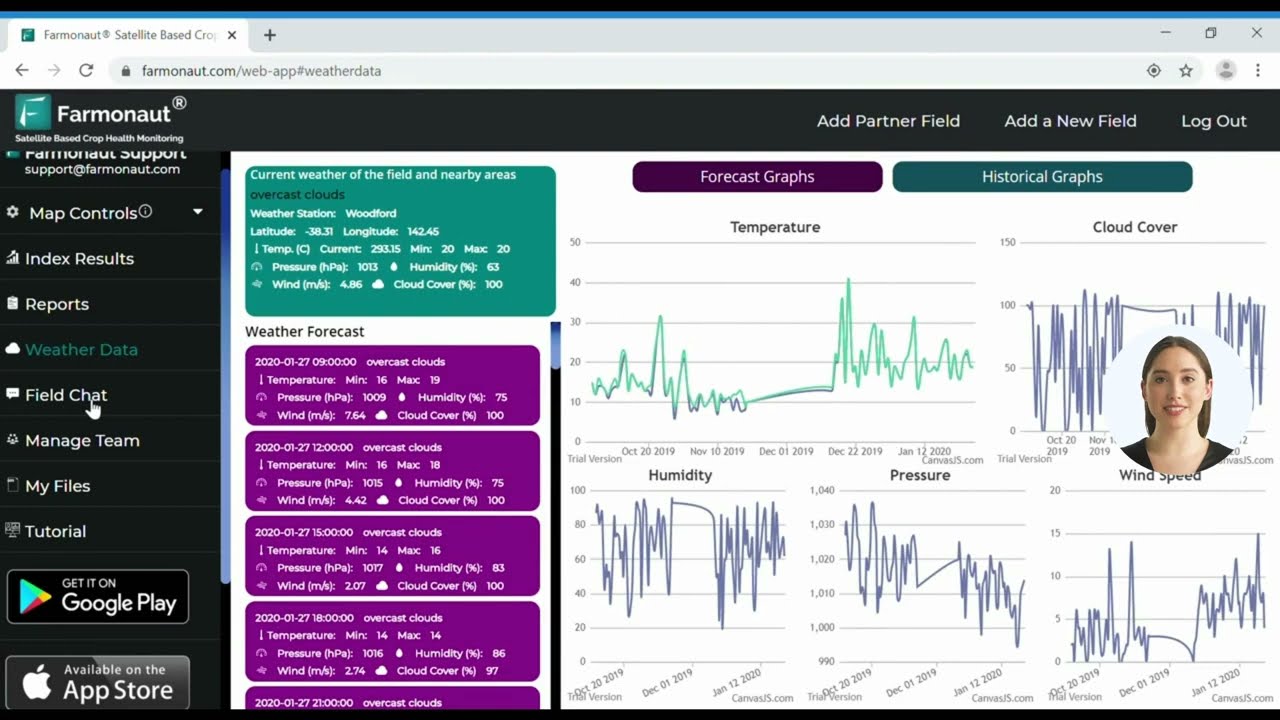
- 🛰️ Digital field scouting: Satellite and AI-powered remote sensing spot problem zones across large acreage—reducing the need for manual scouting and identifying early outbreaks.
- 🌤️ Weather-based forecasting models: New disease risk models integrate real-time weather and soil condition data to optimize fungicide application timing.
- 🔄 Integrated cultural practices: Crop rotation, maintaining field sanitation, using wider row spacing to improve air circulation, and reducing canopy humidity are essential steps against fungal outbreaks.
- 💼 Data-driven decisions: Digital agronomy platforms (including Farmonaut’s carbon footprinting services) help producers balance sustainable farming with profitability, reducing excess fungicide use and environmental impact.

Technology adoption in disease management is projected to double soybean profit margins by drastically reducing undetected yield losses and crop insurance claims.
Explore our Farmonaut API and developer docs for seamless integration of weather and crop monitoring in your agri-tech, insurance, or lending apps.
Comparison Table of Soybean White Mold Management Strategies (2025–2026)
To help farmers, agronomists, and investors make informed decisions, we’ve compiled a clear comparison table highlighting top solutions for controlling white mold in soybeans, improving yields, and supporting economic viability through 2026:
Solutions such as AI-powered disease forecasting, resistant variety planting, and digital scouting are poised for greater adoption in 2026, driven by their positive cost-benefit ratio and growing technology accessibility.
Farmonaut’s Satellite & AI Tools: Empowering Soybean Disease Management
At Farmonaut, we empower farmers, businesses, and governments to monitor fields, predict disease outbreaks, and optimize input use through a cutting-edge platform combining satellite imagery, AI, and blockchain. Our mission is to make actionable, affordable agtech solutions accessible to all.
- 🛰️ Satellite Monitoring: Real-time, multi-spectral imagery delivers insights on canopy growth, disease hotspots, and soil moisture—ideal for pre-emptive action against white mold and related fungal threats.
- 🤖 Jeevn AI Advisory: AI-driven analytics analyze weather, vegetation indices, and pathogen risk for tailored guidance on timing fungicide applications and scouting.
- 🔒 Blockchain Traceability: End-to-end tracking for soybeans—verify that grain is low-mycotoxin, disease-resilient, and ethically produced. See Farmonaut Product Traceability.
- 🌱 Environmental Monitoring: Our carbon footprinting module enables sustainable production by tracking emissions and promoting responsible fungicide use.
- 🛣️ Fleet and Resource Management: Easily track machinery, optimize fuel, and manage large operations—key for contractors and multi-field businesses during short fungicide windows.
- 🏢 Large Scale Farm Management / Agro-Admin App: Centralize digital agronomy, team management, and scouting action plans.
- 🧾 Access to Credit & Insurance: Satellite-based verification for soybean crop loans and insurance boosts trust and reduces risk for farmers and lenders alike.
Key Insights & Pro Tips for Effective White Mold Disease Management
Relying solely on fungicide applications for white mold in soybeans is ineffective if not timed precisely with local weather and canopy stage. This can result in wasted resources and continued disease spread.
Adopting digital satellite scouting tools and blockchain traceability can both reduce disease loss and demonstrate “premium” product quality to grain buyers in 2026!
Stacking resistance genes in varieties (white mold + BSR + downy mildew) delivers exponential protection, especially as environmental threats increase due to climate variability.
Switch to wider soybean row spacing (22–30”) and refrain from over-fertilizing. Denser canopies trap humidity, creating ideal conditions for fungal outbreaks.
Fields monitored via satellite NDVI and predictive models experience up to 25–40% less yield loss compared to conventionally scouted farms in high-pressure years.
Frequently Asked Questions (FAQ): White Mold, Rot & Soybean Disease Management
What is the most important disease management strategy for white mold in soybeans in 2026?
The most important strategy is an integrated management approach that combines the use of resistant soybean varieties, timely fungicide applications guided by disease forecasting models, improved cultural practices (like row spacing and sanitation), and digital monitoring tools.
Why is crop rotation crucial for managing persistent fungal threats like white mold and brown stem rot in soybeans?
Crop rotation disrupts the lifecycle of pathogens—such as white mold and brown stem rot—that persist in soil via sclerotia or infected debris, reducing inoculum buildup and limiting severe outbreaks in subsequent soybean or susceptible host plantings.
How can digital remote sensing improve disease management in high yielding soybeans?
Digital remote sensing (e.g., via Farmonaut’s satellite tools) enables real-time monitoring of canopy health and stress, guiding early detection of white mold, rot, and mildew outbreaks. This ensures timely interventions and supports data-driven, efficient farming in 2025–2026.
What fungicides are most commonly used for white mold in soybeans, and are they effective?
The most effective fungicides for white mold are timed preventive treatments with products such as boscalid, fluazinam, and oxathiapiprolin. Effectiveness depends on properly timed application based on local canopy closure, environmental conditions, and risk forecasting.
How does Farmonaut’s technology help farmers manage soybean diseases in 2025–2026?
Through a suite of satellite imagery, AI-based advisories, and blockchain traceability, we help farmers remotely monitor disease risk, predict outbreaks, track field operations, and verify sustainable crop practices. These solutions save time, maximize yields, reduce losses, and support sustainable, profitable soybean cultivation.
Conclusion: Embracing Integrated, Digital Disease Management for High-Yield Soybeans
White mold in soybeans, together with brown stem rot, pythium, and downy mildew, remains a major challenge for farmers pursuing high yields and economic sustainability in 2026 and beyond. Success in modern soybean cultivation increasingly depends on adopting resistant cultivars, leveraging real-time data, and integrating digital tools into decision-making.
- AI-powered disease forecasting models and remote satellite sensing reduce labor and yield loss, ensuring timely, cost-effective interventions.
- Cultural and genetic resistance remain foundational—resilient soybean varieties and improved crop rotation will be more widely adopted in 2026.
- Digital agriculture and blockchain traceability support food safety, premium market access, and environmental compliance for future-focused producers.
At Farmonaut, we are committed to making powerful, AI and satellite-based disease management available to every farm—regardless of size or geography. Our platform bridges the gap between traditional knowledge and the future of sustainable, data-driven soybean production.

 Godrej Agrovet
 Hayleys Agriculture
 Linx Agritech
 Adinet
 Save Your Soils
 GalaxEye Space
 Grandstream Algérie
 XOS Realty
 Geospatial Lab Africa
 Agro La Gándara
 HIPSAC
 ZOL Zimbabwe
 Juligerm
 AdBio
AdBio MISE Maroc
 NWNS
NWNS Red August Group
 Farm Inc
 WeMe Global
 Agrotoken
 Blue BearX
 Insignito
 DnCubed
 Indosistim Teknologi
 Liquify Digital
 CU Foods
 BeyondTech Global
 Rouge VC
 AgroRisk
 Oath Inc
 Esri North East Africa
 MDCV UK
 Etech Consulting Madagascar
 Vestlandsforsking
 WB Dev
 Sama Premium
 Tres Valles
 Blickwinkel
 Agricultural Credit Policy Council
 eKGIS
eKGIS Mostas Tech
 Andex
Andex Deluxe Conseil
 WICO
WICO Chimera Innovation
 SkyHarvest
 Teledarbas
 Exurbia Geospatial
 FieldZero
