

Integrating InSAR with GIS: Top Risk Assessment Trends 2025
“By 2025, over 70% of nationwide agricultural risk assessments will utilize integrated InSAR and GIS technologies for precision monitoring.”
Table of Contents
- Summary: Integrating InSAR with GIS – Shaping the Future Of Nationwide Risk Assessment
- Understanding InSAR and GIS: Foundations of a Transformative Approach
- Why Integrate InSAR with GIS for Nationwide Risk Assessment?
- Top Risk Assessment Trends 2025: Integrating InSAR with GIS
- Comparative Features Table: 2025 InSAR-GIS Risk Assessment Trends
- Technological Advancements Driving InSAR-GIS Integration in 2025
- Redefining Risk Management in Agriculture & Forestry
- Farmonaut’s Role: Delivering Satellite-Driven Insights Across Sectors
- Future Perspectives: Building Resilient Agricultural and Forest Ecosystems
- FAQ: InSAR-GIS Integration in Agriculture and Forestry Risk Assessment
- Farmonaut Subscription Plans



Summary: Integrating InSAR with GIS – Shaping the Future Of Nationwide Risk Assessment
Integrating InSAR with GIS: The Future of Nationwide Risk Assessment in Agriculture and Forestry is transforming how nations monitor, analyze, and mitigate risks across agricultural and forestry landscapes. As climate change accelerates, triggering more frequent and severe natural hazards, having precision risk analytics is not just beneficial—it’s critical.
By combining Interferometric Synthetic Aperture Radar (InSAR)’s centimeter- to millimeter-level ground deformation detection with the spatial intelligence of Geographic Information Systems (GIS), organizations and governments are empowered to make informed, data-driven decisions at national scale. This integration is driving timely, accurate, and scalable approaches to risk assessment and management spanning soil subsidence, landslides, erosion, flooding, and climate-induced shifts that affect agricultural and forest ecosystems.
2025 marks a paradigm shift, as the adoption and advancement of InSAR-GIS platforms become the new standard for monitoring, mitigation, and early warning in both agriculture and forestry. This enables bold steps towards resilience, sustainability, and resource optimization—a future where risks are anticipated and managed proactively through integrated spatial analytics, not just endured.
Understanding InSAR and GIS: Foundations of a Transformative Approach
What is InSAR?
Interferometric Synthetic Aperture Radar (InSAR) is a radar-based remote sensing technology that leverages phase differences between multiple synthetic aperture radar (SAR) images acquired over time. This enables the detection of ground deformation with precision down to the centimeter and even millimeter levels.
InSAR is highly valuable for identifying subtle movements in the Earth’s surface, making it ideal for assessing soil instabilities, subsidence, landslides, and tectonic activity.
- Technology: Utilizes radar signals unaffected by clouds or darkness, ensuring consistent, reliable acquisition worldwide.
- Core Principle: Analyzes phase differences of the wave signals reflected from the same geographic area at different times.
- Output: Generates detailed deformation maps showing even sub-millimeter elevation changes.
What is GIS?
Geographic Information Systems (GIS) are powerful frameworks for gathering, managing, analyzing, and visualizing spatial and geographic data.
GIS platforms empower stakeholders to interpret complex environmental patterns, assess risks, and make informed decisions by contextualizing data in maps and models.
- Technology: Integrates spatial information (maps, satellite imagery, tabular data).
- Applications: Land-use planning, disaster management, crop health assessment, forestry mapping, infrastructure monitoring.
- Value: Enables interpretation of patterns and relationships in large-scale spatial information—critical to nationwide risk assessment.
How Their Integration Transforms Nationwide Risk Assessment
Integrating InSAR with GIS: The Future of Nationwide Risk Assessment involves layering detailed ground deformation data over rich spatial datasets (such as land use, topography, hydrology, soil types, and infrastructure networks). This combined approach enables:
- Comprehensive spatial-temporal analysis of risk phenomena.
- Early warning for subtle land shifts and instabilities affecting agriculture and forestry.
- Scalable, nationwide risk mapping—supporting policy, management decisions, and disaster resilience strategies.

Why Integrate InSAR with GIS for Nationwide Risk Assessment?
The synergy between InSAR and GIS platforms unlocks a wealth of benefits for nationwide risk assessment in agriculture and forestry. This integration addresses critical challenges posed by increasingly frequent natural hazards and rapid landscape changes in the context of climate change.
Key Benefits of InSAR-GIS Integration in Agriculture and Forestry
-
Early Warning & Monitoring:
By detecting subtle ground deformation (from soil subsidence to landslides) before visible impacts occur, InSAR-GIS fusion enables early warning systems. When integrated with GIS layers for topography, hydrology, crop types, and infrastructure, this information helps predict vulnerable zones and optimize resource management. -
Precision Agriculture & Forestry Management:
Subtle ground movements can drastically affect water drainage, soil structure, and forest health—key factors impacting yields and ecosystem stability. Integrating InSAR with GIS highlights these micro-changes to guide site-specific interventions such as irrigation improvements, crop rotation, reforestation, or targeted pest management. -
Disaster Risk Reduction:
Nationwide risk maps that incorporate InSAR-derived deformation data can pinpoint areas of high risk for flooding, landslides, and infrastructure failure. This supports disaster preparedness, infrastructure protection, and emergency response planning. -
Sustainable Land Use Planning:
GIS platforms enriched with InSAR data support long-term landscape modeling for both natural and anthropogenic change (e.g., mining, deforestation, climate impacts), enabling sustainable land use decisions and environmental protection on a national scale.
How Integration Works: Real-Time Example
InSAR satellites collect time-series radar images over the same area (acquired at different time points). The system then detects critical changes (even 1 mm of soil movement) that may signal impending hazard or risk. This deformation data is imported and layered into GIS, where it is visualized alongside other key data (land use, crop health, drainage lines, etc.) to create actionable maps for agronomists, foresters, policymakers, and emergency responders.
“InSAR-GIS integration can detect land deformation changes as small as 1 millimeter, revolutionizing forestry risk analytics.”

Top Risk Assessment Trends 2025: Integrating InSAR with GIS
The rapid evolution of remote sensing and geospatial analytics is reshaping risk assessment in both agriculture and forestry. By 2025, the fusion of InSAR and GIS is enabling cutting-edge approaches that go beyond conventional monitoring solutions, ushering in a new era of precision, timeliness, and scale.
Trend 1: Automated Flood, Drought, and Landslide Mapping
- Automated, nationwide detection of flood-prone areas, drought impacts, and landslide hot-spots using integrated InSAR-GIS workflows.
- Empowers early warning and resource deployment to vulnerable agricultural and forest regions.
- Combines InSAR-detected ground movement with hydrological, meteorological, and land cover layers for more accurate risk prediction.

Trend 2: Precision Crop & Plantation Site Monitoring
- Enables nationwide tracking of soil health, water retention, and crop stress at field-level scales.
- Timely identification of subsidence, compaction, or irrigation issues impacting productivity.
- Advises on carbon footprinting, resource utilization, and fleet management solutions for sustainable operations.
Trend 3: Forest Ecosystem Resilience & Subsidence Detection
- Mapping and monitoring subtle land subsidence and root zone deformation in forests using multi-temporal InSAR data enriched with GIS-based vegetation, soil, and hydrology layers.
- Detects forest health risks and enables targeted conservation or reforestation strategies.
- Supports sustainable forestry through blockchain-based traceability solutions and environmental compliance.
Trend 4: Nationwide Land Deformation Analysis (Soil, Infrastructure, Ecosystems)
- Comprehensive analysis of ground deformation from natural hazards (floods, earthquakes, drought) and human activities (construction, mining, irrigation).
- Prioritizes risks and enables data-driven decisions for infrastructure protection, crop insurance assessment, and ecosystem health.
- Facilitates satellite-based insurance and loan verification for agricultural enterprises.
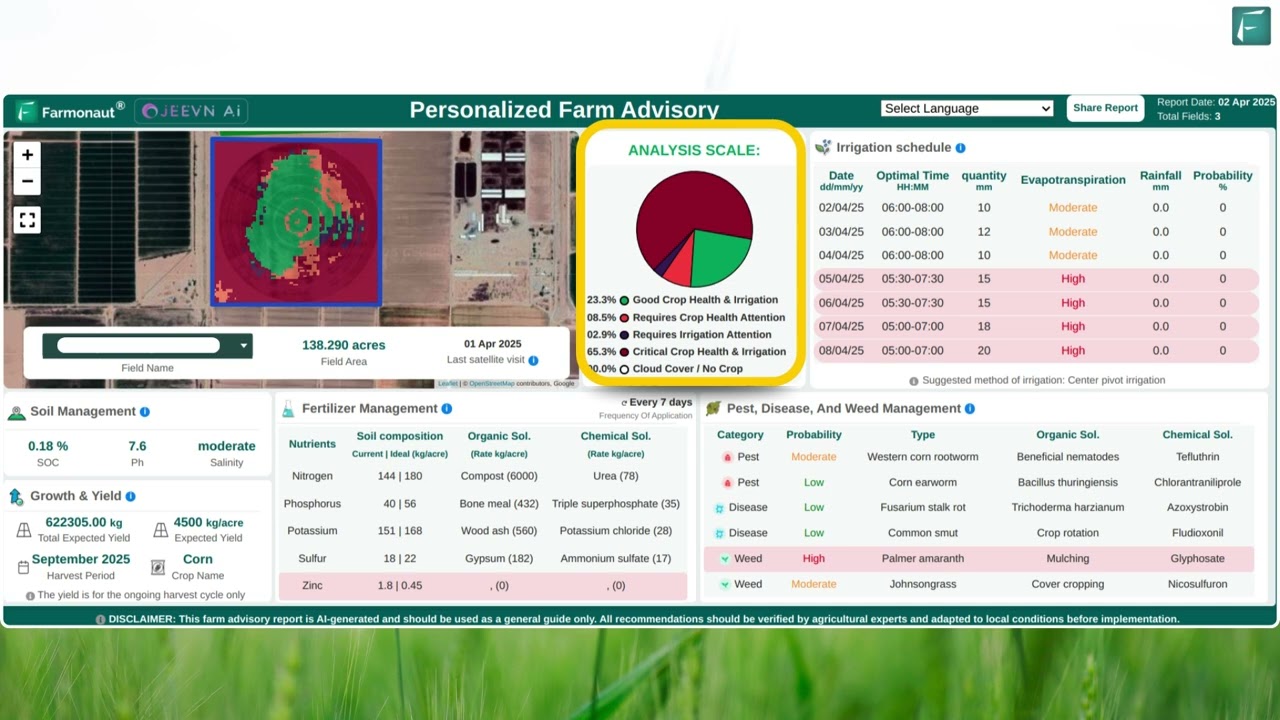
Trend 5: Unified, Scalable Risk Assessment Platforms
- Cloud-based GIS platforms integrate live InSAR satellite feeds, AI-based advisory systems and blockchain traceability features.
- Provide nationwide, scalable, real-time monitoring and analytics for stakeholders ranging from individual farmers to government agencies.
- Facilitates API integration and tailored advisory services.
Comparative Features Table: 2025 InSAR-GIS Risk Assessment Trends
| Trend / Feature | Technology Involved | Estimated Adoption Rate (%) (2025) | Expected Impact on Risk Reduction | Application Area |
|---|---|---|---|---|
| Automated Flood Mapping | Combined (InSAR + GIS) | 75% | High – Prevents crop loss and optimizes early interventions | Agriculture, Forestry, Both |
| Precision Crop Monitoring | InSAR + GIS + AI/ML | 83% | Critical – Enhances yield & soil health, optimizes irrigation | Agriculture |
| Forest Subsidence Detection | InSAR + GIS | 71% | Significant – Protects forest health and biodiversity | Forestry |
| Nationwide Land Deformation Analysis | InSAR, GIS, Remote Sensing | 68% | Major – Reduces disaster impact, supports infrastructure safety | Both |
| AI-Based Predictive Risk Platforms | InSAR + GIS + AI | 60% | Emerging – Provides tailored advisories, rapid response | Both |
| Blockchain-Based Traceability | GIS + Blockchain | 46% | Moderate – Ensures supply chain transparency | Agriculture, Forestry |
| Satellite-Based Insurance/Lending | InSAR + GIS + APIs | 54% | Physical/Financial Risk – Accelerates validation, lowers fraud | Agriculture |
Estimated values for 2025; subject to update with technological adoption and market scaling.
Technological Advancements Driving InSAR-GIS Integration in 2025
The unprecedented accuracy and timeliness seen in integrated risk analytics is powered by several breakthrough technologies, setting the future stage for nationwide agricultural and forestry risk management.
Breakthrough 1: Improved Satellite Radar and Imaging Capabilities
- New generations of radar satellites (e.g., Sentinel-1, NISAR) offer higher revisit rates and better spatial resolution—ideal for dynamic agricultural and forestry environments.
- More images can be acquired within shorter timeframes, improving detection of rapid-onset risks.
Breakthrough 2: Cloud Computing, AI, and Automated Workflows
- Cloud-based GIS platforms now feature AI-driven analytics, allowing for rapid, nationwide processing of massive InSAR time series data.
- Machine learning models automatically detect anomalies, trends, and early warning signals with high precision.
- Integrated platforms enable real-time advisory and intervention solutions.
Breakthrough 3: Interoperability Standards, APIs, and Open Data
- Standardized open data protocols and API endpoints revolutionize how stakeholders (farmers, foresters, government) share, analyze, and act upon risk assessment information nationwide.
- Farmonaut Satellite Weather & Risk API and Developer Docs make it seamless for organizations to integrate advanced risk assessment into their existing systems.

Redefining Risk Management in Agriculture & Forestry with InSAR-GIS Integration
In the context of nationwide risk assessment, the fusion of InSAR and GIS empowers stakeholders to proactively manage hazards that threaten food security, resource sustainability, and rural livelihoods.
Applications in Agriculture
- Field-Level Monitoring: Detects early warning signs of soil erosion, subsidence, and compaction, enabling site-specific interventions (irrigation improvements, soil amendment, pest treatment).
- Yield and Quality Optimization: Combined analytics provide health maps—e.g., NDVI, EVI—with aligned InSAR-based deformation data for real-time precision farming.
- Ecosystem Management: Informs decisions on crop rotation, drainage, carbon management, and sustainable resource allocation.
- Resource Allocation: Optimizes use through advanced fleet management tools for agricultural machinery.
- Finance & Insurance: Supplies data for crop loans and insurance underwriting, based on historic and real-time risk analytics.
Applications in Forestry
- Forest Health & Stress Detection: Automated InSAR-GIS analysis maps areas of shifting root zones, soil movement, and subsidence—often undetectable by optical satellite imagery alone.
- Climate Resilience: Assesses impacts of prolonged drought, flooding, and seismic-induced shifts on forested regions, guiding reforestation and ecosystem restoration efforts.
- Traceability & Compliance: Provides transparency using blockchain-based traceability for legal, sustainable wood sourcing and carbon tracking.
- Infrastructure Protection: Detects areas where landslides, soil creep, or erosion threaten roads, irrigation canals, and forest infrastructure.

Nationwide Risk Assessment: Making Proactive Decisions
- Supports national and regional authorities in strategic planning for resilience and disaster response.
- Facilitates sustainable land use decisions and ensures ecosystem resilience in the face of unpredictable climate change.
- Promotes public and private sector collaboration through standardized information access and integrated platforms.
Farmonaut’s Role: Delivering Satellite-Driven Insights Across Sectors
As a pioneering satellite technology company, we at Farmonaut are committed to making satellite-driven insights accessible and affordable worldwide by leveraging a powerful combination of satellite imagery, AI, blockchain, and cloud-based analytics. Our solutions directly support Integrating InSAR with GIS: The Future of Nationwide Risk Assessment by enabling:
- Real-Time Satellite Monitoring: We provide multispectral images for crop health, soil condition, and infrastructure integrity—integrated with spatial datasets for actionable intelligence.
- AI-Based Advisory: Our Jeevn AI system delivers real-time insights, weather forecasts, and tailored strategies for agriculture, mining, and defense planning—all through a user-friendly app or API integration.
- Blockchain Traceability: Secure and transparent traceability for supply chains, enabling compliance and consumer trust using our traceability solution.
- Fleet and Resource Management: Optimize vehicular and equipment usage to improve operational efficiency and safety—reducing costs and environmental impact. Learn more about Farmonaut’s fleet management tools.
- Environmental Impact Monitoring: Track arena-wide emissions, monitor carbon footprinting (carbon footprint monitoring) and enable sustainable practices across land management projects.
Our subscription-based model empowers everyone—from smallholder farmers to government agencies—to access, interpret, and act on hyperlocal to nationwide data for risk reduction and sustainable outcomes.
Future Perspectives: Building Resilient Agricultural and Forest Ecosystems with Integrated InSAR-GIS Platforms
The coming years—especially 2025 and beyond—will see integrated InSAR-GIS systems become the bedrock for nationwide risk assessment, climate adaptation, and sustainability initiatives in both agriculture and forestry.
-
Scaling from Plot-Level Insights to Nationwide Impact:
Continuous improvement in satellite sensor capabilities, data accessibility, AI-driven analytics, and cloud computing will ensure that decision-makers at every level—from individual farmers to ministries—benefit from timely, scalable risk assessment. -
Blending Real-Time Data, Advisory, and Traceability:
Supply chain transparency, blockchain-enabled traceability, and integrated risk management platforms will drive both efficiency and sustainability certifications. -
Resilience, Sustainability, and Climate Action:
Unified InSAR-GIS frameworks empower all stakeholders to take proactive measures, limit loss, and build resilience across entire agricultural and forested landscapes—supporting sustainable food systems and healthy ecosystems even as climate change accelerates. -
API and Modular Platform Adoption:
Widespread use of Farmonaut’s open APIs for seamless integration, contextual analysis, and scaling up of nationwide monitoring solutions.
Unified, Mobile-First Access for All
For users seeking to scale their risk management efforts, our platform, APIs, and mobile apps support large scale farm management, extensive plantation, and integrated forestry advisory.
FAQ: InSAR-GIS Integration in Agriculture and Forestry Risk Assessment
- What is the main advantage of combining InSAR with GIS for risk assessment?
The main advantage is comprehensive, high-precision monitoring of land deformation across large regions, enabling proactive risk management and early warning for natural and anthropogenic hazards in agriculture and forestry. - Can InSAR-GIS integration be used for crop insurance verification?
Yes. Integrated platforms supply objective, satellite-derived data for evaluating land and crop risk, dramatically reducing fraud and accelerating insurance assessment and loan approval. - How precise is land deformation monitoring with InSAR?
InSAR can detect movements as small as 1 millimeter, enabling detection of subtle landscape changes that may otherwise go unnoticed, especially valuable in forestry risk assessment. - What new trends will emerge by 2025?
Key trends include automated, AI-enabled flood, drought, and landslide mapping, forest subsidence detection, blockchain traceability for supply chain integrity, and satellite-based lending and insurance platforms. - Is it possible to integrate InSAR-GIS analytics with my business or government system?
Absolutely. With Farmonaut APIs and developer documentation, organizations can bring satellite-based risk assessment tools into existing workflows and digital platforms. - How does InSAR-GIS improve climate resilience?
By enabling real-time, nationwide detection of landscape changes due to climate acceleration, stakeholders can deploy sustainable interventions and build long-term resilience against hazards. - How do I access Farmonaut’s integrated InSAR-GIS platform?
Farmonaut provides web, iOS, and Android apps as well as subscription and API plans for scalable monitoring across agriculture, forestry, mining, and infrastructure. See our subscription options below.
Farmonaut Subscription Plans
Integrating InSAR with GIS: The Future is Here
Integrating InSAR with GIS is set to revolutionize nationwide risk assessment for agriculture and forestry by providing unprecedented precision, timeliness, and scale. As climate risks and environmental changes become increasingly frequent and severe, such advanced fusion of spatial analytics and earth observation is indispensable for building a resilient, sustainable future.
For organizations, businesses, and governments looking to stay ahead of the curve, Farmonaut offers state-of-the-art satellite-driven solutions so they can monitor, analyze, and mitigate risks at a national scale—today and for tomorrow.
Start your journey towards smarter, nationwide risk assessment—powered by the most advanced integration of InSAR and GIS.

 Godrej Agrovet
 Hayleys Agriculture
 Linx Agritech
 Adinet
 Save Your Soils
 GalaxEye Space
 Grandstream Algérie
 XOS Realty
 Geospatial Lab Africa
 Agro La Gándara
 HIPSAC
 ZOL Zimbabwe
 Juligerm
 AdBio
AdBio MISE Maroc
 NWNS
NWNS Red August Group
 Farm Inc
 WeMe Global
 Agrotoken
 Blue BearX
 Insignito
 DnCubed
 Indosistim Teknologi
 Liquify Digital
 CU Foods
 BeyondTech Global
 Rouge VC
 AgroRisk
 Oath Inc
 Esri North East Africa
 MDCV UK
 Etech Consulting Madagascar
 Vestlandsforsking
 WB Dev
 Sama Premium
 Tres Valles
 Blickwinkel
 Agricultural Credit Policy Council
 eKGIS
eKGIS Mostas Tech
 Andex
Andex Deluxe Conseil
 WICO
WICO Chimera Innovation
 SkyHarvest
 Teledarbas
 Exurbia Geospatial
 FieldZero
