

Table of Contents
- Introduction: The Rise of Modern Equipments Used in Agriculture
- Trivia: Surprising Facts about Latin America Agriculture Equipment Market
- Driving Forces: What Powers Modern Equipments in Latin American Agriculture?
- Tractors and Harvesters: The Backbone of Mechanized Farming
- Attachments & Implements: Planters, Sprayers, Cultivators, and More
- Precision Technology: Modern Tools Transforming Farming
- Specialized Equipment: Orchards, Vineyards & Forestry Innovation
- Livestock Automation and Modern Pasture Management
- Processing and Post-Harvest Infrastructure Equipment
- Sustainability: Integrating Modern Equipment for a Greener Future
- Farmonaut: Satellite-Driven Revolution for Modern Agriculture
- Comparison Table: Modern Equipments in Latin America’s Market
- Videos Spotlight: Modern & Precision Farming in Action
- Insightful Visual Lists: Key Benefits & Risks
- Expert Callout & Highlight Boxes
- Farmonaut Subscription Pricing
- FAQ: Modern Equipments Used in Agriculture
- Conclusion: Charting A Bright Future With Modern Agricultural Equipment
“Over 60% of Latin American farms adopted GPS-guided tractors for precision farming by 2023.”
Modern Equipments Used in Agriculture: Latin America Trends
Modern agriculture hinges on the intelligent integration of advanced equipment, transformative technology, and data-driven systems to achieve sustainable growth, maximize productivity, and ensure lasting profitability. Across the landscapes of Latin America, from the vast pampas of Argentina to the coffee plantations of Brazil, the profound effects of modern equipments used in agriculture are shaping the region’s role as a global agricultural powerhouse.
Within this blog, we’ll illuminate the best context for agriculture moderne: how tractors and harvesters act as the backbone of mechanized farming; how drones, sensors, and cloud-powered data systems help farmers with precision agriculture; and how integrated equipment and advanced machinery are making environmental stewardship an achievable reality. This comprehensive overview is your guide to how modern agricultural technology is revolutionizing Latin America’s fields, orchards, vineyards, and forests.



Latin America Agriculture Equipment Market: Eye-Opening Trivia
“Automated harvesters increased crop yields by up to 25% in major Latin American agricultural regions.”
The Latin America agriculture equipment market continues to set new records in adoption, innovation, and integration of modern equipments used in agriculture. As we move through 2024 and beyond, satellite-driven insights and robotics are shaping a new era for farming efficiency, responsible resource management, and sustainable field operations.
The Driving Forces Behind Modern Equipments Used in Agriculture in Latin America
What catalyzes the region’s rapid transformation? The effects of modern agriculture in Latin America are the result of several intersecting trends and imperatives:
- ✔ Climate Variability: Demands precision and resilience in equipment systems to adapt to unpredictable weather.
- ✔ Labor Shortages: Incentivize investment in robotics, automation, and versatile machinery.
- ✔ Global Food Security Pressure: Necessitates maximizing yields and reducing post-harvest losses.
- ✔ Environmental Regulation: Pushes for sustainable equipment that minimizes inputs, runoff, and soil disturbance.
- ✔ Market Access: Modernization enables higher quality, traceability, and access to premium international markets.
The integration of multifunctional, connected, and highly efficient modern agricultural equipment is crucial for Latin American farmers to compete globally while ensuring environmental and economic sustainability.
Tractors and Harvesters: The Backbone of Mechanized Farming
Tractors remain the backbone of modern agriculture in Latin America. Today’s machines are no longer just about raw horsepower—they combine high torque engines with fuel efficiency, GPS-enabled auto-steer, telematics, and advanced management systems. These technologies let farmers monitor soil conditions, equipment health, fuel consumption, and even maintenance needs remotely.
- Modern tractors are platforms: Attachments such as planters, sprayers, cultivators, and multi-crop harvester heads can be switched rapidly, converting a single machine for various operations across the farming season.
- ✔ Telematics integration enables remote asset management and precise scheduling for maintenance, maximizing engine life and uptime.
- ✔ Many models feature variable rate application systems for seeds, fertilizer, and crop protection, reducing chemical input while maximizing yields and reducing environmental impact.
Self-propelled harvesters have transformed crop gathering, with sensor-driven guidance systems to minimize grain loss, optimize row navigation, and ensure the highest quality harvests. Automated cleaning and grain separation features further boost efficiency and reduce labor bottlenecks.

As the Latin America agriculture equipment market expands, demand is strongest for versatile, robust machinery with integrated IoT, telematics, and precision platforms—unlocking opportunities not only in manufacturing but also in after-sales service, data management, and training.
Attachments & Implements: Planters, Sprayers, Cultivators, and More
The evolution of modern equipments used in agriculture is incomplete without robust attachments and implements. These tools convert a single tractor into a platform for planting, spraying, cultivating, weeding, or harvesting.
- Planters: High-speed, variable rate planters deliver seeds with pinpoint spatial accuracy. This maximizes field density while minimizing seed waste.
- Sprayers: Modern sprayers are equipped with nozzle-by-nozzle control, sensor-guided application, and drift-reduction technology. This ensures targeted input, protecting crops while reducing chemical use and environmental runoff.
- Cultivators: Adjustable spacing and depth controls enable tailored soil preparation. Minimal tillage cultivators boost soil health and organic matter, reducing erosion.
Integration of sensors and imaging means each implement becomes a data source for precision field operations—enabling real-time adjustment and sustainable management.
📊 Key Advances in Attachments & Implements
- Variable-rate planters: Optimize seeding and deliver measurable boosts in yield.
- Sensors on sprayers: Enable real-time pest, disease, and nutrient management.
- No-till cultivators: Reduce soil disturbance for improved carbon sequestration.
- Robotic weeders: Increasingly deployed in specialty and smallholding farms.
- Quick-hitch systems: Reduce labor time and handling risks during implement swaps.
Using outdated implements with modern tractors can limit the benefits of precise, data-driven field management and may lead to inconsistent yields or higher input costs. Always match the sophistication of your implements to your guidance, sensor, and data systems.
Precision Technology: Modern Tools That Transform Field Operations
At the cutting edge of agriculture moderne, precision agriculture tools have brought a step-change in how we approach inputs, resource management, and sustainability.
- ✔ Drones & Ground Imaging: Provide detailed maps of crop health, soil moisture, and pest outbreaks for fast, targeted action.
- ✔ Variable Rate Technology: Allows field-by-field or even row-by-row adjustment of fertilizer, pesticide, and irrigation application—reducing input waste and supporting sustainable profit margins.
- ✔ Soil-Moisture Sensors: Deliver continuous data feeds, empowering optimized irrigation scheduling and water conservation.
- ✔ Telematics and Asset Management: Connect every machine, implement, and vehicle through a digital farm network for proactive maintenance and maximum uptime.
Consistent performance in tight rows and uneven terrain is increasingly ensured by compact, maneuverable tractors and robotic weeders, ideal for Latin America’s specialty crops and smallholdings.

For field operations that demand real-time monitoring and adaptive management, explore large scale farm management platforms that integrate satellite, sensor, and equipment data—enabling smarter, more sustainable, and more profitable decision-making.

Specialized Equipment: Orchards, Vineyards & Forestry Innovation
Specialty farming in Latin America thrives with dedicated equipment designed for orchards, vineyards, and forests:
- Motorized pruners and adjustable arboricultural platforms: Optimize pruning, thinning, and fruit harvesting while reducing labor bottlenecks and improving fruit quality.
- Canopy shapers & Trellis-mounted sprayers: Apply nutrients and protectants with precision, minimizing foliar damage and environmental impact.
- Forestry equipment (harvesters, forwarders, feller-bunchers): Accelerate timber extraction, enhance worker safety, and support responsible reforestation objectives—all with telematics integration for route optimization and fuel efficiency.
Compact equipment for tight rows ensures flexibility for smaller and irregularly-shaped orchards, while IoT-connected platforms bring new integration for productivity and environmental stewardship.

✔ Common Features in Specialty Equipment
- 💡 Hydraulic platforms: Height-adjustable for ergonomic pruning and harvesting.
- 🛡 Sensor-guided sprayers: Reduce input use and focus treatment on canopy zones.
- 🤖 Automated harvest heads: Adapt to uneven terrain and different fruit sizes.
- 🔒 Sealed cabins: Protect operator health in chemical or dust-prone environments.
- 🔗 IoT integration: Enables data upload to farm management and traceability systems.
Livestock Automation and Modern Pasture Management
Progressive livestock and pasture management in Latin America increasingly hinges on automation and sensor technology.
- Milking robots & automatic feeders: Improve animal welfare, reduce farm labor needs, and support consistent milk and meat production.
- Robotic handling systems: Streamline on-farm logistics and reduce animal stress and worker safety risks.
- Forage harvesters & balers: Boost forage quality and allow efficient hay and silage production for year-round feed.
- Pasture sensors: Monitor grazing pressure and regrowth, supporting precise rotation for sustained soil and animal health.
Integrated livestock-environmental monitoring systems enable producers to maximize animal performance while preserving land and water resources.
Processing and Post-Harvest Infrastructure Equipment
Reducing post-harvest losses and adding value starts with modern processing, packaging, and storage equipment:
- ✔ Automated processing lines: Safeguard quality and food safety by reducing handling errors.
- ✔ On-farm cold storage with climate control: Extends fruit and vegetable shelf life and enables market flexibility.
- ✔ Smart conveyor systems: Streamline sorting, grading, and packing for flexible crops.
- ✔ Irrigation infrastructure equipment: Drip, pivot, and subsurface systems deliver exact water volumes—reducing over-irrigation and runoff risks (learn how to track your irrigation impact here).
- ✔ Soil conservation and drainage tools: Prevent erosion, optimizing long-term land productivity.
⚠ Risks if Modern Equipments Are Neglected
- 🚫 Increased input costs: Older machines lack variable rate and sensor-driven precision—wasting seed, fertilizer, and fuel.
- 🚧 Soil degradation: Non-optimal tillage blades and inflexible cultivators can harm soil structure.
- 📉 Lower yields: Without GPS, smart heads, and precision tech, farmers miss productivity benchmarks.
- ⏳ Labor bottlenecks: Lack of automation limits scaling and drives up costs during critical tasks.
- 🌊 Water wastage: Without sensor-based irrigation, fields are often overwatered, raising costs and harming the environment.

Sustainability: Integrating Modern Equipment for a Greener Future
Sustainability underpins every sector of modern agriculture in Latin America. By deploying modern equipments used in agriculture, farmers are:
- 🌱 Reducing water consumption: Precision irrigation networks and soil moisture sensors deliver water only where needed, preventing over-irrigation.
- 🌾 Minimizing chemical inputs: Variable rate sprayers and in-field diagnostics cut fertilizer and pesticide use—protecting biodiversity.
- 🌱 Building soil health: Reduced tillage equipment and crop residue managers support carbon sequestration and improved structure (track your farm’s carbon footprint).
- 🦠 Enhancing integrated pest management: Drones and field scouting robots target outbreaks, sparing beneficial pollinators and reducing overall chemical exposure.
- 💧 Sustaining productivity: Hybrid and renewable-power agricultural machinery support long-term sustainability goals.
Farm management tools that integrate environmental impact and resource analytics empower Latin American farmers to meet rising market and regulatory demands for traceability, sustainability, and transparency. See how carbon footprinting solutions help track and optimize sustainability practices.

Farmonaut: Satellite-Driven Revolution in Agriculture Modernization
The best context for accelerating the integration of modern equipments used in agriculture is the adoption of advanced, data-rich management platforms. At Farmonaut, we uniquely empower farmers, agribusinesses, and governments with:
- 📡 Satellite-Based Crop and Soil Monitoring: Our platform leverages multispectral satellite imagery to deliver real-time insights on vegetation health, soil conditions, resource use, and operational patterns, making field management more scientific and less reliant on guesswork.
- 🧠 Jeevn AI Advisory System: We combine AI-powered decision-making with current weather data, helping producers optimize fertilization, irrigation, planting, and harvest timing.
- 🔗 Blockchain-Based Traceability: With Farmonaut’s traceability system, stakeholders track products and processes along the supply chain, offering robust transparency and compliance—an increasingly vital feature for export-oriented farmers.
- 🚜 Fleet and Resource Management Tools: Our tools help large operations monitor and optimize the use of machinery—reducing downtime, scheduling maintenance, and tracking assets remotely. Try fleet management solutions here.
- 🌳 Environmental and Resource Analytics: We provide comprehensive support for field, crop, forest, and plantation management—ensuring safe extraction, long-term sustainability, and regulatory compliance.
Explore Farmonaut’s API or check the API Developer Docs for seamless integration of satellite-driven insights into your own agricultural or environmental monitoring platforms.
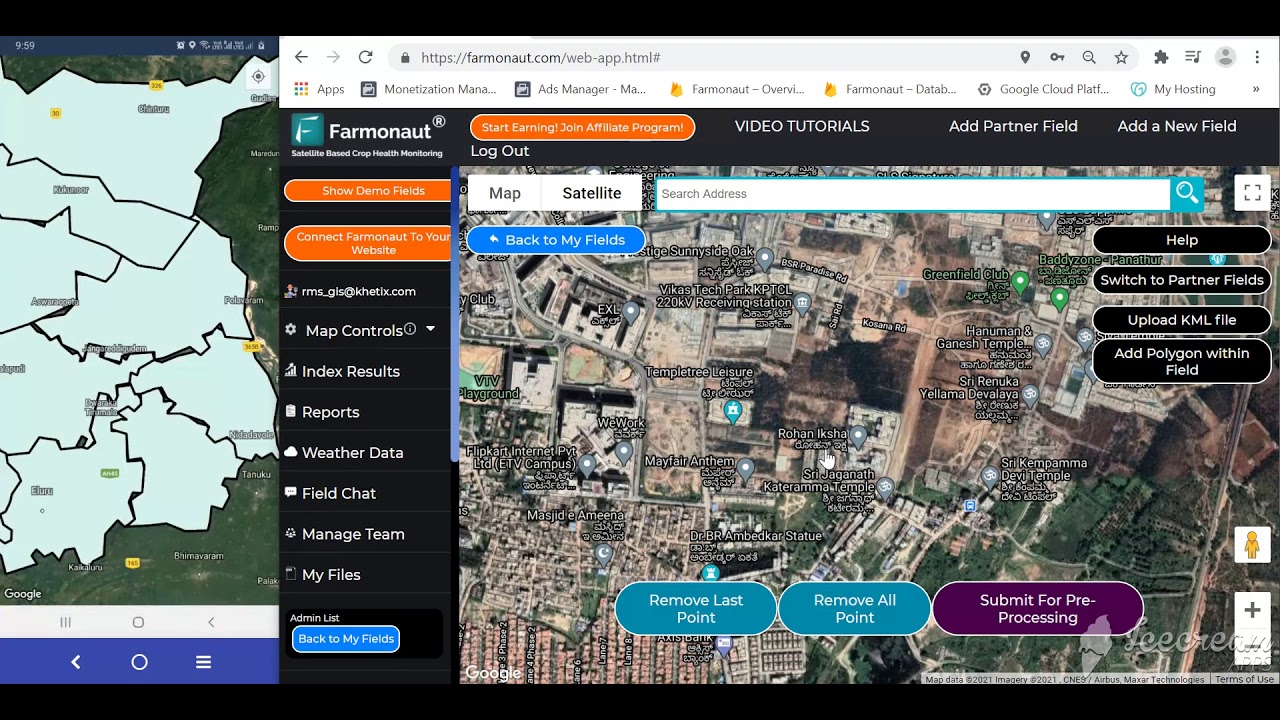
Plantation operators, forestry crews, and environmental managers: Farmonaut’s crop, plantation & forest advisory platform is designed to handle the complexities of integrated agroecosystems (learn more here).
Comparison Table: Modern Equipments Used in Agriculture in Latin America
| Equipment Type | Main Function | Estimated Productivity Improvement (%) | Sustainability Impact | Precision Farming Integration | Typical Usage |
|---|---|---|---|---|---|
| GPS-Guided Tractors | Field preparation, seeding, spraying, transport | +15-25% | 30% inputs reduction, lower fuel consumption | Yes | Row crops, grains, mixed agriculture |
| Drones (Aerial Imaging) | Crop/soil health, pest scouting, mapping | +10-18% | 20% less chemical use, improved targeting | Yes | All crop types, specialty crops |
| Soil Sensors | Moisture, nutrient, pH monitoring | +12-20% | Significant water & nutrient savings | Yes | Row crops, orchards, vegetables |
| Automated Irrigation Systems | Targeted water delivery | +15-22% | Up to 40% water savings | Yes | All major crops, fruit orchards |
| Robotic Harvesters | Automated picking & crop gathering | +18-25% | Reduced labor, minimal crop damage | Yes | Specialty/fruit crops, plantations |
| Telematics Platforms | Fleet, asset, resource management | +8-12% | Optimized maintenance, reduced downtime | Yes | Large-scale farming, logistics, forestry |
| Automated Feeders/Milking Robots | Livestock feeding, milking automation | +10-15% | Better animal health, less waste | Yes | Dairy, beef, mixed livestock |
When considering investments in new equipment, prioritize systems with native precision farming integration and real-time analytics. It’s important to assess local service networks, spare parts availability, and financing options to ensure continuous operation.
Videos Spotlight: Modern Equipments & Precision Farming in Action

These videos provide a glimpse into transformative equipment-powered agriculture modernity across Latin America and globally—showcasing best practices for precision farming, irrigation control, and farm data management.
Key Benefits and Real-World Challenges in Modern Equipment Adoption
🌟 Essential Benefits of Modern Equipments Used in Agriculture
- 🚀 Boosted Productivity: GPS guidance and automated systems reduce overlap, save time, and increase yields.
- 💸 Efficient Input Use: Variable rate machinery and sprayers optimize seed, fertilizer, and pesticide applications.
- 💧 Water Use Reduction: Precision irrigation and real-time soil sensors minimize water wastage.
- 🌿 Sustainable Operations: No-till and reduced-tillage tools promote soil health and carbon sequestration.
- 🔎 Enhanced Traceability: Blockchain and digital platforms support compliance and access to high-value markets.
Expert Callout & Highlight Boxes
Smart farms are moving towards API-driven, cloud-connected decision support systems, merging on-farm machinery data with remote sensing analytics for the ultimate in field productivity.
- 🌍 Global Relevance: Latin America’s adoption of modern equipment serves as a template for emerging-market transformation.
- 🌡 Climate Resilience: Smart systems react to real-time weather and field sensors for greater output stability.
- 🏆 Competitive Edge: Farms leveraging integrated technology can achieve premium product specialty certifications.
- 🌾 All Crop & Livestock Models: Every sector — grains, fruits, forestry, dairy — now has tailored mechanization solutions.
- 📱 Mobile Control: Apps and APIs (like Farmonaut’s platform) let managers monitor, plan, and intervene, anytime, anywhere.
Farmonaut Subscription Pricing
FAQ: Modern Equipments Used in Agriculture
Q1: What are modern equipments used in agriculture, and why are they important?
Modern equipments in agriculture refer to advanced machinery, tools, and integrated systems that boost productivity, sustainability, and profitability—ranging from GPS-guided tractors, drones, and precision sprayers to automated irrigation, robotic harvesters, and digital farm management solutions.
Q2: How does precision agriculture improve yields and reduce environmental impact?
By leveraging data from sensors, satellites, telematics, and imaging, precision agriculture targets input use—minimizing over-application of chemicals and water, reducing runoff, and optimizing crop growth to maximize yields sustainably.
Q3: Are there scalable solutions for smallholders and specialty crop producers?
Yes, modern compact and maneuverable tractors, robotic weeders, and cloud-enabled management systems are increasingly accessible for smallholdings and specialty crops, especially in Latin America’s diverse terrain. Cloud-based solutions like Farmonaut lower the cost and expertise barrier for these producers.
Q4: How does data integration with platforms like Farmonaut enhance equipment use?
Integration centralizes field, soil, and fleet data, improves real-time decision-making, and helps schedule operations and maintenance proactively. Farmonaut’s suite of satellite, AI, and blockchain tools provide actionable insights—optimizing input use and environmental impact on any scale.
Q5: What types of crops or sectors benefit most from modern agriculture equipment?
All major crop and livestock sectors benefit, but the most notable impacts are seen in grains, corn, soybeans, cotton, fruits (orchards and vineyards), forestry, dairy, and mixed-cropping systems.
Conclusion: Charting A Bright Future With Modern Agricultural Equipment
The modern equipments used in agriculture are more than just tools—they are transformative platforms enabling Latin American farmers and agribusinesses to meet the twin challenges of boosting productivity and protecting the environment. By embracing integrated, sensor-driven, and digital systems, the future of agriculture moderne is not only more efficient and profitable but also more responsible and resilient.
From mechanized tractors and advanced harvesters to IoT sensors and satellite-driven decision tools like those offered by Farmonaut, the Latin America agriculture equipment market is poised for ongoing growth and innovation. The journey from the traditional field to the data-driven digital farm underscores a commitment to sustainable, traceable, and high-quality food and resource production.
Start optimizing your operations today—explore Farmonaut’s app and API integrations for affordable, advanced insights that support smarter decisions across your agricultural, forestry, or related value chain operations.
Embrace the future—make modern agriculture a reality with the right mix of equipment, data, and vision.

 Yutz Automation
 AgroGreen Dynamics
 Leher
Leher AgroRisk
 Oath Inc
 Reddane Farming
 Esri North East Africa
 Cresol
 Atur Kuliner
 MDCV UK
 Zerella Group
 Etech Consulting Madagascar
 Vestlandsforsking
 Delicio
 WB Dev
 Sama Premium
 Prochecker
 Tres Valles
 LACOS Geoinformation
 Magrifly
 LatConnect 60
 Blickwinkel
 Agricultural Credit Policy Council
