

Garden compost · UK buyer guide
Asda Compost: Price, Peat Check and Bag Calculator
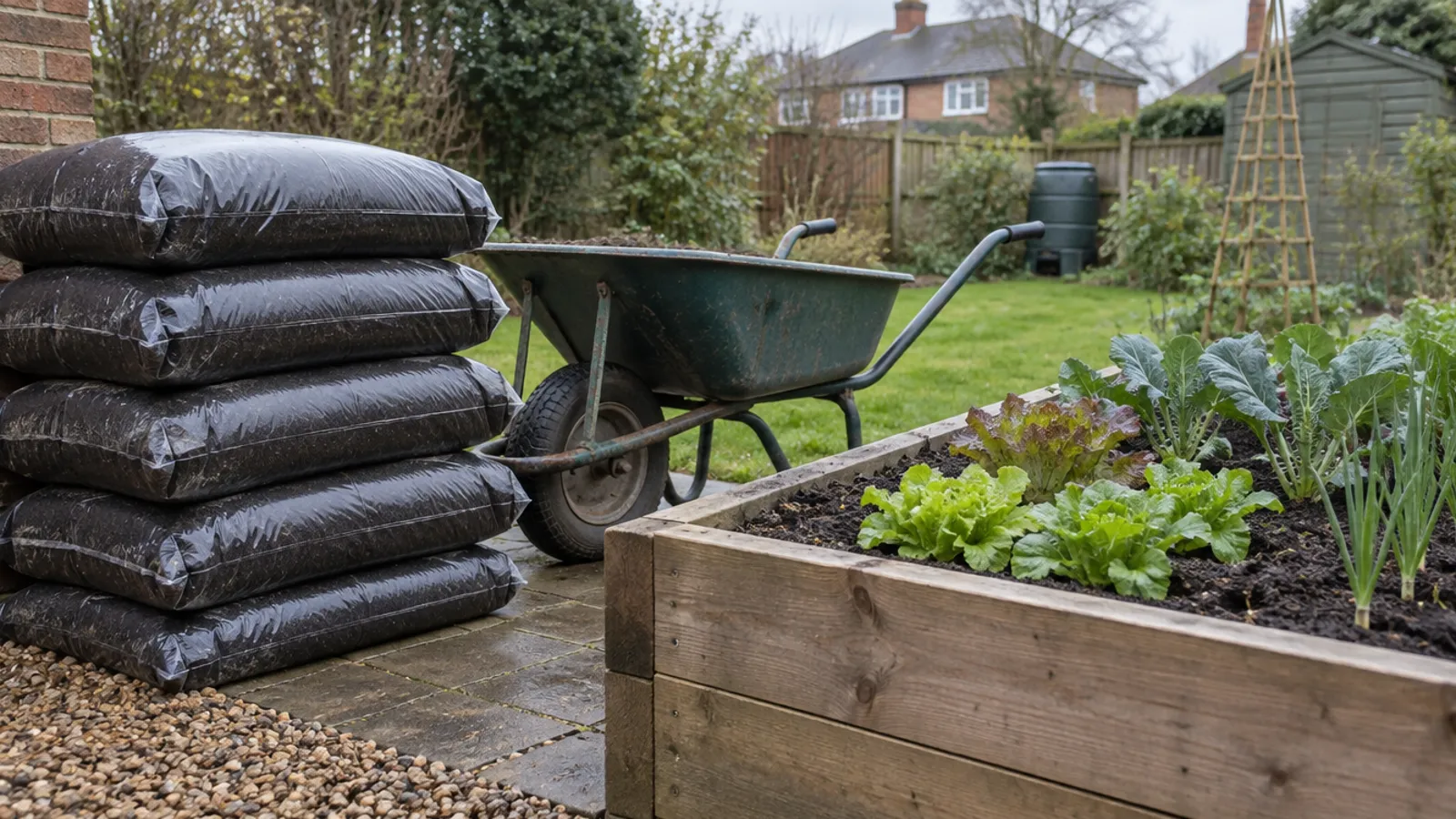
Wickes and B&Q list a 50L no-peat multi-purpose bag at £7 (26 October 2026). Trolley.co.uk’s tracker records an Asda 40L no-peat bag at a historic low of £6.63 and high of £10.49. Peat is not banned in the UK, so read the label.
Key takeaways
- On 26 October 2026 Wickes and B&Q listed a 50L no-peat multi-purpose bag at £7, or £6.00 and about £5.33 a bag in a multi-buy.
- Asda: a Wildlife Trust retailer list says it sells own-brand 50L no-peat compost; Trolley.co.uk’s tracker shows a 40L bag with a historic low of £6.63 and high of £10.49 (seen 26 October 2026, out of stock in every store).
- Peat is not banned in the UK: the RHS says there is no legislation, and Defra said on 5 January 2026 it plans a ban when parliamentary time allows.
- UK retail peat sales fell from 1.02 million to 389,000 cubic metres between 2021 and 2023 (Defra).
- A 50L bag covers 1 square metre at 5 cm deep; use the calculator for beds and pots.
In this article
- Asda compost: what the supermarket sells and what it costs
- Asda compost against Wickes and B&Q
- Is Asda compost no-peat, and is peat banned?
- What is in a no-peat bag
- How to choose multi-purpose compost
- How to spend less on compost
- Seeds, cuttings and houseplants
- How many 50L bags do you need?
- Using no-peat compost: watering, feeding and storage
- When multi-purpose compost is the wrong choice
- How we checked the numbers
- FAQ
- Satellite monitoring for larger growers
Asda sells its own-brand compost with no peat in a 50L bag, according to a Wildlife Trust list of retailer no-peat ranges, and the price tracker Trolley.co.uk shows an Asda no-peat multi-purpose bag of 40L at between £6.63 and £10.49 (its recorded lowest and highest prices, seen on 26 October 2026). On 26 October 2026 Wickes and B&Q both listed a 50L no-peat multi-purpose bag at £7. Asda sets its own shelf price and offers, so check the bag and the shelf label before you buy.
This guide is for gardeners, allotment holders and small growers who search for Asda compost and want to know what is in the bag, what it should cost, how much to buy and whether peat is still legal. It has a comparison table, three charts built from UK government data, and a calculator that turns the size of your bed or pots into bags and pounds. Prices are list prices from retailer pages, not what every store charges. Compost is for pots and beds; it is not a plant protection product, so the label on the bag is your guide to use.
Asda compost: what the supermarket sells and what it costs
The Wildlife Trust list, which carries no date, says Asda sells its own-brand no-peat compost in a 50L bag and plans to remove peat from its own-brand products by 2030. The Trolley.co.uk page for the Asda no-peat multipurpose compost in a 40L bag shows a lowest price of £6.63 and a highest of £10.49, and it was marked out of stock in every store when we viewed it on 26 October 2026. That range is the tracker’s recorded low and high; the page does not say when each price applied, so treat it as a guide to how far Asda prices move, not as today’s price.
Offers change often. Searches such as “asda compost 3 for £10” show that shoppers expect a multi-buy deal, but a deal that ran last spring may not be on the shelf now. Look for the offer on the shelf edge or in the Asda app, and compare the price per litre rather than the price per bag, because bag sizes differ.
A quick way to compare: divide the price by the litres. A 50L bag at £7 costs 14p a litre. A 40L bag at £6.63 costs about 17p a litre, and at £10.49 about 26p a litre. In this comparison the 50L bags cost less per litre than the 40L Asda bag at its tracker prices, but only if you will use it within the growing season, as the storage section below explains.
Asda compost against Wickes and B&Q
We checked the product pages of two other UK stores for a 50L no-peat multi-purpose bag. Both list the bag at £7 and both give a discount if you buy three. The table puts them next to the Asda figures above.
| Bag | Size | Price | Peat | Source |
|---|---|---|---|---|
| Asda No-peat Multipurpose | 40L | £6.63 to £10.49 | No peat | Trolley.co.uk price tracker |
| Wickes multi-purpose | 50L | £7, or 3 for £18 | No peat | Wickes product page |
| B&Q Verve multi-purpose | 50L | £7, or 3 for £16 | 0% peat | B&Q product page |
The multi-buy price works out at £6.00 a bag at Wickes, which says so on its page, and about £5.33 a bag at B&Q. Those are list prices on 26 October 2026 and stores can change them at any time. The chart below shows the saving per bag.
Chart
Price per 50L bag: single and multi-buy
£ per bag, list prices on retailer pages, 26 October 2026
Is Asda compost no-peat, and is peat banned?
A Wildlife Trust list names an Asda own-brand peat-free 50L bag, but the list is undated and also says Asda plans to remove peat from its own-brand products by 2030, so confirm on the bag. Peat is not banned in the UK. The Royal Horticultural Society says on its no-peat compost page that there is currently no legislation banning peat in horticulture and that the timeline for ending its use is unclear. In March 2023 Which? wrote that peat composts would be banned in the UK by the end of 2024, and that ban has not become law, so some bags on sale can still contain peat.
That is why the label matters. The RHS advises that if the bag does not clearly state it has no peat, it most likely has some, and that words such as “organic” or “environmentally friendly” do not guarantee otherwise.
The government says it plans to legislate for a ban on the sale of peat and peat-containing products when parliamentary time allows, in a Defra written answer of 5 January 2026 that links the plan to its Environmental Improvement Plan; no law or date has been set in what we found.
Sales data show a large shift away from peat anyway. Defra’s growing media figures, updated in December 2025, put retail peat sales in the UK at 1.02 million cubic metres in 2021 and 389,000 cubic metres in 2023, a fall of about 62%. Over the same years the amount of coir sold to amateur gardeners rose, and wood fibre stayed the largest single ingredient. The Horticultural Trades Association, the UK industry body, reported in June 2023 that peat made up 16.8% of retail growing media volume in 2022 on its own monitor, and that wood-based materials were the largest retail ingredient at 35.5%.
Chart
UK retail sales of peat and its main replacements
Thousand cubic metres sold to amateur gardeners, 2021 to 2023
What is in a no-peat bag
No-peat mixes are blends, so two bags of the same size can behave very differently. In the Defra data for 2023, wood fibre made up about 36% of the volume of retail growing media, ahead of peat at about 17%, coir at about 15% and bark at about 13%. The remainder was soil or loam, composted green waste and spent mushroom compost. These are our shares, worked out from Defra’s volumes for retail sales in 2023.
The Which? Gardening team lists wood fibre, composted bark, coir, wool, bracken, green compost from garden-waste collections and digestate among the ingredients in the no-peat composts it tests. Because of this, the same brand can vary from batch to batch, which is why Which? bought three sets of each compost in its tests in March 2026. Its 2023 trial of 25 no-peat composts for pots found five Best Buys; full ratings sit behind a Which? membership, so we do not reproduce them.
Chart
What UK retail growing media was made of in 2023
Share of retail volume sold, percent (our shares from Defra volumes)
How to choose multi-purpose compost
Multi-purpose compost is sold for general use in pots and hanging baskets. Use this checklist in the shop.
- Check the front of the bag for a clear statement that it contains no peat. The RHS says to check the packaging for which plants the mix suits.
- Look for the Responsible Sourcing Scheme logo. The RHS says it rates a compost’s ingredients on environmental and sustainability criteria.
- Match the job. Use seed and cuttings compost for seeds, ericaceous compost for acid-loving plants such as blueberries, and a John Innes mix labelled as peat-less for plants that will stay in a pot for years (the RHS says traditional John Innes recipes contain peat, so the bag must say if it has none).
- Note the feed. The RHS says to follow the fertiliser advice on the pack, or pick one with a similar NPK ratio and trace elements.
- Price reflects quality. The RHS says price usually reflects ingredient quality and the amount of added fertiliser, so the cheapest bag is not always the best value.
- Ask how it was stored. The RHS suggests asking the retailer how the bags have been kept, because compost can degrade in long storage.
No label can tell you how a bag will grow your plants. If you want independent test scores, the Which? Gardening team publishes yearly trials of no-peat composts in pots, with results for members.

▶ Our video on why organic matter matters in soil. · 7:33
How to spend less on compost
The cheapest bag per litre is not always the cheapest way to fill a pot. The table works out the price per litre for the bags above, using the Wickes and B&Q prices listed on 26 October 2026 and the Trolley.co.uk low and high for Asda.
| Bag | Price | Per litre |
|---|---|---|
| Asda 40L, low | £6.63 | 16.6p |
| Asda 40L, high | £10.49 | 26.2p |
| Wickes 50L, single | £7.00 | 14.0p |
| Wickes 50L, 3 for £18 | £6.00 a bag | 12.0p |
| B&Q 50L, single | £7.00 | 14.0p |
| B&Q 50L, 3 for £16 | about £5.33 a bag | 10.7p |
Four habits cut the bill without lowering plant quality. First, buy only what you will use in the season: the RHS says compost can degrade if stored for a long time and suggests sharing bags with gardening friends, especially for specialist mixes, so the whole bag is used. Second, use the right mix for each job, because the RHS says to use compost designed for the task, such as a seed and cuttings mix for seeds. Third, save potting compost for pots and make your own compost or leaf mould for mulching beds. Fourth, buy bare-root or root-balled plants in autumn and winter; the RHS says they can be planted straight into the ground with some organic matter, which saves compost and resources.
Seeds, cuttings and houseplants
Multi-purpose compost is a general mix. The RHS says that growing seeds and cuttings can feel different if you used to grow them in peat, but is easy to do no-peat with a little practice, and it points to separate advice for each. Young plants are also sensitive to feed: the RHS suggests a dilute liquid feed once the first true leaves appear, following the maker’s instructions. If a seed tray fails, do not blame the bag until you have checked watering, because no-peat mixes can look dry on top while the layer below is wet.
Gardeners who try a no-peat mix for the first time sometimes judge it on one pot. The RHS says there is not one compost that works for everyone and that you might need to try a few to find the one that suits you and your plants. Keep notes on the brand, the plant and the result, and compare like with like: same pot size, same feed, same watering.
How many 50L bags do you need?
A 50L bag holds 0.05 cubic metres, so it covers one square metre at 5 cm deep. Raised beds and large pots take far more than people expect. Use the calculator to turn the size of your bed into litres, whole bags and cost. Round the number of bags up, and add an allowance for settling because loose compost sinks after watering.
Try the numbers for your own farm below.
Calculator
How many bags of compost do I need?
Enter the size of your bed or container and the price on the bag.
- Compost needed: 634 litres
- Bags needed (round up): 12.7 bags
- Cost per litre: 14.0 pence
Example values only, not a forecast. Price is an example, use today’s price. Litres = length (m) x width (m) x depth (cm) x 10, plus your settling allowance; a bag of 50L covers 1 square metre at 5 cm deep. Round the number of bags up. Ignores the space taken by drainage layers.
Using no-peat compost: watering, feeding and storage
No-peat compost looks like peat compost but behaves a little differently. The RHS gives three habits that matter most.
- Water little and often. Push a finger into the pot, because some no-peat composts look dry on top when there is plenty of water lower down. Lifting a small pot also tells you how heavy, and so how wet, it is.
- Feed to the pack. Plants in containers may need feeding in a different way, so watch for signs of deficiency and follow the maker’s instructions for the feed you choose.
- Use it fresh. Compost does not keep for ever and can break down if stored for a long time, so use each bag in the growing season you bought it. Compost over a year old can go to the compost heap or be used as a soil improver.
The RHS also notes that small mushrooms on the top of a pot are harmless; you can pinch them off. The RHS advises against using potting compost on borders; keep it for pots and containers, and use home-made compost or leaf mould to mulch beds.
▶ Our short video on seven simple ways to look after soil and water. · 4:34
When multi-purpose compost is the wrong choice
Multi-purpose compost is made for containers and raised beds. For a large garden bed, an allotment or a small farm plot, bagged compost gets expensive quickly: at £7 for 50L, one cubic metre costs £140. Bulk loads of soil improver or well-rotted manure, or home-made compost, can cost less per litre (check local prices); ask the supplier what is in them and follow its guidance on use. Soil improvers are not the same as potting mixes, and the RHS says to keep potting compost for pots.
Making your own is the lowest-cost route. The US EPA describes composting as the managed, oxygen-using breakdown of organic materials such as grass clippings, leaves, yard trimmings and food scraps, producing a stable soil amendment. The UN Food and Agriculture Organization describes large-scale windrow composting, where mixed materials are placed in long narrow piles that are turned regularly; it gives typical heights of 90 cm for dense materials such as manures up to 360 cm for light materials such as leaves. Home compost is a soil improver and mulch rather than a seed or potting mix, so use it on beds and borders.
Whatever you choose, check each product’s label for its intended use and any safety notes, and follow local council rules if you are dealing with large volumes of green waste or soil.

▶ Our video on raised garden beds: materials, benefits and challenges. · 15:31
How we checked the numbers
Retail prices come from the Wickes and B&Q product pages and the Trolley.co.uk page, all opened on 26 October 2026. Asda’s own site blocked our automated check, so we do not quote an Asda price from asda.com. Sales volumes come from the Defra datasheet “Annual use of peat and alternatives in the UK horticultural market 2021 to 2023” (updated 16 December 2025). Shares and the per-bag multi-buy prices are our own sums from those figures. Advice on choosing, watering and storing compost comes from the RHS pages named in the text, and the test details come from the two Which? articles.
FAQ
Does Asda sell compost?
Yes. A Wildlife Trust list of retailer ranges says Asda sells its own-brand Asda No-peat Compost in a 50L bag, and the price tracker Trolley.co.uk lists an Asda no-peat multipurpose bag of 40L. The Trolley.co.uk page showed it out of stock in every store on 26 October 2026. Stock and price vary by store, so check the Asda app or your local store.
Is Asda multi-purpose compost no-peat?
Asda’s own-brand compost is sold as no-peat, according to the Wildlife Trust list (which is undated) and the product name on Trolley.co.uk, so confirm on the bag. Other brands on the shelf may differ. The RHS says that if a bag does not clearly state it has no peat, it most likely has some.
How much does a 50L bag of compost cost?
On 26 October 2026 Wickes and B&Q listed a 50L no-peat multi-purpose bag at £7, with multi-buy prices of £6.00 and about £5.33 a bag. The price tracker shows Asda’s 40L bag between £6.63 and £10.49.
Is peat banned in the UK?
No. The RHS says there is currently no legislation banning peat in horticulture and the timeline for ending its use is unclear. Government data show retail peat sales fell by about 62% between 2021 and 2023.
How do I work out how much compost I need?
Multiply length by width by depth, in metres, and multiply by 1,000 to get litres; then divide by the bag size. Our calculator does this and adds an allowance for settling.
Can I use multi-purpose compost on my garden beds?
You can, but it is costly and the RHS advises keeping potting compost for pots and containers. For borders, use home-made compost or leaf mould as a mulch, or buy a bulk soil improver.
Satellite monitoring for larger growers
If you grow on a larger plot or a farm, compost is one input among many. Farmonaut offers satellite images of crop fields that show how vegetation changes across a season, which can help you see where soil amendments make a difference to growth. It does not sell compost and does not diagnose a cause.
Related pages on our site: soil conservation, sustainable soil practices, loam soil, large farm management app, carbon footprinting, crop loan and insurance, fleet management, product traceability, weather API documentation and satellite API.
Farmonaut crop monitoring
See larger plots from space
Farmonaut Satellite + AI Farm Monitoring System shows how vegetation changes across a field over a season.




Keep reading
Sources
- Defra, Annual use of peat and alternatives in the UK horticultural market 2021 to 2023 (datasheet): assets.publishing.service.gov.uk
- Defra, Peat usage in growing media production (updated 16 December 2025): gov.uk
- Defra, Tracking peat usage in growing media production – method statement: gov.uk
- RHS, No-peat compost choices: rhs.org.uk
- RHS, Ten top tips for no-peat growing success: rhs.org.uk
- Which?, Best no-peat composts for pots of summer bedding (13 March 2023): which.co.uk
- Which?, No-peat compost for patio pots: which one works best? (5 March 2026): which.co.uk
- Sheffield & Rotherham Wildlife Trust, Go peat free (retailer list): wildsheffield.com
- Wickes, No-peat Multi-Purpose Compost 50L (product page, 26 October 2026): wickes.co.uk
- B&Q, Verve No-peat Multi-purpose Compost 50L (product page, 26 October 2026): diy.com
- Trolley.co.uk, ASDA No-Peat Multipurpose Compost 40 Litre (price tracker): trolley.co.uk
- Horticultural Trades Association, Growing Media Monitor report (15 June 2023): hta.org.uk
- US EPA, Composting at home: epa.gov
- FAO, On-farm composting methods: fao.org
- UK Parliament, Written question on horticultural peat, Defra answer 5 January 2026: questions-statements-api.parliament.uk
Discussion
Questions, corrections or field experience? Share them below. First-time comments are reviewed before they appear, and your email is never published.
No comments yet. Be the first to add a question or your experience.

 Innomick
 Juligerm
 AdBio
 MISE Maroc
 Drift-Sense
 NWNS
 Red August Group
 Farm Inc
 WeMe Global
 Agrotoken
 Blue BearX
 Insignito
 Croptimum
 DnCubed
 Field Capacity
 Indosistim Teknologi
 Liquify Digital

 Licence holder · Niger · Gold
 Licence holder · Nigeria · Gold + lithium










