

Egg Farming UK: Top Innovations & Machinery Trends for 2026
“By 2026, over 70% of UK egg farms will use automated sorting and packaging systems.”
Table of Contents
- Overview of Egg Farming UK
- Modern Egg Farming Process
- Top Innovations & Machinery in Egg Farming UK (2025-2026)
- Comparison Table: Advanced Egg Farming Machinery & Technologies (2025 vs. 2026)
- Key Benefits & Takeaways
- Egg Farming UK in Action: Informative Videos
- Sustainability & the Future of Egg Farming UK
- Key Challenges & Future Opportunities for Egg Producers
- How Farmonaut Satellite Tech Supports Modern Egg Farming
- FAQ: Egg Farming UK in 2025-2026
- Conclusion: The Road Ahead for UK Egg Sector
The egg farming UK sector remains a vital component of British agriculture, sustaining rural economies and providing a significant source of protein to millions. In 2025 and looking ahead to 2026, this industry continues to evolve—driven by advanced machinery, innovative systems, and a commitment to sustainability and animal welfare. This article explores the latest advancements in egg farming machinery, the egg farming process, key trends, and future opportunities shaping the landscape of egg production in the UK. By focusing on these modern practices, we provide a comprehensive overview for producers, investors, and stakeholders in the egg farming sector.
The shift toward machine-driven, data-powered egg farming processes is not only improving efficiency and product quality but is fundamentally raising the standards for animal welfare and sustainability across the UK egg industry.
Overview of Egg Farming in the UK: A Contemporary Landscape
The egg farming UK industry has steadily grown, with annual farm gate production reaching approximately 7 billion eggs. As we move into 2025 and beyond, this sector is more diverse than ever, encompassing free-range, barn-laid, organic, and caged systems. Yet, legislative changes and shifting consumer preferences have catalyzed a move away from conventional battery cages toward more enriched cage, free-range, and organic production methods.
- ✔ Cage ban since 2012: UK legislation prohibited conventional battery cages, encouraging humane alternatives and raising welfare standards.
- ✔ Enriched cage systems: Now more prevalent, offering more space and enrichment for hens.
- ✔ Diverse operations: The sector supports both large industrial farms and family-owned businesses, sustaining rural economies.
- ✔ Ongoing innovations: Emphasis on automation, traceability, and environmental stewardship.
As welfare, environmental, and quality concerns rise, egg farming UK producers adopt advanced egg farming machinery and technological solutions.

— Access real-time farm monitoring and decision support for egg & crop farms!
The Modern Egg Farming Process: Key Stages in 2025 & Beyond
The egg farming process in the UK has become a carefully managed, data-driven sequence, focused on optimizing hen health, egg quality, and production efficiency. Here’s how it unfolds today:
1. Rearing Pullets & Preparing Flocks
- 🐣 Pullets: Young hens bred and raised for laying, receiving specialized nutrition for growth and health.
- 🏡 Transfer: Pullets are transferred at the right age to laying barns or free-range environments.
- 🍲 Diet: Diets are formulated for consistent egg size, shell strength, and nutritional content.
- 💉 Health: Regular vaccination and biosecurity programs safeguard against avian diseases.
2. Laying Period & Egg Collection
- 🐔 Laying Hens: Typically produce eggs for 72 weeks before rotation.
- 🔄 Flock Management: Regular monitoring for health, productivity, and welfare; crucial replacement strategies.
- 🎚 Automated Collection: Modern machinery collects and sorts eggs, reducing contamination and labor.
To optimize the egg farming process, deploy automated real-time monitoring systems for early detection of hen health and production fluctuations. Early intervention is key!
3. Grading, Packaging & Quality Assurance
- 📏 Sorting: Automated graders assess egg size, shell quality, and weight per food standards.
- 🚫 Sanitation: Robotic cleaning systems reduce disease risk.
- 📦 Packaging: Minimises manual handling—crucial for food safety and shelf life.
4. Distribution & Traceability
- 🏪 Distribution: Eggs reach retailers and food producers via optimized supply chains.
- 🔗 Traceability: Enhanced by blockchain and IoT, ensuring transparency in egg farming UK sector.
Underestimating the importance of consistent flock monitoring. Skipping regular checks can cause undetected drops in productivity and unexpected outbreaks.
Top Innovations & Egg Farming Machinery Trends for 2025-2026
Egg farming UK is entering an era of technological transformation. The focus on egg farming machinery, automation, precision farming, and IoT brings new possibilities to producers in 2025 and 2026.
- 🌐 Automated Egg Collection Systems: Conveyor belts and robotic solutions reduce labor and contamination risks.
- 🌡️ Smart Environmental Controls: Climate control systems use sensors to maintain optimal temperature, humidity, and ventilation.
- 📡 IoT-Based Health Monitoring: Sensors track hen movements, egg counts, and health indicators in real-time.
- 🔋 Renewable Energy Integration: Solar/bioenergy systems power farm equipment, reducing emission and costs.
- 📱 Remote Farm Management Apps: Manage and monitor all operations from mobile/desktop devices.
- 🔒 Blockchain Traceability: End-to-end verification of egg origin and welfare standards.

Machinery upgrades—particularly automated egg collection and IoT-driven monitoring—represent high-return, low-labor investment opportunities in the egg farming machinery sector for 2025-2026.
“UK egg production efficiency is projected to rise by 18% in 2025 thanks to advanced feed optimization machinery.”
Recent Advancements: What’s New in UK Egg Farming?
- Automated Egg Grading & Packing: High-speed graders sort by size, weight, and shell integrity—minimizing waste.
- Precision Nutrition Formulation: Feed blending machinery tailors diets to flock needs, maximizing yield and health.
- Robotic Cleaning & Disinfection: Reduces manual labor and biosecurity risks by cleaning housing environments ever more efficiently.
- AI-Driven Optimizations: Machine learning tools predict demand, guide replacement strategies, and monitor flock welfare.

By 2026, AI and satellite-driven insights will dominate smart egg farming UK systems—optimizing every aspect from feed to housing for both profitability and welfare.
Comparison Table of Advanced Egg Farming Machinery and Technologies (2025 vs. 2026)
The following table highlights major egg farming machinery and technology trends, showcasing usage and innovations from 2025 into 2026. Sustainability and efficiency are primary drivers for adoption across the industry.
| Machinery/Technology Name | 2025 Usage (%) [est] | 2026 Projected Usage (%) [est] | Main Function | Key Innovation | Sustainability Impact |
|---|---|---|---|---|---|
| Automated Egg Collection Systems | 68 | 78 | Collect eggs efficiently, reduce breakage & contamination | Robotics & conveyor integration | Reduces waste & labour, increases food safety |
| Smart Environmental Controls | 54 | 66 | Control climate (temperature, humidity, ventilation) | IoT sensors & automated HVAC | Improves welfare, energy efficiency |
| IoT-Based Health Monitoring | 43 | 60 | Track flock health & productivity | Real-time alerts, AI/ML analysis | Promotes early intervention, reduces losses |
| Renewable Energy Integration | 31 | 48 | Power farm operations & machinery | Solar, biogas, wind turbines | Reduces emissions, lowers energy costs |
| Cage-Free Housing Innovations | 24 | 37 | Improve welfare, provide freedom of movement | Modular barns, enriched space & perches | Aligns with welfare standards, sustainable image |
| Automated Feeding & Watering | 59 | 72 | Optimize nutrition, reduce waste | Smart sensors, precision dispensers | Increases efficiency, supports health |
Key Benefits & Takeaways of Egg Farming Innovations
- 🐓 Animal Welfare: Automated controls and cage-free technologies meet evolving welfare standards.
- 🔄 Productivity: Smart machinery enables higher, more consistent egg yields.
- 🌱 Sustainability: Renewable energy systems and efficient waste handling reduce environmental impact.
- 🔐 Traceability: Blockchain and IoT raise consumer confidence and support regulation.
Explore blockchain traceability technology to secure supply chains in egg and agri sectors. - 💸 Cost Savings: Fewer manual processes reduce labor costs, optimize energy use, and decrease feed waste.
Egg Farming UK in Action: Informative Videos
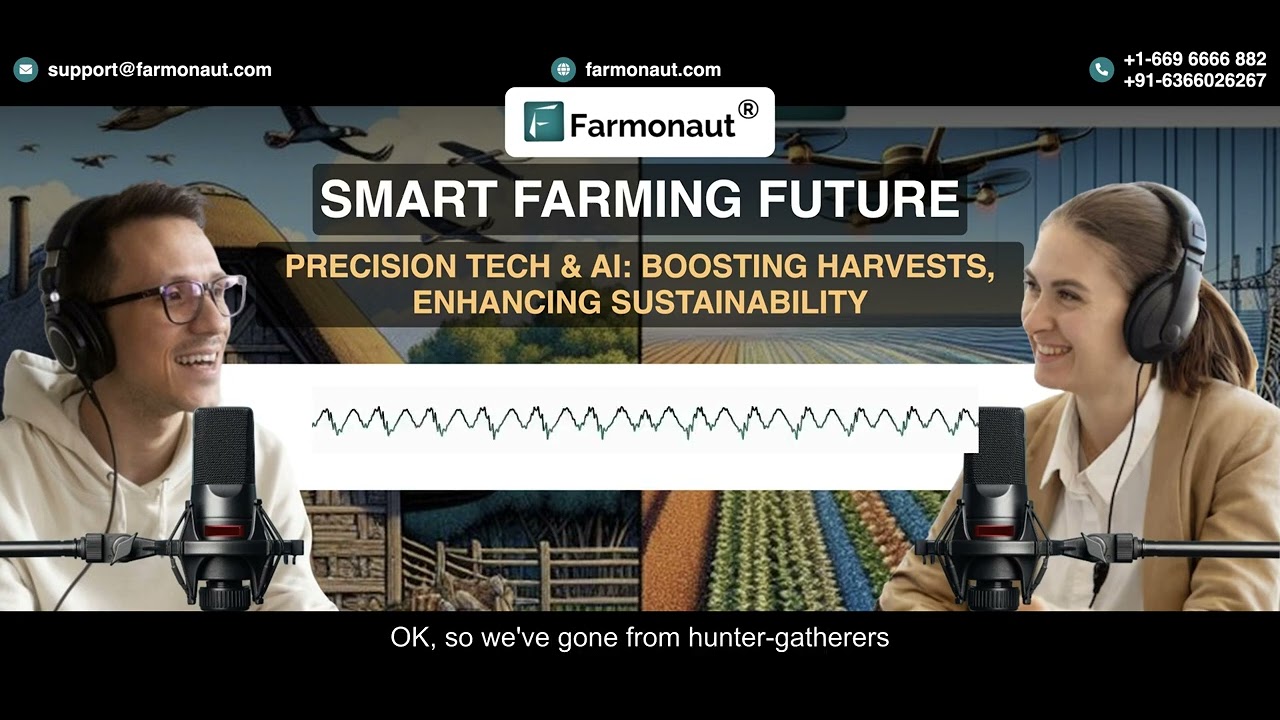
Discover how precision technology, AI, and data-driven decisions are transforming egg farming UK for 2025 and beyond. From farm management apps to advanced monitoring and traceability tools, the future is digital and sustainable.
Integration of AI, blockchain and smart sensors is boosting both yield and traceability in UK’s egg farming—directly responding to demanding UK & EU traceability laws.

Sustainability and the Future of Egg Farming UK: Environmental Responsibility by 2026
As environmental impact becomes a focal concern, sustainability is now integral to the egg farming UK industry. By 2026, we expect several transformative shifts:
- ♻️ Carbon Reduction: Renewable energy sources (solar, biogas) are becoming standard in British egg production.
Farmonaut’s carbon footprint monitoring tools support agricultural businesses in accurately calculating and reducing emissions. - 🌾 Manure Management: Farms convert waste into organic fertilizers—reducing chemical runoff and lowering costs.
- 🌻 Integrated & Diversified Farms: Egg farms increasingly add arable and livestock operations, enhancing resilience while promoting resource use efficiency.
- 🪴 Water & Land Use: Automated irrigation and optimized housing layouts minimize footprint and resource waste.

The Rise of Certification & Green Standards
- 🛡 Certified Organic: Growth of certified organic egg production due to increased consumer demand for sustainable and high-welfare products.
- 🏷️ Egg Traceability: End-to-end digital records for every egg, from flock to supermarket shelf, help build trust and validate claims.
Farmonaut’s Large Scale Farm Management app helps monitor environmental compliance and streamline agri operations for egg producers.


Key Challenges and Future Opportunities for Egg Producers
Egg farming UK, despite its ongoing evolution, faces notable challenges into 2026:
- 📈 Rising Feed Costs: Feed is the largest expense in egg production. Market volatility affects profitability.
- ⚠️ Avian Health Risks: Diseases such as avian influenza require ongoing biosecurity and contingency planning.
- 📜 Complex Regulatory Environment: Adhering to new welfare and traceability laws can be resource-intensive.
- 🔍 Demand for Transparency: Modern consumers expect full disclosure of production, origin, and welfare practices.
- 💡 Workforce Shortages: Fewer skilled workers mean machinery adoption and remote monitoring are crucial for future resilience.
Over-dependence on automated machinery can expose farms to technical failures if back-up plans aren’t in place. Always ensure system redundancy!
Opportunities for Innovation and Growth
- 🛰️ Satellite Insights: Leverage precision data for optimizing feed, welfare, and environmental impact.
Farmonaut offers advanced satellite and AI-powered crop and farm management tools. - ☘️ Eco-Certifications: Adopt third-party certifications to access premium markets.
- 🔑 Data-Driven Flock Management: Monitor productivity, welfare, and health remotely using digital dashboards.
- 🌍 Diversification: Integrate with arable or livestock operations and offer direct-to-retail egg sales.
- 💰 Insurance & Finance: Use satellite-based verification for crop/egg insurance—streamlining access to capital.
Farmonaut’s satellite verification supports loans and insurance processes for UK agri producers.
Read the API Developer Docs – Accelerate custom solutions for monitoring, traceability, and remote farm management in 2026 and beyond.
How Farmonaut Satellite Tech Supports Modern Egg Farming
At Farmonaut, our mission is to democratize satellite-based agricultural intelligence for egg farming UK and beyond.
- 🚀 Real-Time Monitoring: We offer remote monitoring of crops and resource conditions—enabling UK egg producers to optimize feed, flock health, and environmental compliance from their web or mobile devices.
- 🧠 AI-Powered Advisory: Our Jeevn AI system provides farm-specific recommendations, improving efficiency and supporting sustainable practices.
- 🔗 Blockchain Traceability: We facilitate farm-to-supermarket product tracking for eggs, increasing transparency and trust in supply chains.
- 🌱 Environmental Impact: Our platform helps monitor and reduce a farm’s carbon footprint,
ensuring regulatory compliance and access to green financing. - 🚚 Fleet Management: We empower larger egg farms to optimize logistics and machinery usage for improved sustainability and profit. Learn about smart fleet management tools at Farmonaut.
Subscribe to Real-Time Satellite & AI Powered Insights for UK Egg Farms:
Maintaining system interoperability across different brands of egg farming machinery can be a bottleneck. Select systems with open API and data sharing capabilities.
FAQ: Egg Farming UK in 2025-2026
What are the different types of egg farming systems in the UK?
The UK industry encompasses free-range, barn-laid, organic, and enriched cage systems. Since the 2012 battery cage ban, welfare-friendly operations have increased in prominence.
How long does a typical laying hen produce eggs?
Laying hens generally produce eggs for about 72 weeks before being rotated out. Flock management balances replacement to maintain high egg production and hen welfare.
Which technologies are making the biggest impact?
Automated egg collection, IoT-based health monitoring, smart environmental controls, and blockchain traceability lead the innovation wave. Satellite imagery and AI offer a new layer of optimization, with measurable gains in efficiency and sustainability.
What are the main sustainability strategies?
UK egg farms reduce carbon emissions using renewable energy, convert manure into organic fertilizer, deploy precision feed to cut waste, and employ eco-certified supply chains for better market access.
How do I get started with satellite & AI-driven farm monitoring?
Access Farmonaut’s Web and Mobile App here
for real-time monitoring. API integration and developer tools are available here.
Conclusion: The Road Ahead for the UK Egg Sector
The egg farming UK sector remains a vital component of the British agricultural industry—ever more reliant on advanced machinery, data, and digital tools to meet evolving standards and societal expectations.
With industry gate production reaching approximately 7 billion eggs annually, the pressure is on to balance productivity, animal welfare, and environmental responsibility.
As we look toward 2026 and beyond, it’s clear that automation, precision agriculture, and sustainable systems will continue redefining the modern egg farming process. Investment in smart machinery, satellite insights, and real-time monitoring will empower UK producers to not only meet but exceed food standards, regulatory expectations, and consumer demand for transparency and welfare.
Leveraging solutions like those provided by Farmonaut will further future-proof operations, support rural economies, and ensure that UK egg farming continues to grow steadily with respect for both animal welfare and the environment.
Access Farmonaut’s satellite-powered, AI-driven monitoring and traceability platforms—direct from your browser or phone.

 Godrej Agrovet
 Hayleys Agriculture
 Linx Agritech
 Adinet
 Save Your Soils
 GalaxEye Space
 Grandstream Algérie
 XOS Realty
 Geospatial Lab Africa
 Agro La Gándara
 HIPSAC
 ZOL Zimbabwe
 Juligerm
 AdBio
AdBio MISE Maroc
 NWNS
NWNS Red August Group
 Farm Inc
 WeMe Global
 Agrotoken
 Blue BearX
 Insignito
 DnCubed
 Indosistim Teknologi
 Liquify Digital
 CU Foods
 BeyondTech Global
 Rouge VC
 AgroRisk
 Oath Inc
 Esri North East Africa
 MDCV UK
 Etech Consulting Madagascar
 Vestlandsforsking
 WB Dev
 Sama Premium
 Tres Valles
 Blickwinkel
 Agricultural Credit Policy Council
 eKGIS
eKGIS Mostas Tech
 Andex
Andex Deluxe Conseil
 WICO
WICO Chimera Innovation
 SkyHarvest
 Teledarbas
 Exurbia Geospatial
 FieldZero
