

Reviewed September 2026 against US EPA WaterSense and USDA NASS.
Try it: Run your own numbers →
To adjust a Rain Bird 1800 sprinkler head: turn off the water, pop up the head by hand, turn the radius screw at the top clockwise to shorten throw distance or counterclockwise to lengthen it, then use a flat-head screwdriver in the arc slot to set the spray angle from a narrow strip up to a full 360°. Most adjustments take under two minutes per head once you know which screw does what — the mistakes that waste water happen when people guess.
This matters more than it looks. US EPA WaterSense estimates residential outdoor water use at 7 to 8 billion gallons per day nationally, with landscape irrigation accounting for roughly one-third of total household water use (EPA WaterSense, Outdoor Water Use). A poorly adjusted head doesn’t just miss a few plants — it’s the difference between a lawn getting the EPA-recommended 1 inch of water per week (including rainfall) and getting three times that in one wet corner while a dry patch next to it browns out (EPA WaterSense, Watering Tips).
Table of Contents
EPA WaterSense-labeled spray sprinkler bodies save an average of 5,600 gallons per household per year — about $60 — when replacing standard bodies operating above 60 psi (EPA WaterSense, Spray Sprinkler Bodies). Adjustment alone, with no parts replaced, recovers a meaningful share of that by cutting overlap and runoff.
1. What the Rain Bird 1800 Is and Where It’s Used
The Rain Bird 1800 series is a pop-up spray head sold through hardware and home-improvement retailers (including Walmart) for residential lawns, garden beds, and small commercial landscapes. It’s a fixed-pattern spray body — water sprays continuously across a set arc rather than rotating like a gear-driven rotor — with a pop-up stem that rises 2 to 6 inches when pressurized and retracts flush with the ground afterward. Typical spray radius runs from 0 to 17 feet depending on the nozzle installed (EPA WaterSense, Spray Sprinkler Bodies).
Three adjustable elements control how a 1800 head performs:
- Radius screw — sets how far water throws, independent of arc or nozzle change.
- Arc setting — sets the angle of coverage, from a narrow strip up to a full circle.
- Nozzle — a snap-in or screw-in tip that sets flow rate and droplet size; Rain Bird sells more than a dozen nozzle variants for the 1800 body to match different coverage radii and precipitation rates.
Rain Bird 1800 heads also turn up on small farm operations, nurseries, and orchard borders, but they are not the primary irrigation method for US row-crop or field agriculture — that role belongs to center pivots, drip lines, and larger gear-driven rotors. USDA’s 2023 Irrigation and Water Management Survey counted 212,714 US farms operating irrigation systems, covering 53.1 million irrigated acres and applying 81 million acre-feet of water, with $3 billion spent on irrigation equipment, facilities, and technology that year (USDA NASS, 2023 Irrigation Survey). Sprinkler-type systems now cover 12.6 million more acres than gravity-fed systems nationally, and in the Western states 74% of irrigated farms run pressurized or sprinkler systems — up from 37% in 1984 (USDA ERS, Amber Waves). If you’re adjusting 1800 heads on a working farm, it’s most likely at the field margin, around outbuildings, or in nursery stock — not the core pivot or drip zones.

Adjusting arc or radius on a dirty or clogged head. Debris in the nozzle changes the spray pattern independently of your adjustment, so you end up compensating for a clog instead of fixing it. Clean first, adjust second.
2. Adjusting the Spray Radius
The radius adjustment is the one most people search for first, and it’s also the one most often done with the wrong tool or the wrong direction.
- Turn off the water supply to that zone before touching the head.
- Locate the radius adjustment screw at the top center of the nozzle, inside or beside the spray outlet — check your specific nozzle model, since exact placement varies slightly between Rain Bird 1800 nozzle series.
- Turn clockwise to reduce throw distance, useful for small beds or strips next to a walkway.
- Turn counterclockwise to increase throw distance, up to the nozzle’s rated maximum — most 1800 nozzles are rated for a 0 to 17-foot radius range, but the usable adjustment is typically a 25% reduction from full radius, not a doubling. Do not expect a screw turn to make a 10-foot nozzle throw 17 feet; swap the nozzle instead if you need more reach.
- Run the zone briefly and check coverage against neighboring heads — you want the spray from one head to just reach the base of the next head (head-to-head coverage), not stop halfway.
If you’re adjusting radius to compensate for a head that was installed too close or too far from its neighbor, radius adjustment has limits — beyond about a 25% reduction, precipitation uniformity drops because you’re not actually changing how much water leaves the nozzle, only how far it lands, which concentrates water closer to the head. At that point, a smaller nozzle is the correct fix, not a maxed-out radius screw.

3. Setting the Spray Arc
Arc determines the angle of coverage — a corner head might need 90°, a strip along a fence might need 180°, and an open lawn area needs 360°.
- Remove the nozzle cap or access the adjustment collar at the top of the head (some 1800 models use a flat-head screwdriver, others use the Rain Bird adjustment key included with replacement nozzle packs).
- Rotate the nozzle body clockwise to increase the arc angle, counterclockwise to decrease it — many 1800 nozzles click through fixed increments as you turn, letting you feel the setting rather than eyeball it.
- For fixed-arc (non-adjustable) nozzle variants, arc is set only by physically rotating and locking the nozzle body to the desired start and stop points — there’s no variable screw to turn.
- Check corners and edges specifically: a 90° head aimed a few degrees off can leave a dry triangle at the property line or oversaturate a neighboring bed.
Adjustable-arc nozzles let you fine-tune between 0° and 360° without swapping parts, which is the main reason the 1800 series remains widely stocked at retailers like Walmart and Home Depot: one nozzle body covers most residential layouts.
4. Matching Nozzles to Soil
Nozzle choice affects droplet size and application rate, which matters more on certain soils than others:
- Sandy or fast-draining soil: choose a nozzle with a lower precipitation rate (finer droplets applied over a longer run time) to avoid water passing straight through the root zone before the plant can use it.
- Clay or slow-draining soil: a nozzle that applies water gradually, paired with cycle-and-soak scheduling (multiple short run times instead of one long one), reduces surface runoff — clay’s infiltration rate is much slower than sand’s, so a single long cycle often runs off before it infiltrates.
- Mixed or loam soil: most standard 1800 nozzles perform adequately; prioritize matching radius and arc to the bed shape instead.
Rain Bird publishes a nozzle selection chart with each product line listing precipitation rate and radius by nozzle color/code — check the chart for your specific nozzle model rather than assuming all 1800 nozzles apply water at the same rate, since they don’t.
5. Height, Level, and Installation Checks
- Confirm the head body sits flush with — not above or below — the surrounding soil or turf grade. A head sitting proud gets clipped by mowers; a sunken head gets blocked by soil or grass creep, cutting spray height and distorting the pattern.
- Use a spirit level across the top of the head versus surrounding grade if the discrepancy isn’t obvious by eye.
- On slopes, water tends to run downhill after landing regardless of head adjustment — reducing radius slightly on downhill-facing heads and relying on cycle-and-soak scheduling reduces runoff better than adjustment alone.
- For raised beds, a riser extension keeps the head above mulch or groundcover that would otherwise block the spray path.

6. Testing and Troubleshooting
After any adjustment, run the zone for two to three minutes and watch it directly rather than assuming the setting took:
| What you see | Likely cause | Fix |
|---|---|---|
| Fine mist instead of a stream | Pressure too high for the nozzle, or worn nozzle | Check a pressure-regulated body/nozzle; excess pressure above 60 psi is exactly what WaterSense spray body specs target for reduction |
| Head doesn’t pop up fully | Debris under the stem, or weak spring | Remove and flush the head; replace if the spring has failed |
| Dry crescent at the edge of the arc | Arc set short of actual bed width | Re-check arc against the bed’s real edge, not an assumed square footprint |
| Pooling near the head | Radius set too short for the nozzle’s rated flow, or clay soil runoff | Increase radius slightly or switch to cycle-and-soak run times |
7. Adjustment Steps, Time, and Water-Savings Impact
| Step | What to check | Time (min) | Tools | Water-loss risk if skipped |
|---|---|---|---|---|
| 1. Clean head/nozzle | Debris, mineral buildup blocking spray | 3–4 | Soft brush, water | Distorted pattern, localized over/under-watering |
| 2. Set radius | Throw distance vs. neighboring head spacing | 1–2 | Flat-head screwdriver | Overlap (waste) or gaps (dry spots) |
| 3. Set arc | Angle matches actual bed/corner shape | 2–3 | Screwdriver or Rain Bird key | Spray onto pavement, fences, or structures |
| 4. Match nozzle to soil | Precipitation rate vs. infiltration rate | 4–5 | Replacement nozzle (if needed) | Runoff on clay, under-watering on sand |
| 5. Check height/level | Flush with grade, no obstruction | 3–5 | Spirit level | Blocked or clipped spray path |
| 6. Run and observe | Real coverage vs. intended pattern | 3–4 | Visual check | Problems go unnoticed until plants show stress |
8. Why Uniform Irrigation Matters Beyond the Lawn
The case for getting this right isn’t just aesthetic. EPA WaterSense projects that if every US home with a residential sprinkler system switched to WaterSense-labeled spray sprinkler bodies, the national water savings would reach 31 billion gallons per year (EPA WaterSense, Spray Sprinkler Bodies). Adjustment — getting existing hardware to apply water evenly instead of replacing it — captures part of that saving at zero material cost, which is why EPA frames efficient sprinkler systems as capable of a 30% reduction in water use compared to standard pop-up sprinklers run without attention to pattern and overlap (EPA WaterSense, Spray Sprinkler Bodies).
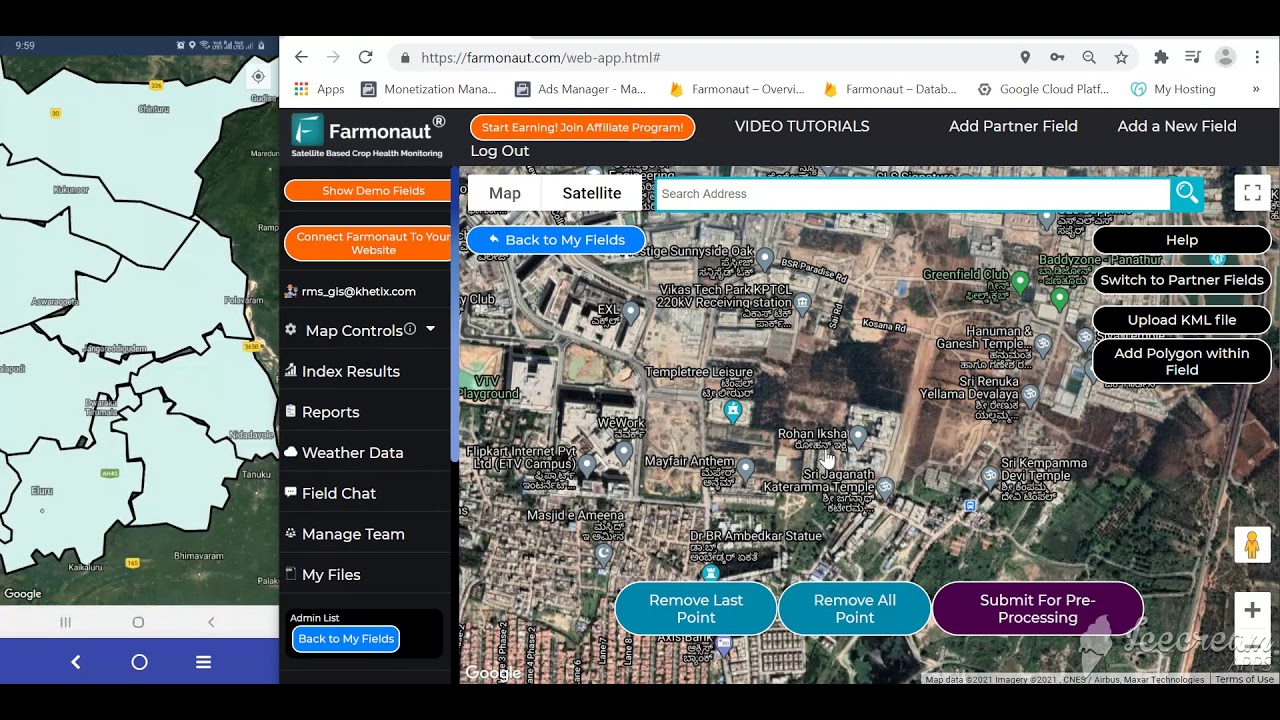
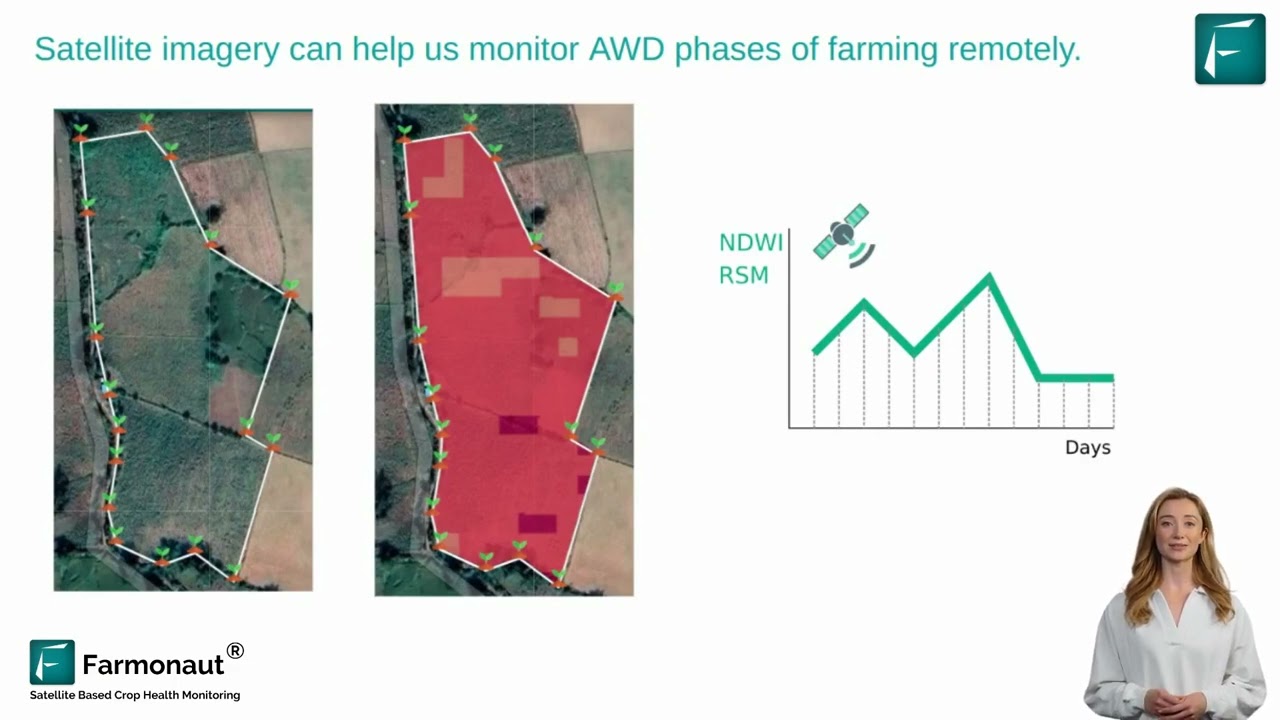
At farm scale, the same uniformity principle carries more weight because the acreage involved is so much larger. USDA NASS’s 2023 survey put total US agricultural irrigation water applied at 81 million acre-feet across 53.1 million acres (USDA NASS, 2023 Irrigation Survey) — a scale where even small percentage losses from uneven application compound into large absolute volumes. That’s the gap Farmonaut’s satellite monitoring is built to close at the field level: detecting uneven water distribution from imagery rather than a ground walk. See our large-scale farm management tools.
9. Sprinkler Zone Runtime Calculator
Use your zone’s nozzle precipitation rate and the EPA’s 1-inch-per-week guideline to work out how long to run each zone per week, split across cycle-and-soak sessions.
Run your own numbers
Assumes the 1-inch-per-week EPA WaterSense guideline as a starting point, not a universal rule — actual plant water needs vary by species, season, and local climate, and this tool excludes rainfall timing, wind drift, and slope runoff. Check your specific nozzle’s rated precipitation rate on its Rain Bird spec sheet rather than guessing.
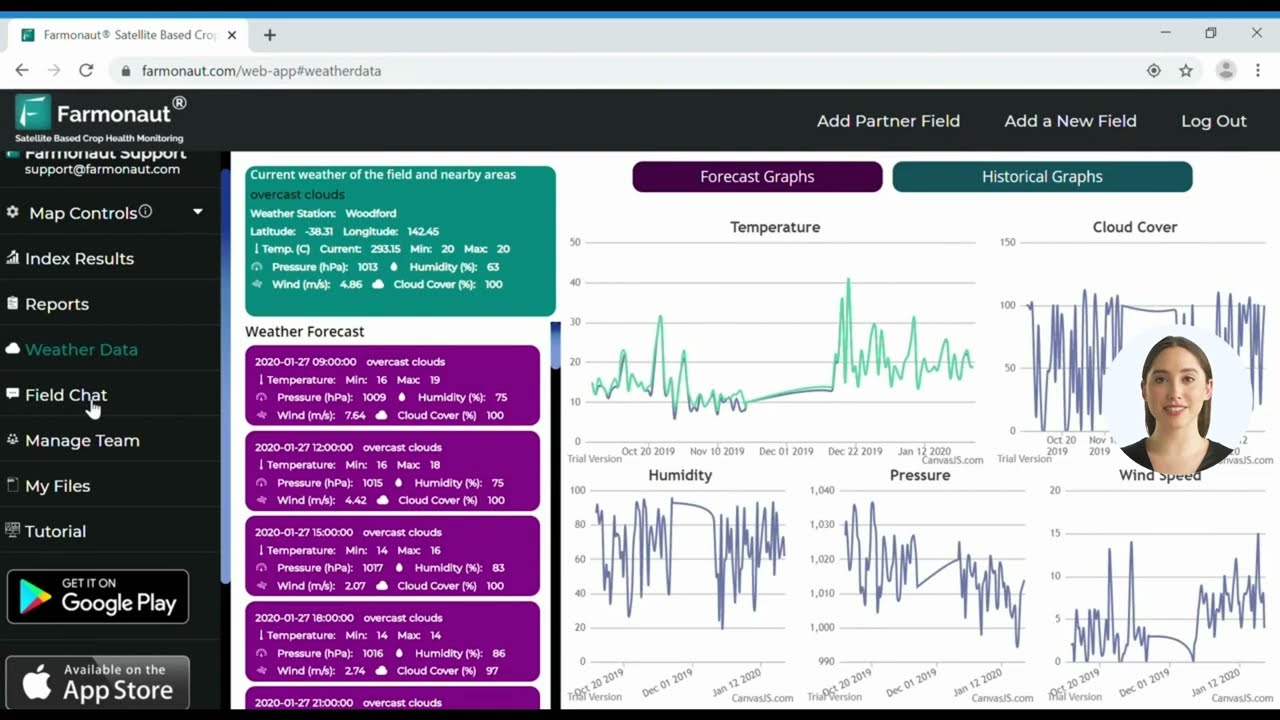
On larger properties or small farm borders, Farmonaut’s satellite field monitoring can flag uneven moisture zones so you know which heads to check first, instead of walking the whole system. Learn more about our large-scale farm management tools.
10. Field-Scale Monitoring for Larger Operations
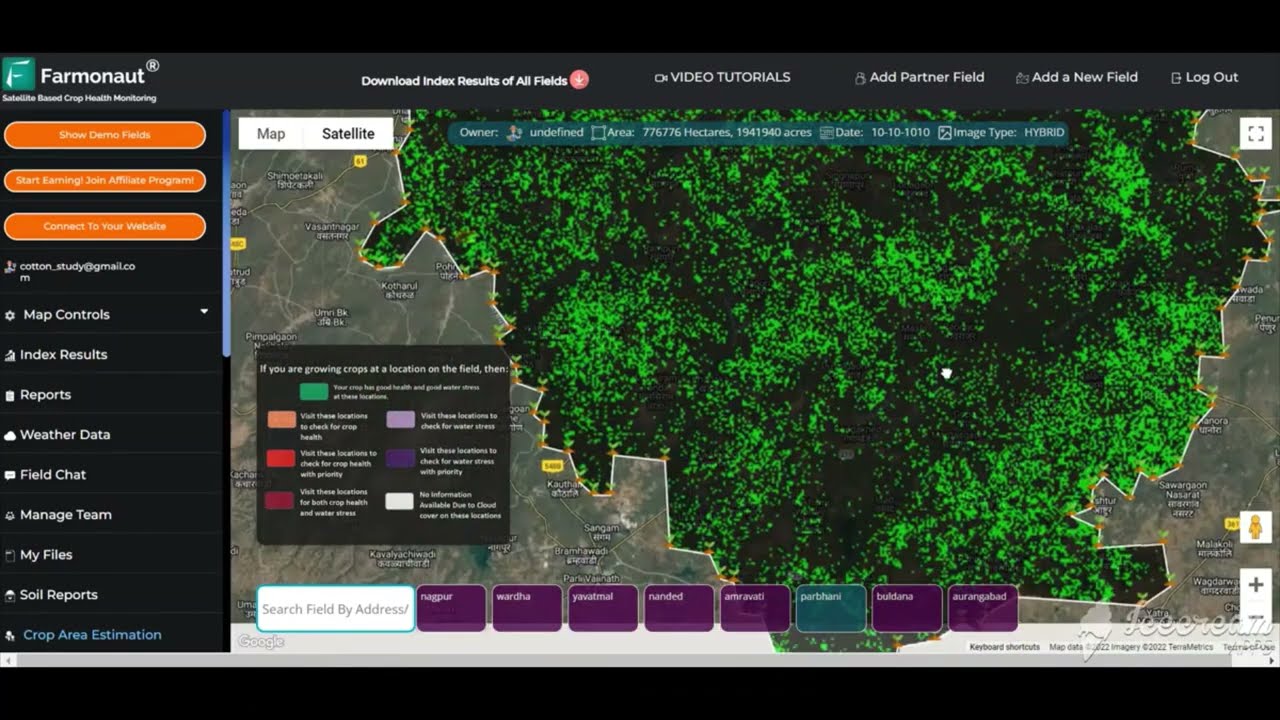
For a handful of residential heads, a visual walk-through after adjustment is enough. For nursery rows, orchard borders, or any operation running dozens of zones, catching an uneven zone by eye gets slower as the area grows. Farmonaut’s tools are built for that larger scale rather than the single-head adjustment itself:
- ▶ Real-time satellite imagery highlights zones showing moisture stress before it’s visible on the ground (carbon footprint audits included).
- ▶ Jeevn AI advisory flags conditions likely to affect irrigation timing (get crop plantation/forest advisory).
- ▶ Fleet management helps coordinate maintenance visits across multiple irrigated blocks.
- ▶ Traceability tools document water-management practices for buyers or auditors asking about input use.
- ▶ A developer API and documentation for teams integrating imagery into their own irrigation controllers.
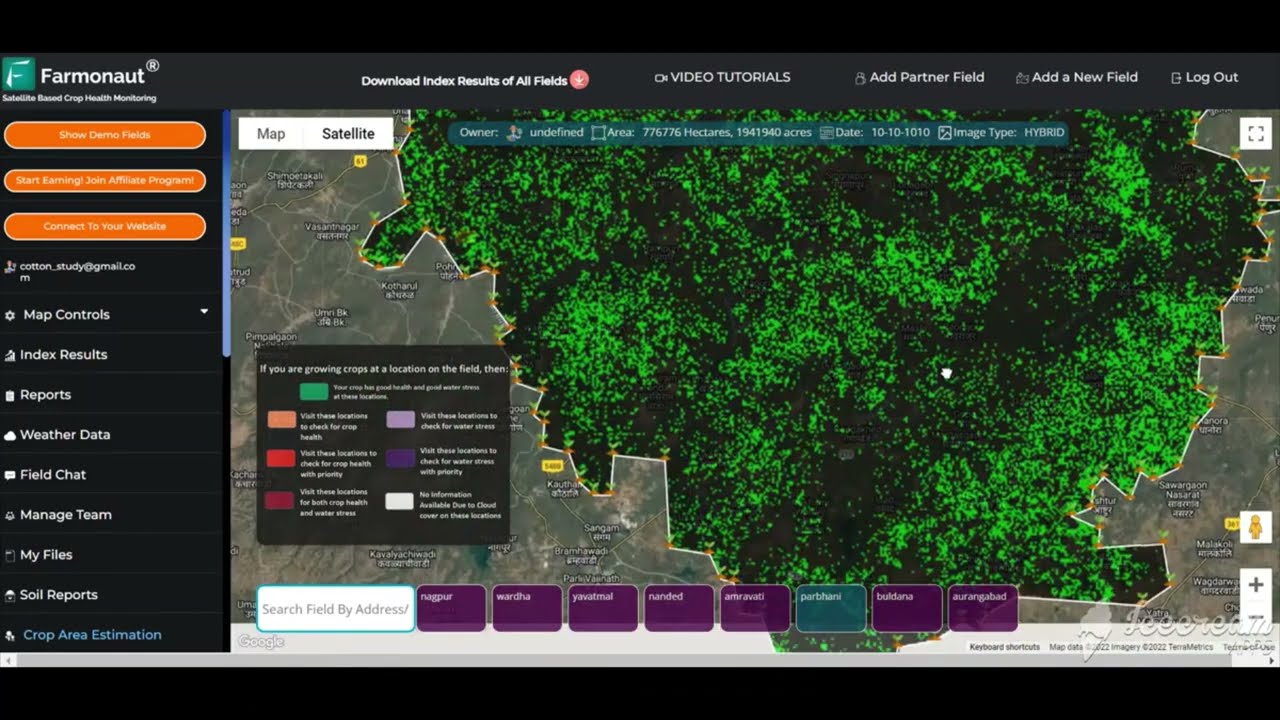
The same logic of even application versus wasted overlap that applies to a Rain Bird 1800 head scales up to mining site water management, where uneven distribution carries a much larger cost per acre.

11. Maintenance Schedule
Adjustment holds only as long as the head stays clean and mechanically sound. A practical schedule:
- ✔ Start of season: full clean, adjust, and test run of every head before regular scheduling begins.
- ✔ Monthly during the irrigation season: visual check for pop-up failure, visible debris, or pattern drift.
- ✔ After any mowing or landscaping work near heads: check for physical damage or height changes.
- ✔ End of season: flush lines and heads before winterizing in regions with freezing temperatures.
Signs a head needs attention before its next scheduled check: a disrupted or misted spray pattern, a head that doesn’t pop up or retract smoothly, visible dirt or mineral buildup around the nozzle, or a patch of lawn that stays dry or stays soggy regardless of how the rest of the zone looks.
Unlock advanced monitoring, carbon footprint calculations, and AI-based irrigation advisory for your entire operation.
12. Frequently Asked Questions
Q1: How do I adjust a Rain Bird 1800 sprinkler head’s spray radius?
Turn off the water, locate the radius screw at the top of the nozzle, and turn it clockwise to shorten the throw or counterclockwise to lengthen it. Most 1800 nozzles allow roughly a 25% reduction from their full rated radius — beyond that, swap to a smaller nozzle instead of over-turning the screw.
Q2: How do I adjust the arc on a Rain Bird 1800 head?
Use a flat-head screwdriver or the Rain Bird adjustment key in the arc slot at the top of the nozzle. Turn clockwise to widen the arc (up to a full 360°) and counterclockwise to narrow it. Adjustable-arc nozzles click through fixed increments; fixed-arc variants are set by rotating and locking the nozzle body instead.
Q3: What tools do I need to adjust Rain Bird 1800 sprinkler heads, including ones bought at Walmart?
A flat-head screwdriver handles radius and most arc adjustments. Some nozzle variants include or require a small proprietary Rain Bird key, typically packaged with replacement nozzles — check your specific nozzle’s packaging, since this varies by model whether purchased from Rain Bird directly, a hardware store, or Walmart.
Q4: Why is my Rain Bird 1800 head spraying unevenly after adjustment?
Check for debris in the nozzle first — a clog distorts the pattern independently of your radius or arc setting. If the head is clean, confirm it’s installed flush with the surrounding grade; a sunken or tilted head throws an asymmetric pattern no adjustment screw can correct.
Q5: How often should I check and readjust sprinkler heads?
At minimum, check at the start and end of the irrigation season. In dusty or debris-heavy environments, or on properties with frequent mowing near heads, a monthly visual check during the season catches problems before they show up as dry or soggy patches.
Q6: Can satellite or remote monitoring help with sprinkler adjustment on larger properties?
On a handful of residential heads, no — a visual walk-through is faster. On nursery rows, orchard borders, or multi-zone commercial landscapes, satellite imagery can flag which zones show moisture stress first, narrowing down which heads need a ground check instead of inspecting all of them equally.
- ✔ Clean the nozzle before adjusting anything — a clog masquerades as a bad adjustment.
- 🔧 Radius screw: clockwise shortens, counterclockwise lengthens, within about 25% of full range.
- ↪ Arc: clockwise widens, counterclockwise narrows; fixed-arc nozzles need physical rotation instead.
- 📏 Match nozzle precipitation rate to soil type — sand needs shorter/more frequent cycles, clay needs the same to avoid runoff.
- 🔄 Always run and observe after adjusting — don’t assume the setting took.




13. Conclusion
Adjusting a Rain Bird 1800 head correctly is a five-minute job once you know which screw controls radius, which controls arc, and how nozzle choice interacts with your soil. The payoff is measurable: EPA WaterSense puts national savings potential at 31 billion gallons a year if every residential system moved to efficient spray hardware, and adjustment captures part of that for free on equipment you already own (EPA WaterSense, Spray Sprinkler Bodies).
For a single yard, that’s the whole job. For nursery rows, orchard borders, or multi-zone landscape contracts, the same uniformity problem scales up — and that’s where Farmonaut’s tools pick up: large-scale farm management, traceability, and carbon footprinting that build on the same principle of catching uneven water application before it costs you.
Check USDA NASS’s irrigation survey page each October for an updated national picture (USDA NASS, 2023 Irrigation Survey), and EPA WaterSense’s site for any new product specifications, since both refresh on a regular cycle.

 eKGIS
eKGIS Mostas Tech
 AgroStar
 Native Seeds
 Andex
Andex FCF India
 Unifrutti Gulf
 Deluxe Conseil
 TVS Electronics
 BW Pipelines
 WICO
WICO Chimera Innovation
 SkyHarvest
 Polaris Digitech
 Teledarbas
