

Ag Land Rental Rates & Ag Georgia Interest Rates 2026: Trends, Outlook, and Strategies for Navigating Costs in the Southern U.S.
“In 2025, average Georgia ag land rental rates are projected to rise by 7% compared to previous years.”
Introduction: Understanding Ag Land Rental & Interest Rates in Georgia and the South
In the southern United States, particularly Georgia, agriculture serves as the cornerstone of rural economies and livelihoods. With row crops like cotton, peanuts, and soybeans guiding cash flow and farm profitability, understanding the trends shaping ag land rental rates and ag georgia interest rates is more critical than ever. As we approach 2026, both farmers and landowners must navigate complex dynamics involving input costs, land availability, commodity prices, and tightened lending conditions.
The current landscape reflects:
- Moderate increases in rental rates due to rising demand and limited supply.
- Elevated interest rates on agricultural loans, making capital access more expensive.
- Persistent operational costs from fertilizer, fuel, and labor, pressuring margins.
- New technology adoption reshaping land productivity and farm management.
Let’s explore 2025–2026 rental and interest trends, actionable strategies, and powerful geospatial tools for maximizing returns in the southern U.S. agricultural sector.
2025–2026 Agricultural Land Rental Rates: Key Trends & Regional Overview
The United States Department of Agriculture (USDA) and major financial institutions project that ag land rental rates in Georgia—and across much of the southern region—will continue to experience steady growth through 2026. These projections are based on the region’s growing demand for high-quality farmland, persistent commodity prices, and shifts in alternative land uses due to urban growth and conservation policies.
- ✔ Averaged cash rent for cropland in Georgia is forecasted at $90–$150 per acre annually in 2025, with rates exceeding $175 in highly productive or irrigated counties near urban expansion zones.
- 📊 Pasture rental rates remain lower, typically $30–$60/acre, yet are essential for integrated farm operations and livestock management.
- ⚠ Year-on-year increases of 5–8% are identified in regions experiencing high crop demand and limited land supply.
- Lease agreements are also changing, with more farmers seeking multi-year arrangements to ensure cost predictability amid volatile input prices and interest rate uncertainty.
Historical Context: Southern U.S. ag land rental rates historically trail the Corn Belt but are catching up due to urban sprawl and rising commodity values, leading to intensified competition for quality acreage.

Agricultural land rental rates are not just a number—they reflect a dynamic equilibrium among crop economics, land availability, input costs, policy, and the broader market environment.
Major Drivers of Ag Land Rental Rates in Southern Georgia
Let’s drill down into critical drivers shaping rental rates for agricultural land in Georgia and the southern United States:
- Commodity Markets:
Prices for cotton, peanuts, and soybeans have seen modest but stable growth since 2022, enhancing the willingness of farmers to enter into higher-value leases. Strong markets also support the confidence to pay upward-adjusted cash rents in productive cropland regions. - Input Costs and Profit Margins:
Fertilizers, fuel, and labor have rapidly increased operational costs. Although some landowners are pressured to reconsider terms, the adoption of precision ag and conservation practices has improved land productivity, justifying heightened or maintained rental rates despite margin pressure. - Land Availability and Demand:
Urban expansion and increasing non-agricultural land uses—such as solar development or conservation reserves—limit the supply of quality farmland, especially in counties adjacent to Atlanta, Macon, and Savannah. This limited availability continues to drive rental rates upward by intensifying competition and demand.

This backdrop sets the stage for our region-specific comparative data overview.
Comparative Trends Table: 2025–2026 Land Rental & Interest Rates Across Southern Georgia
Below is a comparative trends table providing detailed, region-wise projections for agricultural land rental rates and agricultural interest rates across key regions in Georgia:
| County/Region | 2025 Est. Rental Rate ($/acre) | 2026 Proj. Rental Rate ($/acre) | 2025 South GA Interest Rate (%) | 2026 Proj. Interest Rate (%) | % Change (2025–2026) |
|---|---|---|---|---|---|
| South Georgia | $130 | $139 | 6.4 | 6.9 | +7% |
| Central Georgia | $120 | $127 | 6.2 | 6.6 | +5.8% |
| Southwest Georgia | $145 | $155 | 6.5 | 7.1 | +6.9% |
| North Georgia (Piedmont) | $95 | $102 | 6.3 | 6.7 | +7.4% |
| East Georgia | $110 | $118 | 6.4 | 6.8 | +7.3% |
AgSouth & Ag Georgia Interest Rates: Market Dynamics & 2025–2026 Outlook
“AgSouth interest rates for Georgia farmers are expected to range between 6.2% and 7.1% by 2026.”
The cost of agricultural financing is a cornerstone of investment decisions and shapes the future viability of both small and large-scale farms. In 2025 and heading into 2026, the ag south interest rates—including those offered by AgSouth Farm Credit and other major agricultural lenders—are impacted by several macro- and microeconomic factors:
- ✔ Monetary Policy Tightening: Following persistent inflation, the Federal Reserve’s elevated benchmark rates have increased the baseline cost of capital for ag borrowers.
- 📊 Agribusiness Credit Risk: The cyclical and weather-dependent nature of agriculture results in lending rates that account for heightened risk, especially amid climate variability and global commodity market shifts.
- ⚠ Regional Lending Programs: The USDA and Georgia’s agricultural financial institutions continue to buffer some costs with subsidized programs, easing access for beginning and minority farmers—but banks generally keep rates in the 6–8% range for standard ag loans.
- Loan Structures: Short-term operating loans typically come with slightly lower rates but higher renewal frequency, while long-term real estate or equipment loans lock in rates for several years but are subject to upfront scrutiny and collateral requirements.
As these rates fluctuate with macroeconomic and sector-specific pressures, it’s more important than ever to consult with lenders about upcoming Federal Reserve policy changes and to review regional forecast bulletins on ag lending cost trends.

Factors That Influence Ag Georgia Interest Rates in 2026
- 🕵️♂️ Risk Appraisal: Weather volatility, market dynamics, and shifting supply chains are driving lenders to price risk more aggressively than in prior years.
- 💼 Market Liquidity: Regional banks and Farm Credit lenders may adjust minimum down payments or collateral requirements to reflect evolving risk appetites and cost of funds.
- 🌐 Program Diversification: Access to niche programs targeting crop loan and insurance (via Farmonaut’s satellite verification tools) can unlock lower interest brackets, particularly for first-generation or small-scale producers.

Farmers’ Strategies for Managing Rising Costs in the South
With both rental and interest rates heading upward, proactive management is indispensable for maintaining profitability. Below are strategic recommendations for Georgia’s ag producers and landowners in 2026, harnessing a mix of traditional best practices and technology-driven solutions:
Visual List – Five Key Strategies
- 🚜 Adopt Precision Ag Tools: Leverage real-time monitoring, AI advisory, and remote sensing to maximize crop yields and minimize waste (explore Farmonaut Large Scale Farm Management)
- 🤝 Negotiate Multi-Year Leases: Secure cost stability and minimize rent volatility by locking in multi-season agreements.
- 🏦 Access Subsidized Lending: Participate in USDA and state-funded programs for lower rates and reduced upfront costs; utilize Farmonaut’s crop loan and insurance verification for faster approvals.
- 🌱 Prioritize Soil Health: Invest in carbon footprinting and regenerative ag practices to improve long-term soil quality, reduce input needs, and maintain land value.
- 📉 Optimize Resource Use: Deploy satellite-based irrigation, pest, and nutrient monitoring with Farmonaut for operational gains.
- 🔍 Monitor ag land rental rates in real time using publicly available market data and digital dashboards.
- 💡 Consider diversification into specialty crops or alternative uses for under-utilized land parcels.
- 🔗 Implement blockchain-based traceability (Learn how with Farmonaut) to increase crop value and market trust.
- 📝 Document input costs and update budgets monthly to anticipate impacts from fertilizer or labor price shocks.
- 📈 Engage with local lenders and Farm Credit associations in the off-season to evaluate new programs or refinancing options.

The Interplay: Rental & Interest Rates on Farm Decisions
Ag land rental rates and ag georgia interest rates interact in complex ways:
- 🌾 Rising interest rates can constrain cash flow, making it more challenging for farmers to afford higher cash rents or expand acreage.
- 🌱 However, strong rental markets signal regional optimism about future crop returns, attracting outside capital and retaining lease demand.
- 📋 Operators must balance debt servicing and rent costs with ongoing investment in farm improvements, often by renegotiating lease terms or leveraging new lending options.
Real-World Example: Negotiating a Lease Renewal
- 🔑 A typical lease agreement in Southwest Georgia in 2026 may now contain cost-of-living adjustments or preset step-ups tied directly to commodity indexes.
- 💬 Smart tenants will cite current USDA regional trend data as leverage in these discussions, seeking win-win terms that {solidify stability for owners while keeping operators profitable}.
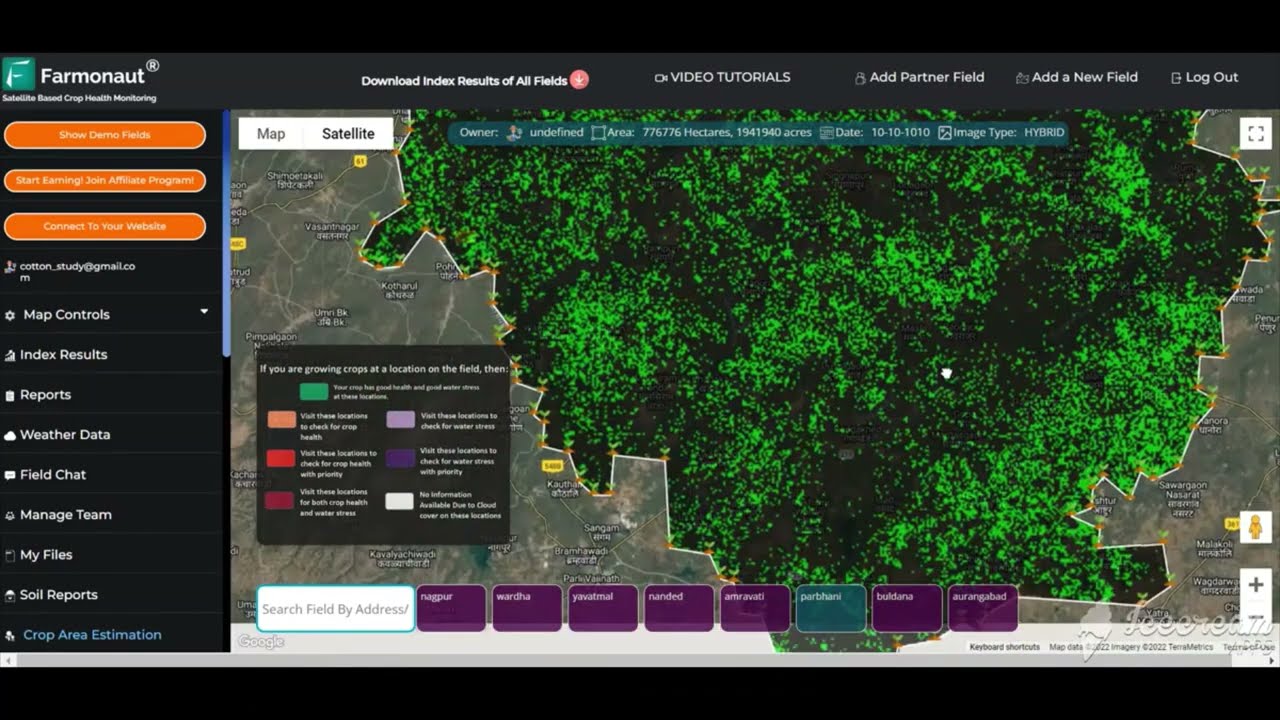
Farmonaut’s Data-Driven Solutions for the Southern U.S.
At Farmonaut, our satellite-based platform equips farmers, landowners, and financial institutions in Georgia and the entire southern U.S. to navigate the challenges of rising rental and interest rates. Our technologies unlock new insights, increase productivity, and reduce overall sector costs through:
Visual List – Farmonaut Platform Benefits
- 🛰️ Satellite Monitoring & Precision Insights: Monitor fields for vegetation health, irrigation needs, and input optimization in real time through our large-scale field management tools.
- 🤖 AI-Driven Advisory Systems: Receive customized recommendations (weather, crop cycles, input adjustments) to maximize farm profitability and minimize losses. Explore our Jeevn AI Advisory System.
- 🔗 Blockchain Traceability: Enhance trust and transparency in your supply chain with traceability solutions for Georgia-grown crops.
- 🚚 Fleet & Resource Optimization: Manage farm machinery, service schedules, and operational efficiency at scale with our fleet management platform.
- 🌎 Environmental & Carbon Impact Tracking: Fulfill sustainability mandates and access market premiums by using carbon footprinting data.
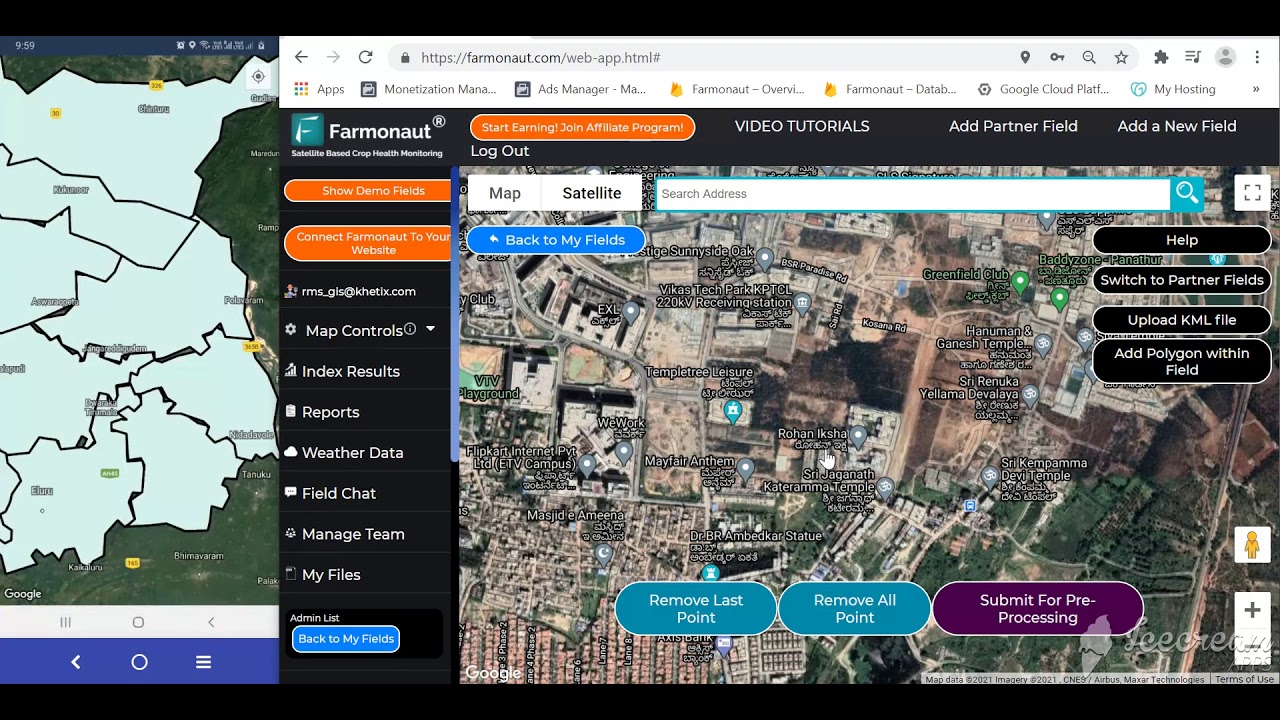
For hands-on access, use our mobile or browser apps for field monitoring, or connect to the Farmonaut API for integrating satellite intelligence into your own farm, finance, or agri-business platforms.




Flexible Farmonaut Subscription Plans for Every Operation
Whether you’re a producer managing hundreds of acres, a landowner seeking transparency in ^rental^ agreements, or a financial services provider evaluating loan risk, Farmonaut offers modular, affordable subscription packages, accessible via web, iOS, and Android. Integrate leading satellite and AI-driven insights into your workflow:
Resource List & Key Tools for Georgia’s Farming Community (2026)
- 🔗 Carbon Footprinting – Measure and improve your farm’s environmental performance for premium markets and regulatory mandates.
- 🔗 Product Traceability – Blockchain-enabled farm-to-market transparency increases product value.
- 🔗 Crop Loan & Insurance Verification – Streamline application processes using satellite-based data, speeding up approval and reducing fraud.
- 🔗 Fleet Management Tools – Optimize machinery use, reduce operational costs, and increase asset lifespan.
- 🔗 Farmonaut Satellite API – Real-time, scalable satellite data for developers, ag services, or large farm operations.
FAQs: Ag Land Rentals and Interest Rates in Georgia (2026)
Q1. What are the projected average ag land rental rates in Georgia for 2026?
For 2026, Georgia’s cropland rental rates are projected between $102–$155 per acre, depending on location, irrigation access, and proximity to urban centers, with the steepest rates in Southwest and South Georgia.
Q2. What are the typical ag south interest rates for farm loans in the region?
AgSouth and similar lenders are expected to offer farm operating and equipment loans at annualized rates from 6.2% to 7.1% in 2026, subject to credit risk, farm size, and collateral value.
Q3. How do rental rate trends compare to previous years?
Rental rates continue a moderate upward trajectory—approximate increases of 5–8% annually—due to higher demand, urban encroachment, and improving commodity market stability.
Q4. What can farmers do to manage rising costs in 2025 and 2026?
- Negotiate multi-year lease agreements.
- Utilize precision ag and data analytics (available on Farmonaut’s platform).
- Leverage accessible loan and insurance programs with satellite-based verification for faster approvals and potentially lower rates.
Q5. Are there tools to monitor fields and track agreements for risk management?
Yes. Farmonaut’s web, iOS, and Android apps—plus API connectivity—provide satellite imagery, field health analytics, and resource management to support both farm operators and landowners. This approach streamlines rental agreement negotiations, optimizes operational decisions, and supports compliance with sustainability mandates.
The outlook for agricultural land rental rates and interest rates in Georgia and the southern United States for 2025–2026 reflects a landscape of moderate financial tightening, sustained demand for productive farmland, and the growing importance of strategic digital tools. Farmers, landowners, and lenders benefit by embracing precision agriculture and real-time analytics—optimizing costs, improving negotiations, and securing resilient, profitable operations.
Farmonaut’s mission remains to empower the southern ag sector with data-driven satellite and AI solutions, paving the way for both economic stability and sustainable growth amid changing market conditions.

 ASQI
ASQI Teledarbas
 Wild Oak Farm
 SFX
SFX BACF Africa
 Doodlakine
 Exurbia Geospatial
 FieldZero
 Indico Company
 Kubota
 FFBS
FFBS Jontra
 Tucor
Tucor
