

Agriculture Innovation Trends 2025: Top US, Urban, Food Advances
- Introduction: Why 2025 Is the Pivot Point for Agriculture Innovation
- Key Trivia: US Crop Yields & Urban Agriculture 2025
- Comparative Trends Overview Table
- Key Agriculture Innovation Trends 2025
- Precision Agronomy & Autonomous Systems
- Regenerative Agriculture & Climate-Smart Practices
- Water Stewardship & Irrigation Optimization
- Genomics, Breeding, Crop Resilience
- Biotechnology-Enabled Inputs & Stewardship
- Digital Twins & Decision-Support Platforms
- Urban & Peri-Urban Agriculture Expansion
- Forestry & Agroforestry Innovations
- Circularity & Value Chain Resilience
- Infrastructure & Energy Efficiency
- Opportunities by Sector
- How Farmonaut Empowers Data-Driven Agriculture Innovation
- Key Callouts & Tips
- Implementation: Building Resilient, Sustainable Systems
- FAQ: Agriculture Innovation Trends 2025
- Conclusion: The Future Landscape of Innovation in Agriculture
Introduction: Why 2025 Is the Pivot Point for Agriculture Innovation
With 2025 on the horizon, agriculture stands at a critical juncture defined by technology-driven transformation, sustainability demands, and a need for resilient food and resource systems across the US, urban centers, and food-focused agriculture. Agriculture innovation trends 2025 signal a tectonic shift—precision farming, regenerative agriculture innovations 2025, smart water management, digital tools, and ecosystem stewardship—all converging to shape the next era of productivity and environmental responsibility.
In this comprehensive blog, we explore the top agriculture innovation trends for 2025, spotlighting their impacts across farming, forestry, and food systems, with special attention to the US landscape and the rapidly expanding field of urban agriculture trends 2025. We’ll also show how digital, data-driven solutions like those from Farmonaut are empowering every stakeholder in the supply chain, from soil to shelf.
“By 2025, precision farming is projected to increase US crop yields by up to 15% through data-driven decisions.”
- ✔ Precision agronomy boosts yields and reduces input waste
- 🌱 Regenerative agriculture innovations 2025 restore soil health and sequester carbon
- 💧 Smart irrigation systems improve water stewardship in drought-prone regions
- 🤖 Autonomous sensors and AI drive efficiency, cut labor costs, and enable real-time field monitoring
- 🏙️ Urban agriculture trends 2025 scale local food production and reduce supply chain emissions



Comparative Trends Overview Table: Agriculture Innovation Trends 2025
These trends highlight a comprehensive view of agriculture innovation trends 2025, balancing technology, efficiency, and sustainability across rural fields and emerging urban landscapes.
“Urban agriculture innovations could supply 20% of fresh produce needs in major US cities by 2025.”
- 📊 60% of US row crop producers expect increased adoption of AI-based farm management systems by 2026
- 🔁 Value chain resilience through localized processing reduces food waste and supports community jobs
- 🌎 Agroforestry on timber-adjacent lands fosters biodiversity, carbon sequestration, and income diversification
- 🚱 Precision fertigation slashes unnecessary water and nutrient losses, benefiting both specialty and row crops

Key Agriculture Innovation Trends 2025
Let’s dive deeper into the agriculture innovation trends 2025 set to shape US farming, urban food production, and related resource sectors in 2026 and beyond.
Precision Agronomy & Autonomous Systems
The shift toward precision farming—using a blend of sensor networks, drone and ground-based imaging, and AI analytics—stands at the core of food agriculture innovation trends 2025. Farmers increasingly deploy real-time monitoring tools to optimize every field’s inputs—water, fertilizers, pesticides—at a granular level.
Autonomous tractors, sprayers, and harvesters further reduce labor costs, environmental footprints, and yield fluctuations. These systems not only improve resource use efficiency, but enable rapid response to real-time changes in soil conditions, crop needs, or weather events.

Regenerative Agriculture & Climate-Smart Practices
Soil health is the foundation of long-term, resilient productivity in both US and global agriculture innovation trends 2025. Regenerative agriculture innovations 2025 revolve around:
- No-till or reduced-till farming to minimize erosion
- Cover cropping and diversified crop rotations for soil structure and biodiversity
- Agroforestry and integration of deep-rooted species for carbon sequestration and water infiltration improvement
- Targeted, smart nutrient management to cut excess inputs and maintain health
These regenerative practices are increasingly paired with digital monitoring technologies—such as those offered by Farmonaut—that track soil health, moisture, and input efficiency, enabling adaptive management even under variable weather conditions.

Water Stewardship & Smart Irrigation Optimization
Water scarcity and shifting climate patterns are key drivers for smart irrigation technologies—a pillar of food agriculture innovation trends 2025. Soil-moisture sensors, weather-driven ET estimates, and dynamic irrigation scheduling allow for just-in-time water application, minimizing loss and maximizing efficiency.
Systems like drip irrigation, reclaimed and treated water usage, and precision fertigation are crucial in:
- Water-constrained regions of California, Texas, and beyond
- High-value specialty crops, orchards, and nurseries

Genomics, Breeding, and Crop Resilience for Extreme Weather
AI-accelerated breeding and genomics are fast-tracking the development of weather-resilient, locally adapted crops—a dominant trend in US agriculture trends 2025. By analyzing “genotype x environment” interactions, breeders are designing seeds for:
- Drought and heat-tolerance to protect yields under climate extremes
- Disease resistance in both row and specialty crops
- Rapid recovery from storms, floods, or other extreme weather events
These breakthroughs multiply in value when paired with digital twins and cloud platforms that track growing conditions, market factors, and supply risks for more informed decision-making.

Biotechnology-Enabled Inputs & Regulatory Stewardship
Biostimulants, microbial inoculants, and reduced-risk pesticides are reshaping input management for both mass-market row crop farmers and high-value specialty producers. Regulatory-compliant, targeted products—monitored and guided by carbon footprint tracking platforms—offer:
- Lower chemical loads
- Maintained/increased yields
- Extra safety for fruit and vegetable crops
Blockchain-based traceability (see Farmonaut Traceability) is also making it possible to clearly attribute product quality to sustainable and safe input use.
Digital Twins & Lattice Decision-Support Platforms
Farm management is now orchestrated on cloud-based, interoperable digital twins—virtual, data-rich representations of farm fields and resource landscapes. These platforms integrate soil, weather, crop, and economic data to:
- Guide planting and harvesting schedules
- Optimize input timing for maximum yield benefit
- Project and manage supply chain risks from weather, markets, or infrastructure failures
Enhanced data interoperability supports collaborative, transparent decision-making across farms, food processors, retailers, and finance providers.

Urban & Peri-Urban Agriculture Trends 2025
As urban agriculture trends 2025 take center stage, high-tech food production is rapidly emerging within city limits. Vertical farms, rooftop greenhouses, and modular, climate-controlled grow units are:
- Cutting “food miles” and slashing supply chain emissions
- Meeting direct-to-consumer and local grocer demand
- Creating new employment and educational opportunities in cities
- Utilizing LED lighting, hydroponics, aquaponic systems, and advanced climate control software
This trend is critical for food security as urbanization—and climate risk—continue to grow.
Forestry & Agroforestry Innovations
Forestry-adjacent agriculture innovation trends 2025 include the integration of tree crops with annual crops and livestock (agrosilvopasture)—boosting biodiversity, soil organic matter, and economic stability. Remote sensing, drone-based health monitoring, and selective smart thinning augment timber and ecosystem productivity.
Tools for forest carbon tracking and carbon footprint management further incentivize sustainable timber, food, and pasture enterprises.

Circularity & Value Chain Resilience
Resource circularity and value chain innovation are essential components of agriculture innovation trends 2025. On-farm composting, nutrient recycling, and agro-waste processing create:
- New revenue streams from waste-to-value systems
- Reduced disposal costs and greenhouse gas emissions
- Localized supply chains with lower spoilage and risk
- Enhanced biodiversity and soil health through residue reintegration
These practices support resilience and economic value—even as markets and weather become more unpredictable.
Infrastructure & Energy Efficiency Solutions
Energy resilience and infrastructure innovation are increasingly critical as climate risk mounts. Solar-powered irrigation, off-grid microgrids, battery storage, and energy-efficient supply chain infrastructure (cold chains, modular storage) are gaining traction across rural and peri-urban landscapes.
- Access to reliable power and connectivity provides “insurance” against outages and extreme events
- Off-grid energy systems unlock production on remote or previously marginal land
Opportunities Across Sectors: Maximizing Yield, Health, and Supply Chain Value
Each farming and forestry segment is embracing innovation trends for 2025:
- 🌽 Row Crops & Specialty Crops: Emphasize precision irrigation, nutrient management, soil monitoring, and digital yield forecasts.
- 🐄 Livestock & Pasture: Use pasture health data, rotational grazing analytics, and methane monitoring platforms to increase efficiency and reduce environmental impact.
- 🍇 Orchard & Vineyard: Deploy sensor networks for targeted spray regimes, canopy health monitoring, and fruit maturity detection.
- 🌲 Forestry-Related Landscapes: Integrate remote drone sensing, smart thinning, data-driven selective harvesting, and digital forest management apps.
- 🏢 Urban Agriculture Ecosystems: Build modular, climate-controlled facilities with water recapture and nutrient recycling for efficient, year-round urban food supply.
How Farmonaut Empowers Data-Driven Agriculture Innovation
As satellite technology leaders, we at Farmonaut provide advanced, affordable satellite-driven insights—empowering innovators across US farming, forestry, food chains, and urban production:
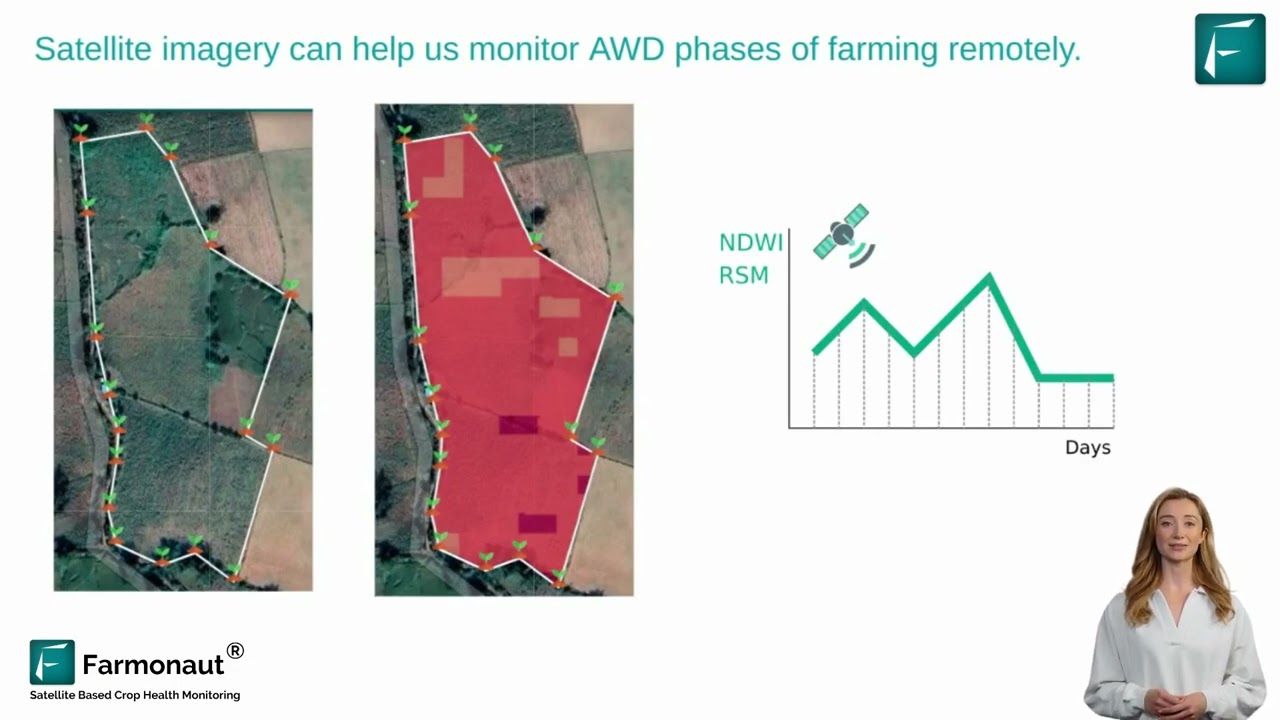
- 🛰️ Satellite-Based Monitoring: Real-time data on vegetation health (NDVI), soil status, and field anomalies supports smarter input and resource management.
- 🌱 AI Advisory (Jeevn): Our Jeevn AI analyzes weather, soil, and crop data to deliver actionable advice on planting, input scheduling, and risk response.
- 🔗 Blockchain Traceability: Ensure product origin, compliance, and integrity (Traceability Solutions).
- 🌏 Environmental Impact Monitoring: Our tools help you track and reduce your carbon footprint (Carbon Footprinting).
- 🚜 Fleet & Resource Optimization: Our Fleet Management Platform improves equipment utilization and boosts operational efficiency.
For comprehensive remote monitoring and advisory, our web and mobile apps offer seamless management—whether you manage a single urban vertical farm, a Midwest row crop operation, or timber estates adjoining regenerative lands.
Key Callouts & Tips for Maximizing 2025’s Agricultural Innovations
- ✔ Integrate satellite and IoT sensor data for continuous, high-resolution field monitoring
- ⚡ Favor open, interoperable platforms to future-proof your farm management stack
- 🔥 Prioritize labor & extension training—human skills are key for adoption and risk management
- 💼 Document environmental and supply chain data for compliance and premium market access
- 🛡️ Invest in data security and privacy to protect stakeholder trust and regulatory compliance
Implementation: Building Resilient, Sustainable Systems for the Future
Invest in Scalable Data Infrastructure
- Leverage interoperable platforms that integrate data from satellites, sensors, farm machinery, and cloud analytics.
- Use standardized metrics for soil health, yield, and supply chain risks.
- Ensure robust cybersecurity for all digital farm data and infrastructure.
Foster Collaboration and Knowledge Exchange
- Facilitate multi-stakeholder collaboration (farmers, researchers, suppliers, retailers) to accelerate technology transfer and adoption.
- Participate in pilot projects, training sessions, and online platforms like the Farmonaut App.
Upskill Labor and Extension Professionals
- Empower your workforce to operate and interpret precision equipment, remote sensors, and digital twins.
- Invest in ongoing training for adoption of regenerative management, carbon accounting, and digital compliance.
Embrace Policy, Economic and Market Incentives
- Apply for carbon credits, water trading markets, and insurance products enabled by digital verification and resource monitoring (see crop loan and insurance support at Farmonaut).
- Seek out value-added markets (traceable, regenerative, low-carbon food and timber products) using digital supply chain authenticity.
- 🗺️ Map fields, forests, water assets with up-to-date satellite imaging
- ⚙️ Deploy field sensors and smart devices for actionable, continuous data flows
- 🔒 Prioritize data privacy & compliance when digitizing farm operations
- 📁 Document process improvements for certifications, grants, and premium buyers
- 📈 Iterate on digital and regenerative strategies for ongoing resilience and yield gains
FAQ: Agriculture Innovation Trends 2025
Key trends include precision agronomy, regenerative agriculture innovations, AI-driven breeding, smart irrigation, digital twins, value chain traceability, and modular urban food production systems. Each trend boosts sustainability, productivity, and resilience in different ways.
Urban agriculture trends 2025 forecast up to 20% of fresh produce for US cities coming from vertical farms, greenhouses, and rooftop systems—driven by technology, consumer demand, and supply chain risk reduction.
Because soil health underpins productivity, water management, and carbon sequestration—critical for resilience as climate extremes grow. Regenerative agriculture innovations 2025 support both economic and environmental goals in US and global farming.
Digital twins centralize your agronomy/forestry data, support yield and risk optimization, and guide input decisions. Blockchain ensures transparency and trust in your supply chains—essential for access to premium markets and regulatory compliance.
We at Farmonaut provide affordable, satellite-based monitoring, AI insights, resource optimization, and blockchain tools through our web, Android, and iOS app platforms and APIs—making next-generation innovation and compliance accessible to all users, businesses, and governments worldwide.
Conclusion: The Future Landscape of Agriculture Innovation
The agriculture innovation trends 2025 landscape is defined by the fusion of high-tech and soil-centered stewardship—a blend that optimizes productivity, reduces resource loss, ensures supply chain authenticity, and builds ecosystem resilience for US, urban, and food-oriented agriculture in 2026 and beyond.
Key to success is a willingness to integrate regenerative practices with digital, data-driven decision-making, building scalable, modular systems suited to extreme weather, shifting markets, and evolving policy.
By leveraging platforms like Farmonaut—with satellite-driven insights, AI-based advisory, blockchain traceability, and integrated resource management tools—farmers, managers, and businesses can confidently build sustainable, resilient, and profitable operations in the new decade.
Explore the full potential of agriculture innovation trends 2025: adopt the tools, strategies, and data-first mindset that will shape a thriving food and resource economy for years to come.

 Godrej Agrovet
 Hayleys Agriculture
 Linx Agritech
 Adinet
 Save Your Soils
 GalaxEye Space
 Grandstream Algérie
 XOS Realty
 Geospatial Lab Africa
 Agro La Gándara
 HIPSAC
 ZOL Zimbabwe
 Juligerm
 AdBio
AdBio MISE Maroc
 NWNS
NWNS Red August Group
 Farm Inc
 WeMe Global
 Agrotoken
 Blue BearX
 Insignito
 DnCubed
 Indosistim Teknologi
 Liquify Digital
 CU Foods
 BeyondTech Global
 Rouge VC
 AgroRisk
 Oath Inc
 Esri North East Africa
 MDCV UK
 Etech Consulting Madagascar
 Vestlandsforsking
 WB Dev
 Sama Premium
 Tres Valles
 Blickwinkel
 Agricultural Credit Policy Council
 eKGIS
eKGIS Mostas Tech
 Andex
Andex Deluxe Conseil
 WICO
WICO Chimera Innovation
 SkyHarvest
 Teledarbas
 Exurbia Geospatial
 FieldZero
