

Table of Contents
- Introduction: American Farming Release – Peering into the Dynamic Intersection of Soil, Water, and Genetics
- Soil Health Trivia
- Why Soil Health Is Central in the American Farming New Update
- 7 Ways to Boost Soil Health for Modern American Farmers
- Comparative Benefits Table of Soil Health Practices
- Water Management: The Parallel Priority for American Agriculture
- Crop Genetics & Integrated Pest Management: The Modern Breeding Update
- Farmonaut: Satellite-Driven Insights for Resilient Soil Systems
- Market Access, American Farmers Market, & Economic Resilience
- Extension, Labor, & Education: Building Capacity for Generational Change
- Forest Systems & Agroforestry: Diversifying Income & Stabilizing Ecosystems
- Policy & Ecosystem Support: Incentives, Programs and Producer Advocacy
- Frequently Asked Questions – Soil Health, American Farming, and Sustainable Update
- Farmonaut Subscription Details
American Farming Release: 7 Ways to Boost Soil Health
American farming stands at an important crossroads—a living example of tradition fused with innovation, where historic stewardship meets rapid technology. As our american farming update unfolds, sustainability, resilience, and balanced ecosystem management define the core trajectory shaping not only landscapes, but the socioeconomic health of rural communities. Soil, water, and genetics don’t operate in silos. Their integration proves most insightful when we view farming through a systemic lens, tracing outputs back to processes, practices, and the decisions that enable viable farms across generations.
In this american farming new update, we explore how soil health is central to modern U.S. agriculture. From boosting organic matter and managing water efficiently, to harnessing the latest in crop genetics and resilient ecosystem management, American farms are thriving by blending foundational wisdom with cutting-edge practices. Along the way, sustainable adaptation to climate variability, technology-driven management, and new economic pathways—like local American farmers market models—help sustain yields and land stewardship alike.
Whether you’re an agronomist, grower, advisor, or simply passionate about soil’s future, discover actionable strategies with this holistic exploration of the american farming release. Let’s dive into the seven essential ways to boost soil health for productive, resilient, and sustainable agricultural systems across the United States.
Soil Health Trivia
Why Soil Health Is Central in the American Farming New Update
The current trajectory of American agriculture is defined by soil’s fundamental role at the intersection of productivity and environmental stewardship. Soil’s organic matter, microbial life, and structural health are not only the foundation of crop yield and stability, but also vital for climate resilience, water management, and economic security. Practices that boost soil health—such as cover cropping, reduced tillage, organic matter additions, and integrated rotations—not only increase on-farm resilience but also enhance nutrient cycling, carbon sequestration, and water retention.
In our dynamic, evolving systems, improving soil health:
- ✔ Reduces risk of drought and extreme weather impacts
- ✔ Decreases dependency on external fertilizers and agrochemicals
- ✔ Enhances economic resilience by supporting market access and premium product claims
- ✔ Boosts on-farm biodiversity and ecosystem service provision
- ✔ Improves water infiltration and retention for robust root zones

These benefits demonstrate why soil health is central in the american farming update. When soil-caring practices are paired with smart water management and genetics, we create a foundation for farms that can sustain not only yields but agricultural livelihoods and environmental integrity for future generations.
Key Insight
Soil health improvements shouldn’t be viewed as isolated interventions.
They work best in synergy—through systemic, integrated approaches that consider water, genetics, labor, and market access together.
7 Ways to Boost Soil Health for Modern American Farmers
The american farming new update brings a toolkit of practical strategies that farmers can adopt to improve soil, water, and ecosystem function. These practices, often supported by extension programs and conservation initiatives, are not only science-driven but proven to work on the ground—creating both economic and environmental benefits.
Here are the seven most impactful soil health solutions, with research-backed explanations and steps for implementation:

-
Cover Cropping
Adding off-season plant cover (such as legumes, clover, rye, or vetch), protects soil from erosion, enhances organic matter, and feeds soil microbial networks.- 📊 Data insight: Cover crops can reduce soil erosion by 40–70% and increase soil organic matter by up to 1% per year.
- 🌱 Key benefit: Provides living roots year-round, boosting carbon sequestration and nutrient cycling.
- 💡 Pro Tip: Select region-adapted species mixes to maximize erosion control and soil fertility!
-
Reduced and Optimized Tillage
Minimizing soil disturbance helps maintain aggregate structure, preserves beneficial microbial systems, and decreases organic matter loss.- ✔ Main advantage: Reduced tillage improves water infiltration and resilience to drought.
- ⚠ Risk or limitation: Transitioning requires equipment adjustments and mindful weed management.
-
Crop Rotation & Diversification
Alternating crops (corn–soy–wheat rotations, or adding cover and specialty crops) enhances nutrient cycling, breaks pest and disease cycles, and builds soil health.- ✔ Key benefit: Reduces pest pressure and improves nutrient efficiency—resulting in yield stability over time.
- 📊 Data insight: Integrating crop rotation can increase soil organic matter by up to 20% in modern American farming systems.
-
Organic Matter Boost & Composting
Adding compost, manures, and crop residues supplies food for beneficial microbes, enhances water retention, and stabilizes soil structure.- ✔ Key benefit: Increases soil fertility and resilience to weather variability.
- 🌱 Pro Tip: Target applications to fields with depleted organic matter for the most rapid gains.
-
Integrating Livestock & Managed Grazing
Carefully planned grazing returns nutrients to the soil, stimulates plant regrowth, and boosts microbial diversity.- ✔ Key benefit: Improved nutrient cycling and reduced need for synthetic fertilizers.
- ⚠ Common mistake: Overgrazing can damage root systems and reduce plant cover—rotate pastures and watch stocking rates.
-
Precision Application & Data-Driven Management
Leveraging technologies—like soil sensors, satellite imagery, and variable-rate equipment—enables precise input application, reducing waste and optimizing yield while minimizing environmental impact.- 📊 Data insight: Farms adopting precision agriculture can cut fertilizer and chemical use by 15–25% while maintaining or increasing crop yields.
- ⚠ Investor Note: Upfront cost is offset by long-term soil health gains and reduced input expenses.
-
Agroforestry and Habitat Conservation Practices
Integrating trees, hedgerows, or windbreaks buffers fields, provides wildlife habitat, and improves microclimate and soil stability.- ✔ Key benefit: Reduces wind and water erosion while diversifying farm income.
- 🌱 Pro Tip: Select native species for greater resilience and ecosystem function!
🌎 Visual Summary: 7 Ways to Boost Soil Health
Comparative Benefits Table of Soil Health Practices
| Practice | Estimated Improvement in Soil Organic Matter (%) | Water Retention Increase (estimated %) | Potential Yield Impact (estimated % change) | Impact on Biodiversity | Greenhouse Gas Reduction Potential (%) |
|---|---|---|---|---|---|
| Cover Cropping | +0.5–1.5%/year | +15–30% | +5–10% | High | 10–20% |
| Reduced Tillage | +0.3–0.8%/year | +10–18% | +3–8% | Medium | 8–15% |
| Crop Rotation | +0.5–2.0% over cycles | +8–16% | +6–11% | High | 10–18% |
| Composting/Organic Inputs | +0.5–1.2%/year | +12–20% | +5–12% | Medium | 12–18% |
| Managed Livestock Grazing | +0.3–0.6%/year | +7–12% | +4–9% | Medium | 8–14% |
| Precision Applications | Indirect (via reduced input losses) | Up to +10% | +2–7% | Low/Medium | 10–18% |
| Agroforestry/Habitat Conservation | +1–3% (over years) | +15–25% | Varies | High | 15–25% |



Investor Note
Investing in digital and regenerative practices isn’t just about sustainability—it’s about future-proofing yields and land value against climate and market volatility in the evolving American farm economy.
Water Management: The Parallel Priority for American Agriculture
While soil stewardship is foundational, water management runs in parallel as a top priority in American agriculture. Many regions of the U.S.—from California’s Central Valley to the Great Plains—face shifting precipitation patterns, recurring drought, and increasing regulatory scrutiny regarding water use. Efficient irrigation systems, soil moisture monitoring, and precision agriculture enable precise application of water and other inputs, reducing waste and safeguarding aquifers.

- ✔ Efficient systems like drip or micro-sprinklers improve water retention and minimize evaporation.
- ⚠ Risk: Over-irrigation can increase leaching and runoff, wasting water & nutrients.
- 📊 Data insight: American farms using sensor and satellite-based irrigation management report up to 20–25% water savings.
- 🌱 Key benefit: Precision application matches plant needs with weather and soil moisture in real time.
- 💡 Pro Tip: Layer real-time weather data, historical imagery, and soil maps for optimal irrigation scheduling.
For farms ready to embrace smart water management, tools like
Farmonaut’s Carbon Footprinting & Environmental Impact Monitoring can provide actionable satellite data to reduce water waste, improve efficiency, and benchmark sustainability improvements.

Pro Tip
Monitor soil moisture in real time with remote sensing to spot trends and prevent yield loss before it happens.
Farmonaut Large Scale Farm Management solutions enable scalable, targeted irrigation and input management, advancing both sustainability and profitability for modern American farms.
“Integrating crop rotation can increase soil organic matter by up to 20% in modern American farming systems.”
📋 Top 5 Water Management Priorities for American Farming
- 💧 Soil moisture monitoring (sensors + satellite imagery)
- 🕰️ Scheduled & variable-rate irrigation
- 🌦️ Integration of weather forecasts into planting and irrigation plans
- 🔄 Recycling runoff water & preventing nutrient leaching
- 🌱 Combining soil & water data for truly precision farming
Crop Genetics & Integrated Pest Management: The Modern Breeding Update
Crop genetics remain a catalyst in the american farming release, driving farm productivity and resilience. The adoption of hybrid seeds, drought-tolerant varieties, and disease-resistant cultivars helps farmers across the U.S. adapt to pest pressures and shifting climate patterns without excessive chemical input.
- 🌾 Advanced crop breeding supports yield stability even in years of high drought or novel disease pressure.
- 🐝 Integrated Pest Management (IPM): Combines biological, cultural, and targeted chemical controls—reducing environmental impact, promoting beneficial species, and optimizing crop health.
- 📉 Result: By investing in genetics and IPM, farms can sustainably reduce pesticide loads, protect pollinators, and maintain higher biodiversity levels.
- 🌱 Pro Tip: Rotate and overlap genetic traits in crops to slow resistance development in weeds and pests.
Learn more about robust traceability and genetic assurance solutions by Farmonaut.
Common Mistake
Over-reliance on chemical pest control without rotation or IPM can quickly create resistant pest populations—integrate genetics, cultural practices, and biological controls for long-term resilience.

Farmonaut: Satellite-Driven Insights for Resilient Soil Systems
We at Farmonaut are dedicated to empowering farms, businesses, and governments across the U.S. and worldwide by making satellite-driven insights affordable and accessible for all. Our integrated platform leverages satellite imagery, artificial intelligence, and blockchain-based traceability solutions, tailored specifically for agriculture, mining, infrastructure, and related sectors.
- 🌐 Satellite Monitoring: Real-time crop health maps (NDVI, soil condition, vegetation indices) for informed decisions.
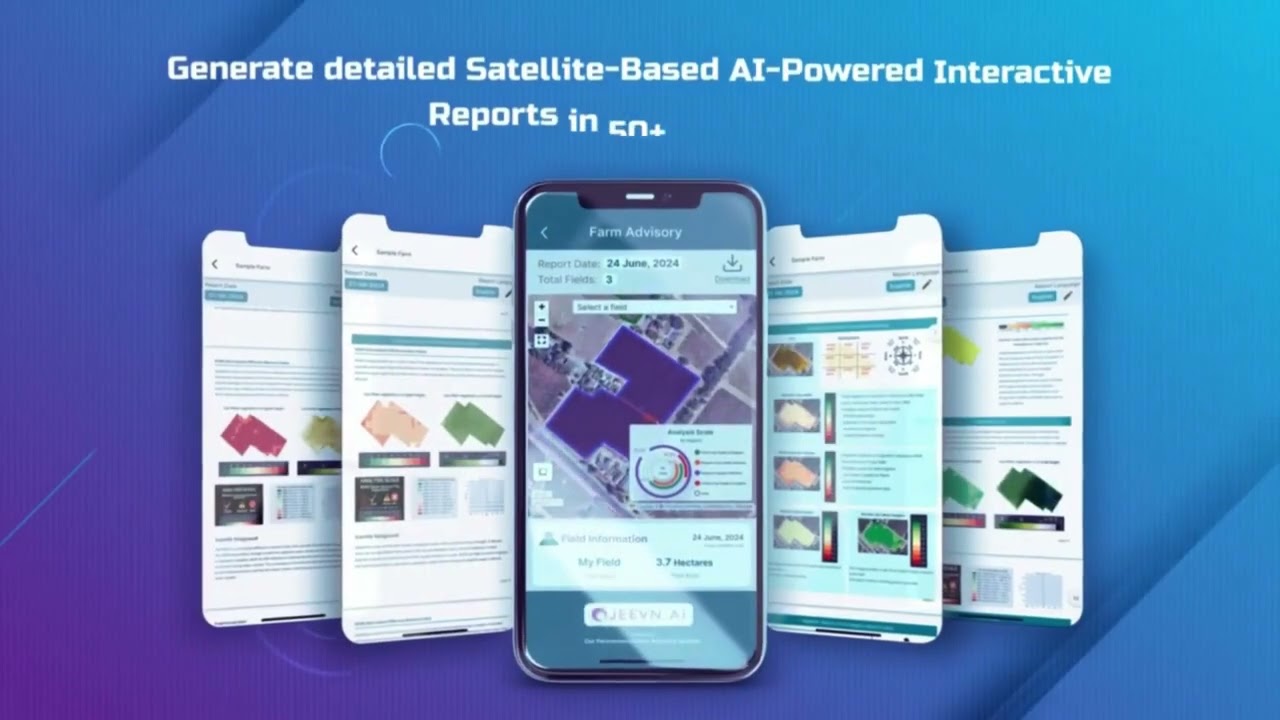
- 🤖 Jeevn AI Advisory System: Actionable weather forecasts, soil moisture insights, and strategic recommendations.
- 🔗 Blockchain-Driven Traceability: Transparent, secure supply chains for product confidence and sustainability.
- 📦 Environmental Impact Tracking: Carbon footprint monitoring to benchmark and reduce emissions.
- 🛠️ Fleet & Resource Management: Optimize agricultural machinery usage, reduce costs, and boost efficiency with real-time satellite data.
These tools enable American farming for free—by democratizing high-tech monitoring and bringing powerful analytics straight to growers’ devices. We help you enhance soil resilience and productivity, while tracking progress in real time.
Explore our large scale farm management platform or fleet optimization solutions for maximizing your ROI and ecosystem balance.

Key Insight
Farmonaut’s suite of satellite and AI tools translate complex data into farmer-friendly insights, supporting decisions that improve soil health, crop genetics, and environmental impacts in dynamic American landscapes.
Visit our API access page for developers & businesses—or dive into detailed integration at our developer documentation.
Market Access, American Farmers Market, & Economic Resilience
Modern market access is a key pillar of economic and system resilience in U.S. agriculture. Models such as american farmers market, direct-to-consumer sales, community-supported agriculture (CSA), and cooperative supply chains provide American producers with diversified, premium outlets—and a closer, more transparent connection to their communities.
- ✔ Direct markets (farmers markets, CSAs) enable premium pricing, increased crop diversity, and greater economic stability.
- ⛑️ Risk reduction: Diversification through multiple marketing channels provides a safety net against price fluctuations and extreme weather impacts.
- 📊 Data insight: Integrated extension programs and apps, like those from Farmonaut, help farms track production, marketing, and traceability—meeting growing consumer demand for transparency.
- 🌱 Systems approach: Soil, water, genetics, and market decisions all converge in determining long-term viability.
Want to translate improved soil and water practices into new premium markets? Use Farmonaut’s Traceability Suite to prove your sustainability efforts across the entire supply chain.
Extension Advice
Many federal, state, and cooperative extension programs offer financial incentives for adopting soil-health and water-conservation practices—align your strategy to maximize cost-sharing and technical support.
Extension, Labor, & Education: Building Capacity for Generational Change
As American farming evolves, the labor landscape and professional pathways change, too—automation, tech integration, and education are central to successful strategy in the current American farming update.
- 🧑🌾 Data-driven labor: Precise field management, remote monitoring, and real-time analytics reduce manual input while boosting efficiency.
- 🗣️ Human decision-making is still essential: Critical for balancing risk, labor needs, market access, and community commitments.
- 📚 Extension & Continuing Education: Ensures research breakthroughs are translated into field-ready solutions for all farm scales and crops.
- ⚙️ Vocational training, online tutorials, and cooperative extension outreach make innovation accessible across regions.
- 🛡️ Risk management tools: Farmonaut’s Crop Loan & Insurance platform leverages satellite verification, making it easier and more secure for American producers to access finance and coverage.
🚀 Pathways Tech & Education Enable in Modern American Farms:
- Efficient labor allocation through real-time task mapping
- Continuous soil health monitoring—including alerts for drought, nutrient deficiency, and erosion
- Transparent record management for certification and traceability
- Access to premium and specialty markets via sustainability verification
- Empowerment for new-generation operators—training for data- and ecosystem-driven agriculture
Forest Systems & Agroforestry: Diversifying Income & Stabilizing Ecosystems
Agroforestry—the purposeful integration of trees, perennial crops, and forest products into working farmland—is an increasingly central feature of resilient American agricultural systems. In mineral- and timber-rich regions, these practices diversify revenue, stabilize microclimates, and create wildlife habitat critical to long-term soil and water health.
- 🌳 Windbreaks & buffers: Protect fields from wind and water erosion, create microclimates, and increase organic matter deposition.
- 🍊 Tree crops: Add new income streams while boosting on-farm biodiversity.
- 🌱 Forest management: Contributes to watershed protection, carbon sequestration, and habitat connectivity.
- 💼 Sustainable mining and reclamation planning: Ensures extractive activities support long-term agriculture and reforestation where feasible.
Access Farmonaut’s Forest & Plantation Advisory tools for mapping, monitoring, and optimizing agroforestry practices for both profitability and ecosystem function.
Policy & Ecosystem Support: Incentives, Programs, and Producer Advocacy
A thriving American farming system requires clear policy signals and robust ecosystem support structures. Transparent regulations, sustainable subsidy programs, and collaborative research investments enable producers to invest with confidence in long-term soil and water management.
- ✔ Conservation programs: Align with soil and water health goals—offering technical and financial support (e.g., USDA EQIP, CSP, state grants).
- ✔ Producer advocacy: Engaged local and national advocacy ensures incentives remain relevant and accessible, especially for small/mid-sized farms.
- ✔ Research & public-private partnerships: Accelerate translation of breakthroughs (from genetics to environmental practices) into actionable, scalable solutions.
- ✔ Market transparency: Ensures eco-certifications become value-added, not just compliance “checkboxes.”
Policy Reminder
Stay updated on evolving federal/state programs; soil health incentives, carbon markets, and resource management policies shift rapidly in the American farming landscape—be proactive in capturing environmental and economic benefits.
Conclusion: Integrating Soil, Water, and Genetics for a Resilient, Balanced Farming Future
The American farming release unveils a future grounded in dynamic, integrated management of soil health, water, genetics, and market access. By adopting regenerative practices—like cover cropping, reduced tillage, and diverse rotations—U.S. producers are poised to boost yield stability, sequester carbon, and buffer environmental risks for their own communities and global markets. Strategic use of satellite technology, data-driven decision-making, and policy support ensures American farms remain resilient and productive—providing models of stewardship and innovation at the intersection of tradition and progress.
Ready to accelerate your journey? Leverage Farmonaut’s AI-driven, satellite-powered ag solutions, available via web and app, to sustain, protect, and improve your soil and water systems—today and for generations to come.
Farmonaut Subscription Plans: Empowering Your American Farming Update
Choose flexible, affordable packages for individuals, businesses, and government users. Scale monitoring, traceability, and environmental impact services as your farm or enterprise grows.
Frequently Asked Questions – Soil Health, American Farming, and Sustainable Update
Q1. What is the best way to start improving soil health if my farm currently uses conventional practices?
Begin with cover cropping and reduced tillage. These strategies require modest changes in equipment and management, but yield rapid improvements in soil structure, erosion control, and organic matter. Gradually integrate additional methods like crop rotation, organic matter inputs, and precision technology for compounding benefits.
Q2. How does Farmonaut make satellite farming updates accessible to everyone?
We provide affordable, subscription-based satellite monitoring via web, Android, and iOS apps (try here). Real-time crop health, soil moisture, advisory insights, and blockchain traceability are available to all, enabling smarter farming decisions for free or on scalable tiers.
Q3. Do soil health practices increase or decrease overall farm yield?
Over the medium and long term, regenerative soil health practices typically increase or stabilize yield. Because these practices improve water retention, nutrient cycling, and pest resistance, they buffer crops against weather shocks and environmental variability, supporting economic viability.
Q4. What role does technology play in integrated soil, water, and genetics management?
Modern technology (satellites, AI, sensors, blockchain) makes it possible to monitor, measure, and verify soil, water, and crop outcomes in real time—transforming “management” from intuition to science-driven precision. This enables American farms to remain resilient, reduce risk, and maximize sustainability incentives.
Q5. Where can I access incentives or cost-sharing for soil and water health practices?
Contact your state agricultural extension office, NRCS agency, or local cooperative for guidance on EQIP, CSP, and other conservation programs targeting soil, water, and ecosystem balance incentives.
Final Takeaway
The best view for the american farming new update is both systemic and local. Invest in soil, steward your water, build resilient genetics, and use integrated technologies to sustain your farm, landscape, and community for generations.

 Godrej Agrovet
 Hayleys Agriculture
 Linx Agritech
 Adinet
 Save Your Soils
 GalaxEye Space
 Grandstream Algérie
 XOS Realty
 Geospatial Lab Africa
 Agro La Gándara
 HIPSAC
 ZOL Zimbabwe
 Juligerm
 AdBio
AdBio MISE Maroc
 NWNS
NWNS Red August Group
 Farm Inc
 WeMe Global
 Agrotoken
 Blue BearX
 Insignito
 DnCubed
 Indosistim Teknologi
 Liquify Digital
 CU Foods
 BeyondTech Global
 Rouge VC
 AgroRisk
 Oath Inc
 Esri North East Africa
 MDCV UK
 Etech Consulting Madagascar
 Vestlandsforsking
 WB Dev
 Sama Premium
 Tres Valles
 Blickwinkel
 Agricultural Credit Policy Council
 eKGIS
eKGIS Mostas Tech
 Andex
Andex Deluxe Conseil
 WICO
WICO Chimera Innovation
 SkyHarvest
 Teledarbas
 Exurbia Geospatial
 FieldZero
